Four carriage words that ended up on sedans, hearses and SUVs: what each name originally meant and how marketing stretched it.
A coupe was a shortened carriage and later a two-door fixed-roof car. A coupe de ville had an open driver's seat, a landau imitated a folding carriage top, and a phaeton was an open car with no fixed weather protection. Marketers later stretched all four names.
When Volkswagen launched a car called the Phaeton in 2002, it was a four-door sedan with a fixed roof, pillars and fully framed windows, which offered open-air motoring only through an optional solar-powered glass sunroof. The word on its badge had once meant the opposite: a car left open to the elements, with nothing fixed overhead. That jump is typical. Coupe, coupe de ville, landau and phaeton all began as descriptions of horse-drawn carriages, and each has wandered a long way from home.
Trace each word back and the oddities start to make sense: why a coupe is "cut", why a landau bar belongs on a hearse, what the French "de ville" adds, and how marketing departments stretched all four names across body styles the first coachbuilders never imagined.
What is a coupe?
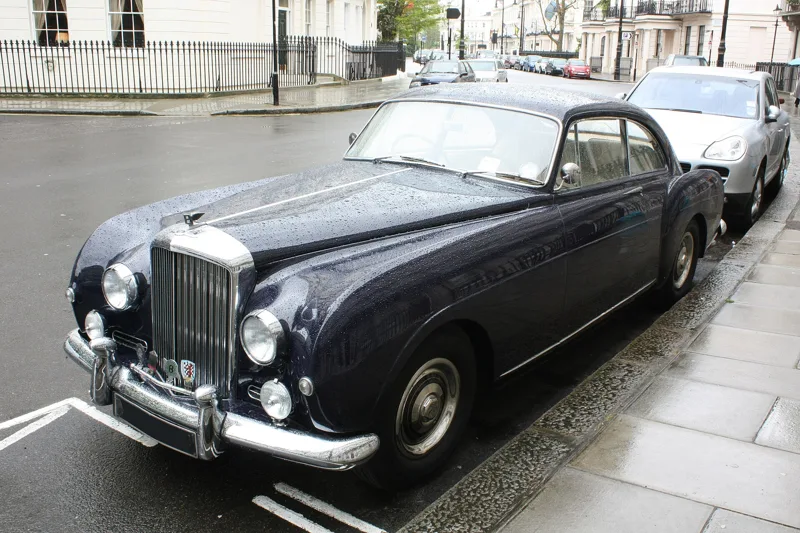
In its modern sense a coupe is a car whose rear roofline slopes away or stops short, typically with two doors. The word is French, the past participle of couper, "to cut". It was first used for horse-drawn carriages for two passengers with no rear-facing seat, descended from the berline. These berlines coupees, or "clipped carriages", were eventually shortened to coupes.
The carriage version appeared in the 18th century. It had a fixed glass window at the front of the passenger compartment, and was thought an ideal vehicle for women going shopping or paying social calls. In English the word has two pronunciations: koo-PAY, the anglicised French, and KOOP, a spelling pronunciation that dominates in the US and across much of Canada. The latter had entered American speech by 1936 and featured in the Beach Boys' 1963 hit "Little Deuce Coupe".
From carriage to car
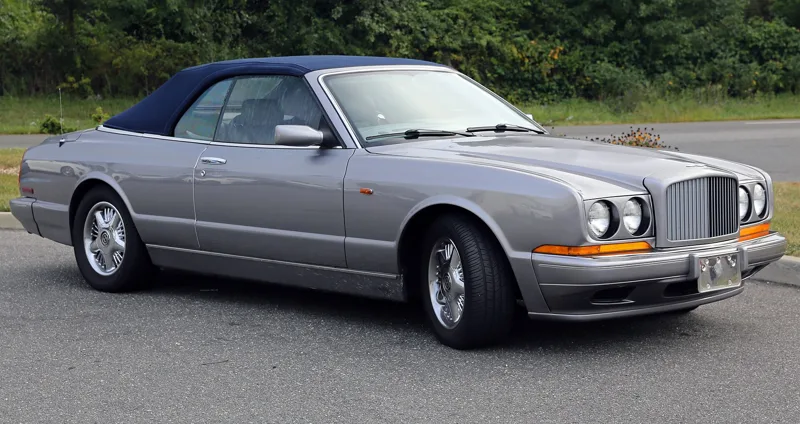
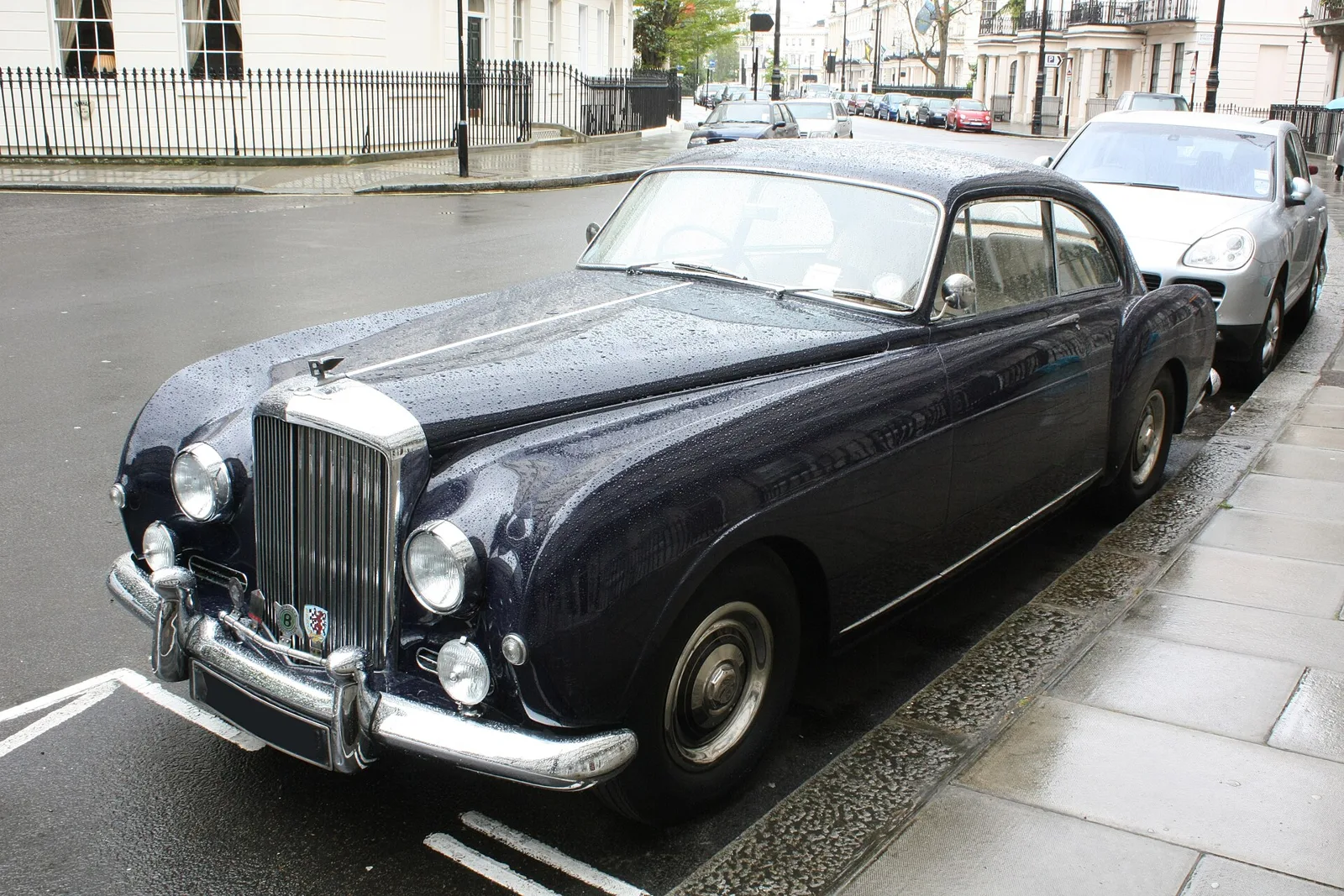
The first coupe automobiles copied the carriage layout: an exposed driver up front and a bench seat for two passengers in a cabin behind. By the 1910s the word meant a closed two-door car carrying the driver and up to two passengers on a single bench; the coupe de ville was the exception, keeping the driver outdoors. In 1916 the Society of Automobile Engineers proposed names for bodies: a coupe was an enclosed car driven from inside, seating two or three and sometimes a rear-facing fourth. A coupelet was a small car with a folding top, and a convertible coupe was a roadster with a removable coupe roof.
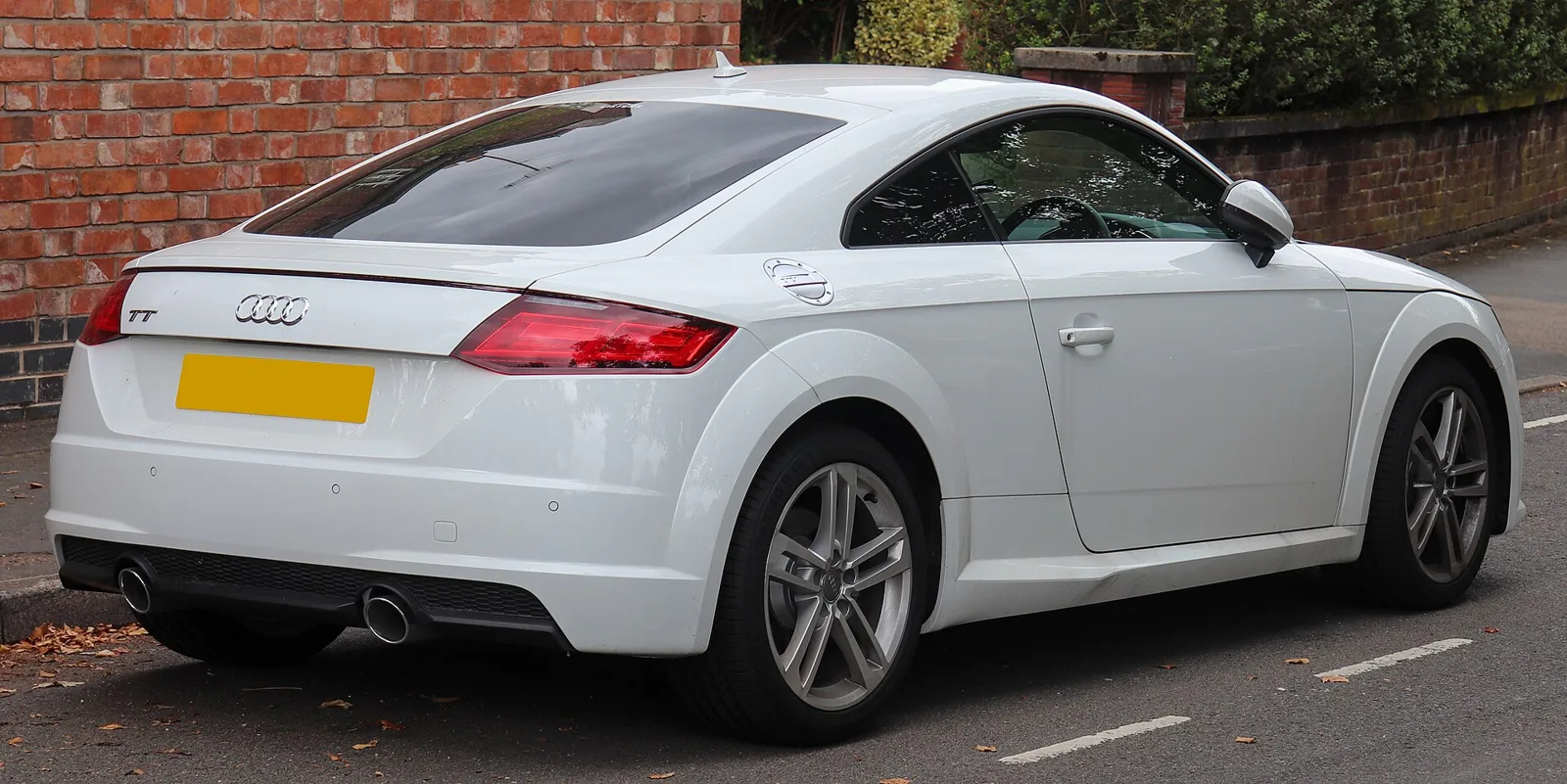
Through the 20th century the label was attached to close-coupled cars, with the rear seat set further forward than usual. From the 1960s it has usually described a fixed-roof car with two doors. The 1977 edition of ISO 3833 agrees: two doors, a fixed roof, restricted space at the rear, a minimum of two seats and two side windows.
A name that once described a carriage now sits on the boot of a sedan.
Coupe vs sedan: where the line blurs
In the 1940s and 1950s a coupe was told apart from a sedan by a shorter roof and sportier profile, and when a model comes in both shapes today the coupe is generally sportier and more compact. Two-door sedans exist too, a body the French call a coach. Trouble began with the 2+2, a sleek two-door with two real seats in front and two small ones behind, and with hatchbacks marketed as coupes because of a lift-up rear door.
Then came four doors. A 1921 LaFayette was sold as a "Four-Door Coupe", and the 1927 Nash Advanced Six came in the same style. The Rover P5 gained a lower-roofed coupe variant in 1962, followed by the 1992-1996 Nissan Leopard and Infiniti J30. Since 2005 the idea has been revived by the Mercedes-Benz CLS, the 2010 Audi A7, the Volkswagen CC and Arteon and the 2012 BMW 6 Series Gran Coupe. Reactions are mixed on whether these are really sedans. Edmunds, the American car guide, has said the category does not really exist. "Quad coupes" are cars with small rear doors and no B-pillar, such as the Hyundai Veloster (2011-2022), the 2003 Saturn Ion and the 2003 Mazda RX-8, and some SUVs with sloping rooflines are called coupe SUVs, even though only a two-door car with no B-pillar is considered a true coupe.
Even the same model name can hide different cars. The AMC Matador coupe of 1974-1978 had a shorter wheelbase and fastback styling that set it apart from the four-door. The coupe versions of the Chrysler Sebring and Dodge Stratus, sold from the late 1990s, had Mitsubishi engineering and an Illinois factory, whereas the sedans came from Chrysler and Michigan.
Coupe subtypes
| Name | What it meant |
|---|---|
| Berlinetta | Lightweight sporty two-door, typically two seats but also 2+2 |
| Club coupe | Two doors and a full-width rear seat reached by tilting the front seats forward |
| Hardtop coupe | No B-pillar; popular in the US from the early 1950s until the 2000s |
| Business coupe | No rear seat or a removable one, for travelling salesmen; late 1930s |
| Opera coupe | Easy rear access, sometimes a folding front seat and room for top hats |
| Three-window coupe | Two side windows and a backlight; popular from the 1920s until World War II |
| Combi coupe | Saab's name for a liftback-style body |
The hardtop vanished for practical reasons: roof-strength safety rules were proposed, and manufacturers focused on cost reduction. Opera coupes had solid rear quarters with small round windows so occupants could see out without being seen, and those opera windows came back on many US cars in the 1970s and early 1980s. The 1932 Ford coupe, a three-window, is often called the classic hot rod.
What does coupe de ville mean?
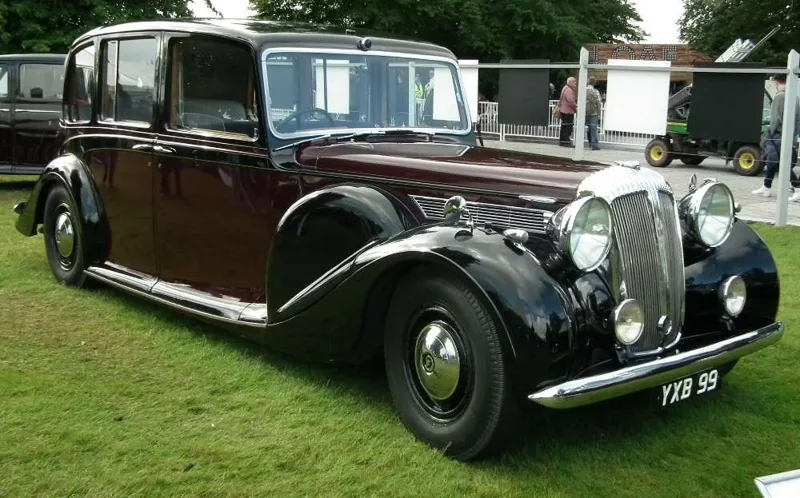
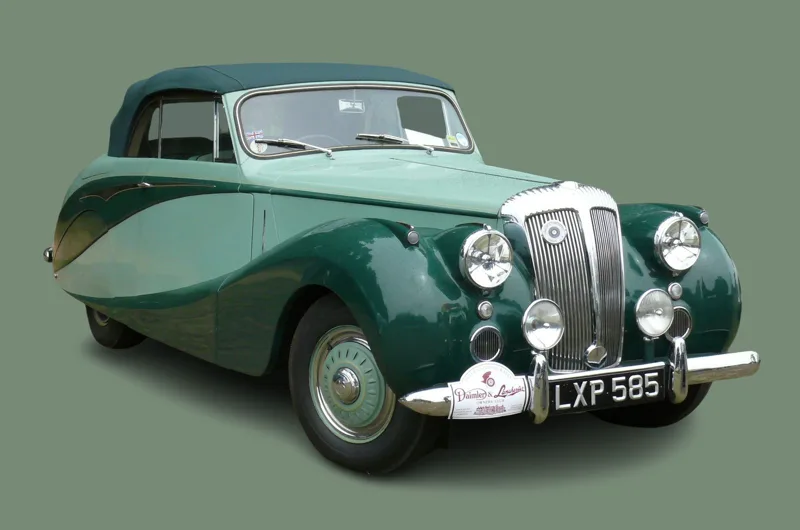
"De ville" is French for "for town". The coupe de ville, which goes by town car and sedanca de ville as well, was built from 1908 to 1939 with the driver's seat in the open air and a closed compartment for passengers. The phrase existed in the 19th century, before the motor car, for a variant of the coupe carriage close to the British clarence. Added to a body name, "de ville" meant the roof over the driver could be folded, retracted or removed. As a town vehicle, it normally had no luggage space.
The first cars left the driver exposed, without cover, doors and sometimes even a windscreen. Windscreens were added as speed and distance grew, to protect drivers from road dirt and animal dung, and doors followed. Early driver roofs were a single skin of leather held with poppers; from the late 1920s some designs had a metal two-skin roof that retracted into the body.
The back was another world. The passenger compartment, for between two and most often six people, with jump seats allowing up to eight, used the best materials: cotton or silk adorned with brocade, heavy curtains, thick carpet and fine woodwork. Some had a partition containing drinks cabinets, and passengers could talk to the front through a speaking tube or, from the 1920s, an electrical device much like a telephone. A few had a lighted panel for sending instructions such as stop, left, right or home.
Town car, sedanca and the vocabulary tangle
The names overlap. "Town car" is an Anglicised "de ville", and in the United States it meant a coupe de ville with rear doors, an open driver's area and a partition. Count Carlos de Salamanca, a Spanish nobleman and Rolls-Royce's distributor in Spain, introduced both sedanca and sedanca de ville with a car of 1923. British usage is unclear. One view holds that sedanca de ville is a town car variant and sedanca is a sedanca coupe; another holds that sedanca de ville is redundant and sedanca means a town car.
Different countries used the words differently. France, Germany and Italy applied "coupe de ville" to both the town car and the sedanca coupe, while in the US it is used for the sedanca coupe, or for a drophead coupe with a three-position top. A British sedanca-style drophead with that same three-position top is called a cabriolet victoria. The French also had the coupe chauffeur, similar to a town car, and the coupe limousine, with a longer cabin for up to seven passengers, three on jump seats. The term Coupe Napoleon was used for a type of Bugatti Royale body.
Who built them
Because they were expensive and bespoke, coupes de ville were built by hand in small numbers. French names include Audineau et Cie, Mulbacher and Rothschild. In Britain they are most associated with Rolls-Royce in four-door form and Bentley in the two-door sporting form, with bodies by coachbuilders including Barker, Hooper, H. J. Mulliner and Park Ward. In North America, Brewster, LeBaron and Rollston clothed chassis from Packard, Cadillac and Lincoln. Edsel Ford ordered a Lincoln with a town car body for his father in 1922. In 1946 Raymond Loewy altered two Lincoln Continentals into coupes de ville with a removable plexiglas cover over the chauffeur.
Ford added a town car to the Model A line in December 1928, a LeBaron design, and 1,065 were made by 1930. Cadillac's Sixty Special carried the Town Car name in 1940 and 1941, then the name Coupe DeVille on a hardtop in 1949 and Sedan DeVille on a four-door hardtop in 1956. By then the real thing was gone: production of the body style stopped in 1939, but American makers kept using the names, and the 1959 Lincoln Continental Town Car is simply a sedan.
What is a landau roof?
The landau began as a carriage with a folding fabric top in two sections, supported by external elliptical springs. It was named after the German city of Landau, where convertible carriages were first made, with the first dated to 1757. The earliest hoods tipped back only 45 degrees and left the doors in place; later the whole structure folded away in two halves. Opened fully, a true landau looks like a barouche.
The word spread to carriages with facing seats and a folding hood over each end, and then to cars. Walter Bersey drove an electric landau on the London to Brighton Emancipation Run of 1896, Benz built a 6 hp petrol Landau in 1897 and Clarkson a steam landau in 1899. After 1900, drivers wanted an unobstructed view forward, and the landaulet, with only the rear hood opening, took over. The Society of Automotive Engineers' 1935 handbook defined a landau as a closed body that could open or fold at the rear quarter by landau joints.
From folding roof to vinyl top
By the 1920s and 1930s, particularly in America, "landau" had come to mean a car whose fixed roof and rear quarters wore fabric or leather and sprouted S-shaped landau bars, so it resembled a convertible. The name went quiet between the mid-1940s and the late 1950s, then returned for fixed-roof cars styled to resemble a two-piece roof, such as the 1957 Imperial four-door hardtop. By the early 1970s it meant premium trim, and a vinyl landau roof covering the rear section appeared on cars of every size. The downsized two-door Chevrolet Caprice, with its wraparound rear window, was named the Landau. The last American cars with factory landau roofs were the 1996 Cadillac Fleetwood and Buick Roadmaster.
The Nash Rambler Landau, introduced on 10 April 1950, was a different thing: a two-door cabrio coach with a power fabric top that slid back along fixed side rails. It was dropped after the 1954 model year as buyers turned to hardtops, sedans and wagons. Ford used the name on Thunderbirds: the 1962 Landau, a hardtop with a padded vinyl roof and simulated S-bars, the 1966 Town Landau, and from 1967 the four-door Landau Sedan, whose trim has been likened to a funeral procession of one car. The Town Landau returned in mid-1977 and ran to the 1979 model year.
Why hearses have landau bars
The landau bar is an ornamental S-shaped metal bar on the rear quarter panel, mostly seen on hearses, and it stands for the folding roof of the landau carriage. Early horse-drawn hearses had working bars to raise and lower the fabric top, and motorised ones kept the bars as decoration. Since the mid-1940s US hearses have usually shown chrome bow-shaped bars, which came to signify a funeral car. Ford fitted simulated bars to top-trim Thunderbirds from 1962. They were seen as gaudy trim after the 1970s, but slimmer "neo-landau bars" have returned in the 2020s on SUVs from Genesis, Lexus and Jeep.
What is a phaeton?
In motoring a phaeton is a wholly open body, popular from the 1900s until the 1930s, that mirrors the light, fast, four-wheeled horse-drawn carriage of the same name. For a time the word was interchangeable with spyder, itself from a carriage called a spider. Phaetons were the favourite early body: usually an open four-door without side windows and with a freestanding windscreen, built on the roadster's cowl and front doors plus rear doors and a longer body. What separated it from a convertible was the lack of any winding or sliding window in the doors or body. A roof could be added before a drive and side curtains fitted, though this gave only temporary relief.
The names multiplied. Another American favourite from the mid-1920s into the early 1930s was the dual cowl phaeton, which put a bulkhead, often with its own folding windscreen, between the back seats and the front pair. After 1912 American usage became tied to the triple phaeton, with room for three rows of seats, and the word drifted into meaning the same as touring car.
The last true phaeton and the name that outlived it
Cheaper closed cars, and convertibles with side windows, ended the phaeton's run in the 1930s. The Willys-Overland Jeepster, sold from 1948 to 1951 with plastic side curtains instead of roll-up glass, was the last true phaeton from a major US automaker, arriving ten years after the one before it. In 1952 Chrysler built three Imperial Parade phaetons, dual-cowl cars on stretched Imperial Crown Limousine chassis, for New York City, Los Angeles and the White House.
Marketing meanwhile kept stretching the term. Buick sold a "convertible phaeton" from 1934 through 1941, actually a four-door convertible with roll-up windows. In 1956 Mercury called the four-door hardtop versions of its Montclair and Monterey phaetons, an odd use for a name that had meant an open car. Then came the closed Volkswagen of 2002.
What it means when you read a badge
The history is a guide to what a name promises. A coupe should have a sloping roof, and strictly two doors with no B-pillar if it is to be called a true one. A "coupe de ville" or "town car" describes a chauffeured layout that ended in 1939, and later cars wearing the name are something else. A landau now suggests a vinyl roof or bars as trim, and a phaeton ought to have no roof protection at all.
Where this goes next
The drift continues in the 2020s. Neo-landau bars are back on SUVs from Genesis, Lexus and Jeep, meant to liven up an otherwise bare rear pillar. Four-door and SUV bodies keep carrying the coupe label, and the debate over whether those cars qualify has run since the early 2000s without a settled answer.