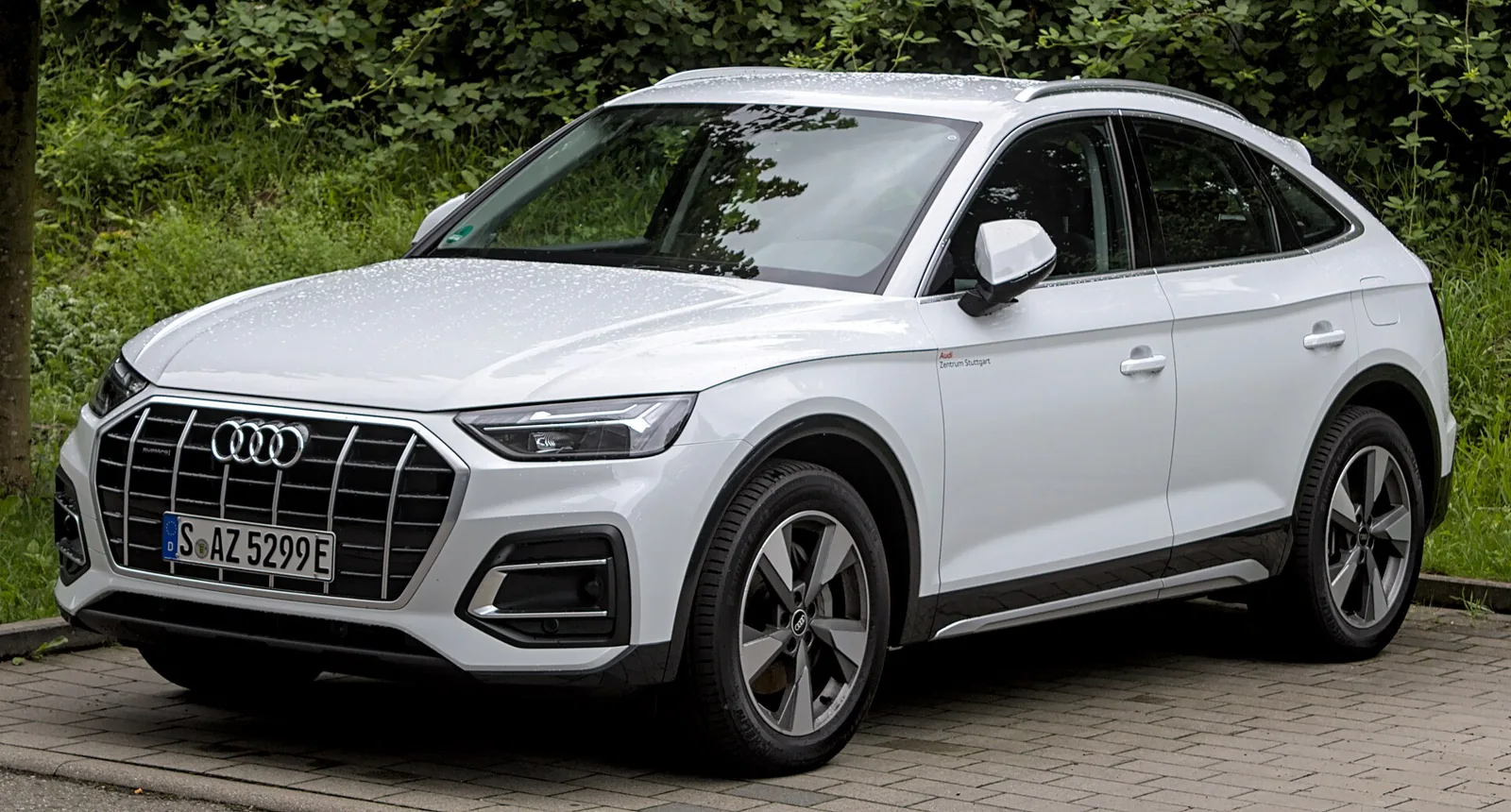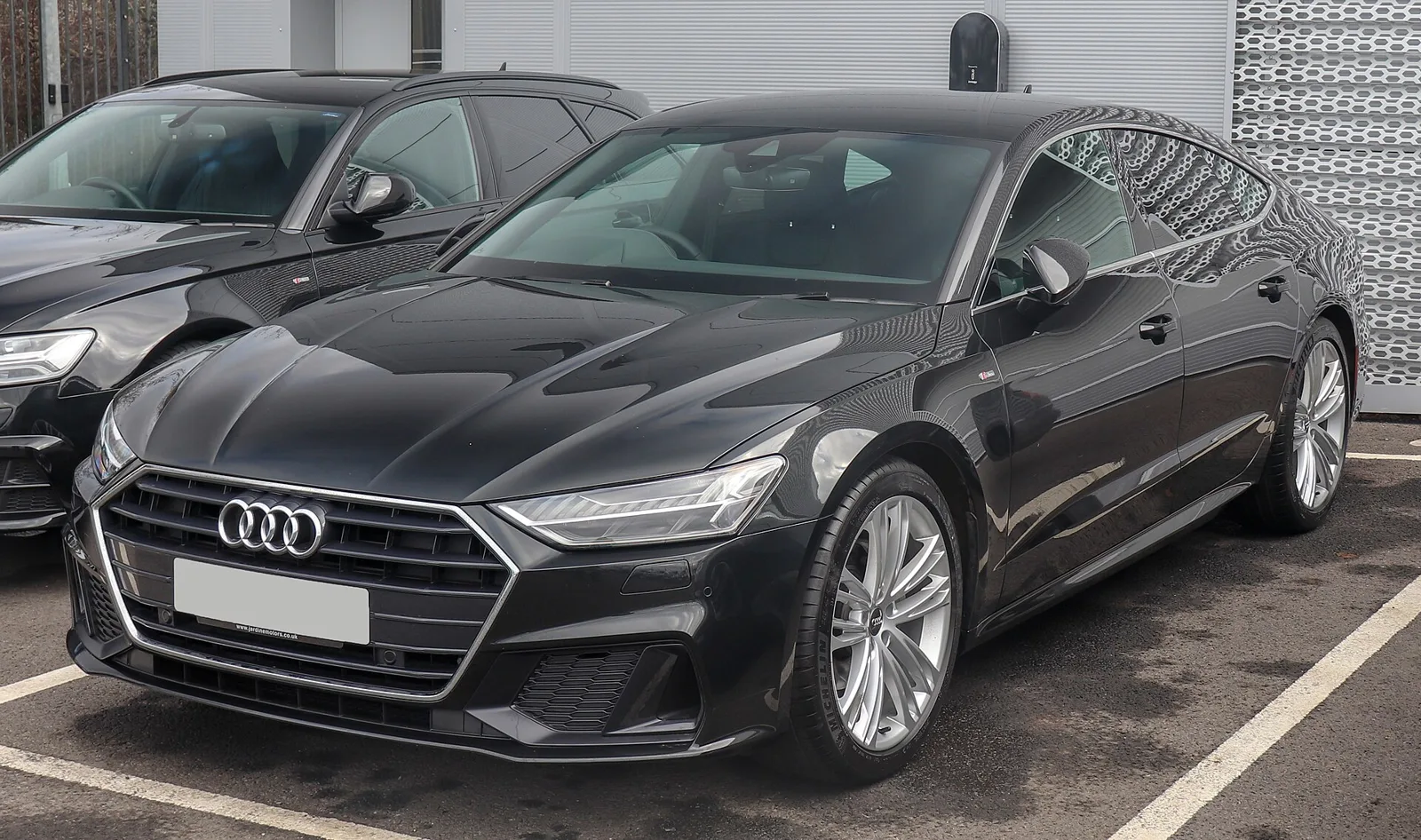
A coupe-style Audi built on A6 underpinnings, which won awards in 2012 and spawned the S7, the RS 7, a hydrogen concept and a China-only A7L.
Audi's A7 is a fastback executive car that arrived in 2010 as the coupe-style counterpart to the A6. It spawned high-performance S7 and RS 7 variants, a hydrogen concept and, in China, the longer A7L saloon, which uses the same engines as the liftback.
The Audi A7 is an executive five-door liftback that Audi has produced since 2010. It is the coupe-style version of the A6 saloon and estate, with a sloping roofline, a steeply raked rear window and four frameless doors. Over two generations it became the basis for the S7, the RS 7 and a hydrogen concept, and a China-only long-wheelbase version called the A7L.
What is the Audi A7?
The A7 is a four-door fastback built on the Volkswagen Group MLB platform. It is essentially a fastback version of the C7-series Audi A6, sharing its core structure, drivetrain, chassis, dashboard and interior. Its exterior panels are unique to the A7. Aluminium makes up much of the front bodywork.
The A7 was released before the more conventional A6 saloon and estate. Audi's C-platform had not seen a fastback since the Avant version of the C2 Audi 100 left the range in 1982.
Reviewers have often cited the Mercedes-Benz CLS-Class as the inspiration for the four-door executive coupe market that the A7 entered.
The A7 wrapped the A6's underpinnings in a fastback body, and gave the executive market a four-door alternative to the saloon.
Where did the A7 come from?
The A7 grew out of a concept called the Audi Sportback, shown at the 2009 Detroit Auto Show. That concept used a 3.0-litre V6 TDI diesel rated at 225 PS (165 kW; 222 hp), a seven-speed S tronic gearbox and quattro all-wheel drive. Its 21-inch wheels and continuous damping control were later described as a preview of the facelifted 2015 A7 Sportback.
The production A7 was unveiled in the Pinakothek der Moderne art museum in Munich on 26 July 2010. It was then shown at the 2010 Paris Motor Show, the 2011 New York Auto Show and the Woerthersee Tour 2011 in Misano Red. Showrooms received them that autumn.
Which engines did the first-generation A7 offer?
Early models included the 2.8 FSI with 204 PS (150 kW; 201 hp) and multitronic transmission, and the 3.0 TFSI quattro with 300 PS (221 kW; 296 hp) and seven-speed S tronic. The 3.0 TDI quattro produced 245 PS (180 kW; 242 hp), and a 3.0 TDI with 204 PS (150 kW; 201 hp) came with multitronic.
The 2011 model year brought the FlexRay databus, which controlled the driver assistance systems that were first used on the A8. The A7 gained a head-up display, active lane assist and full LED headlamps with automatic high beam switching. The early US-market 3.0 TFSI quattro produced 310 PS (228 kW; 306 hp) with an eight-speed automatic.
What did the S7 add to the A7?
The S7 combined a 4.0-litre biturbo TFSI V8 rated at 420 PS (309 kW; 414 hp) with 550 Nm (406 lbf ft) of torque. It had quattro four-wheel drive and a seven-speed S tronic gearbox, and it accelerated from 0 to 100 km/h in 4.7 seconds. The car was unveiled at the 2011 Frankfurt Auto Show, and deliveries began in spring 2012.
The S7 was offered alongside the 3.0-litre versions, and the model variant ran from 2012 to 2017 in the range.
How powerful is the RS 7?
The RS 7 was unveiled at the 2013 Detroit Auto Show. Its 4.0 TFSI twin-scroll twin-turbo V8 produces 560 PS (412 kW; 552 hp) and 700 Nm (516 lb ft) of torque. The engine uses start-stop and cylinder deactivation, which switches off cylinders 2, 3, 5 and 8, and it drives an eight-speed Tiptronic transmission with torque-vectoring quattro all-wheel drive.
Its 0-100 km/h time is 3.9 seconds, and a 250 km/h (155 mph) limiter applies as standard. The optional Dynamic Package raises the limit to 280 km/h (174 mph), and the Dynamic Package Plus raises it to 305 km/h (190 mph). The standard RS 7 used 390 mm front brake discs with six-piston calipers, and 420 mm carbon ceramic discs were an upgrade.
What is the RS 7 Performance?
Audi announced the RS 7 Performance on 22 October 2015, alongside the RS 6 Performance. It used the same 4.0-litre twin-turbo V8, now rated at 605 PS (445 kW; 597 hp) and 750 Nm (553 lb ft). Its sprint to 200 km/h takes 12.1 seconds, after 3.7 seconds to 100 km/h, and its fuel economy and CO2 ratings were unchanged from the standard RS 7.
The RS 7 Performance kept the same top speed limits, with the options unchanged, so the performance gain came from the engine alone.
What did the 2015 facelift change?
Audi unveiled the 2015 A7 facelift in May 2014. Its changes included styling tweaks to the exterior, a revised engine and transmission line-up, and the latest Multi Media Interface with a faster processor and handwriting recognition. Audi Connect added 4G mobile internet and map updates, and the car gained adaptive glare-free Matrix LED headlights.
The Night Vision Assistant could now recognise animals, and both the TFSI and all three TDI engines were made to meet the Euro 6 emissions standard.
What was the A7 Sportback h-tron?
At the 2014 Los Angeles Auto Show Audi showed the A7 Sportback h-tron Concept, built on the A7 but fitted with a hydrogen fuel cell and a plug-in battery. It carried four high-pressure hydrogen tanks feeding a fuel cell in the engine bay, which powered two 85 kW (116 PS; 114 hp) traction motors on each axle, for a total of 232 PS (171 kW; 229 hp), or 310 PS (228 kW; 306 hp) in boost mode.
The tanks held 5 kg (11 lb) of fuel at 700 bar, enough for 500 km (311 mi). The 8.8 kWh lithium-ion battery could be charged in four hours on a domestic 230V charger, or in two hours on a 360V Level 2 charger, and it gave a range of 50 km (31 mi) on its own.
What is the second-generation A7?
The second-generation A7, Type 4K8, was revealed in October 2017 and launched in Germany in February 2018. Production began that month at Audi's Neckarsulm plant, and North American debut came at the Detroit show in January 2018. The second generation brought a 48-volt mild hybrid system with a belt alternator starter, using a six-cylinder petrol engine with 250 kW (340 PS; 335 hp) and 500 Nm (369 lbf ft) at launch.
The RS 7 Sportback of the second generation was first shown at the 2019 Frankfurt Motor Show. It has a 3,996 cc twin-turbocharged V8 with 600 PS (441 kW; 591 hp) at 6,250 rpm and 800 Nm (590 lb ft) of torque from 2,050 rpm.
What is the Audi A7L?
In April 2021 Audi launched the A7L, a three-box sedan version of the A7 that is sold only in China. It was the first Audi model manufactured by the SAIC Volkswagen joint venture. It has a slightly longer wheelbase than the liftback while being shorter overall than the A8, and it keeps frameless doors.
The A7L uses the same engines as the liftback, including the 3.0-litre TFSI with 340 PS (250 kW; 335 hp) and 500 Nm (369 lbf ft). It could be seen as a closer rival to the BMW 8 Series Gran Coupe than the standard A7.
What was the A7 Sportback Black Edition?
The Black Edition was a UK-only version of the A7, excluding the 3.0 TDI and the S7. It had 21-inch rotor-design alloys in a dark titanium finish, a lowered S line sports suspension, a black grille and privacy glass from the B-pillar rearwards.
Its interior had Piano Black inlays, sports seats in black Valcona leather and a BOSE audio system, along with a powered tailgate and a powered retractable rear spoiler. Sales started in November 2012, and cars reached buyers in early 2013.
Specifications
| Model | Engine | Power | 0-100 km/h |
|---|---|---|---|
| S7 (2012-2017) | 4.0-litre biturbo V8 | 420 PS (309 kW; 414 hp) | 4.7 seconds |
| RS 7 (2013-2019) | 4.0 TFSI twin-turbo V8 | 560 PS (412 kW; 552 hp) | 3.9 seconds |
| RS 7 Performance (2015) | 4.0 TFSI twin-turbo V8 | 605 PS (445 kW; 597 hp) | 3.7 seconds |
| A7L (2021) | 3.0-litre TFSI | 340 PS (250 kW; 335 hp) | Not given |