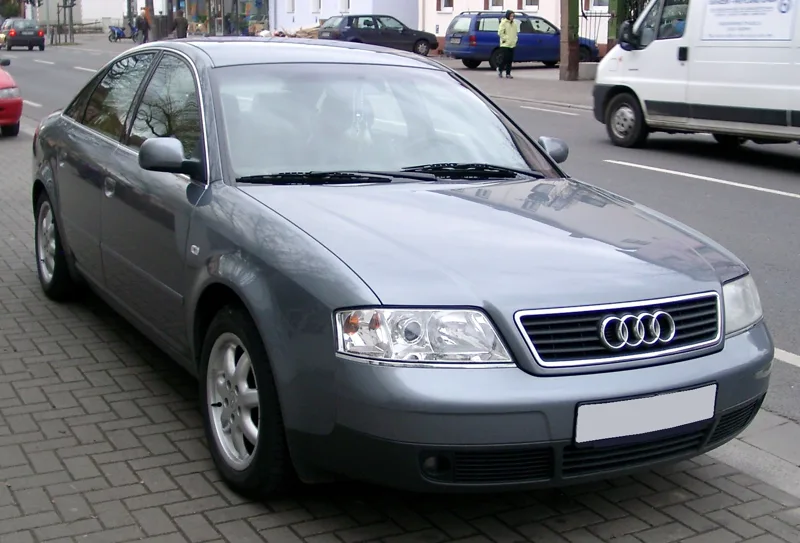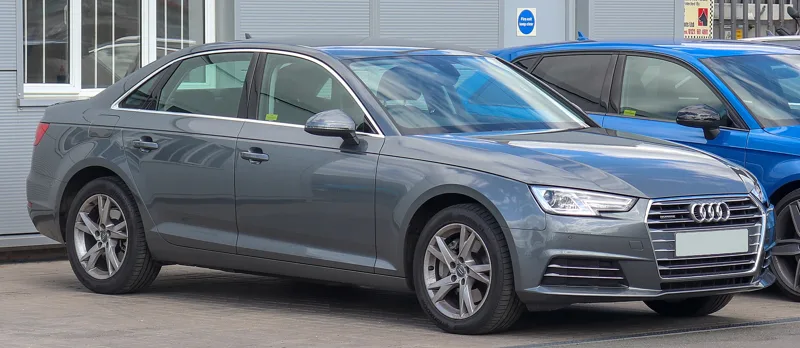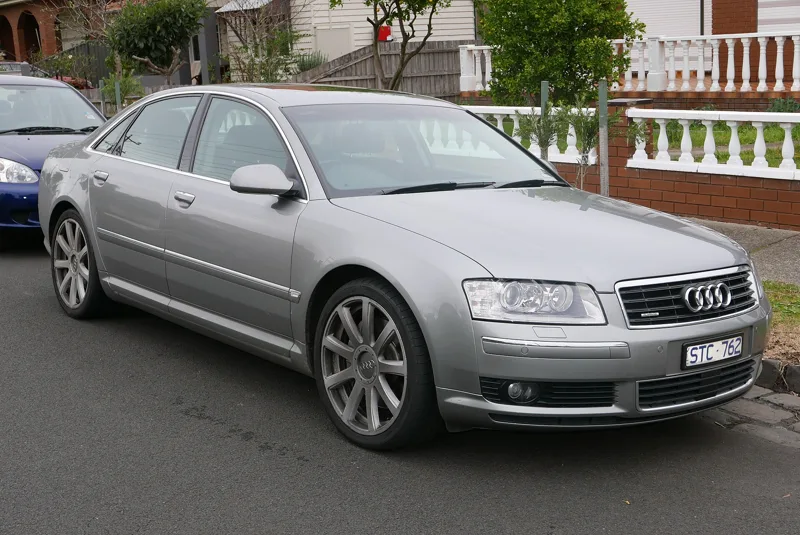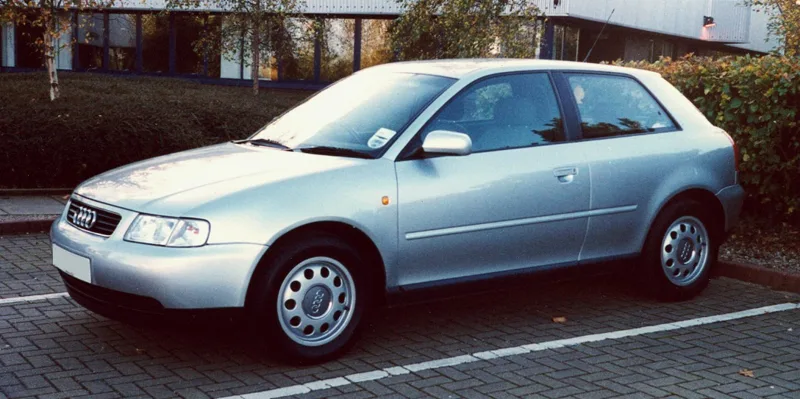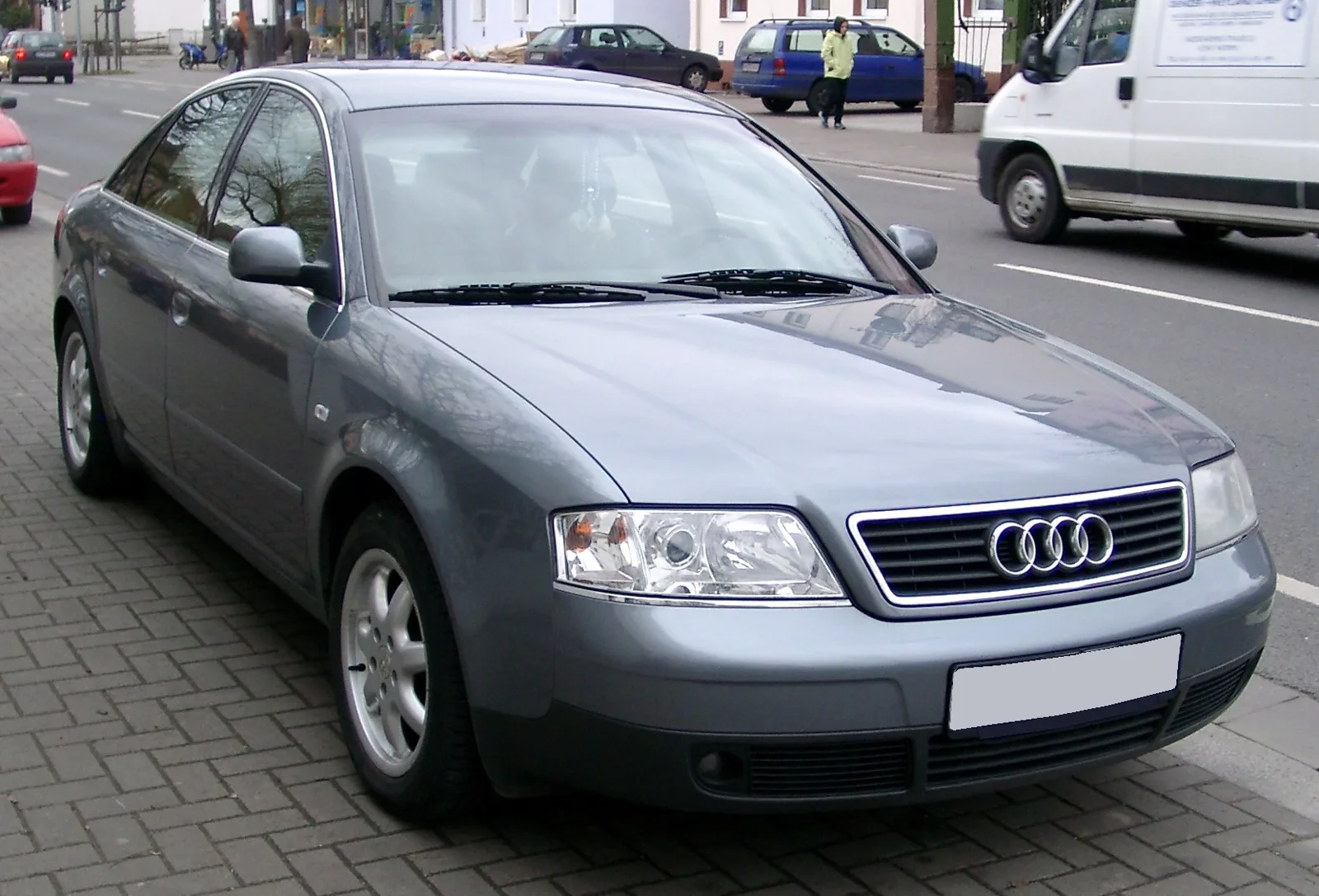
The third-generation Audi A6, with its single-frame grille, Changchun-built cars and the 580 PS RS6 at the top of the range.
The Audi A6 C6 was the third-generation Audi A6, built from 2004 to 2011 with the internal code 4F. It offered engines from a 140 PS four-cylinder diesel to a 580 PS twin-turbo V10 in the RS6, and it was also made in China at Changchun.
The Audi A6 C6, internal code 4F, was the third generation of Audi's upper-range A6, built from 2004 to 2011. It grew larger than its predecessor, and it brought the single-frame grille to the A6 for the first time. The launch range ran from a 140 PS diesel up to a 335 PS V8, and the RS6 later added a 580 PS twin-turbo V10.
Why did the A6 C6 look so different?
The C6 was larger than the previous A6, passing 4.9 metres in length, and it brought in a single-frame grille that was clearly visible at the front. The arched nose also answered safety rules that wanted fewer sharp edges, to limit harm to someone struck by the car.
Walter de Silva, Audi's design chief at the time, signed the styling. The body kept the sinuous three-box shape with a sloping roof and a short tail, borrowing touches from a coupe without becoming a four-door coupe. At the time, the first-generation Mercedes-Benz CLS-Class was the most significant example of that idea.
The headlights were trapezoidal and horizontal, and the rear lights were narrower, stopping flush with the boot lid. Inside, the driver-facing cockpit returned, with the instruments under a large hood that reached into the centre console. The boot held 546 litres, at the top of its class, and a wheelbase stretched by 8.3 cm improved interior room.
Structurally little changed. Aluminium covered the bonnet, the wings and part of the roof, while the body stayed mainly steel. The saving was only about 35 kg for the same version, which was a modest result. The suspension was redesigned for the bigger body, with an aluminium upper wishbone at the front and a multi-link rear already used in the Audi A4 B6.
Ventilated discs were fitted on all four wheels, and the steering was rack and pinion with hydraulic power assistance of variable effect. Coil springs, gas dampers and hollow anti-roll bars completed the suspension.
An A6 that arrived in 2004 with a single-frame grille and later topped the range with a 580 PS RS6.
Did the estate arrive with the saloon?
The saloon came first, in March 2004, and the previous generation's A6 Avant stayed on as the executive estate until September of that year. The new Avant was presented only in November 2004, with first deliveries in March 2005.
The C6 was unveiled at the Geneva motor show in March 2004, initially as a saloon only. The Avant kept the saloon's soft, rounded lines, which gave a certain dynamism to the German family car.
Which engines did the A6 C6 launch with?
Five engines launched the range: a 2.4 V6 with 177 PS (130 kW; 175 hp), a 3.2 V6 FSI with 256 PS (188 kW; 252 hp), a 4.2 V8 FSI with 335 PS (246 kW; 330 hp), a 2.0 TDI with 140 PS (103 kW; 138 hp) and a 3.0 V6 TDI with 224 PS (165 kW; 221 hp).
The longitudinal front engine drove the front wheels or all four, depending on the version. All-wheel drive and a six-speed automatic came as standard with the 4.2 V8 and the 3-litre diesel. The other engines could be ordered with a six-speed manual and front-wheel drive only, and the 2.0 TDI, the only four-cylinder in the launch range, was front-wheel drive alone.
The 2.4 V6 used indirect injection, while the 3.2 V6 used direct injection, and the 4.2 V8 had five valves per cylinder.
The engines were where the real effort went. For the first time in an A6, common-rail technology appeared in the diesels, and direct injection came to the petrol units.
How did the A6 C6 change in its first years?
Avant estate deliveries began in March 2005, and a month later a 2.0 TFSI four-cylinder with 170 PS (125 kW; 168 hp) extended the range downwards. The S6 and A6 Allroad followed in 2006, and the range was nearly complete by the autumn of that year.
Production also started in China at Changchun, where a joint venture with Volkswagen was already active. The Changchun car measured 5.012 metres, thanks to a wheelbase that exceeded 2.94 metres in length.
In spring 2006 the 4.2 V8 gained direct injection and reached 350 PS (257 kW; 345 hp). The 3-litre diesel received a particulate filter and rose to 233 PS (171 kW; 230 hp). A 2.8-litre petrol V6 with 210 PS (154 kW; 207 hp) appeared in autumn 2006.
What did the 2008 restyling change?
The mid-career restyling arrived in August 2008. At the front it brought LED technology to the light units, rectangular fog lights instead of oval ones, and a number-plate holder hidden behind the plate. The rear light units were redrawn in a horizontal shape that closely resembled those of the contemporary Audi A4, and saloons gained a chrome moulding between the rear bumper and the boot lid.
Inside, the restyling brought new chrome inserts, offered in aluminium, wood or carbon fibre depending on the trim level. Carbon fibre was limited to the S6.
Under the bonnet, the V6 engines gained a new variable valve lift system. The 3.2 V6 was replaced by a 3-litre direct-injection unit with a supercharger producing 290 PS, while the 2.8 split into two versions with 190 and 220 PS. A new 2-litre diesel of 136 PS replaced the 140 PS 2.0 TDI, and the company claimed it could cover up to 18.9 km on a litre of diesel.
How did the S6 differ from the standard A6?
The S6 used a naturally aspirated 5.2-litre V10 of Lamborghini origin, with 435 PS (320 kW; 429 hp), all-wheel drive and a six-speed Tiptronic automatic with paddles on the steering wheel. Its torque split was 40% front and 60% rear in normal conditions.
Outside, the S6 stood apart through a chrome grille in a chequer motif, flared arches, LED daytime lights in twin rows of five elements set into the bumpers, 19-inch twin-spoke wheels and four exhaust tips. On a slippery surface the drive could shift as far as 85% to the rear or 65% to the front.
The V10 was derived from the 5-litre unit fitted to the Lamborghini Gallardo. A slightly more powerful variant of 450 PS (331 kW; 444 hp) had appeared earlier under the bonnet of the S8. Production of the S6, both saloon and estate, ended at the end of 2010.
What made the RS6 special?
The RS6 ran a supercharged V10 of 4,991 cc (304.6 cu in) with two turbochargers, producing 580 PS (427 kW; 572 hp), and it could reach 100 km/h in 4.3 seconds. The 2008 model earned the title of the most powerful road-going Audi in history. Its self-limited top speed was 250 km/h (155 mph).
The RS6 debuted as an estate, and the saloon arrived only with the mid-career update. Production began in December 2007, and orders opened in January 2008 with the first deliveries in April. The bodywork was aggressive, with very wide and bulging wheel arches, a gloss-black single-frame grille and 19-inch wheels, or 20-inch on request.
Fog lights moved into the light units to free space for an air intake that cooled the intercoolers. The electronic damper control known as DRC, short for Dynamic Ride Control, varied the stiffness of the dampers as required, and the brakes used ventilated discs measuring 390 mm (15.4 in) up front and 356 mm (14.0 in) out back.
The RS6 engine was an S6 unit with its capacity reduced. The 5.2-litre size could not be fitted together with two turbochargers and two intercoolers, so the capacity was cut for reasons of space. Under the bonnet of the Avant it made the most powerful and fastest estate built up to that time.
Carbon-ceramic discs were available as an option, which made the 20-inch alloy wheels compulsory. Extra cost could raise the top speed to 280 km/h (174 mph) or to 303 km/h (188 mph) with the Plus package. The RS6 was withdrawn from production in December 2010.
How did the A6 Allroad work?
The A6 Allroad became part of the A6 range in 2006, with electronically controlled air suspension now adjustable on five height levels instead of four. Its launch engines were a 3.2-litre V6, a 4.2-litre V8 and two diesel V6s. The autumn 2008 restyling updated three of them.
The A6 Allroad was presented at Geneva in 2006 and was technically an evolution of the earlier Allroad.
The name was not a casual choice. Ingolstadt was already designing a similar Allroad based on the A4, so the A6 version needed its own identity to tell the two apart.
The control unit could adjust the height automatically according to speed, or the driver could select it by hand for the terrain, from a strip of asphalt to a rough unsurfaced road. Externally it carried over the themes of the A6 Avant, apart from the unpainted underbody panels, sills and wheel arches.
Supercharging with a supercharger lifted the petrol V6 from 256 to 290 PS, and the two diesels rose to 190 and 240 PS respectively. Production of the Allroad ended in October 2011, and the next generation replaced it two months later.
How did production wind down?
After the 2008 changes the car received no significant updates. The range was thinned out in stages, ahead of the next generation. The V8 and V10 versions left the price list at the end of 2010, and by the end of winter 2011 every saloon had been removed. The Avant followed in May 2011.
The S6 and RS6 had already ended their runs at the end of 2010, so the performance models left the range first. The A6 Allroad stopped production in October 2011.
Which diesel options were added in 2008?
A 170 PS 2-litre diesel joined the range, while the 2.7 and 3-litre V6 diesels gained particulate filters and rose to 190 and 240 PS. The base 2-litre diesel was described as particularly frugal in consumption. Those changes came with the 2008 restyling.
The new base diesel replaced the 140 PS 2.0 TDI, and its consumption was the point of the exercise. The engine revisions in general were aimed at containing consumption.
Audi A6 C6 specifications
| Specification | Detail |
|---|---|
| Internal code | 4F |
| Production | 2004 to 2011 |
| Length, saloon | More than 4.9 metres |
| Length, Avant | 4.93 metres |
| Boot, saloon | 546 litres |
| Boot, Avant | 565 litres, rising to 1,660 litres with the rear seat and shelf removed |
| Launch engines | 2.0 TDI 140 PS (103 kW; 138 hp) to 4.2 V8 335 PS (246 kW; 330 hp) |
| 2008 V6 petrol | Supercharged 3-litre, 290 PS |
| S6 V10 | 5,204 cc (317.6 cu in), 435 PS (320 kW; 429 hp) |
| RS6 V10 | 4,991 cc (304.6 cu in), 580 PS (427 kW; 572 hp) |
| RS6 0-100 km/h | 4.3 seconds |
| RS6 top speed | 250 km/h (155 mph), self-limited; 303 km/h (188 mph) with Plus |