A lighter aluminium front axle, a four-seat convertible with optional quattro and a saloon and estate run of 1,200,852 cars.
Type 8E, the Audi A4 B6 succeeded the B5 in November 2000 as a saloon and estate. A mid-size Cabriolet (type 8H) followed in 2002, and two new petrol engines, of two and three litres, arrived with the car. The saloon and estate were built until November 2004.
The Audi A4 B6 was the second generation of the A4 family, and it replaced the B5 in November 2000. It came as a saloon and an estate, and from April 2002 it was joined by a four-seat Cabriolet. In Germany the A4 B7 took over in November 2004.
Under the skin the changes went further than the bodywork. A new rear axle, two new petrol engines and a continuously variable automatic all arrived with the B6, and the Cabriolet was almost a model of its own.
How did the B6 differ from the B5?
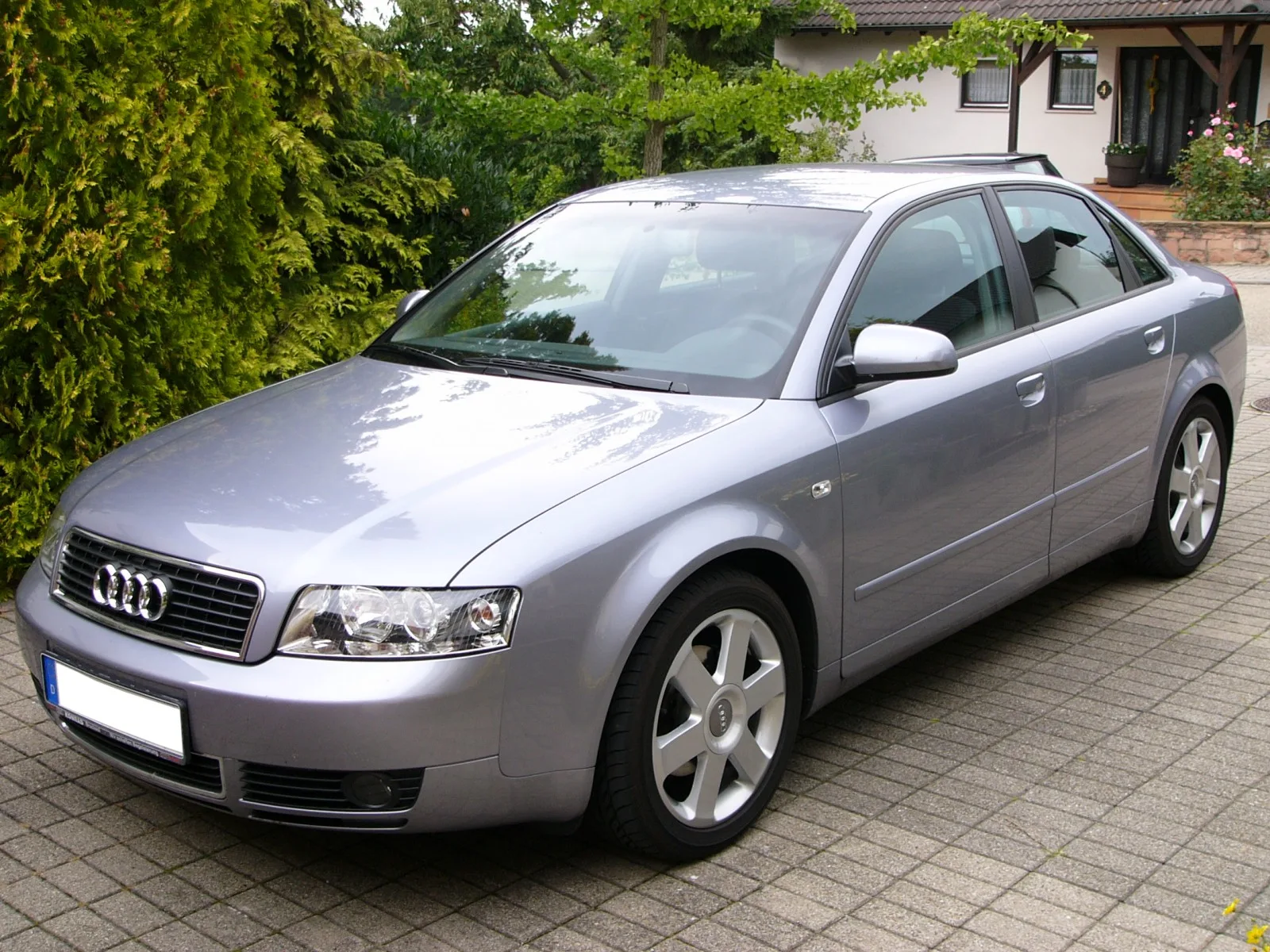
The B6 had a raised side waistline and a rounder rear end, which gave it the look of the larger Audi A6. Compared with the B5, it measured 69 mm (2.7 in) more in length, 33 mm (1.3 in) more in width and 13 mm (0.5 in) more in height.
Its body rigidity was 45% higher than that of the B5.
The front axle was a four-link design, largely made of aluminium, and it weighed 8.5 kg (18.7 lb) less than that of the first A4 generation. The rear axle was a new double-wishbone design. Each wheel had its own suspension, springs and dampers were mounted separately, and tracking improved in both drive variants.
Crash behaviour, ESP and ABS, the braking system and sound insulation were all reworked. The B6 came with the sideguard head airbag system as standard, while the B5 had charged extra for these airbags.
Every body part except the exterior mirrors had its own design.
Which body styles did the B6 have?
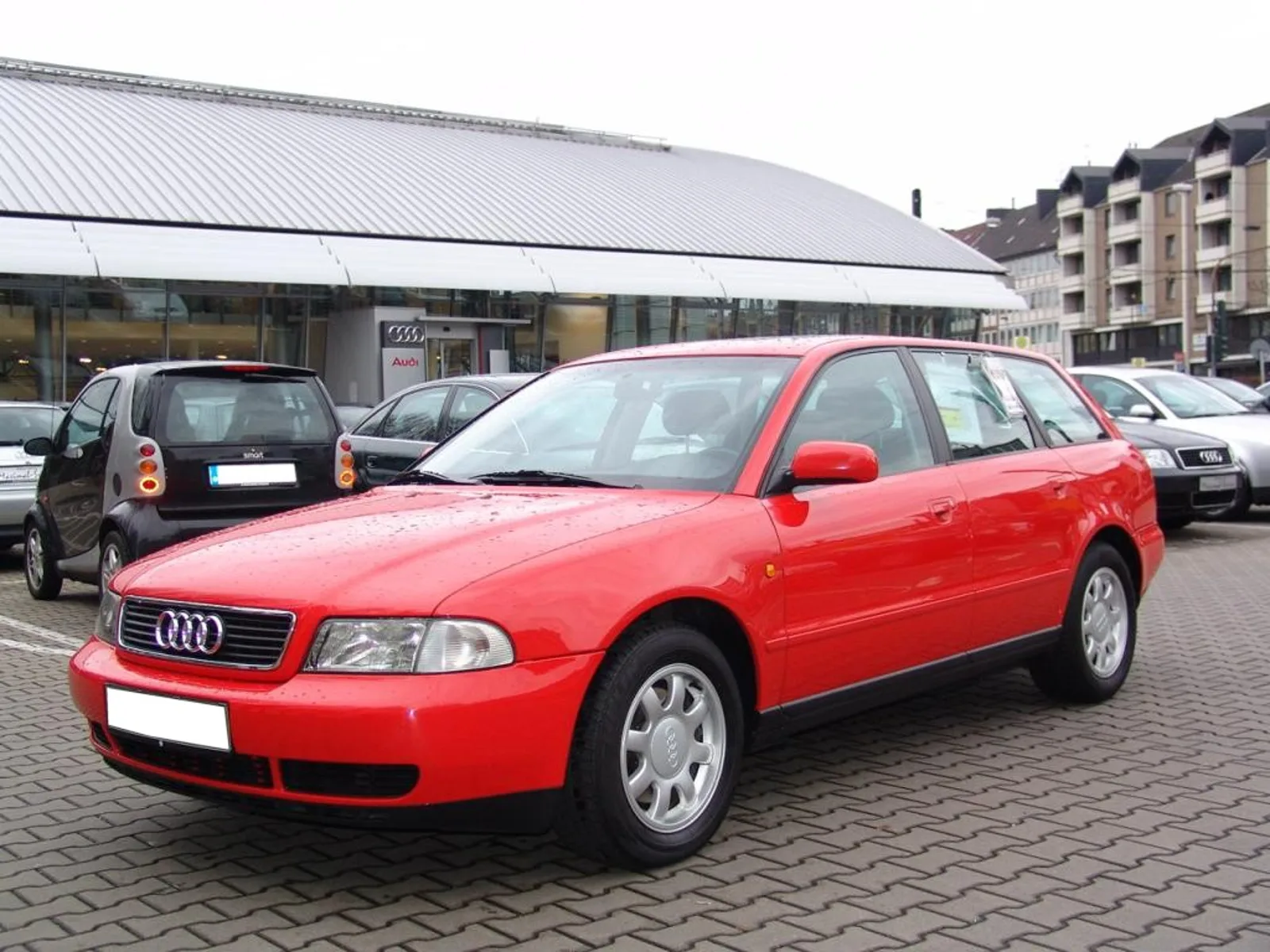
The B6 came as a four-door saloon and a five-door estate, as its predecessor had. The production periods overlapped, because the B5 estate arrived a year later and was built a year longer than the B5 saloon of the same period.
What engines did the B6 offer?
Two newly developed petrol engines joined several units carried over from the old series. One was an inline four-cylinder of 2 litres (122.0 cu in) with 96 kW (130 PS; 129 hp). The other was a V6 of 3 litres (183.1 cu in) with 162 kW (220 PS; 217 hp), and both had aluminium blocks and five valves per cylinder.
The S4 arrived in early 2003 with 253 kW (344 PS; 339 hp), first as a saloon and Avant, and in early 2004 as a Cabrio with the same output. Where the predecessor had a V6 biturbo, the S4 used a naturally aspirated V8 of 4.2 litres (256.3 cu in). No RS4 based on the B6 was ever built.
How did the B6 transmissions change?
The B6 was the first A4 offered with the continuously variable Multitronic automatic, though only with front-wheel drive. Quattro models had to make do with a five-speed torque-converter automatic called Tiptronic or a manual gearbox. The Tiptronic gained an extra "S" position for a sportier shifting feel.
The old gear positions were dropped with the new setup, but they could still be selected separately through the shift gate.
Was the Cabriolet a true A4?
Largely not. Every body part except the exterior mirrors had its own design, and no add-on parts were taken from the saloon or the estate. It carried the A4 name, but beyond the technical platform it had little in common with the series that gave it that name.
In model history the Cabriolet was the forerunner of the Audi A5 series, because it also differed from the A4 in price as well as in looks and engineering.
Competitors of that period included the BMW 3 Series Cabriolet, Mercedes CLK Cabriolet and Saab 93 Cabriolet. The A4 stood apart: it was the first convertible to offer optional quattro all-wheel drive and the Multitronic automatic, and it marketed both as features no rival had.
Petrol choices in the Cabriolet ran from the 1.8 T through the 2.0 and 2.4 to the 3.0, with the S4 at the top. Only the 2.5 TDI was offered as a diesel.
Cabriolet roof, body and interior
The Cabriolet was built by an outside coachbuilder in Lower Saxony, with the work done in Rheine in North Rhine-Westphalia. It kept a silver aluminium windscreen frame that runs along the window line and ends on the hood box below the rear window. The design still marks the four-seat Audi convertibles of later years.
The fabric roof opened electro-hydraulically and fully automatically at the press of a button, within 24 seconds, and it stowed completely under the automatic roof flap. Operation was only possible when stationary or at up to 5 km/h (3 mph). The roof came in red, black or blue, with a glass rear window and a heated rear screen as standard.
The bare body weighed 450 kg (992 lb) and was assembled with 6,250 spot welds. The aluminium chassis was retuned for the extra weight, so performance figures differ from the saloon. With the roof closed, a movable roof box could be folded up in the boot, enlarging the boot volume from 246 to 315 litres.
The interior had its own dashboard with five round vents edged in chrome, and a dashboard of this kind was also used in another group model until 2013. The rear seat area, including the side trims, seats and the hidden roll bars behind them, was designed specifically for the convertible.
Which small details set the B6 apart?
The headlights switched on with a rotary switch, where the B5 had used a stalk on the steering column. All petrol engines except the 1.6 and 2-litre units had two exhaust silencers, one on each side, while diesel models hid theirs behind the rear bumper.
Front-wheel-drive cars carried 70 litres of fuel, and quattro cars 66 litres, because the rear axle design had changed.
How many B6 cars were built?
The saloon was built from November 2000 to November 2004, and the estate from September 2001 to the same month in 2004. The Cabriolet ran from April 2002 to January 2006. Saloons and estates together left the factory in numbers of 1,200,852 in about four years.
Of those, 482,633 were estates, a share of 40.2%.
What changed during the B6 production run?
Outwardly the B6 barely changed. Starting in mid-2003, the bumpers and side sills came in body colour as a standard feature; before that they were an optional extra. At the end of 2003 a navigation system with a 6.5-inch colour screen replaced the 5-inch unit, with a DVD drive, MP3 playback and two slots for SD memory cards.
Most of the later changes were technical. The window antennas in the rear side windows of the Avant were lengthened, and the six-speed gearboxes gained better synchronisation in first, second and third gear. Some engines received more power, and the exhaust values of selected engines improved. The first S line packages also appeared, offering sport suspension, seats and steering wheel, with 17 or 18-inch wheels and a sporty exterior package. The true facelift came only with the B7 in autumn 2004.
Audi A4 B6 specifications
| Specification | Detail |
|---|---|
| Type | 8E (saloon and estate); 8H (Cabriolet) |
| Years built | Saloon 2000 to 2004; estate 2001 to 2004; Cabriolet 2002 to 2006 |
| Four-cylinder petrol | 2 litres (122.0 cu in), 96 kW (130 PS; 129 hp) |
| V6 petrol | 3 litres (183.1 cu in), 162 kW (220 PS; 217 hp) |
| S4 | 253 kW (344 PS; 339 hp), V8 of 4.2 litres (256.3 cu in) |
| Size against the B5 | 69 mm (2.7 in) longer, 33 mm (1.3 in) wider, 13 mm (0.5 in) higher |
| Front axle | 8.5 kg (18.7 lb) lighter than the first A4 generation |
| Cabriolet bare body | 450 kg (992 lb), 6,250 spot welds |
| Fuel tank | 70 litres front-wheel drive; 66 litres with all-wheel drive |
| Saloon and estate output | 1,200,852 vehicles, of which 482,633 estates |