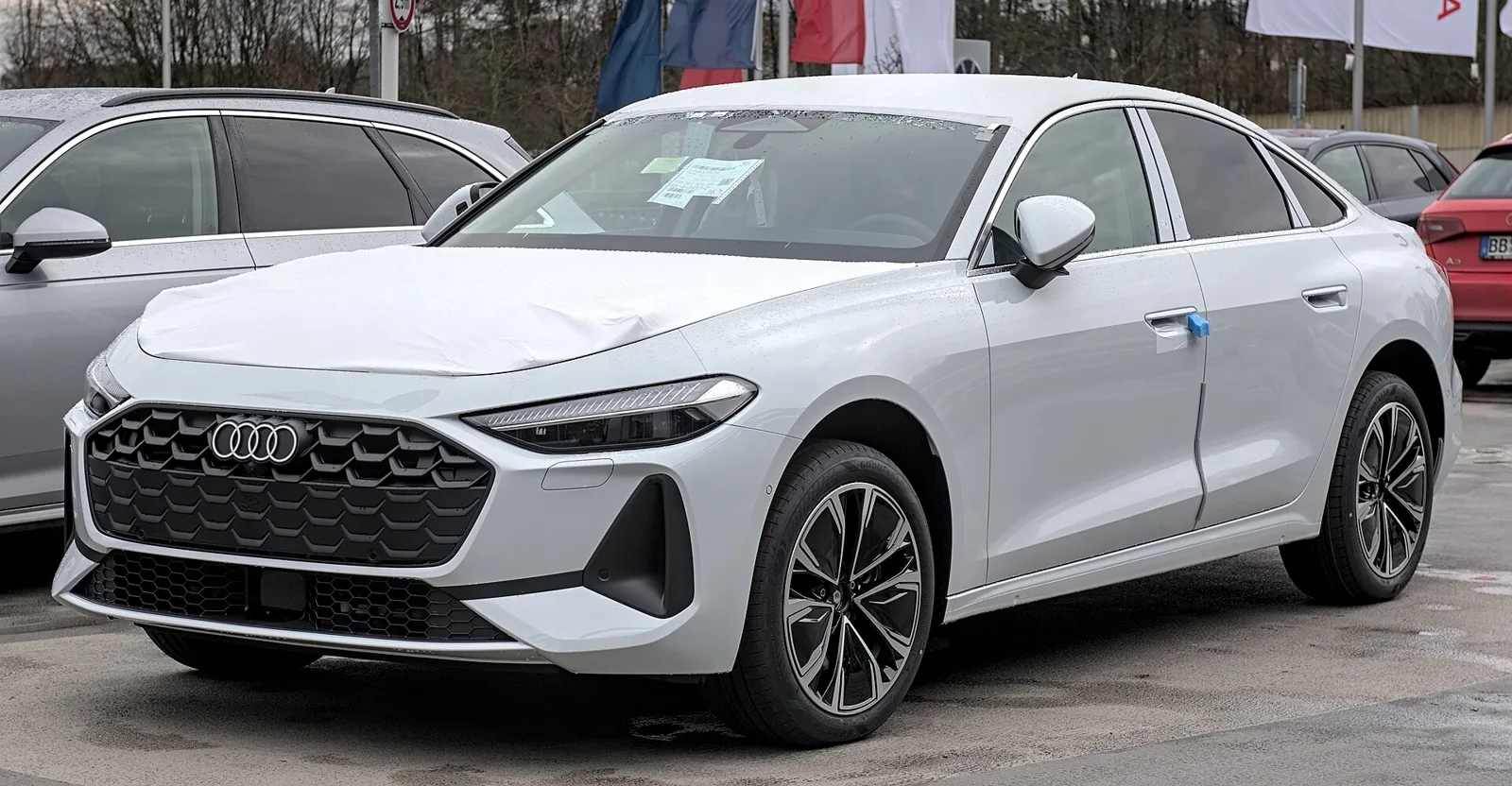
A compact executive coupe that grew into a cabriolet, a Sportback and a high-performance RS 5 family before the third generation swapped the coupe for a liftback.
The Audi A5 is a compact executive and grand touring coupe built since June 2007, with coupe, cabriolet and Sportback body styles. The 2024 third generation replaced the A4 saloon as a liftback, and the RS 5 has moved from a V8 to a plug-in hybrid V6.
The Audi A5 began in 2007 as a compact executive coupe, and it also came as a cabriolet and a five-door Sportback. Over the following years it picked up a long run of performance variants, from the S5 through to the RS 5. The third generation, which arrived in 2024, dropped the coupe body in favour of a liftback saloon.
Where did the Audi A5 come from?
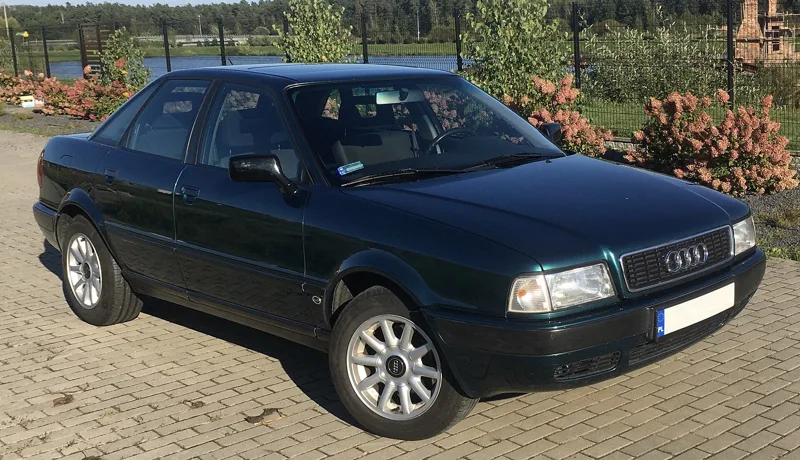
The A5 was created when Audi separated a new nameplate from the A4 range, taking the cabriolet and a new coupe and fastback saloon with it. It returned Audi to the compact executive coupe market after the Audi 80-based coupe ended production in 1996. Audi confirmed production on 10 May 2006.
The A5 was the first car of the B8 family to reach customers, arriving ahead of the A4 saloon and the Q5 crossover. Its underpinnings trace back to the Volkswagen MLB architecture, a flexible base that Audi used to build several body styles on one structure.
Launch timing moved quickly once the decision was made. The coupe and S5 coupe were shown at Geneva on 6 March 2007, orders opened the same day, and the first cars were delivered in June 2007. The look took its cues from the Nuvolari quattro concept, and the launch engine was a 3.2-litre FSI V6 rated 195 kW (265 PS; 261 hp).
From a 2007 coupe to a 2024 liftback, the A5 name has kept changing shape while keeping its performance edge.
How did the body styles differ?
The A5 family was built around three body styles, with the coupe at the centre of the range. The Cabriolet followed with production starting in early 2009, and the Sportback offered a five-door fastback look with four frameless doors. The Sportback did not reach North America until the 2018 model year, arriving at the start of 2017.
The Cabriolet was shown at the 2009 New York show, and American buyers could order it from September 2009 as a 2010 model. Its engine line-up mirrored the coupe's, although the S5 Cabriolet adopted a supercharged 3.0 TFSI V6 for extra punch. Buyers could therefore choose open-top touring or a sharper powertrain within the same family.
The Sportback's long, tapering roofline gives it a four-door coupe look, and its rear doors are frameless like the front pair. Its exterior cues sit close to the coupe, so the two shapes are easy to confuse at a distance.
What did the aluminium prototype prove?
Audi built an aluminium-bodied A5 Coupe prototype to demonstrate its aluminium space frame concept. It started from the 2.0 TFSI version with 155 kW (211 PS; 208 hp), but swapped the steel body for aluminium and carbon fibre reinforced plastics. The car weighed 110 kg (243 lb) less than the equivalent steel production model.
The prototype was an engineering exercise rather than a production car. Its build relied on punch riveting, adhesive bonding and laser-MIG hybrid welding in place of conventional spot welding, a set of methods that later shaped how Audi approached lightweight construction across its range.
What did the 2011 facelift change?
The 2011 facelift updated the coupe, Cabriolet, Sportback, S and RS models with new front and rear lights and a fresh front bumper. The car grew by 10 millimetres in overall length, and the revised front end added pronounced air inlets and flat fog lights. The updated range premiered at Frankfurt in 2011.
European customers received the facelifted cars in 2011 as 2012 model-year vehicles, led by the 1.8 TFSI, 2.0 TFSI, 3.0 TFSI and the S5 3.0 TFSI. US models of the A5 and S5 followed as 2013 model-year vehicles, which kept the revised line-up on sale in North America for longer.
The S5 gained the 3.0 TFSI engine across all of its body styles after the facelift, together with new lights, crystal effect paints and the crown-gear centre differential of the quattro system.
How much power did the A5 range make?
The original coupe used a 3.2-litre V6, while the 2010 S5 coupe carried a 4.2-litre V8 producing 260 kW (349 hp). Output in the RS 5 reached 331 kW, or 450 PS and 444 hp, and by 2026 the flagship RS 5 combined a V6 with an electric motor for about 630 hp.
Early S5 coupes used a 4.2-litre V8 between 2010 and 2012, while S5 Cabriolet and Sportback models relied on a supercharged 3.0 TFSI V6 producing 245 kW (329 hp). The coupe and convertible therefore had different engines in the same model years, which is unusual within one nameplate.
The 2010 RS 5 was the headline car. Its 4.2 FSI V8 produced 430 Nm (317 lb ft) of torque between 4000 and 6000 rpm. Quattro all-wheel drive sent 60 percent of its torque rearward in normal conditions, and the car weighed 1,800 kg (3,968 lb) with 56.3 percent of that weight at the front.
What changed in the second generation?
The second generation was unveiled on 2 June 2016 with a Virtual Cockpit display in place of conventional dials. It kept the coupe body, and the RS 5 that followed used a 2.9-litre twin-turbo V6 with an 8-speed automatic transmission, a clear break from the naturally aspirated V8 that came before.
The second-generation RS 5 was 60 kg (132 lb) lighter than the car it replaced, and it reached 100 km/h from a standstill in 3.9 seconds. Its top speed was 280 km/h (174 mph), a figure that reflected how much the powertrain had moved on in a few short years.
Digital displays became the main way the driver read the car, and that shift defined the cabin of the second generation. The instrument layout was the clearest sign that the A5 had entered a new technological era.
Was the RS 5 the only high-performance model?
No. Audi also built the S5 and the RS 5 variants alongside the standard car. The RS 5 Cabriolet was unveiled at the 2012 Paris show, and RS 5 production ended in June 2015. The 2012 RS 5 Coupe added new headlights and electric power steering.
The S5 offered a more restrained route into the high-performance range. The 2013 S5 used a 3.0 TFSI V6 with 440 Nm of torque, peaking at 333 PS (245 kW; 328 hp), while the RS 5 remained the flagship with its own V8 and later a V6 plug-in hybrid system.
Those updates kept the RS name current through its run. Each one tightened the link between the everyday coupe and the flagship car, which is why the high-performance range remained the most talked-about part of the family.
What are the key Audi A5 specifications?
The table sets out headline figures for the launch engine, the 2010 RS 5 and the two later RS 5 generations, so each version is read on its own terms. Where a figure belongs to one version only, it is labelled as such, and the third generation adds a plug-in hybrid system that is not comparable with earlier V8 power.
| Specification | Detail |
|---|---|
| Launch engine | 3.2-litre FSI V6, 195 kW (265 PS; 261 hp) |
| 2010 S5 coupe engine | 4.2-litre V8, 260 kW (349 hp) |
| S5 Cabriolet and Sportback engine | Supercharged 3.0 TFSI V6, 245 kW (329 hp) |
| 2010 RS 5 engine | 4.2 FSI V8, 450 PS (331 kW; 444 hp) |
| 2010 RS 5 torque | 430 Nm (317 lb ft) at 4000-6000 rpm |
| 2010 RS 5 weight | 1,800 kg (3,968 lb), 56.3 percent weight at the front |
| Second-generation RS 5 | 2.9-litre twin-turbo V6, 8-speed automatic, 0-100 km/h in 3.9 seconds |
| Second-generation RS 5 top speed | 280 km/h (174 mph) |
| Third-generation RS 5 | Plug-in hybrid, about 630 hp combined, 0-100 km/h in about 3.6 seconds |
| 2025 e-hybrid | 252 PS plus 143 PS motor, 25.9 kWh battery, 11 kW AC charging |
Two points stand out in the table. The launch car was a V6, while the 2010 RS 5 moved to a V8 rated at 450 PS, and the third generation's plug-in system makes its output a different sort of number altogether. Reading the rows by version keeps those comparisons honest.
How did the A5 perform in racing?
The A5 DTM was a V8 race car built by Audi Sport in Ingolstadt that replaced the A4 DTM in 2012. It produced 340 kW (462 PS; 456 hp) and used a sequential gearbox. Outside the DTM, a prototype Ethanol E100 Coupe won the 2010 Michelin Challenge Bibendum eco rally.
The race car's homologation was scheduled for 1 March 2012, which set the timetable for its arrival in the series. The A5 DTM was designed to succeed the A4 DTM on the same track programme.
The Ethanol coupe covered 350 kilometres during the eco rally, with 0-100 km/h in 6.9 seconds and a top speed of 236 km/h. The Audi A5 3.0 TDI also won the Michelin Challenge Bibendum in the prototypes category, showing that efficiency and speed were both part of the programme.
Did the A5 have any reliability problems?
Audi faced complaints about oil consumption in engines from models built between 2009 and 2011, with Swiss owners among those affected. Cars under 100,000 km (62,000 mi) and five years old could have their hardware replaced, which was the company's remedy for affected Swiss cars.
The problem was specific to certain engines and years rather than the whole range, which is why the remedy depended on mileage and age. Anyone looking at a used example from that period should check the service history for that work before buying.
What did the third generation change?
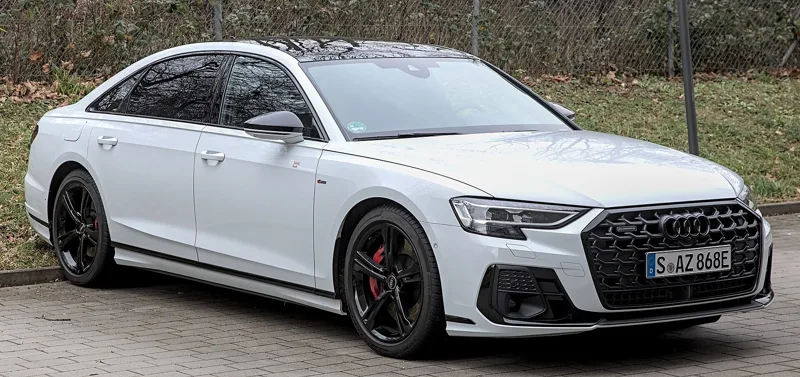
The third generation replaced the A4 saloon on 16 July 2024 and took the form of a liftback. Coupe and convertible bodies were no longer offered. Deliveries began in Europe in November 2024, and the range dropped manual gearboxes entirely.
The engine line-up comprises a 2.0-litre petrol four, a 3.0-litre petrol V6 and a 2.0-litre diesel. Mild hybrid systems on the regular engines add 24 PS (18 kW; 24 hp) of electric assistance and recover energy during braking, and the cars now carry real tailpipes rather than the decorative covers of the previous generation.
The 2025 e-hybrid added a plug-in option with a 25.9 kWh battery and 11 kW AC charging, using a 252 PS engine paired with a 143 PS motor. China received its own long-wheelbase version: the A5L was revealed at Auto Guangzhou 2024, and the A5L Sportback followed with deliveries beginning on 1 August 2025.
How did critics and buyers respond to the A5?
Reviewers praised the car's design, build quality, performance and all-wheel drive, and called it a niche car that did nearly everything well. Walter de Silva called the coupe his most beautiful design ever, a verdict that still frames how the first generation is remembered.
Enthusiast interest centred on the Panther edition, a limited run of 100 RS 5 cars split between 75 Sportback and 25 Coupe. Anthony Garbis, an Audi of America product planner, designed the package, which gave the car Panther Black paint and a special colour scheme.
Across the range, the A5 gave buyers a choice of body, engine and trim, from a restrained Sportback to a flagship RS 5. That breadth is a large part of why the nameplate kept its relevance through three generations.
Frequently asked questions
How fast was the second-generation RS 5?
The second-generation RS 5 accelerated from 0-100 km/h in 3.9 seconds and topped out at 280 km/h (174 mph). It used a 2.9-litre twin-turbo V6 and an 8-speed automatic, and it weighed 60 kg (132 lb) less than the model it replaced.
Is the Audi A5 still made as a coupe?
No. The third generation dropped the coupe and convertible bodies in 2024 and is sold as a liftback saloon. Deliveries began in Europe in November 2024.
Did the A5 offer a manual gearbox?
Not in the third generation. The current range has no manual gearboxes and only real tailpipes, which sets it apart from the earlier cars that offered a manual option.
What is the Panther edition?
The Panther edition was a run of 100 RS 5 cars, 75 Sportback and 25 Coupe, with a package that retailed for $13,800.