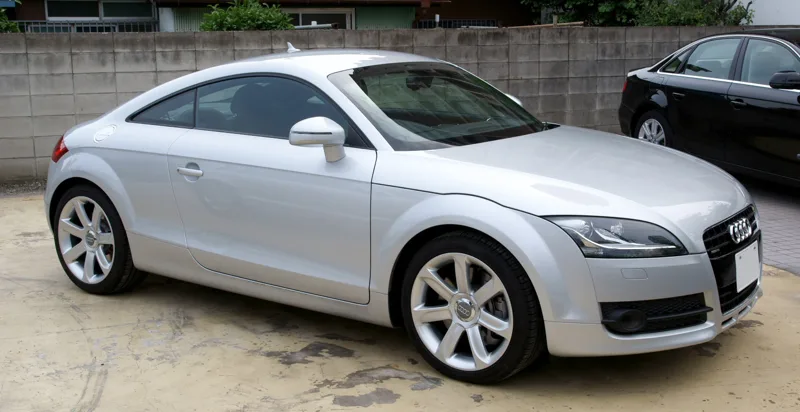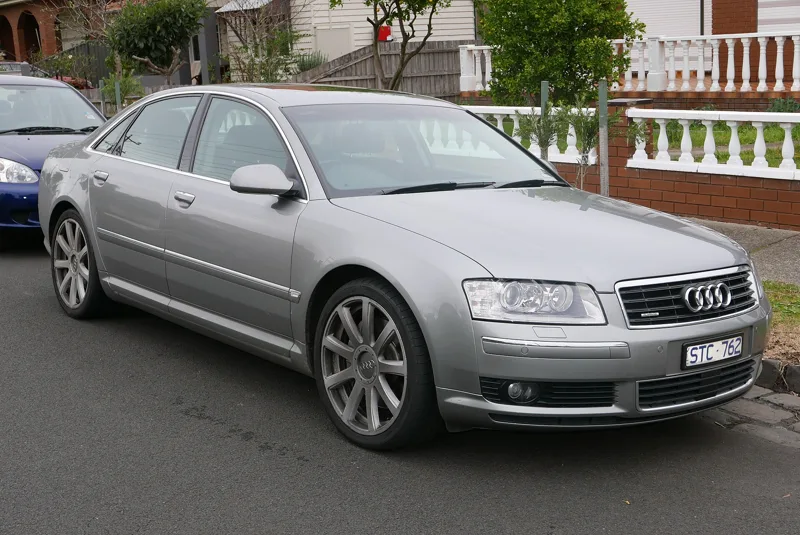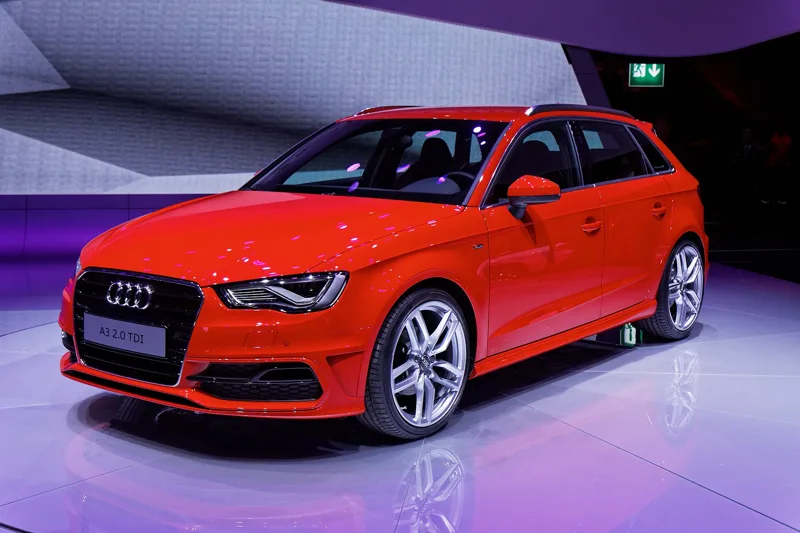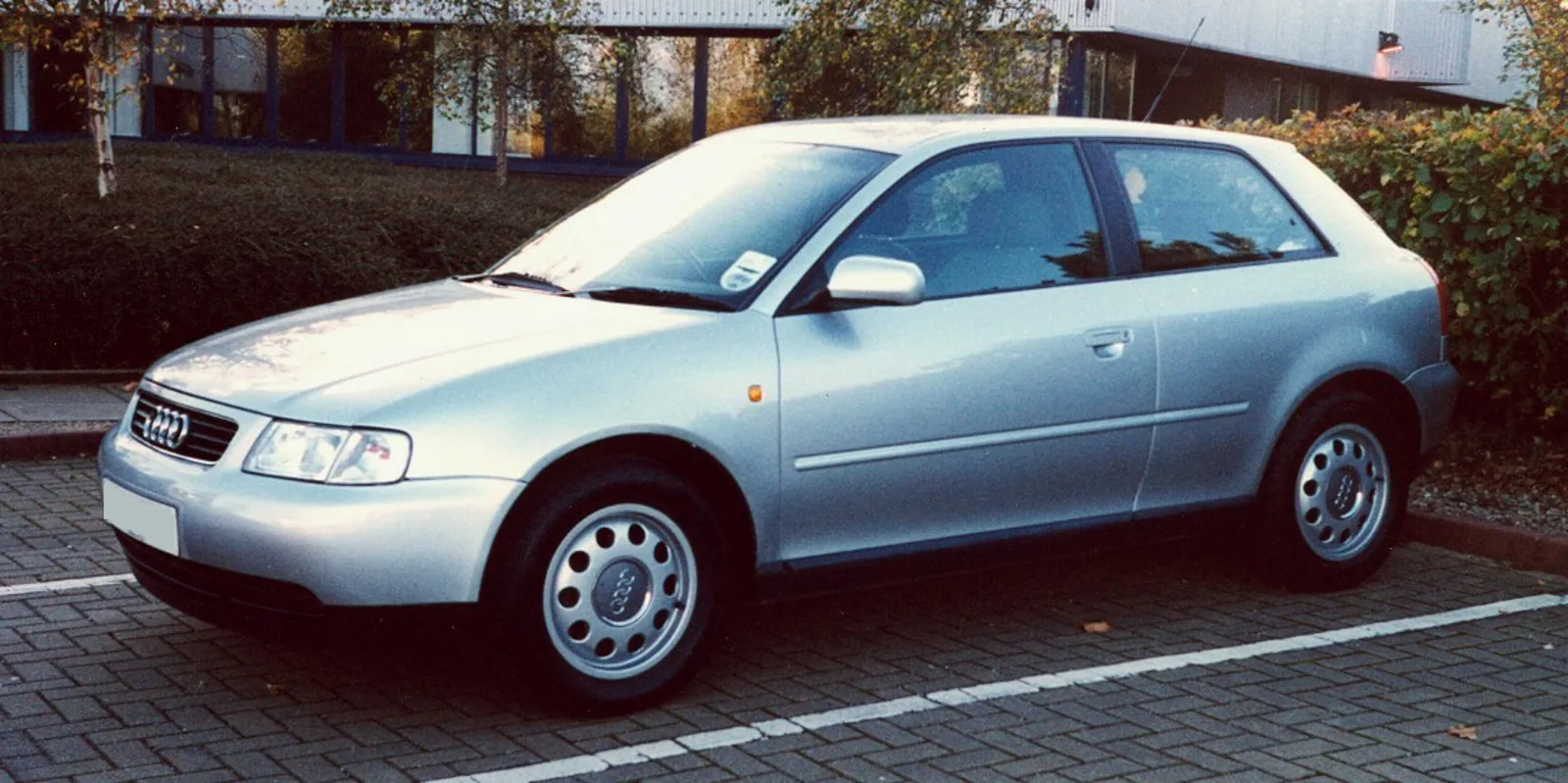
Built on the Golf IV floor, launched in 1996 with four engines, and topped by a four-wheel-drive S3 from 1999.
The Audi A3 8L was the first generation of the A3, a lower-medium car built from 1996 to 2003. It shared its floor with the Volkswagen Golf IV, and its top model, the S3, added four-wheel drive from 1999.
Audi's first A3 arrived in October 1996 at the Paris Motor Show, and the 8L was built in Europe until 2003. Production began at Ingolstadt a month before the presentation. The car sat on a floor shared with the Volkswagen Golf IV, and it brought the four-ring brand's look into a smaller, lower-range model.
The S3 is the most interesting story in the range, but the ordinary A3 was a complete family in its own right, from a 102 PS 1.6 to a 90 PS diesel.
Why was the A3 built on the Golf IV floor?
The floor came from the Volkswagen Golf IV, and it forced a major change to Audi's layout. Audi dropped its usual longitudinal engine for the transverse arrangement used in the Golf. That choice helped the interior space, which ended up at a very good level.
Audi's management set the technical link from the start, even though the Golf IV was due to debut in 1997, a year after the A3. Steel side members stiffened the monocoque in the most critical areas, among them the doors, the footwell and the centre pillar.
Suspension used independent front wheels with a MacPherson layout and interconnected rear wheels. Both ends had coil springs, oleopneumatic dampers and an anti-roll bar. Discs on all four wheels came with standard ABS, and the steering was rack-and-pinion.
All engines were paired with a five-speed manual, and the drive always went to the front wheels. Audi already had all-wheel-drive versions in preparation, and a four-speed automatic could be ordered as an alternative.
A smaller car that still carried the four-ring character in every detail.
Design and cabin
The front was an evolution of the design of the larger A4, with a grille and light clusters that echoed the bigger car. Audi's designers said from the start that the A3 would keep the brand's character despite sitting lower in the range. The overall result was sober but elegant, in line with the company's direction at the time.
The rear had new trapezoidal light clusters, shaped around a tail design that was new for Audi. Because the first A3 was initially planned only as a three-door, the team paid close attention to rear-seat access and headroom. The result was 92 cm (36.2 in) between the rear seat cushion and the roof, despite the sloping rear window.
The press of the period had one main complaint: the driver's view was limited by a belt line set high compared with rivals. The boot held 316 litres with the rear seat in place.
What engines did the A3 launch with?
The launch line-up had four engines, from a 1.6 8v rated 102 PS (75 kW; 101 hp) to a 1,896 cc (115.7 cu in) TDI diesel rated 90 PS (66 kW; 89 hp). Between them sat a 1.8 20v with 125 PS (92 kW; 123 hp) and a turbocharged 1.8 20v quattro at 150 PS (110 kW; 148 hp).
Power by version
| Version | Power | Introduced |
|---|---|---|
| 1.6 8v (1,595 cc, 97.3 cu in) | 102 PS (75 kW; 101 hp) | 1996 |
| 1.8 20v (1,781 cc, 108.7 cu in) | 125 PS (92 kW; 123 hp) | 1996 |
| 1.8 20v Turbo quattro (1,781 cc, 108.7 cu in) | 150 PS (110 kW; 148 hp) | 1996 |
| 1.9 8v TDI (1,896 cc, 115.7 cu in) | 90 PS (66 kW; 89 hp) | 1996 |
| 1.9 TDI | 110 PS (81 kW; 108 hp) | July 1997 |
| 1.8 turbo quattro | 180 PS (132 kW; 178 hp) | November 1998 |
| S3 | 210 PS (154 kW; 207 hp) | January 1999 |
| S3, facelifted | 225 PS (165 kW; 222 hp) | September 2001 |
What engine updates came between 1997 and 1999?
The first update came in July 1997, when a new 1.9 TDI with 110 PS (81 kW; 108 hp) joined the range. In November 1998 a stronger 1.8 turbo, rated 180 PS (132 kW; 178 hp), sat above the 150 PS car, and the range grew around the original model.
How did the S3 four-wheel drive work?
The S3 used a multi-plate clutch, bathed in oil and controlled electro-hydraulically, to send torque to the rear wheels. The clutch worked as a central differential, while the front axle had a limited-slip differential and the rear an open one. An electronic unit read speed and grip, then set the pump pressure that engaged the clutch.
In practice the arrangement was the 4Motion system that Volkswagen used on its own models. The S3 also needed an independent rear axle to make room for the clutch and the rear differential.
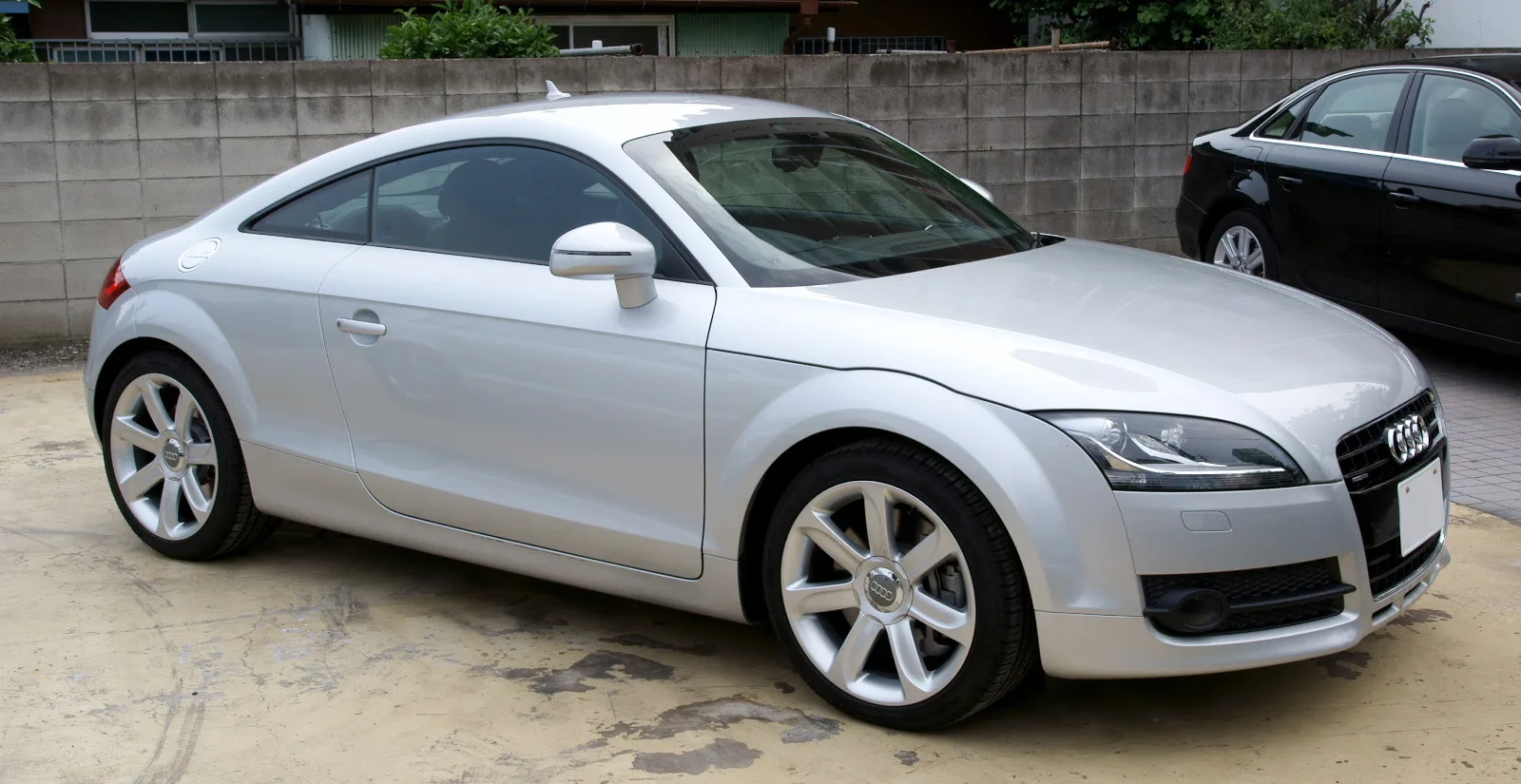
The system reached the top versions of the TT sports coupe a few months before the S3 arrived in January 1999. The TT sat on the same platform as the contemporary A3.
Audi S3 styling and performance
The first S3 stood out with bulging wings, a roof spoiler, an S3 logo on a new chrome grille, 17-inch alloy wheels with their own design and new side skirts. Inside, it had electrically adjustable sports seats.
The 180 PS 1.8 turbo, introduced at the end of 1998, held the top spot only briefly. The 210 PS S3 reached 238 km/h (148 mph) and went from 0 to 100 km/h in 6.8 seconds.
In September 2001 the S3 was facelifted, with new suspension calibration for more responsive handling and power raised from 210 to 225 PS (165 kW; 222 hp). Top speed rose to 243 km/h (151 mph), and the sprint to 100 km/h took 6.6 seconds.
What changed in the August 2000 facelift?
The mid-life facelift in August 2000 redesigned the front, with one-piece clear light covers, circular projectors and a new grille. Bumpers and mirrors were colour-coded, the rear lights gained white centres, and the wheels now ran from 15 to 17 inches. Engine changes were modest and mostly aimed at Euro 3 compliance.
Inside, aluminium trim appeared on the steering wheel, gear lever and handbrake. New housings appeared for the radio and glovebox, the sound and climate controls came from the A4, and the air vents were now lit.
Under the bonnet the basic 1.6 rose from 101 to 102 PS, and the only significant new engine was a pump-injector 1.9 TDI with a six-speed manual and 130 PS (96 kW; 128 hp), also offered with four-wheel drive.
The S3 missed the 2000 update because it had only just debuted, and its own revision followed the next year.
Trim levels
Trim levels varied by market, but three grades formed the base of the range.
- Attraction: the entry grade, with a four-spoke wheel, cloth seats and 15-inch alloy wheels.
- Ambition: a sportier grade with a three-spoke wheel, a 16 mm lower suspension and specially designed alloy wheels.
- Ambiente: a comfort trim with the four-spoke wheel again, suede-style seats, a leather-covered gear lever and a central front armrest.
When did five-door and export production begin?
The five-door body arrived in March 1999, and four-wheel drive became available on both 1.8 turbo versions. Production was also extended to the Audi plant at Gyor in Hungary, and in 1999 a Brazilian plant at Sao Jose dos Pinhais began building A3s for South American markets.
That growth was the car's own success at work: demand led Audi management to widen the range further, with more bodies and more factories.
Production end and legacy
European production ended in June 2003, while the Brazilian line continued until 2006. The 100 PS TDI and the S3 revision were the last significant changes to the range.
Shortly before the S3 update, a pump-injector 1.9 TDI rated at 100 PS (74 kW; 99 hp) replaced the 90 PS and 110 PS versions at once. From then on the 8L's commercial career began to fade.
The Brazilian line continued until 2006, and its cars were intended for South American markets.