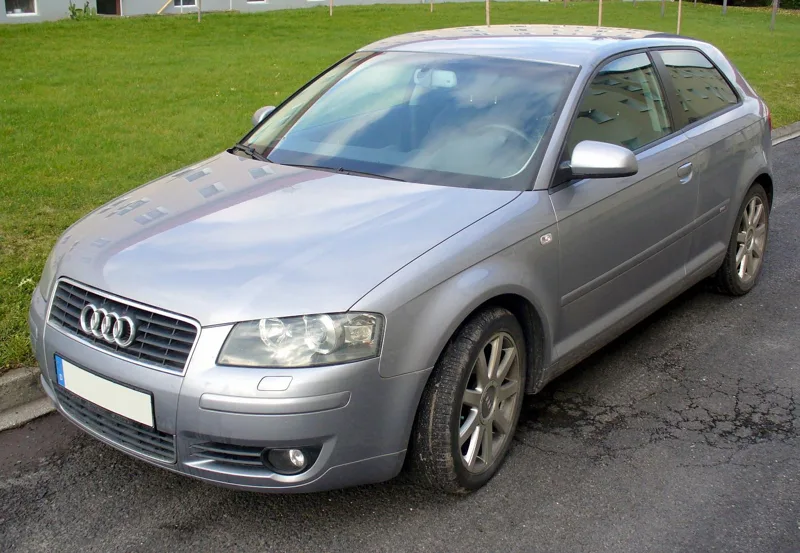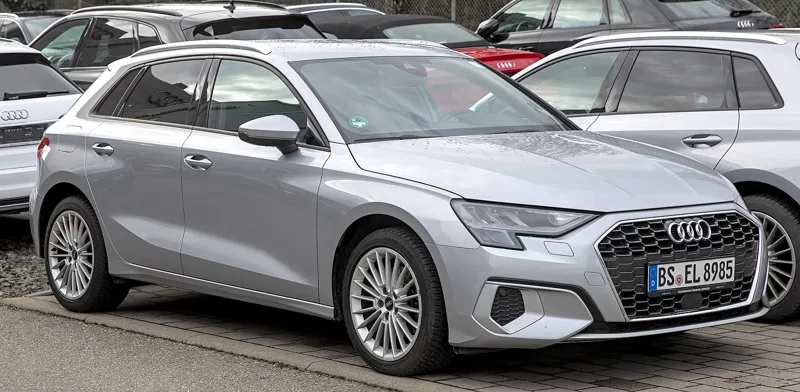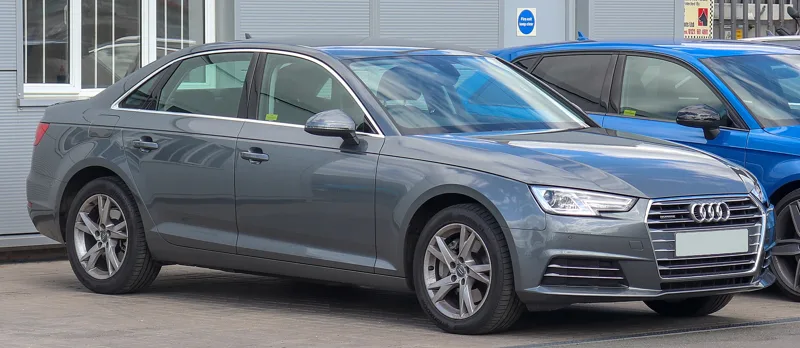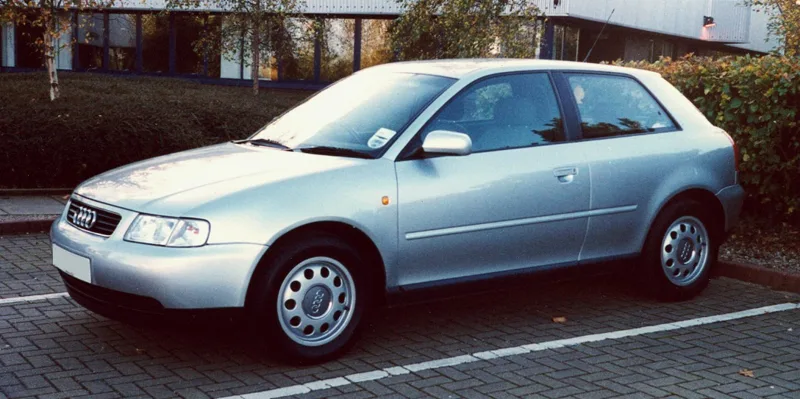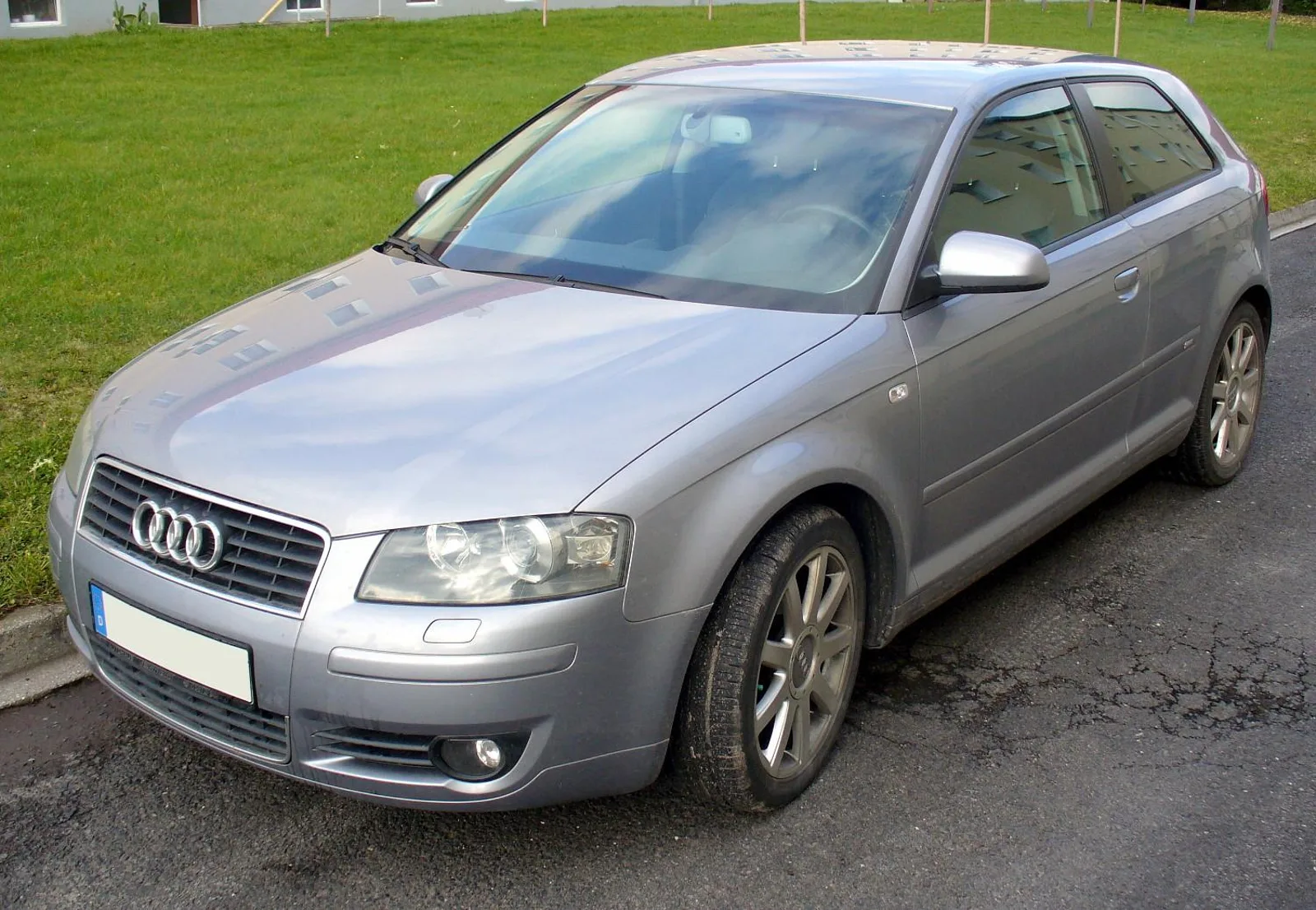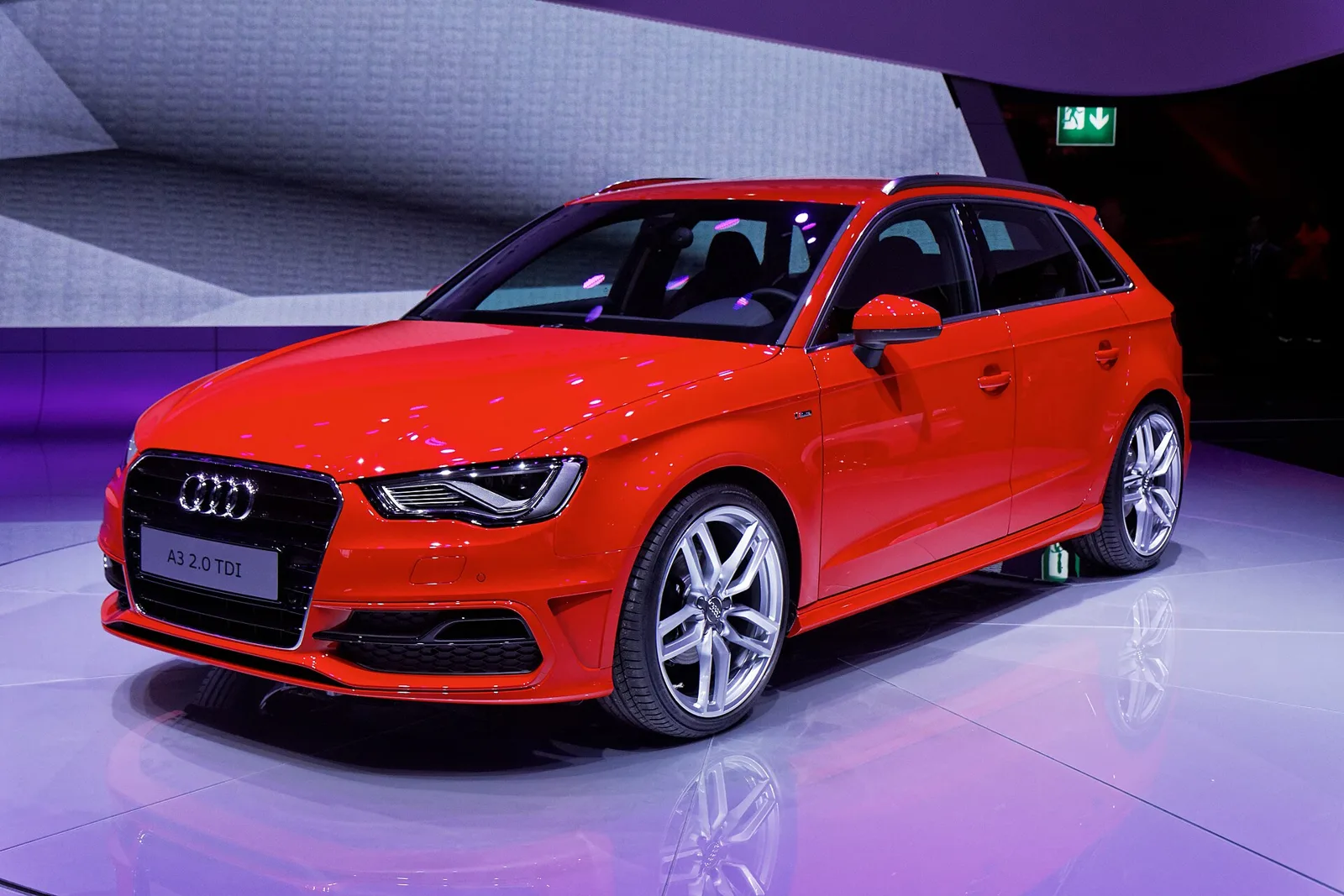
Four body styles, two Audi plants and turbocharged engines throughout, from the Geneva launch in 2012 to the end of production in 2020.
From 2012 to 2020 Audi's compact range was built in four body styles, the three-door, Sportback, saloon and Cabriolet. Geneva saw the car unveiled in March 2012, and a plug-in e-tron Sportback followed in 2014. Audi made the cars in Ingolstadt and in Gyor, and every engine it offered carried a turbocharger.
The Audi A3 8V was the third generation of Audi's compact A3, built from 2012 to 2020. Audi kept its dimensions close to those of the 8P it replaced, and the range grew from a single three-door into a family of four body styles. Every engine was turbocharged, and a plug-in hybrid joined the line-up in 2014.
Where did the A3 8V come from?
Audi unveiled the A3 8V at the Geneva Motor Show on 6 March 2012 as a three-door, after showing its interior at the 2012 Consumer Electronics Show. The three-door reached the market on 24 August 2012. The Sportback followed with its formal premiere at the Mondial de l'Automobile 2012, and it became available in Germany from 15 February 2013.
The saloon came in a different order. Audi previewed it online on 27 March 2013, gave it its formal trade show debut at the New York International Auto Show, and put it on sale at the end of August 2013. The Cabriolet, shown at the IAA 2013, reached dealers in spring 2014.
Four body styles, one platform and turbocharged engines throughout, from a Geneva three-door to a plug-in Sportback.
How long was each body style built?
The three-door was built from May 2012 to September 2017. The five-door Sportback ran from September 2012 to February 2020, the four-door saloon from May 2013 to February 2020, and the Cabriolet from January 2014 to February 2020. Three of the four body styles therefore ended production in the same month.
Where was the A3 8V built?
Two plants shared the work. Ingolstadt built the three-door and five-door models, while the saloon and the Cabriolet came from Audi Hungaria in Gyor. Anyone comparing a Cabriolet with a Sportback was therefore comparing cars from two different factories.
Platform and body
The A3 and the Golf VII were the first two Volkswagen Group models built on the Modular Transverse Matrix, known as MQB. Numerous other models have since been based on the same platform. A novelty on the three-door was the panoramic glass sliding sunroof, and LED technology gave the rear lights more to do than simply serve as tail lights.
Electronic parking brake and a comfort key were also new on the A3, while the headlights came as xenon or LED units to match the rear lamps.
The saloon was the notchback member of the family. The American term is sedan, while in Britain it is called a saloon. It sat 24 cm (9.4 in) shorter than the Audi A4, and its engine was mounted transversely, as in the other body styles, rather than longitudinally as in the A4.
What did the cabin get that was new?
The A3 8V brought several cabin innovations into the compact class. The Audi MMI navigation and vehicle operating system used a touchpad integrated into the rotary-push controller. Audi also introduced the Audi phone box, a compartment in the centre armrest. A phone placed there connects wirelessly to the roof antenna for better reception, and Audi says the radiation from the phone's antenna inside the cabin is greatly reduced.
For the first time on the A3, the radio and navigation screen could retract electrically. That screen also showed the settings of Audi drive select, which offered Dynamic, Efficiency, Comfort and Individual modes. Individual mode let owners set steering resistance, engine response and adaptive cruise control separately, where fitted.
Driver assistance was optional rather than standard. For an extra charge buyers could add adaptive cruise control, a lane change assistant, an active lane keeping assistant and dynamic cornering lights with sliding range adjustment.
Which trim levels were on offer?
Early cars came in Attraction, Ambition, Ambiente and S line trims. Attraction was the base model, with 16-inch steel wheels, height adjustment for the front seats and an electromechanical parking brake. The saloon and Cabriolet used 16-inch aluminium cast wheels in its place.
Ambition fitted 225 mm tyres on 17-inch aluminium wheels, lowered the body by 15 mm and added sporty front seats with a three-spoke leather steering wheel. Ambiente had 16-inch aluminium wheels and added a leather four-spoke steering wheel, a front centre armrest with storage, a light and rain sensor and cruise control.
S line was the sport package. It brought 18-inch aluminium wheels, leather sports seats with S line embossing, a black headliner and a body lowered by 25 mm instead of 15 mm. The lettering sits on the door sills.
What changed in the 2016 facelift?
Audi announced a model update for the A3 and S3 in April 2016, with the changes arriving for summer 2016. Visual changes covered the bodywork, the headlights and the rear lights. Xenon headlights became standard, replacing halogen units, and full LED or matrix LED headlights could be ordered instead.
The A3 gained a heated steering wheel and a driver's seat with a massage function for the first time. Further assistance systems, the Audi smartphone interface and the Audi virtual cockpit also became available, and the control lighting changed from red to white. Revised engines arrived with the update, and the trims were renamed A3, A3 sport and A3 design.
Which engines could you buy?
Buyers could start with a 1.4 TFSI petrol at 90 kW (122 PS; 120 hp), move up to a 1.8 petrol at 132 kW (180 PS; 178 hp) with S tronic, or choose a 2.0 TDI diesel. The lowest output level of that diesel produces at most 110 kW (150 PS; 148 hp), and a 1.6 TDI followed from August 2012.
The 1.6 TDI produced 77 kW (105 PS; 104 hp) and used 3.9 litres per 100 km (60.3 mpg-imp; 72.4 mpg-US) on the combined cycle, with CO2 emissions of 99 g/km. From February 2013 a 1.4 TFSI COD with cylinder deactivation offered 103 kW (140 PS; 138 hp) and 250 Nm (184 lb ft) between 1,500 and 3,500 rpm.
From February 2014 the five-door Sportback could also run on natural gas. Its 1.4 TFSI, in g-tron form, produced 81 kW (110 PS; 108 hp). In March 2019 the natural gas option changed to a 1.5-litre engine rated at 96 kW (131 PS; 129 hp), which replaced the 1.4-litre unit.
Key figures at a glance
| Item | Detail |
|---|---|
| Production | 2012 to 2020 |
| Unveiled | 6 March 2012, Geneva Motor Show, three-door |
| Body styles | Three-door, five-door Sportback, four-door saloon, Cabriolet |
| Plants | Ingolstadt (three- and five-door); Audi Hungaria, Gyor (saloon and Cabriolet) |
| Saloon petrol range | 1.0 TFSI to 2.5 TFSI (RS3), except the 1.2 TFSI |
| Launch petrol | 1.4 TFSI, 90 kW (122 PS; 120 hp) |
| Diesel | 1.6 TDI, 77 kW (105 PS; 104 hp), 3.9 litres per 100 km (60.3 mpg-imp; 72.4 mpg-US) |
| Plug-in hybrid | Sportback e-tron, system output 150 kW (204 PS; 201 hp), up to 50 km electric |
| Facelift | Announced April 2016 |
How did the e-tron plug-in hybrid work?
The Sportback e-tron combined a 1.4-litre petrol engine rated at 110 kW (148 hp) with a 75 kW (101 hp) electric motor. The motor was built into a newly designed six-speed S tronic gearbox, and its torque peaked at 330 Nm (243 lb ft) from a standstill, holding that level until about 2,000 rpm. The two drives together gave a system output of 150 kW (204 PS; 201 hp) and system torque of 350 Nm (258 lb ft).
The lithium-ion battery held 8.8 kWh gross and 7.0 kWh net. It sat protected under the rear seat and the boot floor, which made the boot 280 litres and the fuel tank 40 litres. A household socket could fully charge it in about 3:45 hours.
Why did the A3 e-tron stop being sold?
The e-tron was dropped for the 2019 model year because of the switch to the WLTP test cycle. Audi had announced the official end of production in November 2018. The car returned to the European market in October 2019, and its combined fuel use was given as 1.5-1.7 l/100 km with electricity use of 114.0-124.0 Wh/km.
The A3 clubsport quattro concept
For the 2014 GTI meeting, Audi produced a concept car built on the S3 saloon. Its turbocharged five-cylinder inline engine, at 2.5 litres, was rated at 386 kW (518 hp).
Which trims replaced the early names?
The A3, A3 sport and A3 design lines replaced Attraction, Ambition and Ambiente after the 2016 facelift. Standard equipment on the base A3 included xenon lights and start-stop, along with manual air conditioning and 16-inch steel wheels.