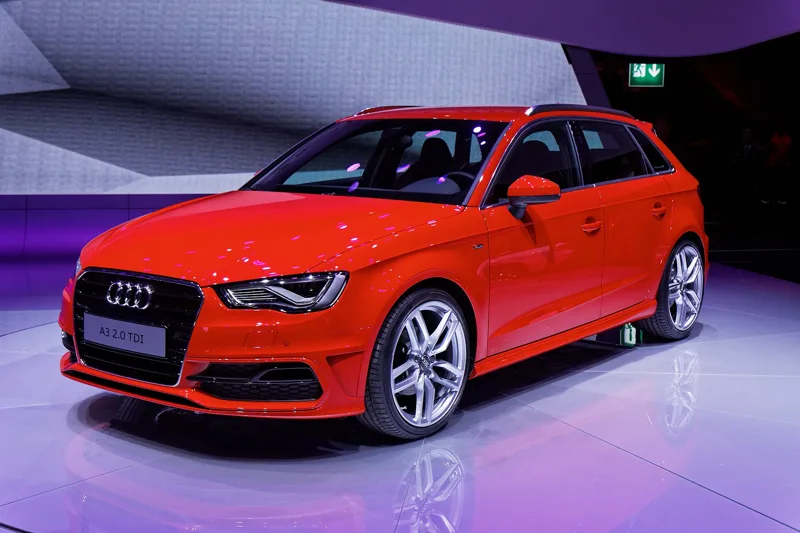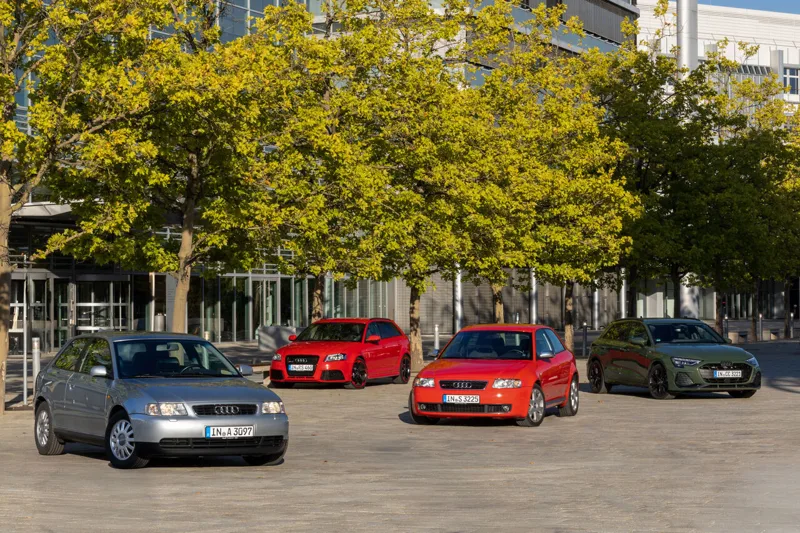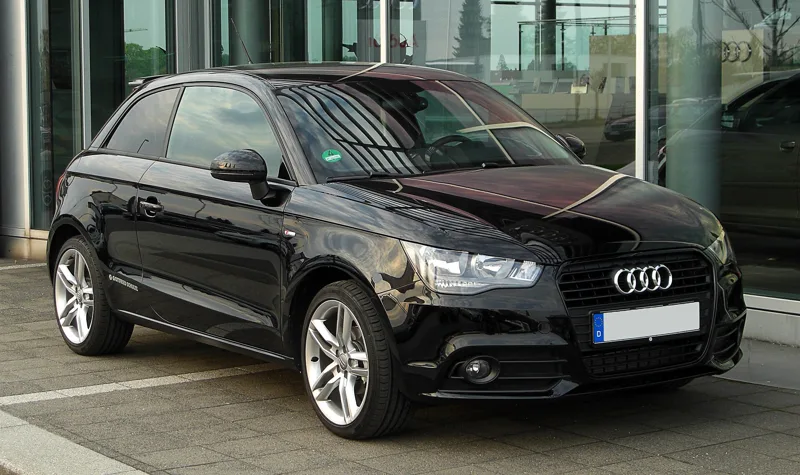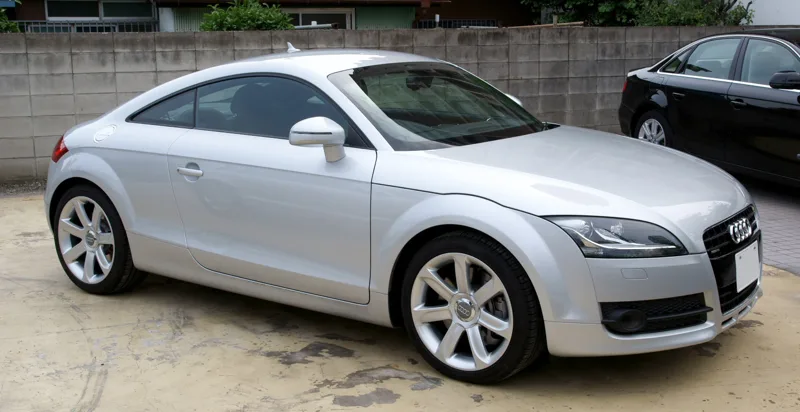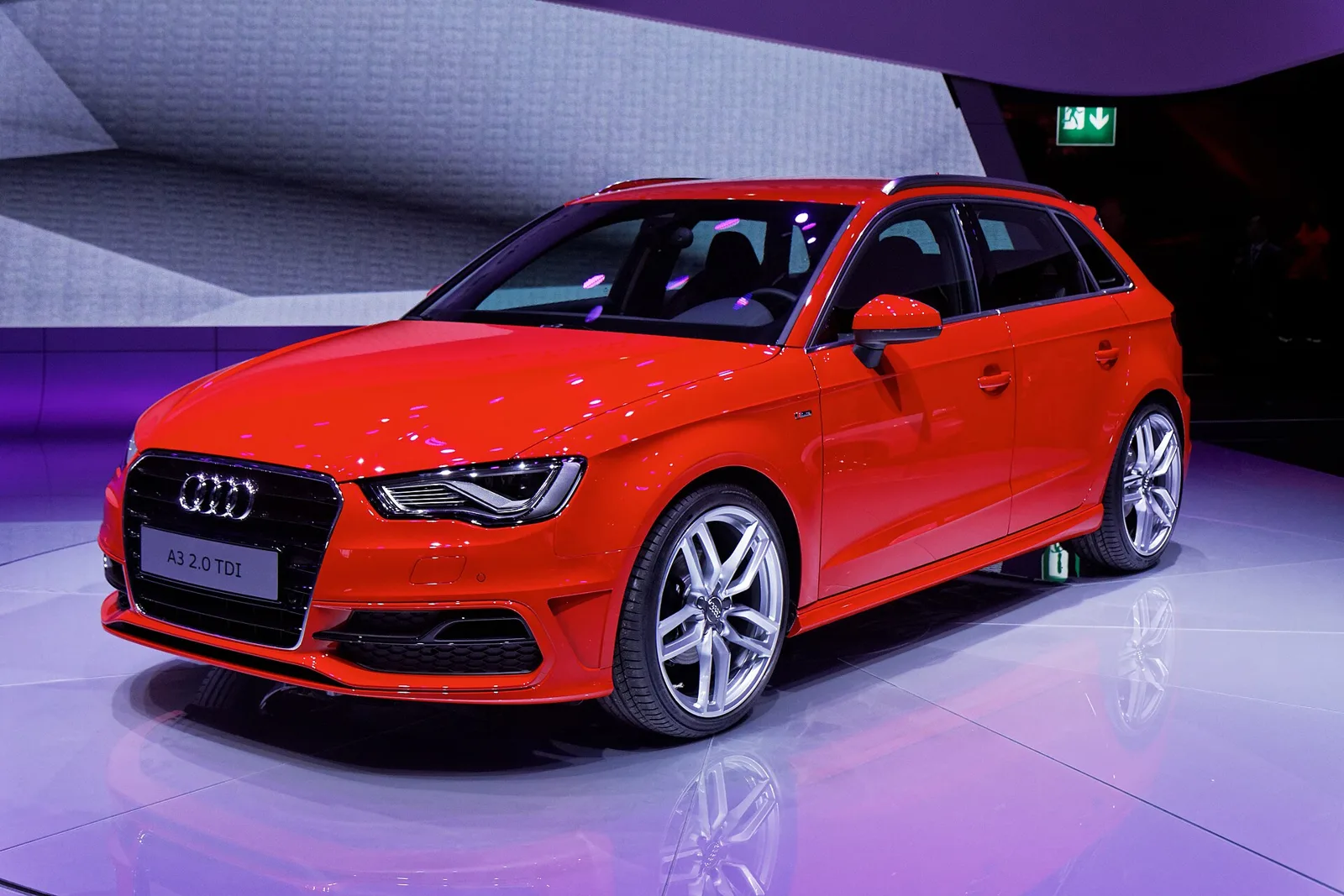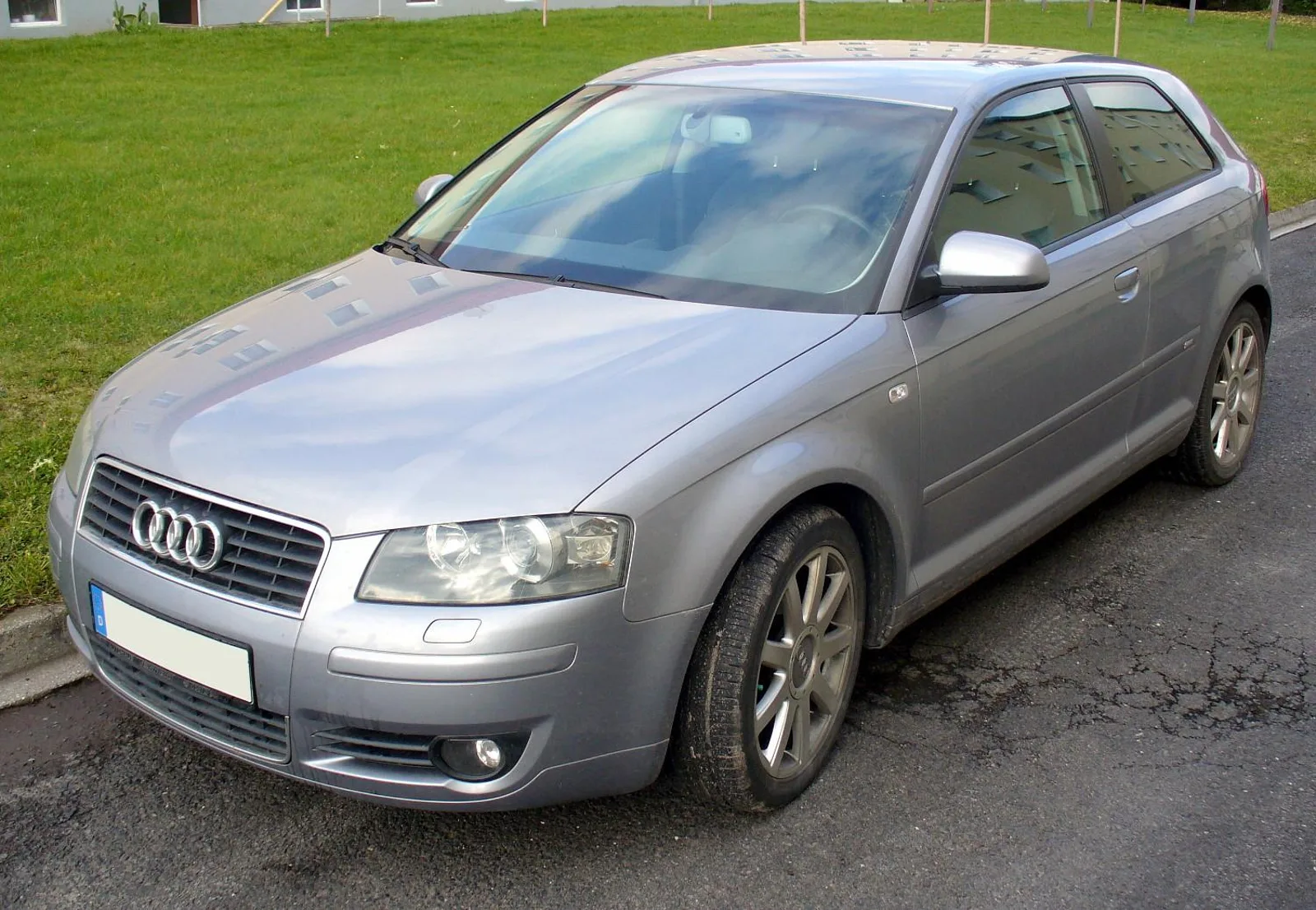
A Golf-based compact from 2003 that added a Sportback and a fabric-roof Cabriolet, then went through a long run of engine and trim changes.
Audi's second-generation compact A3, the 8P, shared the Golf V's A platform. It came as a three-door, a five-door Sportback and a Cabriolet, and it was built until 2013 in several plants, including Ingolstadt and Gyor.
Launched as a three-door in 2003, the Audi A3 8P marked the second generation of Audi's compact-class A3. Its architecture came from the Golf V, and the range later grew to include a five-door Sportback and a Cabriolet, which was built until March 2013.
Across a decade the car saw steady change: a sharper body at launch, a long series of engine swaps, two facelifts and a set of trim lines that kept the names of the car it replaced.
What did the 8P inherit from the Golf V?
The 8P rode on the A platform of the Golf V, which carries the internal code PQ35. It was the second car within the Volkswagen Group to use that base, after the VW Touran I, and its three-door version was shown at the 2003 Geneva Auto Salon.
Compared with the 8L, the 8P brought technical improvements including electromechanical steering, independent rear suspension and a two-zone comfort automatic climate control.
A Golf-based compact that kept its predecessor's silhouette and grew a Sportback, a Cabriolet and a long list of engines.
How did the design differ from the 8L?
The 8P kept the silhouette of its predecessor, the 8L, but its lines were sharper. The double-frame grille stayed the centrepiece of its nose until an early-summer 2005 facelift, which made the 8P the last model line to keep it.
The facelift changed that. From then on the single-frame grille became the central design element, and it was the clear mark of the updated three-door.
What was the Sportback?
The five-door version carried the code 8PA and was sold as the A3 Sportback. It started production roughly a year and a half after the three-door, and its tail lamps differed from the three-door's. It is also 72 mm (2.8 in) longer.
The Sportback was presented in 2004 at the Norisring, during a DTM race held at the circuit. From the start of production it carried the single-frame grille and single-frame steering wheel, which the three-door adopted only in the June 2005 update.
When did the Cabriolet go on sale?
Germany received the A3 Cabriolet in mid-January 2008, with five engine options, three petrol and two diesel. Audi chose a fabric roof, a decision that went against the period's move toward folding metal hardtops.
Production of the Cabriolet ran from January 2008 to March 2013. Its bodies were made and painted in Ingolstadt, and final assembly took place at Audi Hungaria in Gyor.
Which engines did the 8P offer?
The first engines were the 1.6 FSI, 2.0 FSI, 3.2 V6 and 2.0 TDI. Later the range added the 1.2 TFSI, 1.4 TFSI, 1.8 TFSI, 2.0 TFSI and 1.6 TDI, and several of these replaced older units during the model's life.
Gearboxes depended on the engine. TFSI units took a six-speed or the dual-clutch S tronic, the 1.6 TDI came with a five-speed or S tronic, and the other diesels used a six-speed or the dual-clutch unit. The 3.2 V6 had the dual-clutch from the beginning. Direct-shift DSG was on offer, and Audi renamed it S tronic from model year 2006.
How did the Haldex quattro system work?
Four-wheel-drive models used an electronically controlled multi-plate clutch, called the Haldex clutch. It limited wheelspin at the front by routing power to the rear when needed. The 3.2-litre engine, the S3 and the RS3 all came with all-wheel drive as standard.
In the factory setting, the rear wheels received more than ten percent of the torque only when the fronts lost grip. Tuners could alter that behaviour.
What changed in the 2005 and 2008 updates?
The June 2005 update brought the S line exterior package. In April 2008 Audi presented extensive model care for both body styles. It reworked the bonnet, wings, grille and front bumpers, and it made daytime running lights standard.
The headlamps received new trim surrounds, LED daytime running lights were used with bi-xenon lighting, the indicators moved into the door mirrors and the door handles were reshaped.
Inside, the light switch, vents and centre console gained an aluminium look, and the instrument cluster was redesigned. The two 2.0 TDI engines switched from pump-nozzle to common-rail injection in the same update.
Model care timeline
- September 2005: Xenon-Plus bi-xenon headlamps with daytime running lights.
- Turn of 2006/2007: The 1.8 TFSI replaced the 2.0 FSI.
- Autumn 2006: Radios moved to double-DIN, and a CD radio with MP3 playback arrived.
- March 2007: The 1.9 TDI e arrived, with fuel use cut to 4.5 l/100 km.
- August 2007: The 1.4 TFSI replaced the 1.6 FSI.
- November 2007: An optional hands-free adapter with SIM Access Profile support was announced.
- May 2009: The 3.2-litre VR6 was dropped without replacement.
- Autumn 2009: The 1.6 TDI replaced the 1.9 TDI.
- Turn of 2009/2010: The 1.2 TFSI replaced the 1.6.
- Summer 2010: New alloy wheels, an aluminium strut in the front apron and a grey-backed instrument cluster.
What trim levels were offered?
The trim names followed the predecessor. Attraction was the base, Ambition the sporty choice, Ambiente the comfort model, and S line the sports-oriented option that came only with Ambition.
Attraction used 6.5J x 16-inch steel wheels and a foam-covered steering wheel with four spokes. Ambition fitted 225 mm tyres on 7.5J x 17-inch aluminium wheels in a five-arm design, and it lowered the body by 15 mm. It also brought front sports seats, a three-spoke sports steering wheel with leather trim and sill strips with aluminium inlays.
Ambiente had 6.5J x 16-inch aluminium wheels and a leather steering wheel, plus root-wood inlays on the dashboard and cruise control. The S line Sport Package Plus added leather seats, special alloy wheels, a black headliner and a firmer suspension, which lowered the body by 25 mm rather than 15 mm. The separate S line exterior package only looked sporty, through its lettering and spoilers.
Specifications
| Item | Detail |
|---|---|
| Body styles | Three-door (8P), five-door Sportback (8PA), Cabriolet |
| Platform | A platform of the Golf V, code PQ35 |
| Drive | Front-wheel drive; Haldex quattro on four-wheel models |
| Steering | Electromechanical |
| Cabriolet petrol engines | 75 kW (102 PS; 101 hp), 118 kW (160 PS; 158 hp), 147 kW (200 PS; 197 hp) |
| Cabriolet diesel engines | 77 and 103 kW (105 and 140 PS; 104 and 138 hp) |
| Sportback length | 72 mm (2.8 in) longer than the three-door |
| 1.9 TDI e fuel use | 4.5 l/100 km (63 mpg-imp; 52 mpg-US) |
| 1.9 TDI e CO2 | 119 g/km |
| Three-door production | March 2003 to May 2012 |
| Sportback production | September 2004 to October 2012 |
| Cabriolet production | January 2008 to March 2013 |
Where was the 8P built?
Ingolstadt built the A3 and S3. A small batch was finished at Brussels between 2009 and 2010, and Audi Senna assembled the last Sportbacks at Curitiba.
The Brussels batch was a stopgap until the Audi A1 8X began coming off the line there in mid-2010. At Curitiba, the last units went together from CKD kits made in Germany between December 2012 and March 2013. Those units were destined for Argentina, Brazil and China, where the older generation was still in high demand.
What happened to the A3 in China?
Shanghai Volkswagen revised the A3 technically. Early test cars ran on Chinese roads in late 2012 badged as a Skoda Sportback, and the model reached series production as the VW Gran Lavida in May 2013.
A visual refresh came first. The Gran Lavida is distinct from the ordinary VW Lavida, which itself matches the VW Jetta VI.
How did the 8P handle child safety and awards?
Two child seats fit in the back, and Isofix mounts on the outer rear seats were standard. Isofix for the front passenger seat and a switchable airbag cost extra. The record for 2009 names the Top Safety Pick 2010 award, the only award listed for the model.