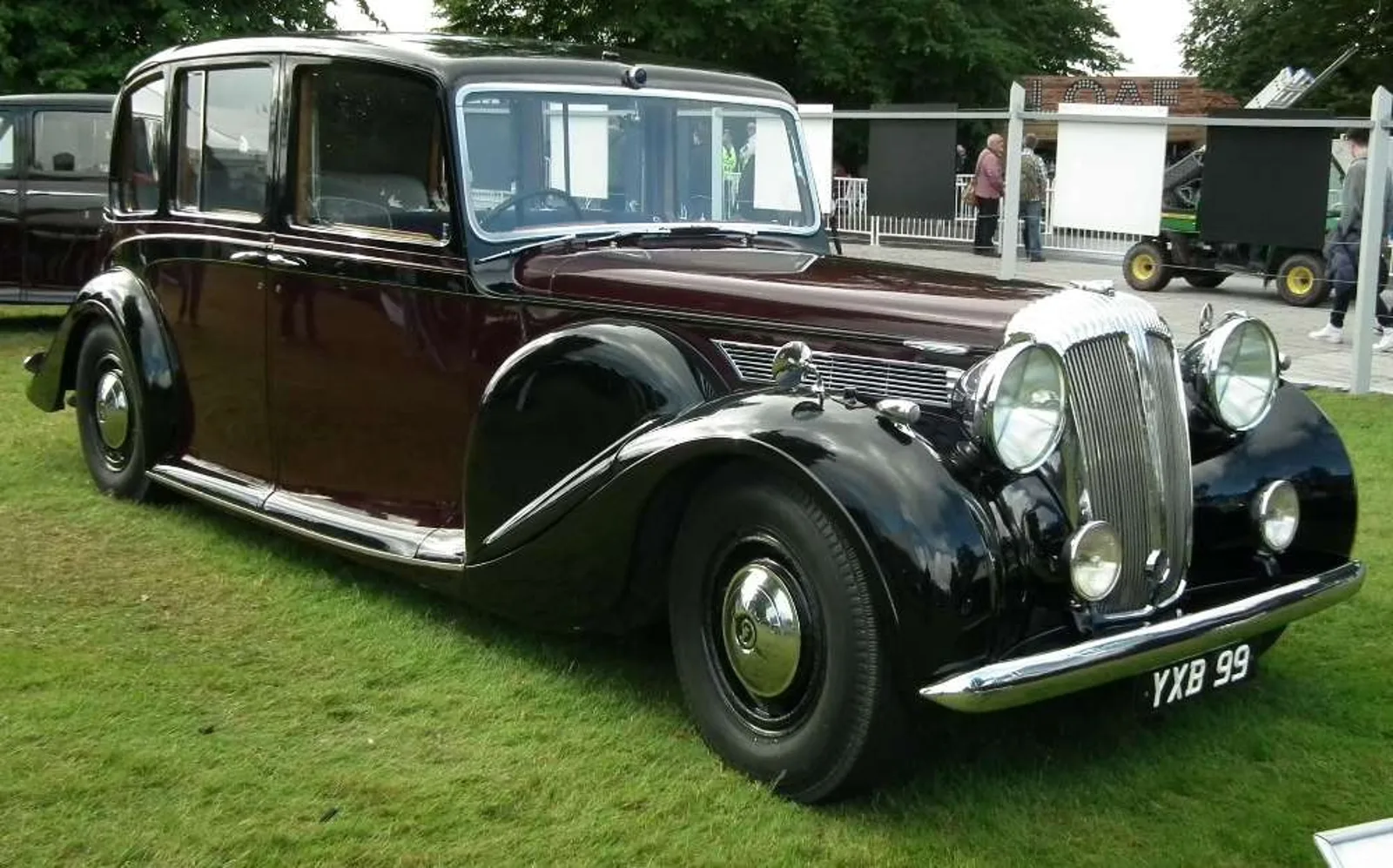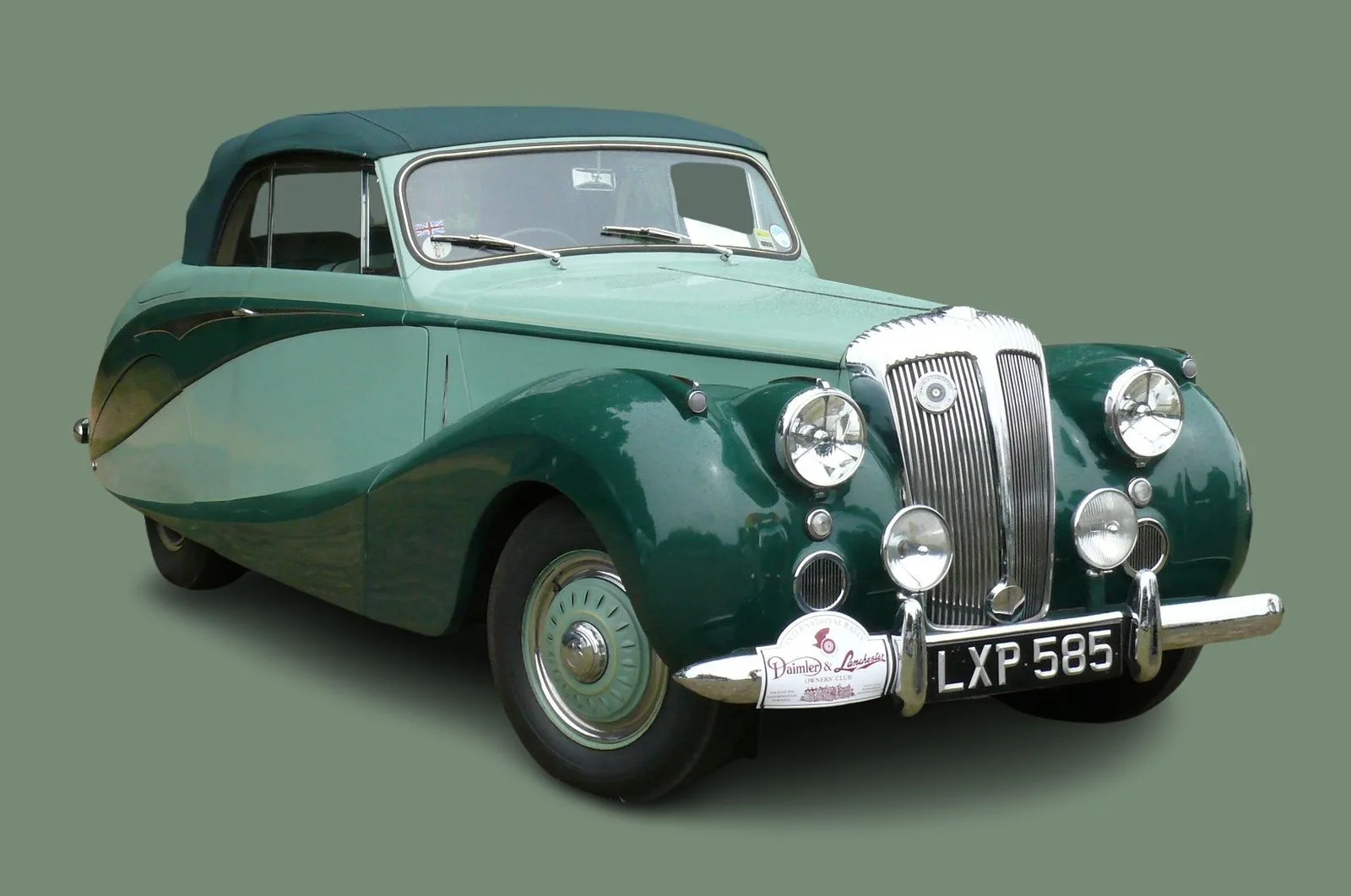
Five series, about 215 cars and a design line with roots in 1935, all built on Daimler chassis between 1950 and 1957.
The Daimler Empress was a range of luxury bodies that London coachbuilder Hooper built on Daimler chassis from 1950 to 1957. Five series produced about 215 cars, from the Empress I on the Consort to the Empress IV on the DK400.
From 1950 to 1957, the London coachbuilder Hooper dressed Daimler chassis in a body style the maker marketed as the Empress. Five series produced about 215 cars, and each Empress cost more than the standard model beneath it. Today these cars are regarded as desirable classics.
Where did the Empress design come from?
Hooper's chief designer Osmond Rivers developed the look in the second half of the 1940s. It blended the Razor Edge styling that Freestone and Webb had developed in 1935 with elements of the pontoon body, and it aimed at attractive, modern lines rather than the serious, conservative image of Hooper's earlier bodies.
Hooper, based in Westminster, was one of the most renowned coachbuilders in Britain and held the title of royal purveyor for periods. The Second World War changed its ownership. At the start of the war, Birmingham Small Arms (BSA) took over Hooper, and BSA also owned the Daimler Motor Company, an established maker of state carriages.
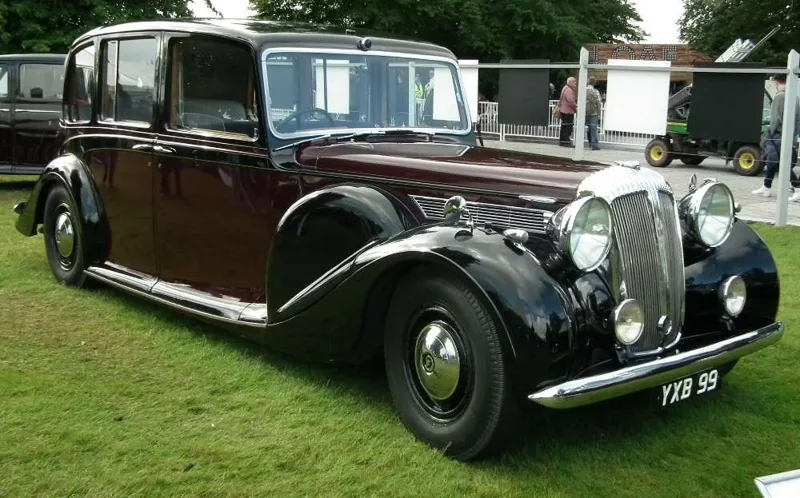
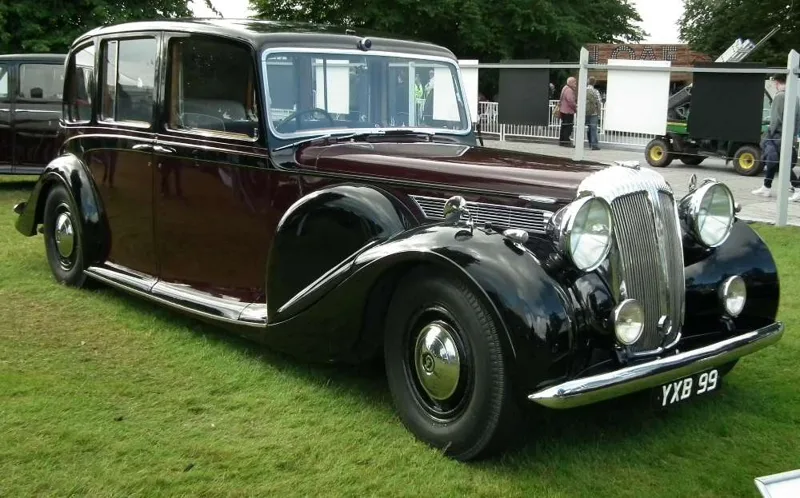
The finished shape left the front wings free, as was normal, but there were no shaped rear wings at all. The rear passenger compartment was broad enough to enclose the rear wheels, and spats covered those wheels completely. The tapering front wings, the line of the C-pillar and a nearly horizontal trim strip all converged at the tail.
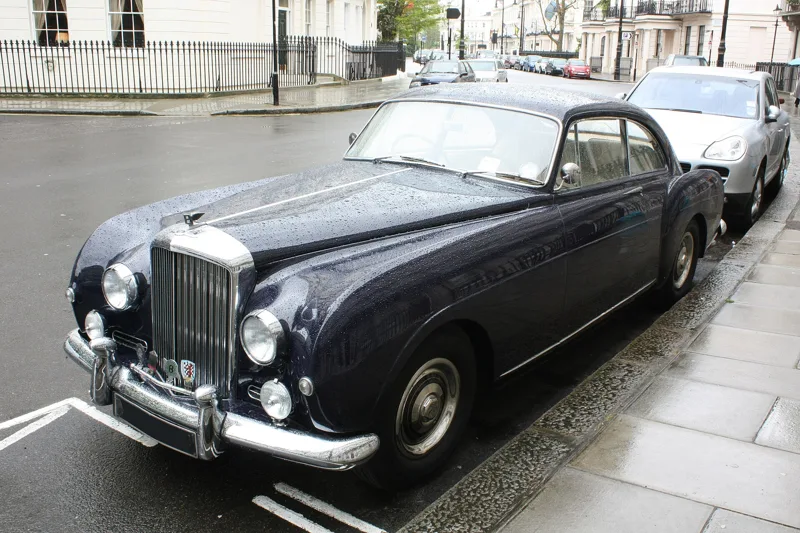
The Empress name was official only when the body sat on a Daimler chassis. Hooper also fitted Rolls-Royce and Bentley chassis with similarly styled bodies, but those cars did not carry the name.
Five Empress series, about 215 cars, and roots in a 1935 body design.
How did the Empress I differ from the Consort?
The Empress I was a special version of the Daimler Consort, shown at the Earls Court Motor Show in October 1950. It rode on the Special Series chassis and carried a 2,522 cc six-cylinder engine. At 3,450 pounds sterling it cost almost twice as much as the ordinary car.
The Consort, the DB18 before its 1949 rename, was the entry model of the brand in the years just after the war. Its standard form was a four-door saloon with a conservatively styled body by Mulliners of Birmingham. From 1948 it was also sold as a convertible with a separate Barker body on a slightly modified Special Series chassis.
The Empress I's engine was an inline six of 2,522 cc (153.9 cu in), giving 85 bhp (63 kW; 86 PS). That output sat slightly above the Mulliner-bodied saloon. The four-door layout used conventional hinging, with the front doors hung at the front and the rear doors at the rear.
Ninety-seven almost identical saloons were built, plus six convertibles. One convertible went to King George VI, and a two-door car was made for Norah Docker. Against a Ford Anglia at 300 pounds sterling, the Empress cost roughly eleven times as much.
Why was the Conquest version a dead end?
Daimler replaced the Consort in 1953 with the Conquest. Hooper built only a handful of Empress-style prototypes, probably four, as two-door cars. Two of them received a Lanchester radiator grille and were shown at the 1953 Earls Court Motor Show as the Lanchester Dauphin, at 3,000 pounds sterling each. Series production never followed.
The Conquest was slightly shorter than the Consort, and that shorter wheelbase is why the prototypes ended up as two-door cars. No standard Empress body existed for this chassis, so the design never went beyond prototypes.
What set the Empress II and IIA apart?
The Empress II sat on the Regency Mark I, built from 1951 to 1953. It was a six-light saloon with a 3.0-litre (183.1 cu in) inline six producing 100 bhp (102 PS). The Empress IIA followed on the Regency Mark II, which Daimler presented in October 1954, and used a 114 bhp (85 kW; 116 PS) engine.
The Regency was in effect a bigger Consort. Its chassis largely matched the Consort's, and its engine was based on the Consort's inline six. Daimler's Barker-bodied Regency Mark I came in two forms. The four-door saloon was built only seven times, and the two-door convertible probably only three times.
Hooper's Empress II proved far more popular than the Barker saloon. Until early 1953, a total of 33 Empress II saloons left the works. Individual cars were built as two-door models at customer request, though the six-light saloon was the usual form.
Daimler introduced the second Regency generation, the Mark II, in October 1954. Its Sportsman four-light saloon, with a 130 bhp (96 kW; 132 PS) version of the 3.5-litre engine, took over the sporting role from the Barker convertible. Hooper then built the Empress IIA on the Mark II. It shared the Sportsman's gearbox and rear axle, and only small details at the front separated it from the earlier Empress Mark II. Of this variant, 58 vehicles were built.
What did the Empress III and IV add?
The Empress III was Hooper's body on the Sportsman chassis, using a 130 bhp 3.5-litre engine, and 14 were built in total. The Empress IV was Hooper's alternative body for Daimler's DK400, a large chauffeur-driven saloon with a 3,302 mm (130.0 in) wheelbase and a 4.5-litre six. Seven or eight Empress IV cars were made.
The Empress III looked almost identical to the II and IIA, but it kept the Sportsman's chassis and engine rather than moving to the One-0-Four. A single car received the 167 bhp (124 kW; 169 PS) 4.5-litre engine instead. The last Empress III was completed in 1957 on a chassis that had already been produced in 1955.
Daimler launched the DK400, initially called the Regina, in 1954 in place of the DE36 Straight Eight. Technically it was a stretched Regency Mark II. Hooper's Empress IV styling followed the Empress Line but was elongated to suit the longer wheelbase, and the front was reworked.
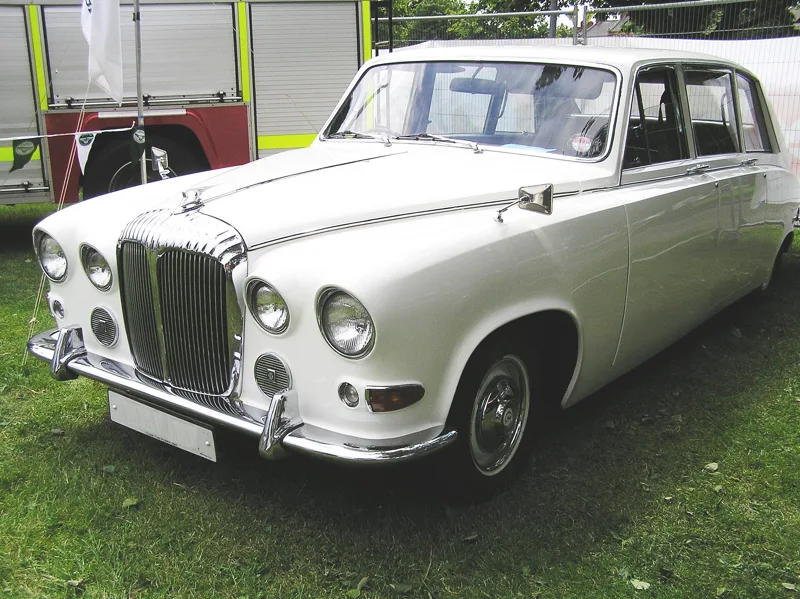
Headlamps on the Empress IV sat in the tips of the wings, without the small round canopy seen before. Daimler reused that detail ten years later on the DS420, a large representative saloon built on Jaguar technology. Standard bodies came from the independent specialist Abbey Panels, while Hooper's bodies were offered as an alternative. Books often call Hooper's DK400 bodies Empress IV, yet neither Daimler nor Hooper used that label at the factory.
In 1957 an Empress IV cost 6,123 pounds sterling, which put it nearly 50 percent above a DK400 with a standard body. Six further Hooper bodies with individual designs were also made. Some of them loosely followed the Empress Line, and not all of them did.
Empress specifications at a glance
| Series | Chassis basis | Engine | Output | Cars built |
|---|---|---|---|---|
| Empress I | Daimler Consort, Special Series chassis | 2,522 cc (153.9 cu in) inline six | 85 bhp (63 kW; 86 PS) | 97 saloons and 6 convertibles |
| Empress II | Regency Mark I, Barker convertible chassis (DF302/303) | 3.0-litre (183.1 cu in) inline six | 100 bhp (102 PS) | 33 saloons by early 1953 |
| Empress IIA | Regency Mark II | 3.5-litre (213.6 cu in) inline six | 114 bhp (85 kW; 116 PS) | 58 vehicles |
| Empress III | Sportsman (DF306/307) | 3.5-litre (213.6 cu in) inline six | 130 bhp (96 kW; 132 PS) | 14 in total, last built 1957 |
| Empress IV | DK400 (Regina), 3,302 mm (130.0 in) wheelbase | 4.5-litre (274.6 cu in) inline six | 167 bhp (124 kW; 169 PS) from 1956 | Seven or eight, plus six individual Hooper bodies |
Why do the Empresses still matter?
The Empress bodies were exclusive and very expensive alternatives to the standard models, and today the cars are regarded as desirable classics. Hooper built them on a small number of Daimler chassis, and their story shows how a renowned London coachbuilder styled Daimler's luxury cars in the early 1950s.
The Green Goddess of 1948 came first. Hooper showed a convertible on the state-saloon DE36 chassis that already carried some of the basic features of the Empress Line. Daimler made about ten replicas to customer request. The Green Goddess was a conceptual forerunner of the so-called Docker Daimlers, and the Empress name did not yet appear on it.
Hooper's design travelled beyond Daimler. Rolls-Royce and Bentley chassis were given bodies in the same style, but they never carried the Empress name. Only on Daimler chassis was the design an official model name, so the Empress label belongs to Daimler's own cars.
Production of the Hooper-bodied Empress II far outran the Barker saloon on the same chassis. Hooper had built 33 Empress II saloons by early 1953, while the Barker-bodied car had reached only seven.