A 1930 straight-six that arrived just before receivership, a post-war saloon with a fast Continental sibling and a two-generation convertible built with Pininfarina and Mulliner.
The Bentley 8 Litre was a 7,983 cc straight-six announced in 1930, of which only 100 were built before the company entered receivership. The R Type saloon followed from 1952 to 1955, and the Azure convertible ran from 1995 to 2003 and again from 2006 to 2010.
Bentley Motors launched the biggest, smoothest car it ever made in the autumn of 1930, and then ran out of road. Less than nine months after the 8 Litre arrived, the company was in receivership. Three Bentleys that share a badge but little else tell the story of what came before that collapse, what the marque turned into under Rolls-Royce, and how it came back as a maker of vast open-top cruisers.
The Bentley 8 Litre and the collapse it could not prevent
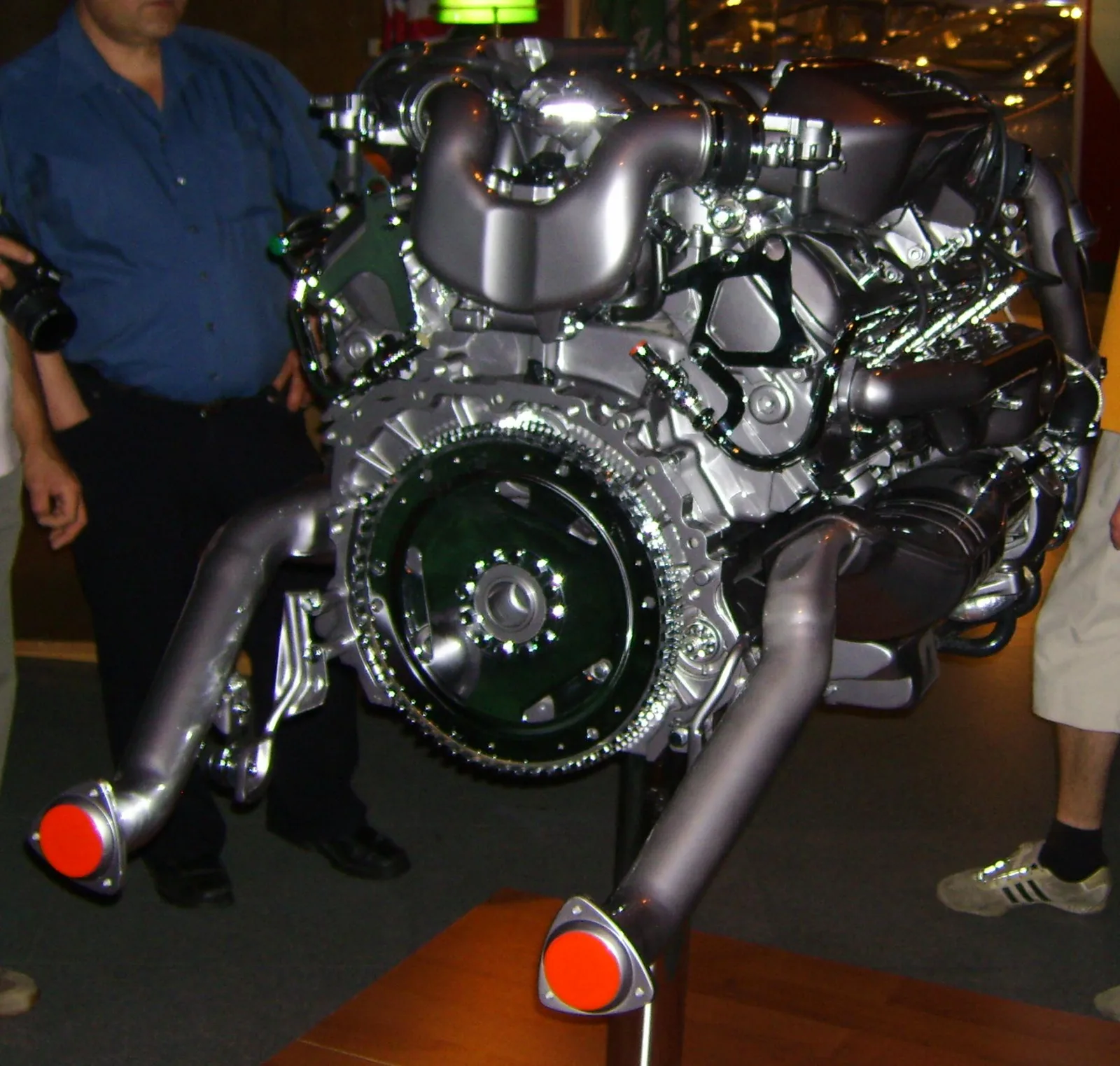
The Bentley 8 Litre was a large straight-six luxury car built by Bentley Motors Limited at Cricklewood in London. Bentley announced it on 15 September 1930 and showed it at the London Olympia Motor Show that October. It was the last completely new model the independent company would produce. The worldwide Great Depression was a year old, and buyers with a spare 1,850 pounds for a bare chassis (roughly 293,000 pounds in 2010 money) were scarce.
Only 100 were made. Of those, 35 sat on the shorter wheelbase, and fewer than 25 wore open bodies. One theory holds that the cost of developing the car was a prime reason Bentley went bankrupt. The company tried one last rescue: it fitted modified 4-litre engines into a shortened 8 Litre chassis and sold the result as the Bentley 4 Litre, announced on 15 May 1931. Just 50 were built before receivership arrived.
Rolls-Royce bought the business from the receiver in November 1931. The deal is dated 13 November, at a price of 125,000 pounds, and was made through a nominee company, with Bentley Motors (1931) Ltd formed immediately afterwards. The new owner dropped the 8 Litre and disposed of every spare part for it.
How the Bentley 8 Litre was built
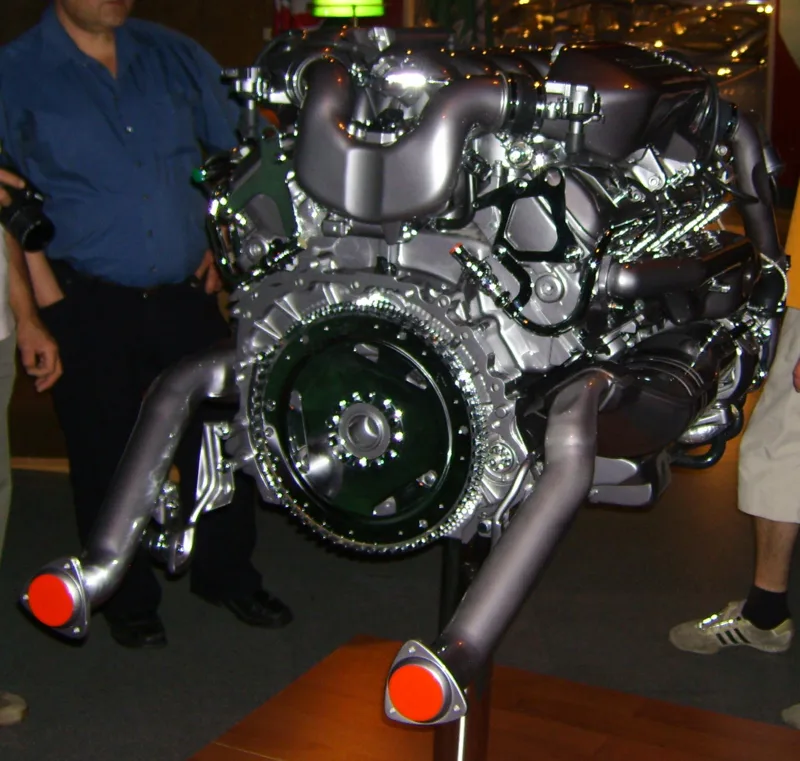
Think of the engine as a very large, very carefully made piece of clockwork. The straight-six had a one-piece cast-iron block with a fixed cylinder head, and a crankcase cast in Elektron, a magnesium alloy. A single overhead camshaft opened four valves per cylinder, driven by a patented arrangement of three coupling rods that Bentley called the three-throw drive. Each cylinder had two spark plugs fed by separate systems, one coil and one magneto, so a failure in one left the other still firing.
With a bore of 110 mm (4.3 in) and a stroke of 140 mm (5.5 in), capacity came to 7,983 cc (487.2 cu in). Pistons were aluminium alloy. Engine and gearbox each sat on rubber at three points so that vibration stayed away from the body.
The gearbox was new as well: four speeds with a constant-mesh third, a single dry plate clutch and a hypoid bevel final drive to the rear axle. The car ran on 21-inch Rudge-Whitworth wire wheels with centre-lock fixings.
The frame was a ladder of steel with large tubular crossmembers, swept downward between the axles to bring the centre of gravity down. Neither the engine nor the gearbox helped brace it. Long semi-elliptic springs did the suspending, with friction dampers at the front and hydraulic ones at the rear. All four wheels had 400 mm (15.7 in) drum brakes with Dewandre vacuum assistance, and the front pair were of Bentley-Perrott design. Steering was worm and sector, with adjustable castor to suit the driver's taste, and a centralised lubrication system looked after the chassis and springs but not the front axle or the clutch release.
Two wheelbases were offered, 144 inches (3,700 mm) and 156 inches (4,000 mm), plus three cars built on 138 inches (3,500 mm). Bentley claimed a top speed of about 125 mph (201 km/h), and guaranteed more than 104 mph (167 km/h) even with the heaviest saloon bodies fitted.
Why the 8 Litre is still sought after
Contemporary praise centred on tractability and smoothness. The car could pull from walking pace to motorway speed in top gear without fuss. Not everyone was kind in later years: one 1966 assessment called the engine design faultless but the heavy chassis the cause of a rather dull and slow car.
Seventy-eight 8 Litres were known to survive as of mid-2011. A great many lost their original limousine or saloon bodies to new replica tourer coachwork, which is why examples with their first bodies are the ones collectors chase. The only 8 Litre with an American body, and the first Bentley with an all-metal body, came from the W.M. Murphy Company of Pasadena for a customer in Santa Barbara, California.
In the 1930s McKenzie's Garages, a Rolls-Royce and Bentley specialist, reworked four of them. YM5050 gained a shortened chassis, a lowered radiator and bulkhead and triple SU carburettors. YR5083 received a higher-ratio rear axle and triple SUs. YX5117 was lowered and shortened with triple SUs, and YX5121 was shortened, lowered and given a tuned engine.
Less than nine months after the 8 Litre arrived, Bentley Motors was in receivership.
The Bentley R Type: the post-war saloon
When Bentley reappeared after the war as a Rolls-Royce subsidiary, its second post-war series was the R Type, built from 1952 to 1955 as the successor to the Mark VI. It was essentially a Mark VI with a larger boot, almost double the capacity, and some see it as a stop-gap before the S series arrived in 1955. During development it was called the Mark VII, and the chassis cards still describe the cars as Bentley 7. The name R Type comes from the RT chassis series.
The front of the saloon was identical to the Mark VI. The engine was the unit of roughly four and a half litres already fitted to later Mark VIs, now with an automatic choke on the carburettor, and the rear spring mounting was altered in detail. Every R Type used an iron-block, aluminium-head straight-six fed by twin SU H6 carburettors, displacing 4,566 cc (278.6 cu in) from a 92 mm (3.62 in) bore and 114.3 mm (4.50 in) stroke. A four-speed manual gearbox was standard, with a four-speed automatic offered and later made standard.
Underneath, the front suspension was independent on coil springs, with semi-elliptic leaf springs at the rear. Drum brakes of 12.25 in (311 mm) diameter sat at each corner, hydraulic at the front and mechanical at the rear through a servo driven by the gearbox.
Bodies, performance and numbers
The standard car was a steel saloon built by Bentley. Plenty of customers instead took a bare chassis to a coachbuilder of their choice, among them H. J. Mulliner, Park Ward, Harold Radford, Freestone and Webb and Carrosserie Worblaufen. Of 2,323 R Types, 295 carried coachbuilt bodies.
British magazine The Motor tested an automatic saloon in 1953 and recorded 101.7 mph (163.7 km/h) flat out and 13.25 seconds from rest to 60 mph (97 km/h). Fuel consumption came to 15.5 miles per imperial gallon (18.2 L/100 km; 12.9 mpg-US). The test car cost 4,481 pounds including taxes.
The R Type Continental: the fastest four-seater of its day
The R Type Continental was the high-performance version, and at the time it was the fastest four-seat car in production. A team from Rolls-Royce and coachbuilder H. J. Mulliner developed the prototype under Rolls-Royce chief project engineer Ivan Evernden. Rolls-Royce chose Mulliner over its own Park Ward subsidiary because Mulliner had developed a lightweight body system using metal throughout instead of the traditional ash frame.
Stanley Watts of Mulliner finalised the styling, shaped by wind-tunnel work at Rolls-Royce by Evernden's assistant Milford Read. The rear fins were there for a reason: they steadied the car at speed and made it resistant to direction changes caused by crosswinds. Engineers capped kerb weight at 34 long hundredweight (1,700 kg; 3,800 lb), so that the tyres stayed within a safe load when the car ran at 120 mph (190 km/h).
The prototype, chassis 9-B-VI and registered OLG-490, was on the road by August 1951. Its registration earned it the nickname Olga. Olga and the first production cars sat on the Mark VI chassis, and with no automatic choke the driver set the mixture by hand with a control at the centre of the steering wheel.
What changed under the bonnet
The early Continental had essentially the standard R Type engine, but with modified carburation, induction and exhaust manifolds, and higher gearing. Compression rose to 7.25:1 from 6.75:1, and the final drive ratio went from 3.41 to 3.07. After July 1954 a larger bore of 94.62 mm (3.7 in) lifted capacity to 4.9 litres (4,887 cc; 298 cu in).
| Detail | Standard R Type | Early R Type Continental |
|---|---|---|
| Compression ratio | 6.75:1 | 7.25:1 |
| Final drive ratio | 3.41 | 3.07 |
| Speed | 101.7 mph (163.7 km/h) in a 1953 test | 120 mph (190 km/h) design target |
Who built the Continentals
Despite the name, the two-door Continental was produced mainly for the home market. Most of the 207 cars were right-hand drive, and 43 left-hand-drive cars went abroad. The chassis were built at Crewe and shared many components with the standard car, then delivered as rolling chassis to the coachbuilder the customer chose. H. J. Mulliner finished most of them, mainly as fastback coupes. Park Ward built six, later including a drophead coupe, Franay of Paris built five and Graber of Wichtrach in Switzerland built three, one of which Koeng of Basel later altered. Pininfarina built one. In 1954 James Young of London built a sports saloon for the company owner, James Barclay.
Rarity has made the car valuable. In 2015 an unrestored 1952 R Type Continental sold for more than 1 million US dollars.
The Gooda Special
One of the oddest R Types was never a Continental at all. Chassis B77ZX left the factory in 1954 as an ordinary steel-bodied saloon, despite common reports to the contrary. Period documentation suggests it served as a trials car first, and it may have been rolled, after which someone chose not to repair the saloon body.
In 1966 owner Bob Gooda commissioned Peel Coachworks of Kingston-upon-Thames to build a new aluminium body with a more streamlined roofline, a radiator grille lowered by four inches and a front end inspired by the Rolls-Royce Silver Cloud III. The weight fell from 1880 kg to 1549 kg, and top speed rose from 106 mph to an estimated 120 mph.
The renamed Gooda Special made its competition debut in August 1967 in a five-lap Bentley Drivers' Club handicap at Silverstone, driven by co-owner Brian Dumps. It did not finish. In the 1970s the car went to the United States, where it made a brief background appearance in the detective series Vegas. It was offered for sale in Britain by Straight Eight Ltd of London in April 1990, was owned by Terry O'Reilly in America by 2008 and was sold through Bonhams in 2009. In 2014 it ran in the Tony Gaze Trophy at the 72nd Goodwood Members' Meeting, its first race since that Silverstone outing in 1967.
The Bentley Azure: a convertible for a new era
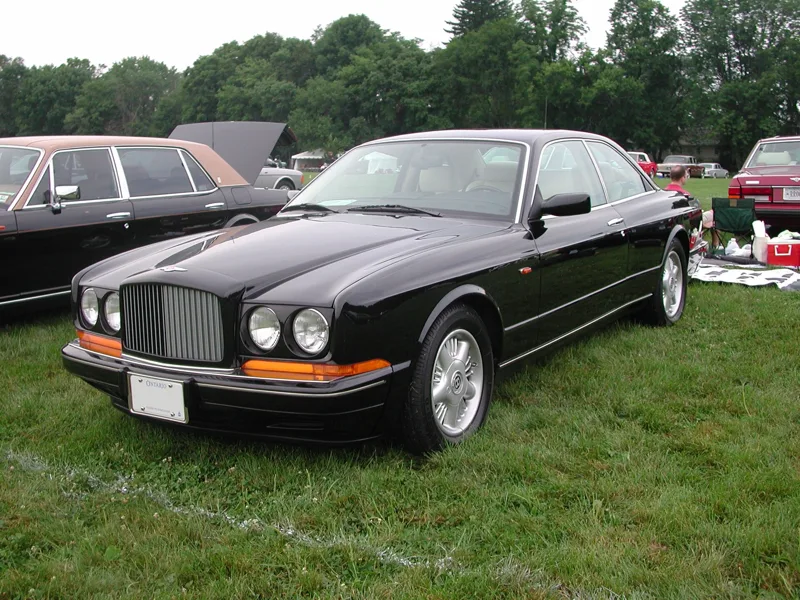
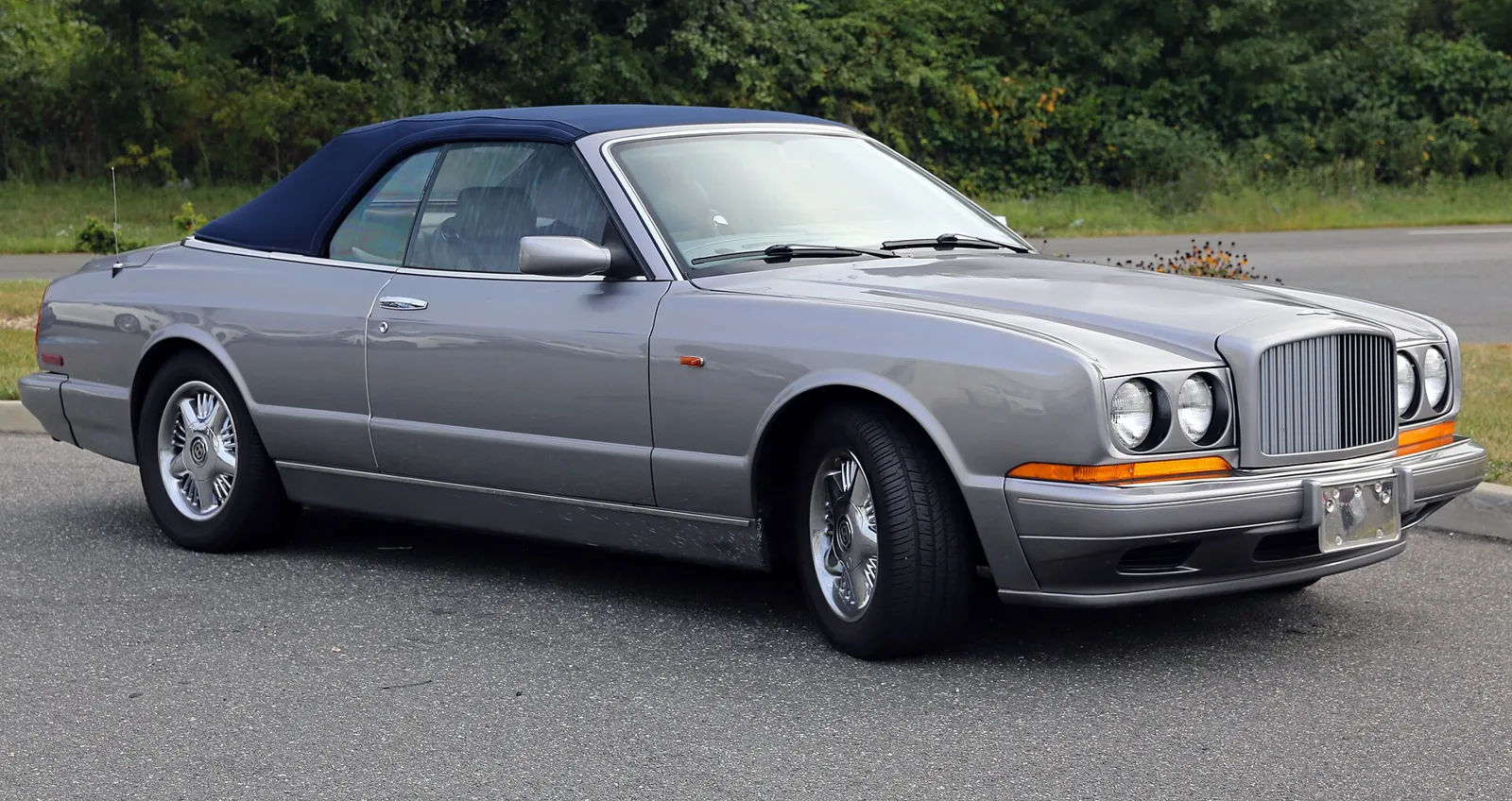
The Bentley Azure is a four-seat convertible grand tourer that came in two distinct generations. The first debuted at the Geneva Motor Show in March 1995 on the platform of the Continental R, which had launched in 1991, and ran until 2003. The name came from earlier two-door conversions by Robert Jankel that evolved into the Continental R.
It started slowly. Only nine cars were finished in 1995, and 251 in 1996 once full production began. Pininfarina spent two years helping turn the coupe into a four-seat convertible, and built the shell and soft top in Italy, largely from parts sourced in the UK, before final assembly at Crewe. Because a roll-bar was never considered, the chassis needed extensive reinforcement.
The Azure measured 210 inches (5,340 mm) long and weighed 2,608 kg (5,750 lb), which often surprised onlookers. That size was deliberate, intended to give presence and to seat four adults comfortably.
First-generation Azure power and price
Power came from the long-serving 6.75-litre V8 with a single intercooled Garrett turbocharger. Rolls-Royce and Bentley were not yet publishing official output figures at launch, and the engine was rated at roughly 365 PS (268 kW; 360 hp). By the time production gathered pace, a Zytek engine management system had lifted it to 390 PS (287 kW; 385 hp) at 4,000 rpm, with 750 N.m (553 lb.ft) of torque at 2,000 rpm. A modified four-speed 4L80-E automatic, sourced from General Motors, sent power to the rear wheels.
That gave 0-100 km/h (62 mph) in 6.5 seconds and a ceiling of 241 km/h (150 mph), very quick for something so large, heavy and unaerodynamic.
Pininfarina also designed and made the electrically powered fabric roof, because Crewe lacked the space and workforce, and that added considerably to the cost. In 1995 the Azure was priced at 215,167 pounds, which was 22,590 pounds more than the Continental R. From 1999 a Mulliner trim added bespoke finishes and equipment and let buyers customise further during the build. A final series ran from 2002 to 2003, with only 62 made. The last right-hand-drive car sold was chassis CH01228, and the very last Azure stayed at the Crewe plant.
The second-generation Azure and the Azure T
Volkswagen bought Bentley from Vickers in 1998, three years into the first car's life, and decided to keep it in production until 2003 before introducing a successor. The new Azure arrived for the 2006 model year on the Arnage platform and ran until 2010. Its twin-turbocharged V8 made 456 PS (335 kW; 450 hp), with 645 lb.ft (875 N.m) of pulling force.
That engine had a political history. The Arnage was designed around a BMW 4.4-litre engine, but during the 1998 takeover battle between BMW and the Volkswagen Group for Rolls-Royce and Bentley, BMW threatened to stop supplying engines if Volkswagen won. The threat was later withdrawn when BMW acquired the right to build Rolls-Royce cars at a new location. Still, Volkswagen could not accept a rival as a long-term supplier, and customers worried about engine and parts availability. So in 2001 Volkswagen reworked the 6.75-litre Rolls-Royce and Bentley V8, replacing the old single turbo with twin turbochargers to cut lag and raise output. A six-speed ZF 6HP-32 automatic fed the rear wheels.
Bentley claimed 0-97 km/h in 5.6 seconds and 270 km/h (168 mph) flat out. Economy was dismal. The United States Department of Energy ranked the Azure last in its class, at 9 miles per US gallon (26 L/100 km; 11 mpg-imp) around town and 15 (16 L/100 km; 18 mpg-imp) on the open road.
The Azure T, built in 2009 and 2010, was the faster version. It wore 20-inch five-spoke two-piece alloy wheels with 255/40 ZR20 Pirelli P Zero tyres, Le Mans-style vents in the lower front wings, dark-tinted grilles and a billet aluminium fuel filler cap. Its exterior styling drew on the Bentley Mark VI. Stability control and tyre pressure monitoring became standard, and buyers could add a 10-speaker, 1,100W Naim for Bentley audio system. The engine delivered 507 PS (373 kW; 500 hp) and 1,000 N.m (738 lb.ft), which meant 0-97 km/h in 5.1 seconds, 0-100 km/h in 5.5 seconds, 0-160 km/h in 12.0 seconds and a maximum of 288 km/h (179 mph). It was unveiled at the 2008 LA Auto Show.
Where the Azure idea went next
The Azure had no immediate successor. At the 2014 Los Angeles Auto Show, though, Bentley revealed a concept on the Mulsanne platform that followed the same formula. It did not use the Azure name and called it the Grand Convertible. The production version appeared at the 2017 Dubai Motor Show, again on the Mulsanne platform but 99 mm (3.9 in) shorter because it dropped the rear doors. It kept the concept's wooden rear deck, described as the biggest piece of wood ever applied to a production car. Mulliner, Bentley's in-house coachbuilder, built it, and production was limited to 19 units.
Three Bentleys side by side
| Model | Years | Engine | Speed | Built |
|---|---|---|---|---|
| 8 Litre | Announced 1930 | 7,983 cc straight-six | About 125 mph (201 km/h) claimed | 100 |
| R Type | 1952 to 1955 | 4,566 cc straight-six | 101.7 mph (163.7 km/h) in a 1953 test | 2,323 |
| Azure, first generation | 1995 to 2003 | 6.75-litre turbocharged V8 | 241 km/h (150 mph) | Nine in 1995, 251 in 1996, 62 in the final series |
| Azure, second generation | 2006 to 2010 | 6.75-litre twin-turbo V8 | 270 km/h (168 mph) claimed | No total given |