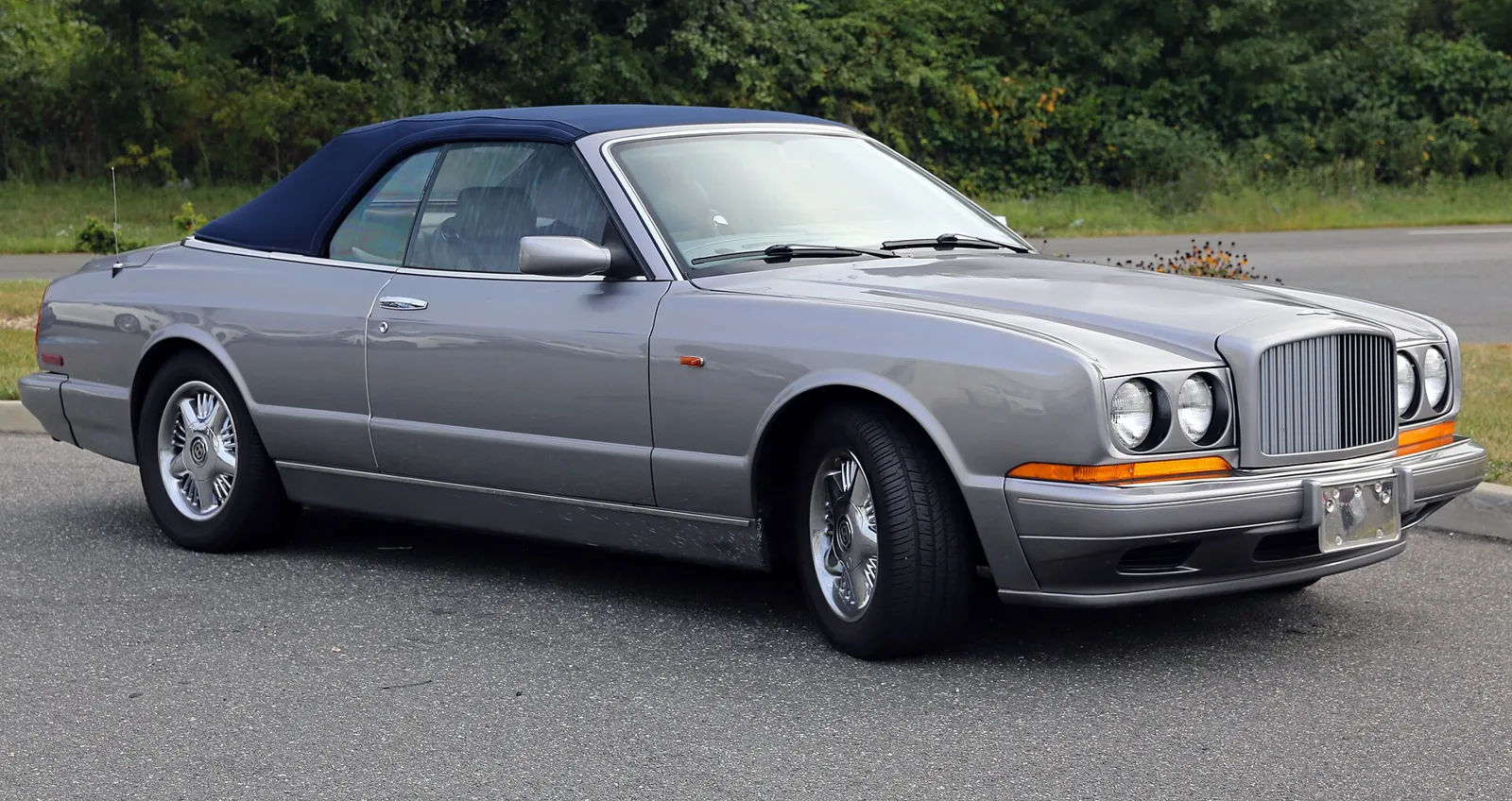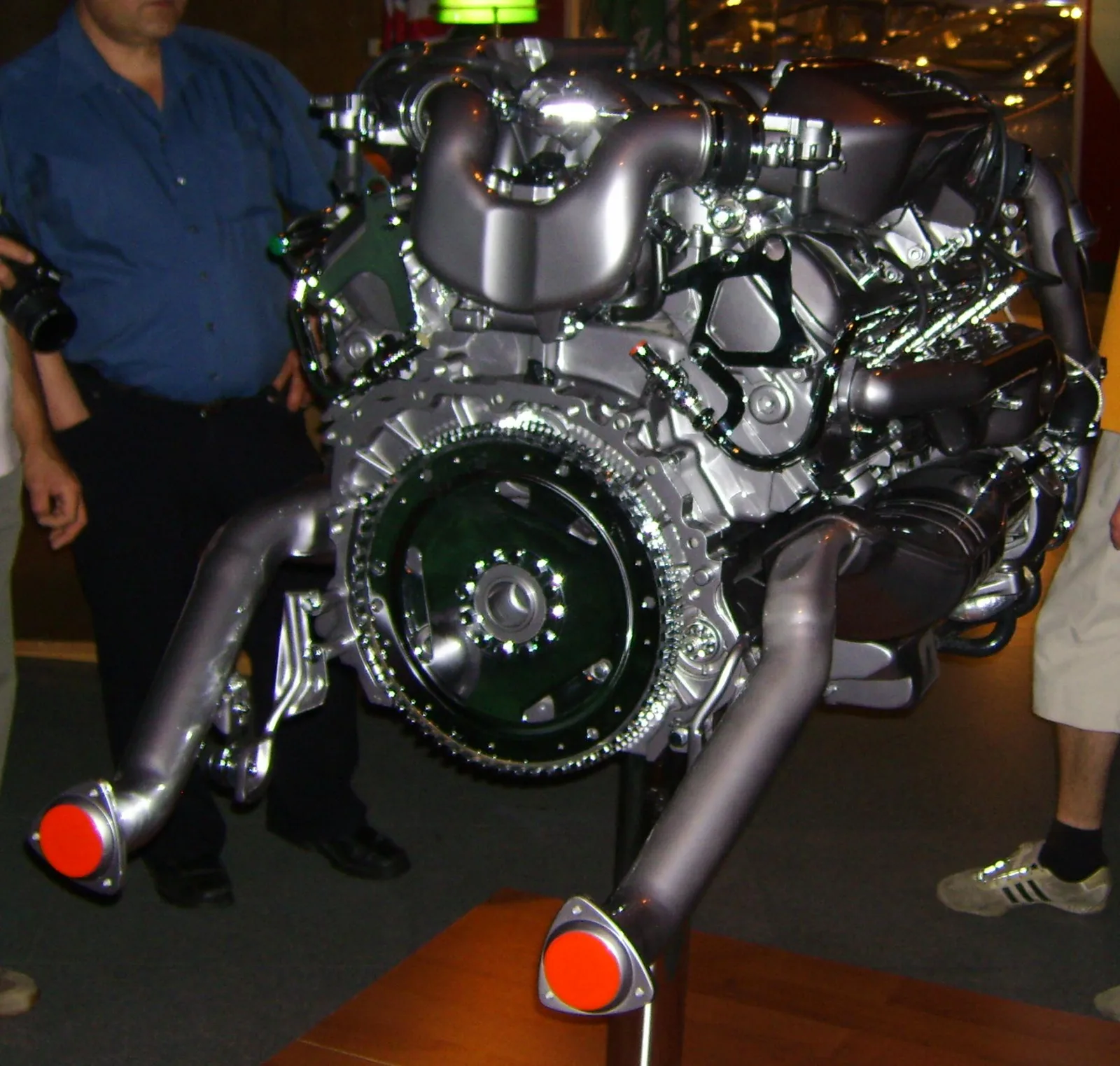
A V8 family that powered Rolls-Royce and Bentley for four decades, from the 6.25-litre original to the twin-turbo 6.75-litre of the Mulsanne.
The Rolls-Royce and Bentley L-series V8 was a V8 family introduced in 1959 and built until 2020. It powered most large Rolls-Royce and Bentley cars for four decades, starting as a 6.25-litre and growing to 6.75-litre, and the Bentley Mulsanne was its final application.
The L-series V8 arrived in 1959 and stayed in production until 2020. It gave Rolls-Royce and Bentley a large, durable engine across four decades of cars, and the Bentley Mulsanne was the last model to use it.
Where did the L-series engine come from?
Rolls-Royce recognised the need for a new engine in the early 1950s and began development in 1952. The result was a family of V8s called the L series, and the L410 was the version named after its 4.1 in (104.14 mm) bore. The project had no link with the company's 1905 V8.
Before that work, Rolls-Royce had used a 7.3-litre V12 for the Phantom III, then the inlet-over-exhaust B60 straight-six and the B80 straight-eight. The 4.3-litre B60 served in the Silver Wraith, Silver Dawn and Bentley Mark VI until 1955, when a larger bore turned it into the 4.9-litre B61.
Rolls-Royce acquired Bentley in 1931 and kept using Bentley engines alongside its own for a time, though none of them was a V8. The B80 straight-eight powered the Phantom IV limousine.
The company's earlier V8 history was brief. A French engineer developed the first V8 in 1904 for speedboat racing, and Rolls-Royce followed with a production V8 car in 1905. That Legalimit was governed to 20 mph (32 km/h), the British limit of the day, yet it was not a success: only three were made, one was sold, and that car went back to the factory to be scrapped. Cadillac pioneered a mass-produced V8 about a decade later.
From 1959 to 2020, one V8 family carried Rolls-Royce and Bentley through four decades of luxury motoring.
What were the main L-series capacities?
The original L410 displaced 6,230 cc (380 cu in), a figure rounded up to give the six and a quarter litre name. In 1970 the stroke grew from 3.6 in (91.44 mm) to 3.9 in (99.06 mm), lifting capacity to 6,750 cc (412 cu in) for the 1971 model year. That six and three-quarter litre version became the most widely built and best known of all the variants.
Several experimental versions appeared along the way. The L425 of 1965 displaced 7,439 cc (454.0 cu in), and a 1970s development version, the L410E, used a 4.2-inch (106.7 mm) stroke. Neither reached production, but both show how far the basic design was stretched.
How did the 6.75-litre engine change over its life?
The 6.75-litre was revised almost continuously, mostly to meet tighter emissions rules, and many of those changes reduced power. Bosch fuel injection arrived in the US in 1986 and became standard in early 1987. Turbocharging followed and spread across the range by 1994.
The fuel-injected engine was the most powerful normally aspirated production version ever made, with 336 lb-ft of torque. Output later dropped to 220 bhp and 325 lb-ft by 1989 as emissions requirements tightened.
Its idle was the problem. The fuel-injected firing order gave a rocking tick-over that owners disliked, so the original 1-5-4-8-6-3-7-2 order returned later in 1987, and the engine regained its reputation for smoothness.
Later variants pushed the design further. The L410D of 1982 was a turbocharged production version for the Mulsanne, followed by fuel-injected and intercooled turbo models. The L410TT of 2007 used twin MHI turbochargers with an intercooler, and the 2009 L410HT added variable cam phasing for the Mulsanne.
The 2020 twin-turbo 6.75-litre made over 150% more power and torque than the original, with 40% better fuel economy and 99.5% less exhaust emission. In the Brooklands and Mulsanne it produced 395 kW (537 PS; 530 bhp) and 1,050 Nm (774 lb-ft).
How did the engine stay in production so long?
Constant revision kept the L-series viable for decades. By 2006 almost every component of the 1959 specification had been upgraded, and the 2020 unit differed sharply from the original while keeping the same basic V8 layout. Many of those changes responded to tougher emissions laws, and many reduced power output.
Bosch injection, turbocharging and the later twin turbos were the main tools used to recover performance as the rules tightened. The 2009 L410HT added variable cam phasing to its high-torque tune for the Mulsanne.
Which cars used the L-series V8?
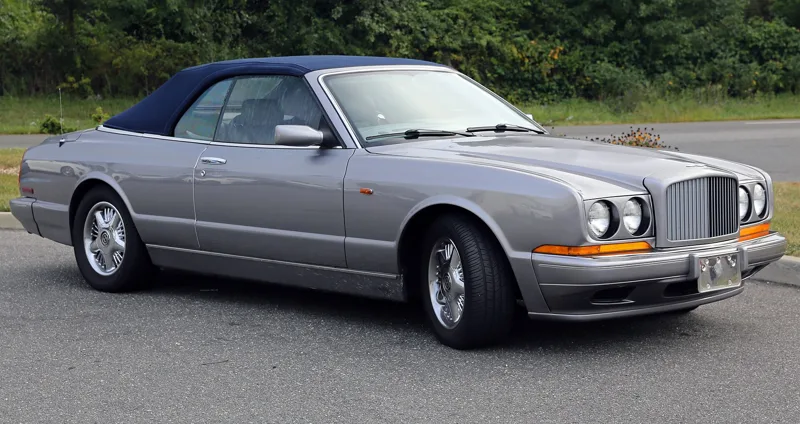
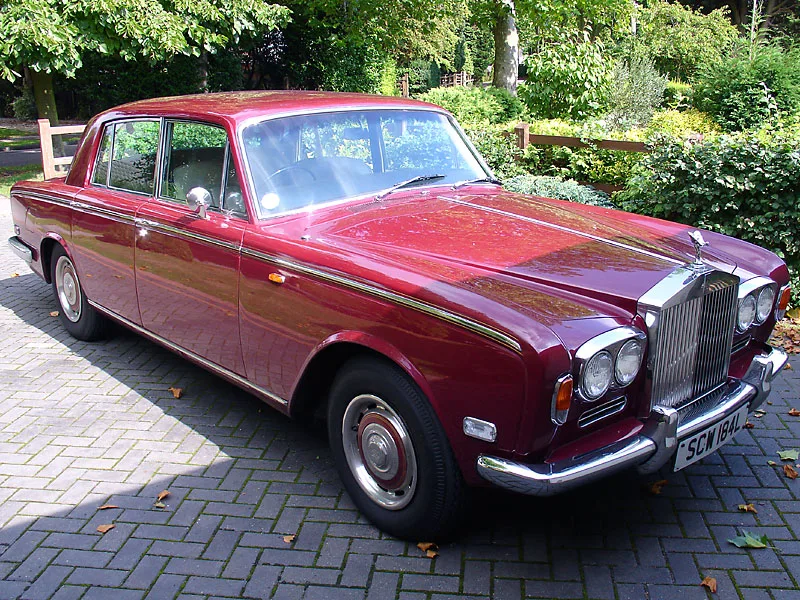
The engine appeared under Rolls-Royce and Bentley badges across four decades. Early users included the Silver Cloud II and III, the Phantom V and the Bentley S2 and S3, while the 6.75-litre later powered many of the large saloons and coupes, including the Corniche, Camargue and Silver Spirit.
- Rolls-Royce Silver Shadow, 1965 to 1980 across both capacities
- Bentley T-series, 1965 to 1980
- Rolls-Royce Corniche, 1971 to 1996
- Bentley Mulsanne, 1980 to 1992, and again from 2010 to 2020
- Bentley Turbo R and Turbo S, 1985 to 1997
- Bentley Continental R and S, 1991 to 2003
- Bentley Brooklands, 1992 to 1998, and the Brooklands Coupe from 2008 to 2011
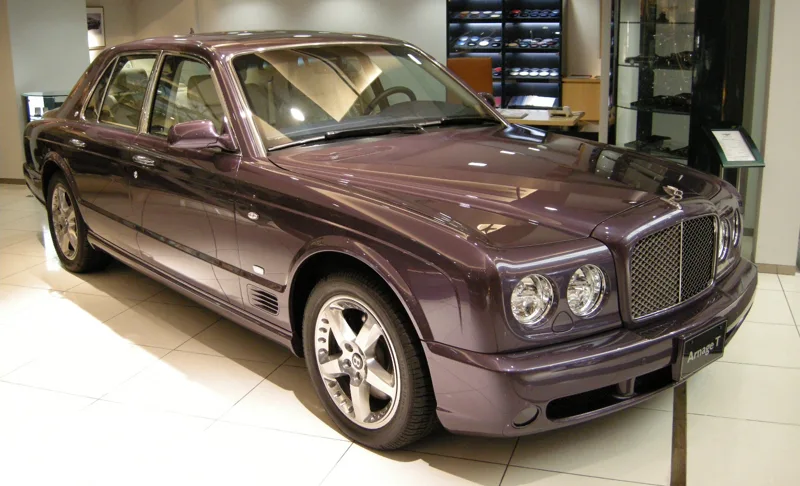
- Bentley Arnage, 1998 to 2009, with a BMW engine in its early years
The engine also sat under the Bentley Eight from 1984 to 1992 and the Bentley Azure from 1995 to 2003, with the convertible returning from 2006 to 2009. The Phantom VI ran the engine from 1968 until 1991. The Silver Spirit and Silver Spur both used it from 1980 to 1998, and the Camargue from 1975 to 1986.
How did the BMW and Volkswagen split affect the engine?
Vickers put the car business up for sale in 1997, and BMW was expected to buy it because it already supplied engines. Volkswagen's bid was accepted, but it lacked the Rolls-Royce name, which BMW bought from Rolls-Royce plc for 40 million pounds. The split left Volkswagen with Bentley and the factory.
The car business had been divested in 1973, and the Rolls-Royce name and badge stayed with the aero engine company. That is why Volkswagen could not use the brand once it had bought the rest of the business.
BMW had already supplied a V12 for the Rolls-Royce Silver Seraph and a twin-turbo 4.4-litre V8 for the Bentley Arnage, which used it exclusively from 1998 to 2000. Volkswagen then reintroduced the L410 in highly redeveloped form, and a deal brokered by German politicians kept BMW supplying engines and key components for five years.
Since 1998 the L410 has been a Bentley-only engine. Rolls-Royce stopped using it once BMW took over the brand, and the Phantom VII later used a normally aspirated BMW V12 with no technical links to the L410. The 2010 Rolls-Royce Ghost used a 6.6-litre twin-turbo V12.
The aero engine company, Rolls-Royce plc, had worked in a joint venture with BMW since 1990, and it backed its long-standing partner throughout the bidding.
What were the key L-series specifications?
| Version | Year | Capacity | Notable detail |
|---|---|---|---|
| L410 (6.25-litre) | 1959 | 6,230 cc (380 cu in) | Silver Cloud II, Phantom V and S2 series |
| Marine LM 841 | c1963-4 | 6,230 cc (380 cu in) | 240 bhp (179 kW) peak at 4200 rpm |
| L410 (6.75-litre) | 1970 (1971 model year) | 6,750 cc (412 cu in) | Stroke increased to 3.9 in (99.06 mm) |
| L410I and L410IT | 1986 to 1987 | 6,750 cc (412 cu in) | Fuel injection; 336 lb-ft, most powerful normally aspirated version |
| L410D | 1982 | 6,750 cc (412 cu in) | Turbocharged, for the Bentley Mulsanne |
| L410TT | 2007 | 6,750 cc (412 cu in) | Twin MHI turbochargers with intercooler |
| L410HT | 2009 | 6,750 cc (412 cu in) | Variable cam phasing for the 2009 Mulsanne |
| Twin-turbo final form | 2020 | 6,750 cc (412 cu in) | 395 kW (537 PS; 530 bhp), 1,050 Nm (774 lb-ft) |
What was the L-series engine like to build?
The engine was built at Crewe for most of its life. The 512 PS (377 kW; 505 bhp) version fitted to the Mulsanne took nearly 30 hours to build. Castings came from Bridgnorth, and the twin-turbo unit was machined and partly assembled in Telford, Shropshire.
The 6.75-litre kept the 4.1 in (104.14 mm) bore of the original and grew its stroke to 3.9 in (99.06 mm). That change added displacement without altering the bore.
The bore spacing of 4 3/4 in (120.7 mm) set the engine apart from most American V8s. The only exceptions were Buick's big block and the AMC V8 line, which shared the same bore centres, and the deep skirted crankcase was also less common in American designs.
Marine versions were sold as complete power packs, with the LM 841 supplied in either crank rotation and fitted with a BorgWarner velvet drive gearbox.
Was the L-series a licence-built American engine?
No. A rumour held that the V8 was an American design built under licence, but Rolls-Royce and Bentley engineers developed it in-house. Its aluminium block with wet liners, gear-driven camshaft and porting inspired by the Merlin aircraft engine all point to a British origin.
Rolls-Royce did use General Motors transmissions in its cars, notably the Hydramatic in the Silver Cloud and the Turbo-Hydramatic in the Silver Shadow. Those gearboxes were a separate matter from the V8, which the company developed on its own terms.
What is the legacy of the L-series engine?
The L-series was in production from 1959 to 2020, the longest run of any engine in history. It overtook the Chevrolet small-block V8, and through 2020 it could be regarded as the longest-running engine still fitted to a vehicle at the factory.
The Chevrolet small-block is now sold only as a crate engine, and its successor, the GM LS, shares no real design with it. That gives the L-series a strong claim to endurance in the record books.
Brooklands carried the engine's most powerful form, and the Mulsanne closed the story in 2020.