A slab-sided, independently sprung luxury saloon that broke with coachbuilt tradition in 1965 and left a long trail on screen.
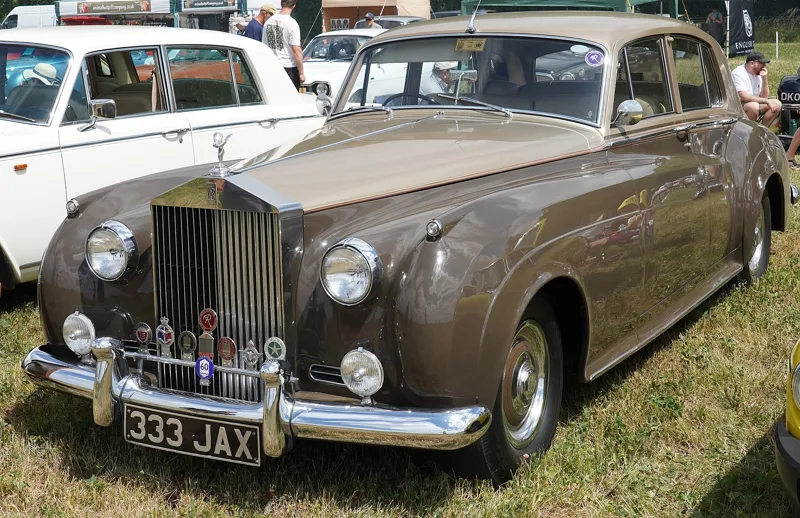
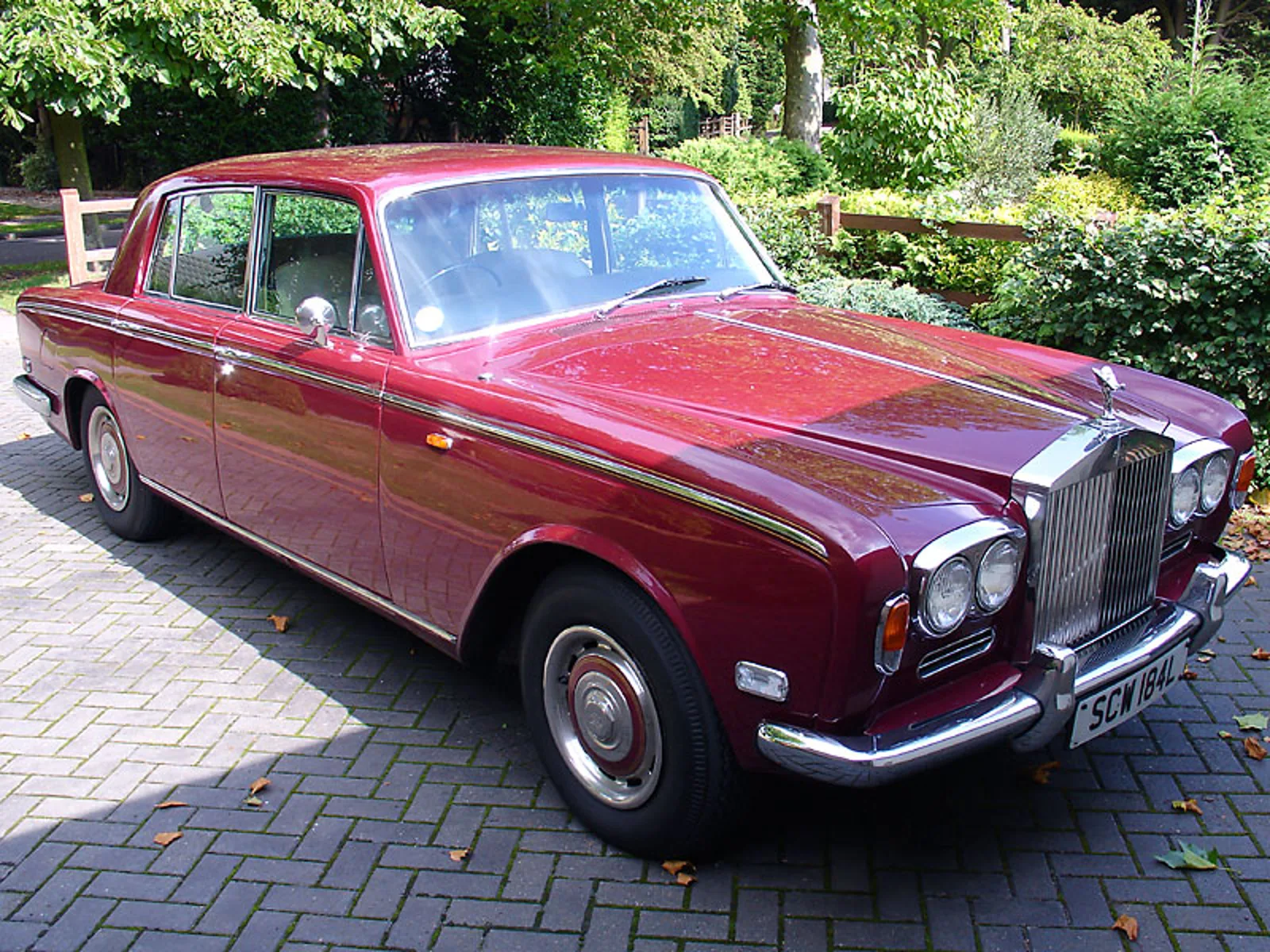
The Rolls-Royce Silver Shadow was a full-size luxury saloon built from 1965 to 1980, alongside the longer Silver Wraith II. It was the first Rolls-Royce with a fully slab-sided unitary body and all-round independent suspension, and 30,057 cars were built across the model run.
The Rolls-Royce Silver Shadow was a break from the coachbuilt tradition that had defined the marque. Built from 1965 to 1980 as a unibody saloon with a slab-sided body, it ran alongside the longer Silver Wraith II.
Why did Rolls-Royce build a smaller car?
Rolls-Royce wanted a smaller car because demand for its large coachbuilt models had fallen after the war. Work with BMC on unibody saloons and coupes was merged into one programme known as SY, and that programme produced the Silver Shadow and the Bentley T-series.
More than half of Silver Clouds had been sold at home, where roads were narrow and crowded. A smaller car therefore made commercial sense, and the engineers planned saloons that would replace the Silver Cloud and the Bentley S1.
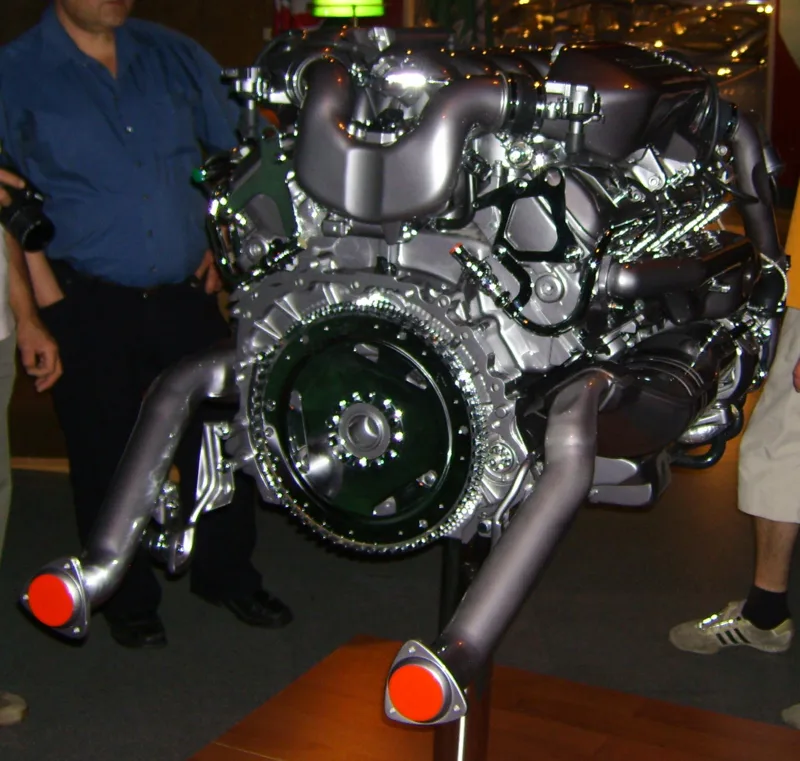
Early concepts used a 3909cc FB60 six-cylinder engine, which was later abandoned for a 6230cc V8 under development. The Bentley Tibet bodyshell was shortened and fitted to a modified chassis, and that shortened body became the basis of the Shadow.
A slab-sided unibody that gave Rolls-Royce its largest production run and a screen career few cars can match.
How did the Silver Shadow's design differ?
John Polwhele Blatchley's design broke sharply with the Silver Cloud. The Shadow sat 8.9 cm (three and a half inches) narrower and 18 cm (7 in) shorter than the Silver Cloud, yet it offered more passenger and luggage room because of its unitary, full-width body.
Rolls-Royce gave the body engineering to Pressed Steel Fisher, which built the body-in-white at the former Cowley plant before the cars went to Crewe for final assembly. The car was first to be called Silver Mist, but the name was dropped at the last minute because of its unfortunate meaning in German.
Disc brakes replaced drums, and independent rear suspension replaced the live rear axle used on earlier models. The standard wheelbase car measured 203.5 inches (5,170 mm) and weighed 4,700 lb (2,100 kg), with a first-year book price of GBP 6,557.
Which engines and gearboxes did it use?
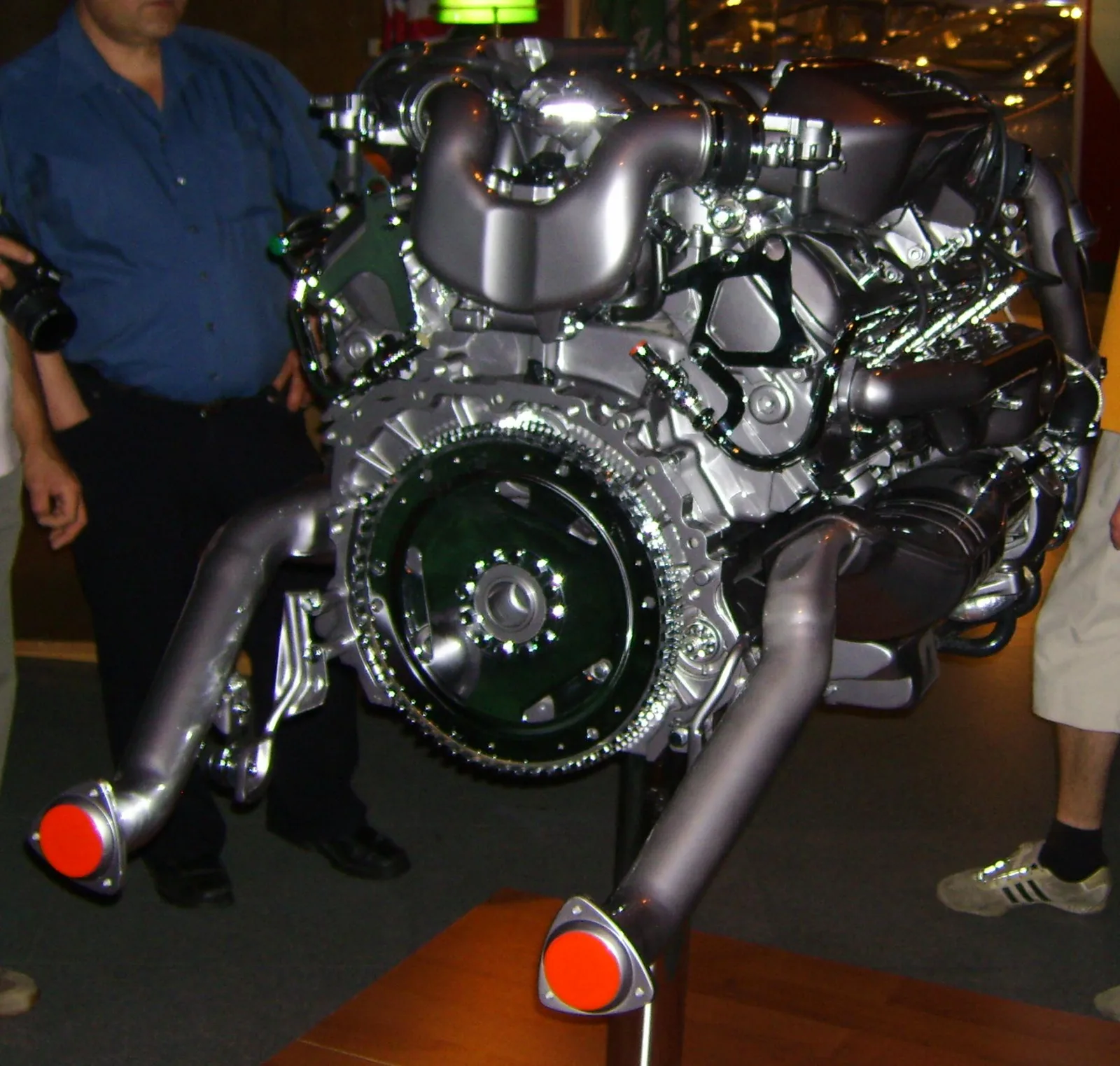
The Shadow used a 6.2-litre V8 rated at 172 hp (128 kW) from 1965 to 1969, then a 6.75-litre V8 at 189 hp (141 kW) from 1970 to 1980. Left-hand-drive cars took General Motors' Turbo-Hydramatic 400 automatic gearbox.
Right-hand-drive cars built before 1970 used a modified, aluminium-cased version of the four-speed Hydra-Matic, built under licence at Crewe from 1953. From 1968 export right-hand-drive cars took the Turbo-Hydramatic 400, and by 1970 the four-speed had gone even from the home market.
The factory never stated official power outputs, although registration authorities in many markets required figures to be listed.
How did the Silver Shadow ride?
The Shadow used high-pressure hydropneumatic suspension licensed from Citroen, with dual-circuit braking and hydraulic self-levelling. Front levelling was dropped in 1969, because the rear unit was doing nearly all of the levelling.
Ride quality was a strong point of this arrangement.
What body styles were offered?
A two-door saloon arrived early in 1966, followed by a convertible in 1967. The common two-door saloon was a Mulliner Park Ward design with a raked C-pillar, and the convertible was sold as the Silver Shadow Drophead Coupe.
A far rarer James Young two-door, with a more formal design, was limited to thirty-five Rolls-Royce cars and fifteen Bentleys. From 1971 the two-door models took the Corniche name, and production lasted until 1982 for the coupe and 1996 for the convertible.
What changed with the Silver Shadow II?
The Silver Shadow II arrived in 1977 with rack and pinion steering and revised front suspension, which improved handling markedly. The bumpers had changed from chrome to alloy and rubber in late 1976, a style used in the United States since 1974.
To mark the company's 75th anniversary in 1979, 212 Silver Shadow IIs and one Camargue received red RR badges and a silver commemorative placard. Seventy-five cars had been planned for each of three zones, but the full number was never built.
What was the Silver Wraith II?
The Silver Wraith II was the stretched, long-wheelbase version of the Shadow, adding 4 inches of rear seat legroom. A pilot series of ten limousines was built in 1967, and one of them was sold to Princess Margaret.
The long-wheelbase car was offered in the United States from May 1969 and to domestic buyers from early 1970. Some carried an electrically retractable privacy divider, which used up the entire wheelbase gain. In 1979 the factory built a special stretch limousine for Bhagwan Shree Rajneesh, who owned 93 Rolls-Royces.
How did the Corniche, Camargue and Bentley T differ?
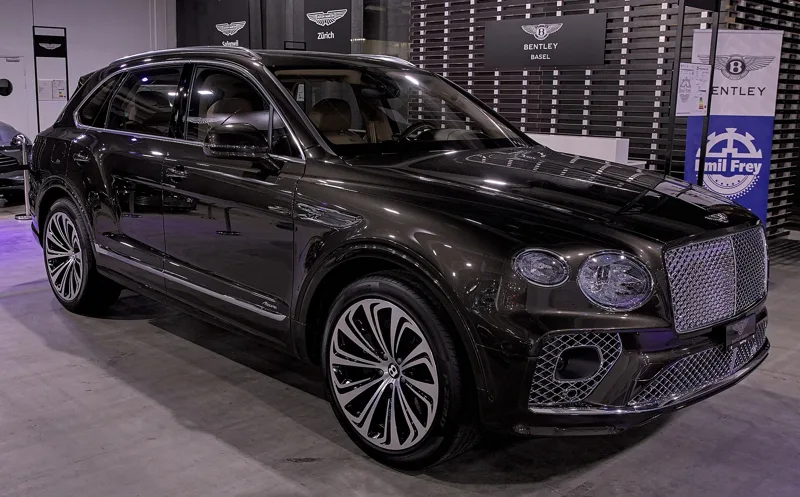
The Corniche was the two-door Shadow with its own identity from 1971, the Camargue was a Pininfarina-styled coupe built from 1975 to 1986, and the Bentley T was a mechanically identical Shadow with Bentley badging and a rounder radiator shell.
The Camargue carried the distinction of being the most expensive production Rolls-Royce. Its bodywork came from the Italian firm Pininfarina, and only one Bentley Camargue was ever produced.
The Bentley T ran from 1965 to 1980 in 2,336 examples, with the T2 name from 1977. Only nine or ten long-wheelbase Bentley T cars were built, under 0.4% of long-wheelbase production.
How many Silver Shadows were built?
The combined model run totalled 30,057 cars. James May reported that figure in 2014 as the largest production volume of any Rolls-Royce model, and the Shadow itself ran from 1965 to 1976 before the Silver Shadow II took over from 1977 to 1980.
Why is the Silver Shadow so familiar on screen?
The Silver Shadow became a screen shorthand for rarefied wealth. Its most filmed individual car, chassis SRH 2971, appeared in The Avengers from 1968 until 1983, and the model turned up in several James Bond films and other productions.
Freddie Mercury, who held no driving licence, was driven around London in a Silver Shadow from 1979 until his death in 1991. After his death his sister Kashmira displayed the car at public events, including the 2002 West End premiere of We Will Rock You, before it was auctioned at the National Exhibition Centre.
Steve McQueen often drove a 1967 two-door Silver Shadow in The Thomas Crown Affair (1968). In the Bond series a drophead turned up in On Her Majesty's Secret Service (1969), and a Silver Shadow I appeared in The Man with the Golden Gun (1974), while Q drove a Silver Shadow II in Licence to Kill.
A 1972 white Silver Shadow was lowered into the swimming pool at Stocks House, Hertfordshire, for the 1997 cover of the Oasis album Be Here Now. Juzo Itami, the Japanese director, used Silver Shadows and a Bentley T in films including The Funeral (1984), Tampopo (1985) and A Taxing Woman (1987).
The Corniche became a status symbol the moment it appeared in 1971. Paul McCartney, Frank Sinatra and Tom Jones all bought one, while David Bowie, Michael Caine, Elton John and Dean Martin joined two-year waiting lists. Princess Margaret owned a 1980 Silver Wraith II for 22 years.
What are the Silver Shadow specifications?
| Specification | Detail |
|---|---|
| Model run | Silver Shadow 1965 to 1976; Silver Shadow II 1977 to 1980 |
| Combined production | 30,057 cars |
| Engine, 1965 to 1969 | 6.2 L V8, 172 hp (128 kW) |
| Engine, 1970 to 1980 | 6.75 L V8, 189 hp (141 kW) |
| Automatic (left-hand drive) | Turbo-Hydramatic 400 from General Motors |
| Standard wheelbase | 203.5 inches (5,170 mm) |
| Weight | 4,700 lb (2,100 kg) |
| First-year book price | GBP 6,557 |
| Bentley T-series | 2,336 examples, 1965 to 1980 |
| Corniche | Coupe to 1982; convertible to 1996 |
| Camargue | Pininfarina coupe, 1975 to 1986 |