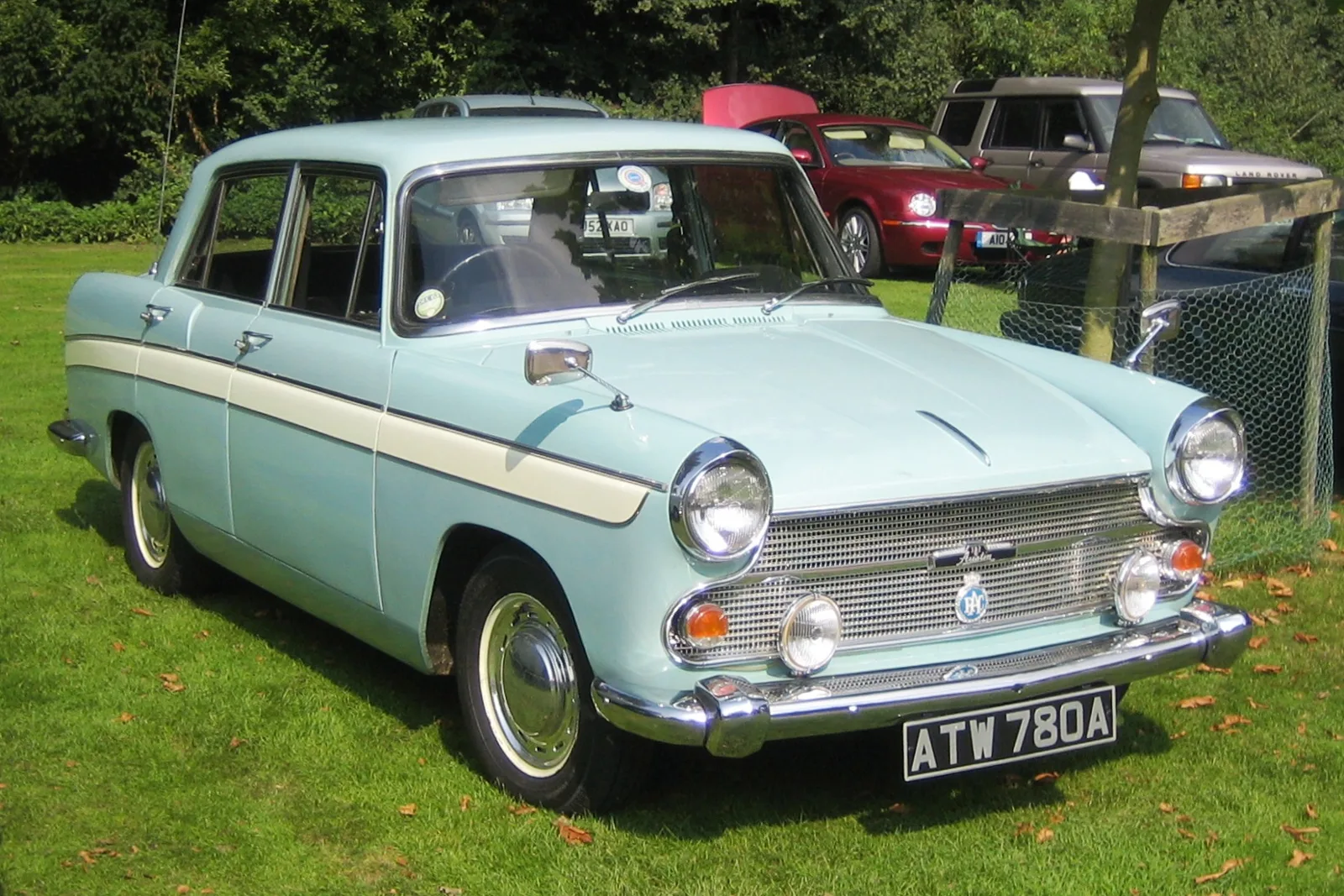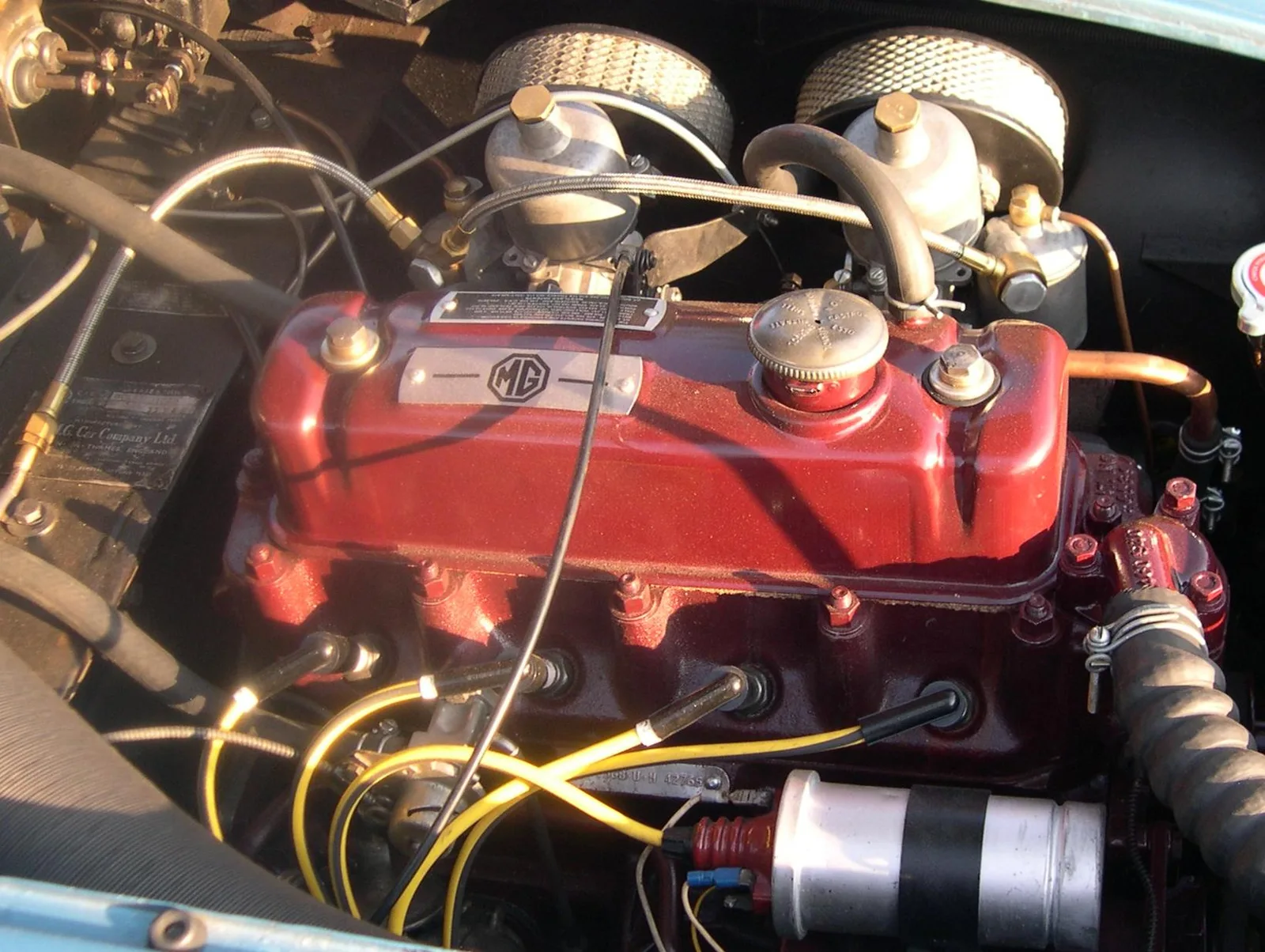
The long-stroke four that Austin began designing in 1952, through a Twin-Cam MGA engine, a diesel that ran for decades and an Australian six-cylinder spin-off.
Designed by Austin from 1952, the B-series started as a 1200 cc four and grew to 1.8 litres. It powered the MGA Twin-Cam, gave rise to Perkins diesels built for decades, and spawned a six-cylinder variant in Australia. Its basic layout remained recognisable from the first A40 engines to the final diesels.
The BMC B-series was a family of straight-four and straight-six engines, used mostly in cars, that the Austin Motor Company began designing in 1952. It grew from a 1.2 litre unit to a 1.8 litre, powered an MG Twin-Cam, spawned diesels that ran for decades and inspired a Japanese engine family through Nissan.
Where did the B-series come from?
The B-series grew out of Austin's 1200 cc overhead valve engine, used in the 1947 to 1952 A40 Devon and, in modified form, in the 1953 A40 Somerset. Its design took much from a scaled-down version of Austin's 1945 engine for the 16 hp car and from the wartime Austin K5 truck engine.
The stroke of 88.9 mm (3.5 in) carried over from the pre-war Austin 10 engine, which let much of the same tooling produce the block and crankshaft. The new overhead valve unit was otherwise an all-new design.
The K5 engine was an Austin version of a Bedford engine, and Bedford and Chevrolet both belonged to General Motors. Valve gear, cylinder head design and siamesed ports were common features across that lineage, from the Chevrolet 235 to the Austin 1200.
A 1200 cc Austin four that grew into a family covering petrol, diesel, twin-cam and six-cylinder engines.
Why did BMC need a new engine?
The A40's engine was originally designed in two capacities for the Eight and Ten tax horsepower classes. After the government dropped the horsepower tax, only the 1200 cc version was built, and it could not grow much further. Austin then needed an engine of at least 1500 cc for its medium cars.
Design of the B-series began around January 1952. The first production version kept the 1200 cc capacity and looked almost identical to the A40 engine, with the same valve gear and head design. Its block and head were slightly larger, though, and the cylinder walls were thicker, which made room for bigger bores later.
How was the B-series built?
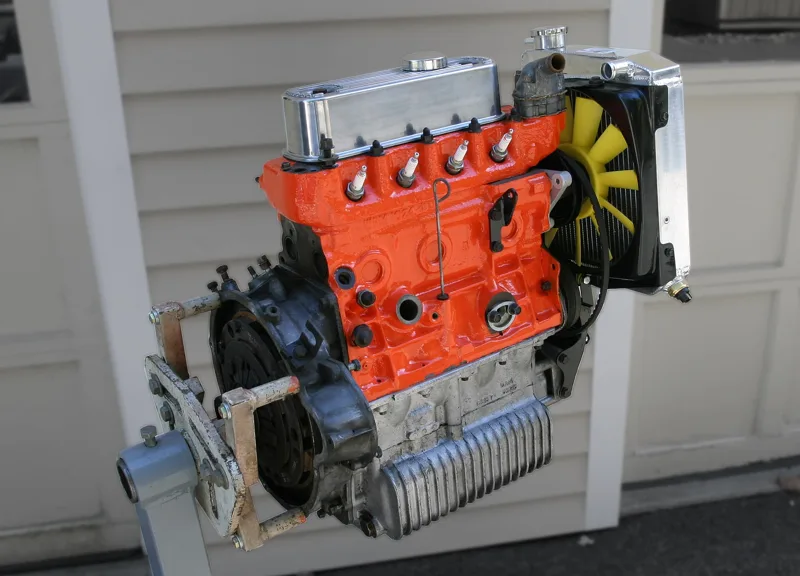
The B-series used a one-piece cast iron crankcase and cylinder block, with a cast iron head and a pressed steel sump on rear-wheel drive cars. A chain-driven camshaft sat low in the block and worked the overhead valves through pushrods and rockers. Early engines had three main bearings, and later ones had five.
The head was non-crossflow. Two inlet ports were shared by cylinders 1 and 2, and by cylinders 3 and 4, while the exhaust ports served the cylinders in a similar pattern. Valve clearance was set by screws and locknuts on the rockers. Bore spacing was not constant, measuring 3.4375 in between cylinders 1 and 2, 3.875 in between 2 and 3, and 3.4375 in between 3 and 4.
The B-series shared much with the smaller BMC A-series, including heart-shaped combustion chambers and siamese inlet ports designed by Harry Weslake. One difference was the full-depth skirt on the B-series block, which gave excellent bottom-end strength and later suited diesel versions.
What were the 1.2 and 1.5 litre B-series engines?
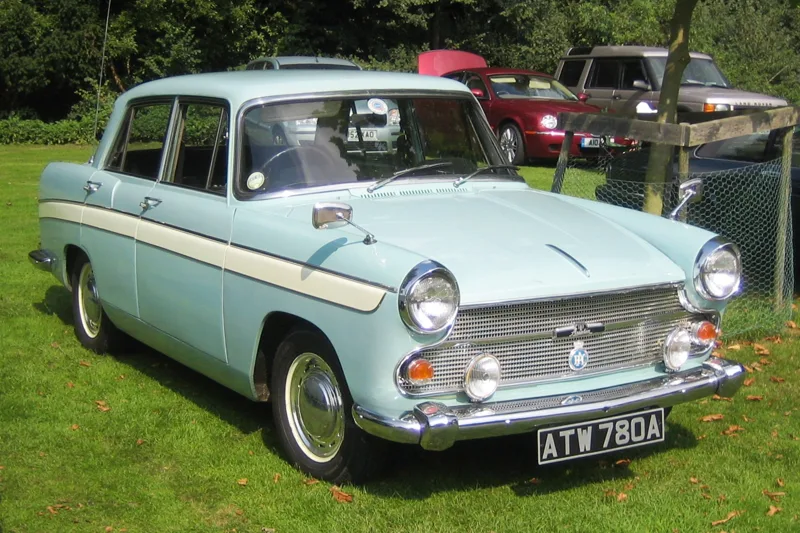
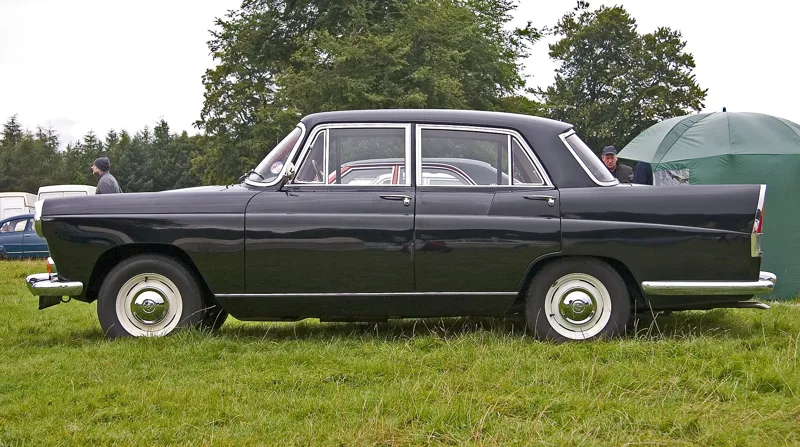
The 1.2 litre engine, at 1,199.6 cc, had a 65.5 mm by 89 mm bore and stroke and made 39 bhp (29 kW) at 4300 rpm. The 1.5 litre, at 1,489 cc, arrived in 1953 in the MG Magnette ZA and in 1954 in the Morris Oxford Series II and Austin Cambridge.
After BMC was formed, the 1.2 served the Morris Cowley, the Austin A40 Cambridge and the Nash Metropolitan 1200, the last using a 2G engine prefix. It also went into a Massey-Harris combine harvester.
Twin-carburettor 1.5s produced 68 to 72 bhp (51 to 54 kW), while single-carburettor versions made 55 bhp (41 kW). The bore was 73 mm and the stroke 89 mm (2.9 in x 3.5 in). The original MGA of 1957 used the 1.5.
A diesel 1.5 was also made. It produced 40 bhp (30 kW) at 4,000 rpm and 64 lb-ft (87 N-m) at 1,900 rpm. Hindustan Motors built these in India for decades, supplying the Ambassador until production was phased out in 2013, and they remain popular with taxi operators there. Nissan also licence-built the 1.5 as its 1H engine in the late 1950s.
How did the B-series become a diesel?
The 1.5 B-series formed the basis of the 1958 Perkins 4.99, a 1.6 litre (1,622 cc) diesel. It was fitted to cars, boats and commercial vehicles, including London taxis, and it was later enlarged to the 4.107 and then the 4.108, both 1.8 litres (1,760 cc).
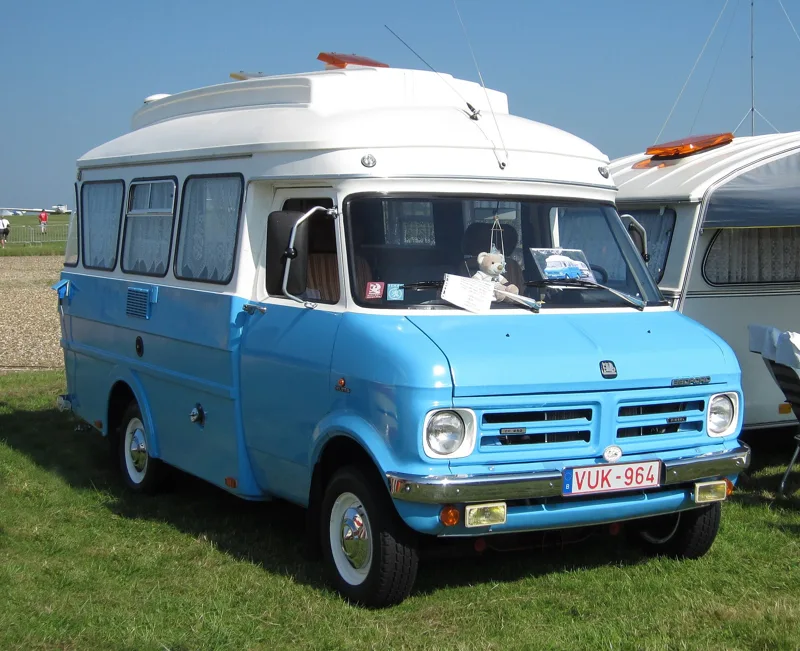
Among its homes were the Beardmore Mk7 Paramount taxi and the Bedford CA, along with Ford Thames 400E vans, a Vauxhall Victor, a Hillman Minx, a Standard Ensign and a Moskvitch 407. The 4.108 later powered the Bedford CF, Alfa Romeo Giulia and SEAT 131, and it saw marine, farm and skid-steer loader use.
The 4.108 stayed in production until 1992. Its last notable job was on British Army tanks in the Gulf War, where it ran essential air conditioning equipment.
Almost 500,000 of these engines were made in Peterborough, with small numbers built elsewhere from kits. Output peaked in 1970, when almost 30,000 left the line.
What was the Twin-Cam B-series?
The Twin-Cam was a DOHC version of the 1.6 litre (1,588 cc) B-series, built for the MGA. Its high-compression 9.9:1 version made 108 bhp (81 kW) at 6700 rpm, while the optional low-compression 8.3:1 version made 100 bhp (75 kW).
The engine kept a cast iron block but used an aluminium alloy crossflow eight-port head. A half-speed gear-driven shaft, mounted where the conventional camshaft would have been, drove the twin camshafts by chain.
It earned a reputation for unreliability, especially the high-compression version, which needed high-octane fuel. Piston burning, once thought to come from ignition timing, was later traced to a vibration-induced lean burn involving the float bowls, which flexible carburettor mounting could correct. A total of 2,111 cars were built, as coupes and roadsters.
A very few 1.8 litre (1,762 cc) racing engines were also built.
How did the 1.6 and 1.8 litre engines develop?
BMC enlarged the B-series to 1.6 litres in 1958 by increasing the bore to 75.4 mm (2.97 in). A second enlargement in 1961 raised the bore to 76.2 mm (3.00 in) and the capacity to 1,622 cc, and in 1962 the 1.8 litre (1,798 cc) arrived with an 80.2 mm (3.16 in) bore.
The 1.8 produced 94 bhp (70 kW) at 5,500 rpm in twin-carburettor form, and 85 bhp (63 kW) with a single carburettor, as fitted to the Morris Marina. Early 1.8s had a three-bearing crankshaft, and a five-bearing version appeared in 1964.
Applications of the 1.6 included the MGA 1600, the TVR Grantura Mark II and IIA, and the Elva Courier Mark II. The 1.8 diesel went into the Leyland Sherpa van with 56 bhp (42 kW) at 4,250 rpm. Turkey built it under licence for many years, and it remains a common narrowboat engine on the canals of the UK.
What was the Blue Streak six?
The Blue Streak was an inline-six development of the 1.6 litre B-series, built by BMC Australia for local models. Adding two cylinders produced a 2.4 litre (2,433 cc) engine for the Austin Freeway and Wolseley 24/80, both variants of the existing Austin A60 Cambridge.
Australian market demands called for a six in a car the size of BMC's mid-range Farina, and the corporate C-series engine would not fit. That meant the Blue Streak had to be developed as a unique unit. Both models were withdrawn in 1965, and the engine was not used again.
Was there a 2.0 litre B-series?
Yes, but only as a prototype. BMC engine man Stan Johnson designed a 1,998 cc version in 1964 and 1965, and it produced 106 hp.
The prototype used siamesed cylinder bores and offset connecting rods so that it could use the existing 1.2 and 1.5 block. The engine never went beyond the prototype stage.
How were B-series engines numbered?
BMC used two main numbering systems for B-series engines and changed them at the end of 1956. From 1936 to 1956 the codes ran in the style BP15GB, followed by a serial number. From 1957 to 1970 the style became 15GB-U-H, and from the early 1970s it switched to the 18V style.
In the early system, BP stood for a B-series engine with pushrod overhead valves, and the number gave the capacity. In the later system, V meant a longitudinal engine with rear-wheel drive, and H meant a transverse engine with front-wheel drive.
What were the main B-series specifications?
| Version | Years | Capacity | Bore and stroke | Peak output |
|---|---|---|---|---|
| 1.2 litre | 1954 to 1956 | 1,199.6 cc | 65.5 mm x 89 mm | 39 bhp (29 kW) at 4300 rpm |
| 1.5 litre twin carburettor | 1953 onward | 1,489 cc | 73 mm x 89 mm | 68 to 72 bhp (51 to 54 kW) |
| 1.5 litre diesel | 40 bhp (30 kW) at 4,000 rpm | |||
| Perkins 4.99 diesel | 1958 onward | 1,622 cc | ||
| Twin-Cam (MGA) | 1958 to 1960 | 1,588 cc | 108 bhp (81 kW) at 6700 rpm | |
| 1.8 litre | 1962 onward | 1,798 cc | 80.2 mm x 89 mm | 94 bhp (70 kW) at 5,500 rpm |
| Perkins 4.108 diesel | Until 1992 | 1,760 cc | ||
| Leyland Sherpa diesel | 1.8 litre | 56 bhp (42 kW) at 4,250 rpm | ||
| Blue Streak six | Withdrawn in 1965 | 2,433 cc |
What is the legacy of the B-series?
The B-series outlived its original design goals by decades, spanning petrol, diesel, DOHC and six-cylinder forms. Its tooling and design also reached Japan, where Nissan built a 1-litre engine from a shortened version of the licence-built 1.5 litre.
Donald Stone, formerly of Willys-Overland, advised Nissan, which wanted a 1-litre engine for the 1957 Nissan Bluebird (210/211). His suggestion was to shorten the 1.5 litre B-Series block that Nissan licence-built as the 1H engine. The result, the Nissan C, was also known as the Stone engine and was made on Austin's old transfer machines.
Nissan enlarged that design to 1.2 litres from 1958 as the Nissan E, and the Nissan J engine followed. Each was distinctly different from the earlier engines, yet similar in many ways.