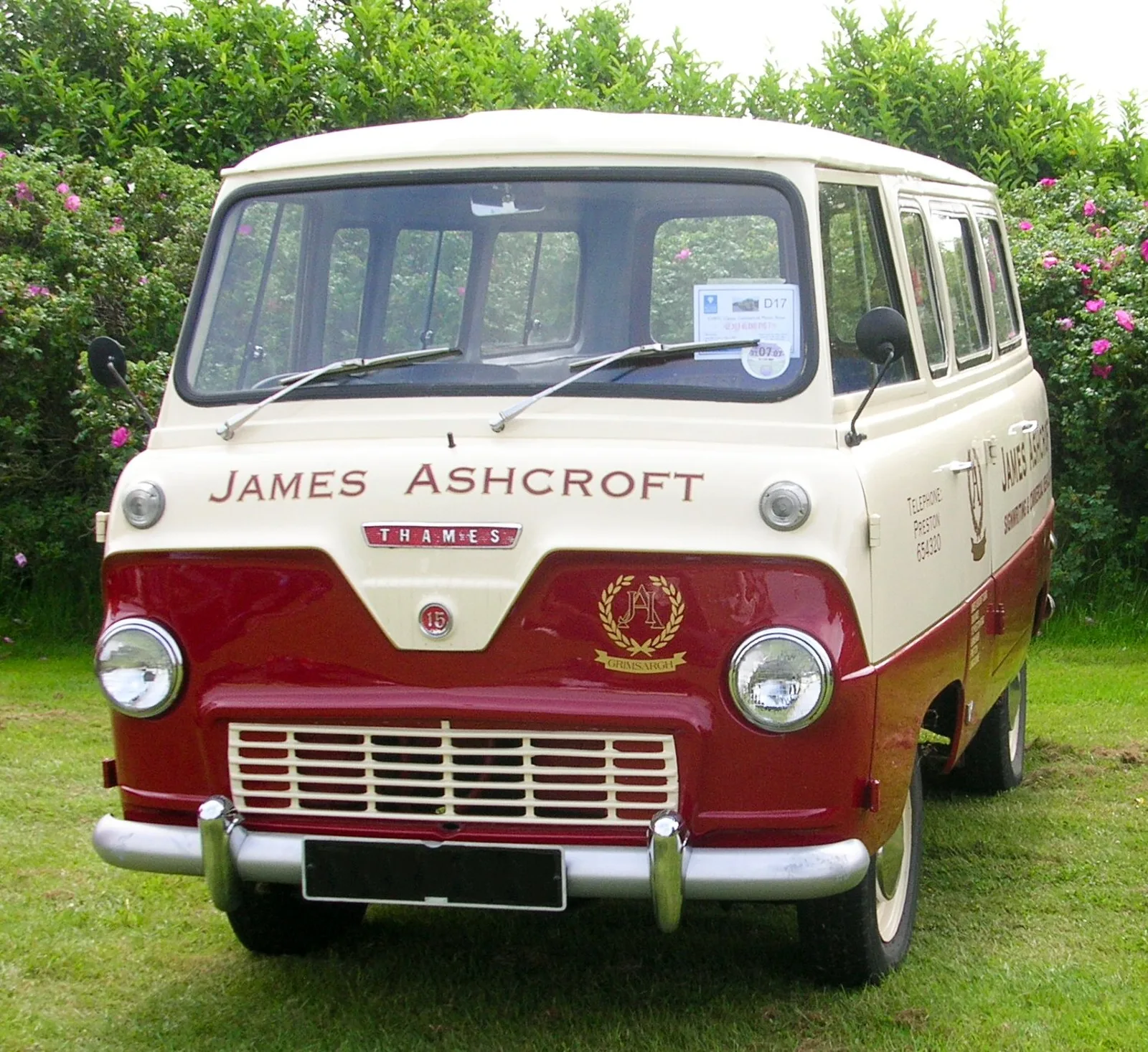
Ford's answer to a light commercial market it had fallen behind in, a van with 187,000 built, a Beatles connection and a long life as a bus and motor caravan.
Introduced by Ford UK in 1957 and built until 1965, the forward-control 400E used a 1703 cc Consul-derived engine and came in 10/12 and 15 cwt payloads. Its engine was rated 53 bhp (40 kW) in low compression form. Ford built 187,000 of them before the Redcap range replaced it.
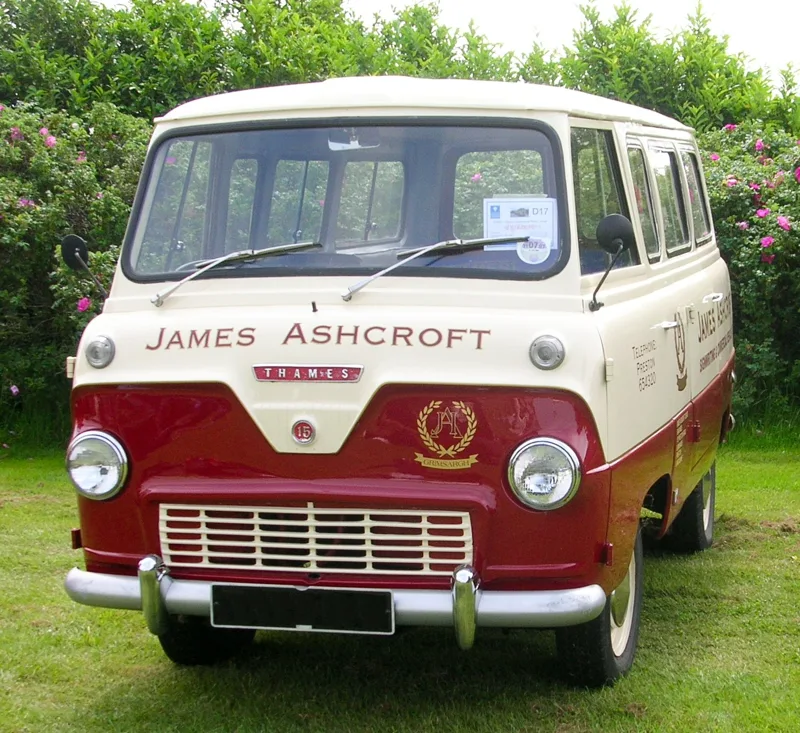
The Ford Thames 400E was a forward-control light van that Ford UK put on sale in 1957 to close a gap in its commercial range. It was built until 1965, with 187,000 produced, and it became the basis for estate cars, buses, pickups and motor caravans.
Why did Ford need a new light van in the 1950s?
By the mid-1950s Ford trailed its rivals in the light commercial market, and its main van, the Fordson E83W dating from 1938, was overdue for replacement. Studies of Morris, Austin, Trojan and Bedford vans shaped a new 10, 12 and 15 cwt range built on one shared chassis.
Earlier Ford vans had shown how varied the market was. The 1939 15 cwt van was offered with three engines, 22 hp (16 kW), 24 hp (18 kW) and 30 hp (22 kW), and some were used to tow trailer fire pumps when the war began.
Competing designs had their own limits. Ford Pilot was a postwar derivative of a prewar V8 saloon, and the Standard Vanguard and Austin A70 Hampshire vans shared its bonneted layout. That layout left little space for a load, which made the vans hard to sell to ordinary van users.
Newspaper distributors wanted a vehicle of about 200 cubic feet (5.7 m3) with the performance of a sports car. Before the war they used 15 cwt Fords and Chrysler Dodge vans of similar capacity to meet that need.
Ford took a design lead from its US parent when it set the new range. The vans used forward control, with the engine placed low between the front wheels so that the driver could slide over the engine cover for a nearside exit.
Production of the Thames 400E series began in September 1957. The Thames nameplate sat on the front beneath a circular emblem showing the capacity class, and the model quickly won widespread approval from buyers.
A forward-control van that let Ford catch up in the light commercial market, then became the base for many British motor caravans.
What engine and gearbox did the 400E use?
The 400E borrowed its engine from the Consul, the 1703 cc overhead valve unit in low compression form, rated 53 bhp (40 kW) at 4400 rpm. The original gearbox was a three-speed with column change, and a Perkins 4/99 diesel was offered from February 1961.
Output rose in January 1963, when the engine went up to 55 bhp (41 kW) in low compression form. Buyers who wanted premium fuel could take the high compression head, which had 7.8:1 compression and gave 58 bhp (43 kW).
A four-speed all synchromesh gearbox joined the range from 1963, and buyers who chose it also got a heavy duty back axle with a four-pinion differential. The Consul gearbox was a three speed with synchromesh on the upper two ratios, and its final drive used a two pinion differential. The Perkins diesel traded performance for running costs, offering 42 bhp (31 kW) from its 1.6 litre four cylinder engine.
How was the 400E body designed?
The 400E sat on a shared outrigger chassis with an 84 inch (2,100 mm) wheelbase and a van body that offered 180 cubic feet (5.1 m3) of capacity. Open-back cab and chassis models bolted their cabs on, so conversions were easier to carry out.
Ford chose coil springs and transverse wishbones for the front suspension rather than the MacPherson struts used on its passenger cars. Struts would have restricted cab design and entry in a forward-entrance van, so the team settled on the simpler arrangement.
Closed-back vans had their steel bodywork and cab welded directly to the chassis. That added stability to the structure, and it reflected the different needs of buyers who were not planning to convert their vans.
Did the 400E have sliding doors?
No. The 400E used hinged doors on the cab and a pair of hinged rear doors on the van, with an optional nearside side door. Some users wanted sliding doors for quicker exits, but the design kept hinged doors because of the chassis-cab versions.
Sliding doors were debated in the trade, but the 400E was also sold as a chassis-cab for special bodywork, and sliding doors would have ruled that out. Hinged doors were the sensible choice for a vehicle built to take many different bodies.
Which body styles did the 400E come in?
The 400E came as a van, an 8/10 seat estate, a 12-seat bus and in chassis, chassis/scuttle and chassis/cab forms for special bodies. Payload ratings were 10/12 cwt and 15 cwt, and the van bodies offered space from 300 cu ft (8.5 m3) up to 415 cu ft (11.8 m3).
The van's cab and rear doors were all hinged, while the estate car carried three windows to each side behind the cab. An automatic folding step on the nearside door made entry easier for passengers.
A de luxe estate version of the 15 cwt had chrome overriders, chrome exterior mouldings, chrome window trims and two exterior mirrors. Very few of these were sold in Britain, possibly because of the purchase tax rate of the time.
What special bodies were built on the 400E?
Outside suppliers built a wide range of bodies on the 400E chassis, including mobile shops, milk floats, ambulances, tower wagons, pickups and refuse trucks. Some were approved by Ford and appeared in the company's own brochures.
The Powertruc was an air compressor truck in which the compressor's engine also propelled the vehicle from the rear of the cab. Walkers of Watford built a pickup with substantial box section sides, while a tipper and a standard dropside were also listed.
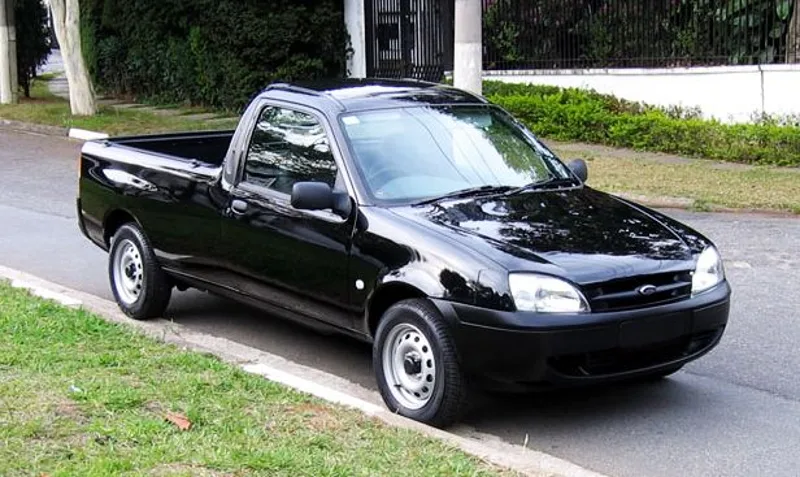
Other bodies in the catalogue included tower wagons, luton vans and an unusual flat truck with an air compressor. Eagle Engineering Company of Warwick made tower wagon equipment, Tuke and Bell supplied a slide cover refuse truck, and Normand converted some vans into insulated ice cream vehicles. The pickup proved so popular that it was catalogued as a standard model from February 1961.
Did the Beatles use a Thames 400E?
Yes. The Beatles' Express Bus, a cream-coloured Thames 400E registered 6834 KD, was bought by manager Brian Epstein in summer 1962 through a Liverpool car salesman. It went on to serve as the group's workhorse in the years that followed.
The Express Bus version was a 400E built for passenger work, so the band's van was a passenger-carrying model rather than a commercial one. Its story shows how widely the 400E was used beyond the trades for which it was designed.
What bus versions did the 400E have?
The 400E was built as a 12-seat bus with longitudinal seats from September 1958. Martin Walter and Kenex produced public service vehicle versions that met the rules of the day, with raised roofs, rear grab rails and lifeguards, and the Kenebus and Kenecoach were among the names used.
Martin Walter's Utilabus PSV could be ordered with side and rear doors or with a rear door only. It had a raised reinforced plastics roof to achieve the headroom the rules required, and its seats were spaced to suit the regulations.
Martin Walter also built the Farmer's Model Utilabrake, which had two upholstered front seats and plain wood slatted seats along the sides of the rear. Kenex's Kenecoach carried 11 passengers on transverse seats behind a panelled divider.
How did the 400E become a motor caravan?
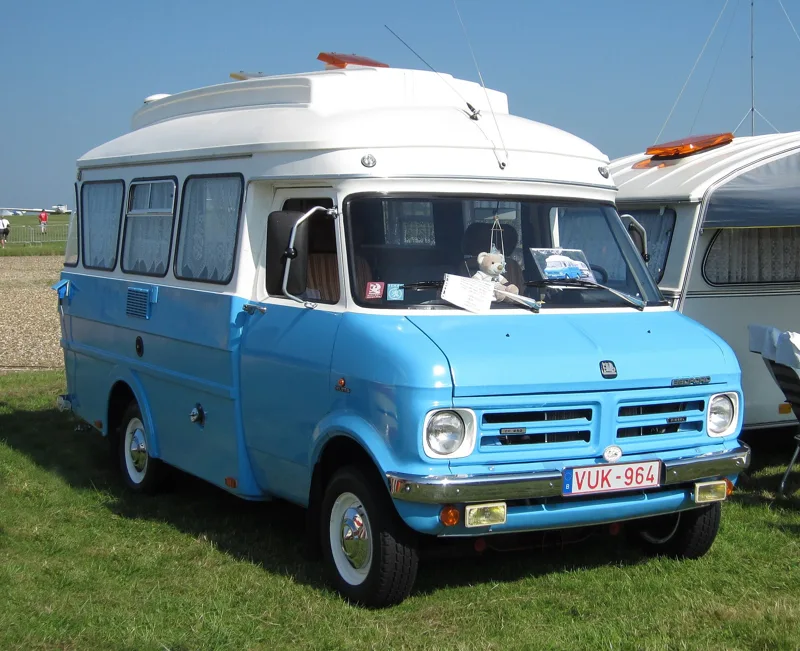
The 400E's roughly square body and sturdy engine made it a natural base for motor caravans, which could double as a weekday van and a weekend camper. Martin Walter's conversions became known as Dormobiles, and for many people the word campervan meant that brand.
The 1,703 cc (103.9 cu in) engine was well suited to the weight of some caravan conversions. A higher roof line was often needed, although some builders used elevating or folding extensions to keep the travelling height down.
Ford's Holiday Adventurers brochure dealt exclusively with motor caravans, and its list of coachbuilders included M. Calthorpe, Airborne Service Equipment, Kenex Coachworks, Moortown Motors, M.T.S., Peter Pitt and Martin Walter.
Was the 400E sold outside Britain?
Yes. Left hand drive models were available from the start, and Denmark took many vans, where Ford had an assembly plant. Danish sales staff asked for a longer wheelbase chassis cab with the six cylinder Zephyr engine as an option.
A senior truck engineer travelled to the Copenhagen plant to investigate a lengthened chassis frame. The lengthened propeller shaft was tested for vibration and critical whirling speeds before the Danish Ministry of Transport gave its approval.
All of the testing for the Danish ministry was carried out at the University of Denmark's laboratories, and the approved conversion was then accepted by Ford in Britain as well.
What replaced the Thames 400E?
Production ended in August 1965, after 187,000 vans had been built. The range was replaced by a new set of vans developed under the Redcap codename, which had been in development since about 1963.
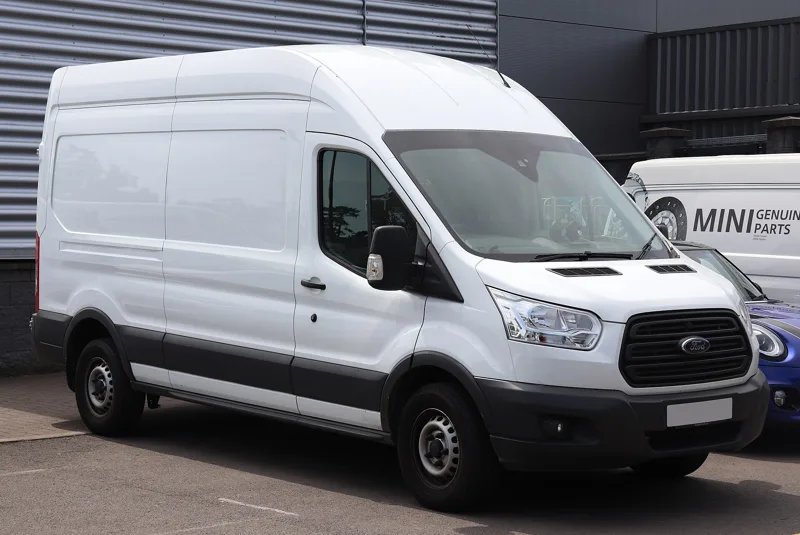
In March 1965 the D series trucks arrived and every commercial model took the Ford nameplate, so the 400E briefly appeared with a Ford badge on its front panel. The range did not continue in that guise for very long.
The Redcap vans had been tested and developed since about 1963, so the successor was ready when the last 400E left the line.
What were the Thames 400E specifications?
| Specification | Detail |
|---|---|
| Production | September 1957 to August 1965; 187,000 built |
| Payload | 10/12 cwt and 15 cwt |
| Wheelbase | 84 inches (2,100 mm) |
| Engine | 1703 cc ohv, 53 bhp (40 kW) low compression at 4400 rpm |
| Later engine | 55 bhp (41 kW) low compression from January 1963; 58 bhp (43 kW) high compression |
| Diesel option | Perkins 4/99, 1.6 litre, 42 bhp (31 kW), from February 1961 |
| Van body | 180 cubic feet (5.1 m3) |
| Box body | 300 cu ft (8.5 m3) |
| Pantechnicon | 415 cu ft (11.8 m3) with integral cab |
| Bus | 12-seater from September 1958 |
| Motor caravan engine | 1,703 cc (103.9 cu in) |