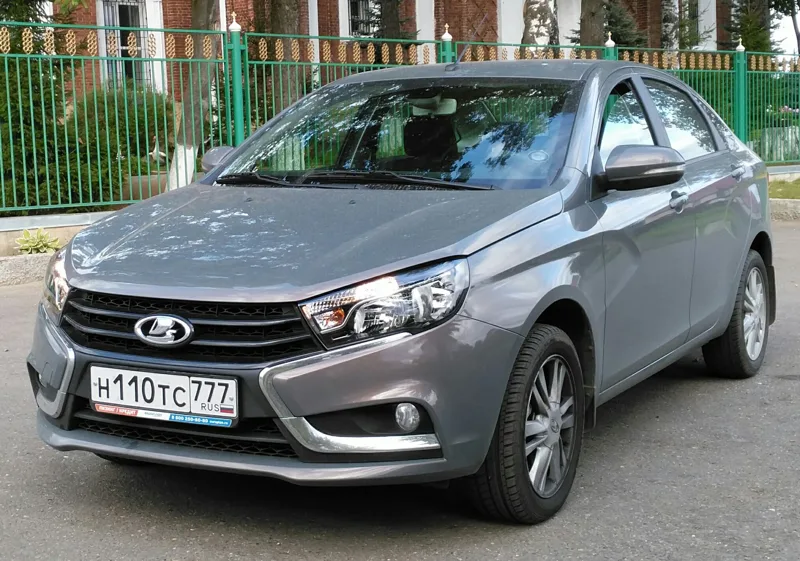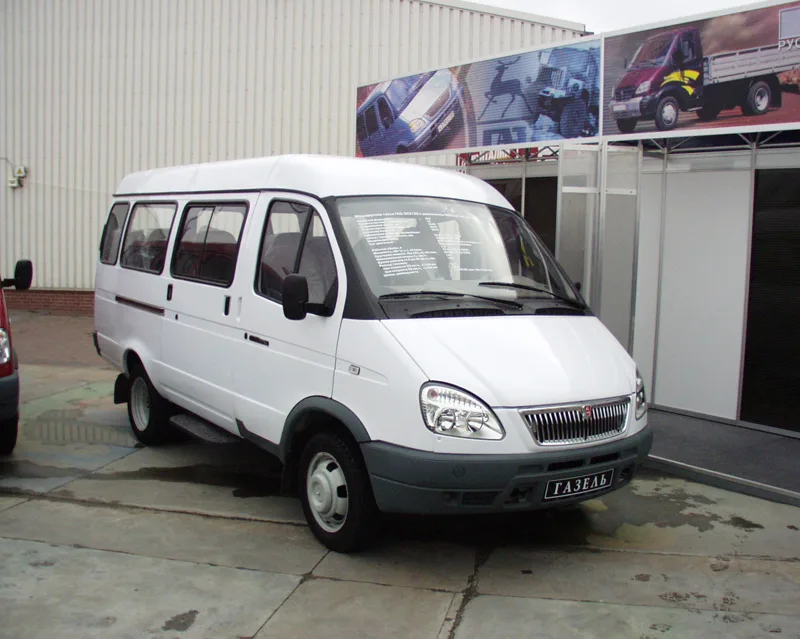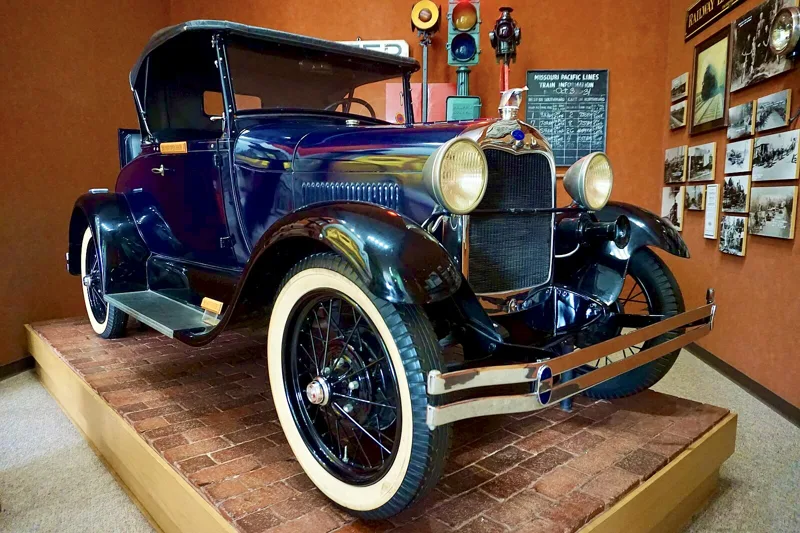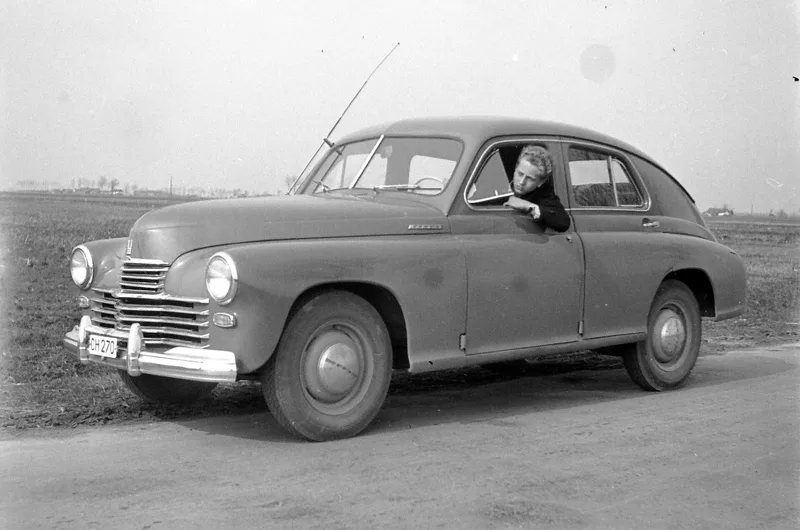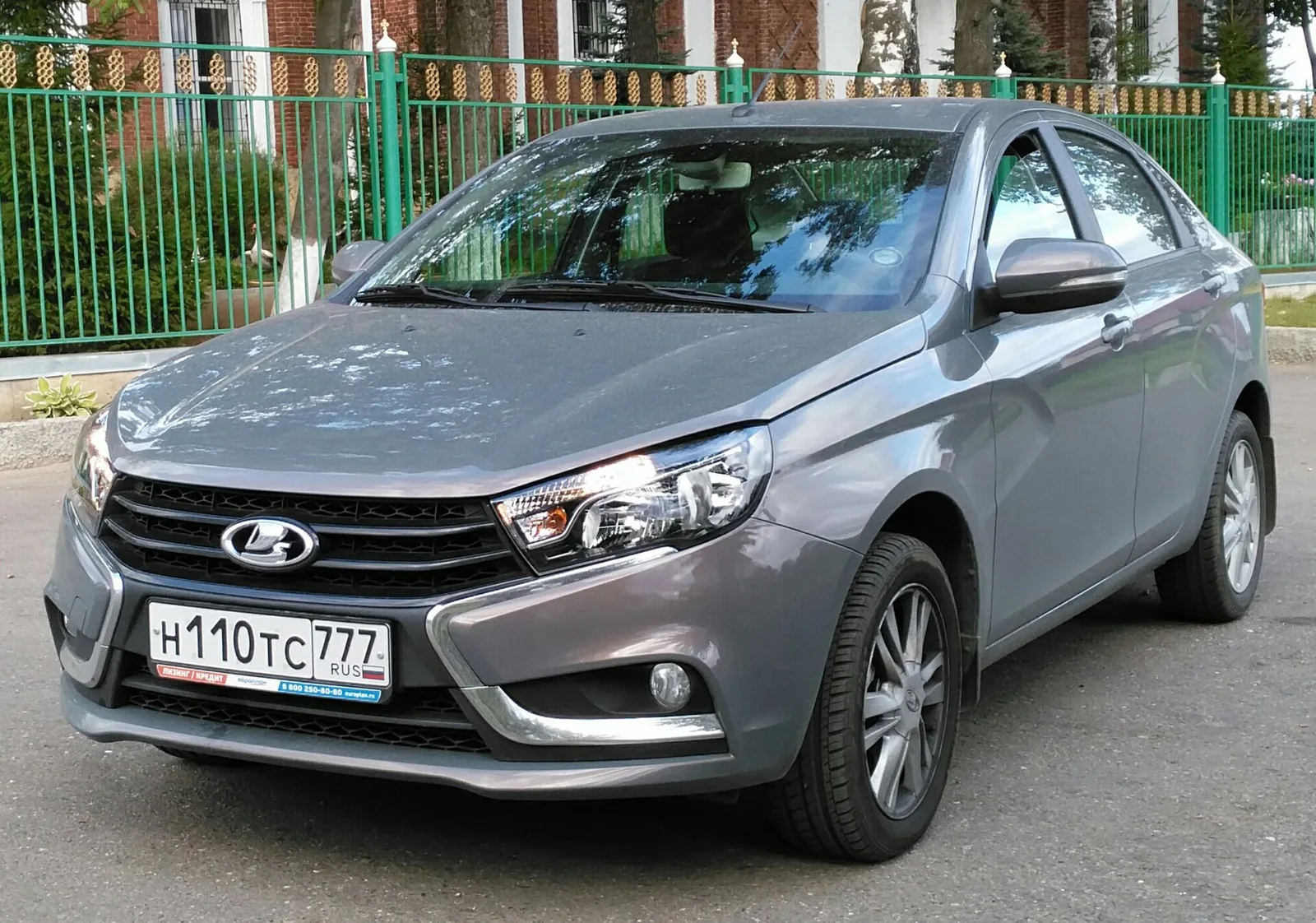
From Ford-licensed assembly and an Opel-based first model to the 407 export success, the Renault years and a 2022 revival.
Moskvitch, also spelled Moskvich, is a Soviet and Russian car brand. It was built at a Moscow factory until bankruptcy in 2002, began with an Opel-based design after the war, and returned in 2022 with rebadged JAC sedans and crossovers.
Moskvitch, also written Moskvich, is a car brand from the Soviet Union that carried on in Russia after 1991. Its cars were built at a single Moscow factory, and that factory's name still describes a large building in the city's east. Production stopped in 2002 and restarted in 2022 with a new range.
The marque's history is a story of borrowing. Ford, Opel, Renault and the Chinese maker JAC each shaped its cars at different times, and the brand was rebuilt more than once. The sections below follow that route from licensed Ford assembly to the crossovers sold today.
What is Moskvitch and where does the name come from?
Moskvitch, sometimes spelled Moskvich, belongs to the Soviet and Russian motor industry. The word roughly means a native of Moscow, or a Muscovite, which tied the marque to its home city from the start. The name still refers mainly to the old factory building.
The word is a demonym, and it suited a factory built in the Russian capital. After the Soviet Union dissolved in 1991, the plant became a privatised venture called OAO Moskvitch, a name given to the former factory to sidestep legal complications.
The company had no assembly branches outside Russia after 1991, so the name today mostly points to the building in the lower eastern part of Moscow.
From Ford-licensed assembly and an Opel-based first model to a 2022 revival built on rebadged JAC crossovers.
Why did Soviet car production begin with Ford?
Russia had worked with the American Ford Motor Company since the reign of Nicholas II, and Ford supplied tractors, trucks and passenger cars. Tens of thousands of Ford vehicles arrived in the 1910s and 1920s, because the economy had been wrecked by war.
Ford's cooperation carried on through the October Revolution of 1917. The Great War of 1914 to 1918 and the Russian Civil War of 1917 to 1922 had devastated the economy, and imports were judged essential to recovery.
The Soviet government then looked to domestic production. Its first five-year plans began in 1928 under Joseph Stalin, with the aim of industrialising the country quickly, and the plans included car making at home.
How did the Moscow factory start building cars under Ford licences?
Construction of the Moscow Car Assembly Factory began in 1929. In 1930 it began building Ford Model A and Model AA cars under licence using knock-down kits, and in December that year the plant was named KIM, after the Young Communist International.
Knock-down kits are sets of parts shipped for assembly on site, so the early factory was an assembler rather than a designer. Its output of Ford models was a foundation for later work.
By 1933 the plant had become a GAZ branch, putting together GAZ-A and GAZ-AA vehicles. It later stopped being a GAZ subsidiary and began building a design of its own.
What was the KIM-10 and why did the army reject it?
The KIM-10 was the first model the factory produced under its own design, launched in 1940 and inspired by the Ford Prefect. Between November 1940 and April 1941, 338 sedans were assembled. The design department was headed by A. N. Ostrovtsev.
The Red Army put a KIM-10 through tests in May 1941, on routes that ran from a newly built highway to muddy country tracks and open off-road ground. The car was judged unsuited to military service.
In October that year the plant was hastily evacuated to the Ural Mountains, and most of its manufacturing equipment was lost during the Battle of Moscow. Even so, by 1944 the team had mapped out a continuation of the KIM-10-52, with Soviet victory looking close.
How did the Opel Kadett become the Moskvitch 400?
After the war the Soviet Union sought tooling and designs from Germany as reparations. Planners rejected the Kdf-Wagen and DKW F8, found the Opel Kadett K38 matched their needs, and issued Order No. 9905 to start production as the Moskvitch-400.
In August 1945 the plant became the Moscow Plant of Small Cars, known as MZMA. The choice of the Kadett rested partly on examples captured by the Red Army, which were available for study.
Making the car was hard. The Opelwerk Brandenburg factory had built aircraft engines for the Luftwaffe and suffered heavy Allied bombing, so most stamping dies and tooling were made from scratch in the Soviet Union.
The 400-420 range entered production in December 1946. It ran for ten years, until 1956, when the improved 401 took over. Altogether the 400 and 401 totalled 247,439 cars, and some went to Belgium, East Germany and Norway.
What changed in the second generation of Moskvitch cars?
The second generation began in 1956 with the Moskvitch 402, developed entirely within the Soviet Union. Its successor, the 407, added independent suspension, better interiors and built-in radios, and it became the first Soviet car to succeed in Western markets.
The 407 family had several variants. The 407-424 station wagon was available to the general public, the 431 van served commercial buyers, and the 410 and 411 attempted an early off-road sedan and estate.
Up to half of the 407's output was reserved for export. Most of it went to Eastern Bloc countries, with Norway, Finland and France also taking cars, and the model achieved real success in Western markets, which set it apart from earlier Soviet exports.
What safety features did the Moskvitch 408 include?
The Moskvitch 408 was the first Soviet car drawn up with extra safety in mind. Its kit included crumple zones, safer steering columns, softer interior trim, belts, a padded dash and brakes split into two circuits. It arrived in the 1960s alongside the 412 and 2140.
Early cars in the first series carried upright rear lamps, two or four round headlights and a bench seat across the front. Their 4-speed manual gearbox had a lever mounted on the steering column. The second-generation 408, built from 1969 to 1976, kept that engine and gearbox but gained rectangular headlights, horizontal rear lights and separate bucket seats.
Good value made the 408 popular in the United Kingdom, Finland and Norway. The 412 was tested more thoroughly. It cleared checks in France, Bulgaria, Czechoslovakia, Sweden and West Germany, and it spent almost five months in testing in France before winning an international safety certificate.
How did the Renault agreement affect the Moscow plant?
In 1966, during a visit by Charles de Gaulle, an agreement was signed between the Moscow factory and Renault. Renault was to help rebuild the Moscow plant and establish a second plant at Izhevsk. Renault's involvement with the site continued long after that.
In October 1968 the factory was renamed AZLK, a title honouring the Komsomol on the 50th anniversary of its founding youth movement. The name stayed with the factory until the Soviet era ended.
The 2138 and 2140 were built on a modified 412 platform, and the factory kept producing cars through the Soviet years.
What was the Moskvitch 2141 Aleko?
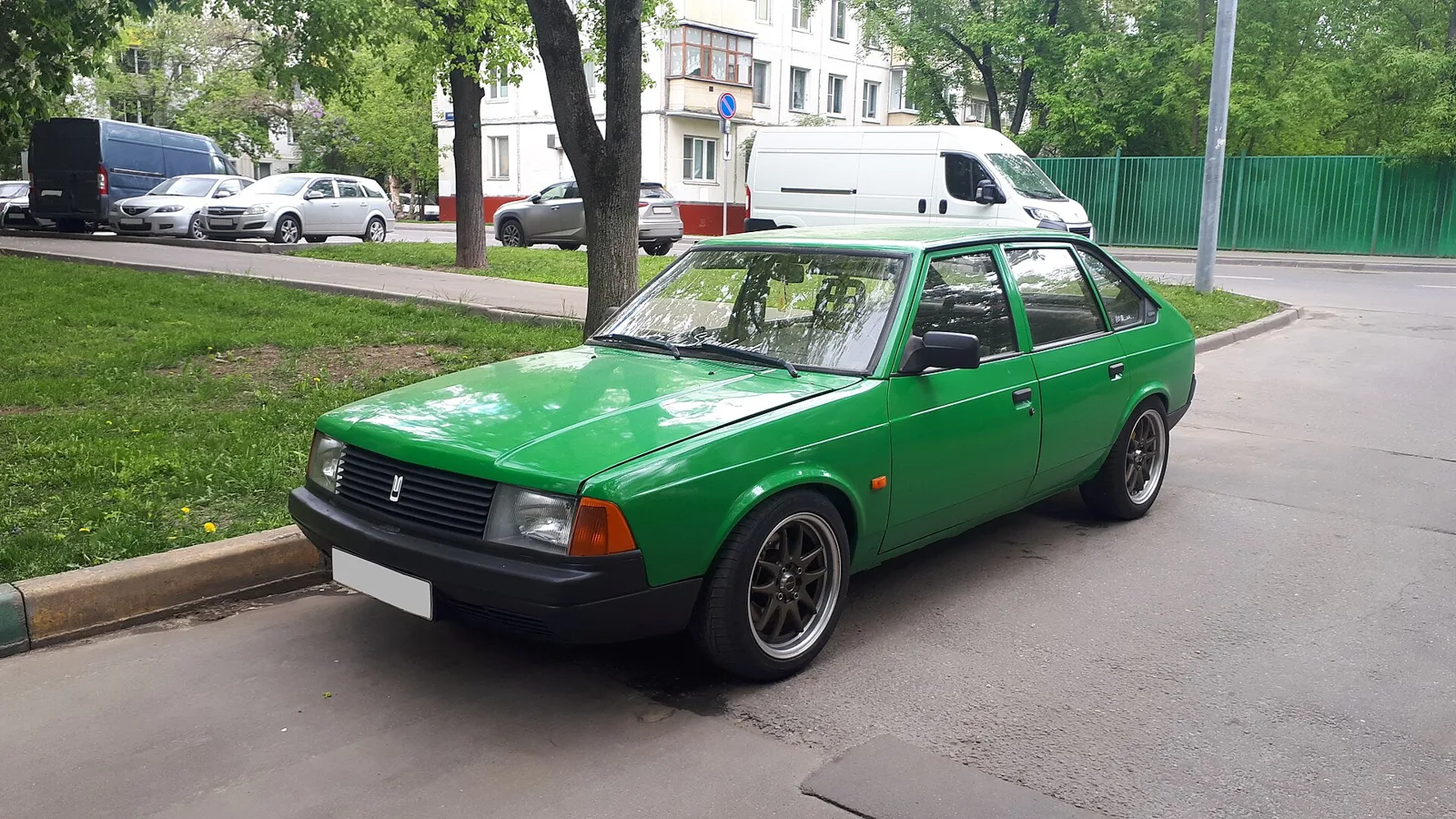
The Moskvitch-2141 Aleko arrived in 1986 as the factory's most modern car to date. It was influenced by the Chrysler Simca 1307. It was larger and more luxurious than earlier models, and it used front-wheel drive, a hatchback body and MacPherson strut front suspension.
The Aleko also featured rack-and-pinion steering and a collapsible column. Its designers put safety and aerodynamics at the centre of the car, which was new for the factory.
In the years before the Soviet Union dissolved, the factory remained one of the largest car makers in the USSR. Design work had begun on the M-2142 and on an engine plant. The financial crisis after the Soviet collapse, plus work stoppages and financial mismanagement, left the engine plant unfinished and the brand in decline.
How did the old Moskvitch company come to an end?
OAO Moskvitch filed for bankruptcy in 2002 and stopped production. Several restart attempts failed in the years that followed. The bankruptcy was formally announced in 2006, and the company was liquidated the following year. Unfinished bodies were left on the line when work stopped.
Half-built bodies stayed on the line in various stages, and the offices still held furniture, computers and paperwork. Part of the abandoned site was bought by Avtoframos, a joint venture of Moscow and Renault.
Avtoframos began assembling Renault Logan sedans from imported kits in 2005, and later became a fully owned Renault subsidiary. Technopolis Moscow, an industrial park, opened on the premises in 2012. In 2015 Renault began securing the rights to the Moskvitch name in Russia.
Did Moskvitch return to production after 2022?
Yes. In May 2022 Renault sold its Moscow plant to municipal authorities, who planned to restart production under the Moskvitch name. A new range was presented on 6 July 2022, and the Moskvitch 3 and 3e went on sale on 26 December 2022.
The 2022 models were rebadged versions of Chinese JAC vehicles, and the JS4-based cars were produced with the truck maker Kamaz. The range comprised a sedan and three SUVs, with the Model I offered as both a petrol and an electric car.
Early in 2023 an agreement with Yandex Taxi covered 3,000 Moskvitch 3 and 2,000 Moskvitch 3e vehicles. Several car-sharing and taxi operators then added Moskvitch 3 cars, and some traffic police fleets received the 3e electric crossover.
In June 2023 Hans Peter Moser was appointed general manager, while Dmitry Pronin became chair of the board of directors. Moser had worked for Kamaz and for the German industrial firm Knorr-Bremse before joining.
Which Moskvitch models are on sale now?
The current line-up is mostly compact crossovers. The Moskvitch 3 and 3e launched in 2022, the Moskvitch 6 liftback followed in 2023, and the seven-seat Moskvitch 8 arrived in 2024. The Moskvitch 5 was produced from 2023 to 2026.
The Moskvitch 3 Comfort, produced from 2023, adds extra safety, styling and interior features to the 3. Each model is also tagged with a Model I, Model II or Model III label in the company's list.
Two upcoming models were listed for 2026. The Moskvich M70 is a compact crossover with five or seven seats, and the M90 is a mid-size crossover with seven seats.
What are the key Moskvitch dates and figures?
| Specification | Detail |
|---|---|
| Names | Moskvitch, also Moskvich |
| Soviet-era producer | AZLK, 1946 to 1991 |
| Private company | OAO Moskvitch, 1991 to 2001 |
| Bankruptcy | Filed 2002, announced 2006 |
| First model | Moskvitch-400, based on the Opel Kadett K38 |
| First production run | 400 and 401 models, 247,439 built |
| Renault partnership | 1966 agreement; Avtoframos assembly from 2005 |
| Aleko | Moskvitch-2141, 1986, front-wheel drive hatchback |
| Revival | Production resumed in 2022 |
| Current range | Moskvitch 3, 3e, 3 Comfort, 6 and 8 |
| Upcoming | Moskvich M70 and M90, listed for 2026 |
Read the table as a timeline: the Soviet years, the post-Soviet collapse, the Renault era and the 2022 revival.
Where was Moskvitch built under licence abroad?
Moskvitch models were built under licence in Belgium and Bulgaria. In Belgium the Moskvitch 408 was made as the Scaldia, renamed Scaldia-Volga in 1965. In Bulgaria, Balkancar built several models in Lovech from 1966 to 1990 under the Rila marque.
Belgian cars were imported partly built, and their engines and transmissions were fitted after they arrived. Some used Perkins diesel engines of British origin, and the Aleko was also assembled there for a short time.
Balkancar's Lovech plant built the 408, 412, 2140 and 2141 Aleko. Some of these matched Moscow specifications, while others, like the Belgian cars, used Perkins diesels.
Did Moskvitch compete in motorsport?
Motorsport plays little part in the record of Moskvitch. Its engineering links were mainly civilian, and the brand's history centres on mass production, exports and industrial partnerships. This profile therefore does not claim any competition results.
The best-documented business links after the Soviet period run through trucks and industrial engineering. Hans Peter Moser's earlier career with Kamaz and Knorr-Bremse is one example, and the Kamaz connection also appears in the 2022 cars.
What is the legacy of Moskvitch?
Moskvitch is remembered for the 407, a model that proved genuinely successful in the West, and for the 408, which was praised for value in export countries. The name also lives on in the building in eastern Moscow where the factory once stood.
The brand name went quiet after the bankruptcy and came back on new cars in 2022. Its modern range is built around rebadged Chinese designs rather than the home-grown engineering of the Soviet decades.
The Aleko remained the factory's most modern car, and the 2140 and 2141 were still built under licence in Bulgaria until 1990. The brand's history runs from Ford assembly through a Renault partnership to a JAC-based revival.