A truck-building group founded in 1964 that became a passenger car brand, a contract builder for NIO and a Chinese exporter to more than a hundred countries.
JAC is a Chinese car and commercial vehicle maker founded in 1964 as Hefei Jianghuai Automobile Factory. It began with trucks, moved into passenger cars and built NIO vehicles under contract. Partnerships with Volkswagen and Huawei now shape its electric strategy.
JAC is a Chinese maker of cars and commercial vehicles, formally known as Anhui Jianghuai Automobile Group, and headquartered in Hefei. Its roots lie in trucks, but it has built passenger cars since gaining approval in 2007, and its partnerships with Volkswagen, NIO and Huawei have shaped its recent strategy.
Where did JAC come from?
The company was established in 1964 as Hefei Jianghuai Automobile Factory. Its name changed to Anhui Jianghuai Automobile Co., Ltd. in 1997, and it floated on the Shanghai Stock Exchange in 2001. For much of its early life JAC sold commercial trucks under the Jianghu name.
During the 2000s the company moved into multi-purpose vehicles and sport utility vehicles. Passenger car production was approved by 2007, but the factory continued to make mostly trucks for several years afterwards. That mix of commercial and private vehicles remains the defining feature of the group.
A truck builder from Hefei that became a car brand, a contract factory for NIO and a partner for Volkswagen and Huawei.
How did Hyundai shape JAC's early products?
Before it gained a passenger car licence, JAC worked with the Hyundai Motor Company. From 2003 it assembled Hyundai multi-purpose vehicles, a practice that stopped before 2007. Two models built on Hyundai technology carried on after the partnership ended, one an MPV and the other a sport utility vehicle.
Hyundai reportedly explored a joint venture with the company in 2004.
Did JAC consider merging with Chery?
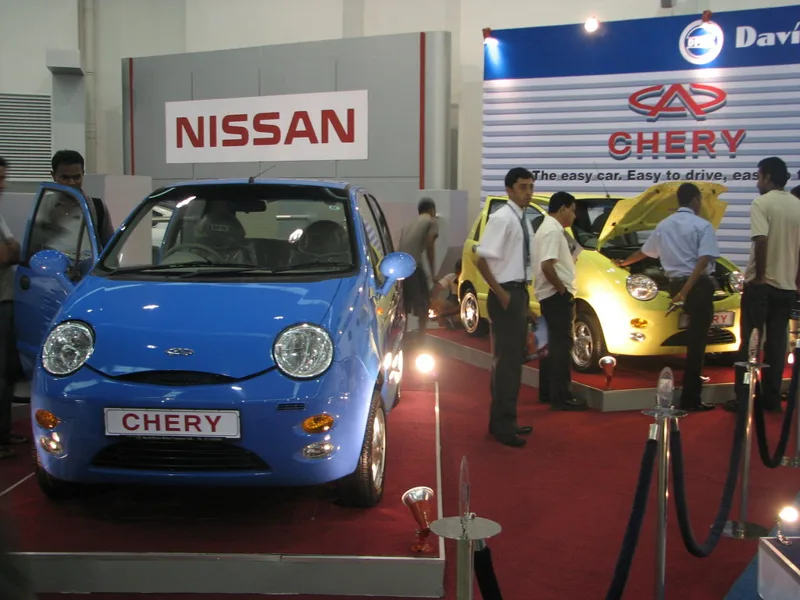
In 2009 the Chinese government signalled support for consolidation across the domestic car industry. Analysts suggested JAC might join Chery, since both companies are based in Anhui province, but JAC said it had no interest in a merger.
Instead the group leaned further into passenger cars. A 2010 announcement of a new electric vehicle programme may have been partly an effort to stave off the rumoured tie-up. Its focus moved steadily from heavy trucks toward cars and electric drive.
How many vehicles did JAC sell?
JAC's sales passed 445,000 units in 2012. In 2011 it was ninth among China's most productive manufacturers, making nearly 500,000 vehicles, but the drop to about 445,000 units in 2012 moved it down to tenth place. Estimated production capacity was over 500,000 units a year as of 2009.
The company recovered in 2013, when it sold 458,500 units for a 2.5 per cent market share and reached eighth place among the country's top ten producers. Those figures placed JAC among the country's volume manufacturers.
How did the group become one company?
In 2014 JAC Motors completed its full acquisition of JAC Group. The combined business was traded on the stock market under the JAC Motors name but continued to operate as JAC Group.
Leadership passed through a small number of executives. Zuo Yan'an led the company from 1990 to 2012, An Jin served from 2012 to 2021, and Xiang Xingchu has led it since 2021.
How did the Volkswagen partnership develop?
In 2017 JAC and the Volkswagen Group announced a joint venture to build electric cars for the Chinese market. The first plan involved the SEAT brand, but when the venture was officially formed in April 2018, it traded under a new name, Sol. Its first product, the SOL E20X, was an electric crossover that badge-engineered the JAC iEV40, also sold as the JAC Refine S2 EV, with a new front end styled by the SEAT design centre in Spain.
Volkswagen then moved to take control. In 2020 it signed letters of intent to raise its stake in the joint venture from 50 per cent to 75 per cent, a deal that involved an investment equal to one billion euros and was expected to conclude by the end of that year. Volkswagen would also take half of JAG, the parent company of JAC and a holding owned by the Anhui government.
The arrangement left Volkswagen with 75 per cent of Volkswagen Anhui, while JAC Group kept 25 per cent. Through its stake in JAG, Volkswagen also held a 14.09 per cent interest in JAC Group, which lifted its effective ownership of Volkswagen Anhui to 78.52 per cent.
Why did NIO rely on JAC to build its cars?
In April 2016 NIO and JAC Group signed a manufacturing agreement that set a target of 50,000 vehicles a year over five years. In 2018 the NIO ES8, the first mass-produced NIO model, was launched after being built by JAC.
In March 2021 the two companies formed Jianglai Advanced Manufacturing Technology (Anhui) Co., Ltd., a joint venture held equally, and extended the contract to May 2024. NIO paid JAC CNY 1.2 billion to extend those manufacturing services. Contract payments reached a total of CNY 3.038 billion by 2022.
The relationship changed again in December 2023, when NIO bought the JAC factories that made its vehicles for CNY 3.158 billion. That purchase ended NIO's role as an original equipment manufacturer. A January 2024 framework agreement then set out cooperation on battery standards, battery swapping technology and service networks.
What did the Huawei agreement bring?
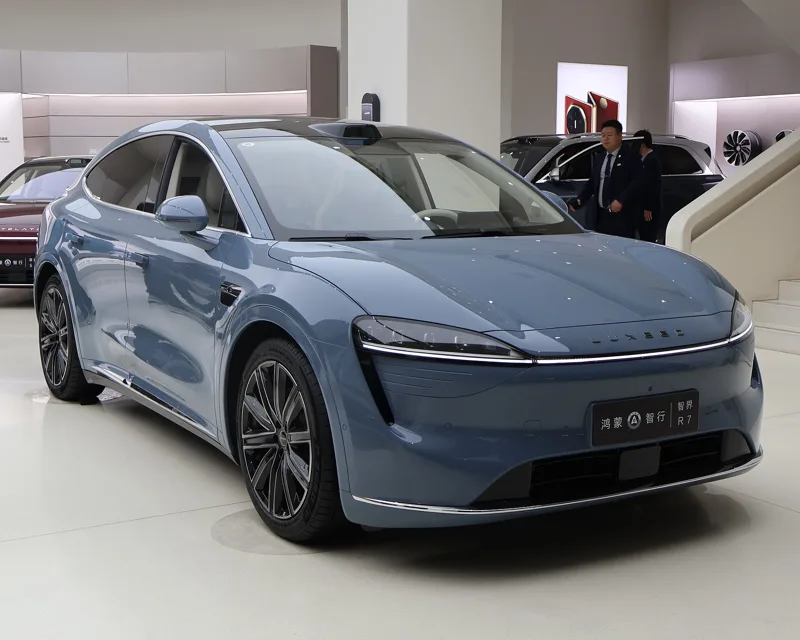
In December 2023 JAC signed a cooperation agreement with Huawei to make premium electric vehicles built on Huawei's intelligent automotive solutions. The arrangement covered manufacturing, sales and services, so JAC would build the cars while Huawei supplied the intelligence.
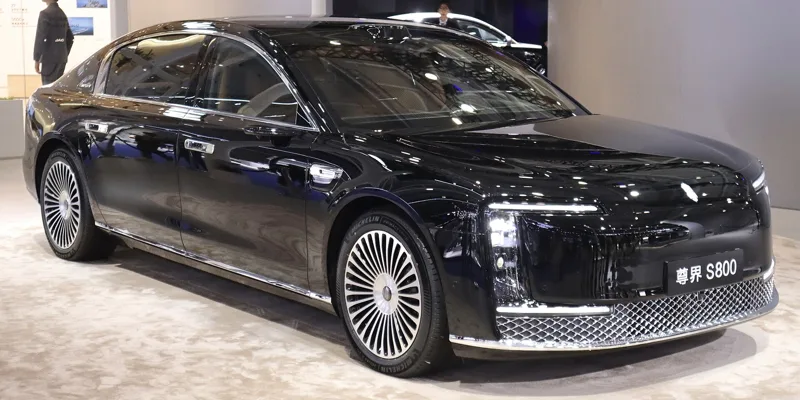
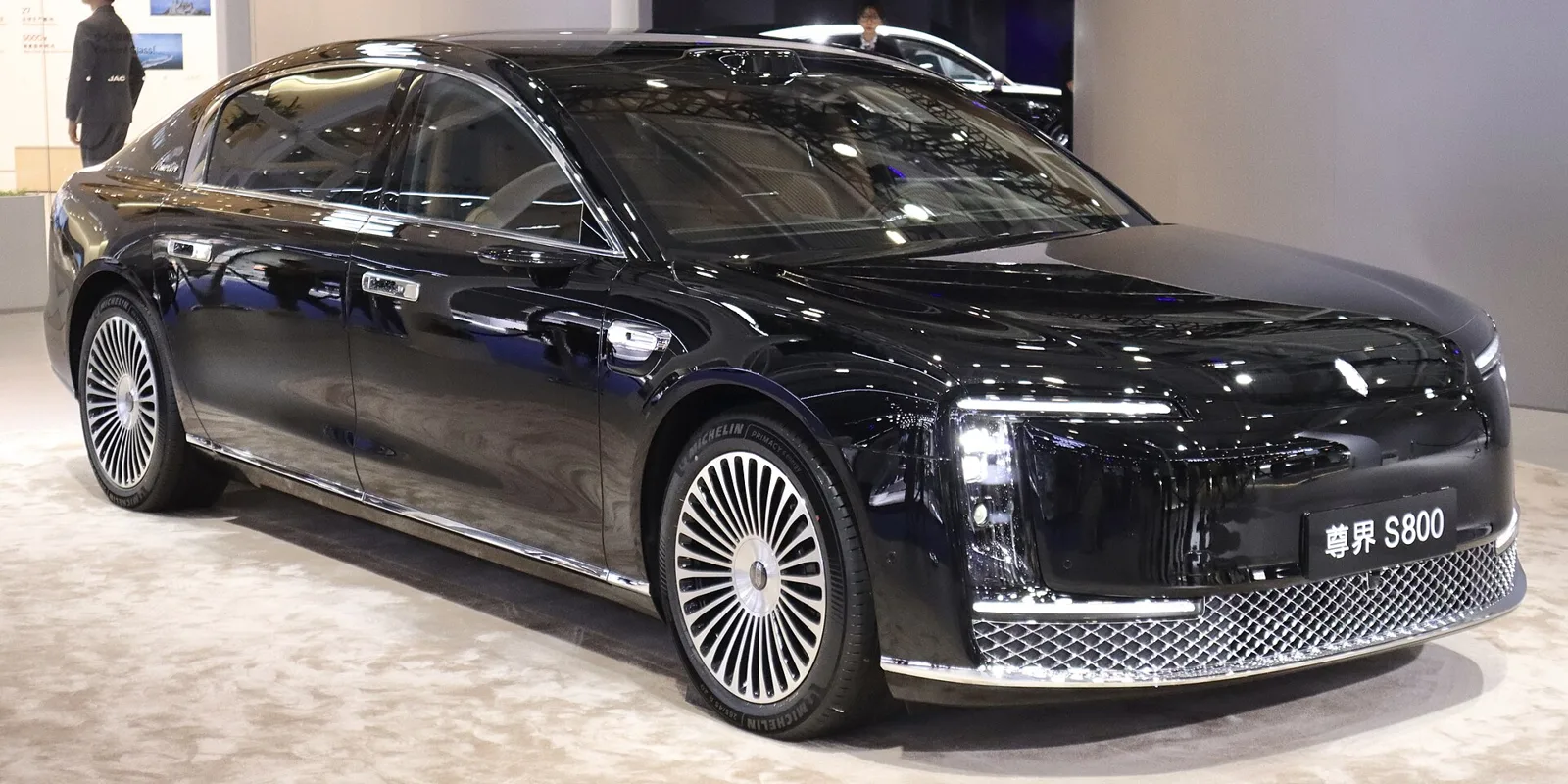
In August 2024 Huawei announced, at the Stelato S9 launch, that Maextro (Zunjie in Chinese) was the fourth brand in its Harmony Intelligent Mobility Alliance to work with JAC. The first vehicle, the Maextro S800, was scheduled to leave the production line by the end of 2024 and to go on sale in the first half of 2025.
What brands sit under the JAC umbrella?
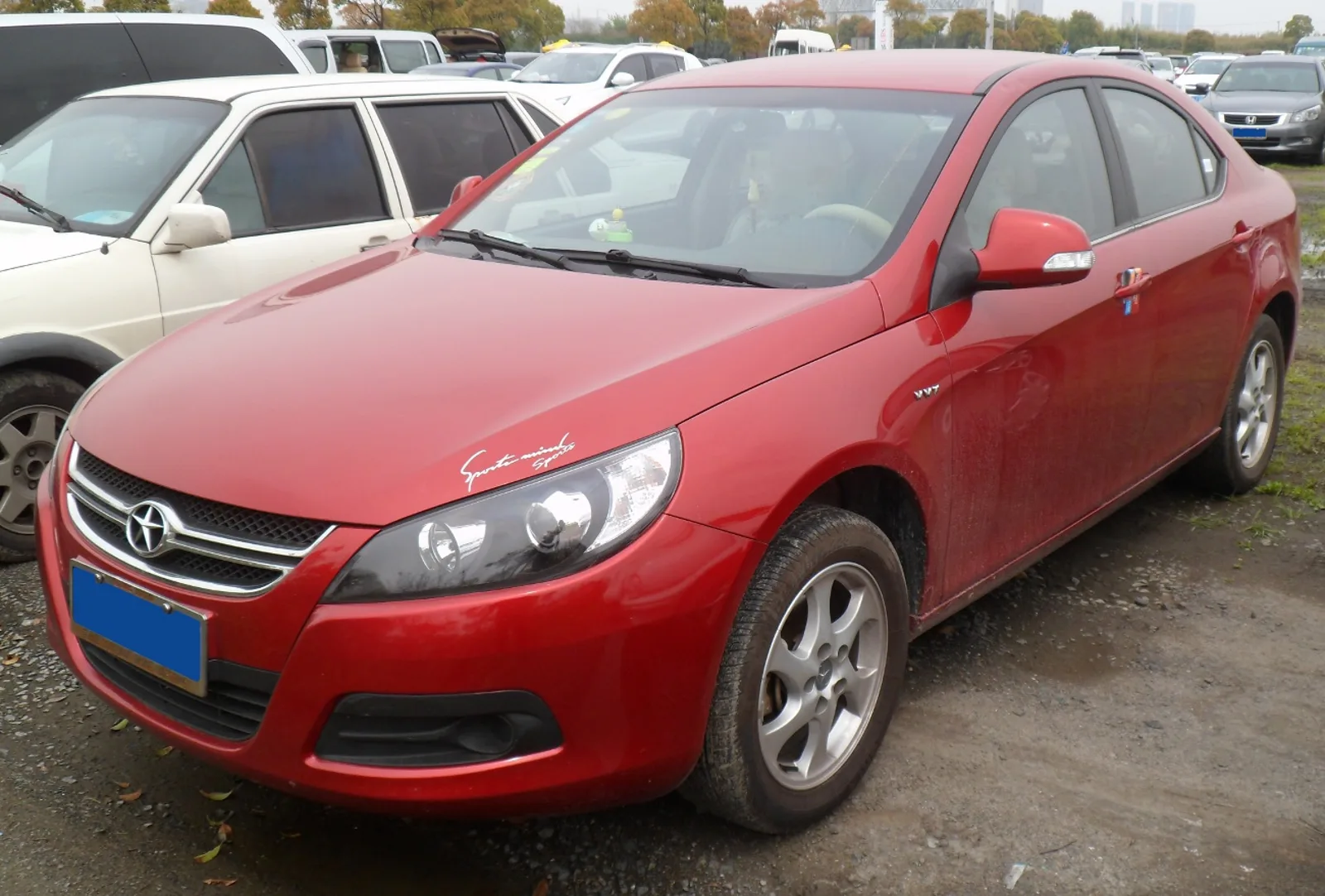
The company has rebuilt its brand line-up several times. Heyue covered sedans, hatchbacks, MPVs and SUVs, while Refine handled large MPVs, minivans and vans. Heyue was discontinued in 2017, with electric variants taking over its final models. Jiayue arrived in 2019, and several Refine vehicles moved into it.
In 2020 JAC began rebadging Jiayue models as Sehol, a brand formed in 2018 by JAC and Volkswagen as a joint venture, originally aimed at pure electric vehicles. The Sehol name was licensed to JAC, which effectively made it a JAC-owned brand rather than a joint venture. In 2023 the company announced it would phase out Sehol, and several models were rebadged back to JAC.
Entry-level electric cars now sit under the JAC Yiwei name, launched in April 2023. The range includes the Yiwei 3 subcompact hatchback from 2023, the Yiwei Hua Xian Zi city car from 2024, and the Yiwei Aipao compact sedan, which is a battery-electric version of the JAC A5 Plus. The Refine name became an independent brand in 2020, and it covers the commercial minivan range.
Which past models defined the JAC range?
Several models from the early period are now discontinued but remain well documented. The Refine A60 mid-size sedan ran from 2015 to 2020, and the Binyue mid-size sedan from 2008 to 2012. The Heyue A30 subcompact sedan ran from 2012 to 2019, while the Yueyue city car ran from 2010 to 2019.
On the SUV side, the Refine S7 mid-size model ran from 2017 to 2020, and the Refine S5 compact SUV from 2013 to 2019. The Refine S3 and Refine S2 subcompact SUVs were still on the books in the most recent listings, and the iEV7S electric version of the S2 ran from 2016 to 2023.
How big is JAC's truck and van business?
JAC's commercial vehicles are a large part of its identity. Its light truck and pickup families include the Ruiling, Reni and K5, the V7, the Hunter, and a long run of Shuailing models with G, H, I, K, S, W and X series variants. The Junling range covers E, V and G series trucks, and the Kangling range spans K, H, X and G series vehicles.
Electric logistics vehicles are a newer part of the portfolio. The Lanmao line includes the M1 and M2, the Kala has its own electric logistics version, and the Van Baolu is an electric logistics vehicle.
How does JAC's engine and factory base work?
A 40,000 unit per year medium to heavy truck base was expected to start operating in 2012, probably in Hefei. The company's research and development facility is also based in Hefei, supported by three overseas centres in Turin, Tokyo and Seoul.
Heavy engines came from joint ventures with Navistar. The JAC-Navistar Diesel Engine Company, called JND, builds medium to heavy diesel engines in China using parts and services from Navistar. A second venture, NC2 Global, was a Navistar and Caterpillar joint venture for heavy-duty trucks. Cummins later bought Navistar's equity in the engine venture, in 2018.
How did JAC enter overseas markets?
JAC began exporting to Bolivia in 1990 and has since expanded to more than one hundred countries. Light trucks have been a popular export, and some vehicles leave China as knock-down kits for assembly abroad, in places such as Egypt, Ethiopia, Vietnam, Mexico and Iran. Such overseas factories are not always owned by JAC, and the kits give the company a cheaper entry into developing markets.
In Brazil the company partnered with the SHC group in 2009. By early 2011 that distributor had placed more than 10,000 firm orders, and a plant in Bahia state was planned, with SHC to provide 80 per cent of the initial investment. In the Philippines a local partner sold JAC heavy-duty trucks from 2016, and passenger cars followed in 2018.
Mexico became a manufacturing market in 2017, when JAC formed a joint venture with Giant Motors, a company owned by the tycoon Carlos Slim. The factory at Ciudad Sahagun in Hidalgo state covers 65,000 square metres and runs two production lines with capacity above 25,000 units a year. Its SEI2 and SEI3 SUVs went on sale in June 2017, and the J4 compact sedan joined the line-up in 2018.
Europe came through a different route. In 2016 JAC agreed with DR Automobiles to send vehicles to Italy. China-built models were re-approved to European safety and anti-pollution rules and sold with the DR badge. The first arrivals were the Refine S3, rebadged as the DR4, and the iEV40, which went on sale as an electric DR model.
What is the Rightech RT75?
On 29 January 2025 Wrightbus, the Northern Irish bus manufacturer, entered truck production with JAC under the Rightech sub-brand. The first vehicle, the Rightech RT75, is a 7.5 tonne battery electric box truck based on the JAC Junling, with a revised front grille.
The RT75 is offered with a 3.85 metre (12.6 ft) or a 4.48 metre (14.7 ft) wheelbase, and it can be specified in left-hand or right-hand drive for the UK and European truck markets.
JAC milestones at a glance
| Year | Milestone |
|---|---|
| 1964 | Founded as Hefei Jianghuai Automobile Factory |
| 1990 | Export of vehicles begins in Bolivia |
| 1997 | Renamed Anhui Jianghuai Automobile Co., Ltd. |
| 2001 | Listed on the Shanghai Stock Exchange |
| 2007 | Government approval for passenger car production |
| 2014 | JAC Motors completes full acquisition of JAC Group |
| 2016 | NIO manufacturing agreement; DR Automobiles deal for Italy |
| 2018 | SOL E20X from the Volkswagen joint venture; NIO ES8 launched |
| 2021 | Jianglai joint venture formed with NIO |
| 2023 | Yiwei brand launched; NIO factories acquired |
| 2024 | Yiwei city car and Aipao; Maextro announced with Huawei |
| 2025 | Rightech RT75 electric truck with Wrightbus |