From Harry Ferguson's 1961 P99 to the 1969 wave of Cosworth-era attempts, the story of an idea that weight and handling never let succeed.
Four-wheel drive has been tried only occasionally in Formula One, with eight such cars known to have been built since 1950. The first to race was the Ferguson P99 in 1961, most attempts came in 1969, and FISA banned the idea from 1982.
Formula One has flirted with four-wheel drive, but never for long. Since the World Championship began in 1950, eight such machines have been constructed, and most of them surfaced either in the early 1960s or during a brief burst of interest in 1969.
The principle was straightforward: send power to all four wheels and gain grip. In practice, the extra mass, complicated driveshafts and awkward handling cancelled out the benefit, and the drivers who tried these machines rarely enjoyed the experience.
How many four-wheel drive Formula One cars were built?
Eight four-wheel drive cars are known from the championship era. Ferguson's P99 arrived first, in 1961, and later machines came from BRM, Lotus, Matra, McLaren and Cosworth. Most of them appeared in 1969, and the FISA ban of 1982 brought the experiment to an end.
Several examples have survived in collections. Some were raced seriously, others were withdrawn after a single qualifying session, and a few were abandoned before they reached a championship race.
Eight cars, one idea and a grip problem that extra driven wheels could never fully solve.
What was the Ferguson P99?
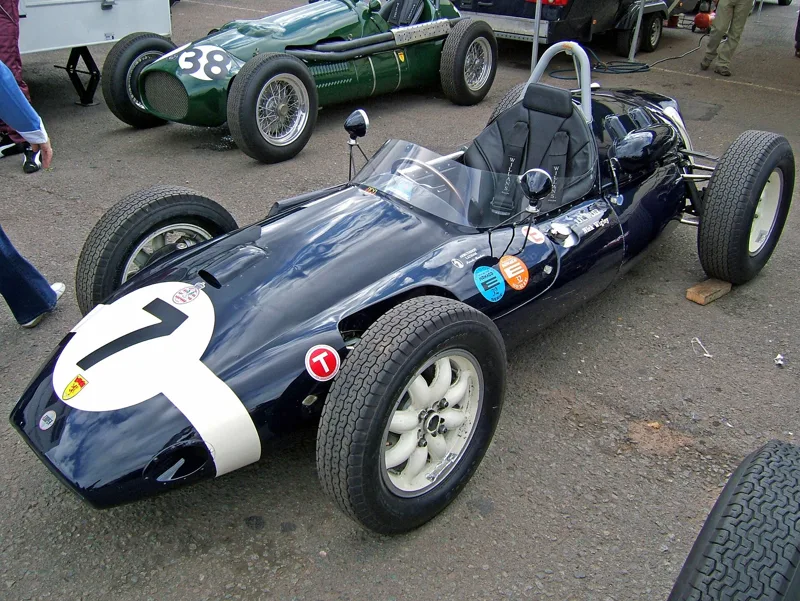
The Ferguson P99-Climax is the most famous of the breed, because it was both the first four-wheel drive entry and the last front-engined car to take a Formula One victory. Those two distinctions sit uncomfortably side by side, which makes the car a lasting puzzle.
The project began with two enthusiasts who saw potential in circuit racing, and the tractor maker's founder, Harry Ferguson, wanted to publicise his firm's transmissions. Design work started in 1960 under Claude Hill, who aimed for an even 50-50 split of torque between the axles. That balance forced the engine to sit at the front, despite the recent success of Cooper and Lotus with rear engines.
Rule changes then cut engine capacity by 40% for 1961, which made the transmission's weight a much heavier handicap. The team installed a standard 1.5-litre Climax four-cylinder, tilted to clear the front driveshaft, and shifted the seat slightly to one side so the gearbox and rear shaft had room.
Early results were poor. The car made its debut at the 1961 British Empire Trophy, but Jack Fairman crashed on the second lap. At Aintree, Fairman gave way to Stirling Moss when his Lotus 18 broke, and officials later excluded the P99 for receiving help from outside on lap 56.
Moss gave the car its high point, winning a rain-soaked International Gold Cup race at Oulton Park. In February 1963 a 2.5-litre Climax engine went in, and Graham Hill took the wheel at Warwick Farm in Australia and at Lakeside, finishing sixth and second. Its last racing came on the British hillclimb circuit between 1964 and 1966, and Peter Westbury took the 1964 crown.
A spin-off, the four-wheel drive Ferguson P104 Novi indycar, took its basis from the P99. Bobby Unser raced it at Indianapolis in 1964 and 1965 but failed to finish either year. In a 1997 conversation with Motor Sport magazine, Sir Stirling Moss named the P99 as the best of all the Formula One cars he had driven, a strong endorsement from a driver who had also raced the Mercedes W196 and the Vanwall.
Why did BRM try four-wheel drive?
BRM built the P67 in 1964 to test the Ferguson system before the 1966 move to 3.0-litre engines. The car combined a P261 chassis, P57 suspension and a 1.5-litre P56 engine mounted back to front. Richard Attwood was its driver at the British Grand Prix, where BRM pulled it out after it qualified last.
After leaving racing, Ferguson offered its transmission to any constructor that was interested, and BRM accepted the offer. Mike Pilbeam, then a BRM apprentice, assembled the car, and he later became known for building hillclimb machines.
Once the P67 had failed to make an impression, BRM turned its attention to the complicated H16 engine. The H16 was packaged so that a second driveshaft could run through it, in case four-wheel drive became the way forward.
The P67 found a second life on the hill. David Good drove it in 1967 with a 2-litre engine, and after tuning the torque split, Peter Lawson used it to win the British championship in 1968 with ease.
Why did four-wheel drive boom in 1969?
The Cosworth DFV, introduced in 1967, gave cars more power than their tyres could use, especially in the wet. Several leading customers and Cosworth itself responded with four-wheel drive designs, and 1969 became the peak year for the idea.
The timing was unlucky. Wet races dominated 1968, but 1969 was almost entirely dry, so the cars never showed what they could do on slippery tracks. Improvements in wings and tyres also erased the traction gain, and nearly every driver disliked how the cars handled.
What went wrong with the Lotus 63?
Lotus were the most committed of the 1969 teams, and the 63 was their attempt. It used a back-to-front DFV, a Hewland gearbox and a Ferguson transmission whose torque split could be set anywhere from 50-50 to 30-70. Its wedge shape and inboard front brakes carried forward into the Lotus 72.
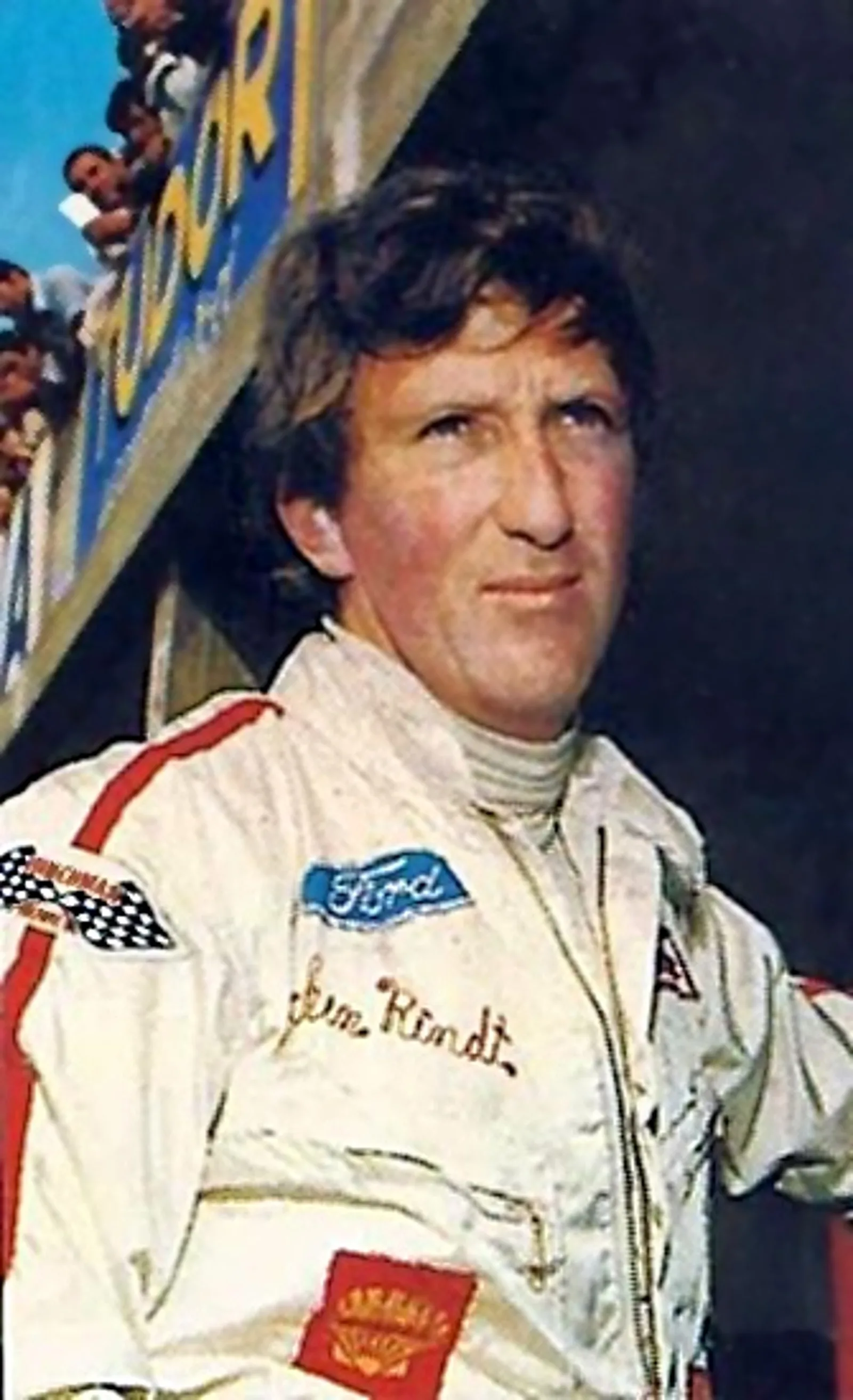
The car drew on the Lotus 49 and on the company's two gas turbine four-wheel drive entries at Indianapolis. A ban on high-mounted wings followed the 1969 Spanish Grand Prix crashes involving Graham Hill and Jochen Rindt, which made low grip a bigger problem, and the 63s were rushed into action at Zandvoort two races later.
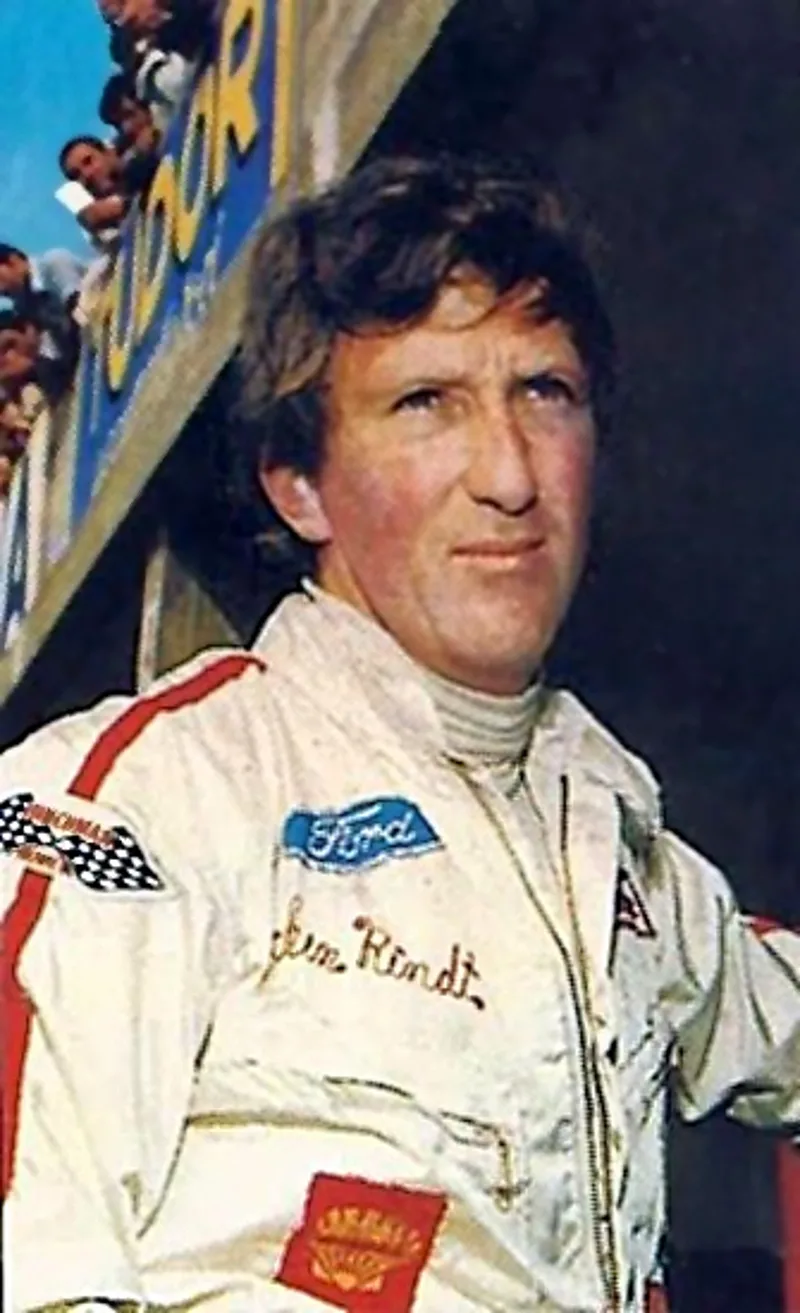
Hill tried the 63 in qualifying, found his regular 49B almost four seconds faster, and called the 63 a death trap. Test driver John Miles made the debut at the French Grand Prix, where a fuel pump failure ended his run after one lap. At Silverstone, Jo Bonnier's engine let go and he retired, while Miles came home tenth, some nine laps down.
Mario Andretti wrecked a 63 on the opening lap at the Nurburgring. Unhappy about it, Rindt was pushed into a 63 for the International Gold Cup, finishing second behind Jacky Ickx in a weakened field. Miles's later races in Italy, Canada and Mexico ended in engine, gearbox and fuel pump failures, while Andretti's car went out at Watkins Glen with broken suspension.
Once Jackie Stewart's Matra had taken both titles, Chapman dropped the four-wheel drive plan and concentrated on the Lotus 72. One 63 is now on show at the Donington Grand Prix Collection.
Why did the Matra MS84 and McLaren M9A struggle?
Matra's MS84 was built from the MS80, the car that had won the 1969 Constructors' Championship. The added transmission made it 10% heavier than its two-wheel drive relatives. Jackie Stewart tried it at the Dutch Grand Prix but kept racing his MS80 for the rest of the season.
Jean-Pierre Beltoise gave the MS84 its first race at Silverstone, where he finished ninth, six laps behind Stewart and three laps ahead of Miles's Lotus 63. Later the front differential was disconnected, turning the car into an overweight MS80 with inboard front brakes. Johnny Servoz-Gavin, who had dismissed the car as undriveable, finished sixth in Canada but six laps down, and later took eighth in Mexico, two laps adrift.
McLaren's team was the last front-running outfit to build a four-wheel drive car, in 1969. Jo Marquart designed the M9A, which wore a distinctive tea tray rear wing. Derek Bell retired it at the British Grand Prix with suspension failure, and Bruce McLaren, after testing the car, likened the experience to having someone keep jogging his elbow while he tried to sign his name. It was never raced again.
What made the Cosworth four-wheel drive car different?
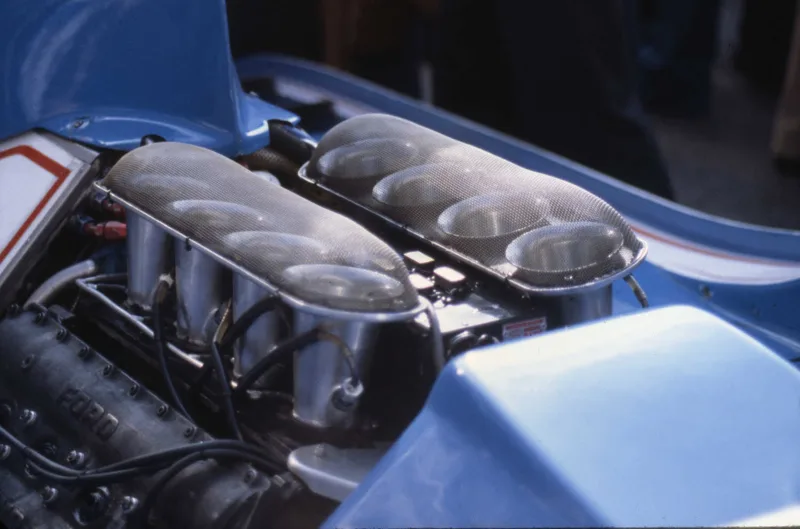
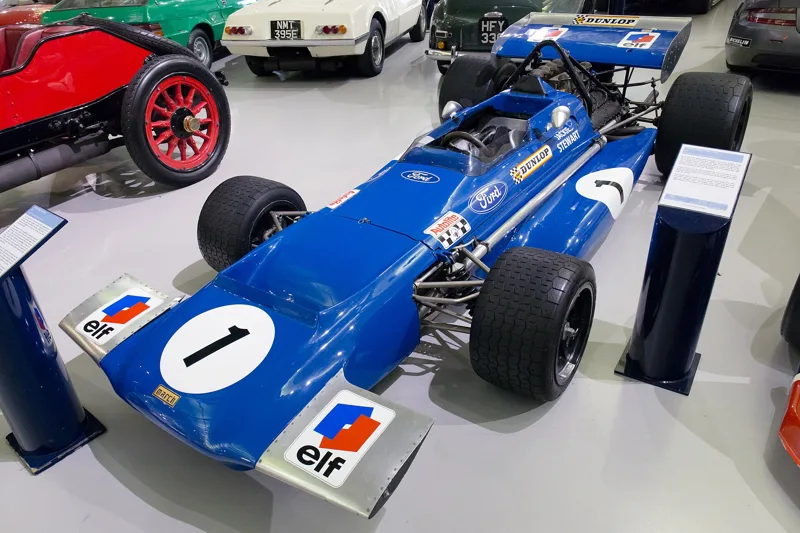
Cosworth were the first to try four-wheel drive, a logical step given that their own DFV was the root of the grip problem. Ford's Walter Hayes backed the project, and Robin Herd helped Keith Duckworth with the design, which had an angular body and sponsons either side of an aluminium monocoque.
Cosworth refused to use Ferguson's gear. Instead the team built its own transmission, along with a new gearbox and a magnesium-cast DFV, perhaps hoping to sell the technology later. The cockpit sat visibly off-centre to the left.
Trevor Taylor and Mike Costin ran the car. Early on, the oil tank sat directly behind the driver and was uncomfortable, so it moved behind the engine. The front driveshafts were also redesigned, but understeer remained a problem. Even a limited-slip front differential offered only slight benefit.
Jackie Stewart also drove it, and his assessment was that the car felt too heavy at the front. Hayes withdrew his backing, and the project was ended shortly before the British Grand Prix. The car remains the only Formula One machine Cosworth ever built, and it is on display at Donington. A second car was assembled from factory parts by Crosthwaite and Gardner.
Why did the Lotus 56B turbine car race?
Lotus built the 56B as a Formula One version of its gas turbine car, which had nearly won the 1968 Indianapolis 500. A ban on turbines and four-wheel drive at the 1970 race left the design without a home, so it came to Formula One as a replacement for the 63.
Its Pratt and Whitney turbine drove a Ferguson-derived transmission with no clutch or gearbox. At the 1971 Race of Champions, Emerson Fittipaldi qualified seventh of 15 and retired after 33 laps. The suspension broke again in the first heat at the International Trophy, but Fittipaldi still took third in the second race.
Dave Walker replaced him for the Dutch Grand Prix, starting 22nd. Rain suited the car, and he surged to tenth within five laps before crashing out. Reine Wisell's British outing ended 11 laps down, and the last Formula One start for a 56B came at the Italian Grand Prix, where Fittipaldi took eighth, a lap down on what was then the closest finish in the sport's history.
| Car | Year | Team and driver | Best result |
|---|---|---|---|
| Ferguson P99-Climax | 1961 | Rob Walker, Stirling Moss | Victory at the International Gold Cup |
| BRM P67 | 1964 | BRM, Richard Attwood | Withdrawn after qualifying last |
| Lotus 63 | 1969 | Lotus, John Miles | Second for Jochen Rindt at the International Gold Cup |
| Matra MS84 | 1969 | Matra, Jean-Pierre Beltoise | Ninth at Silverstone |
| McLaren M9A | 1969 | McLaren, Derek Bell | Retired at the British Grand Prix |
| Cosworth 4WD | 1969 | Cosworth, Trevor Taylor | Axed before the British Grand Prix |
| Lotus 56B | 1971 | Lotus, Emerson Fittipaldi | Third at the International Trophy |
Why was four-wheel drive banned in 1982?
FISA's decision was triggered by the Williams FW08D, not by any other car with four driven wheels. Its arrival made the governing body act, and four-wheel drive was removed from the sport from 1982 onwards.
Earlier, March and Williams had each built six-wheeled cars with identical layouts, and neither was raced in Formula One. The March 2-4-0 later enjoyed success in hillclimbs. Testers found that the extra traction was largely cancelled by the rolling resistance of the additional wheels, so the cars were roughly as fast as ordinary ones.
What was the AJB Special?
The AJB Special was an earlier four-wheel drive entry, built by Archie Butterworth and entered at Silverstone in 1950. It retired after one lap of its first heat and did not take part in the final.
Butterworth was an engineer and driver with an enthusiastic streak. The AJB Special became the first starter to pair four-wheel drive with an air-cooled unit, a distinction that says more about pioneering spirit than about results.
Why does four-wheel drive still matter?
Four-wheel drive matters because it shows how an idea that works on paper can fail when the rest of the car is not ready for it. Grip, weight, tyres and aerodynamics had to work together, and the extra driveshafts and differentials usually made the cars slower.
The sport changed its mind quickly. The 1969 wave was brief, and the 1982 ban closed the door before a fair test could be made. Today four-wheel drive is most closely associated with road cars, while Formula One remembers the experiment through the few cars that survive in collections.