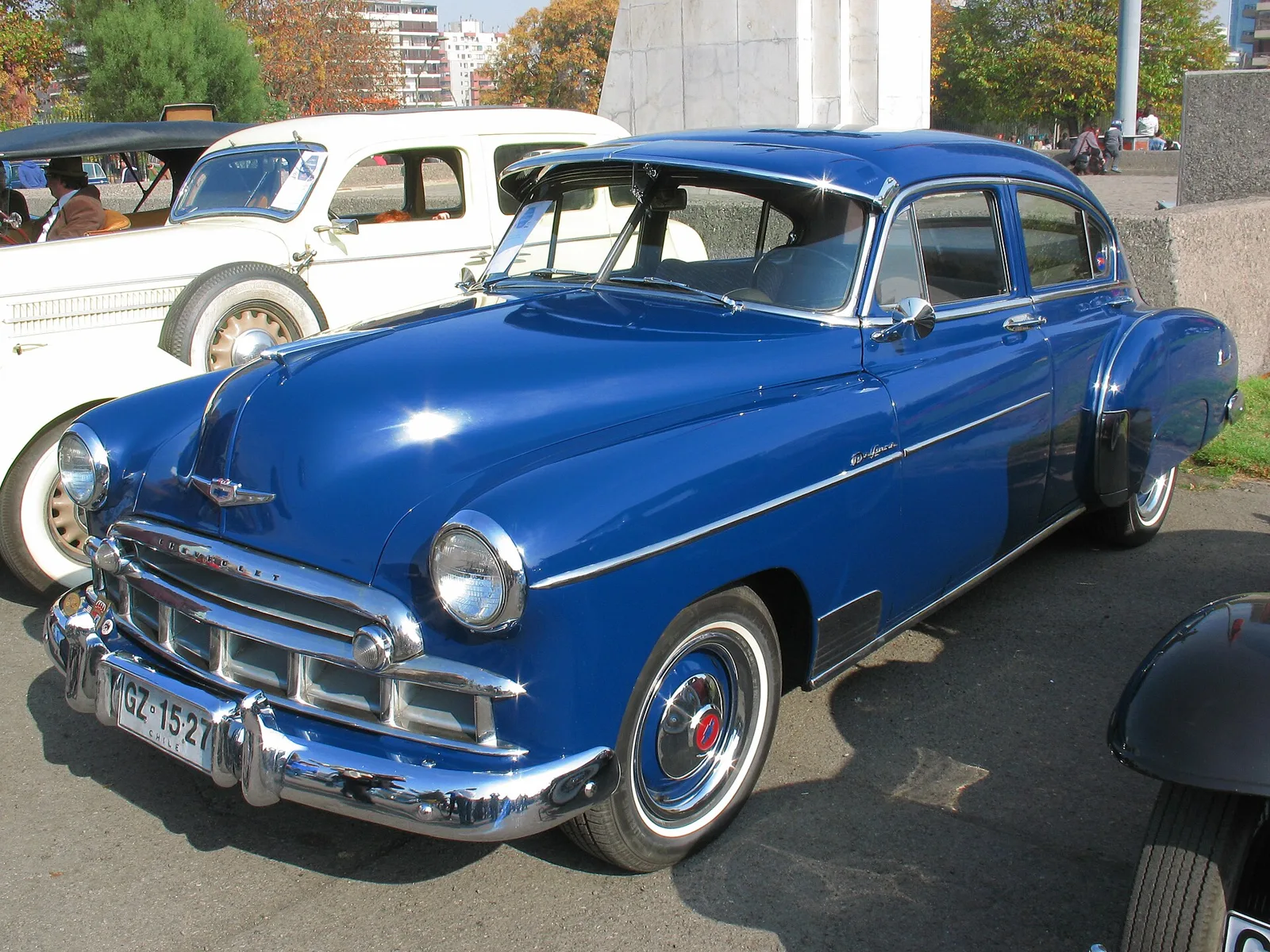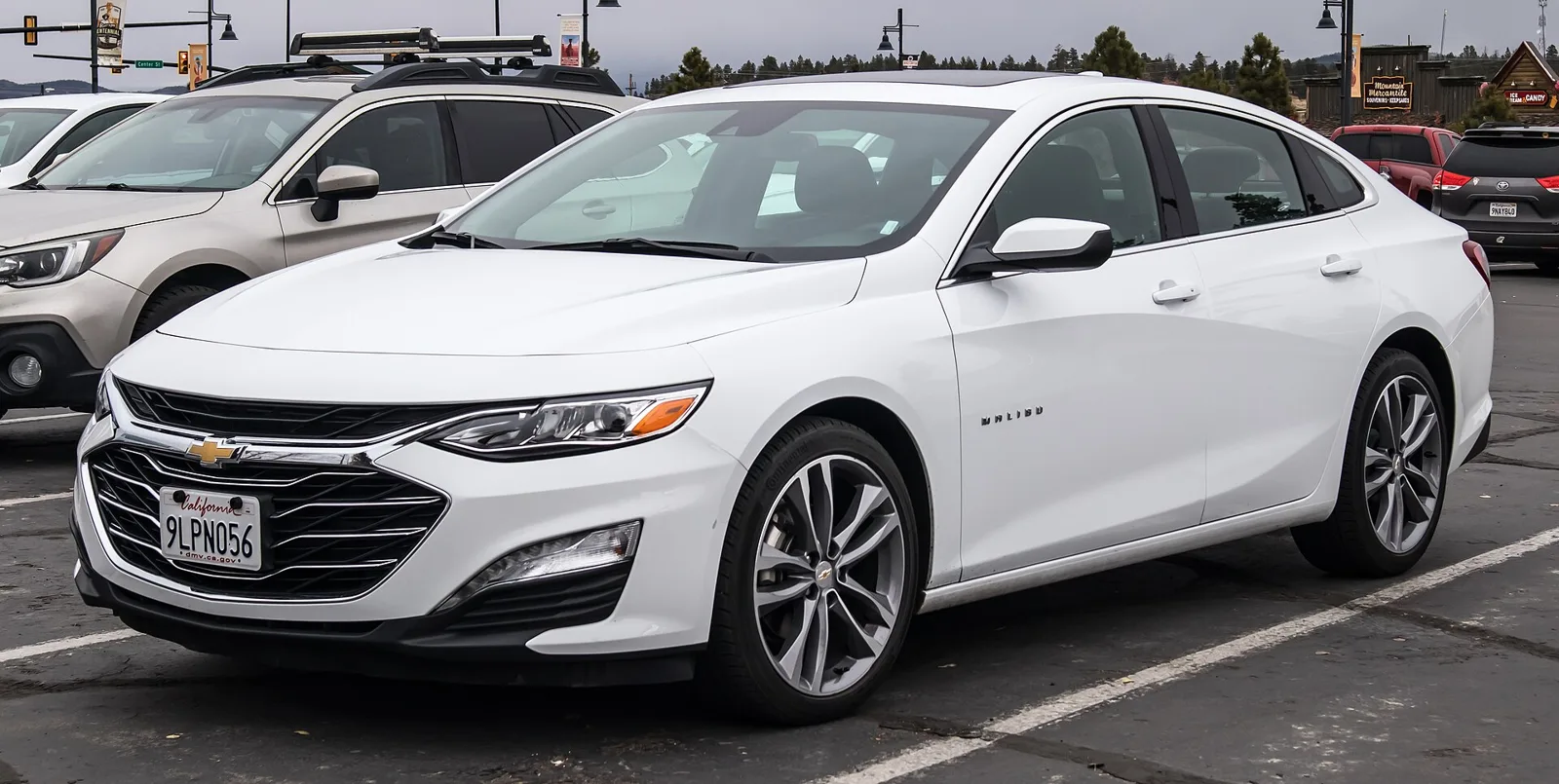
A best-seller in 1980, a recall casualty by 1983, a Fortune cover in between, and a nameplate that outlived them all.
Chevrolet's family-car line moved from the rear-drive Malibu to the front-drive Citation (1980 to 1985), Celebrity (1982 to 1990) and Lumina (1990 to 2001). The Malibu then returned in 1997 and ran until 2025, ending as Chevrolet's last US sedan.
In 1986 the car Americans bought more than any other carried a Chevrolet badge, and it was not a Camaro or a Corvette. It was the Celebrity, a front-drive family car that few people could picture today. No Chevrolet, and no car from any other General Motors brand, has topped that chart since.
The Celebrity belongs to a family of four names that kept the middle of the Chevrolet range stocked for decades: Malibu, Citation, Celebrity and Lumina. They took turns. One handed the job to the next, sometimes after a clumsy launch, sometimes after a spectacular one, and between them they show how a big manufacturer reinvented its everyday car three times.
Where does the Chevrolet Malibu story begin?
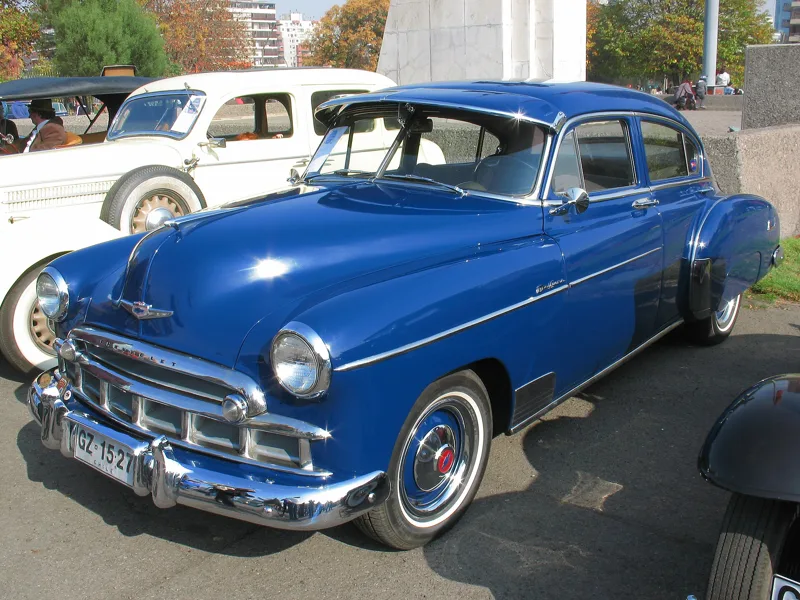
The Malibu began in 1964 as the top-line trim of the mid-sized Chevelle, not as a car in its own right. It became a separate model line in 1978, disappeared after 1983, and returned in 1997 as a front-wheel-drive car that stayed on sale until 2025.
The early cars were the comfortable end of the Chevelle range, with patterned cloth and vinyl, deep-twist carpet and a deluxe steering wheel. The Malibu SS added bucket seats, a console and engine gauges, and could be ordered with any six-cylinder or V8 on the Chevelle list. The best 1964 engine was a 5.4-litre (327 cu in) V8 rated at 224 kW (300 hp).
A run of 201 Malibu SS hardtops in 1965 got the Z16 option, which brought a heavily reworked chassis and a new 396 cu in big-block V8 of 375 hp. After that the performance badge moved. For 1966 Chevrolet launched a separate Chevelle SS-396 series, and the Malibu settled into the role of sensible, well-trimmed family transport.
The 1968 restyle brought semi-fastback roofs on two-door hardtops and split the wheelbase: 112 inches (2,800 mm) for two-doors, 116 inches (2,900 mm) for four-door sedans and wagons. A 5.0-litre (307 cu in) V8 of 200 hp displaced the old 4.6-litre. In 1969 headrests turned standard under a federal safety mandate, the ignition moved to the steering column, where it doubled as a steering lock, and the Turbo Hydra-Matic automatic spread across every model and engine.
Then the regulations bit. By 1970 the Malibu was effectively the only ordinary Chevelle, since the cheaper 300 and 300 Deluxe lines had been dropped from the American range. A year later every engine was detuned to run on lower-octane unleaded petrol, a first step towards the catalytic converters planned for 1975. The 1972 model was the last to offer hardtops and convertibles, because the 1973 redesign switched to Colonnade styling with fixed side pillars and frameless door glass.
Four names, three reinventions: Chevrolet rebuilt its everyday family car around front-wheel drive in a single decade.
Why did Chevrolet rename the Chevelle as the Malibu in 1978?
By then Malibu was the best-selling badge in the Chevelle lineup, so Chevrolet simply promoted it. The 1978 car was the company's second downsized nameplate after the 1977 Caprice and Impala: over a foot shorter, yet with more trunk space, leg room and head room.
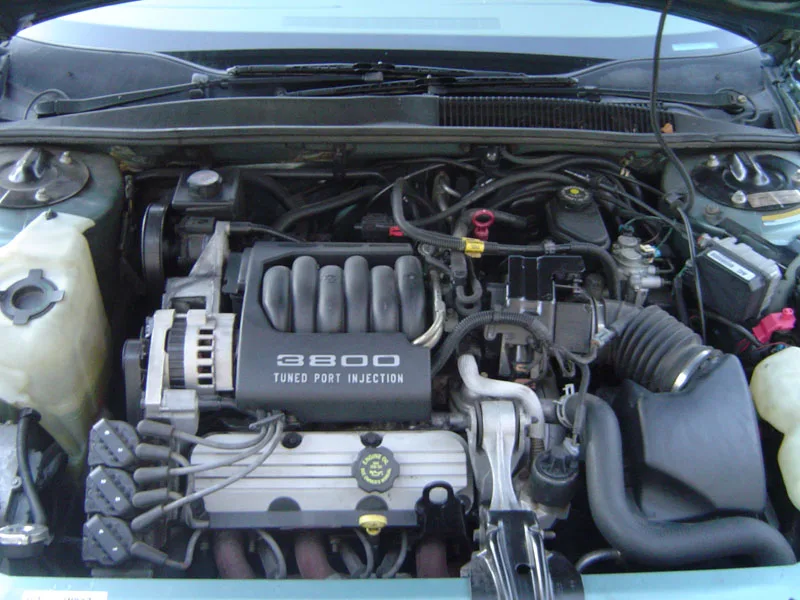
The weight loss was between 500 and 1,000 pounds (230 to 450 kg). Only two trims were offered, Malibu and Malibu Classic, and the Landau version wore two-tone paint with a vinyl top. This generation introduced the 90-degree Chevrolet V6 family, with a 3.3-litre (200 cu in) V6 as the base engine and a 5.0-litre Chevrolet V8 as the step up. California buyers got a Buick 3.8-litre V6 as standard instead.
One design decision aged badly. Rear door windows on the four-door sedan were fixed shut, which freed enough space for the arm rests to be recessed into the door and added a few inches of rear hip room. It also left back-seat passengers short of fresh air, and the complaints that followed probably sold air conditioning. For 1981 the sedan gained a four-window profile with a formal pillared roof, and the two-door coupe left the line because the Monte Carlo had taken over that job.
The Malibu had odd lives beyond the showroom. Police forces used the four-door as a patrol car after the Nova ended in 1979, and a Malibu with the Camaro Z-28's LT-1 engine finished 13th in that year's Cannonball Run. The 1980 Malibu M80, a dealer package sold only in North and South Carolina, aimed at fans who travelled to Darlington, and is estimated at around 1,901 cars.
Stranger still was the Iraqi taxi. In 1981 General Motors of Canada built 25,500 four-door Malibu sedans to a special order at Oshawa for the Iraqi government, a deal reportedly worth $100 million. They were stripped for hard work: a 3.8-litre V6 of just 110 hp, a three-speed manual gearbox, heavy-duty cooling, a 200 km/h speedometer and tweed and vinyl trim. Only 13,000 reached Iraq, most of them as taxis in Baghdad, and the government cancelled the order in 1982.
What was the Chevrolet Citation?
The Citation was a compact car sold for the 1980 to 1985 model years. It was the first front-wheel-drive Chevrolet, it replaced the Nova, and it sat on General Motors' X platform, shared with the Skylark from Buick, the Omega from Oldsmobile and the Phoenix from Pontiac.
Its roots go back to the 1973 fuel crisis. General Motors started work on a Nova replacement in April 1974, while imports such as the Honda Accord and Volkswagen Rabbit were eating into the American compact market. Downsizing the big cars and the mid-sizes had left the range out of step, and the old X-body Nova had grown bigger than the Malibu. The new car was meant to fix that, under the working name Condor, for 1978.
Front-wheel drive was unfamiliar ground. General Motors had pioneered the layout in postwar American cars with the 1966 Oldsmobile Toronado, but only with big longitudinal V8s. To learn how a transverse four-cylinder should be packaged, the company bought several Lancia cars to test and take apart. Prototypes began running in the summer of 1976. Chevrolet designed the front suspension and Pontiac the rear, and the engines came from both houses: Pontiac's 2.5-litre Iron Duke four and a Chevrolet 2.8-litre V6, the first of General Motors' 60-degree V6 engines.
The launch slipped, because tooling and parts supplies were not ready, and Condor became Citation. It reached showrooms in April 1979 as a 1980 model, 20 inches shorter, 4 inches narrower and 800 pounds lighter than the 1979 Nova. With a fuel shortage under way, the timing could hardly have been better. More than 810,000 were sold, enough to top the American sales chart for 1980.
Why did Chevrolet Citation sales collapse so fast?
A string of problems arrived together. Sales fell by nearly half in 1981, by more than 60 per cent in 1982, and reached only 92,000 in 1983. Safety recalls hurt its name, Chrysler's K-cars offered the sedans and wagons it lacked, and new front-drive cars from Chevrolet itself competed with it.
The first signs were small. The 1980 base price of $4,800 was more than a fully equipped 1979 Nova cost, and hatchbacks made up nearly 85 per cent of sales. Demand also outran the plan: Chevrolet had expected 70 per cent of buyers to pick the optional V6, so the factories were geared up for the wrong engine, and customers waited months for the standard 2.5-litre four.
The 1981 model year was about six months shorter and brought the Dodge Aries and Plymouth Reliant, with notchback sedan and wagon bodies the Citation could not match. In 1982 the Cavalier replaced the Monza and Vega, and the Celebrity replaced the Malibu on the Citation's own underpinnings. For 1983 Chevrolet dropped the full-width bench seat to avoid competing with the larger Celebrity.
The Citation II name for 1984 was an attempt to move on from the recalls and quality complaints; the car itself was only nominally changed. Sales rose for the first time, though still under 100,000, far behind the Cavalier and Celebrity. The final year was 1985, when the Citation survived only as hatchbacks and the Buick Skylark was the one sister car left. The Beretta coupe and Corsica sedan took over during 1987.
The sportiest version, the Citation X-11, had a retuned suspension, stabiliser bars and 13-inch rallye wheels from the start. In 1981 it took 8.5 seconds to reach 60 mph with a high-output 135 hp V6; the 1982 to 1984 cars needed 9.2 seconds. Its powertrain also served the Celebrity Eurosport, the Pontiac 6000STE and the Pontiac Fiero.
How did the Chevrolet Celebrity fit between the Citation and the Impala?
The Celebrity was a mid-size front-drive car sold for the 1982 to 1990 model years in one generation. It succeeded the rear-drive Malibu and sat above the Citation, using the same 104.9-inch wheelbase, and later slotted between the Corsica and the Caprice.
No mass-market American mid-size platform had gone front-drive before the A platform. The A platform was derived from the Citation's X platform, and the Celebrity roofline matched that of the Century, the Ciera and the 6000. Against the Malibu it lost about 4 inches of length and 2 inches of width, a gentler diet than the Citation had endured. A five-door wagon followed in 1984, and a third-row seat returned to a mid-size Chevrolet wagon, last offered in 1977.
Early cars had teething troubles. The computerised engine control caused drivability problems in 1982, and the upper engine mount, known as the dogbone, deteriorated and sent vibration through the engine and transaxle. The A-body did not suffer the whole of the X-body's recall saga, however, which helps explain why it sold so well.
Engines evolved steadily. The 1982 line-up offered a 90 hp 2.5-litre four as standard, a 112 hp 2.8-litre V6 and an 85 hp 4.3-litre diesel V6, which was effectively three quarters of an Oldsmobile diesel V8. The Citation X-11's 130 hp H.O. V6 arrived as an option in 1984, the diesel was dropped in 1986, and by 1987 a fuel-injected 2.8 made 135 hp. The wagon's last engine, in 1990, was a 3.1-litre V6 of the same output.
Why did a magazine cover embarrass General Motors over the Celebrity?
On 22 August 1983 Fortune put the Celebrity and its three A-body siblings on its cover as an example of corporate rebadging, four near-identical cars from four divisions. The picture became a symbol of sameness, and General Motors responded by recommitting to separate brand identities.
The criticism had a basis. The Celebrity, Buick Century, Oldsmobile Cutlass Ciera and Pontiac 6000 shared a platform, a roofline and much else. None of this stopped customers buying. The Celebrity outsold the Cavalier as the best-selling Chevrolet in 1986 and 1987, and in 1986 it led the whole national chart.
Chevrolet used option packages to give the plain family car some character. The Eurosport arrived in 1984 with black window trim, red emblems, the heavy-duty F41 suspension and 14-inch Sport Rallye wheels, and it could be paired with the Citation's 2.8-litre H.O. V6. A white Olympic Eurosport was sold in Canada in 1988 to mark the Calgary Winter Olympics.
After 1987 General Motors stopped regular updates so that it could concentrate on the Lumina. The two-door Celebrity went after 1988, the sedan after 1989, and only the wagon lived on for 1990, with the Lumina APV minivan as its stand-in. It remains the last mid-sized Chevrolet station wagon.
What was the Chevrolet Lumina?
The Lumina was a mid-size car built from 1990 to 2001 model years, and it replaced both the Celebrity and the Monte Carlo. It was the largest front-wheel-drive Chevrolet, ranked below the Caprice Classic, and came as a coupe and a sedan.
It was the first time Chevrolet had no mid-size wagon, with the Lumina APV minivan carrying the family business instead. The platform, GM10, was common to the Grand Prix, Cutlass Supreme and Regal from the other divisions, and the Lumina was assembled by GM Canada at Oshawa. The press criticised General Motors for arriving late with an aerodynamic rival to the Ford Taurus; Ford had even considered the Lumina name for the Taurus before production.
Airbags were not yet fitted when the car launched, so door-mounted seat belts served as passive restraints and satisfied regulations. By 1993 the Taurus, Accord and Camry all had at least one front airbag. At the back, Chapman struts and a cross-mounted fibreglass leaf spring did the work, an idea lifted from the C4 Corvette.
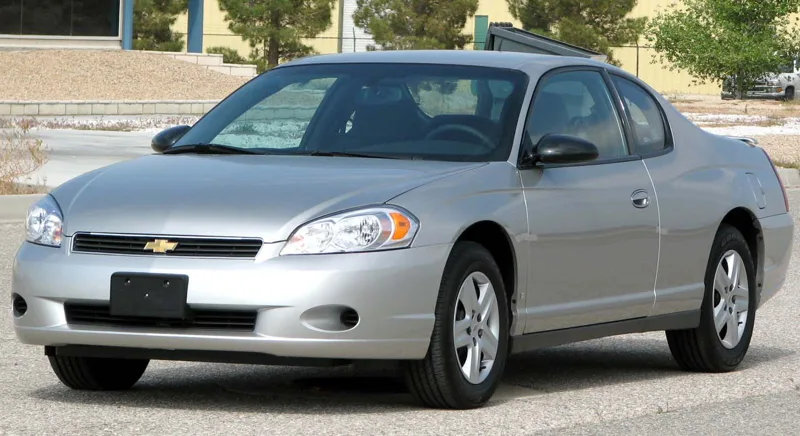
The performance model was the Lumina Z34. It had a 210 hp 3.4-litre V6, a five-speed Getrag manual, a unique body kit and anti-lock brakes on all four wheels. Chevrolet claimed 0-60 mph in 7.1 seconds, a quarter mile in 15.5 seconds and 0.79 g of lateral grip, with top speed limited to 113 mph. The Lumina coupe also ran in stock-car racing in place of the Monte Carlo SS, and in 1995 the Z34 name passed to the revived Monte Carlo.
The second generation had a troubled development. Work began in 1989 under chief engineer Norm Sholler for a late-1992 launch, but the redesign ran 18 months late and made its debut in Los Angeles in January 1994, badged as a 1995 model. It gained a rounded body but kept the old chassis. A 3.1-litre V6 with revised heads and manifold made 20 hp more than before. Base, LS and, from 1997, LTZ trims followed, and the Lumina picked up police and taxi packages once the Caprice ended in 1996. A 3.8-litre engine in 1998 made 200 hp and was fractionally slower than the 3.4 it replaced, at 7.5 seconds to 60 mph against 7.2.
Retail sales ended in Canada in 1999 and a year later in the United States, where the Impala took over for 2000. Fleet-only 2001 cars kept the name going until production stopped on 26 April 2001.
Did the Chevrolet Lumina name travel beyond North America?
Yes, and it ended up on very different cars. From 1998 to 2013 the Lumina badge went onto rebranded Holden Commodores in the Middle East and South Africa, and a coupe based on the Holden Monaro was sold from 2003 to 2006.
The 2006 generation, built on the Commodore VE, won the Car Middle East award for 2007. Most trims had a 3.6-litre V6, while the SS used a 6.0-litre V8. South Africa received only the SS and, from 2008, a pick-up version called the Lumina Ute. Sales stopped in 2011 in the Middle East and in 2013 in South Africa.
The Philippines version was an outlier. Chevrolet sold a Chinese-built Buick Regal there as the Lumina from 2005 to 2006, with a 2.5-litre V6 of 152 hp and a four-speed automatic. It was praised for comfort and equipment but its design was called a bit too bland, and at around P1.290M it was larger than the Honda Accord and Toyota Camry, yet sales were poor. The Malibu replaced it in 2013.
The four nameplates side by side
| Name | Years | Layout and platform | Place in the range |
|---|---|---|---|
| Malibu | 1964 to 1983; 1997 to 2025 | Rear-drive Chevelle trim, then own line from 1978; front-drive from 1997 | Intermediate, later mid-size |
| Citation | 1980 to 1985 model years | Front-drive, X platform | Compact; replaced the Nova |
| Celebrity | 1982 to 1990 model years | Front-drive, A platform | Mid-size; replaced the Malibu |
| Lumina | 1990 to 2001 model years | Front-drive, GM10 platform | Mid-size; replaced the Celebrity sedan and Monte Carlo |
What happened to the Malibu after the Lumina ended?
The Malibu name outlived the others. General Motors revived it in 1997 as a front-wheel-drive car, and the eighth generation was introduced globally. US production ended in November 2024, while the Fairfax factory is being retooled for a second-generation Bolt, a model yet to arrive. That leaves the Malibu as the last sedan Chevrolet sold in the United States.