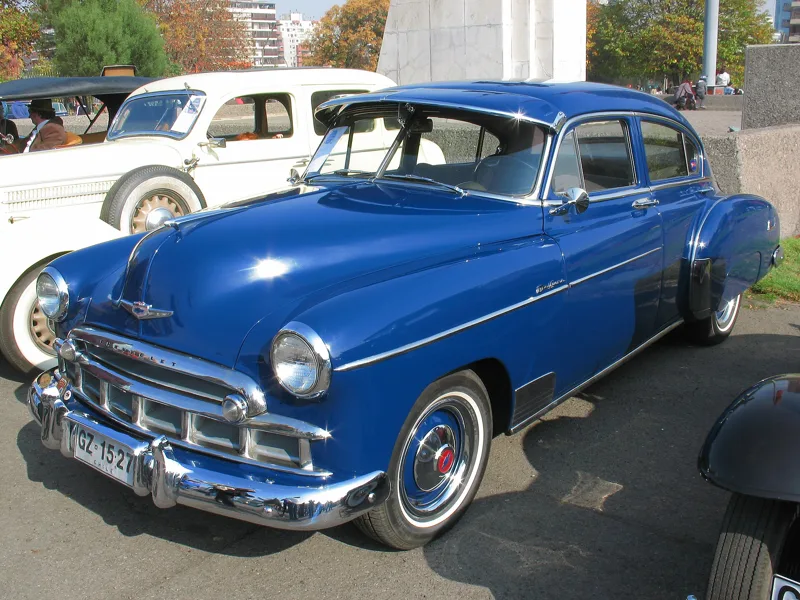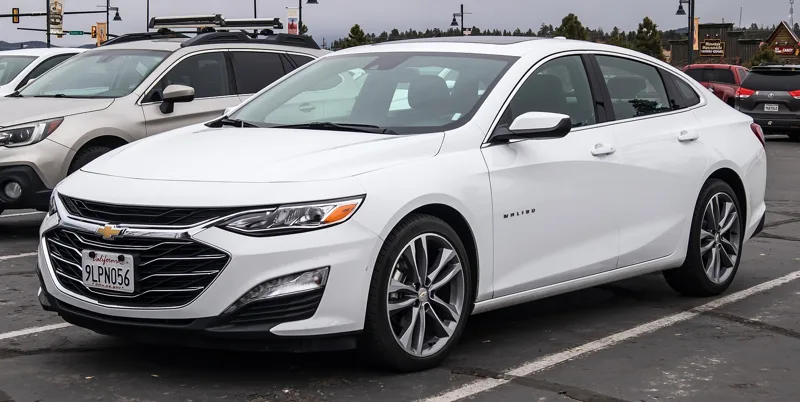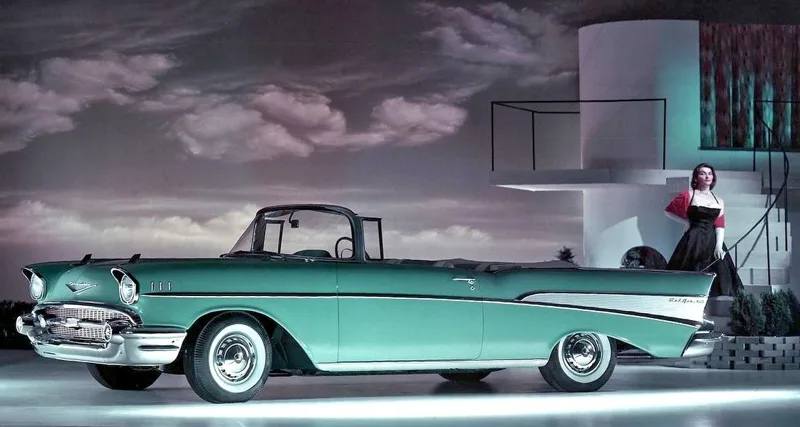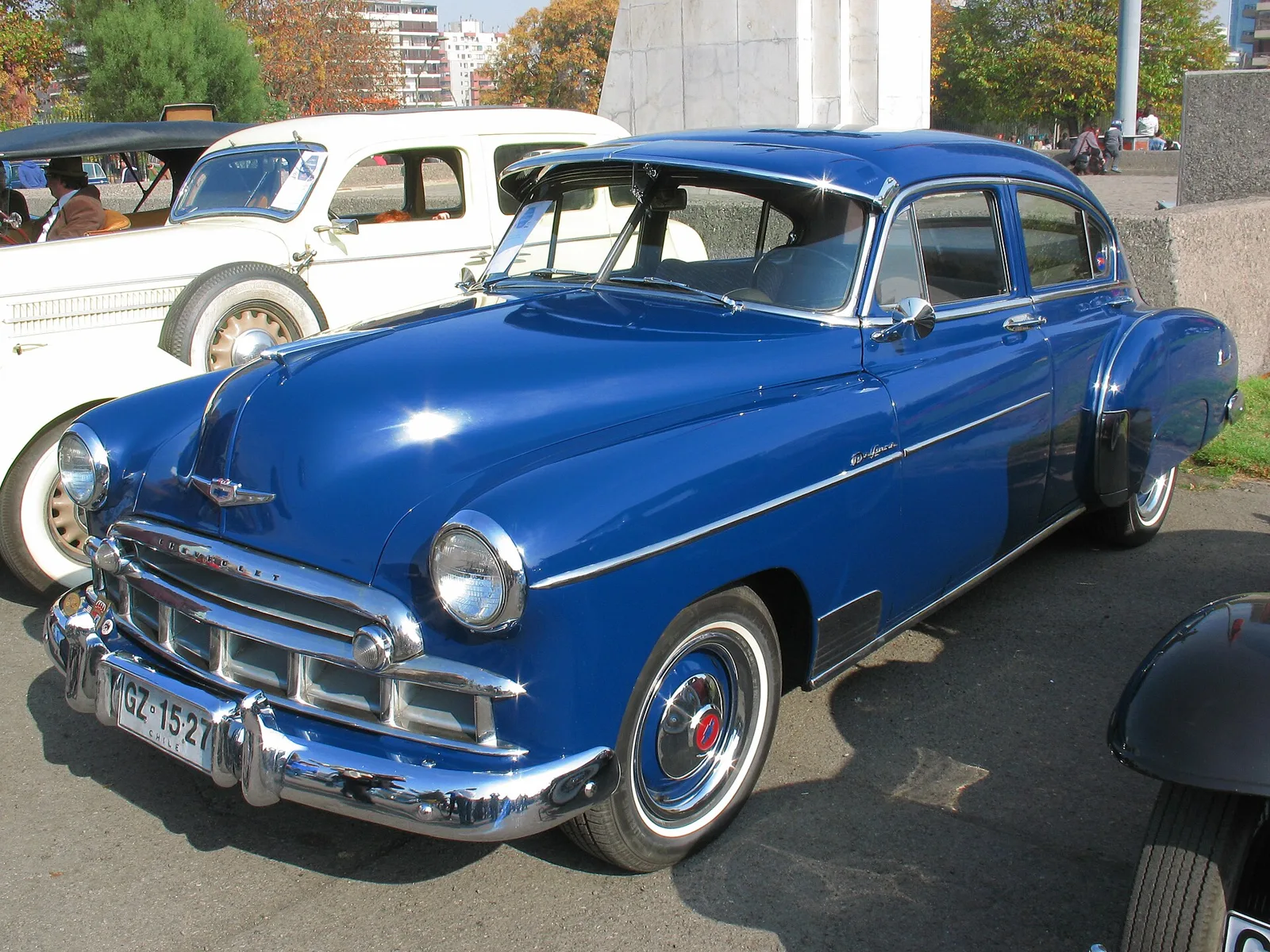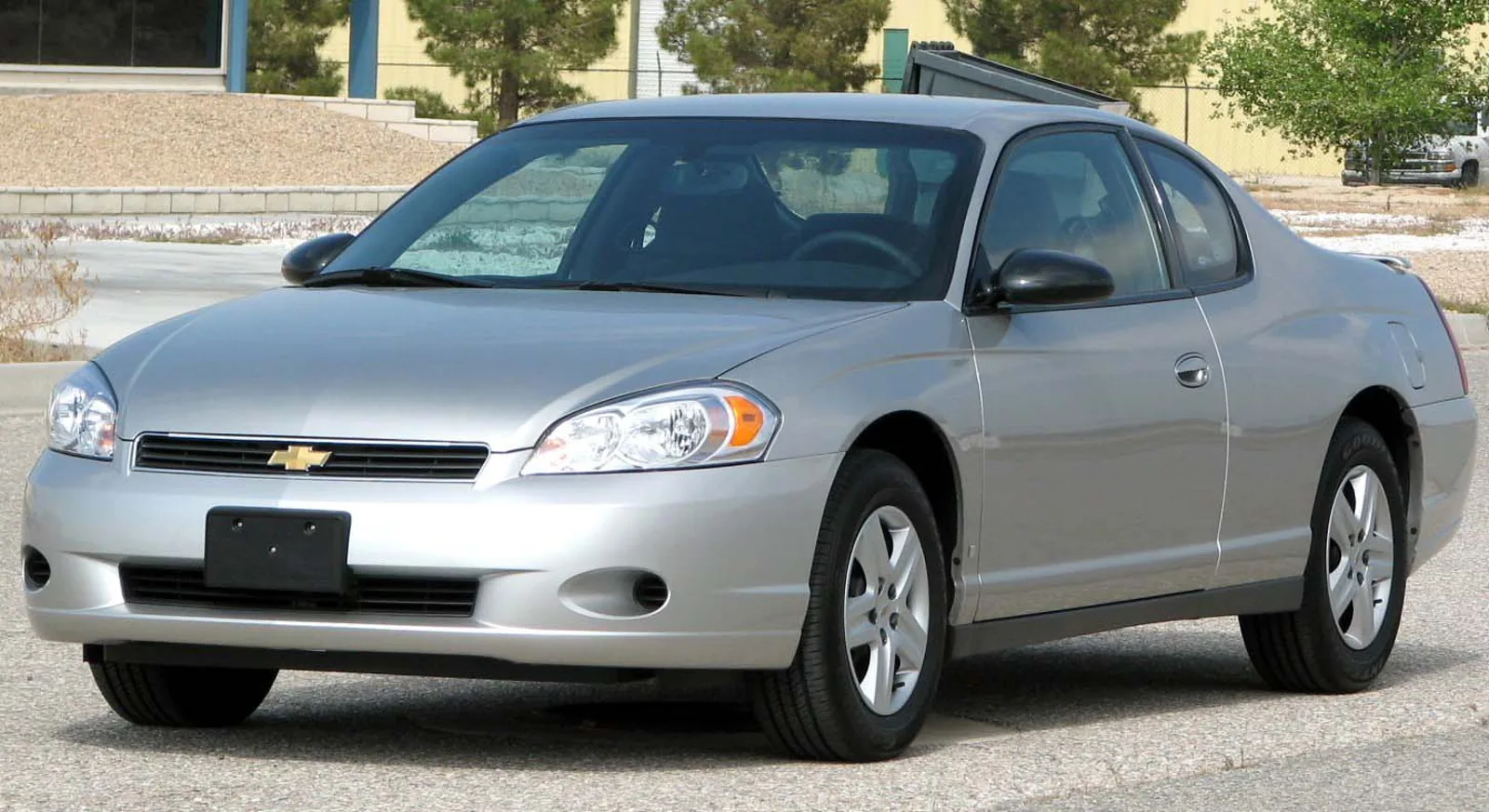
A Chevrolet coupe that was really a Pontiac relative, and a station wagon name that began as a Motorama show car and ended up on vans, a Vega and a South African bakkie.
Chevrolet's Monte Carlo was a coupe sold from 1970 to 2007, with a gap, as the brand's first personal luxury car. Nomad was a wagon name that began as a 1954 dream car and returned in several guises.
Chevrolet built its first personal luxury car around a Pontiac. The 1970 Monte Carlo owed its stretched, long-bonnet proportions to the Grand Prix, and the two cars stayed related until the last Monte Carlo left the line in 2007. The Nomad went the other way: a Chevrolet dream car so warmly received that General Motors put it into production and sold a Pontiac twin alongside it.
What was the Chevrolet Monte Carlo?
The Chevrolet Monte Carlo was a two-door coupe named after the city in Monaco and sold as the Chevrolet brand's first personal luxury car. It arrived for the 1970 model year, ran through six generations to 2007, and paused from 1989 until 1994.
It shared a platform with the Grand Prix until 1972, moved to the standard A-body intermediate chassis for 1973 through 1977, and shrank to a midsized coupe for 1978. After an abbreviated 1988 model year the two-door Lumina took over. Chevrolet revived the name for 1995 on a front-wheel-drive W-platform shared with the Grand Prix coupe, and when that car vanished after 2002 the Monte Carlo became the largest two-door built by any American manufacturer. Falling sales ended it after 2007.
The Nomad began as a show car, and nothing that wore its name afterwards quite matched it.
How did the Monte Carlo begin?
It began with a stretched Pontiac. In 1968, GM gave its A-platform intermediates split wheelbases: 2,845 mm (112 in) for two-doors, 2,946 mm (116 in) for sedans and 3,073 mm (121 in) for wagons. Then Pontiac lengthened the two-door layout ahead of the firewall to make the 1969 Grand Prix, a car 5,339 mm (210.2 in) long with an unusually long bonnet.
Chevrolet wanted a version. Pete Estes, the division's general manager, and chief stylist David Holls conceived it as an answer to the Buick Riviera and the Oldsmobile Toronado, and they took the Cadillac Eldorado as their styling model. Underneath, though, the car borrowed freely from the Chevelle: the firewall, windscreen, boot lid and rear window were all shared. Coke bottle styling, hidden wipers and an optional fibre-optic system for monitoring the exterior lights completed the package.
Inside Chevrolet management the first car went by the working name Concours, in keeping with the habit of starting development names with C. At one stage the proposal covered a formal coupe, a sedan and a convertible, the sedan looking rather like a full-size Oldsmobile 98. The production car of 1970 was offered only as a two-door hardtop.
The man who introduced it in September 1969 was John Z. DeLorean. He had taken over from Estes at Chevrolet earlier that year, having previously run Pontiac, where he had led development of the Series 276 Grand Prix. The car that Chevrolet pitched against Pontiac's own design was, in effect, the work of a man who had already built the original.
What did a 1970 Monte Carlo cost, and what did it come with?
The base price was US$3,123, which was $218 more than a comparable Chevelle Malibu yet still below a Caprice Sport Coupe. Standard equipment included a 5.7-litre (350 cu in) small-block V8, front disc brakes and a column-mounted three-speed manual gearbox. Fully optioned cars went past $5,000.
The face of the car carried a chromed grille of fine squares, 720 of them, split by two horizontal bars. At its centre sat a chrome and red crest with a Corinthian helmet, usually called the knight's crest.
Inside, the dashboard matched the Chevelle's except for simulated wood. According to the chief stylist, the pattern was a photographic copy of the elm trim used by Rolls-Royce. Upholstery was a better grade of nylon or vinyl, with deep-twist carpet underfoot.
The engine list climbed in steps.
- The standard 350 two-barrel made 253 PS (186 kW; 250 hp) gross at 4500 rpm and 468 N m (345 lb ft) at 2800 rpm.
- A four-barrel 350 raised that to 304 PS (224 kW; 300 hp) at 4800 rpm.
- The two-barrel 6.6-litre (400 cu in) Turbo-Fire produced 269 PS (198 kW; 265 hp).
- The four-barrel 402 Turbo-Jet gave 335 PS (246 kW; 330 hp).
Buyers could choose a two-speed Powerglide (on the 350 only), a three-speed Turbo-Hydramatic or a four-speed manual, though most cars left the factory with the Turbo-Hydramatic. Power steering, power windows, air conditioning, power seats, rally wheels, bucket seats, a console, full instrumentation and rear fender skirts all cost extra.
What was the Monte Carlo SS 454?
The SS 454 was the hot one: a $420 package built around a 7.4-litre (454 cu in) four-barrel Turbo-Jet V8 rated at 365 PS (268 kW; 360 hp) at 4800 rpm. It also brought heavy-duty suspension, wider wheels and tyres, SS 454 badges and automatic load-levelling at the rear.
Only the three-speed Turbo Hydra-Matic was offered with it. The standard rear axle ratio was 3.06, with 2.56 or 3.31 available for an extra $222. Chevrolet built 3,823 of them in the first year.
The following year, the 454 carried a nominal rating of 370 PS (272 kW; 365 hp) even though compression ratios had fallen to allow regular leaded, low-lead or unleaded fuel under a corporate order. The gain came from a more aggressive camshaft. It did not last. The package ended after 1,919 cars in 1971, because the Monte Carlo was being sold as a luxury car rather than a muscle car, although the 454 engine itself stayed on the option list through 1975.
For 1972 a one-year Monte Carlo Custom option took over some of the SS's suspension hardware. Unlike the SS, it could be ordered with any engine.
Why did the early cars sell slower than planned?
Strikes got in the way. A labour dispute at the Flint, Michigan, plant, where most Monte Carlos were due to be built, disrupted the early months after the 18 September 1969 launch. Full production was not reached until February 1970, and the car sold 159,341 in its first model year against a projection of 185,000.
Customers who did get one seemed to know why they wanted it. Popular Mechanics reported that 82% of reader-owners had bought for the styling, though 10.1% complained about rear legroom.
The 1971 model year suffered a worse interruption. A 67-day walkout across the corporation coincided with the September 1970 launch of the new cars, leaving dealers with a thin stock of pre-strike models until the dispute ended in mid-November. Normal output returned around the start of January, and the year ended at 128,600 cars, including the 1,919 SS models. A dozen went to Australia for conversion to right-hand drive, four of them SS cars.
How did the Monte Carlo change in 1971 and 1972?
The 1971 car changed mostly in cosmetic ways. Headlamp bezels turned squarish, the grille lost its horizontal divider and the bonnet spear gained an upright Chevrolet script ornament, while the grille emblem carried the year in Roman numerals. An AM/FM radio with an 8-track player joined the options. Every engine lost compression, and the base 350 fell to 245 hp.
For 1972, the last year of the first design, a Cadillac-style egg-crate grille like the one on the 1971 Caprice appeared, with parking lamps at its outer edges and a wider spear. Ratings were restated on the SAE net basis that the whole industry adopted. In California, where emissions rules were tougher, the four-barrel 350 was the only engine and the Turbo Hydramatic the only gearbox.
The four-speed manual left the order sheet altogether. The brochure, describing the car's place as a personal luxury machine, said bluntly: "Sorry, no four-on-the-floor." Variable-ratio power steering, meanwhile, became standard for the first time. Production hit 180,819, a record for the first generation.
Why was the Monte Carlo such a good NASCAR car?
Its proportions suited the track. The Monte Carlo's 2,900 mm (116 in) wheelbase sat just one inch above NASCAR's minimum at the time, while the Chevelle two-door was shorter at 112 inches. The long bonnet also pushed the engine further back, giving better weight distribution.
Most teams considered it the best Chevrolet for stock car racing, and it was Chevy's standard-bearer in NASCAR from 1971 until 1989, then again from 1995 to the end of production.
What changed for the 1973 Monte Carlo?
The second generation arrived with the other GM intermediates and abandoned the hardtop for a pillared Colonnade coupe with small opera windows in the rear quarters and frameless door glass. An egg-crate grille, a Monte Carlo emblem and vertical taillights above the bumper set the look. The front bumper grew to meet the federal 5 mph (8.0 km/h) impact rule, and the same requirement reached the rear on 1974 models. The pull-up door handles seen in that early sedan proposal finally appeared.
What was the Chevrolet Nomad?
The Nomad was a station wagon nameplate used by Chevrolet in North America from the 1950s to the 1970s. Three different Nomads were built as a distinct model line, and afterwards the name returned as a trim or appearance package.
It started in 1954 as one of General Motors' Motorama dream cars, drawn under head stylist Harley Earl as a follow-up to the Corvette roadster and a fastback shown the year before. The Nomad put a Corvette-style front end on a two-door wagon, and it broke from the practical look of ordinary wagons with a forward-slanting B-pillar and an almost wraparound rear window.
The public liked it, and GM approved it for 1955. One condition was that the design be adapted to the standard, larger A-body Chevrolet chassis, which also let GM build a Pontiac version. The concept car itself is believed to have been scrapped, as was common practice then, though reproductions exist that pair Corvette front ends with production Nomad bodies.
How did the 1955 to 1957 Nomad differ from other Chevrolets?
The first production Nomad was a two-door sport wagon with the roofline of the dream car almost intact, trimmed and badged in line with the Bel Air sedan. Its Pontiac counterpart was the Safari, which shared the chassis and roof but took the Chieftain's front end and the Star Chief's interior.
At $2571 in 1955, the Nomad was among the most expensive Chevrolets, the Corvette apart, and it came with a 265 cu in V8 as standard. Fully radiused rear wheel openings echoed the Corvette, the front doors came from the Bel Air hardtop and convertible, and it was the only two-door Chevrolet wagon with carpet and cloth seats. A two-piece split tailgate and a flat-folding rear seat completed it.
For 1956 the Nomad received its own twist on the Bel Air side trim, angled forward to meet the B-pillar rather than rearward as on other Bel Airs, along with standard two-tone paint and interior. The radiused rear openings went. Ford answered with the Parklane, which outsold the Nomad by nearly two to one but lasted only a single model year.
The 1957 car added tailfins that lengthened it by several inches, and its two-tone paint became calmer, returning to a contrasting roof. Sales stayed low, and Chevrolet ended the separate model line after that year. Pontiac also withdrew its two-door Safari and spread the name across nearly all its station wagons.
How did the Nomad return as a four-door wagon from 1958 to 1961?
Chevrolet brought it back for 1958 as the flagship of a separate wagon range, no longer a two-door but a four-door body, with the shift from A-body to B-body. All Bel Air-trim wagons took the Nomad name, placed above the Brookwood (the Biscayne's wagon) and the Yeoman (the Delray's). Chrome tailgate trim, multi-tone paint and a forward-sloping C-pillar echoed the original. The Nomad seated six, and the Brookwood was the only nine-seat Chevrolet wagon.
For 1959 it became the counterpart of the new Impala. Bel Air wagons now carried the Kingswood (nine seats) and Parkwood (six seats) names, and the Brookwood, available in two-door form, supplied the base for the first El Camino. A one-piece tailgate with a retractable rear window replaced the split design, and large horizontal tailfins took the place of vertical chrome strips. An optional rear-facing third seat made the Nomad a nine-seater.
The 1960 update was calmer, with a larger grille and tamer fins. For 1961 the range was redesigned on a 119-inch wheelbase, losing two inches in width and an inch in height. It looked far more conservative but gained cargo space through a bigger tailgate opening, and only the nine-seat layout remained as the Kingswood disappeared. Chevrolet dropped the nameplate for 1962 and repackaged the car as the Impala wagon.
What was the Chevelle Nomad?
After six years away, the Nomad returned for 1968 inside the Chevelle intermediate range, where it replaced the Chevelle 300 wagon. It was the opposite of its glamorous forebears: the cheapest Chevelle wagon, sold strictly as a six-seater without a third row, intermittent wipers or underfloor storage. It was also the only Nomad offered with a six-cylinder engine.
From 1969 the wagons formed a separate line and the Nomad dropped Chevelle from its name. The Greenbrier replaced the Nomad Custom, below the Concours and Concours Estate. Changes after that were small, and 1972 was the final year. In 1973, with the arrival of GM's Colonnade intermediates, Chevrolet stopped giving its full-size and intermediate wagons their own names, and the cheapest one became the Chevelle Deluxe.
| Years | Body | Range | Seating and notes |
|---|---|---|---|
| 1955-1957 | Two-door sport wagon | Tri-Five, Bel Air trim | Pontiac Safari twin; split tailgate; carpet and cloth seats |
| 1958-1961 | Four-door wagon | Bel Air, then Impala | Six seats in 1958; nine with the optional third row from 1959; nine only in 1961 |
| 1968-1972 | Base-trim wagon | Chevelle | Six seats; no third row; only version with a six-cylinder |
Which other cars and trucks wore the Nomad name?
Chevrolet kept using the name through the late 1970s on variants of other models. The 1976 Vega Nomad was an appearance package for the Vega Kammback wagon, with filler panels to restyle the B-pillars, a vinyl roof, tailgate rub strips and Nomad badging. From 1977 to 1981 a Van Nomad sat between cargo and passenger vans: five seats, panelled plywood walls, a rubber floor mat, plaid upholstery and two-tone paint. GMC sold it as the Gaucho, and both left the range with the 1982 van update.
General Motors South Africa produced a quite different Nomad from 1976 to 1980. This was a bakkie, an open utility vehicle with rear-wheel drive, a 2.5-litre four-cylinder engine and a four-speed manual gearbox. It was designed to be cheap: its body was built from flat panels, and 82% of the vehicle was sourced locally. The rest came from Germany (VDO instruments and a BorgWarner transmission), Australia (a Holden rear axle) and the United States (a Rochester carburettor).
The engine made 76 kW (103 PS; 102 hp) at 4000 rpm and carried the Nomad to 134.8 km/h (84 mph) in a period test. With no four-wheel drive, the designers relied on a short 82-inch wheelbase, 10.4 inches of ground clearance, a sump guard and a standard limited-slip differential for off-road work. Inside, it was as basic as a Land Rover or Jeep CJ: a driver's seat, a passenger bench, a folding windscreen and no heater. A soft top or fibreglass hardtop cost extra. GMSA assembled about 2,400 in 1976, but sales settled at 250 to 300 a year and production ended after 1980.
Did any Nomad concept reach production?
None did. A 1958 prototype hardtop version of the 1959 wagon was not approved, and Nomad-badged clay models in 1965 explored a two-door wagon during the Camaro's development.
The most interesting was the 1979 Nomad II, a running prototype built on the front-wheel-drive X-body platform with design cues from the Citation. GM was testing the appetite for minivans. Customers approved, but the company shelved it, and the first front-wheel-drive Chevrolet minivan, the Lumina APV, did not appear until 1990.
The name returned at the 1991 Chicago Auto Show on a concept based on the Suburban. At the 1999 Detroit show a V8-powered Nomad on the fourth-generation Camaro's F-body chassis updated the Tri-Five two-door wagon. Neither car was built.