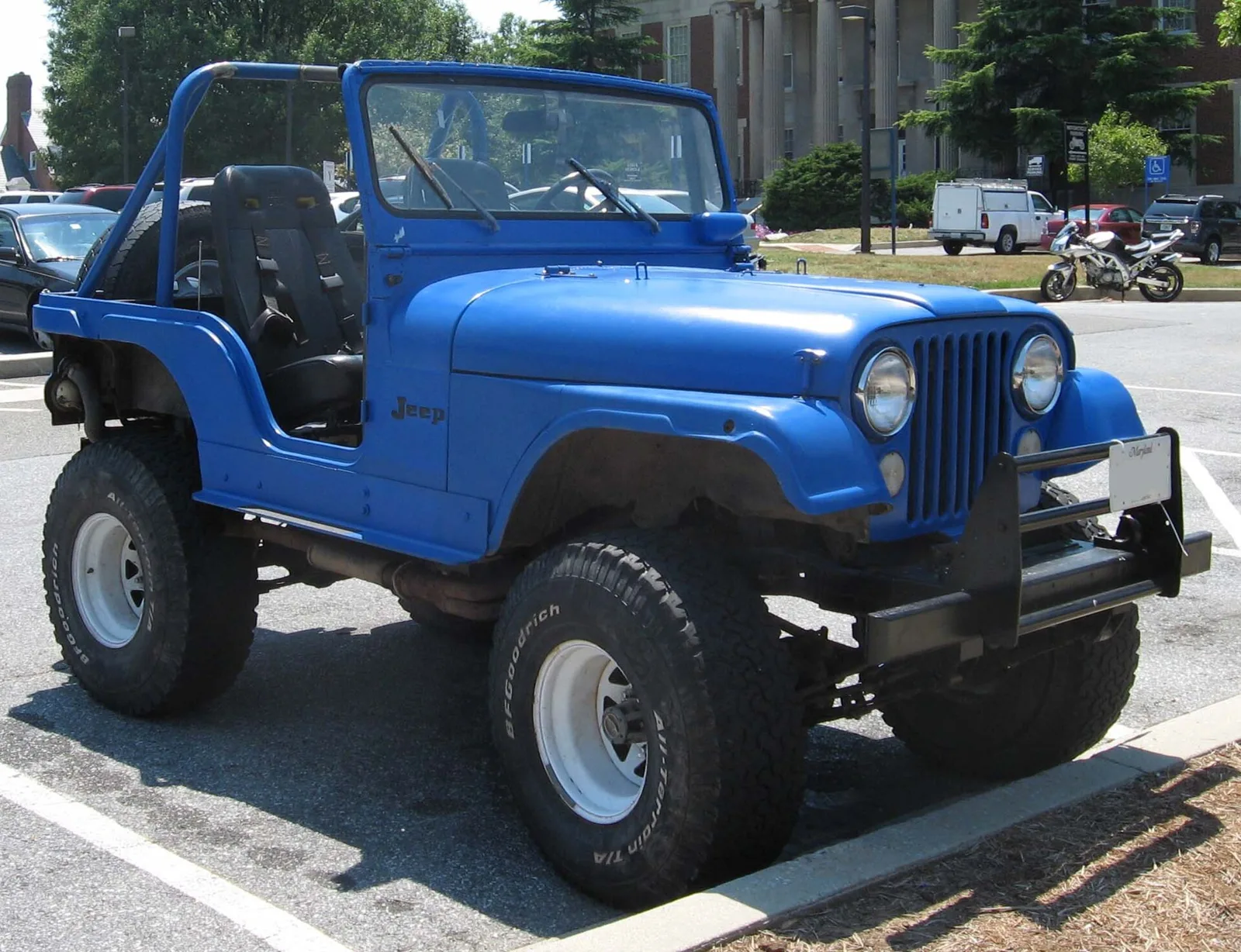
Built from the wartime Jeep with a tailgate, doors and a removable top, the CJ line survived four decades, several owners and more than 1.5 million sales.
The Jeep CJ was a civilian off-road Jeep built from 1945 to 1986 across several models, from the CJ-2A to the CJ-7. More than 1.5 million were made before the first Wrangler replaced it in 1987.
The Jeep CJ was a series of small, open-bodied off-road vehicles and compact pickups built by several successive owners of the Jeep marque from 1945 through 1986. Its roots lie in the Willys Universal Jeep, which became the world's first mass-produced civilian four-wheel drive car in 1945.
The CJ stood for civilian Jeep, and the line lasted 42 model years with more than 1.5 million built. It kept the same basic body style for most of its life, which is why it is often described as America's workhorse and one of the most successful utility vehicles ever made.
Where did the Jeep CJ come from?
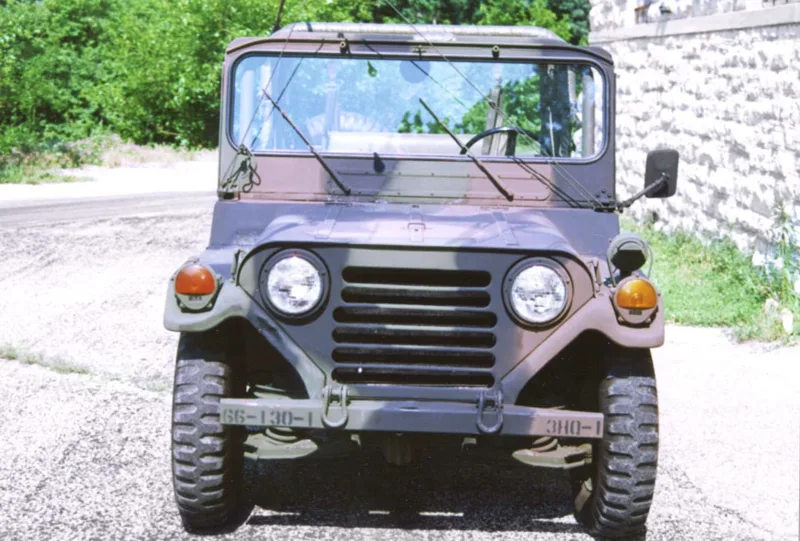
In 1944 Willys-Overland, the main maker of the wartime Jeep, built prototypes for a commercial version. The design was a direct evolution of the military car, but it added a tailgate and moved the spare wheel to the side, with legally compliant lighting and a sturdier drivetrain for rural buyers.
Civilian owners expected years of durability rather than the weeks that the wartime vehicles had needed. The CJ therefore kept separate body and frame construction, rigid live axles on leaf springs both front and rear, and a fold-flat windshield, and it could still be driven without doors.
Most CJs had part-time four-wheel drive with high and low gearing, and their open bodies took removable hard or soft tops. Across its life the design changed through round-fendered bodies, straight-six and V8 engines, automatic gearboxes and new four-wheel drive systems.
A tailgate, a removable top and leaf springs front and rear: the civilian Jeep that stayed on sale for four decades.
What were the CJ-1 and CJ-2 prototypes?
Early CJ-1 examples were simply modified military MBs, with a tailgate, lower gearing, a drawbar and a canvas top meant for civilian use added on. Prototypes dubbed CJ(-1) were running by May 1944, and the CJ-1 was the first Jeep built from the ground up for civilian use.
The CJ-2 followed as an agricultural test vehicle, nicknamed the AgriJeep, and at least 40 were built for evaluation rather than retail sale. The CJ-2 used the wartime Go-Devil L-head engine but had tailgates, power take-offs, engine governors and column-shift transmissions, and it was painted olive drab on the earlier pilot models.
Few early prototypes survived. Of the 40 to 45 built, a small number of serial numbers are known to exist today, and some of those are in very rough condition, while two have been restored.
What did the CJ-2A bring to production?
The CJ-2A was the first full-production CJ, and its production started on 17 July 1945. It looked like a civilianised MB, with a tailgate, a side-mounted spare and a seven-slot grille in place of the military nine-slot design, while still using the L-134 Go-Devil engine and a three-speed T-90 transmission.
A total of 214,760 CJ-2As were produced, and early examples used leftover military parts, including the full-floating rear axle, before a stronger Dana 41 took over. Its colour choices, such as Pasture Green with Autumn Yellow wheels, reflected the farm equipment that the vehicle was built to rival.
The CJ-2A was designed for farming, ranching and industry, so a stock truck came with only a driver seat and mirror, and buyers could order a wide range of attachments. Those included power take-offs, a capstan winch, a snow plough and a rear hydraulic lift.
How did the CJ-3A and CJ-3B change the Jeep?
The CJ-3A arrived in 1949 with a 60 hp L-134 Go-Devil, a T-90 transmission and a Dana 18 transfer case. It had a one-piece windshield with a vent, a ten-leaf suspension to carry farm implements, and a shorter rear wheelwell that moved the driver's seat rearward.
In total 131,843 CJ-3As were produced before the series ended in 1953. Mitsubishi assembled about 550 of them as the J1 and J2 for Japanese police and forestry customers, and the same chassis later became the basis for early Zamboni ice resurfacers.
The CJ-3B replaced the CJ-3A in 1953, the same year Kaiser Motors bought Willys-Overland. It introduced a higher grille and hood for the new Hurricane engine, and a four-speed manual became optional in 1963 at an extra cost of $194 (about $2,040 in 2025).
Until 1968 about 196,000 CJ-3Bs were built, of which 155,494 were assembled in the US. A military version, the M606, used heavy-duty options and blackout lighting, and it accounted for a large share of the limited CJ-3B production in the 1960s.
How did the CJ travel overseas?
The CJ-3B design was licensed to several manufacturers, including Mitsubishi of Japan and Mahindra of India. Mitsubishi's Jeep was introduced to Japan as the J3 in July 1953, and it was built in knock-down form until August 1998, selling around 200,000 units across 45 years.
Mahindra continued building Willys CJ-3B-based vehicles until October 1, 2010. In Turkey, Turk Willys Overland built the CJ-3B in Tuzla County, Kocaeli, from 1954 under the Tuzla 1013 brand, becoming the first off-road vehicle plant in Turkey.
In Australia the CJ was fitted with Ford Falcon six-cylinder engines at the Rocklea factory in Queensland from 1965, and in Brazil Willys assembled the CJ-5 from CKD kits from 1957. Ford do Brasil bought the subsidiary on 9 October 1967 and kept the line, adding its own 2.3-litre four in 1976.
Why did the CJ-5 become such a long runner?
The Willys CJ-5 appeared under the Kaiser name and was influenced by the Korean War M38A1. It was meant to replace the CJ-3B, but the older model kept building, and the CJ-5 repeated the pattern by staying in production for three decades while three newer models arrived.
In 1965 Kaiser licensed the Buick 225 cu in V6 to offer 155 hp, countering complaints that the Hurricane four was underpowered. By 1968 about 75% of CJ-5s were sold with that engine, and the Buick unit was retired after the 1971 model year.
American Motors bought Kaiser-Jeep in 1970 and reworked the car for 1972 with its own Torque Command straight sixes and a 304 cu in V8. The wheelbase was stretched by 2.5 inches, and the fenders and hood were lengthened to suit, giving the CJ-5 a more sporty character.
What were the special CJ-5 versions?
The Tuxedo Park trim line began in 1961 and became a separate model in its Mark IV form in 1964, with chrome bumpers and a more upmarket look. From 1969 a 462 performance package added a V6, front bucket seats, a roll bar and a heavy-duty frame.
The 1970 Renegade I and 1971 Renegade II used bright road wheels and hood stripes, while the Renegade itself became a regular appearance package from 1972 until 1983 with the AMC 304 V8. The Golden Eagle package followed from 1977 to 1983, adding power disc brakes, a tachometer and air conditioning.
The 1979 Silver Anniversary was a limited Renegade of 1000 units to mark 25 years of the CJ-5. A camper option offered from 1969 also carried a rear axle and sleeping space for the driver, and only 336 were produced before AMC ended it.
How did the CJ-6 differ from the CJ-5?
The CJ-6 was a CJ-5 stretched by 20 inches (51 cm). Its wheelbase was 101 inches (2.57 m) from 1955 to 1971 and 103.5 inches (2.63 m) from 1972 to 1981, which allowed extra seating and cargo layouts.
The military M170 ambulance shared many features with the M38A1, but the civilian CJ-6 found most of its buyers abroad, especially in Sweden and South America. A total of 50,172 were produced before the series went out of production in 1981.
What did the CJ-7 bring to the range?
The CJ-7 arrived for the 1976 model year with a wheelbase 10 inches (25 cm) longer than the CJ-5. Its curved side cutouts were squared off to take hinged doors, and its chassis used two parallel C-section main rails, with the rear stepped out to mount the springs wider.
Buyers could choose a part-time two-speed transfer case, an automatic, or the new Quadra-Trac automatic all-wheel drive system. A molded hardtop and steel doors were optional, and the Laredo trim added highback leather seats, a tilting wheel and chrome trim.
A total of 379,299 CJ-7s were built during eleven years of production. The Canadian Army took 195 militarised versions in 1985, and the CJ-7 is still used in mud racing and rock crawling, where it remains a favourite with enthusiasts.
What was the Jamboree edition?
The 1982 Jamboree Commemorative Edition marked the 30th anniversary of the Rubicon Trail, and it was built in 630 numbered units, with 560 in Topaz Gold Metallic and 70 in Olympic White. It was the only AMC Jeep to carry a numbered dash plaque, and it was the most heavily optioned CJ built.
The 1982 to 1983 Limited was a luxury model of 2,500 units with the 4.2-litre six and either a manual or automatic transmission. It sat alongside the Renegade and Laredo as a more upmarket choice.
What was the CJ-8 Scrambler?
The CJ-8 Scrambler was a long-wheelbase CJ-7 introduced in 1981, with a 103.5-inch (2,629 mm) wheelbase and a removable half cab that created a small pickup box. It was built until 1986 and was effectively replaced by the Cherokee-based Comanche.
The Alaska Postal Service used a full-length steel hardtop Scrambler with right-hand drive and automatic transmission, and 230 were sold in the US. The same body was also sold in Venezuela and Australia as the CJ8 Overlander, and Ronald Reagan owned a Scrambler for use on his California ranch.
Why was the CJ-5 blamed for rollovers?
A December 1980 segment on the television programme 60 Minutes showed a demonstration by the Insurance Institute for Highway Safety that the CJ-5 could roll over at low speeds. The IIHS later used hidden weights to create worst-case conditions, which the public did not see at the time.
Years later it emerged that the testers achieved eight rollovers in 435 runs through a corner. The episode is often cited as the reason the CJ-5 lost ground, though the sales decline had other causes too.
What were the CJ-10 and CJ-10A?
The CJ-10 was a CJ-bodied pickup built on a heavily modified Jeep J10 truck from 1981 to 1985, mainly for export markets such as Australia. It had rectangular headlights in the fenders and a ten-slot grille, where other CJs had seven.
The CJ-10A was a flightline aircraft tug built in Mexico from 1984 to 1986, and about 2,300 were produced for the United States Air Force. It was a 4x2 bobtail design rather than a four-wheel drive truck.
How did the CJ line end?
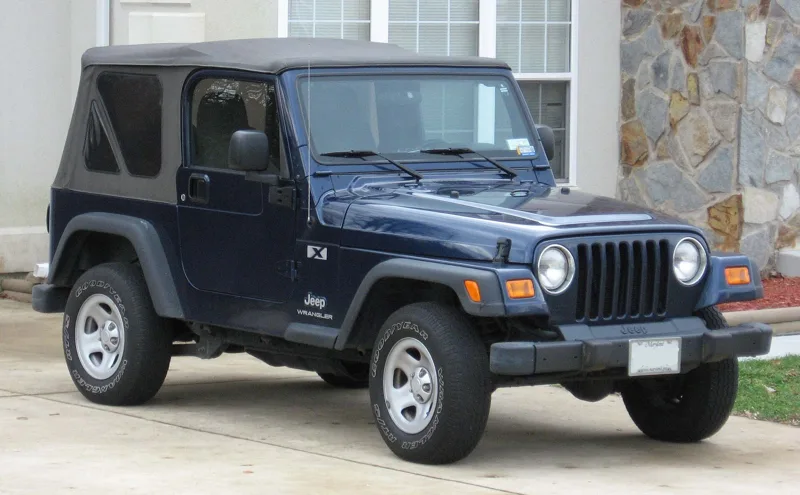
The CJ line officially ended after 1986. In 1987 the CJ-7 was replaced by the first-generation Jeep Wrangler, which looked very similar and rode on the same wheelbase, and it carried over important parts such as leaf springs.
American Motors vice president Joseph E. Cappy said the end of CJ production would mark the end of a very important era in Jeep history. The model had been built for 45 years since the first Jeep appeared.
What are the Jeep CJ specifications?
| Model | Years | Engine | Notes |
|---|---|---|---|
| CJ-2A | 1945 to 1949 | L-134 Go-Devil four | 214,760 built |
| CJ-3A | 1949 to 1953 | 60 hp L-134 Go-Devil four | 131,843 built |
| CJ-3B | 1953 to 1968 | Willys Hurricane four | About 196,000 built |
| CJ-5 | 1955 to 1983 | Buick 225 cu in V6, 155 hp from 1965 | Wheelbase stretched in 1972 |
| CJ-6 | 1955 to 1981 | As CJ-5 | Wheelbase 101 in, later 103.5 in |
| CJ-7 | 1976 to 1986 | 258 cu in AMC six, 304 cu in AMC V8 | 379,299 built; Quadra-Trac option |
| CJ-8 Scrambler | 1981 to 1986 | Four, six or V8 | 103.5 in wheelbase |
| CJ-10 | 1981 to 1985 | 198 cu in Nissan diesel six, or AMC engines | Built for export markets |