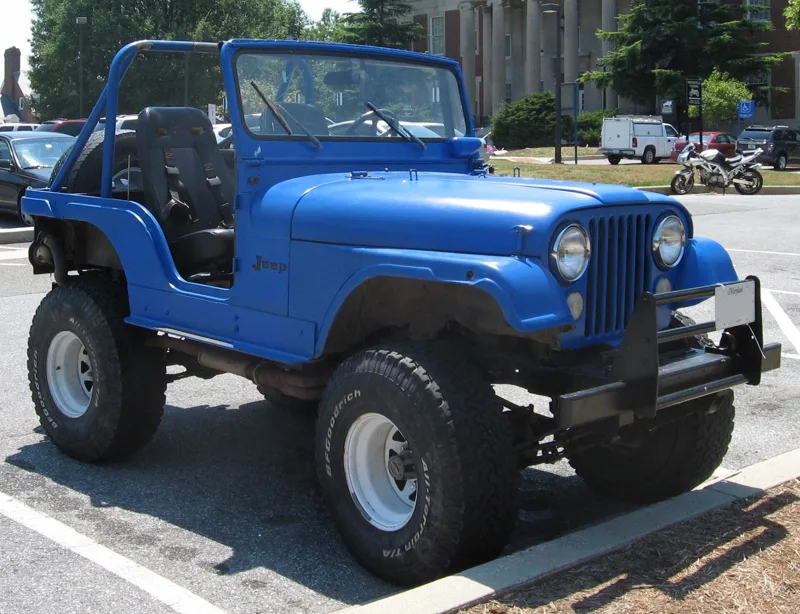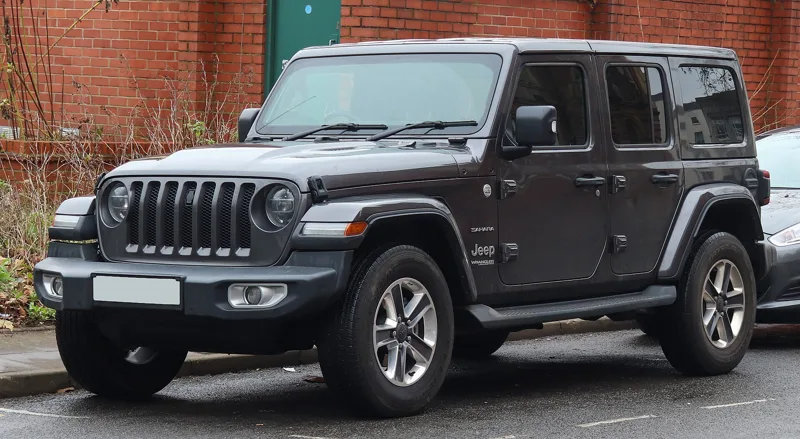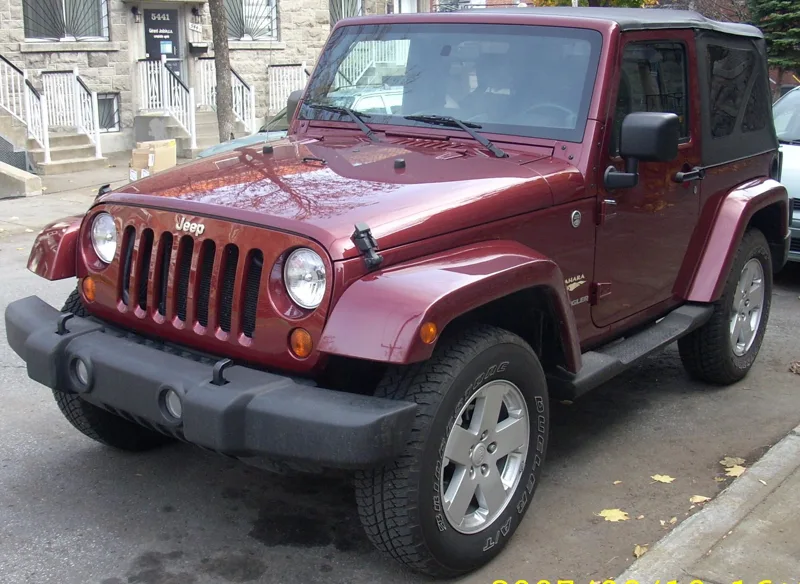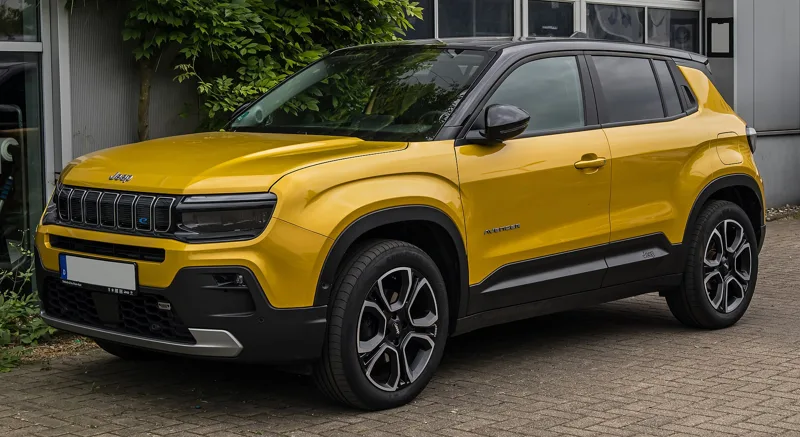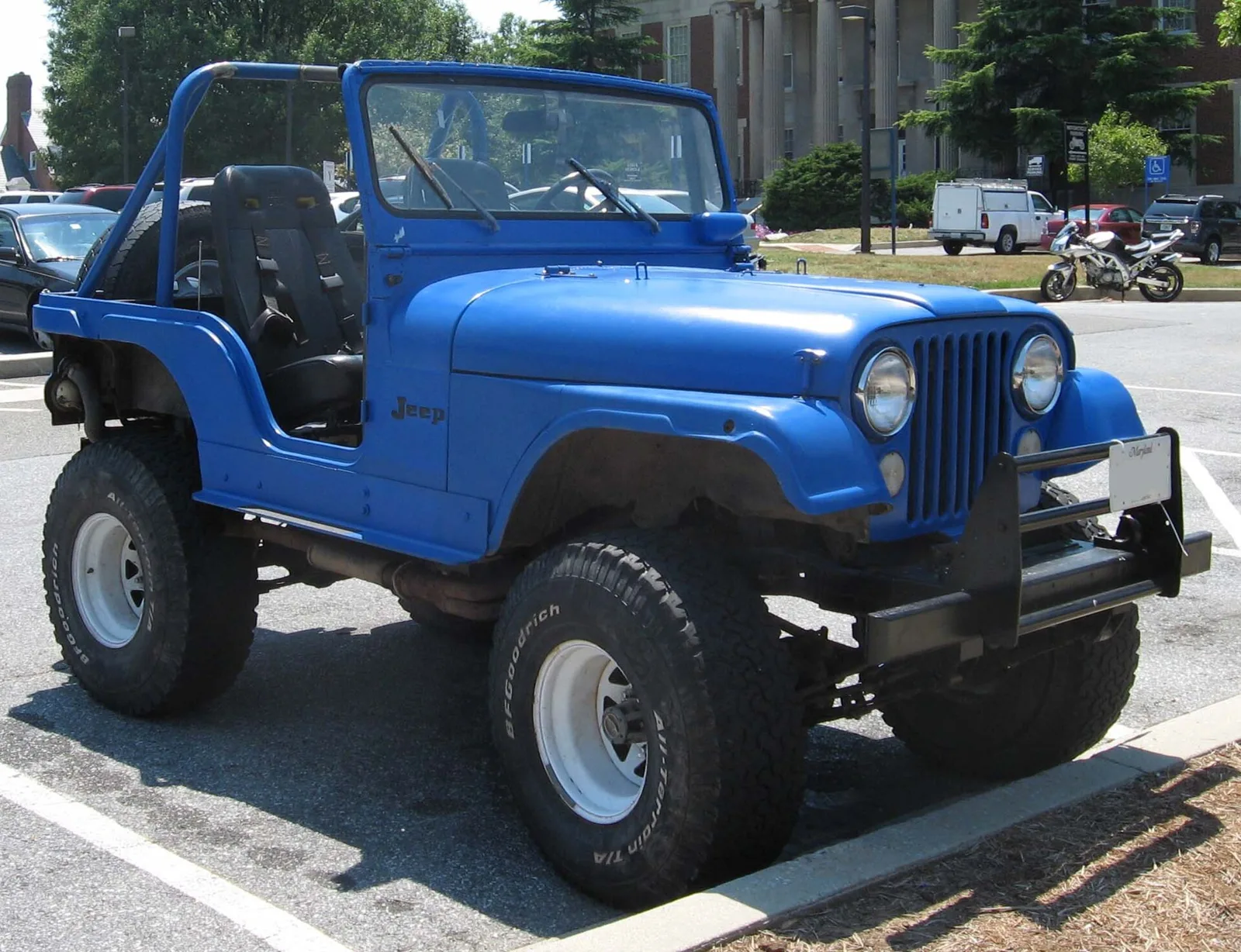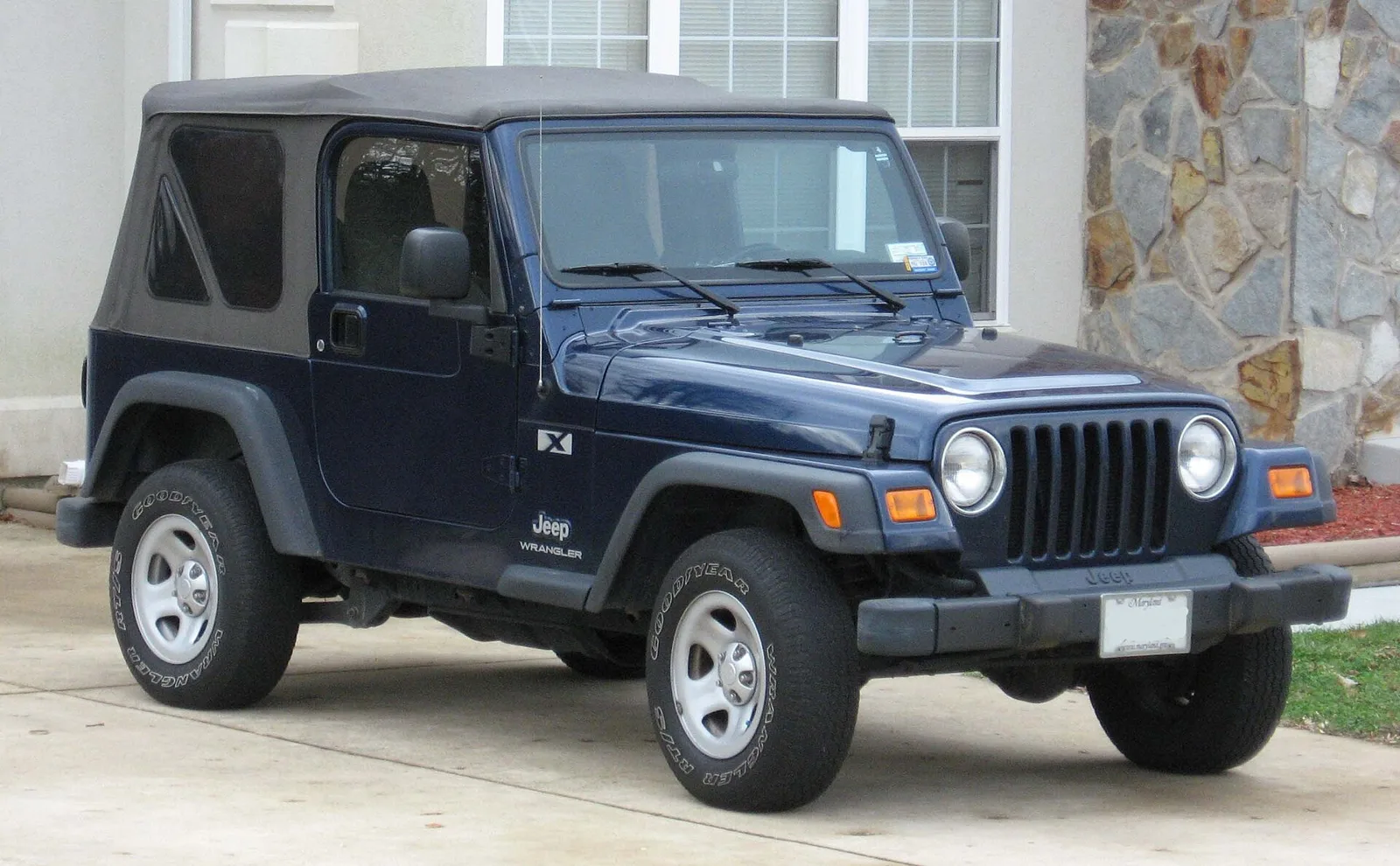
Coil springs, round headlamps and a 4.0 L six that carried the Wrangler from 1996 to 2006, plus the Unlimited.
Built from 1996 to 2006, this second-generation Wrangler used coil springs, round headlamps and a 4.0 L six-cylinder engine. The JK replaced it in 2006, and the long-wheelbase Unlimited had joined the range in 2004. It was also the last Wrangler built with AMC-linked parts.
The Jeep Wrangler TJ was the second-generation Wrangler, introduced in 1996 as a 1997 model. It brought back the round headlamps of the classic Jeep models and swapped the leaf springs of its predecessor for coil springs at both ends.
The TJ was an evolutionary update rather than a clean sheet, yet it changed enough to define the Wrangler for a decade. It was also the car that added the long-wheelbase Unlimited, which widened the family's appeal.
Where did the TJ come from?
Development began in 1990 in Chrysler's Jeep-Truck Engineering Pre-Program, led by Bob Sheaves and TJ programme director Craig Winn. Test mules built from YJ parts ran between 1990 and 1993, and formal approval followed at a $260 million budget.
Michael Santoro's TJ proposal was chosen in late 1992 by Tom Gale, Lee Iacocca and executive management. Santoro then led the final production design, which was frozen in May 1993.
Verification prototypes with production bodies were tested from 1994 to late 1995. YJ production ended in December 1995, and TJ production began in January 1996.
The TJ programme therefore ran alongside the YJ for most of the decade, from the first mules to the final YJ builds.
The car was unveiled on January 2, 1996, at the 1996 Detroit Auto Show, and it reached showrooms in April 1996.
Round headlamps and coil springs brought the Wrangler back to its roots, and the Unlimited made it longer.
Coil springs and the round headlamps
Coil springs front and rear replaced the leaf springs of the YJ, which gave a better ride and handling. The change was the most important mechanical difference between the two Wranglers.
The ride became more comfortable on the road, which widened the car's appeal beyond its off-road role.
The round headlamps returned a styling link to the classic CJ.
The side mirrors were black metal-framed until 2002, and moulded plastic from 2003. Those small changes showed how the TJ was refined across its life.
Inside, the 2003 update gave the seats a new design with separate back and headrest areas, and the radio bezels and sound bar changed too. The key was redesigned with a new round head.
The TJ kept a recirculating ball-type steering gear throughout its life. The Rubicon, meanwhile, was the trim that carried locking hardware as standard.
A 19 US gallon (72 L; 16 imp gal) fuel tank became standard in 1998, which gave the car a longer range between fills.
Which engines did the TJ use?
The base engine was the 4.0 L AMC 242 straight-six, also used in the Cherokee. The 2.5 L AMC 150 inline-four stayed on entry-level models until 2002, and the 2.4 L DOHC four replaced it for 2003.
The 2003 Power-Tech four made 147 hp and 165 lb-ft of torque. It replaced the older 2.5 L as the entry-level engine.
By 2006 the six was standard on every TJ, so the six-cylinder became the car's defining engine in its final years.
The 2006 model year brought the 4.0 L Power-Tech six as standard on every TJ, because the four had been dropped. The AMC-related parts were retired across the generation, with the straight-four going after the 2002 model year.
Gearboxes and the automatic
The 3-speed automatic gave way to a 4-speed automatic with overdrive for 2003, and the overdrive could be turned off with a dash switch.
On the Rubicon, the optional 42RLE four-speed automatic ran from 2003 to 2006.
The Rubicon manual was a five-speed NV3550 in 2003 and 2004, and it became a Mercedes-derived six-speed NSG370 in 2005.
Postal and export versions
Export markets and US rural postal carriers both received a right-hand-drive version of the TJ. The postal car came only with an automatic transmission.
The postal package also included a Dana 44 rear axle and a hardtop with the 4.0 L and the automatic. It was a working vehicle built for a specific job rather than a showroom model.
The package was one of the few TJ variants built around a particular customer, and it showed how far Jeep would go to serve a specialist buyer.
What made the Rubicon different?
The Rubicon arrived in the summer of 2002 with front and rear air-actuated locking Dana 44 axles and the Rock-Trac NV241 4:1 transfer case. Its name comes from the Rubicon Trail in the Sierra Nevada Mountains.
The Rubicon Unlimited arrived for the 2005 model year, combining the longer wheelbase with the Rubicon drivetrain and Goodyear MT/R tyres in 245/75R16.
The Rubicon's manual transmission and 4:1 low range were central to its trail credentials.
When did the Wrangler Unlimited return?
In April 2004, after an 18-year hiatus, Jeep reintroduced a long-wheelbase Wrangler called the Unlimited. Its wheelbase was 10 inches (250 mm) longer than the standard TJ.
The new wheelbase was virtually identical to the 103.5 in of the CJ-6 and CJ-8 Scrambler, its predecessors. The Unlimited was the first model to carry the Unlimited nameplate.
The Unlimited was offered in two forms from its first years, the Sport Edition and, from 2005, the Rubicon Unlimited.
The Unlimited is about 15 inches longer overall than the standard TJ, with 2 inches more rear legroom and 13 inches more cargo space. Towing rose too, to 3,500 lb for the Unlimited against 2,000 lb for the standard car.
Its standard rear axle was a Dana 44 with a 3.73 ratio, paired with the Command-Trac transfer case.
Reintroducing the long wheelbase closed a gap of 18 years, and it gave the Wrangler a second body length to sell alongside the standard car.
The trims from SE to Sahara
The SE was the core model. It used the 2.5 L engine until 2002 and the 2.4 L from 2003, with vinyl seats and a two-speaker radio at first.
The X arrived in 2002 with the 4.0 L as standard, and air conditioning was optional. It ran until 2006 as the value-oriented option in the range.
The Sport came with the 4.0 L and a Dana 35 rear axle, with cloth seats as standard. A Dana 44 axle with a 3.73 ratio was optional for buyers who wanted more strength.
The Sahara ran from 1997 to 2004 with a wider body, colour-matched fender flares and alloy wheels. It was the premium trim in the range for most of its life.
The Unlimited Sport Edition arrived for 2004 to 2006 with the 4.0 L and a Dana 44 limited-slip axle. It carried the sport options of the regular models on the longer frame.
Which special editions did the TJ get?
The TJ produced a long run of special editions, from the 2001 60th Anniversary model, of which 4,067 were built, to the 2006 65th Anniversary car, around 1600 of which were made. Each one added its own colours, decals or trim.
The 60th Anniversary had 1,862 black cars and 2,205 in silverstone. Its options were limited to speed control and dual tops.
The 65th Anniversary celebrated 65 years of Jeep production. It came with the full Sahara options package, minus the rocker sills, seats and trim that were unique to the Sahara.
The Tomb Raider Edition was a limited run of 1,001 in 2003, produced to promote the Lara Croft: Tomb Raider sequel. Its Rubicon base made it one of the most collectible Jeeps of its time.
The Tomb Raider cars wore a Tomb Raider badge with a serial number, a detail that made each example easy to identify.
The Sahara Edition Unlimited Rubicon came in 2005, a run of 1000 numbered cars that followed the 2005 film Sahara, which featured a Wrangler. The Willys Edition sold about 1000 units in 2004, and it was only available in moss green.
The Freedom Edition of 2003 added full metal doors and chrome wheels. The Apex Edition of 2002 and 2003 brought a hood decal and Ultra-Hide seats, while the Columbia Edition of 2004 came with a Columbia Bugaboo parka.
The Rocky Mountain Edition ran from 2003 to 2005 and added seven premium speakers. Each of these editions shows how Jeep used small packages of trim and decals to keep the range fresh.
Taken together, the trims showed the TJ serving many different buyers at once, from the value-minded SE to the premium Sahara.
How did the Storm differ from the civilian TJ?
The Storm Mark II was built under licence from Chrysler by Automotive Industries Ltd. (AIL), an Israeli automaker and major military supplier. Its first deliveries came in 2006, and it was known in the field as the Storm Commander.
The Storm's most obvious change was the addition of dual passenger doors, which made it the first five-door Wrangler derivative. Its length was 4,463 mm (175.7 in) and its wheelbase 2,931 mm (115.4 in).
AIL was a major supplier to the Israeli security forces, so the Storm was built for a demanding and specific customer.
Adding doors also made the Storm longer and more complicated to build than the TJ it came from, a trade-off that suited its military role.
The five-door body was the clearest sign of the Storm's military role.
What happened to the TJ in 2006?
The 2006 model year was the final one for the TJ and the TJ Unlimited, which were replaced by the all-new JK Wrangler. The JK and its Unlimited sibling debuted at the 2006 Detroit show in January 2006.
The JK was the first all-new Wrangler since the TJ arrived in 1996, so the TJ covered a full decade of the nameplate.
Two special editions marked the end of the run for the regular-wheelbase car. The 65th Anniversary Edition and the Golden Eagle Edition both paid tribute to Jeep's heritage.
The Golden Eagle was an option package for the CJ-7 before it became a Wrangler trim, so its name linked the final TJ to that older Jeep.
The AMC legacy in the last Wranglers
The TJ was the last production vehicle to use AMC-related parts. The AMC straight-four engine was retired after the 2002 model year, and the straight-six and the door handles went with the generation in 2006.
The door handles had first appeared on AMC vehicles in the 1968 model year. The TJ used the AMC passenger car door handles on most models, and the larger handles from the AMC-built CJ on higher-end versions.
Key figures for the Wrangler TJ
| Specification | Detail |
|---|---|
| Introduced | 1996 as a 1997 model; production from January 1996 |
| Base engine | 4.0 L AMC 242 straight-six, standard on all TJs from 2006 |
| Entry engine | 2.5 L AMC 150 inline-four to 2002; 2.4 L DOHC four from 2003 |
| 2003 Power-Tech four | 147 hp; 165 lb-ft of torque |
| Fuel tank | 19 US gallons (72 L; 16 imp gal), standard from 1998 |
| Automatic | 3-speed to 2002; 4-speed overdrive from 2003 with a dash switch to disable overdrive |
| Unlimited wheelbase | 10 inches (250 mm) longer than the standard TJ |
| Towing | 3,500 lb Unlimited; 2,000 lb standard TJ |
| Storm Mark II | 4,463 mm (175.7 in) long; 2,931 mm (115.4 in) wheelbase |
| Tomb Raider Edition | 1,001 built in 2003 |