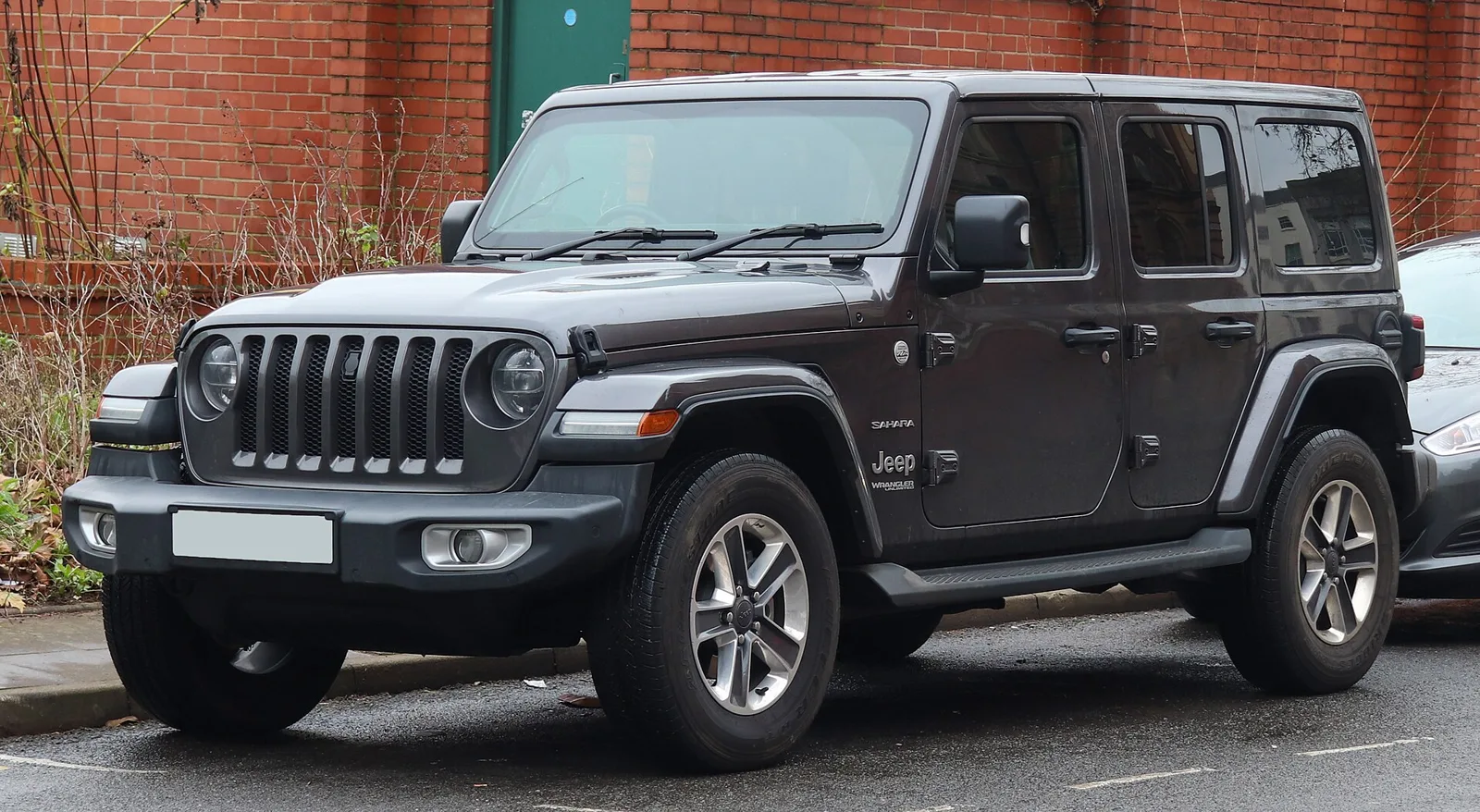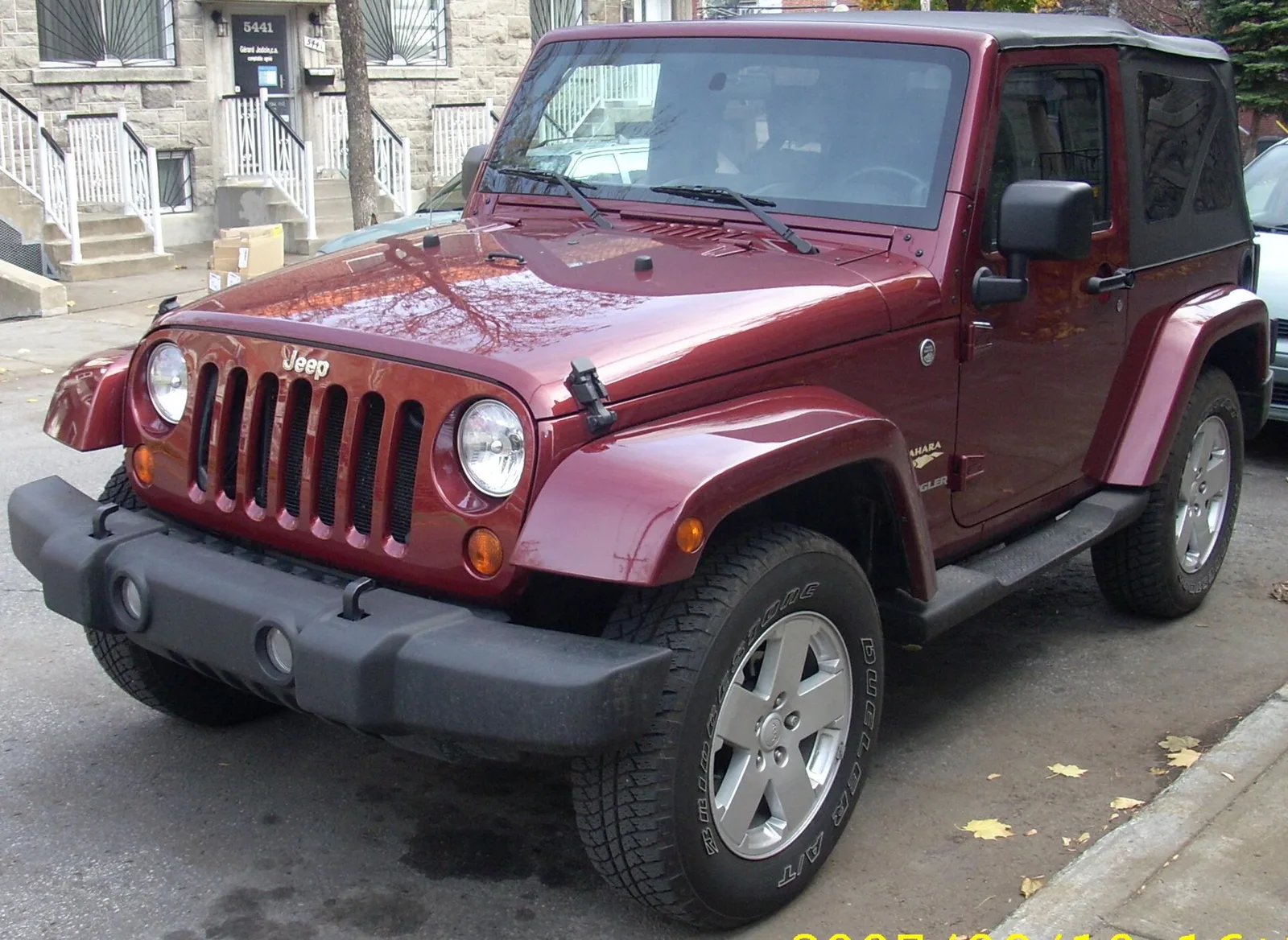
A new platform, a four-door Unlimited and a run of editions that kept the Wrangler in the spotlight for twelve years.
Sold from the 2007 model year until April 2018, this third-generation Wrangler introduced the four-door Unlimited as a factory model. It rode on an all-new platform that replaced the TJ chassis. Its wider track and longer Unlimited wheelbase set it apart from the TJ.
The Jeep Wrangler JK was the third generation of the Wrangler, and it arrived on a clean chassis. Unveiled at the 2006 North American International Auto Show in Detroit, it replaced the TJ with an all-new JK platform for the 2007 model year.
It also brought the four-door Unlimited into the mainstream, a choice that reshaped the Wrangler's sales mix. By mid-2017, three-quarters of new Wranglers for sale were four-door models.
How was the JK different from the TJ?
The JK kept the separate body and frame, live axles and fold-flat windshield of its predecessors. Its two-door wheelbase was 2 inches (51 mm) longer than the TJ's, yet it was 2.5 inches (64 mm) shorter overall.
The most important change was underneath. The TJ chassis was replaced by an all-new JK platform, which gave the Wrangler a fresh structure after a decade of the old one.
Power windows and remote power door locks arrived for the first time on a Wrangler, and an available navigation system was another first. Those features marked a clear break with the earlier models.
The JK was the first Wrangler to offer that level of electrical convenience, which set the tone for the models that followed.
A new platform, a four-door option and a run of editions that kept the Wrangler in the spotlight for twelve years.
Development from DaimlerChrysler to the 2006 show
DaimlerChrysler commissioned the JK programme in 2001 as the successor to the TJ. The body and chassis were completely redesigned while Jeep was still part of DaimlerChrysler.
Design work began almost at once. The JK design was frozen in January 2004, 31 months ahead of production, which gave engineers a long run-up to the launch.
Jeep also previewed its direction with the 2005 Jeep Gladiator Concept, unveiled on December 5, 2004. The concept previewed many of the design elements that appeared on the incoming JK.
Concept work of this kind meant the 2007 Wrangler was not a surprise to the people who had watched the preview, because its look had already been shown.
Who designed the JK?
Mark Moushegian won the internal design competition by the second quarter of 2003, and his design went forward to production. The schedule was set years before the car reached showrooms.
That timetable gave the design team 31 months between the freeze and the start of production. It was a long lead for a launch of this size.
The programme moved from initial design work in 2001 to a frozen design in 2004, a cycle of roughly three years before the first car was sold.
The 2006 show and the window stunt
The Wrangler JK was introduced at the 2006 show in Detroit with a memorable demonstration. Chrysler's then group CEO, Tom LaSorda, drove one up some steps and through a plate glass window.
The stunt was a deliberate show of toughness, the sort of demonstration that suits a Wrangler. It set the tone for a launch built around the car's off-road character.
Which models and trims arrived first?
The 2007 Wrangler came as a short-wheelbase two-door in X, Sahara and Rubicon trims, and as a long-wheelbase Unlimited four-door in the same three. The four-door was the first factory four-door model of the Wrangler family.
The JK was first sold with the 2007 model year, beginning in August 2006. It replaced the TJ chassis entirely, so buyers were getting a new vehicle rather than an update.
Stability control was new for the JK. It came with off-road tuned anti-lock brakes and traction control, along with an electronic limited-slip differential.
Wider track, longer wheelbase, sharper angles
The track was 3.4 inches (86 mm) wider than the TJ's. The two-door's extra wheelbase did not make it longer overall, a useful balance for trail use.
The approach angle reached 44.3 degrees and the departure angle 40.4 degrees.
With 32-inch tyres, the Rubicon's breakover angle rose from 22.6 to 25.4 degrees, which was a useful gain on steep ground. The Unlimited's wheelbase reached 116 in (2,950 mm), which was 14 inches longer than the 2006 TJ Unlimited.
What did the Rubicon add off road?
The Rubicon used front and rear Dana 44 axles with electric lockers, a Rock-Trac 4:1 low range, 4.10 axle gearing and an 8.8-inch ring gear. Its electronic sway bar disconnect was standard, too.
Standard on the Rubicon, the sway bar disconnect allowed the axles to articulate more freely when the car was off road. Locking hardware of that kind was the core of the trim's purpose.
The Rubicon's 32-inch BF Goodrich Mud-Terrain KM tyres sat on 17-inch alloy wheels, which gave it a visible off-road stance. The Rubicon package also included rock rails and Tru-Lok locking differentials.
Electronics and stability control
The JK's engine, transmission and some braking functions were computer controlled, a first for the Wrangler. That shift brought a new layer of software into a vehicle that had been mechanical for decades.
Hill Start Assist became standard for 2009, which prevents rollback on graded surfaces.
Which engines powered the JK?
The 2007 to 2011 base engine was a 3.8 L EGH V6 with 202 hp (151 kW) and 237 lb-ft (321 N-m). From 2012 a 3.6-litre Pentastar V6 took over, producing 285 hp and 260 lb-ft.
Transmission choices in the early years were the six-speed Chrysler NSG370 manual and the Ultradrive 42RLE four-speed automatic. The automatic gave way to a five-speed in 2012, the same year the Pentastar arrived.
The 2012 engine change was a clear step up in output.
The diesel and the overseas option
Outside the US, a 2.8 L VM turbodiesel with 177 hp (132 kW) was available, because it did not meet US emissions standards for 2007. It gave overseas buyers an alternative to the petrol V6.
US buyers never had the diesel option, so the petrol V6 was the only engine they could order from the factory during those years.
The diesel was upgraded in 2011 to 200 PS (147 kW; 197 hp), which made it a stronger option.
What did the Unlimited add?
The Unlimited added 20.6 in (523 mm) to the 95.4 in (2,423 mm) wheelbase of the two-door, and it launched at a price of $21,000. Its four-door body made it the first factory four-door Wrangler.
The Unlimited's stretch was double the 10 inches of the TJ Unlimited, which made the four-door a more substantial change than its predecessor.
That sales shift was the Unlimited's real legacy, because it turned the four-door Wrangler from an option into the mainstream choice for many buyers.
The 4x2 option was discontinued after the 2010 model year, and four-wheel drive became standard for 2011. After the Hummer H1 was discontinued in 2006, the JK Unlimited was the only four-door convertible in the US until the Ford Bronco arrived in 2021.
Wrangler trims from Sport to Rubicon
The Sport base model was the bare-bones two-door, originally called the Wrangler X until 2009. It could be customised with air conditioning and other accessories to suit each buyer.
The X-S added 32-inch tyres on 17-inch wheels and air conditioning, and it was renamed Sport S in 2009. It remained a step up from the base car without moving into the luxury segment.
The Sahara was the luxury model, with a 7-speaker Infinity sound system and extra exterior trim. The Rubicon was the off-road package, and the Freedom hard top was an optional three-piece modular hardtop for buyers who wanted a solid roof.
The Sport and the X-S were the two most basic choices, and buyers who wanted to build their own specification often started there.
Military Wranglers: the J8 and the Storm III
Chrysler unveiled the J8 on September 13, 2007, a military version of the Wrangler Unlimited with larger brakes and axles. Its payload was 1,339 kg (2,952 lb).
The J8 was powered by a VM 2.8 L turbodiesel with 158 hp and 295 lb-ft, and it could tow up to 3,500 kg (7,700 lb). It could wade water 762 mm (30 in) deep, which made it suited to rough military work.
The J8 was not sold in the US, because it would not meet US emissions requirements. It was produced in Egypt and targeted at armed forces in overseas markets.
The military Wrangler sat alongside the civilian range rather than replacing it, which made the J8 a separate programme with its own engineering priorities.
Israel's AIL planned a Storm Mark III from June 2008, with the IDF to buy around 600 vehicles from early 2011. The Storm III was designed from the outset with a five-door layout.
Which editions followed in the 2010s?
Editions came thick and fast, from the Rocky Mountain Edition for 2009 to the Call of Duty MW3 Special Edition based on the 2012 Rubicon. Limited runs such as the 70th Anniversary Edition for 2011 marked Jeep's milestones.
The 70th Anniversary Edition was based on the Sahara and was offered on both two-door and Unlimited models for 2011. It celebrated 70 years of Jeep production.
The Call of Duty MW3 Special Edition was inspired by a video game series, and it was based on the 2012 Rubicon. The Moab edition of 2013 bridged the gap between Rubicon and Sahara styles.
The Freedom Edition for 2014 was a modified Wrangler Sport, which gave the lower-priced trim its own look and a more distinctive presence.
The Rubicon X Edition used electronic-locking Dana 44 axles, and the Polar Edition introduced in 2014 came in three colours. The Golden Eagle returned for 2018 with bronze accents.
Each special edition came with its own decals, trim or wheels, which gave the JK a steady flow of new looks across its twelve years.
How did the interior and production change?
For 2011 the interior was fully redesigned, and heated front seats and leather-trimmed seating surfaces were offered for the first time in a Wrangler. The 2010 update had already brought UConnect standard on MyGig-equipped models.
Production was centred at the Toledo Supplier Park in Toledo, Ohio, and the one-millionth JK rolled off the line on May 17, 2013. That car was a Rubicon 10th Anniversary Edition, a fitting milestone for the generation.
Mopar produced over 250 accessories for the 2012 Wrangler, which gave owners a wide range of upgrades to choose from.
When did the JK finally end production?
Production of the JK ceased on April 27, 2018, after twelve years. The plant was retooled to build the JL-based Gladiator, which debuted for the 2020 model year.
The JK had been sold alongside the all-new JL in 2018 to meet demand, and the two models were built at separate plants within the Toledo complex.
Wrangler JK key figures
| Specification | Detail |
|---|---|
| Unveiled | 2006 North American International Auto Show, Detroit |
| First model year | 2007, sold from August 2006 |
| Base engine, 2007 to 2011 | 3.8 L EGH V6, 202 hp (151 kW), 237 lb-ft (321 N-m) |
| 2012 engine | 3.6-litre Pentastar V6, 285 hp, 260 lb-ft |
| Track | 3.4 inches (86 mm) wider than the TJ |
| Approach and departure | 44.3 and 40.4 degrees |
| Two-door wheelbase | 95.4 in (2,423 mm) |
| Unlimited wheelbase | 116 in (2,950 mm) |
| Unlimited launch price | $21,000 |
| J8 payload | 1,339 kg (2,952 lb) |
| Production ended | April 27, 2018, after twelve years |