Five Le Mans victories, a world endurance title, a 490 km/h Bugatti run and an IMSA championship from four British drivers.
Derek Bell won Le Mans five times and Daytona three times. Allan McNish won Le Mans three times and the 2013 world endurance title, Andy Wallace completed the triple crown and set speed records, and Oliver Jarvis won the 2022 IMSA championship.
Derek Bell won the 24 Hours of Le Mans five times, more than any other British driver, and he began racing in a Lotus Seven in 1964, at his stepfather's urging. Over the following decades three more British drivers built careers on the same long-distance circuits: Allan McNish, Andy Wallace and Oliver Jarvis. Together they have won at Le Mans, Daytona and Sebring and set speed records, and McNish has moved into team management.
Derek Bell and the five Le Mans wins
Derek Reginald Bell was born on 31 October 1941 and grew up on a farm near Pagham Harbour and helped run its caravan site, which even had a pub of its own. He boarded at The King's School in Worcester. His stepfather, Bernard Hender, encouraged him to race, and in March 1964 Bell won his first race in a Lotus Seven at Goodwood. He moved up to Formula Three the next year in a Lotus 31, then took his first victory in a Lotus 41 in 1966, again at Goodwood, and won seven times in 1967.
Hans-Joachim Stuck has described him as one of the most liked drivers of his generation. In sports cars Bell won the World Sportscar Championship twice, the 24 Hours of Daytona three times and Le Mans five times.
From Formula Two to a Ferrari seat
He entered Formula Two in a privateer Brabham run by his stepfather's Church Farm Racing team. Promising performances caught the eye of Enzo Ferrari, and Bell made his Grand Prix debut for Ferrari at Monza in 1968. He drove a 2.4-litre Dino in the 1969 Tasman Series and the four-wheel-drive McLaren M9A at the British Grand Prix, which was that car's only race. In 1970 he finished second in the European Formula Two Championship in a Brabham for Wheatcroft Racing.
Formula One never gave him a big result. His best finish was sixth in the 1970 United States Grand Prix in a Surtees TS7. He drove for Tecno in 1972 alongside Nanni Galli, and he finished 11th in the 1974 German Grand Prix for Surtees. He preferred single-seaters to sports cars for a while and took drives in Formula 5000 in Britain, the US and Australia in the mid-1970s.
Le Mans with Steve McQueen
Bell took part in the filming of the movie Le Mans in 1970, which starred Steve McQueen. His family lived with the McQueens during the shoot and the two men became friends. During filming the Ferrari 512 he was driving caught fire while he was positioning for a take. He got out just before it was engulfed and suffered minor burns. The car was rebuilt and still races at historic meetings.
The Ferrari link led to a drive in Jacques Swaters' private Ferrari 512M at the 1970 Spa 1000 km and then to a works drive at Le Mans that year with Ronnie Peterson. This was the road into sports car racing, where Bell built a reputation as a world-class racer.
Five wins at Le Mans
Bell won at Le Mans in 1975, 1981, 1982, 1986 and 1987. In 1975 he drove the Gulf Mirage GR8 with the Belgian Jacky Ickx. They shared a Porsche 936 again in 1981 and a Rothmans Porsche 956 in 1982. His 1986 and 1987 wins came in a Rothmans Porsche 962 with Hans-Joachim Stuck and Al Holbert.
His first start there was in 1970 in a works Ferrari 512, and his last was in 1996 in a McLaren F1 GTR. On the April test day in 1971 a Porsche 917LH in JW Gulf colours took him down the Mulsanne Straight at a calculated 246 mph, the highest speed of his Le Mans career. In 1995 he finished third at Le Mans with his son Justin in the Harrods-sponsored McLaren F1 GTR, on Father's Day, which he counts as his proudest moment outside his wins.
The wider sports car record
Bell won the World Sportscar Championship in 1985 and 1986, and the 24 Hours of Daytona in 1986, 1987 and 1989. He took the 1973 RAC Tourist Trophy at Silverstone in a BMW 3.0CSL with Harald Ertl, and the 1984 Nurburgring 1000 km with Stefan Bellof in a Porsche 956. In 1974 he finished fourth at the Nurburgring in a Gulf GR7 with James Hunt, on the 22.8 km circuit.
At Spa 1000 km his first win came in 1974 in a Mirage M6 with Mike Hailwood. He won again in 1975 with Henri Pescarolo in an Alfa Romeo Tipo 33TT12 on the old 14 km track, and in 1984 with Bellof in a Porsche 956 on the shorter circuit. Only he and Ickx have won on both the original and the current circuit.
After racing
Bell chaired the Spectre R42 supercar project from 1996 until it ended in 1997. In 2001 he was hired to consult on the Bentley Speed 8 programme, and Bentley won Le Mans two years later. Today he divides the year between America and a house near Chichester, speaks after dinner, commentates, races historic cars and is a global ambassador for Bentley. He raced a Porsche 962 at Le Mans in the Group C support race on 16 June 2012, his first time in one at the circuit for 20 years.
He was awarded the MBE in 1986. Other recognition includes the BRDC Gold Star in 1984, 1985, 1986 and 1987, the Royal Automobile Club Plaque d'Honneur in 1985, entry to the Motorsports Hall of Fame of America in 2012, the Le Mans 24 Hours Drivers Hall of Fame in 2013 and the Motor Sport Hall of Fame UK in 2016. In 2014 the AA made him an honorary life member for 50 years in motorsport. He is president of the Pagham Pram Race, which has run since 1946 on Boxing Day at 11am.
Derek Bell is the most successful British driver in Le Mans history, with five wins.
Allan McNish, from Dumfries to Le Mans and Audi
Allan McNish was born in Dumfries, Scotland, on 29 December 1969. He played football at school and supported Queen of the South, but only found something he excelled at when he started karting, as fellow Dumfries and Galloway driver David Coulthard did. McNish credited David Leslie, father and son, with starting all three of them, along with Dario Franchitti.
He and Coulthard both won the McLaren/Autosport BRDC Young Driver of the Year award. McNish won the Formula Vauxhall Lotus championship in 1988 and was runner-up to David Brabham in British Formula 3 in 1989. In those years he shared a house with Mika Hakkinen, and he drove a McLaren Formula One car for the first time at a test at Estoril in November 1989.
Formula One that never quite happened
He tested for McLaren and Benetton while racing in Formula 3000 from 1990 to 1992. In his first F3000 season he crashed at Donington Park in a race where a bystander was fatally injured, and he went on to finish fourth in the championship. A Formula One drive did not appear, and in 1995 he returned to F3000 with Paul Stewart Racing. He was arguably the fastest driver but a series of mishaps left him well behind Super Nova's Vincenzo Sospiri and Ricardo Rosset. His career seemed to stall in early 1996 when a Formula Nippon deal fell through.
Toyota's new F1 team needed a development driver in 2001, and McNish took the job and then a race seat for 2002. He did not score a point in 17 races. Teammate Mika Salo scored on the team's debut in Melbourne. McNish came close to a point of his own in Malaysia, but a pit lane error cost him the result. Olivier Panis and Cristiano da Matta replaced them for 2003. McNish also had a spectacular practice crash at the 130R corner at Suzuka, escaped serious injury, and the corner was reprofiled the following year.
The sportscar champion
His sportscar career had started in 1996 with Porsche, whose 911 GT1 was then transforming sports car racing. In 1998 he won Le Mans for the factory team with Laurent Aiello and Stephane Ortelli. Later he drove for Toyota and Audi at the race. He lost a likely victory in the closing stages of the 2007 race, then won in 2008 with Tom Kristensen and Rinaldo Capello in an Audi R10, and again in 2013 with Kristensen and Loic Duval.
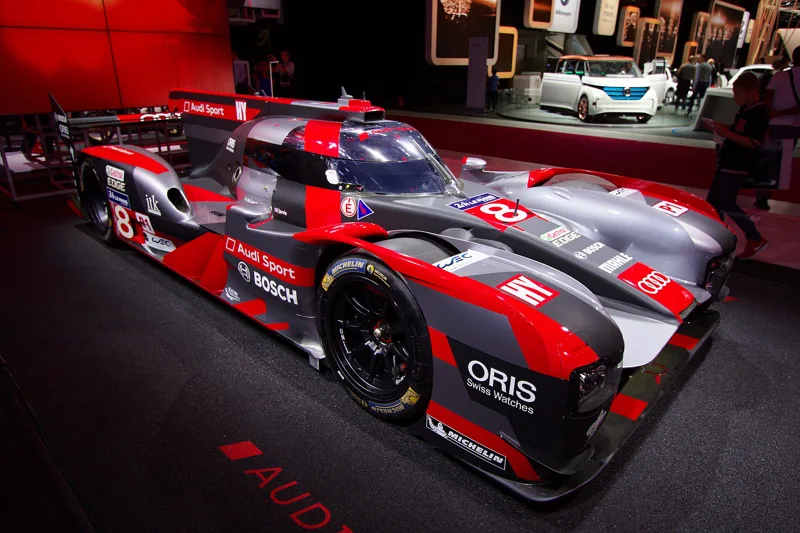
For Audi in the American Le Mans Series he won the title with Capello in 2006 and 2007, and he took four overall wins at the 12 Hours of Sebring, in 2004, 2006, 2009 and 2012. In 2006 he was in the line-up that won at Sebring in the new Audi R10 TDI diesel, setting pole and the lap record. In 2013 he, Kristensen and Duval won the FIA World Endurance Championship, which made him a world champion.
There were costly mistakes too. At Le Mans in 2011 a crash early in the race destroyed his car and put Audi No. 3 out, though he walked away unhurt thanks to recent safety improvements. In 2012 a driving error lost him the lead in Audi No. 2 a few hours from the finish. He also co-drove the No. 8 Starworks Motorsport Riley-Ford to second place at the 2012 Daytona 24 Hours.
Team principal and Audi's Formula 1 team
On 17 December 2013 McNish announced that he was retiring from Audi Sport and from full-time racing. He took a role with Audi Sport liaising between drivers and engineers and working on driver development, and he manages driver Harry Tincknell. He has worked as a commentator and pundit for BBC Formula One coverage, and he became team principal of Audi's Formula E team from the 2017-18 season.
He has won the Segrave Trophy twice, in 2009 and 2014, the BRDC Gold Star in 2014 and the BARC Gold Medal in 2015. Audi announced on 23 January 2026 that he would direct its Driver Development Programme, which is to scout young drivers from karting and junior formulae. On 24 April 2026 he added the role of Racing Director of the Audi F1 Team, in charge of trackside operations at Grand Prix weekends, taking over from Jonathan Wheatley and reporting to Mattia Binotto. His home is in Monaco, where he lives with his wife Kelly and their two children.
Andy Wallace, endurance winner and speed record holder
Andrew Steven Wallace was born on 19 February 1961 and has been racing since 1979. In 1976 he attended the Jim Russell Racing Drivers' School. He has raced prototype sports cars since 1988 and won more than 25 international sports car races, including the 24 Hours of Le Mans, the 24 Hours of Daytona three times, the 12 Hours of Sebring twice and the Petit Le Mans 1,000 miles (1,600 km). He is described as the sixth driver to complete the informal triple crown of endurance racing.
He drove the McLaren F1 to 386.4 km/h (240.1 mph), a speed that stood as the world record for the fastest production car for more than 11 years. He liked Le Mans so much that he became a resident there. He raced for Dyson Racing in the American Le Mans Series through 2007, and in January 2008 he drove the Ruby Tuesday-backed, Porsche-powered Daytona Prototype of Alex Job Racing at Daytona, finishing 36th with engine problems.
He is now the official Bugatti test driver. On 2 August 2019 he drove a Bugatti Chiron Super Sport 300+ to a record of 300 mph at the Ehra-Lessien test track owned by Volkswagen. Top Gear revealed the run on 2 September, and the certified speed was 490.48 km/h (304.77 mph).
Oliver Jarvis, from Formula Renault to the IMSA title
Oliver Richard Benjamin Jarvis was born on 9 January 1984 in Burwell, Cambridgeshire, and was educated at King's Ely. His father, Carl, raced in Formula Ford 1600, and at six Oliver had his first motocross competition. He moved to kart racing at eight, spent ten years in karts and became a Tony Kart works driver. At 18 he went into British Formula Ford, then Formula Renault.
Early titles and A1 Grand Prix
In 2005 Jarvis was Formula Renault UK champion with five wins, seven podiums and four poles. He became a BRDC Rising Star and was handed the McLaren Autosport Young Driver of the Year award by Sir Stirling Moss. In 2006 he joined Carlin in British Formula 3, won two races and finished second in the standings, ahead of Bruno Senna. In 2007 he led every lap of the Macau Grand Prix, the biggest victory of his career.
He also drove for A1 Team Great Britain in the 2006-07 season. In Beijing he finished second in the feature race after the leaders retired, and in Mexico he won the feature race, Britain's first A1 Grand Prix victory.
DTM, Audi and Le Mans
Jarvis raced in the DTM from 2008 to 2011, first for Team Phoenix and then Abt Sportsline in Audis. He was 13th in 2008, ninth in 2009 with two podiums and a first pole at Zandvoort, ninth in 2010 and tenth in 2011. Audi did not keep him for 2012. At Suzuka he won the Pokka 1000 km with Juichi Wakisaka and Andre Lotterer, and in 2012 he drove in the FIA GT1 World Championship with Frank Stippler for Team WRT, finishing eighth with five podiums. He also raced at Le Mans for Audi that year.
In 2013 he won his class at the 24 Hours of Daytona in an Alex Job Racing Audi R8 Grand-Am, won the 12 Hours of Sebring and finished third at Le Mans in an Audi R18 e-tron quattro. He was runner-up in the FIA World Endurance Championship in 2016. After Audi left the WEC he raced a Bentley in the Blancpain GT Series Endurance Cup in 2017, and he also drove an LMP2 car for Jackie Chan DC Racing, which gave him a class win at Le Mans and second overall. They were second in the championship too. In 2018 he drove for Mazda Team Joest in IMSA.
In 2022 he and Tom Blomqvist won the IMSA SportsCar Championship for Meyer Shank Racing with two victories, one of them the 24 Hours of Daytona. He has won his class at Le Mans twice, in LMP2, and now races in the European Le Mans Series with United Autosports.
The four drivers compared
| Driver | Le Mans 24 Hours | Daytona and Sebring | Other mark |
|---|---|---|---|
| Derek Bell | Five wins: 1975, 1981, 1982, 1986, 1987 | Daytona 24 Hours in 1986, 1987 and 1989 | World Sportscar Championship in 1985 and 1986 |
| Allan McNish | Three wins: 1998, 2008, 2013 | Sebring overall wins in 2004, 2006, 2009 and 2012 | FIA World Endurance Championship in 2013 |
| Andy Wallace | A win, part of the informal triple crown | Daytona three times, Sebring twice | 386.4 km/h (240.1 mph) in a McLaren F1 |
| Oliver Jarvis | Two LMP2 class wins; third overall in 2013 | Daytona overall in 2022; Sebring in 2013 | IMSA SportsCar Championship in 2022 |