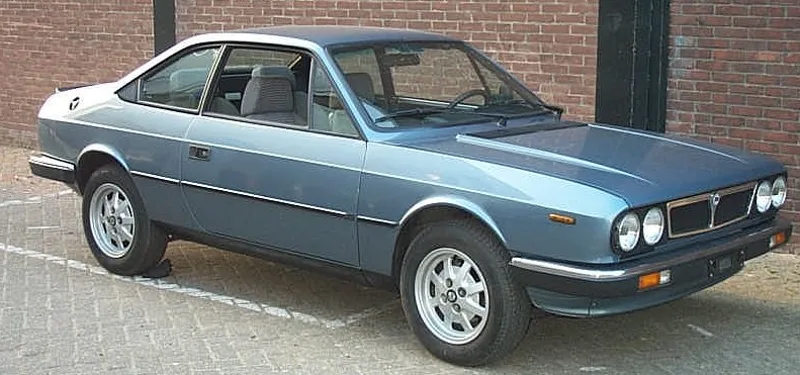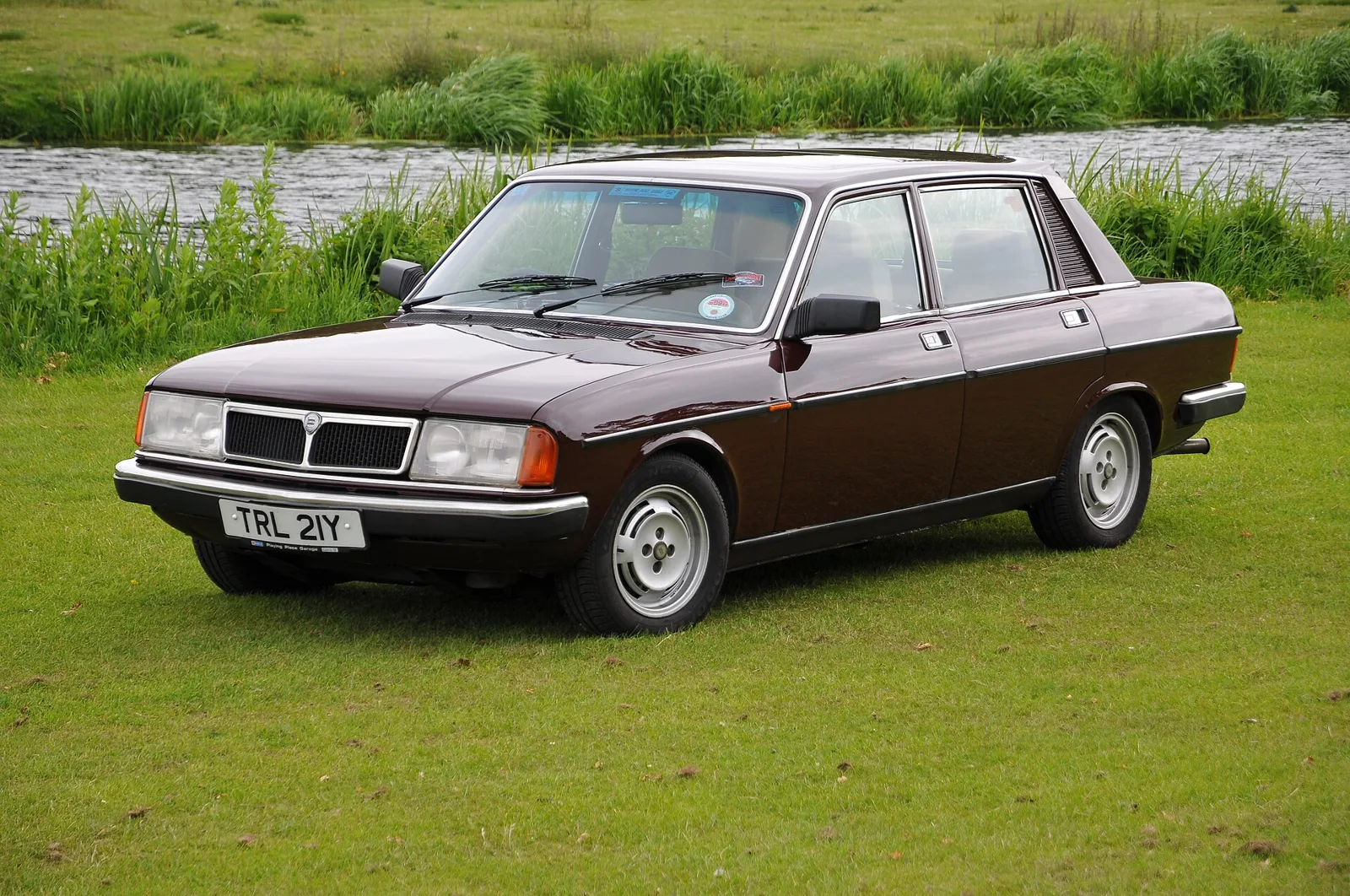
Lancia's 1980 notchback saloon, built on the Beta, with a supercharged Volumex model and a dashboard that became a talking point for critics.
The Lancia Trevi, sold first as the Beta Trevi, was a front-wheel-drive saloon built from 1980 to 1984. It used 1600 and 2000 four-cylinder engines, a supercharged Volumex arrived in 1982, and 36,784 cars were produced. Its dashboard became the most debated feature of the car.
Lancia's Trevi arrived in 1980 as a notchback saloon grown from the Beta, and it remained in production until 1984. Front-wheel drive, twin-cam engines and a choice of 1600 or 2000 powerplants defined the car, and a supercharged Volumex model joined the range in 1982.
Where did the Lancia Trevi come from?
The Trevi was developed from the Lancia Beta and launched in Turin in May 1980. It was sold first as the Beta Trevi until 1983, when the Trevi name took over, and the Beta continued alongside it for two years.
The chief engineer for the Beta, Sergio Camuffo, also worked on the Gamma and several other models. Lancia wanted the restyled car to restore credibility after the Beta's rust problems, when the company had to buy back cars whose sub-frame mounting points had corroded.
Sales literature pitched the car as both luxurious and sporting, and the designers set out to build a classic three-box notchback. Beta sales had dropped to 7,000 a year by 1980, down from 11,000 in 1977, so the restyle carried real weight. The name itself comes from the Italian Tre Volumi, meaning three boxes.
A Beta-based saloon that brought Lancia a supercharger and a dashboard that critics never forgot.
What engines did the Trevi use?
The Trevi launched with 1600 and 2000 four-cylinder engines, each with twin overhead camshafts and Weber or Solex carburettors. In 1981 Bosch electronic ignition arrived on the 2000IE, lifting output to 122 CV at 6,400 rpm from 115 CV at 5,500 rpm.
Both engines sat transversely and drove the front wheels.
The most powerful Trevi arrived in 1982 as the Volumex. Its supercharger lifted output to 135 CV (99 kW), and Lancia kept the carburettors rather than switching to fuel injection. The Volumex was the last version of the car.
Lancia did not import the Volumex into Great Britain and Northern Ireland, and the carburettored 2000 was discontinued during 1983.
How was the Trevi engineered?
The Trevi used a five-speed gearbox as standard, with a single dry plate clutch, MacPherson struts all round and rack and pinion steering. Its tyres were 185/65 HR 14 Pirelli P6 units, which the suspension was tuned around. The brakes were 250 mm (9.8 in) units that performed well during fade tests.
The front seats were a weak point, giving little sideways support, and rear legroom and headroom were limited. Interior storage was also poor, which reviewers counted against the car.
The clutch was criticised as too heavy, and the gear change suffered from over-spring towards third and fourth. The gearbox spacing meant drivers had to shift often to stay between peak power and peak torque. On the two-litre car, power steering came as standard in Britain.
Steering was light around town but too light for fast cross-country work. The car's natural tendency was towards understeer, yet a sudden lift of the throttle mid-corner could bring on lift-off oversteer.
How did critics receive the Trevi?
The Trevi received a cool reception, particularly in the British press, where most magazines criticised its looks and interior. Its handling and steering won praise from several reviewers, but the design itself was treated as a weak point.
Autocar put the Trevi 2000 on its cover in August 1981 and praised the handling as among the best of any saloon. The same review criticised the packaging, the dashboard, the ergonomics and the seats, and it noted that the car could lift into oversteer.
CAR magazine liked the Trevi's grip and balance, and in November 1981 it judged the car the best of a three-way comparison. The same writers found the styling bland and the dashboard hard to use, and they found the dipped beam inadequate for fast driving.
A 2014 review in Klassik Autobild called the dashboard hardly a masterwork, while also describing it as audacious.
What was the Volumex model?
The Volumex arrived in 1982 at Turin as the final and most powerful Trevi. It used a twin scroll Roots-type supercharger to lift output to 135 CV (99 kW) without fuel injection, and the designers aimed to improve performance without hurting economy.
Motor magazine tested the Volumex in 1982 and found that the car did not feel especially quick. Its straight-line performance had character but little sparkle, while the handling and grip remained first class. Lancia had chosen mechanical supercharging rather than turbocharging to give the feel of a larger engine.
The Volumex also gained revised front seats, a matt-black chin spoiler, plusher trim and seats upholstered in Zegna fabric, along with power steering from ZF as standard. Autocar reported that the supercharger did not penalise fuel economy, with around 28 mpg quoted by Lancia.
A Belgian test praised the steering but found the performance disappointing. The car was promised 9.6 seconds to 0-100 km/h (62 mph) but took 11.2 seconds. The writers felt a fuel-injected Trevi Turbo would have been a much better car, and the cheaper 2000IE was just as fast with lower fuel use.
How did the Trevi 2000 perform in road tests?
Autocar's August 1981 test of the Trevi 2000 found that the car reached 0-60 mph in 11.1 seconds. Its 115 CV was judged only adequate for a car weighing 1,184 kg, and the front-heavy balance brought torque steer into the picture.
Autocar noted that 72% of the car's weight sat over the front wheels, and it criticised the gearchange as clunky though well spaced. The brakes were soft at the pedal but held up well under repeated fade tests.
Drive and Trail tested the 2000 at a quoted GBP 7,421 and described the engine as fiery. On a cold morning the car could take three miles (5 km) before the engine reached running temperature, and it sometimes stuttered and lost power when accelerating again. Once warm, the engine responded crisply, and the car became a reformed character on the road.
The same magazine liked how the engine delivered power across a broad band and forgave poor gear choices. It also suggested that a taller top gear would have suited motorway cruising better than the ratios fitted.
How did the Trevi compare with its rivals?
Autocar matched the Trevi 2000 against the Alfa Romeo Alfetta, Citroen CX Athena, Fiat Mirafiori Sport, Renault 20 TX and Saab 900 GLS. Of that group, the Trevi had the highest top speed at 113 mph, the fourth-fastest 0-60 mph time at 11.1 seconds and the third-best average consumption at 25.2 mpg.
CAR's November 1981 comparison pitted the Trevi against the Citroen CX Reflex and the Saab 900 GLS, and the Lancia won. Its strengths were its handling and performance, helped by evenly spread close ratios and by having more torque and less weight than its rivals. It lost ground on fuel consumption, coming second to the Citroen, and on its styling and dashboard.
The driver's seat won praise for general comfort, although reviewers said it lacked lumbar support. Rear passenger room was judged sufficient and on a par with the Saab, while the luggage space looked smaller only because the other two cars were so generous.
What was the Trevi Bimotore?
The Trevi Bimotore was a one-off built in 1984 by former Abarth engineer Giorgio Pianta. It carried a second engine in the rear to give all-wheel drive, with about 300 CV combined from two lightly tuned Volumex units. Pirelli used the car to test tyres for the street version of the Lancia Delta S4.
The rear engine needed large air intakes cut into the rear doors. Smaller pulleys raised boost pressure in the two units, which produced 150 CV each. It was a single car, built for one specific test purpose.
What happened to the Trevi 1600?
By April 1983 the Trevi was available only as a 1600 saloon, and CAR magazine judged that the model had been left without a supporting range. The 2000 was seen as the better car, and production of the Trevi ended in 1984 after 36,784 examples.
CAR praised the roomy and cocoon-like body, but it argued that the car had been left behind by a lack of development. Lancia's whole range was rated merely adequate in the magazine's listings at the time.
The 1600 also suffered from weak resale, which reviewers noted as a further drawback.
CAR's summary listed the lack of a hatchback among the drawbacks, while noting that the 2000 had been the better proposition. The 1600 kept the roomy, cocoon-like body but lost the wider range that had supported it.
Why was the dashboard so controversial?
The Trevi's dashboard, designed by Italian architect Mario Bellini, drew more criticism than almost any other feature. Critics called it ugly, gimmicky and overstyled, and compared it to Swiss cheese or a scene from Star Trek, while the Star Wars style fascia was dismissed as a disaster.
Bellini described the interior as a complex architecture in a small, very restricted space, tackled from a structural angle rather than a purely aesthetic one. Autocar found the layout confusing for the driver and dull for the passenger.
What Car? also joined the criticism in 1982, comparing the fascia to Gruyere cheese and calling the interior bizarre.
What are the Lancia Trevi specifications?
The Trevi was a front-wheel-drive saloon with transverse engines, a five-speed gearbox and MacPherson struts at every corner. The table below lists the core figures for the 1600, 2000 and Volumex, along with the Bimotore and the production total.
| Specification | Detail |
|---|---|
| Type | Type 828 notchback saloon |
| Engines | 1600 and 2000 in-line four-cylinder, twin overhead camshafts |
| Drive | Front-wheel drive, transverse engine |
| Gearbox | Five-speed manual standard; automatic optional on larger engines in the UK |
| Ignition | Electronic ignition; Bosch unit on the 2000IE from 1981 |
| 2000IE output | 122 CV at 6,400 rpm (115 CV at 5,500 rpm before) |
| Volumex output | 135 CV (99 kW), twin scroll Roots-type supercharger |
| Bimotore output | 150 CV per engine, 300 CV (221 kW) total |
| Consumption, 1600 manual | 9.6 L/100 km (29.4 mpg) |
| Consumption, 2000 automatic | 11.1 L/100 km (25.4 mpg) |
| Tyres | 185/65 HR 14 Pirelli P6 |
| Brakes | 250 mm (9.8 in) |
| Production | 36,784 built, 1980 to 1984 |
| UK price | GBP 7,421 quoted for the 2000 |
Drive and Trail's test of the 2000 averaged 25 mpg-imp (11 L/100 km; 21 mpg-US). The realistic range was put at 250 miles (400 km), and the 52 L (11.4 imp gal; 13.7 US gal) tank gave the car a useful but not generous reach.