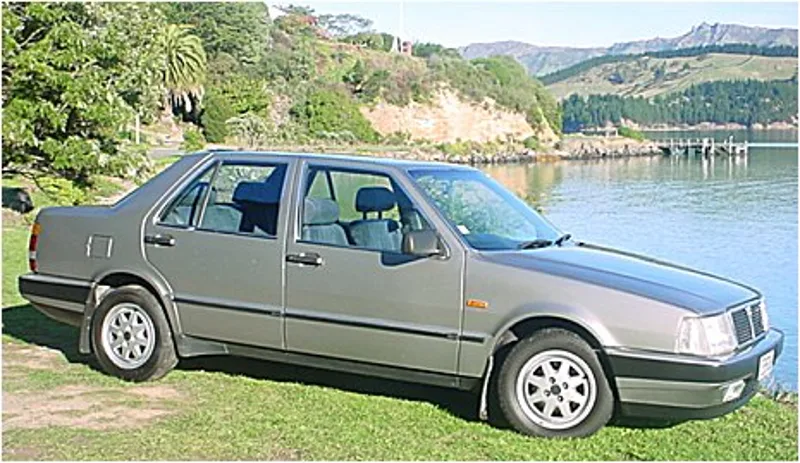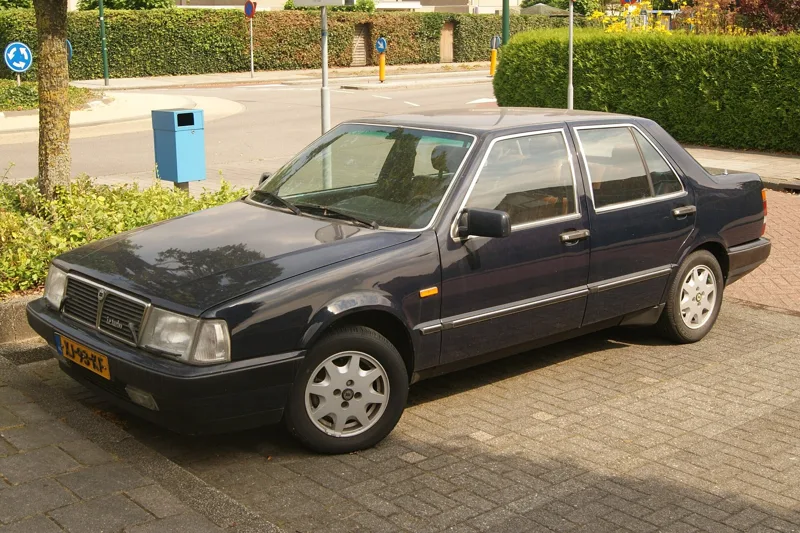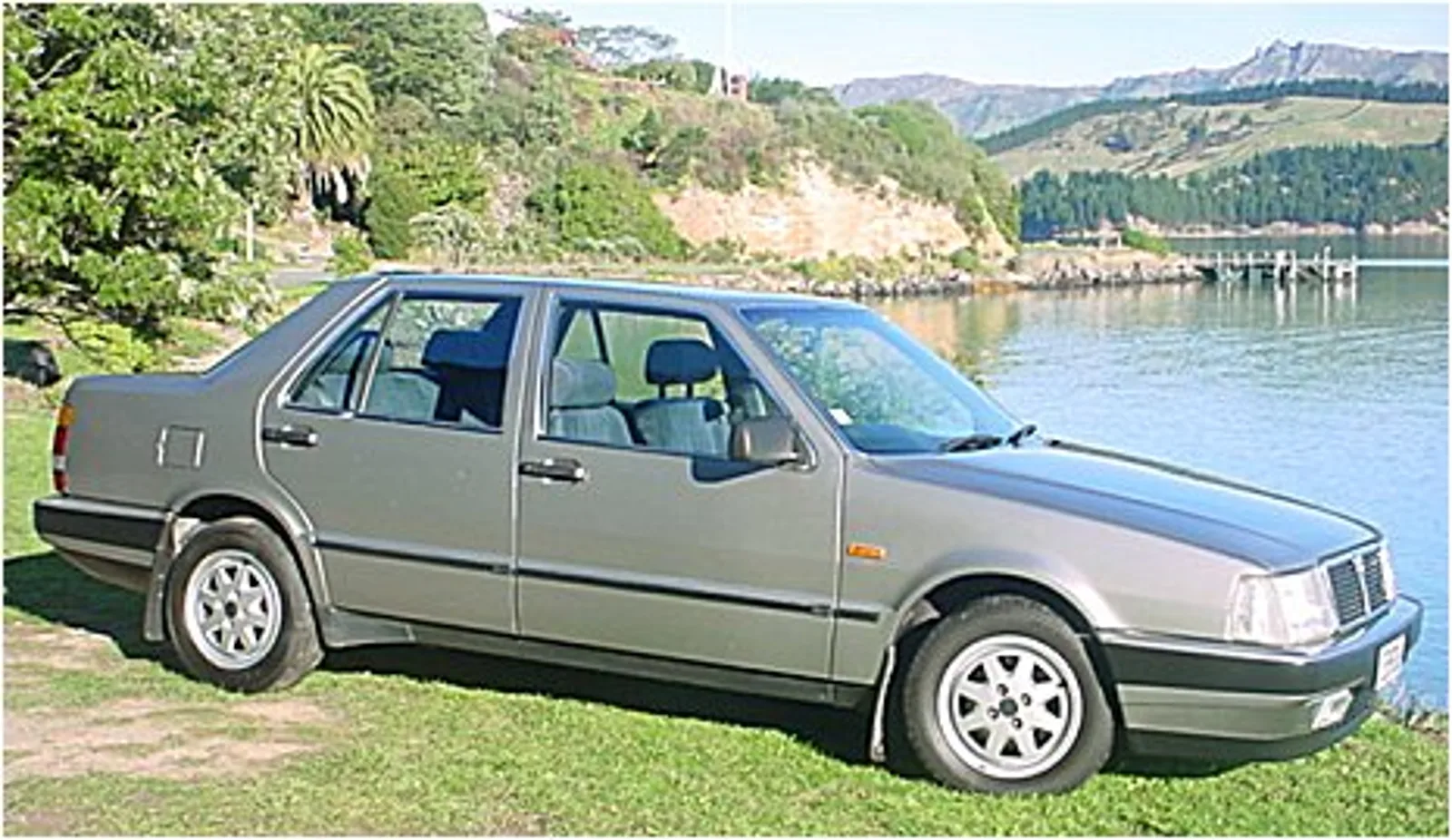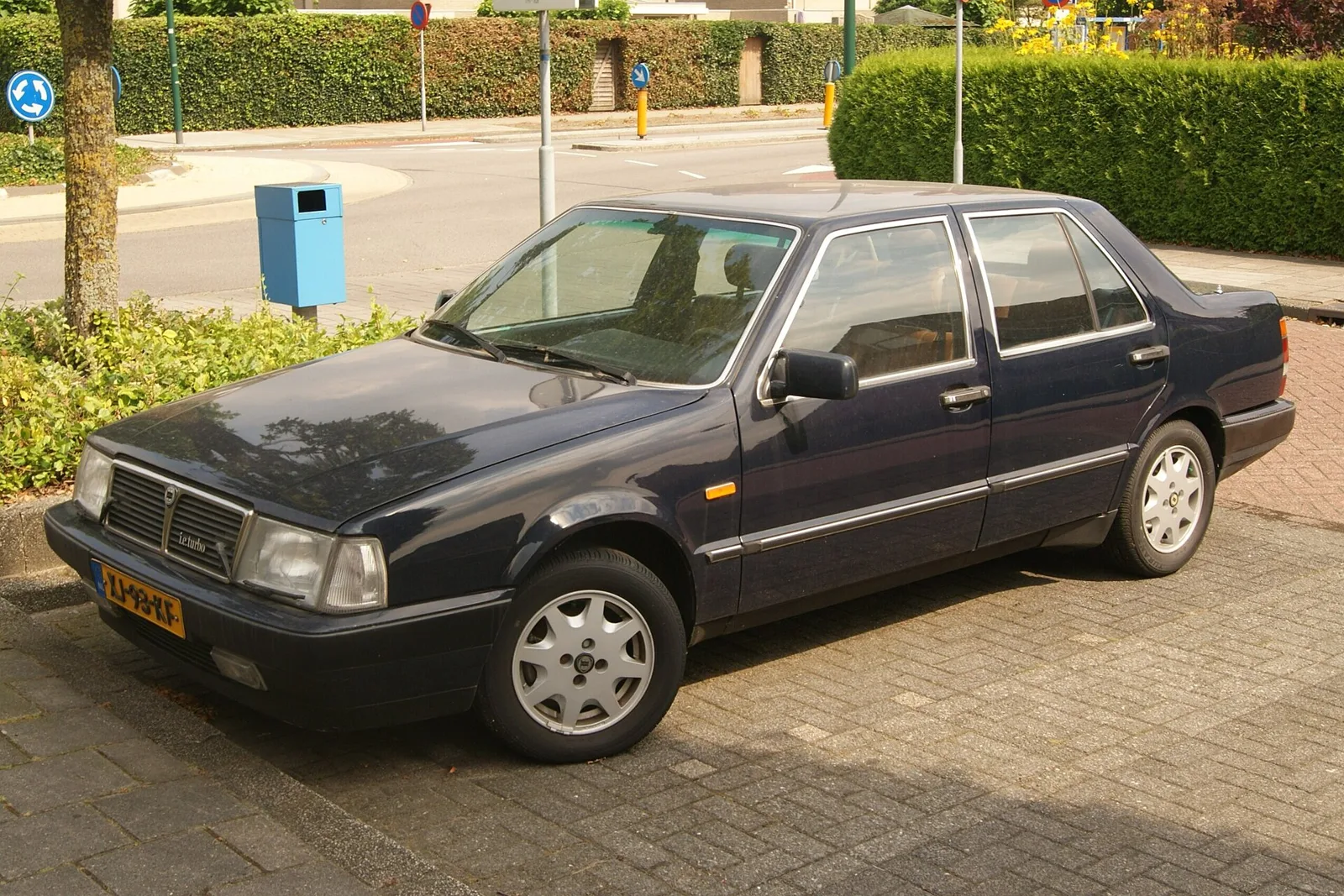
Lancia's Thema and Saab's 900 both offered sporting, well-equipped family motoring in the 1980s, but they took very different engineering routes to get there.
The Lancia Thema was an executive car built by Lancia from 1984 to 1994, sharing the Type Four platform with a range of two-litre, V6 and Ferrari V8 engines. The Saab 900 was a Swedish car built from 1978 to 1998, based on the Saab 99 with an unusual engine layout and a range of turbocharged versions.
Lancia's Thema and Saab's 900 both offered sporting, well-equipped family motoring in the 1980s, but the two cars took very different routes. The Thema was an Italian executive car with a platform shared across several brands, while the 900 was a Swedish original that kept its distinctive engineering for most of its life.
The comparison therefore sets a shared-platform executive saloon against an individual sporting car with a long, idiosyncratic history. Both offered turbo power and a range of trims, which makes their differences in engineering more telling than their shared aims.
Why were the Thema and the Saab 900 seen as rivals?
The two cars were not direct platform rivals, since the Thema shared its Type Four platform with the Saab 9000 rather than the 900. They met in the market as sporting family cars for buyers who wanted turbo power, a comfortable interior and a well-equipped cabin at a sensible price.
Saab and Fiat worked together on Type Four, which produced the Thema, the Croma, the Alfa Romeo 164 and the 9000. The 900 stayed outside that family, so its rivalry with the Thema lay in the buyer's choice rather than in shared engineering.
An Italian executive saloon with a Ferrari V8 option against a Swedish car whose engine was mounted backwards and whose gearbox doubled as the oil pan.
How were the two cars developed?
The Thema was announced in May 1984 and first shown at the Turin Motor Show in November of that year, after an introduction to the press in Vienna in October. It was built as a saloon, with a station wagon designed and produced by Pininfarina in Grugliasco.
The Saab 900 was introduced on 12 May 1978 for the 1979 model year, based on the Saab 99 chassis. Its front end was made longer to meet upcoming United States frontal crash rules and to make room for turbocharged engines and air conditioning that the older 99 had not offered.
The 900 gained a four-door sedan for 1981, which was first shown at the 1980 Geneva Motor Show. That change let the car reach the market with a broader range of body styles, though country importers chose different combinations for their own markets.
What made the Saab 900's engineering unusual?
The 900's B engine sat reversed, with power taken from the crankshaft at the front of the car. The transaxle bolted to the bottom of the engine to form the oil pan, with separate oil lubrication, and power passed down and back through chain-driven primary gears.
The rear suspension used a beam axle stabilised with a Panhard rod, but the attachment points formed an unusual arrangement. Two Watt's linkages, one at each end of the axle, located it, with a lower control arm at the bottom of the car and an upper link facing rearwards.
The 900's dashboard was curved to bring all controls within easy reach, with gauges lit from the front. Saab placed controls according to how often they were used, so the radio sat high on the dashboard where the driver could reach it with the least distraction.
How did the Thema's design and interior differ?
The Thema's styling changed across its three series. The second series added a more prominent grille with vertical bars and moved the turn indicators under the headlamp units, while the third series brought a facelift with new trim levels base, LE, LS and LX.
The 8-32 was the Thema's most unusual variant, with a handmade wood and Alcantara interior and a double hand-painted pinstripe along its sides. Its retractable rear spoiler sat flush with the boot lid when closed, and Bosch KE3 Jetronic injection fed its Ferrari engine.
How did the engines and performance compare?
The Thema's first series used a 2.0-litre eight-valve at 120 PS (88 kW; 118 hp), a turbocharged 2.0-litre at 165 PS (121 kW; 163 hp) and a 2.8-litre V6 at 150 PS (110 kW; 148 hp). The second series added 16-valve engines, with the turbo 16v producing 185 PS (136 kW; 182 hp).
The 900's 1978 range covered a single-carburettor GL at 100 PS (73.5 kW), a twin-carburettor GLs at 108 PS (79 kW), a fuel-injected GLi at 118 PS (87 kW) and the Turbo at 145 PS (107 kW). The 1984 Turbo 16 used a 16-valve DOHC B202 rated at 175 PS (129 kW) with an intercooler.
The Thema 8-32 reached 0-100 km/h in 6.8 seconds and 240 km/h (149 mph) in non-catalysed form, with its Ferrari V8 producing 215 PS (158 kW). The 900 Turbo 16 was quick for its class, but the 8-32 was in a different performance league, which shows how far the Thema range stretched.
How did production and sales compare?
The Valmet plant in Finland produced the 900's base models, with a total of 238,898 examples. Production in Trollhattan continued in the early years, and the Arlov plant near Malmo also built the car, which shows how the 900 was spread across several plants during its life.
The Thema passed over 336,000 saloons in total, and its station wagons reached 21,074 between 1986 and 1994. The 8-32 was far more limited, with 2,370 Series 1 cars built between 1986 and 1988, and 1,601 Series 2 cars from 1989 to 1992.
How were the two cars received?
The 900 offered a Minilite alloy wheel option for the UK market, and its Aero or Special Performance Group version added a body skirt, a sport suspension and sway bars. The record notes that sway bars were later added to standard turbos from 1987.
Road & Track's description of the 8-32 as a sleeper of the 1980s gives the Thema's quiet character a fair summary. Its looks gave little away, which made it a more interesting purchase than its badge suggested.
How did the 900's Turbo and Aero versions differ?
The 900 Turbo used a turbocharged engine rated at 145 PS (107 kW) at launch, while the Turbo 16 used a 16-valve DOHC B202 that combined a turbo with an intercooler to reach 175 PS (129 kW). The Aero, known in the United States as the Special Performance Group, added a body kit and a sport suspension.
The Turbo 16 Aero had a body kit that allowed speeds up to 210 km/h (130 mph). Its sport suspension used shorter, stiffer springs and stiffer shocks, along with sway bars that cut body roll at some cost to ride comfort.
From the 1987 model year the standard turbos also received sway bars, and owners could retrofit the feature to any model. The Aero's sportier character was therefore available across the range rather than limited to a single badge.
The 900's turbocharged engines came in full-pressure form in the United States and, during the early 1990s, as low-pressure turbos in European models, which reflected different emissions and fuel conditions in each market.
How did the 900 and the Thema compare in Britain?
The 900 was sold in the United Kingdom with a Minilite alloy wheel option, and features that were standard on American models could be ordered as extras in Europe. Saab's trim levels varied by model year and market, so buyers had to check what was fitted to a particular car.
The Thema's British story was shorter. It was sold in the United Kingdom through its run, until Lancia withdrew from right-hand drive markets in 1994 in response to falling sales.
The two cars therefore reached British buyers at different points in their lives, with the 900 spread over a long period and the Thema concentrated in the years of its first and second series.
What made the Saab 900 a long-running design?
The 900 was built on the Saab 99 chassis and kept its basic undercarriage largely unchanged to save money. Its first generation ran from 1978 to 1993, and it was refined through a long list of model-year updates rather than replaced.
Saab changed the 900's front end and bumpers for 1987, moving from a vertical design to a more sloped one, while leaving the undercarriage almost untouched. That approach kept costs down across a long production run.
The 900's door design was unique, with an undercutting sweep that met the undercarriage to form a tight, solid unit. The design also kept water and debris from collecting at the foot of the door, which reduced the risk of corrosion.
Saab's engineers placed controls and gauges according to how often they were used and how important they were, so a driver needed to look away from the road for the shortest possible time.
How do the specifications compare?
| Specification | Lancia Thema | Saab 900 |
|---|---|---|
| Years built | 1984 to 1994 | 1978 to 1998, two generations |
| Layout | Type Four platform, front engine | longitudinal front engine with transaxle under it |
| Engines | 2.0-litre four, 2.8 V6, 2.0 16-valve, Ferrari V8 in the 8-32 | B engine, H engine from 1981, B202 turbo 16-valve |
| Top power | 215 PS (158 kW) 8-32; 185 PS (136 kW) turbo 16v | 175 PS (129 kW) Turbo 16, 1984 |
| 0-100 km/h | 6.8 seconds, 8-32 | no figure given |
| Top speed | 240 km/h (149 mph), 8-32 | 210 km/h (130 mph) with the Aero kit |
| Production | over 336,000 saloons | 238,898 base models from Valmet |
| Drive | front-wheel drive | front-wheel drive |
| Drag coefficient | no figure given | no figure given |
Which buyer suits each car?
The Thema suits a buyer who wants an Italian executive saloon with a choice of engines, including a rare Ferrari V8 variant, and a station wagon option. The 900 suits a buyer who wants a sporting Swedish car with an individual engine layout and a long production run.
Buyers who value a broad range of body styles and engines will find more variety in the 900, which had hatchbacks, saloons and convertibles. Those who want the most exclusive variant will look to the Thema 8-32 and its small production run.
The record gives no current values for either car, so buyers should check present-day prices and condition before comparing purchase costs.