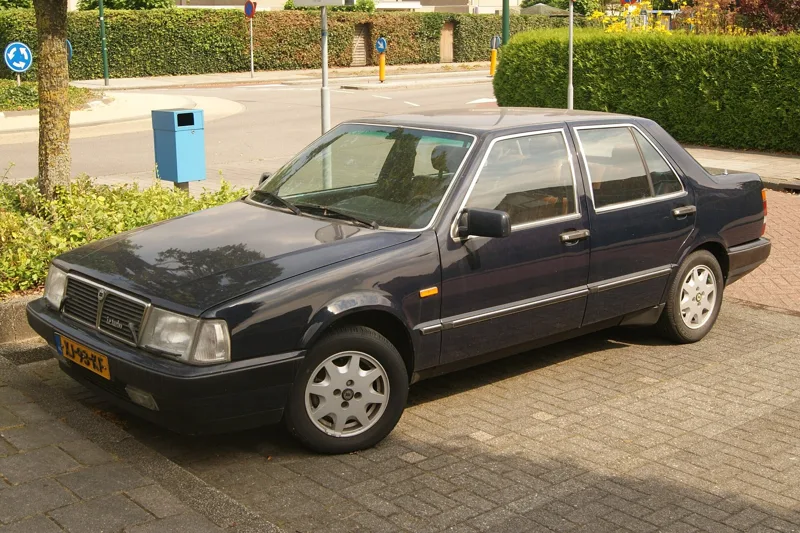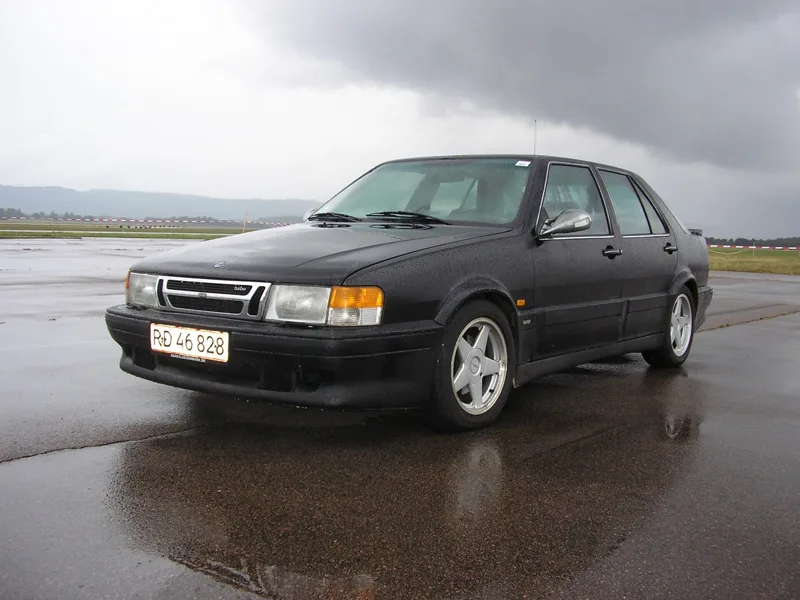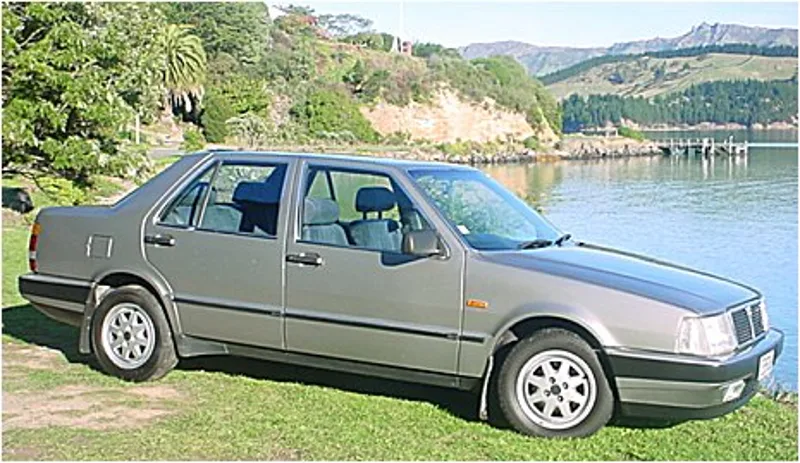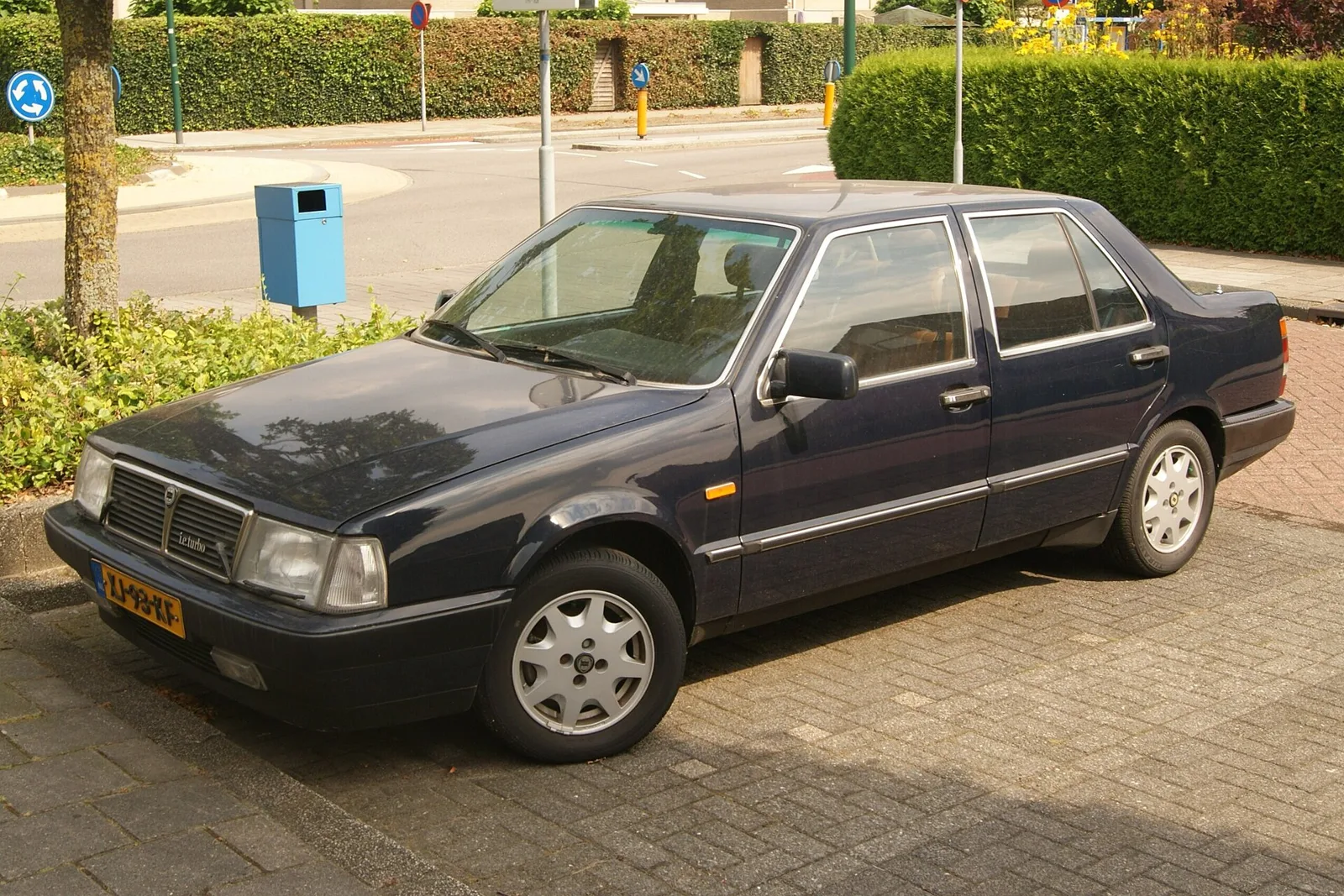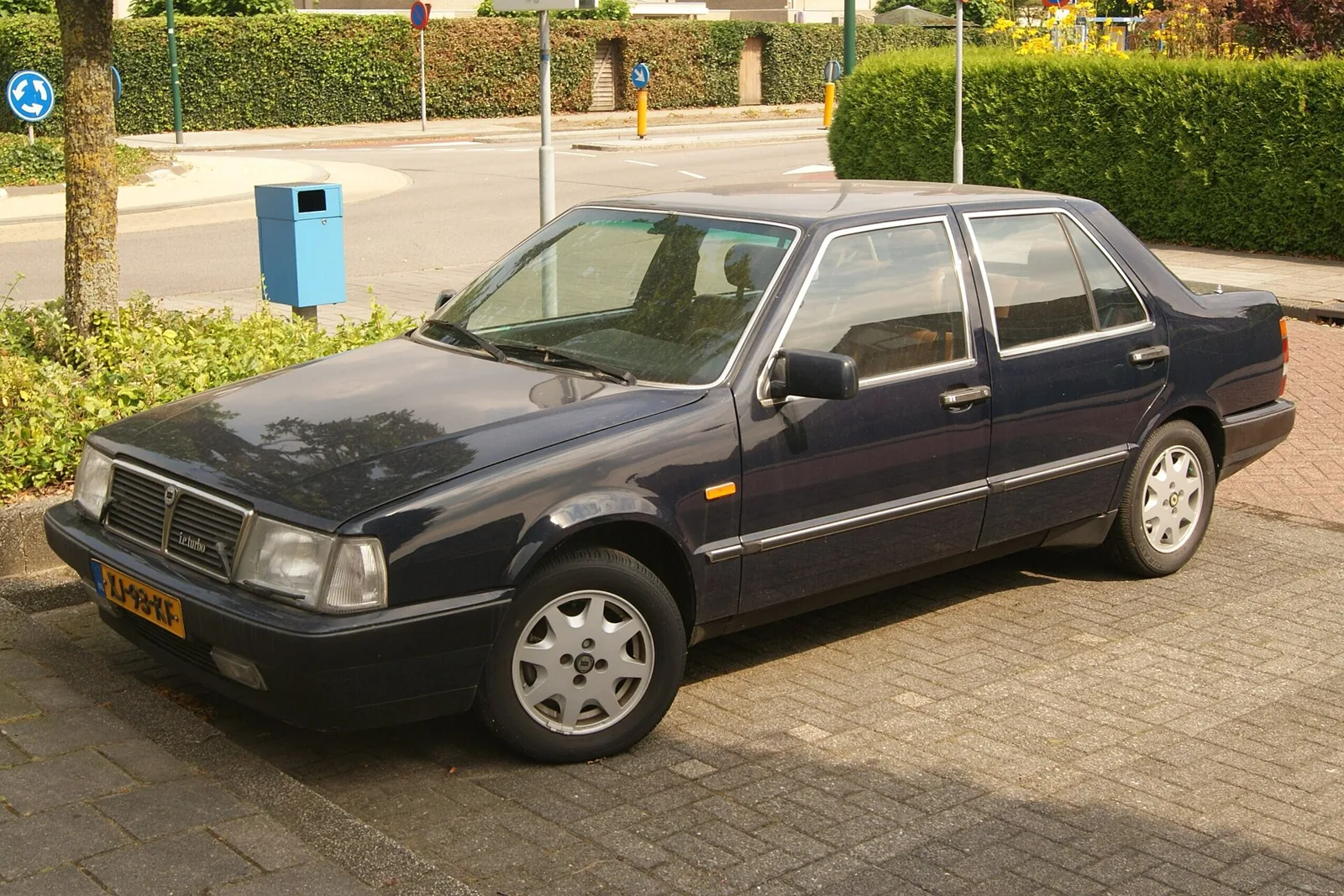
The Thema and the Saab 9000 shared the Type Four platform, but Saab rebuilt the front, the crash protection and the rear suspension to suit its own market.
The Lancia Thema and the Saab 9000 were executive cars that shared the Type Four platform developed with Fiat. The Saab 9000 was built from 1984 to 1998 and reached 503,087 cars, while the Thema was built by Lancia from 1984 to 1994 and passed 336,000 saloons.
The Lancia Thema and the Saab 9000 shared a common starting point in the Type Four platform, but the two cars did not stay close for long. Saab's engineers rebuilt the front, the crash protection and the rear suspension to suit their own market, which meant the cars ended up far more different than their outlines suggested.
The comparison is therefore a study in how a shared platform can produce two different executive cars. Both were sold for a decade or more, and both carried turbocharged power, but their engineering priorities took them in different directions.
How did the two cars share a platform?
The Type Four platform was developed by Saab in partnership with Fiat, which produced its own derivatives as the Croma, the Thema and the Alfa Romeo 164. The Croma and Thema looked outwardly similar to the 9000, and much of the bodywork appeared interchangeable between them.
Saab's car differed where it mattered. Its heavier side impact protection and other changes meant that none of the components could be swapped, and only seven parts were genuinely interchangeable. The 9000 also used MacPherson struts only at the front, while the other Type Four cars used them all round.
The 9000 was designed by Giorgetto Giugiaro together with Saab's in-house designer Bjorn Envall. The result was a car with a Giugiaro-influenced profile and Saab-specific structure underneath, which made it a distinct product rather than a rebadged Italian car.
Two executive cars that began life on the same platform, but where Saab's engineers rebuilt almost everything that mattered to its own customers.
What did Saab change for United States crash rules?
Fiat had designed the Croma without considering American crash test requirements, which forced Saab to strengthen the body with reinforcements. The front of the 9000 became radically different from its Italian siblings because of that improved crash protection, and the work made the Saab far safer in the American market.
Earlier production 9000s could not pass the American crash tests, but the car was continuously reinforced during its production run. That process shows how much engineering went into making the Saab acceptable in its most important foreign market.
Early 9000s had weak structural rigidity and cracking problems, which the record sets against the car's prestige reputation.
How did the 9000 and Thema differ in size and space?
The 9000 was shorter overall than the 900 that ran alongside it, yet it had a longer wheelbase and greater interior space. Its engine was mounted transversely, unlike the 900, which allowed the car to qualify as an EPA-rated large car.
The 9000 offered 3.5 cubic metres (120 cu ft) of interior space, a boot of 0.67 cubic metres (24 cu ft) and 1.6 cubic metres (57 cu ft) with the rear seats folded. Its ignition switch stayed in the conventional steering column position, which kept the cabin layout familiar.
The Thema was built as a saloon and as a station wagon, with the wagon finished by Pininfarina at its Borgo San Paolo plant. That wagon option gave the Thema a practical edge that the 9000 never offered in the same form.
How did the engines compare?
The original 9000 Turbo 16 was a five-door hatchback with a manual gearbox and a 2.0-litre turbocharged 16-valve four, rated at 175 hp DIN (129 kW) without a catalytic converter. Its drag coefficient of Cd 0.34 was very competitive for its time.
The 9000 later used the B234 2.3-litre, rated at 146 hp DIN (107 kW) naturally aspirated and 195 hp DIN (143 kW) with a turbocharger from the 1991 European model year. The 3.0-litre B308 V6 from General Motors arrived for the CDE in 1995, rated at 210 PS (154 kW).
The Thema's range ran from a 120 PS (88 kW; 118 hp) two-litre to the 215 PS (158 kW) Ferrari-engined 8-32, which reached 0-100 km/h in 6.8 seconds. Its Alfa Romeo V6 of 175 PS (129 kW; 173 hp) gave the third series a smoother top end.
The Thema 8-32's 215 PS (158 kW) took it to 0-100 km/h in 6.8 seconds, the quickest acceleration figure the record gives for either car.
What changed during the 9000's life?
The four-door CD saloon arrived for 1988 with a more modern and more streamlined front. The same year brought the Saab Information Display, which showed fuel use, distance to empty and outside temperature, and pyrotechnic seat belt tensioners for the front seats.
The B234 engine appeared in 1990, a four-speed ZF automatic arrived for 1987, and the CS redesign followed in 1992 with a Trionic management system from 1993. The 9000 ended production in 1997 as the 9-5 took over, with only 1,400 cars built for the 1998 model year.
The Thema 8-32 is the most unusual Thema in the record: 2,370 Series 1 and 1,601 Series 2 cars were built, and it carried a retractable rear spoiler and a five-speed manual gearbox. Road and Track described it as a sleeper of the 1980s.
How did the Thema's history compare?
The Thema's first series ran from 1984 to 1988 with four models at launch, and its second series arrived at the Paris Motor Show in September 1988. The third and last series was introduced in September 1992 and built until 1994, when the car was replaced by the Kappa.
Lancia withdrew entirely from right-hand drive markets in 1994, which ended the Thema's British sales as falling volume pushed the company to reduce its range. The Thema's total of over 336,000 saloons makes it a substantial model in its own right.
The record also notes that Enzo Ferrari owned a Thema 8-32 at the end of his life, which gives the small-production 8-32 a notable owner among the Thema range.
How were the two cars received?
The 9000 was awarded Best Prestige Car 1985 by the French magazine L'Action Automobile. Early cars, though, had weak structural rigidity and a reputation for cracks, which Saab worked to reduce across the production run, reinforcing the car continually along the way.
Saab's 1986 endurance run at Talladega put three 9000 Turbo 16s through 20 days and 20 nights of running, and the lead car set a series of records. That event gave Saab a publicity win in the United States that later influenced special models.
What did the 9000's interior and dashboard offer?
From 1988 the 9000 carried a Saab Information Display, which showed fuel consumption, distance to an empty tank, alternator output voltage, outside temperature and the lowest battery voltage at start-up. The display also warned of possible black ice when the outside temperature fell into a narrow band just around freezing.
A separate pictogram monitored door and hatch opening and the condition of exterior light bulbs. Safety kit moved on that year too, which showed that the car kept pace with safety thinking.
The 9000's cabin benefited from its longer wheelbase and generous interior volume, and its rear seats folded to add luggage room. Those points made it a practical executive car, in contrast to the Thema's more decorative approach.
The Thema's 8-32 used matte burr wood veneers, six small auxiliary gauges and a silver eggcrate grille outside. That contrast with the Saab's practical layout highlights two different ideas of executive luxury.
How did the 9000 grow into its later models?
The 9000 line grew from the 1985 hatchback into the CD saloon of 1988 and the CS hatchback of 1992, with each change bringing new engines and trims. The line was revised again in 1993 with the CS and CD designations, which set out basic and fuller trim levels.
Basic equipment came with the CS and CD, while the CSE and CDE came with most available equipment from the factory. Either trim could be combined with the engines available that year, so a basic CS could still carry the 200 hp turbocharged engine.
The 1995 model year added a 3.0-litre B308 V6 from General Motors, rated at 210 PS (154 kW), as standard for the CDE and optionally for the CSE. The engine was not offered in every market.
The four-door CD and E models were discontinued in all markets in summer 1997, and the Aero also ended that summer. Only 1,400 units of the 9000 were produced for the 1998 model year, and only 400 of those went to the United States.
How do the specifications compare?
| Specification | Lancia Thema | Saab 9000 |
|---|---|---|
| Years built | 1984 to 1994 | 1984 to 1998 |
| Total built | over 336,000 saloons | 503,087 cars |
| Layout | Type Four platform, front engine | Type Four platform, transverse engine |
| Top power | 215 PS (158 kW) 8-32 | 210 PS (154 kW) B308 V6 from 1995 |
| Turbo power | 185 PS (136 kW; 182 hp) turbo 16v | 175 hp DIN (129 kW) Turbo 16; 195 hp DIN (143 kW) from 1991 |
| 0-100 km/h | 6.8 seconds, 8-32 | no figure given |
| Drag coefficient | no figure given | Cd 0.34 |
| Interior space | no figure given | 3.5 cubic metres (120 cu ft) |
| Station wagon | 21,074 built by Pininfarina | no station wagon offered |
Read down the table and the two cars share a platform but not much else. The Thema's range leans on Ferrari and Alfa engines and a station wagon, while the 9000 leans on crash engineering and interior space, so the table reflects two different priorities rather than a clear winner.
Which buyer suits each car?
The Thema suits a buyer who wants an Italian executive saloon with a station wagon option and, if chosen carefully, a Ferrari V8 variant. The 9000 suits a buyer who wants a larger Swedish executive car with strong crash protection and generous interior space.
Buyers who value practical body styles will find more choice in the 9000, which offered hatchback, saloon and cabriolet-style variants over its life. The Thema 8-32 is the choice for collectors who want a small-production Lancia with a Ferrari heart.
The record gives no current values for either car, so buyers should check present-day prices and condition before comparing purchase costs. Service history matters as much as the purchase price for cars of this age.