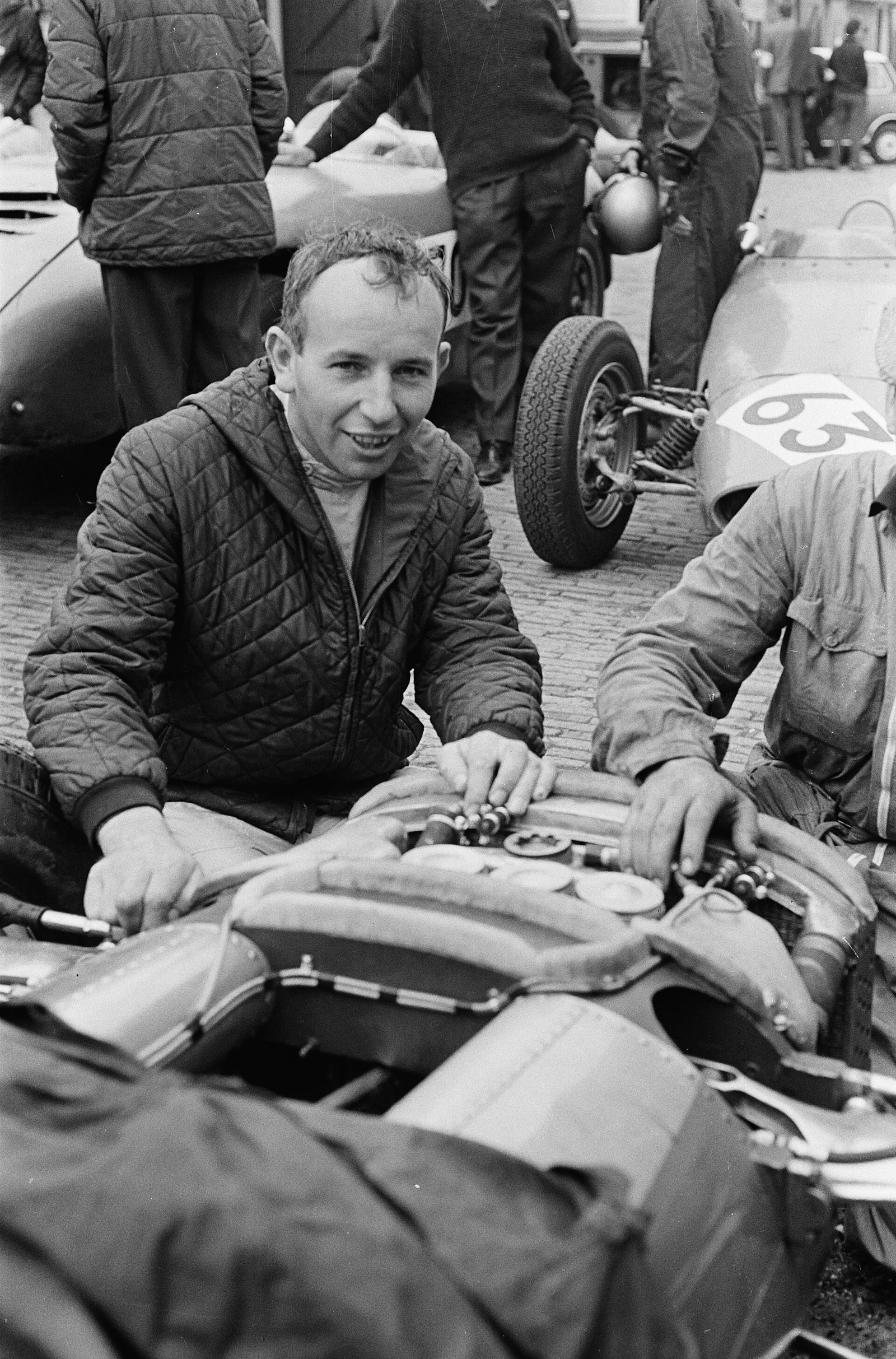
From motorcycle clubman events to Le Mans, Porsche's works team and an unrealised Formula One team plan.
Tetsu Ikuzawa was a Japanese racing driver who competed in Japan, Britain, Europe and at Le Mans from the 1960s to the 1980s. Ikuzawa became the first Japanese driver to contest European series on a regular footing and the first Japanese factory driver for Porsche, and he later ran his own team.
Tetsu Ikuzawa was one of the most accomplished Japanese drivers of the early years of motor racing in his country. He became the first Japanese driver to compete regularly in the British Formula Three and European Formula Two championships, and later the first to race as a factory Porsche driver. This article covers his career from motorcycle clubman events to Le Mans and his unrealised plan to run a Formula One team.
Who was Tetsu Ikuzawa?
Tetsu Ikuzawa was a Japanese racing driver, team executive and businessman, born on 21 August 1942 in Tokyo. He raced motorcycles before switching to cars in 1963, and over the next decade he competed in Europe, at Le Mans and in his home championships. Later he ran his own racing team and managed Nissan Motorsports Europe.
His father, Rou, was a painter and illustrator. Ikuzawa's first competitive outings, however, were on motorcycles rather than cars.
From clubman motorcycles to a Porsche factory seat, his career opened doors that Japanese drivers had not yet walked through.
How did Ikuzawa start in racing?
Ikuzawa's first races were on motorcycles. At 15 he entered the 1st All-Japan Motorcycle Clubman Race at the Asama Kogen test course, where he rode a 50cc Otsuki Dandy in the 125cc class. He finished last of the twelve riders classified, but he received a special Fighting Spirit Award for keeping going to the flag without quitting.
The next season he returned to Asama for the second national clubman event and finished second in the 50cc race. He was also among the early riders at the new Suzuka International Racing Course, and at the inaugural national road racing championships he took fifth in the 125cc class on a Tohatsu.
Why did Ikuzawa switch from motorcycles to cars?
Ikuzawa moved into cars in May 1963, when he entered the first Japanese Grand Prix sports and touring car meeting at Suzuka. He had signed a works contract with the Prince Motor Company and drove its new Skyline Sport Coupe. That move set the course for a career that would later reach Europe.
The 1964 meeting, the second Japanese Grand Prix at Suzuka, brought him three races for Prince. In the GT-II sports car race on 3 May he drove the special GTS54, a Skyline with a longer nose and the straight-six engine from the Gloria. He passed Sokichi Shikiba on the seventh lap, led a single lap and finished third behind Shikiba and Yoshikazu Sunako. Enthusiasts often describe that race as the start of the Skyline racing legend.
Later that afternoon he won the T-V touring car race in a Skyline 1500, climbing from as far back as 20th on the opening lap. In 1965 he raced his own Honda S600 in the All-Japan Car Club Championship at Funabashi Circuit and took second in the GT-I class behind the Toyota Sports 800 of his close friend Tojiro Ukiya. That was Ukiya's final win. He was killed in a private test at Suzuka about a month later.
What did Ikuzawa win at Fuji in 1967?
In 1967 Ikuzawa won the Japanese Grand Prix at Fuji Speedway in a privately run Porsche 906 that he leased from Mitsuwa Motors. He set pole position after becoming the first driver to lap the six-kilometre circuit in under two minutes. When Tadashi Sakai crashed out, Ikuzawa took the lead for good and collected prize money of 1,750,000 yen.
Nissan, which had completed its takeover of Prince in 1966, did not give him a drive, so his effort was funded independently. Backing came from some of the first corporate sponsors in Japanese domestic racing, including Pepsi-Cola, VAN Jacket, STP and Bridgestone, along with the driving apparel firm Racing Mate. Shikiba and former driver Tokudaiji Aritsune had founded that firm.
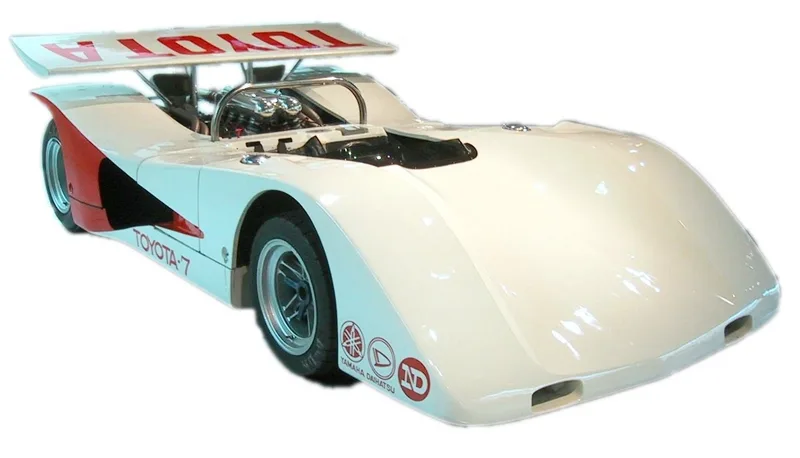
He returned in 1968 to defend the title, running a Porsche 910 for the Taki Racing Organisation. That year the newer Group 7 two-seaters, including the Nissan R381 and Toyota 7/415S, made their first appearance in the race. His two-litre Porsche outlasted many of the more powerful machines and finished second behind the winner, Moto Kitano.
Why was Ikuzawa banned from racing in Japan?
In 1969 he took pole position for the inaugural JAF Grand Prix formula car race at Fuji in a Mitsubishi Colt F2C, but an engine failure ended his race. He returned in 1970 in the upgraded Colt F2D and retired again with a mechanical problem.
In 1970 Ikuzawa refused to take the drivers' oath before the JAF Grand Prix at Fuji. He was protesting the Japan Automobile Federation's treatment of Japanese drivers, particularly over participation fees and travel costs. The federation banned him from racing in Japan for one year, and the ban was reduced after he apologised.
The ceremony was attended by dignitaries, including Prince Takamatsu. Ikuzawa had been chosen to recite the oath on behalf of the drivers, which made his refusal very public.
How did Ikuzawa's British Formula Three career go?
Ikuzawa raced in the British Formula Three Championship from 1966 to 1969, first for Stirling Moss's Motor Racing Stables and then for Frank Williams Racing Cars. His best season came in 1968, when he finished fourth in the championship with 51 points and won four championship races.
In 1966 he competed in seven events with a Lotus 41, and his top result was fourth at Brands Hatch on 21 August, in a non-points BARC race. In 1967 the team switched to Brabham BT21s, and he ran 17 races. He won three non-championship events at Brands Hatch that season and finished ninth in the series with 26 points.
For 1968 he moved to Frank Williams Racing Cars and drove a Brabham BT21B. One of his championship wins came at Brands Hatch, two at Mallory Park and one at Oulton Park. He also took the non-championship Martini International Formula 3 Trophy at Silverstone and raced abroad for the first time, at circuits including Zandvoort, Reims, Rouen and Karlskoga.
For 1969 his talks with the Surtees Racing Organisation about a move up to Formula 2 and Formula 5000 broke down. He joined Michael Spence Limited for a smaller F3 programme and won the non-championship Guards 4,000 Guineas at Mallory Park.
How did Ikuzawa's sports car career develop?
His Japanese Grand Prix win in the Porsche 906 caught the attention of Fritz Huschke von Hanstein, Porsche's motorsport director. Ikuzawa was named a reserve driver for the works team at the BOAC 500 Miles at Brands Hatch, and in 1968 von Hanstein gave him a works seat. That made him the first Japanese driver to represent Porsche as a factory racer.
In the 1967 Nurburgring 500km, the final round of the World Sportscar Championship, he finished 11th overall in a Honda S800 and won the GT class. The 1968 Watkins Glen 6 Hours followed. He shared a No. 2 Porsche 908 with Hans Herrmann and Jo Siffert, and the trio finished sixth overall. It was his only race with the Porsche factory team.
What role did Ikuzawa play in Japan's first Le Mans entry?
In 1973 Ikuzawa made his first start at the 24 Hours of Le Mans for Sigma Automotive, the forerunner of today's SARD. Sigma was the first Japanese team to enter the race, and its MC73 used a Mazda two-rotor Wankel, the first rotary-powered car to enter Le Mans. Ikuzawa and Hiroshi Fushida became the first Japanese drivers to race there, alongside French driver Patrick Dal Bo.
The MC73 qualified 14th in a field of 55 cars. Ikuzawa started the race and handed over to Fushida and Dal Bo. Ten hours and thirty minutes in, a broken clutch ended the rotary car's race after 79 laps.
How did his Formula Two career go?
For 1970 Ikuzawa stepped up to the European Formula Two Championship as a privateer with a Lotus 69-Ford. In only his second race in the series he came close to winning the Deutschland Trophy at Hockenheimring. Clay Regazzoni took the aggregate by three tenths of a second, and Ikuzawa finished the season tied for sixth with nine points.
His 1971 season produced no points with the same Lotus, although he finished seventh at Tulln and at Mantorp Park. In 1972 he signed with Group Racing Developments (GRD), a new constructor. His first season with the team brought growing pains: three times he failed to qualify or was eliminated in the heat stage, and his best finishes were ninth at Hockenheim and at Mantorp Park. In 1973 he and young Hiroshi Kazato ran a two-car effort called Team Nippon. After eighth at Mantorp Park, he stopped racing in Europe.
What did Ikuzawa achieve in Japan in the 1970s?
Ikuzawa stayed a fixture of Japanese racing through the 1970s. He finished third in the 1971 Japanese Grand Prix Formula Libre race, and that season he took the wheel of David Piper's Porsche 917K for the last race of the newly launched Fuji series. In 1977 he won the series title by a single point, his only title in a major annual Japanese championship.
Driving a GRD S74, he was never lower than fourth in the series standings from 1974 to 1977, and he was second in the championship to Noritake Takahara in 1976. He also contested the 1977 All-Japan Formula 2000 Championship and finished 13th. At the end of 1978 he retired from full-time competition.
How did his teams and endurance racing continue after 1978?
After retiring, Ikuzawa founded a team, i and i Racing Development, which later became Team Ikuzawa. It won All-Japan Formula Two titles with Satoru Nakajima in 1981 and 1982 and with Geoff Lees in 1983. From 1984 to 1986 it ran Toyota-powered TOM's cars in the All-Japan Endurance Championship, cars that Dome helped develop.
The team also took an endurance motorcycle win when Dominique Sarron and Alex Vieira rode its Honda RVF750 to victory at the 1989 Suzuka 8 Hours. In 1990 he took over as manager at Nissan Motorsports Europe.
Did Ikuzawa keep racing at Le Mans?
Yes. He missed the 1979 race after a Mazda RX-7 failed to qualify by less than seven tenths of a second. He returned in 1980 in a Kremer Porsche that retired after 14 hours, and his final start came in 1981 in a Mazdaspeed RX-7 that stopped after 12 hours.
Nearly two decades later, at age 57, he returned to the Nurburgring 24 Hours in a Spoon Sports Honda S2000 with three team-mates. They finished 32nd overall, won the A7 class and completed 123 laps.
Why did his Formula One team plan fail?
In early 1994 Ikuzawa set out to enter Formula One as a team owner rather than a driver. Peter Windsor, once a Williams manager, and Enrique Scalabroni, a former Lotus designer, were brought in to help set it up, and the plan was to join the grid by 1998 at the latest. Financial difficulties in Japan, which followed the Great Hanshin Earthquake and a slumping economy, stopped the project before it started.
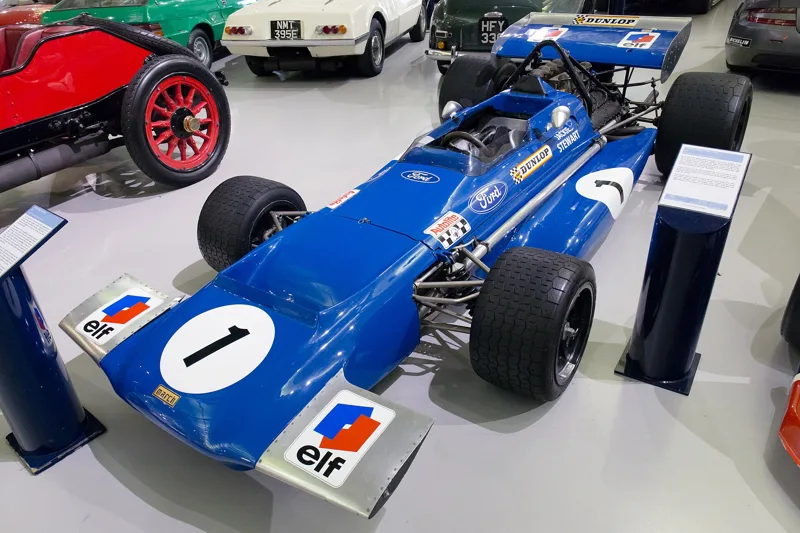
Several of the staff he had recruited later joined Stewart Grand Prix, which made its Formula One debut in 1997. He had also looked at potential drivers for the project before the funding disappeared.
Career summary at a glance
| Year | Event | Result |
|---|---|---|
| Age 15 | 1st All-Japan Motorcycle Clubman Race | Last of twelve classified, Fighting Spirit Award |
| 1963 | Japanese Grand Prix sports and touring car meeting | Works driver for Prince in a Skyline Sport Coupe |
| 1964 | Japanese Grand Prix, Suzuka | Third in GT-II; won the T-V touring car race the same afternoon |
| 1966 | British Formula Three | Best finish fourth, Lotus 41 at Brands Hatch |
| 1967 | Japanese Grand Prix, Fuji | Pole and victory in a Porsche 906 |
| 1968 | British Formula Three | Fourth with 51 points, four championship wins |
| 1968 | Watkins Glen 6 Hours | Sixth overall with a Porsche 908 |
| 1970 | European Formula Two | Tied for sixth with nine points |
| 1973 | 24 Hours of Le Mans | Retired after 79 laps with a broken clutch |
| 1977 | Fuji Grand Champion Series | Series title by one point |
| 1989 | Suzuka 8 Hours | Overall win for Team Ikuzawa on a Honda RVF750 |
| 2000 | Nurburgring 24 Hours | 32nd overall, won the A7 class |
The rows show a career that moved from Japanese club racing to European series, Le Mans and team management.
What is Tetsu Ikuzawa's legacy?
Ikuzawa's legacy lies in opening doors for Japanese drivers in Europe and at Le Mans. He was the first Japanese driver to race on a regular basis in European championships and the first to represent Porsche as a factory driver. His team later produced All-Japan Formula Two champions, and his 1977 Fuji title remains his only major annual championship in Japan.
His later work extended the story. Team Ikuzawa ran endurance cars through the 1980s, and his role at Nissan Motorsports Europe tied him to the company that had absorbed Prince, the manufacturer that first gave him a works contract.