Herrmann and Attwood drove a Porsche 917K to victory in heavy rain, and Porsche took the top three places and every class win among the finishers.
The 1970 race was won for Porsche by Herrmann and Attwood, who finished five laps clear of the Martini car. It was the marque's first outright Le Mans win, and the rain-soaked race also gave Porsche its top three places.
Hans Herrmann and Richard Attwood won the 1970 24 Hours of Le Mans for Porsche, its first outright victory at the event. Heavy rain for most of the race cut the power advantage of the 917s and 512S Ferraris, and only seven cars were classified as finishers.
Who won the 1970 24 Hours of Le Mans?
Herrmann and Attwood won in the Porsche Salzburg 917K, five laps ahead of the Martini 917 longtail. Herrmann had lost the 1969 race by about 120 metres, and it was his 13th Le Mans. The win came at the marque's 20th attempt.
Herrmann had promised his wife he would quit if he ever won the race, and he retired from driving at once. The Porsche Salzburg team was taken by surprise. His Porsche career went back to 1953, when the company's first mid-engined car, the 550, appeared.
The race was decided by the weather as much as by machinery. Porsche had expected to dominate, and the 917s were fast in a straight line. In the rain, however, the faster cars were not always the ones that stayed in the race.
Porsche's first outright Le Mans win came in heavy rain, one year after its driver had lost by about 120 metres.
How did the race start in 1970?
The traditional Le Mans start was abolished for 1970. The cars were lined up in echelon, with the drivers fully belted in before the start, and four flagmen waved the tricolore to send the cars away together.
Dr Ferry Porsche was the guest starter, marking the company's 20th year at Le Mans. Elford led Siffert and Rodriguez at the end of the first lap, with the Ferraris of Merzario and Vaccarella close behind.
Vaccarella's Ferrari broke its crankshaft after seven laps, and the Alfa of Gregory and Hezemans was wrecked soon after. Rodriguez's JWA 917K blew its engine at Arnage on the 23rd lap, when a cooling fan failure caused the damage.
Which Ferraris and rivals were in the race?
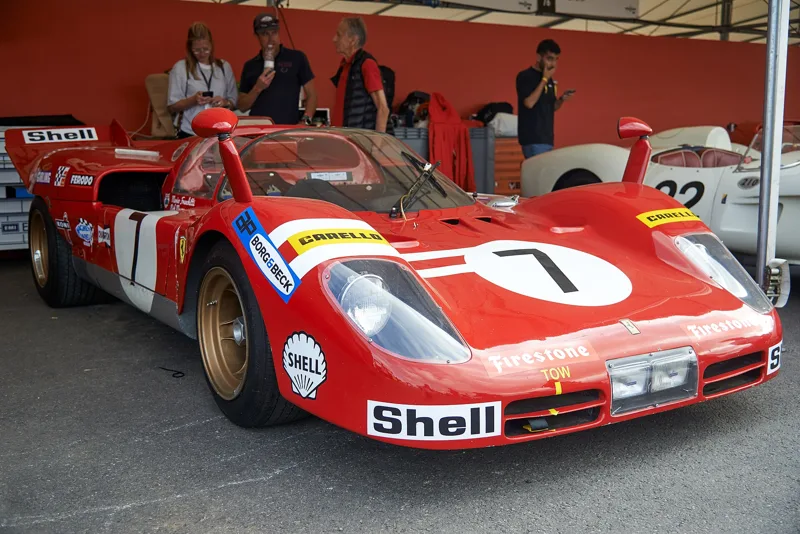
Ferrari fielded the 512S, a five-litre V12 producing 550 bhp, in both long-tail and standard forms. Four works cars ran alongside customer entries from Filipinetti, NART and Ecurie Francorchamps. Ickx, Regazzoni, Vaccarella and Bell were among the drivers.
Ickx was still carrying an injury from the Spanish Grand Prix and a fuel leak from Spa. Derek Bell replaced Jean Guichet, who had been injured in a road accident and was missing his first Le Mans since 1959.
The 917 was Porsche's main weapon. The Porsche Salzburg car of Herrmann and Attwood ran strongly, the Martini longtail of Larrousse and Kauhsen was in the top four, and the JWAE car of Siffert and Redman was among the fastest in the early hours.
Leading finishers in 1970
| Position | Car | Drivers | Notes |
|---|---|---|---|
| 1 | Porsche Salzburg 917K | Herrmann and Attwood | Winners by five laps |
| 2 | Martini Porsche 917 longtail | Larrousse and Kauhsen | Debut for the Martini team |
| 3 | Porsche 908/02 | Lins and Marko | Works spyder |
| 4 | NART Ferrari 512S | Posey and Bucknum | Despite rough steering |
| 5 | Ferrari, Ecurie Francorchamps | Belgian crew | Met the required distance by a single lap |
| 10 | NART Ferrari 312P | Adamowicz and Parsons | Pushed over the line by spectators |
How did the Martini and Salzburg 917s prepare?
Porsche Salzburg was run by Louise Piech, the sister of Ferry Porsche and mother of company technical director Ferdinand Piech. Its drivers were Vic Elford and Kurt Ahrens in a 4.9-litre 917L, while Rico Steinemann and Dieter Spoerry, and Hans Herrmann and Richard Attwood, had 4.5-litre 917Ks.
The Martini Racing team also gained support from Porsche AG, running a 917L for Gerard Larrousse and Willi Kauhsen. Its livery of green whirls and swoops on blue earned the car the nickname Hippie Car, and it started a tradition of art cars at Le Mans.
A final 917 was co-entered by its owner, the Finnish AAW Racing Team, and the British privateer David Piper. Gijs van Lennep drove it, and the car had already proved very competitive through the championship year.
What happened to the Alfa Romeos and Matras?
Autodelta, the racing division of Alfa Romeo, returned with four T33 cars carrying a 3-litre V8 that developed 400 bhp. The drivers included Stommelen and Galli, Courage and de Adamich, Gregory and Hezemans, and Facetti and Zeccoli. The long-tail format gave the T33 a useful 25 km/h (15 mph) on the straights.
The Matras had been developed with a new MS660, but only one of those cars was ready. Pescarolo and Beltoise drove it, while the MS650s were driven by Brabham and Cevert, and by Depailler and Jabouille. The Matras retired within ten laps of each other with leaking piston rings.
Courage's fuel ran dry on his stint near the pits, so he climbed out and pushed. The car reached the pits with five people shoving it, and then it needed a jump-start before it could continue. Such help broke the rules, although the officials failed to act.
What happened in the rain on the first night?
The rain arrived at 5.30pm and turned into a torrent by 8pm. Regazzoni hit Wisell's slowed Ferrari, the Parkes car caught fire, and Derek Bell's engine broke on the Mulsanne half a lap later.
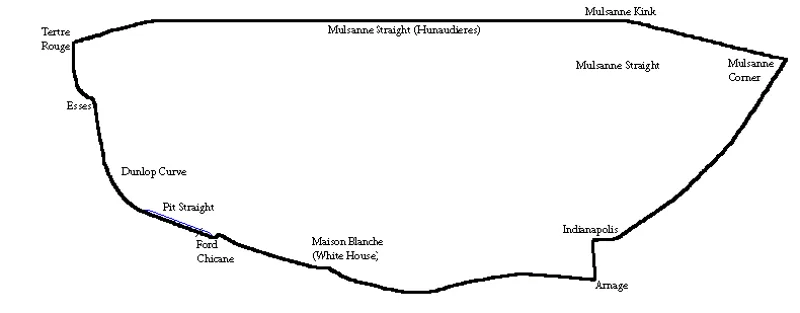
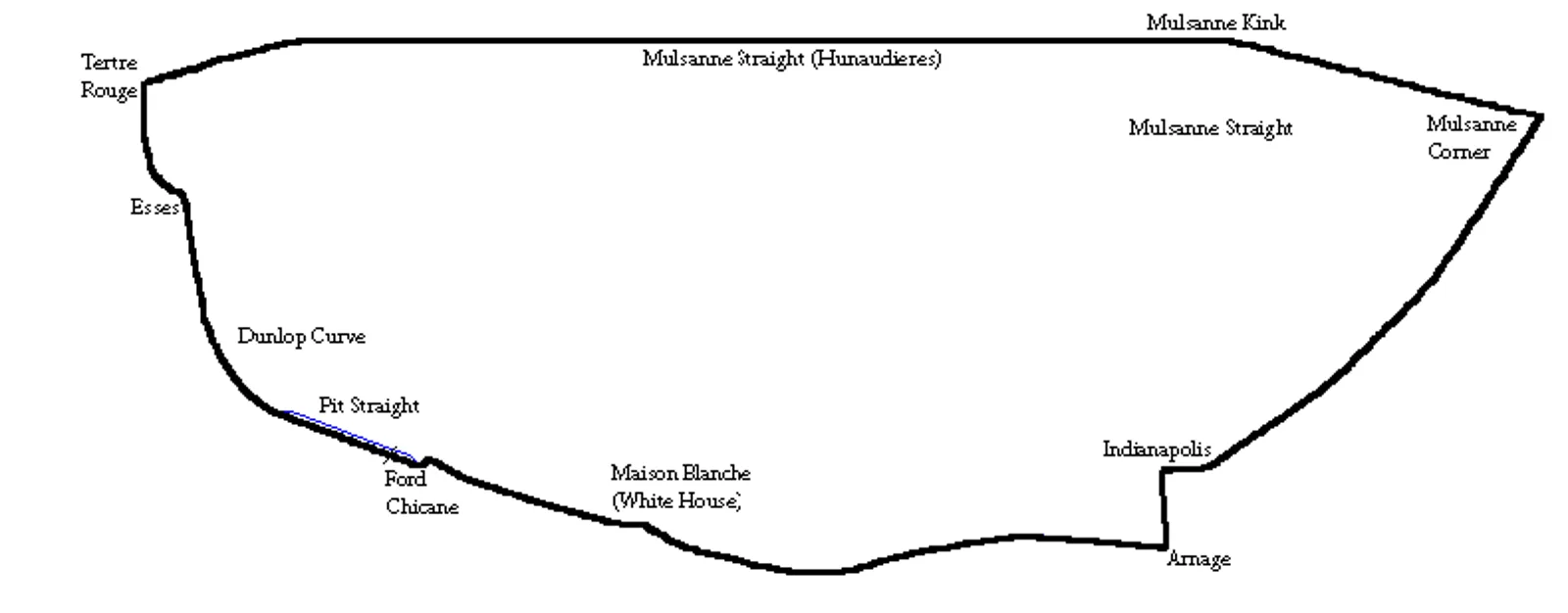
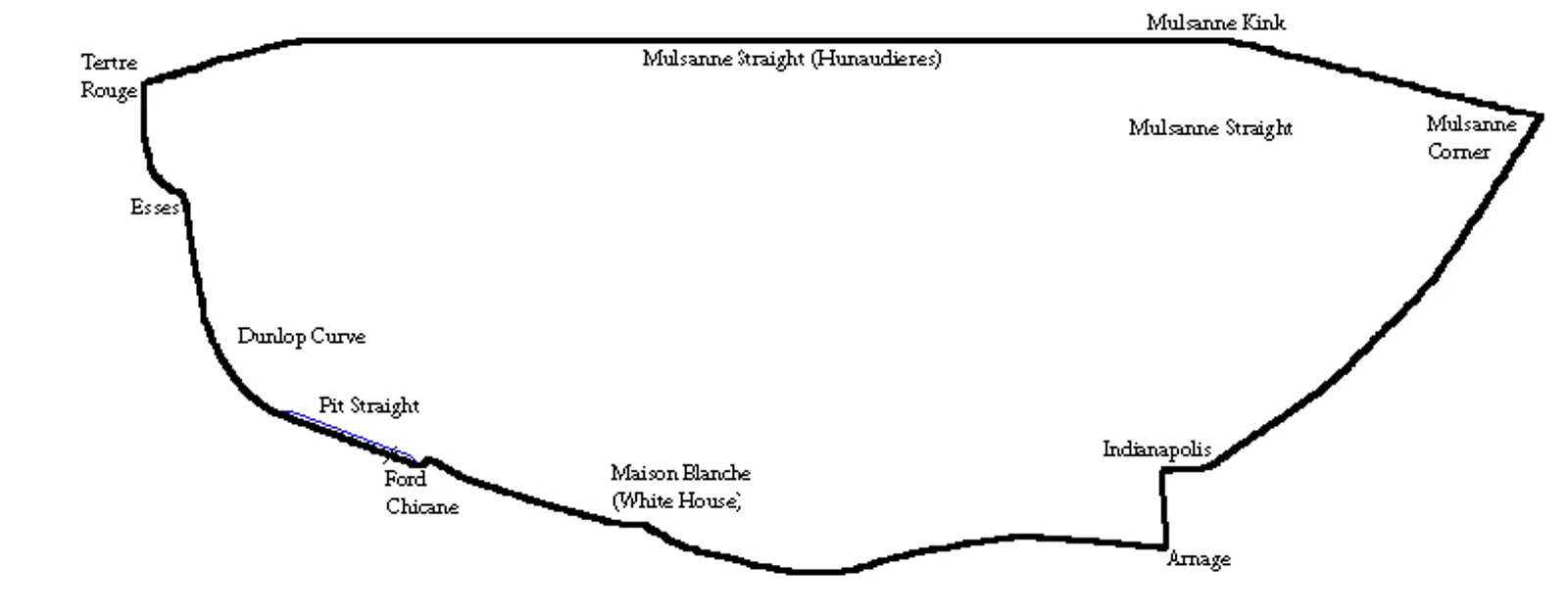
Ickx's charge ended at 1.45am at the Ford chicane. His Ferrari's rear brakes failed, it went into a sodden sandbank and was launched over it, and it burst into flames. The fire killed track marshal Jacques Argoud and injured another man, and Ickx was unharmed.
With all four works Ferraris out, the Ferrari challenge to Porsche was effectively over. Siffert's JWAE Porsche had built a lead of ten laps by 2am, but he then missed a gear change while lapping back-markers and broke the engine.
How did the field change at dawn?
At dawn the weather turned from heavy rain to storm, and by 6am, after 16 hours, Porsches still held the top four places. Larrousse and Kauhsen moved up to second by midday and set about trying to catch the leaders.
Elford's 917 was stopped by engine problems at 8.30am, after 18 hours. The rain then eased off, and the track was virtually dry by 9.30am.
The Stommelen and Galli Alfa Romeo was disqualified after it needed a push-start at its pit stop. At that point the Porsches were well clear of the rest of the field.
How did the GT cars and Corvettes fare?
Greder supplied the two Chevrolet Corvettes, the biggest cars in the entry, each with a 7-litre engine producing 560 bhp. They could reach 305 km/h (190 mph), and his previous car had gone to Claude Aubriet's Ecurie Leopard.
The GT class was dominated by privateer Porsche 911s, many uprated with the 2.2-litre engine. A new 914/6, with a 1991cc flat-six producing 100 bhp, was entered by the French team Sonauto for Chasseuil and Ballot-Lena.
Early in the race the French 914 led the GT category, in a tight tussle with Greder's Corvette and the Ecurie Luxembourg 911. The Luxembourg 911 later finished three laps further back.
What happened in the final hours?
In the final hours the Chevrons and the Healey prototype were out. The Healey had been battling gearbox issues for most of the race and needed a rebuild, and both Chevrons had needed engine rebuilds and run at the back of the field.
Roger Enever took the Healey out for a final lap with less than a quarter of an hour left. A part costing 10 cents then failed, and the engine stopped on the Mulsanne Straight.
The NART 312P of Adamowicz and Parsons had moved up to sixth, but its electrics failed on the last lap near Maison Blanche. Spectators climbed over the fence to help push the car to the line, which made it the 10th car home.
Herrmann and Attwood won by five laps. Larrousse and Kauhsen were second in the psychedelic 917 longtail, and the 908/02 of Lins and Marko was third. Posey and Bucknum's NART Ferrari finished fourth, with the Belgian Ferrari fifth.
How did the GT class and the final results shape up?
The French Corvette was the first GT car home, but it had not covered the required minimum distance. The GT prize therefore went to the 914/6 of Ballot-Lena and Chasseuil, which finished a lap behind.
The FIA later gave the Corvette first-place points for the GT Cup, after the weather had cut its distance. The ACO did not change the official results, but it did send the team a cheque equal to the GT winner's prize money.
Porsche had won all four classes that had finishers. The third-placed 908 took the Index of Performance, and the Martini 917 won the Index of Thermal Efficiency.
Thirty years later the second-placed Martini Porsche and its psychedelic paint scheme were voted the Le Mans Car of the Century in a public poll.
How did the Steve McQueen film shape the event?
Solar Productions, Steve McQueen's company, was at Le Mans to film a feature directed by John Sturges. A 908 spyder was entered with cameras, driven by Herbert Linge and Jonathan Williams, and it collected more than 250,000 feet of film.
Porsche released Linge to drive the camera car, pleased that the script had a Porsche win. Enzo Ferrari declined to provide cars, so Ecurie Francorchamps supplied the Ferraris that appeared in the film.
McQueen had bought a 908 spyder and was pencilled in to share a 917 with Jackie Stewart, but his life insurance company refused to cover him for Le Mans. Earlier that year he had come second at the Sebring 12 Hours with Peter Revson, only 20 seconds behind the Ferrari winner.
David Piper's accident came later, during the filming that followed the race. His Porsche blew a tyre at speed, hit the barriers on both sides of the track and broke in two, and he had to have his lower right leg amputated.
How did the Porsche 908s compare with the 917s?
The Lins and Marko 908/02 spyder was the first prototype home, and it held a strong position for much of the race. At halfway it had a handy five-lap lead in the Group 6 class over Stommelen's Alfa Romeo.
The 908 finished third overall and went on to win the Index of Performance. Porsche took all three prizes and the class wins among the finishers, with the 917s and 908s sharing the top places.
What did the 1970 race leave behind?
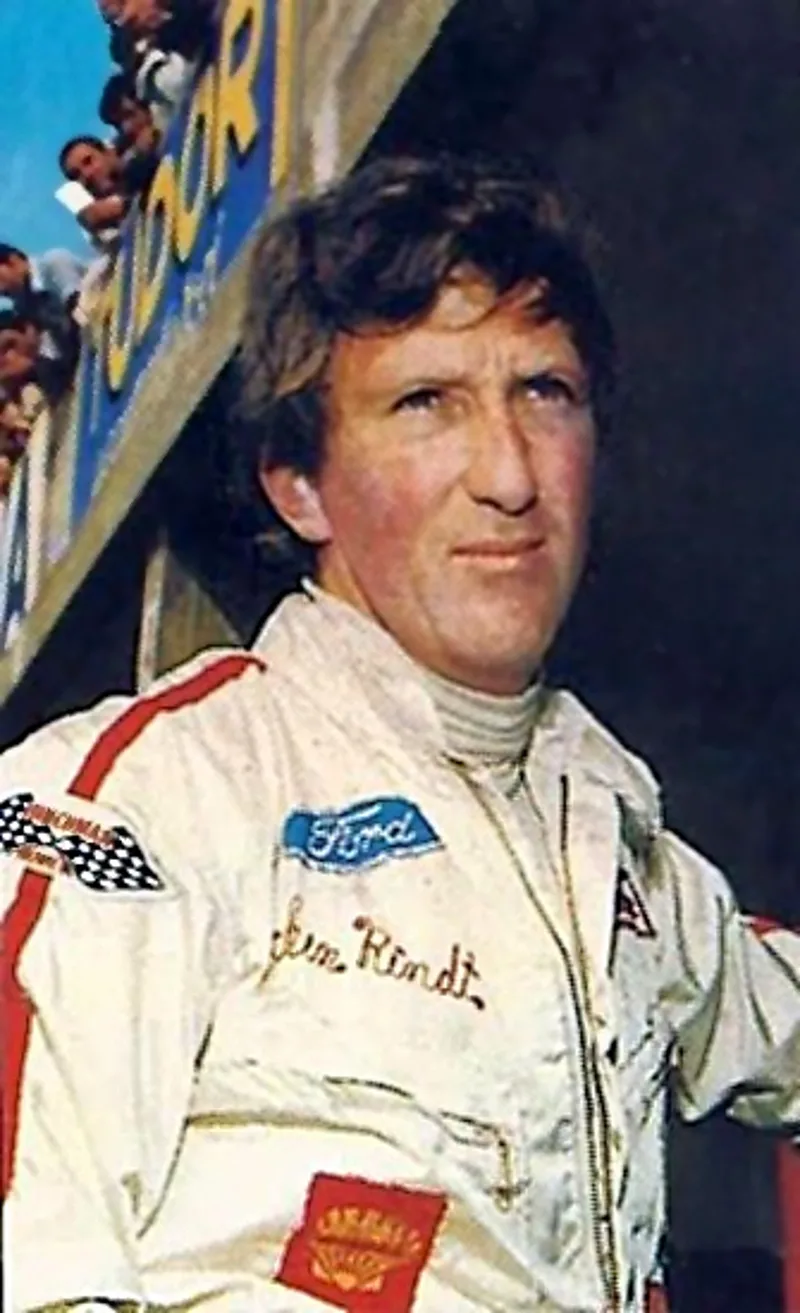
Piers Courage, who drove the Alfa Romeo in this race, died during the Dutch Grand Prix. Bruce McLaren had been killed testing two weeks before Le Mans, and Jochen Rindt was killed at Monza, becoming the only posthumous Formula One world champion.
The ACO released commercial figures for the event. About 300 000 spectators attended, and 300 commercial sites raised 6.5 million francs, with another 7 million from advertising. The circuit used electricity equivalent to a city of 80000, and over 2.5 million telephone calls were made.