Yamaha-built chassis, a 1968 Japan Grand Prix debut, domestic endurance wins and a turbocharged V8 whose Can-Am plan never happened.
The Toyota 7 was a series of Toyota racing cars built with Yamaha for FIA Group 7 competition from 1968 to 1970. Its 3-litre 415S, 5-litre 474S and turbocharged 578A won domestic endurance and sprint races, before the project ended after fatal testing accidents.
The Toyota 7 was a series of racing cars built by Toyota with Yamaha Motor Corporation for FIA Group 7 competition, and it was the company's first purpose-built racer. Three generations were built in Japan between 1968 and 1970: the 3-litre 415S, the 5-litre 474S and the turbocharged 578A. Most of the wins came in domestic endurance and sprint races, while the Japanese Grand Prix stayed out of reach.
The project was cut short. Fatal testing accidents, a cancelled Japanese Grand Prix and the loss of a planned Can-Am campaign brought development of the turbo car to a halt in 1970. The story of the Toyota 7 is one of quick engineering, strong results at home and an early end.
What was the Toyota 7 built to do?
Toyota built the 7 as its first purpose-built racer and aimed it at FIA Group 7 sports car competition. Yamaha constructed the aluminium monocoque for the first 415S, while Toyota designed a new 3-litre V8. Development began in the second quarter of 1967, and the car first ran in February 1968.
Jiro Kawano, who ran Toyota's motorsport activities and had engineered the 2000GT, worked on the project alongside Yamaha. The first chassis was completed in January. Early testing used the 2000GT's 3M six-cylinder engine while the new 61E was being completed.
The design centred on an open two-seater cockpit with large intakes behind the doors. Its exhaust exited straight off the tail, a layout that recalled the Ford Indy V8. During testing, rivets holding the monocoque together loosened under lateral load, and the reinforcement that fixed the problem made the car far heavier than its initial 680 kg figure.
The engine was the heart of the car. The 61E was a dual overhead cam, 3-litre aluminium-block V8 rated at up to 224 kW (300 hp; 304 PS). A 1968 FIA rule change allowed a 3-litre engine to compete in Group 6 sports prototype racing as well, which widened the car's options.
A Yamaha-built racer that gave Toyota its first purpose-built race car, then ended in fatal tests before the Can-Am plan could begin.
How did the 415S perform at the 1968 Japan Grand Prix?
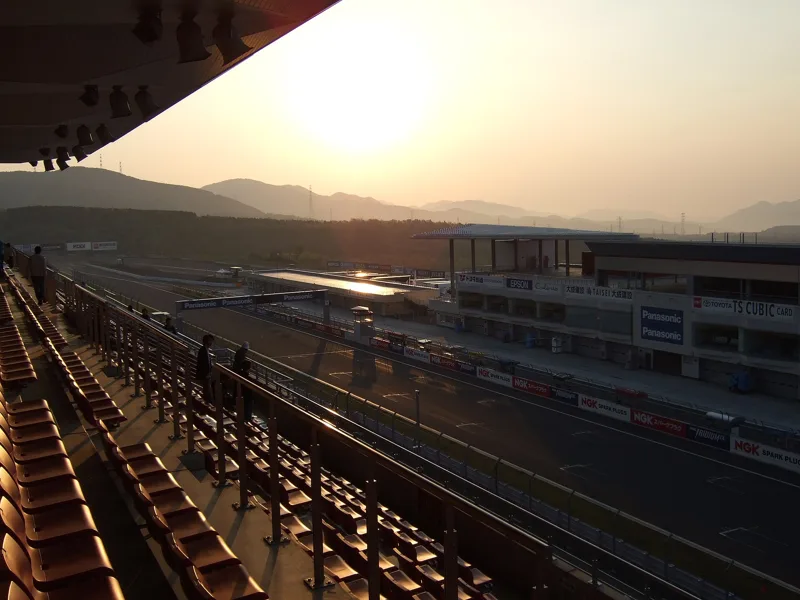
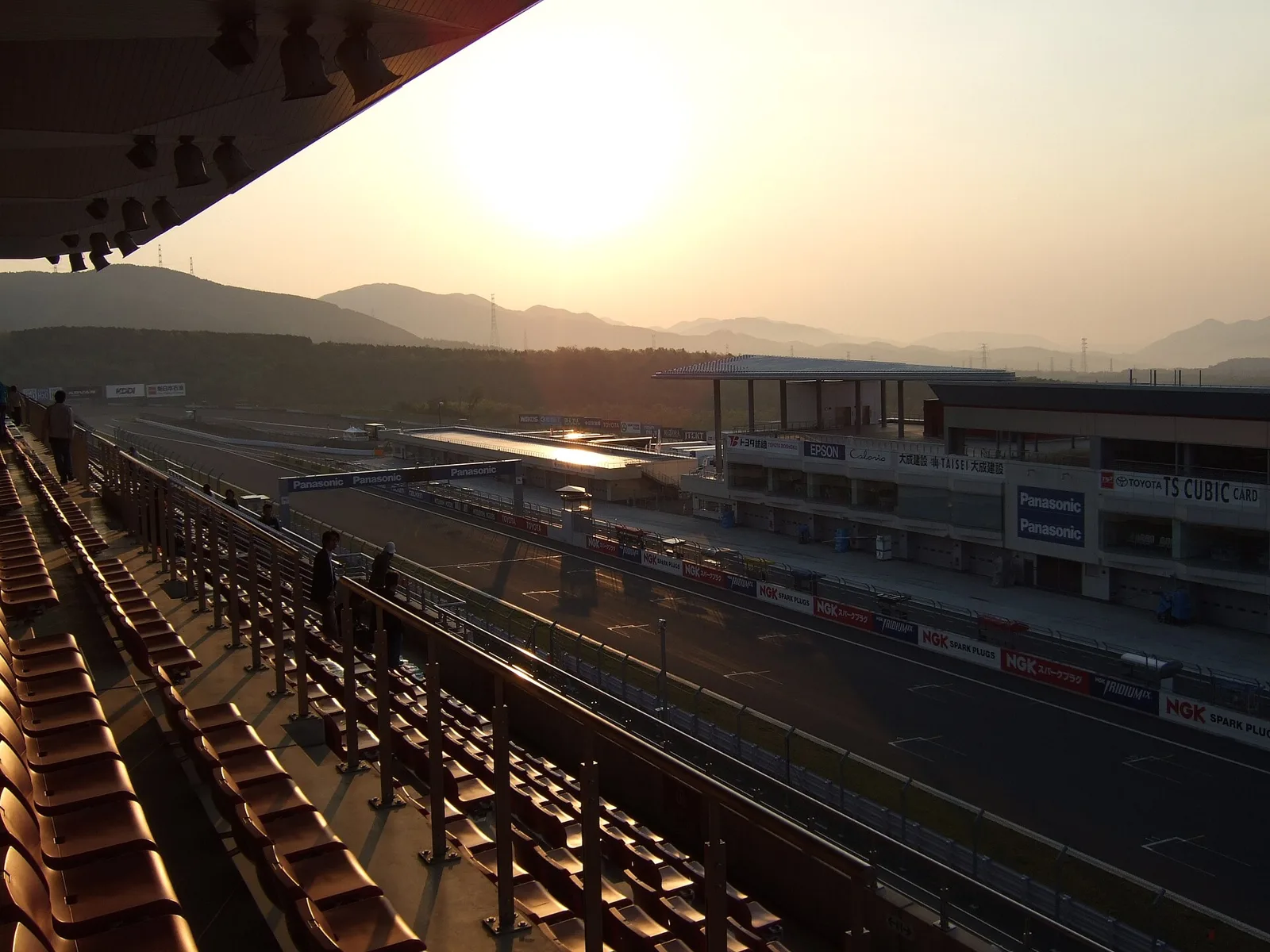
The 415S debut came at the 1968 Japan Grand Prix, where four cars lined up at Fuji Speedway. The 61E was weaker than the Chevrolet small block V8s in the Nissan R381 and Lola T70s, and Fukuzawa qualified sixth with a lap of 1:56.21.
The race was hard going. Hosoya retired on lap 44 from overheating, and Fukuzawa's suspension and driveshaft failed on lap 59. Otsubo finished eighth, five laps down, and Fushida was ninth, six laps down, so only one Toyota finished in the top eight.
Moto Kitano's R381 won the race for Nissan, and the Toyotas could not match the pace of the Nissan cars. For a team building its first racing car, the debut showed how much work remained on the power unit.
Did the Toyota 7 win races in Japan?
Yes. Hosoya scored the 415S's first competition win on 30 June 1968 at the All-Japan Suzuka Auto Racing Tournament. Fushida and Kanie won the second Fuji 1000km on 21 July, and by the end of 1968 the car had taken several major domestic endurance and sprint events.
The wins kept coming. Hosoya and Otsubo took the Suzuka 12 Hour on 4 August, and Fushida won the second All-Japan Suzuka tournament on 25 August. On 23 September Fukuzawa and Fushida won the third annual 1000km Suzuka, a result that marked the car's strength in long-distance events.
The biggest invitational prize came on 23 November 1968 at the World Challenge Cup Fuji 200 Mile Race, which was nicknamed the Japan Can-Am race. The 200-mile (320 km) event drew five 415S, and newcomer Minoru Kawai was among the drivers. Peter Revson's McLaren M6B-Ford took the win.
Fukuzawa finished fourth, the highest-ranked Japanese driver, and earned 1,152,000 yen from the prize purse. Otsubo was fifth, Hosoya sixth, Fushida eighth and Kawai ninth. Fushida then won the Suzuka 300 km on 19 January 1969, and the 415S took its last competitive win at the All-Japan Clubman Race at Fuji on 20 April 1969.
How did the 474S improve on the 415S?
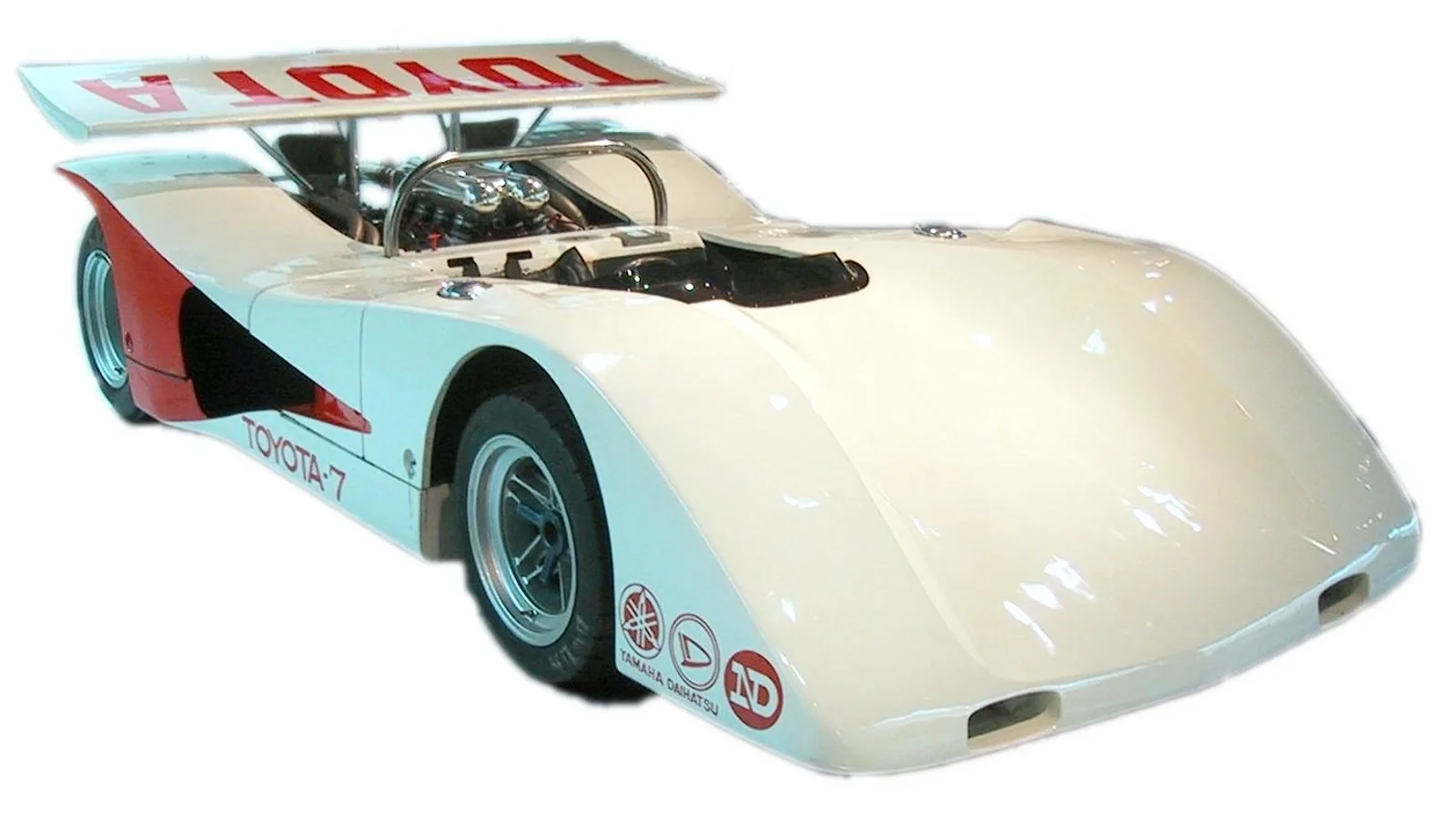
The 474S, also called the New 7, moved to an open-cockpit body and a 5-litre V8 derived from the Ford Cosworth DFV. Its 79E engine produced 395 kW (530 hp; 537 PS) at 7,600 rpm, and development had begun in May 1968.
The bodywork changed as well. The closed-cockpit body was dropped in favour of an open-cockpit shape, and Daihatsu lent its wind tunnel to Toyota and Yamaha for the redesign. The result was a car built around a much larger and more powerful engine than the 61E.
The closed-cockpit 474S won the 1969 Suzuka 500 km on 6 April, and it was Minoru Kawai's first win with Team Toyota. The revised car then took the Fuji 1000 km, which gave Toyota its third straight win in that event.
The 1969 Japanese Grand Prix took place on 10 October, and the race distance was extended to 720 km. Five 474S were entered, and each car could carry two drivers. Vic Elford shared car number 7 with Toshiaki Takahashi.
Kawai qualified fifth and led the first two laps before finishing third, one lap behind the Nissans. Motoharu Kurosawa won the race, with Moto Kitano second. Elford finished fourth, but Fushida retired on lap 5.
The Fuji 200 Mile race returned on 23 November 1969. For this race the 474S carried a rear spoiler, which the Japan Grand Prix had banned. Kawai won in the number 8 car, ahead of John Cannon's Ford G7A.
Twelve 474S chassis were built. The only survivor is Kawai's winning car, which was restored in 2007.
What happened to the Turbo 7?
The Turbo 7, coded 578A, used an aluminium space frame and a 91E five-litre V8 fitted with two Garrett AiResearch turbochargers. It was rated at 597 kW (800 hp; 811 PS), but Nissan withdrew from the 1970 Japanese Grand Prix, and the Japan Automobile Federation cancelled the race.
Toyota had Can-Am plans for the car, which Kawai's death and a legal dispute brought to an end. Work on the car began in November 1969, and the first chassis was finished in April 1970.
Three Turbo 7s ran an exhibition at the 1970 Fuji 1000 km. The turbo engine's peak torque was 725 Nm at 7,600 rpm.
A 1970 concept, the EX-7 coupe, was shown with 450 PS (330 kW). The Turbo 7 now sits in Nagakute at the Toyota Automotive Museum, and the car has appeared in several Gran Turismo games.
What were the main Toyota 7 specifications?
| Specification | Detail |
|---|---|
| Developer | Toyota with Yamaha Motor Corporation |
| Class | FIA Group 7 sports racing car |
| 415S engine | 61E 3-litre V8, up to 224 kW (300 hp; 304 PS) |
| 415S chassis | Aluminium monocoque by Yamaha, initial weight target 680 kg |
| 474S engine | 79E five-litre V8, 395 kW (530 hp; 537 PS) at 7,600 rpm |
| 474S torque | 519.75 Nm at 5,600 rpm |
| Turbo 7 engine | 91E five-litre V8, two Garrett AiResearch turbochargers |
| Turbo 7 output | 597 kW (800 hp; 811 PS) at 8,000 rpm |
| Turbo 7 torque | 725 Nm at 7,600 rpm |
| Last competitive win | All-Japan Clubman Race at Fuji, 20 April 1969 |
The figures show how quickly the programme moved. Each generation brought a bigger or more powerful engine, from the 3-litre 61E to the five-litre 79E and then the five-litre turbo 91E.
Why did the Toyota 7 project end?
The Toyota 7 project ended after fatal testing accidents and the loss of its planned Can-Am campaign. Sachio Fukuzawa died in February 1969 at Yamaha's test course, and Minoru Kawai died in August 1970 while testing the Turbo 7. Development of the turbo car officially ceased in September 1970.
Otsubo's crash came earlier. On 29 March 1968 he went through a guardrail at Fuji, but he survived without major injuries and left Toyota in 1969.
Fukuzawa was born on 18 June 1943 and died at Yamaha's Fukuroi test course after his car hit a signpost. The Fukuzawa family's case against Toyota was settled in 1981 for 61,000,000 yen.
Kawai was born on 9 December 1942. He died on 26 August 1970 while testing the Turbo 7 at Suzuka Circuit. His death, together with the legal dispute that followed Fukuzawa's, ended Toyota's Can-Am plans and marked the end of the project.
What did the Toyota 7 leave behind?
The 415S itself did not survive. All fourteen original 415S chassis were destroyed once the car left competition, so the replica built by Nautilus Sports Cars in Sakura in 2007 is the nearest thing to the original car that remains.
The 474S is represented by one survivor, Minoru Kawai's winning car, which was restored in 2007. The turbo car also has a place in the Gran Turismo series, which featured the Turbo 7 from Gran Turismo 4 onwards.
Taken together, the 415S, 474S and 578A show a team moving from a first prototype in 1968 to a turbocharged car by 1970. The programme was short, but it gave Toyota a racing record in Japan and a set of cars that still draw attention today.