A former horse racing site outside Melbourne that opened as a motor circuit in 1962, hosted six Australian Grand Prix races and still runs the Sandown 500.
Sandown Raceway began as a motor circuit in 1962 in Springvale, Victoria, laid out beside an earlier horse track. It hosted the Australian Grand Prix six times, staged a 1984 world championship round and has run the Sandown 500 for much of its history.
Sandown Raceway is a power circuit in Springvale, Victoria, about 25 km (16 mi) south-east of Melbourne's central business district. The site began as a horse racing course in the 19th century, and a motor racing circuit was first opened there in 1962.
Its long straights, six Australian Grand Prix races and a run of V8 Supercars fixtures give it a place in the country's motorsport history. This article covers how the track was built, how its layout changed, the championships it hosted and the upgrades that followed.
When was Sandown Raceway built?
Sandown opened as a motor racing circuit in 1962 in Springvale, laid out beside an earlier horse track. The horse track itself was only finished in 1965, while the 500 km endurance event had already started in 1964.
The land had been a racecourse since the 19th century. A government-backed rationalisation program shut the horse facility down in the 1930s, and redevelopment began soon after the Second World War, with the motor circuit taking shape around the proposed racetrack.
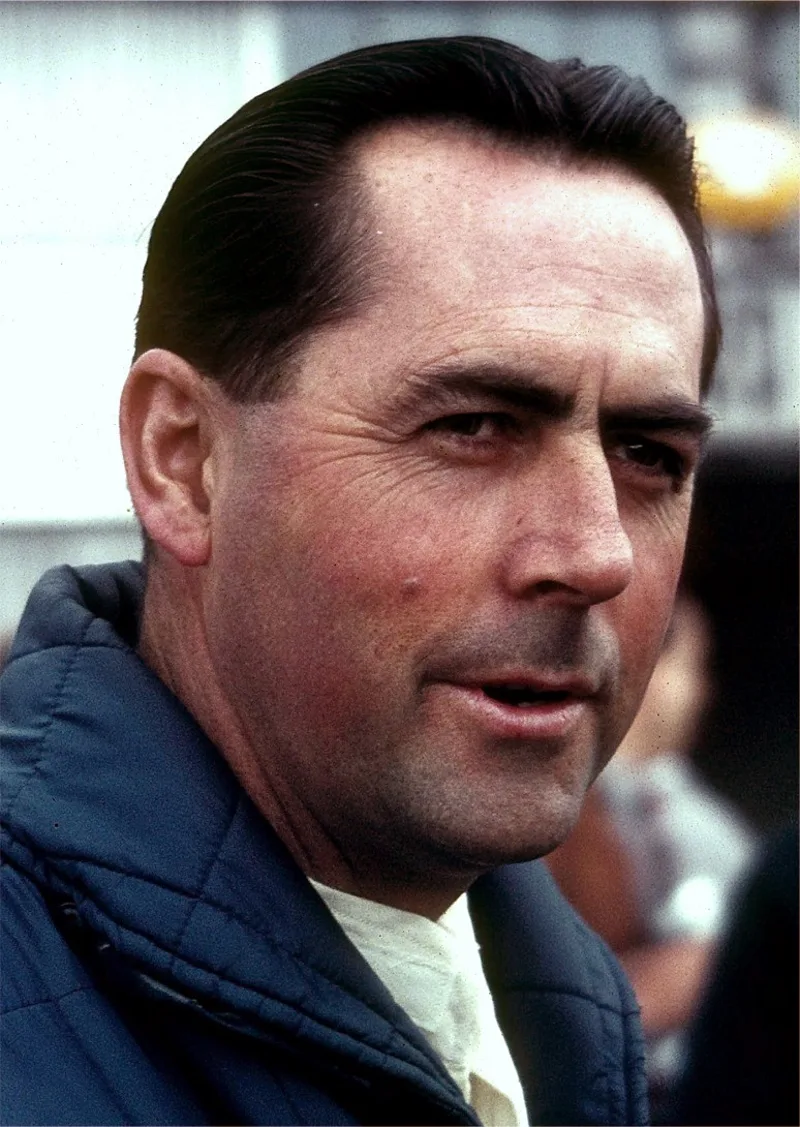
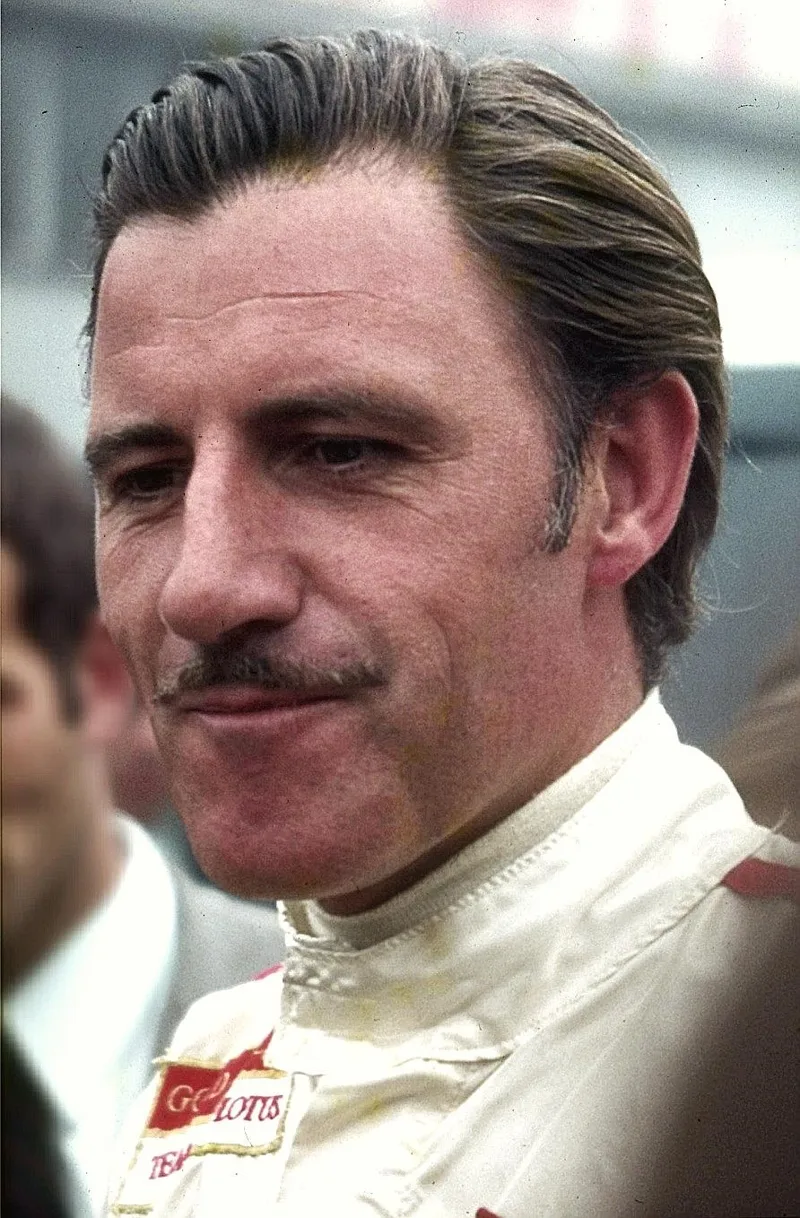
The opening meeting ran on 11 and 12 March 1962 and featured the Sandown International Cup, with a field that included Brabham, Clark, Moss, McLaren and Surtees. A second International Cup followed in 1963, and the two events served as the forerunners of the Tasman Series round at Sandown, which ran from 1964 to 1975.
The Holden against Ford rivalry rose to prominence in the late 1960s and 1970s. Racers such as Peter Brock, Colin Bond, Bob Jane, Allan Moffat and Norm Beechey competed, and the first Australian Touring Car Championship race at the circuit was held in 1965.
A horse racing site that became a motor circuit in 1962, then a 1984 world championship venue and a home for V8 Supercars.
Did Sandown host the Australian Grand Prix?
Yes. Sandown staged the Australian Grand Prix six times, in 1964, 1968, 1972, 1973, 1976 and 1978. The 1978 race was the event's 50th anniversary and the last time it was held at the circuit.
Jack Brabham won the 1964 race, and Jim Clark took the 1968 win by 0.1 seconds from the Ferrari of Chris Amon, among the tightest finishes the event has produced. John Goss won in 1976, and he holds the distinction of winning the Australian Grand Prix and also the Bathurst 1000, a double no other driver has achieved.
The 1978 meeting also featured a special guest, Argentina's Juan Manuel Fangio, a five-time Formula One World Drivers' Champion. Fangio, who had raced a Mercedes-Benz W196 in 1954 and 1955, joined a three-lap demonstration with Brabham, Bob Jane and Bill Patterson.
Brabham drove the Repco-Brabham BT19, the car in which he had won the 1966 Formula One World Championship, and he finished just ahead of Fangio. Patterson in a Cooper and Jane in a Maserati followed some distance behind in third and fourth.
How did the circuit's layout change?
The track has run in several forms. In 1984 the lap grew to 3.878 km (2.410 mi), the minimum FIA length for world championship events, and in 1989 it went back to a 13-turn course of 3.104 km (1.929 mi) by bypassing the infield.
The 1984 extension was meant to open the door to a Formula One round, but that ambition went to Adelaide. Promoters, the Light Car Club of Australia, could not expand beyond the property boundary, so the extra length had to go infield. The Melbourne Racing Club, which administered the horse racecourse, also wanted minimal disruption to its racing.
The 800 metre addition was unpopular with spectators, who had no access to the infield, and with competitors, since touring car teams found the long runs in second gear hard on transmissions. The pits were moved at a cost of AUD$600,000 to a permanent position on the main straight, where pit bays and lock-up garages were built for more than 40 cars.
The 1989 change kept the outer National Circuit and bypassed the tight infield. Commentators had called the infield version the Village Grand Prix because of how slow it was. The esses beyond the back straight drew crowds through the 1970s and 1980s, when converted double-decker buses carried fans to race meetings.
Motorcycles used the infield until about 2001. The high-speed esses, turns six to nine, were judged too dangerous for bikes, because entry speed off the back straight approached 200 km/h (120 mph) with little run-off between the track and the fence.
A motorcycle Grand Prix was held at the venue in 1976. Later, the Australian Superbike Championship used the infield section, which slowed the bikes and let them keep racing at the circuit.
The venue also serves other sports. Several Melbourne cycling clubs race there over the summer season, and Athletics Victoria stages an annual road race, sometimes a team relay, as part of its cross-country season.
Which major sports car races were held at Sandown?
Sandown closed the 1984 World Endurance Championship season on 2 December 1984. That event, called the Sandown 1000, was taken by Stefan Bellof and Derek Bell in a Rothmans Porsche 956.
The 1984 event was the first FIA world championship road race held in Australia. Under world championship rules, races other than Le Mans and, in some years, Daytona were limited to six hours. The leading Porsche hit that limit after 206 laps, or 803.4 km, which left the race roughly 51 laps shy of the planned 1000 km.
The 360 km of Sandown Park followed on 20 November 1988 as the final round of the World Sports-Prototype Championship. Jean-Louis Schlesser and Jochen Mass won in a Sauber Mercedes C9. That race proved to be the last top-level race on the 3.878 km layout.
How has the Sandown 500 changed over time?
The Sandown 500 was first held in 1964 and ran until 2007. It returned to the calendar in 2012, and from 2025 it has been two 250 km races, both driven by one driver. Before that change, the event was a single 500 km race shared by two drivers.
V8 Supercars arrived in 1997, and the Sandown 500 stayed on the calendar that year and in 1998. Sandown then held sprint rounds in 1999 and 2000. In 2001 the event ran as three 150 km heats with pit stops. In 2002 it had a 150 km Saturday race and a 300 km Sunday race. Todd Kelly won the 2001 event and Marcos Ambrose the 2002 event.
For 2008 the 500 km endurance race moved to Phillip Island, and Sandown kept a multi-sprint format earlier in the year. The race returned to a single 500 km format in September 2012 as an enduro lead-in to the Bathurst 1000. Craig Lowndes and Warren Luff won the inaugural Dick Smith Sandown 500 in a Holden Commodore for Team Vodafone.
Earlier, Sandown also staged a sprint round called the Sandown Challenge throughout most of the 1970s, 1980s and 1990s. The Grand Finale, the closing round of the Supercars season, was held there in 2001 and 2002. The sprint round disappeared from the calendar once the 500 came back in 2003, which left the circuit with one major V8 Supercars event a year.
What are the key figures for Sandown Raceway?
| Measure | Figure |
|---|---|
| Location | Springvale, Victoria, about 25 km (16 mi) south-east of Melbourne |
| Opened | 1962, opening meeting on 11 and 12 March |
| Layout from 1984 | 3.878 km (2.410 mi), built to meet FIA minimum length |
| Layout from 1989 | 3.104 km (1.929 mi), modified 13-turn course |
| Back straights | 899 m and 910 m (983 yd and 995 yd) |
| Australian Grand Prix | Six races, 1964 to 1978 |
| Lap record, 3.878 km layout | 1:33.580, Jean-Louis Schlesser, 1988 |
| Fastest qualifying lap, 3.878 km layout | 1:28.620, Jean-Louis Schlesser, 1988 |
| Council limit | Five motorsport events a year, at no more than 95 decibels |
How has the venue been upgraded and made safer?
The circuit was repaved in 2013 to meet new FIA rules, with extra tyre barriers and new catch fencing for large events. The main grandstand gained a bar and food complex, and the pits were upgraded at the same time.
Major accidents at the back straight, especially at turn six, occurred from 2010 to 2017, and the run-off there was widened in early 2019.
The Melbourne Racing Club brought the circuit's management in house in late 2007. Wade Calderwood, the circuit's manager, struck a long-term arrangement with V8 Supercars, and the club committed heavy spending to a three-year programme covering pits and safety.
A local council permit limits Sandown to five motorsport events a year, with noise held to 95 decibels. Today's permitted events are the Sandown 500, Historic Sandown, the Shannons Nationals meeting and two rounds of the Victorian State Race Series.
Historic Sandown takes place on the first weekend of November. The Victorian Historic Racing Register, known as the VHRR, promotes it, and the MG Car Club of Victoria stages it. In 2009 it drew a record field of more than 400 historic racing cars, headlined by the Biante Touring Car Masters.
What is the future of Sandown Raceway?
The long-term future of the circuit is uncertain. Owners of the wider Sandown Park site have sought a rezoning that would allow the land to be sold to a property developer, which could mean demolition and high-density housing.
For now the calendar remains busy. Its November programme includes the Supercars Championship, the GT4 Australia Series GT Festival, the Porsche Sprint Challenge Australia, the Toyota Gazoo Racing Australia 86 Series and Historic Sandown.
Over the decades the venue has also hosted the Australian Sports Car Championship in several seasons, the Porsche Carrera Cup Australia in multiple spells, GT World Challenge Australia, the S5000 Australian Drivers' Championship in 2019 and 2021, and the Australian National Trans-Am Series from 2022 to 2025. Formula 4 ran there from 2015 to 2017.