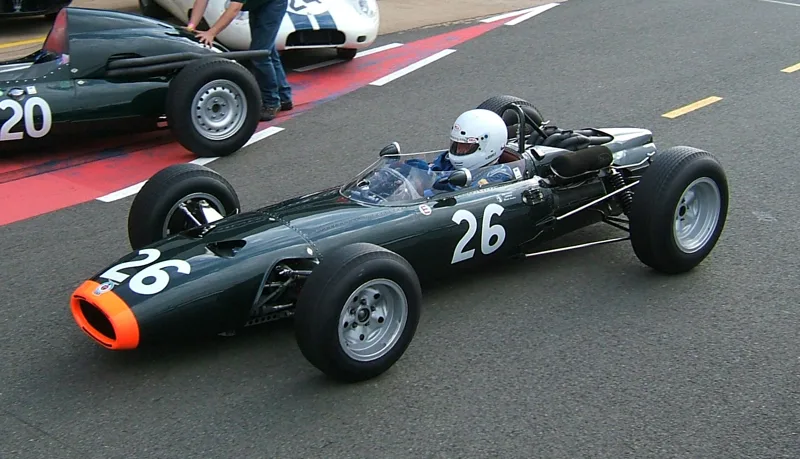
An ambitious 3-litre H16 engine, a monocoque built around it and a record of 27 retirements from 40 entries that cost BRM its edge.
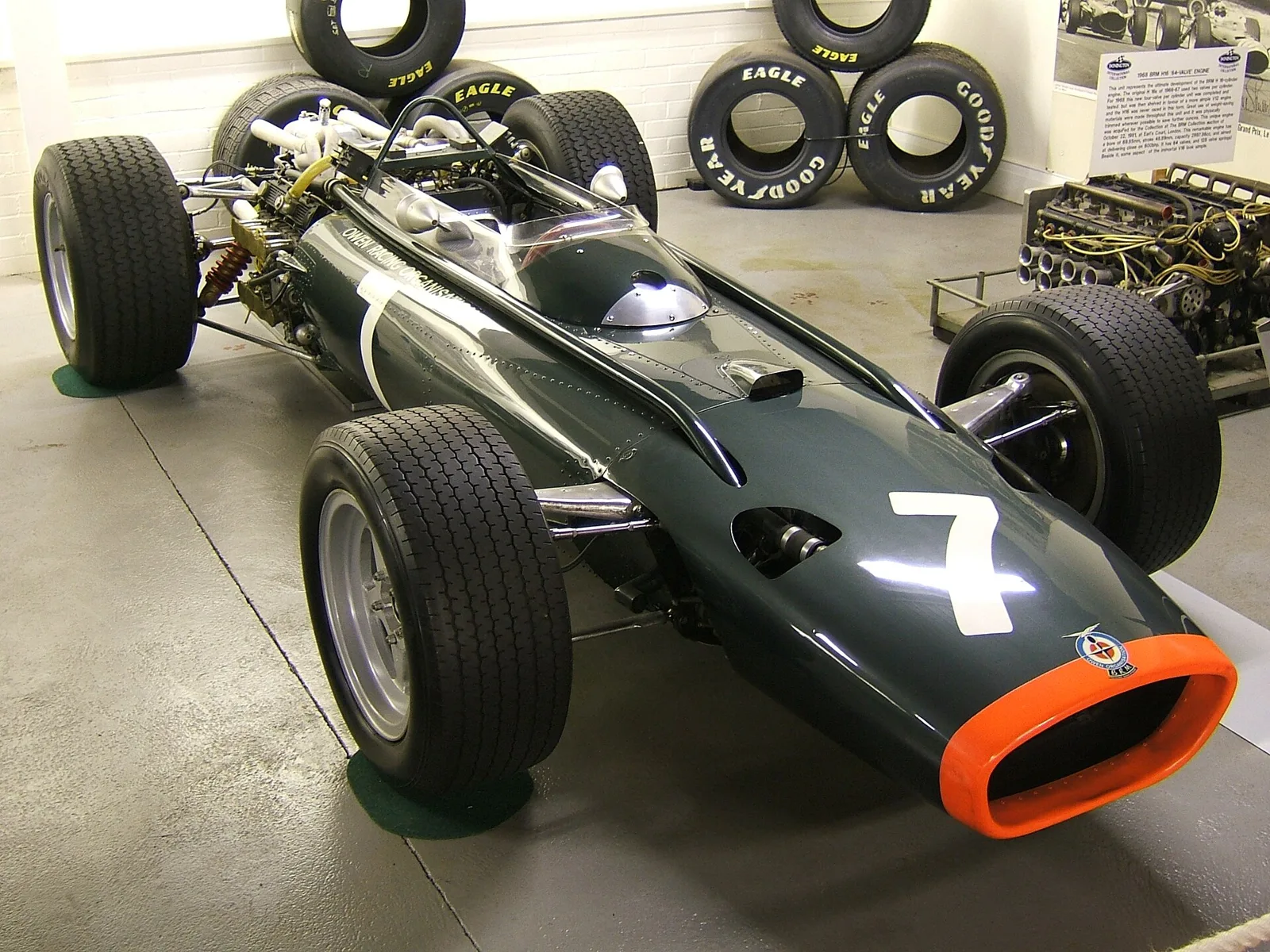
Built in 1966 around an H16 engine, the BRM P83 was the team's answer to the new 3-litre rules. The engine's crankshaft problems and narrow power band undermined it, and BRM never regained the competitiveness it had shown in the early 1960s.
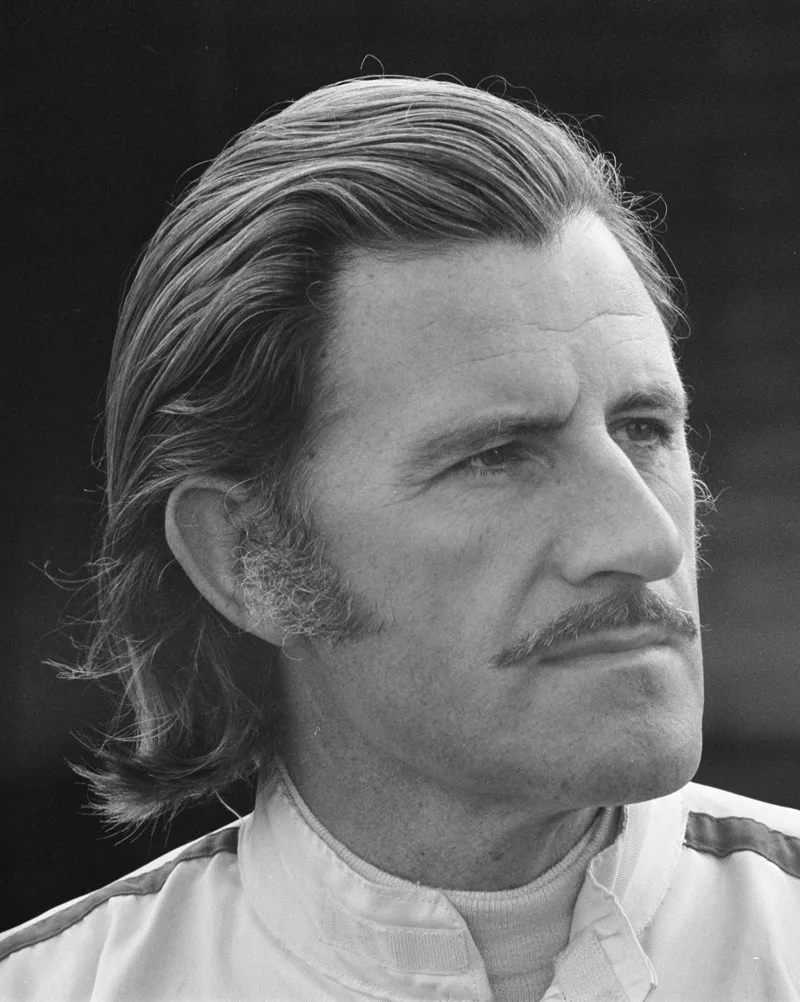
The BRM P83 was a 1966 Formula One car that combined a monocoque chassis with a rare H16 engine. Designed by Tony Rudd and Geoff Johnson, it was meant to keep BRM among the sport's leaders, but its engine caused constant trouble. Graham Hill and Jackie Stewart drove it hard, and it is now remembered as one of the most painful British failures of the decade.
Why did BRM build an H16 engine?
BRM had taken both the 1962 drivers' and constructors' titles, then finished second in each season that followed. The 1966 rules allowed either a 3-litre normally aspirated engine or a supercharged 1.5-litre, and many teams had no new engine to turn to. BRM, which built its own V8s, had to decide which route to follow.
The company tried both options. Its 1.5-litre V8 was reworked into a 32-valve 3-litre H16, which amounted to two flat-eight engines stacked on top of one another and geared together. A 48-valve 3-litre V12 was developed alongside it with Harry Weslake. Sir Alfred Owen picked the H16, and Weslake took the V12 forward, where it eventually powered the Eagle T1G. The team also worked on two more V12 projects, plus a 4.2-litre H16 that Lotus was to take to Indianapolis.
An unusual H16 engine and a record of 27 retirements from 40 entries made the P83 one of BRM's most painful failures.
How did the H16 engine perform?
Crankshaft vibration troubled the engine from the start. Quick-fix balance weights bolted to the crankshafts kept coming loose and flying about inside the block, which brought about several disastrous failures. Every bank carried its own cooling radiator, pump, distributor and fuel metering unit, and a single oil radiator served them both.
The reliability figures were dismal. The engine, the gearbox and related systems were responsible for 27 of the 30 retirements in 40 starts. Stewart judged the unit too big, too thirsty and too heavy on oil and water, which all added weight and blunted the car's handling.
The first version made 395 horsepower at 10,250 rpm, and a later 64-valve variant lifted that to 420 hp at 10,500 rpm. Measured against the Cosworth V8 of 1967, and against the Ferrari, Honda and Weslake V12s, those figures were respectable. The trouble was the narrow band of revs in which the H16 made its power, and its weight. It began life at 555 lb when introduced in 1966, and even the final lightweight version was 398 lb, which left it the heaviest engine on the grid by a clear margin.
Team Lotus borrowed the H16 for its Lotus 43, a stopgap that filled the gap until the Cosworth DFV was ready.
How was the P83 chassis built?
The P83 followed the approach of the Lotus 33 and the Cooper T81. It was a riveted monocoque made from Duralumin, with fuel tanks built into the structure on either side of the driver. The engine was intended to carry loads as part of the chassis, a layout the Cosworth DFV would later make the norm. A six-speed gearbox was fitted, with the lever positioned to the driver's left.
At the front the car used unequal-length double wishbones with the springs and dampers mounted inboard. The rear suspension used twin radius arms, reversed lower wishbones and single top links, with the springs and dampers mounted outboard and connected to the gearbox and engine. The engine sat high, because the upper crankshaft had to clear the ground and the whole unit had to be raised to fit the lower exhausts, so the centre of gravity was both rearward and high.
How did the P83 race in 1966?
The P83 made its first appearance at Monaco, where Stewart tried it in practice before taking a P261 to victory in the race. At Belgium Hill and Stewart both practised with the P83 but raced the P261, and Stewart crashed at Masta and missed the French round. The P83 was then kept out of three races while the H16's problems were worked on.
By the final three rounds both P83s were on the grid, with a third example and a P261 carried as spares. At Reims Hill's time would have earned fourth on the grid, but gearbox trouble left him eighth in a P261. At Monza the team struggled all weekend, and Hill's H16 failed on the opening lap. Stewart's car leaked fuel, soaking him in petrol, and he retired.
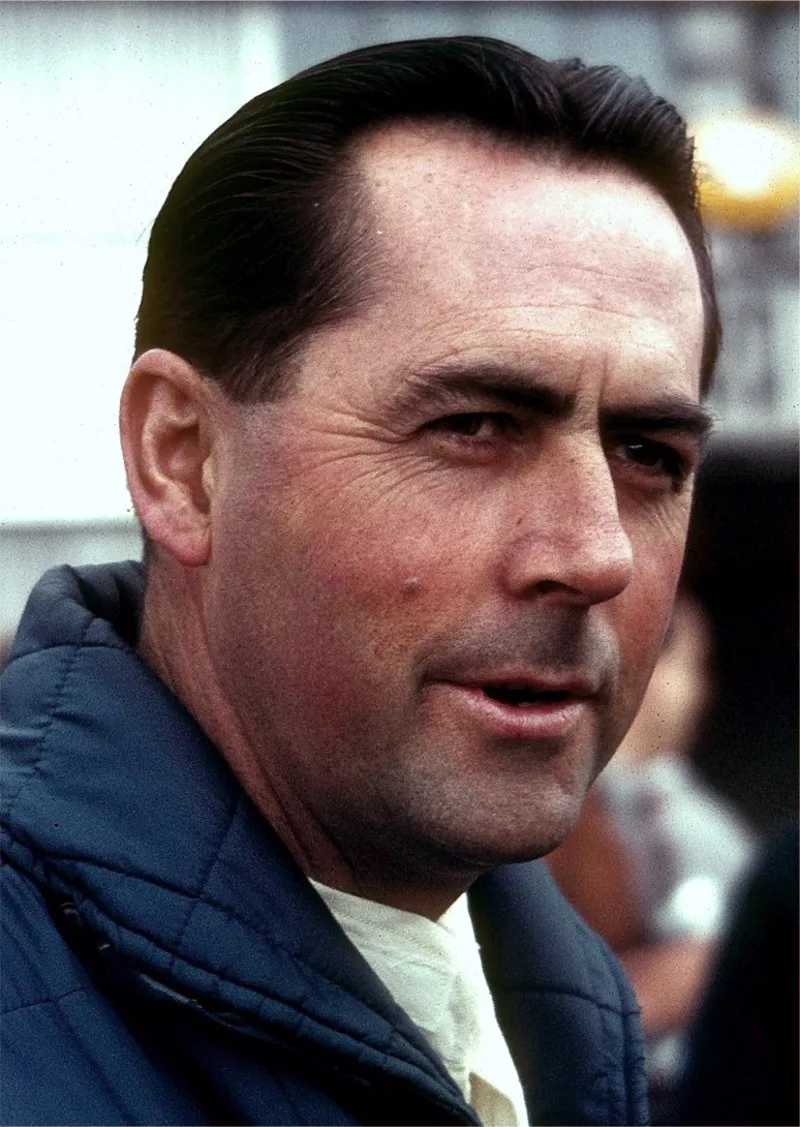
The P83 pair turned up at Oulton Park for the Gold Cup that year, where Stewart and then Hill led behind Jack Brabham, the eventual winner. Both cars then retired with engine failures. At the United States Grand Prix Hill and Stewart started fifth and sixth. Hill's differential broke on lap 53, and a cylinder liner failed on Stewart's car a lap later. Jim Clark then took his Lotus 43, which carried a BRM H16, to victory, and that was the only Formula One win the H16 ever achieved.
What went wrong in the 1966 Mexican round?
In Mexico both cars leaked oil in practice, the result of a faulty pressure relief valve that was easily repaired. In the race Hill's engine misfired from the start and lasted 18 laps. Stewart ran third for a time, trailing smoke as oil escaped, and he retired after 26 laps. Hill and Stewart ended the season fifth and seventh in the drivers' table, with no points gained in the closing rounds.
Who drove the P83 in 1967?
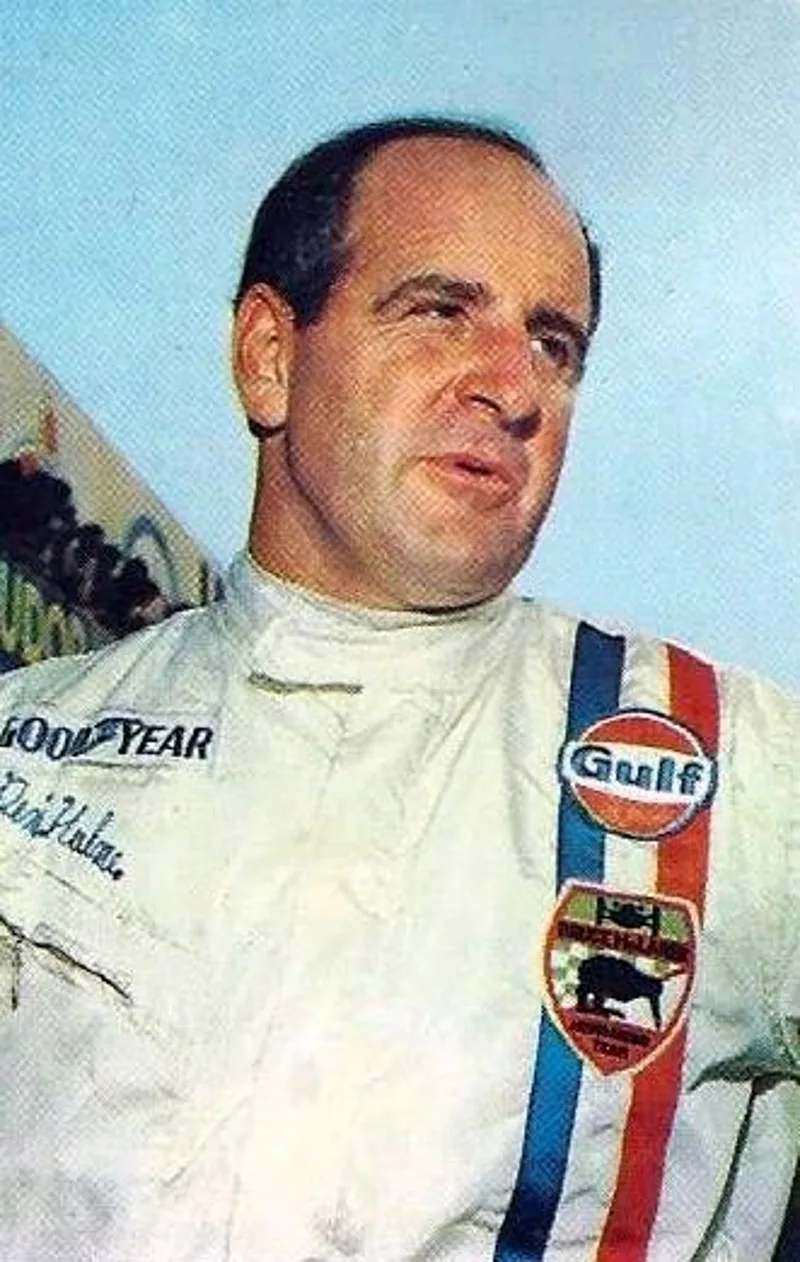
Hill quit BRM when 1966 ended, and Spence stepped into his seat. The team began 1967 much as it had finished 1966. In South Africa Stewart qualified ninth and Spence 13th, and Stewart's engine let go after two laps while Spence's race was lost to an oil leak before the halfway point.
Between South Africa and Monaco, BRM ran three non-championship events in Britain. At Brands Hatch for the Race of Champions Spence was the team's lone entrant, and he came fifth and seventh in the heats before seventh in the final. Stewart returned for the Oulton Park Spring Cup, took pole, a second clear of Denny Hulme's Brabham, and both cars completed the second heat. At the International Trophy at Silverstone Stewart took pole again, but gearbox trouble ended his race after 17 laps.
At Monaco Stewart moved back to the P261 while Spence kept the P83. Spence qualified twelfth and finished sixth, which gave the P83 its first points. He was also the last car to cross the line, four laps down on Denny Hulme's Brabham.
How did the P83 fare in its final races?
At Belgium the P83 looked more at home on the fast Spa layout. Stewart qualified sixth and Spence eleventh. Oil dropped from Stewart's car on the first lap caused the accident that ended Mike Parkes's career at Blanchimont. Stewart took the lead when Clark's car ran into trouble, but Dan Gurney overtook him to win, and Stewart finished second, with Spence fifth.
BRM then built the lighter P115, which Stewart drove for the rest of the year. The P83s passed to Spence and Chris Irwin, who both struggled with the heavier cars. In Canada the three H16 cars lined up ninth, tenth and eleventh, and Spence came home fifth, three laps adrift. At Monza Spence and Irwin started twelfth and sixteenth, and Spence finished fifth again.
The team passed on the Gold Cup and flew to North America for the closing pair of races. At Watkins Glen both P83s dropped out, on laps 35 and 41, each with engine trouble. The Mexican Grand Prix was the P83's last race, and Spence took fifth there for two points. BRM finished sixth in the Constructors' Championship for 1967.
What became of the P83 after Formula One?
Two of the three P83 chassis were converted for Formula 5000. Chassis 8301 received a Ford V8 from a GT40 and was entered by Colin Crabbe for a 1969 race at Mallory Park, where it failed to start. Terry Sanger raced it in five further 1969 Formula 5000 events and finished every one. Chassis 8303 was given a 3.5-litre Rover V8, appeared once at Hockenheim in 1971 and retired with an engine failure.
Bobbie Bell's T83, running a 5.7-litre Ford V8, took the first trio of rounds in the 1973 BRDC Formula Libre series. Spence lost his life at Indianapolis in May 1968, and less than two weeks later Irwin's racing career ended in a sports car crash at the Nurburgring.
What is the P83's legacy?
The P83 is remembered as a painful failure for a British marque that had once dominated the sport. Its H16 was complicated and fragile, and it helped push BRM from championship contention into a long spell of disappointment, even though its drivers gave it everything they had.
The engine belongs in the same story as the BRM Type 15, a reminder of how overcomplicated engineering can undo a team. For BRM, the P83 showed how one unusual engine decision could cost years of competitiveness.