Gendebien and Hill took Ferrari's 330 TRI/LM to victory in a race that closed the era of front-engined GT-style winners and set Ferrari up for its mid-engined run.
Olivier Gendebien and Phil Hill won the 1962 24 Hours of Le Mans in a Ferrari 330 TRI/LM. The car was the final front-engined GT-style machine to take the overall win, and it gave Ferrari six victories, the most of any marque.
The 1962 24 Hours of Le Mans went to Olivier Gendebien and Phil Hill in a Ferrari 330 TRI/LM, the last overall win for a front-engined GT-style car. It also gave Ferrari a sixth victory and made the Italian marque the most successful team the race had seen. Ferrari's works cars controlled the race from the early hours.
Who won the 1962 24 Hours of Le Mans?
Gendebien and Hill won the 1962 race in a Ferrari 330 TRI/LM, a four-litre front-engined car, finishing five laps clear of the French entry in second place. Gendebien retired soon afterwards at a high point, and the result carried Ferrari to its sixth overall win at the event.
Hill broke Mike Hawthorn's 1957 lap record during the race-week practice, then broke it again in the third hour of the race itself.
The last front-engined winner, and the start of Ferrari's mid-engined run, all in one long race.
How did the 1962 rules change the field?
The Commission Sportive Internationale launched a new championship aimed at GT cars, expanded to 15 races. The Automobile Club de l'Ouest, which knew the public loved sports cars, went its own way and lifted the Experimental engine limit from three litres to four. The purpose was to foster prototypes that could become future GT designs.
The CSI windscreen rules also shaped the cars. They favoured closed bodies, and only six of the 55 starters were open-top. The Sebring, Targa Florio, Nurburgring and Le Mans organisers combined to form the Challenge Mondial de Vitesse et Endurance, which ran until 1974.
Interest in the race was strong. A total of 79 applications had come in, and the organisers reduced them to 60 cars to practise for 55 starting places. Of the entries, 28 were works efforts, with four-car teams from Ferrari, Abarth and Panhard et Levassor.
Which teams and cars made up the grid?
Ferrari was again the dominant marque with 18 entries, the biggest representation of any marque at Le Mans to that point. Sports car specialist Abarth was next with nine cars. Ferrari had arrived with a fresh 330 TRI/LM, finished by Mauro Forghieri after the walkout of its designer Carlo Chiti, and its 4-litre V12 developed 390 bhp.
Ferrari also brought two mid-engined cars: a 246 SP V6 for the Rodriguez brothers and a 268 SP V8 for Scarfiotti and Baghetti. The previous year's TRI/61 cars had gone to the North American Racing Team and to Count Volpi's Scuderia Serenissima. Volpi had lost access to Ferrari cars after hiring Chiti, so he commissioned a redesigned 250 GT for Abate and Davis.
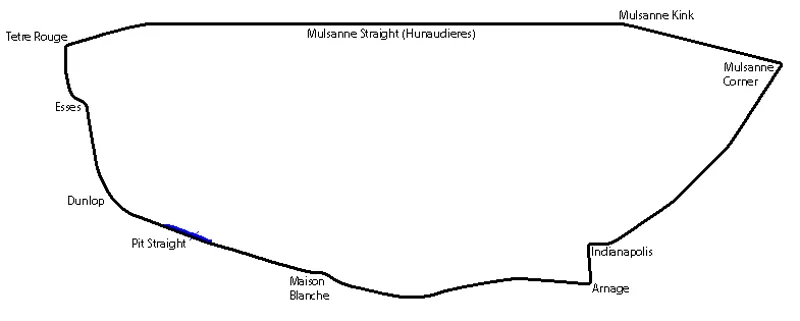
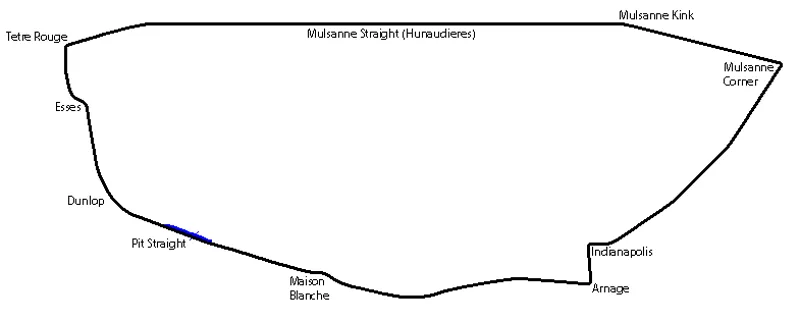
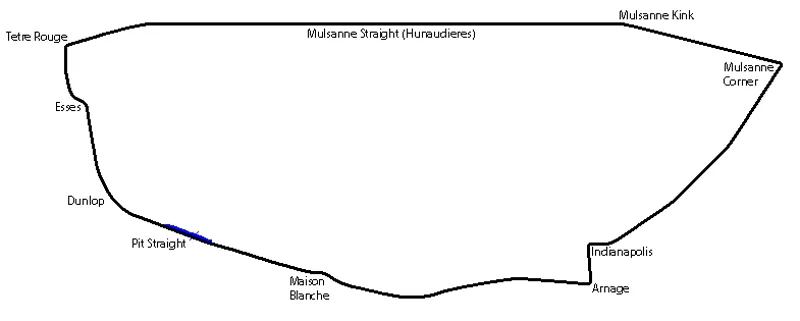
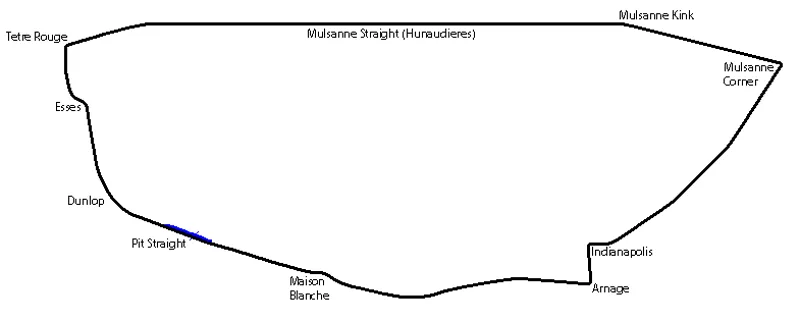
Maserati had a different strategy. Its new T151 was a front-engined 3.9-litre V8 producing 360 bhp, with an aerodynamic Kamm tail. The car was the fastest on the straights, reaching 287 km/h (180 mph), but it lost time to the better-handling Ferraris in the corners. Aston Martin returned with a DB4-based prototype, the Project 212, whose 4-litre straight-six developed 330 bhp and reached 270 km/h (170 mph) down the Mulsanne.
What were the highlights of the grid?
Several stories stood out before the flag. Ecurie Ecosse brought John Tojeiro coupes dispatched to Le Mans unpainted. One of them was damaged in a transporter accident in Kent, and the team scratched the unassembled car. Jim Clark's Lotus 23, which had led the entire field at the wet Nurburgring, was stopped at scrutineering over a mismatch in the wheel studs. Colin Chapman pulled the entries and never returned to Le Mans.
Among the smaller cars there were some notable names. The Morgan Plus 4 Super Sport was entered again after being refused the year before for looking too old-fashioned. Rene Bonnet's new Djet ran with Renault power, while Charles Deutsch stayed with Panhard for the works team. The Corvette, meanwhile, was almost stock except for a tuned 327 cu in engine that made 360 bhp.
Results and lap records
The race covered 4,451.25 km (2,765.88 mi), with a winning average of 185.47 km/h (115.25 mph). Official statistics give the fastest race lap to P. Hill at 204.20 km/h (126.88 mph), and the fastest practice lap at 206.12 km/h (128.08 mph). The attendance was given as more than 300 000.
The practice pace told its own story. Mairesse had set the test benchmark at 4:07.1 in a 250 GT SWB during the April test weekend, and the works GTO of Parkes was only just behind Phil Hill on race week. Among the smaller classes, the Bianchi Abarth-Simca was the outlier, posting a 4:34.3 lap.
How did the race unfold through the night?
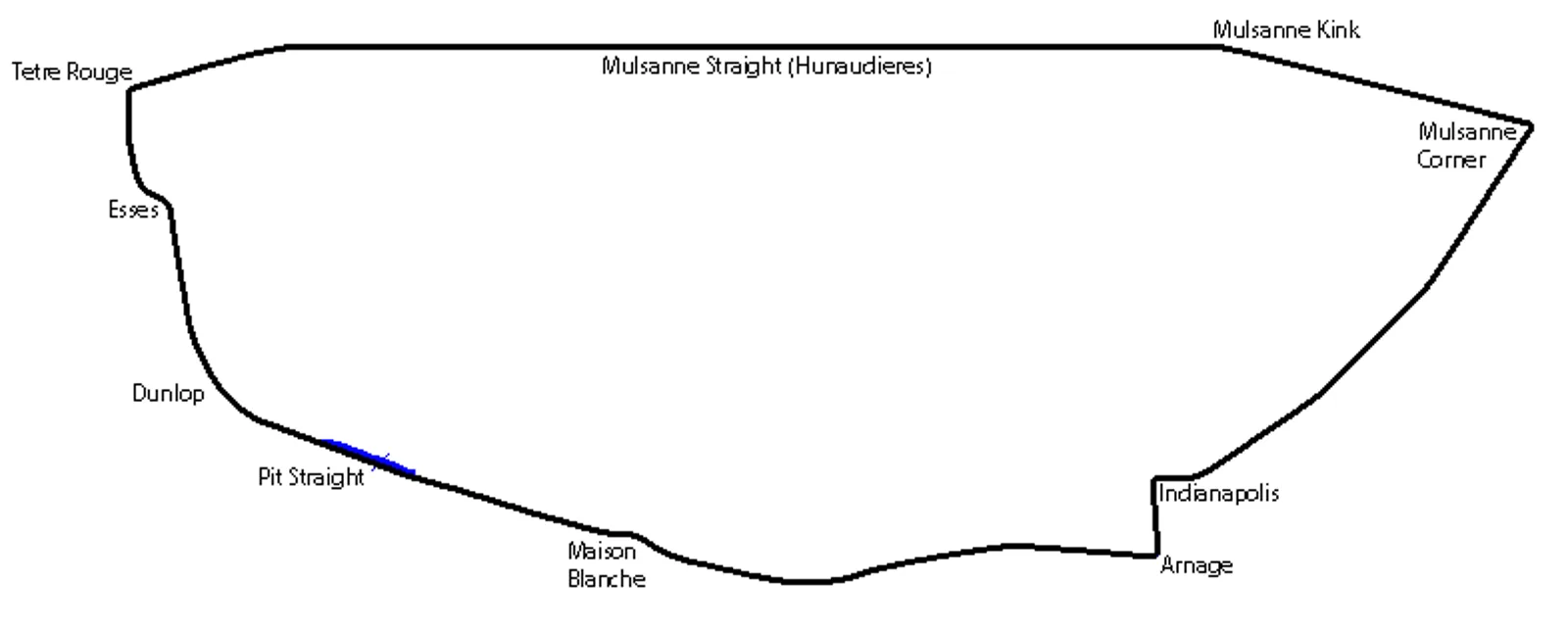
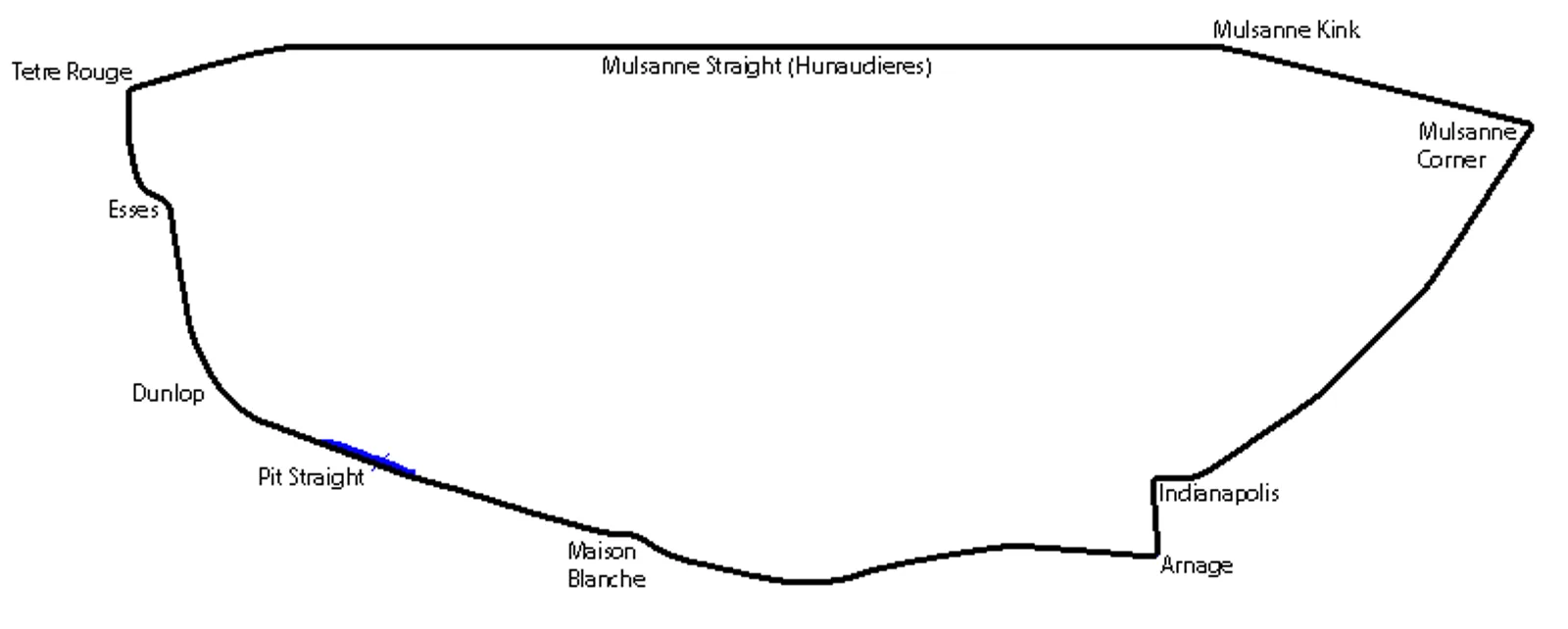
Graham Hill was first under the Dunlop bridge at the start, but he got into a drag race with Parkes down the long straight. Both braked late, and the Aston Martin pushed the Ferrari into the sandtrap at Mulsanne corner, costing Hill many laps. Gendebien passed Hill cleanly on the second lap, and the TVR retired on the third when its water ran out long before any refill was allowed.
The big Ferrari led the first hour from three Maseratis, but the Rodriguez brothers worked their way forward and hit the front during the third hour. Their handling and fuel economy gave them the edge over the field, and the two Ferraris swapped the lead throughout the night, keeping the crowd on its feet. The Scarfiotti and Baghetti car held a secure third place.
Attrition took its toll. Dick Thompson spun the Maserati at the Esses about 8.30pm and ruptured its oil tank. Mike Parkes' 330 LMB radiator was destroyed in the sandtrap, and that car retired after 10pm. The second Cunningham Maserati lost its differential in the 12th hour, and the Ecosse Tojeiro coasted in neutral near Maison Blanche, forcing marshals to push it clear while cars raced past in the dark.
How did the race finish?
Dawn came dry for once, and by then only 33 of the 55 starters were still running. The Rodriguez car broke its final drive at 4.45am, which allowed Hill and Gendebien to ease off and rest a potentially troublesome clutch. The other Ferrari retired on the Mulsanne three hours later with a broken clutch, which moved the privateer GTO of Pierre Noblet into the top three.
The works Ferrari team held station through the final hours. The American Ferrari slipped to sixth with starter-motor problems, while Hill and Gendebien crossed the line five laps ahead of the Frenchmen. Noblet and Guichet won the GT class by 12 laps from the Belgian GTO, and Cunningham's Jaguar finished fourth.
How did the test weekend and practice shape the 1962 grid?
Thirty-three entrants used the April test weekend, and Willy Mairesse set the fastest time in a Ferrari 250 GT SWB at 4:07.1, quicker than his 4:10.8 in the new GTO. Race-week practice then produced the fastest times of the weekend.
On the Wednesday evening Phil Hill broke Mike Hawthorn's longstanding lap record from 1957, posting 3:55.1. Mike Parkes was second fastest in the GTO prototype at 3:58.6, with Thompson's Cunningham Maserati at 3:59.1 and Graham Hill's Aston Martin at 3:59.8 close behind.
Pedro Rodriguez was sixth in that session at 4:02.2, while Bianchi's new Abarth-Simca managed only 4:34.3. The only serious incident of practice was Robert Bouharde's crash in his small Bonnet Djet at Maison Blanche, which destroyed the car and sent him to hospital with a knee injury.
What made the Ferrari 250 GTO a talking point?
Ferrari entered five of the new 250 GTO cars for customer teams, and the car carried the 3-litre engine from the Testarossa sports car. The GT regulations required 100 production examples, so Ferrari argued that the GTO was a derivation of the existing 250 GT and could use that production record.
On track the GTO was the car to beat in the GT division. The privateer entry of Pierre Noblet finished 12 laps clear of the Belgian GTO to win the class, and Abate's breadvan had led the other GTOs for a while before a broken propshaft stopped it in the third hour.
How did the British and American cars fare?
Jaguar had three E-type cars in the field, because the previous year's E2A prototype had been homologated as the E-type. Briggs Cunningham ran one of them, co-driven by Roy Salvadori because Cunningham could not fit into the Maserati cars.
Austin-Healey entered a 3000, and there were a pair of Aston Martin DB4s, one of them returning from Frenchman Jean Kerguen. In the 1.6-litre class the contest was three Porsche-Abarths against three works Sunbeams, because Porsche had chosen not to enter its new 2.0 flat-8 in the Experimental class.
How did the Porsche and Lotus duel develop?
The contest for the smaller prototype places became a long duel. Herrmann and Barth's 2-litre Porsche chased Hobbs and Gardner's 1.2-litre Lotus Elite, and both cars had steadily moved up the field through the night.
The Lotus then dropped onto three cylinders, which let the Porsche overtake it. Herrmann and Barth still had a failing gearbox to contend with, but they finished 7th, less than a lap clear of the recovering Lotus.
The Belgian GTO finished twelve laps behind Noblet and Guichet, and it was the second car home in the GT class.
Who won the Index of Performance in 1962?
The Index of Performance went to the sole surviving CD-Panhard of Guilhardin and Bertaut. They edged out two of the new Bonnet-Renault Djets, which had been in the same fight.
The contest was between the French Panhard, Renault and Simca cars, and it was settled by only a small margin at the end. The index was an important prize for the French small-car builders.
The Morgan Plus 4 Super Sport soldiered on throughout the race. It finished 13th and claimed the GT 2-litre class win, after its only rival in that class, an AC Ace, had retired after four hours.
What did the 1962 race mean for Ferrari and Le Mans?
The win made Ferrari the most successful marque at Le Mans, with six victories. Jaguar and Bentley had five each. Ferrari's cars had dominated the race in the years before it.
Ferrari's mid-engined V12 prototypes carried the team's streak until 1965, and the race was also the final Le Mans for OSCA. Its owners the Maserati brothers sold the company in 1963 to Count Domenico Agusta, owner of MV Agusta. The original Ecurie Ecosse team, which had won outright in 1956 and 1957 with the Jaguar D-type, made its last appearance here as well.
The race also took a heavy personal toll on the wider scene. Ricardo Rodriguez, the younger of the Mexican brothers who had excited crowds for years, was killed in November during practice for the Mexican Grand Prix. He was 20 years old. Paul Armagnac, a two-time winner of the Performance Index for DB, had built a new circuit at Nogaro. This was his last of eight Le Mans, and he too was killed later in the year at Montlhery.