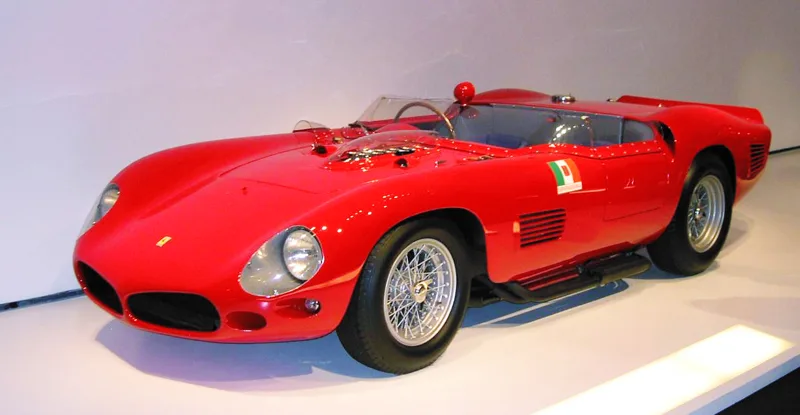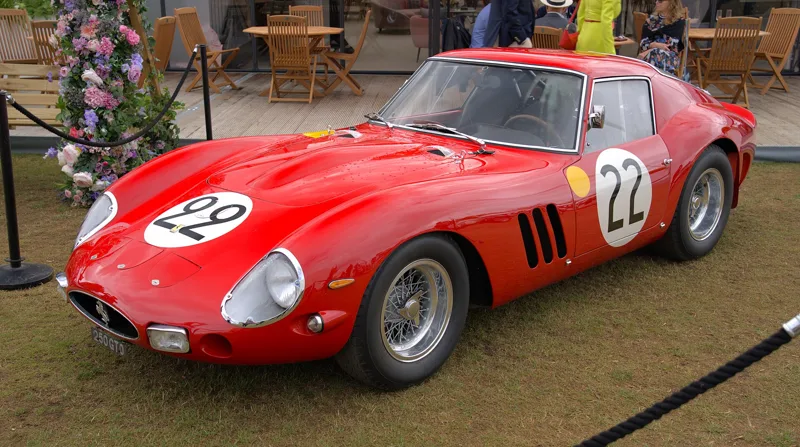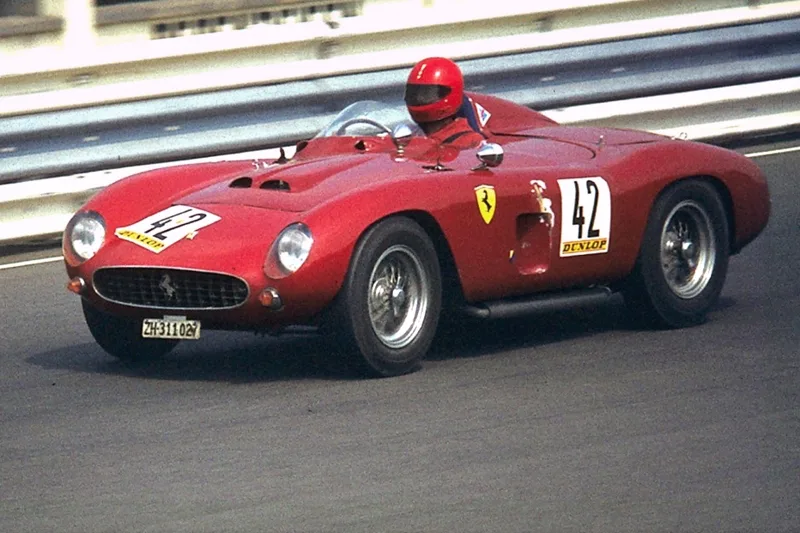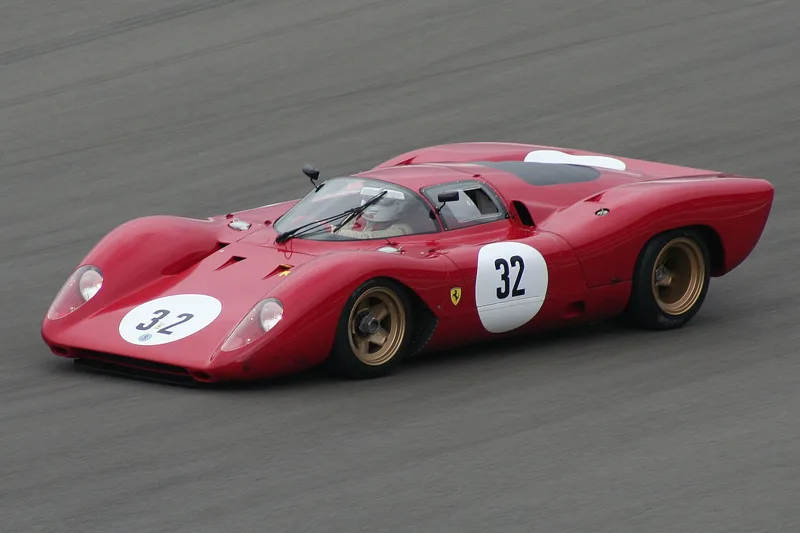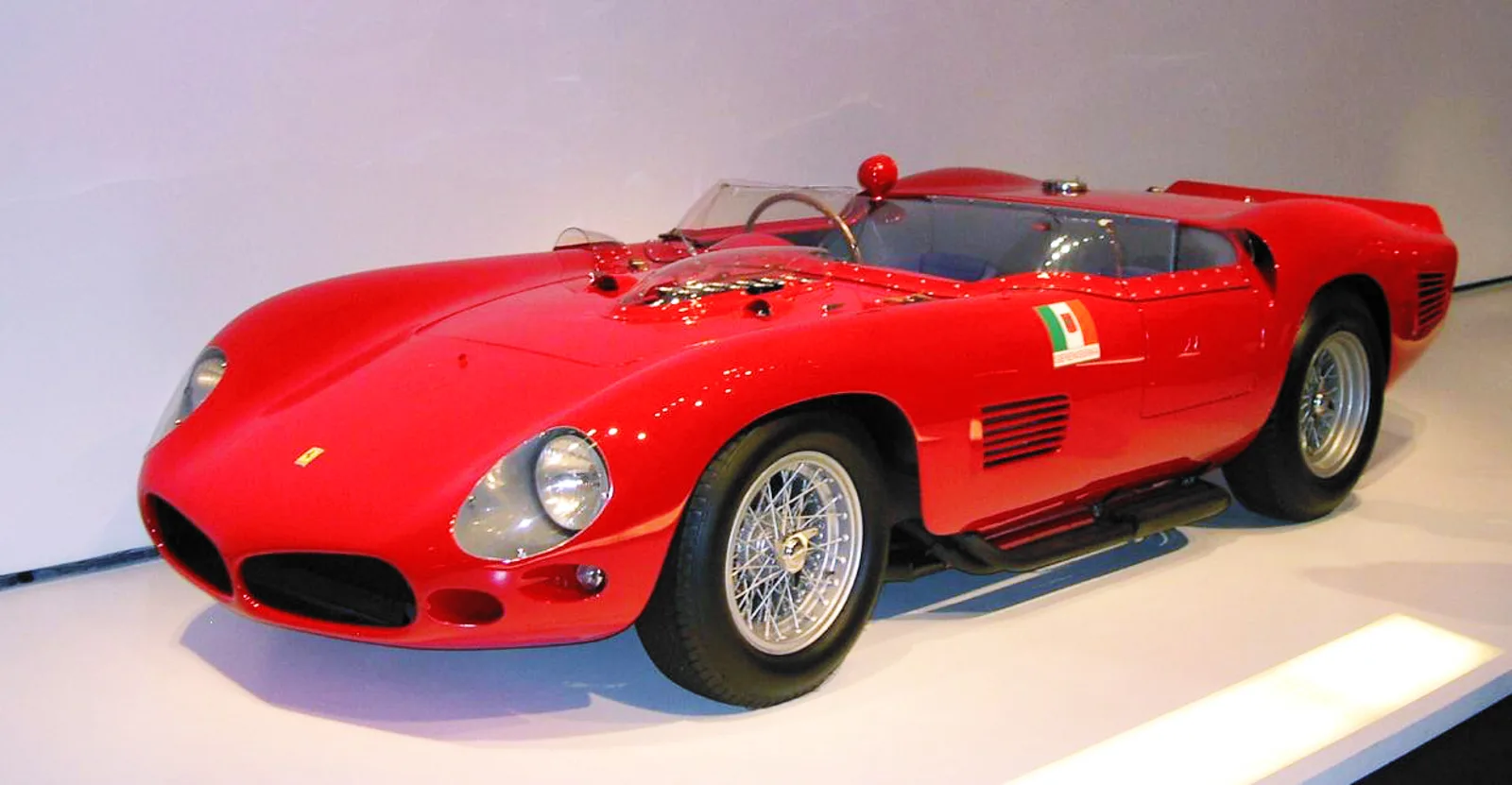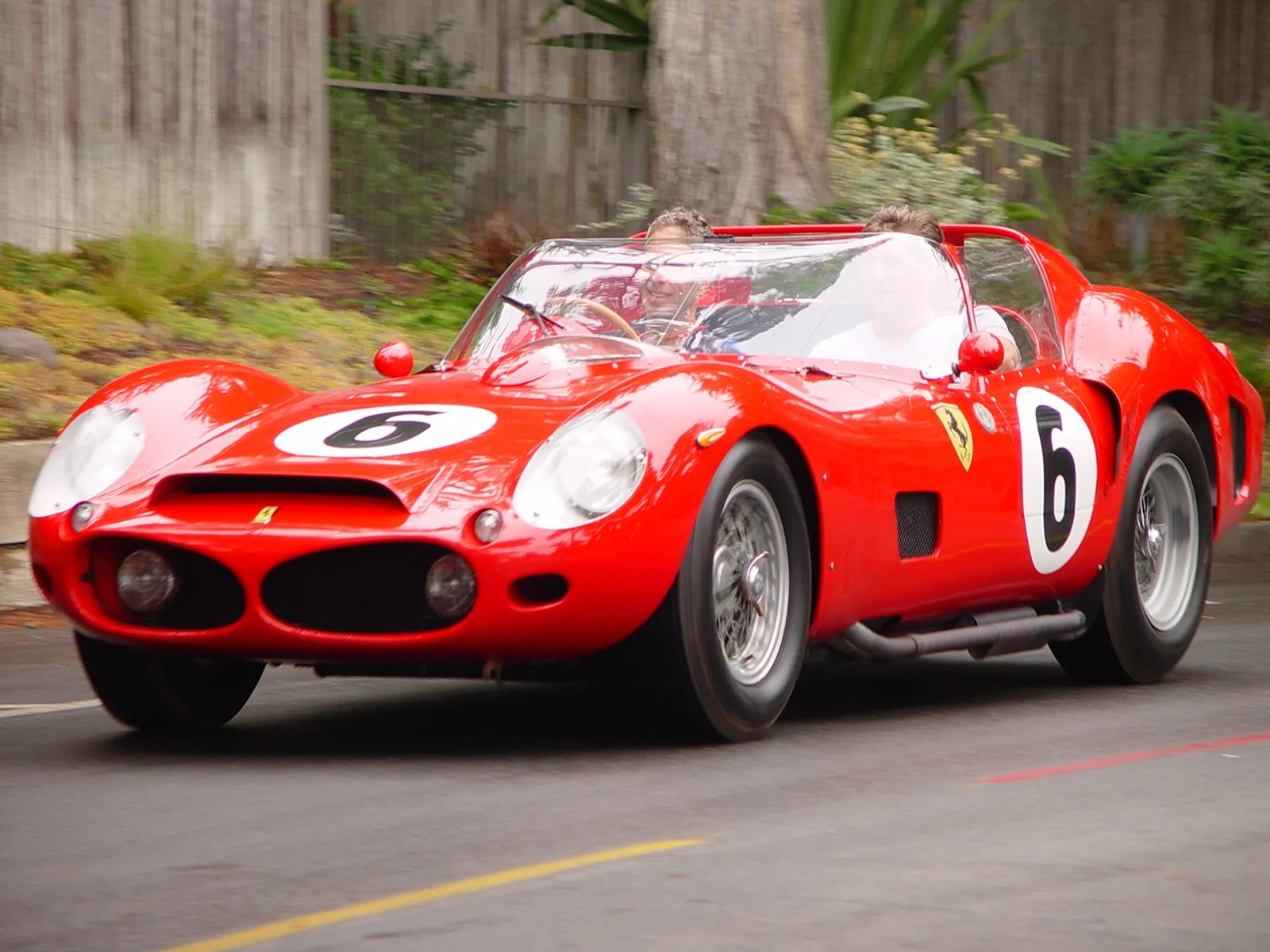
A one-off 4.0-litre Testa Rossa built in 1962 for the experimental class, which won Le Mans and then crashed out of the race a year later.
Built in 1962 for the experimental class, this single 4.0-litre racer carried Hill and Gendebien to a Le Mans victory. The win made it the final front-engined car to take an overall victory at the race, and it was never repeated.
The Ferrari 330 TRI/LM was a one-off racing sports car that Ferrari built in 1962 to win the 24 Hours of Le Mans. It was the last front-engined sports racer from Ferrari, and it won the race outright. That victory made it the last front-engined car to take an overall win at Le Mans.
Where did the 330 TRI/LM come from?
The car began life in 1960 as a 250 TRI/60 Fantuzzi Spyder, chassis 0780TR. It debuted at the Targa Florio that year, but a practice crash badly damaged it, and it was rebuilt before a Le Mans attempt that ended without a finish.
Its 1961 results were strong. It took second at the 12 Hours of Sebring, second at the Nurburgring 1000 km and second at Le Mans, before winning the Pescara 4 Hours that season. The I in its name stands for independent rear suspension.
After Pescara, the rule changes made it possible for Ferrari to rebuild 0780TR into its final form. The result was the 330 TRI/LM, with a larger engine and a new body, chassis number 0808.
One car, built to exploit a rule change, that won Le Mans and was the last of its kind to do so.
Why did Ferrari build the 330 TRI/LM?
The 1962 rules changed the sports car classes and raised the limit for the experimental class to four litres. Ferrari responded by replacing its sports racers with mid-engined designs, but it built the 330 TRI/LM as a one-off for the experimental class.
Ferrari had dominated sports car racing since 1958, winning three World Sportscar Championships and three Le Mans races in four attempts. The Testa Rossa line began in 1956 with a two-litre car aimed at beating Maserati's 200 S. The 500 TR debuted at the 1956 1000 km Monza, where Peter Collins and Mike Hawthorn gave it its maiden win, with 500 TRs also placing second and fourth.
The unlimited-displacement class ended after the 1957 Mille Miglia accident, and the World Sportscar Championship then imposed a three-litre limit. Ferrari supported the change to suit American customers, and answered with the 250 TR, which raced from 1957 through 1961. The 330 was the final development of that platform.
What changed in the 330 engine and chassis?
The engine was a Tipo 163 4.0-litre Colombo V12 developed from the road-going Superamerica unit, fitted with Testa Rossa cylinder heads. It produced 390 hp (290 kW) at 7500 rpm, which was 50 bhp more than the 250 TR and gave almost 100 hp per litre.
The engine used six twin-barrel Weber 42DCN carburettors and dry sump lubrication. The five-speed transaxle received strengthened gears to cope with the extra power.
The new 4-litre V12 was 10 cm (4 inches) longer than the 3-litre unit it replaced, which required a new frame. That frame was 6.3 cm (2.5 in) longer than the 250 TR's, and it was strengthened for the extra power and torque.
A new body by Fantuzzi with an aerodynamic roll hoop completed the transformation. The TRI/61-style independent coil-spring suspension carried over from the earlier car.
How fast was the 330 TRI/LM in testing?
The car made its debut on the second day of the April 1962 Le Mans test sessions, with Phil Hill and Olivier Gendebien driving. It set the fastest lap of the day at 4 minutes 10.8 seconds despite wet weather, and Hill later broke Mike Hawthorn's lap record in practice, 3 1/2 seconds quicker than the competition.
Hill found the car not brutish to drive. Gendebien had a different view, comparing it to a 2CV fitted with a powerful engine and complaining about a shaky clutch, a fragile gearbox and inadequate brakes.
During the race the pair had to hold off the Ferrari 246 SP of the Rodriguez brothers and, briefly, the Aston Martin DP212 of Graham Hill and Richie Ginther. Gendebien's slow start was a worry, but the car's speed let him take the lead.
The clutch slipped when the engine was at peak torque in the early practice sessions.
The drivers got around it by treating the car gently and shifting a gear higher than usual.How did the 330 win Le Mans in 1962?
Hill and Gendebien won the 1962 24 Hours of Le Mans after a slow start from Gendebien and a clutch that kept slipping. The Rodriguez brothers, who had been chasing the lead in a 246 SP, retired with gearbox problems at 4.30 am. That handed the Ferrari pair a four-lap lead, which grew to five by the finish.
The win made Hill and Gendebien the first triple-winning driver pairing at the race, and it made Gendebien the first four-time winner. The 330 TRI/LM was the last front-engined car to achieve an overall win at Le Mans.
What happened to the car after Le Mans?
Earlier, at the 1961 Targa Florio, the car had been the team's only front-engined entry, with Mairesse and Pedro Rodriguez driving. They retired after one of the drivers crashed during practice, and the car went back to the factory for work on its nose. It returned to racing that same year at Nurburgring, where it finished second.
The car was ineligible for more European races that season, so Ferrari passed it to NART, the factory-supported North American Racing Team run by Luigi Chinetti. NART used it as a middleman so that Pedro Rodriguez could race it in North America, and the team removed the aerodynamic roll hoop because it believed the hoop added drag.
Pedro Rodriguez won the 1962 Bridgehampton Grand Prix and finished second in the Canadian Grand Prix at Mosport. Masten Gregory took over for the 1962 Nassau Trophy, when Rodriguez was unable to drive after his brother's fatal crash at the Mexican Grand Prix. Gregory finished fourth.
How did the 330 crash out of Le Mans in 1963?
In 1963 NART entered the car at Le Mans with Pedro Rodriguez and Roger Penske, and it started from pole position. It ran second to the factory cars until the ninth hour, when its engine threw a connecting rod. Oil on the rear tyres then caused a crash that also took out Jo Bonnier's Porsche 718/8 GTR.
Penske was unhurt, but the car was severely damaged and never raced again. Earlier that year, Graham Hill and Rodriguez had taken third at the 12 Hours of Sebring, after holding a three-lap lead over the 250 P prototypes for a time.
How much did the 330 TRI/LM sell for?
After the 1963 crash the car went to the Ferrari factory for repair, and a new coupe body by Fantuzzi was fitted. It went back to Chinetti in the United States as a road car, and its later price history has been dramatic.
Rob Myers paid US$5,800,000 for it in 2002. At RM Sotheby's Monterey auction that August it sold for US$6,500,000 including buyer's premium. Gregorio Perez Companc paid 7,000,000 euros in 2007, when the car sold at RM Sotheby's Maranello auction.
Who owned the 330 TRI/LM after the racing ended?
Hisashi Okada brought the car to the United States in 1965 and drove it daily on the streets of Manhattan. He traded it for a 250 LM in 1974. Pierre Bardinon then bought it, drove it in New York City until 1993, and commissioned Fantuzzi to return it to 1962 form.
The car narrowly avoided Hurricane Katrina in 2005. Jim Spiro, a New Orleans money manager who bought it in 2002, drove it 16 km (10 miles) west of the city two days before the storm, and he used it in road rallies and city commuting.
330 TRI/LM key specifications
| Item | Detail |
|---|---|
| Chassis | 0808, rebuilt from 0780TR |
| Engine | 4.0-litre Tipo 163 Colombo V12 |
| Output | 390 hp (290 kW) at 7500 rpm |
| Carburettors | Six twin-barrel Weber 42DCN |
| Gearbox | Five-speed transaxle |
| Frame | 6.3 cm (2.5 in) longer than the 250 TR |
| Le Mans | Overall win in 1962 |
| Racing end | Crash at the 1963 Le Mans |
| Last sale | 7,000,000 euros in 2007 |