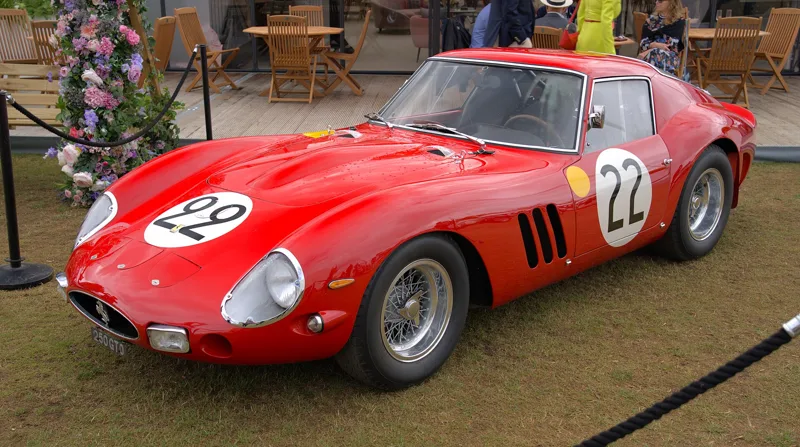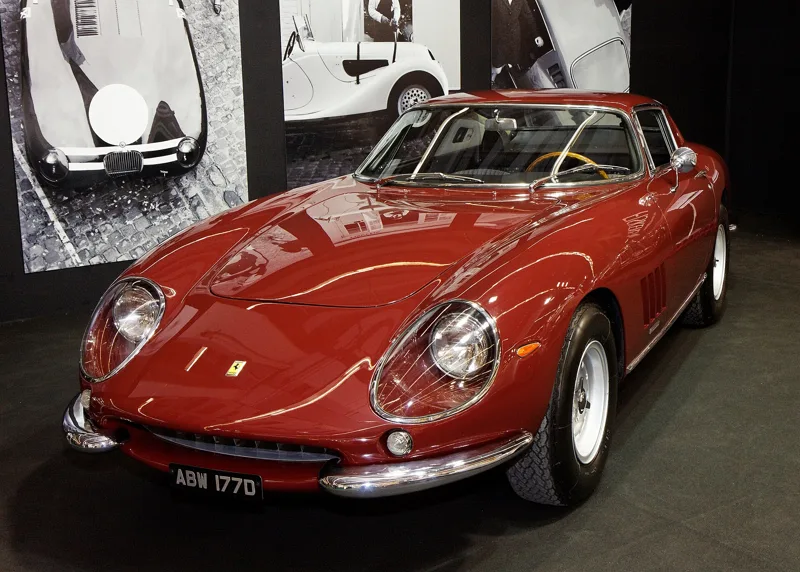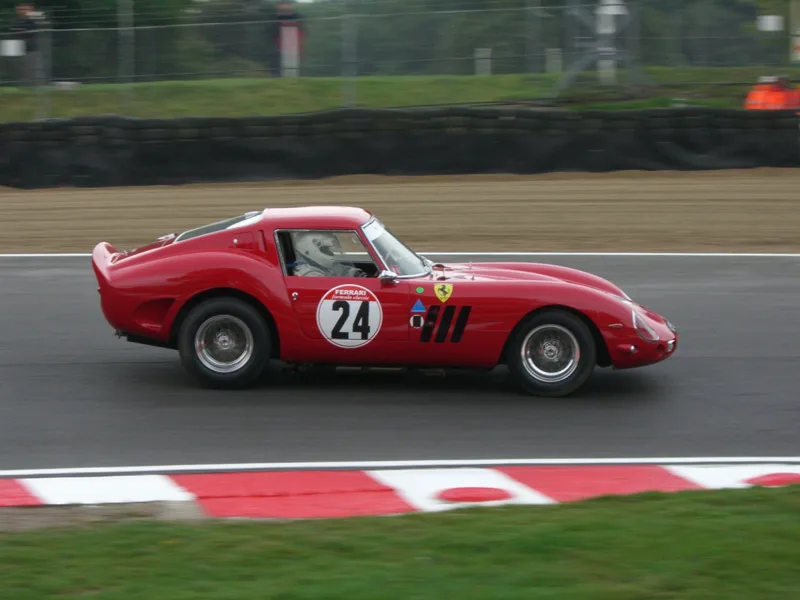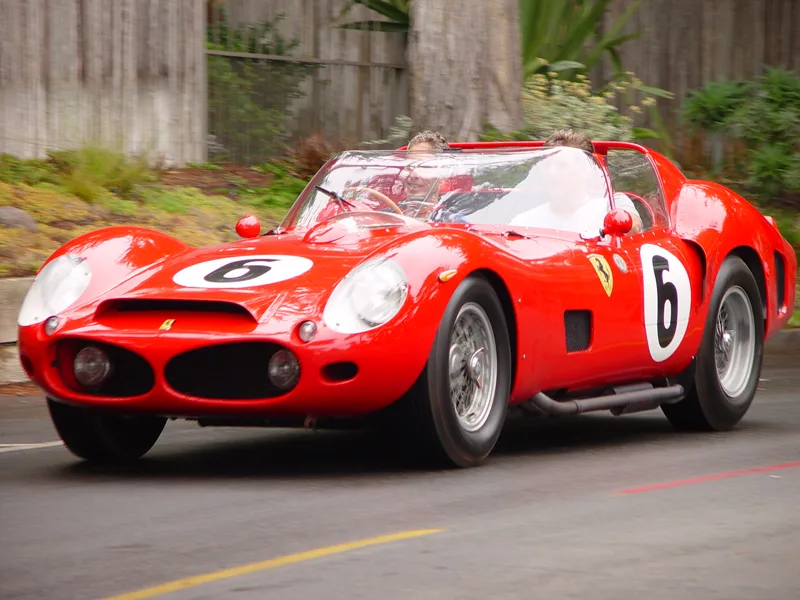
From the 250 P of 1963 to the 312 PB of 1972, the Ferrari P series put V12s behind the driver and won Le Mans, Sebring and the World Championship for Makes.
The P series produced Ferrari's rear mid-engined sports prototypes between 1963 and 1973. The 250 P won the 1963 Le Mans as the first V12 racer with its engine behind the driver, and the programme ran on through the 312 PB.
Built by Ferrari between 1963 and 1973, the P series comprised two-seat Group 6 prototypes with V12s behind the driver, mostly raced by the factory's Scuderia Ferrari team. The 250 P was the first Ferrari sports racer to carry a V12 behind the driver, and it won the 1963 24 Hours of Le Mans. The series that followed won Le Mans again in 1964 and produced a famous 1-2-3 finish.
Why did Ferrari take so long to move its V12 behind the driver?
Enzo Ferrari had watched the rear mid-engined Auto Union racers of the 1930s, but he resisted moving his V12s behind the driver even when Cooper dominated Formula One in 1959 and 1960. Ferrari did place a Dino V6 behind the driver in one single-seater, the 156 F1, which took the 1961 Formula One title.
The Dino V6 of 2.0 or 2.4 litres powered the first rear mid-engined Ferrari sports prototypes, the SP series of 1961 and 1962. The 1963 P cars carried V12s above three litres; their numbers matched road cars, but the racers were almost entirely different machines.
Ferrari's first mid-engined road car was not built until the 1967 Dino 206 GT. A road-going V12 was placed behind the driver only in 1971, in the 365 GT4 BB.
A V12 behind the driver for the first time, built for Le Mans and carried through the factory's most successful prototype years.
What was the 250 P?
The 250 P had an open cockpit and a mid-mounted engine driving the rear wheels, and it was built in 1963 for the new FIA prototype class. Designed by Mauro Forghieri, it used a tubular space-frame chassis and a 3.0-litre Testa Rossa-type V12 fed by six Weber 38 DCN carburettors, producing 310 bhp at 7,500 rpm.
It was the first V12 set behind the driver in a Ferrari sports racer, and it won straight away. The car won the 1963 Le Mans, the 12 Hours of Sebring, the 1000 km Nurburgring and a Canadian Grand Prix. Surtees, Scarfiotti, Mairesse, Bandini and Rodriguez were among its drivers.
Only four 250 P chassis were built, plus one development mule based on a 246 SP chassis. Once the 1963 season ended, the entire batch was rebuilt to 275 P or 330 P specification.
How did the 275 P and 330 P differ?
For 1964, Ferrari's 275 P and 330 P were upgraded 250 Ps that used bigger engines. The 275 P used a bored 3.3-litre version of the Testa Rossa-type V12, while the 330 P used a four-litre Colombo-designed V12 derived from the 400 Superamerica road car.
The 330 P made more power, 370 bhp against 320 bhp, but it weighed more, at 785 kg against 755 kg. Drivers were split: some favoured the 330 P's additional output, while others liked the nimbler 275 P, and both ran side by side.
Scuderia Ferrari, NART and Maranello Concessionaires raced the cars through 1964 and 1965. The high point was a Ferrari sweep of the top three places at the 1964 Le Mans, led by a Scuderia Ferrari 275 P.
What made the 250 LM special?
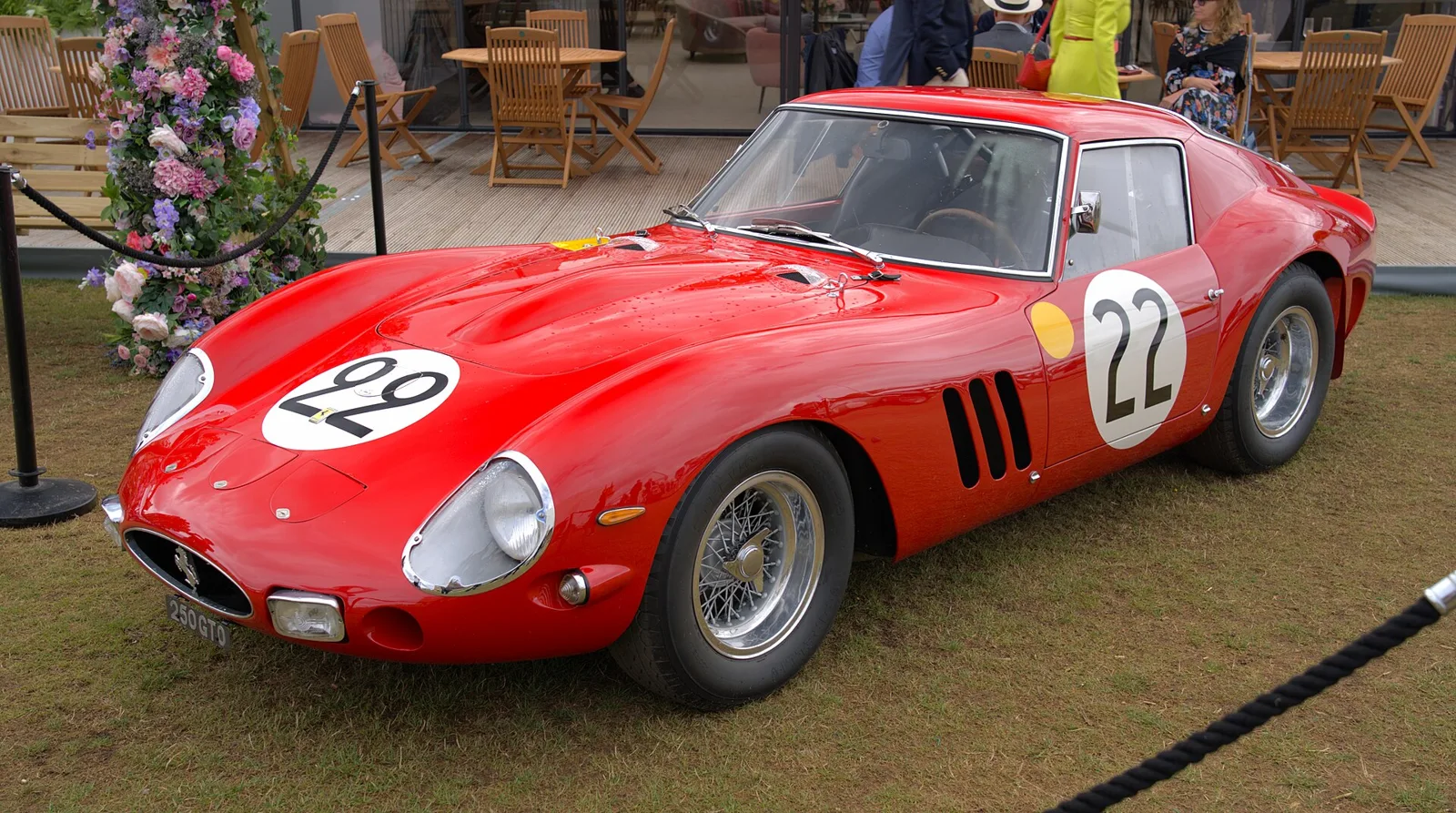
The 250 LM was introduced at the November 1963 Paris Auto Show as a coupe version of the 250 P. It was intended as a production GT racer for customers. The FIA required 100 cars for Group 3 homologation, and it refused the model in April 1964 because Ferrari had built far fewer than that.
Late in 1965 the 250 LM gained Group 4 homologation, a rule that asked for at least 50 units in 12 months. In total 32 chassis were built from 1963 to 1965, and most had 3.3-litre engines making 320 bhp.
Chassis 5893 won the 1965 Le Mans for Jochen Rindt and Masten Gregory. That was Ferrari's last overall Le Mans win before the 499P of 2023. Collectors pay well over US$10 million for a 250 LM these days.
What were the P2 models?
Two entirely new cars arrived in 1965, with lower and lighter chassis and aluminium bodies made by Carrozzeria Fantuzzi. Each used a V12 with four overhead camshafts, producing 350 hp for the 275 P2 and 410 hp for the 330 P2.
The 275 P2 won the 1965 Monza 1000 km with Mike Parkes and Jean Guichet, and it also won the Targa Florio with Nino Vaccarella and Lorenzo Bandini. The 330 P2 won the Nurburgring 1000 km for John Surtees and Ludovico Scarfiotti, but both 330 P2s failed at Le Mans.
For 1965 Ferrari also built customer 365 P2 cars with a single overhead camshaft 4.4-litre engine.
What did the 330 P3 and 330 P4 achieve?
The 330 P3 introduced Lucas fuel injection to Ferrari in 1966, and it produced 420 hp at 8000 rpm. The 1966 Monza race went to the Parkes and Surtees pairing, and a win at Spa followed. The P4 was built on the same lineage, and its results carried the line forward.
The 330 P4 replaced the P3 for 1967 and produced up to 450 hp. Just four P4-engined cars were produced: three new 330 P4s and a reworked P3, chassis 0846. The P4 won the 1967 Monza 1000 km.
At Daytona in 1967 two P4s and a 412 P finished side by side in a photo finish.
What was the 412 P?
Independent teams including NART, Scuderia Filipinetti, Francorchamps and Maranello Concessionaires ran the 412 P, a customer form of the 330 P3. It used Weber carburettors instead of the factory's Lucas fuel injection, which reduced its output. Its customers raced it under their own colours, which gave the car a varied history.
Ferrari sat out the 1968 championship in protest. The 412 P and P4 were too large for the 3-litre Group 6 class, and too few had been built to qualify for the 5-litre Group 4 category.
Surviving 412 P cars are valued at approximately US$35-45 million.
Did the 312 P and 312 PB carry on the programme?
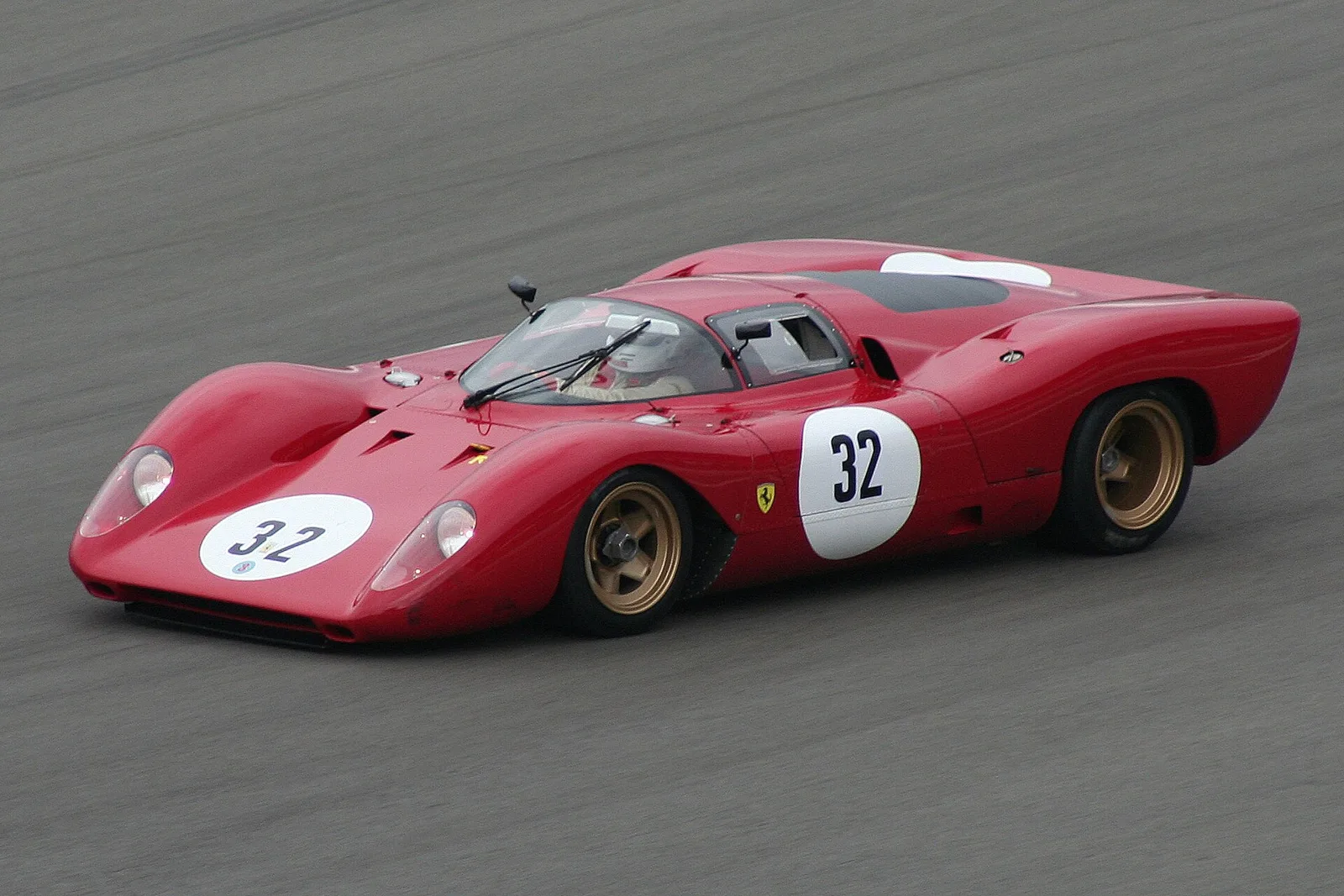
Ferrari built three 312 P cars in 1968, with prototype bodies on 3-litre F1 chassis, and it then concentrated on the 312 PB. The 312 P spyder finished second at Sebring behind a JWA Gulf Ford GT40. The 312 P line continued into the 312 PB, which carried the programme into the 1970s.
The 312 PB used a flat-12 engine derived from the 312B F1 car. In the 1972 World Championship for Makes the 312 PB won ten of eleven races, and the title went to Ferrari.
Ferrari skipped the 1972 Le Mans, then finished second to Matra in 1973. FIAT forced the company to abandon sports car racing at the end of 1973 in favour of Formula One.
What were the 612P and 712P?
The 612P was a purpose-built Group 7 prototype, designed and built by Scuderia Ferrari for the North American Can-Am series from 1968 to 1971. The 712P followed for Can-Am from 1970 to 1974, with a 7-litre V12 and the same purpose-built layout.
Both cars were built to compete in Can-Am rather than at Le Mans.
What came after the P series?
Pininfarina redesigned a 2003 Enzo for film director James Glickenhaus, creating the one-off P4/5 that was officially presented at the Pebble Beach Concours in August 2006. The project cost Glickenhaus US$4 million. Ferrari's later prototype activity drew on the same heritage the P cars had built.
Ferrari returned to Le Mans prototype racing with the 499P after 50 years. Unveiled at Imola on 29 October 2022, the 499P went on to win the 2023 Le Mans, driven by Giovinazzi, Pier Guidi and Calado. That was Ferrari's first overall win since 1965.
Ferrari won Le Mans again in 2024, its eleventh overall victory, and a yellow AF Corse 499P won in 2025 with Robert Kubica driving.