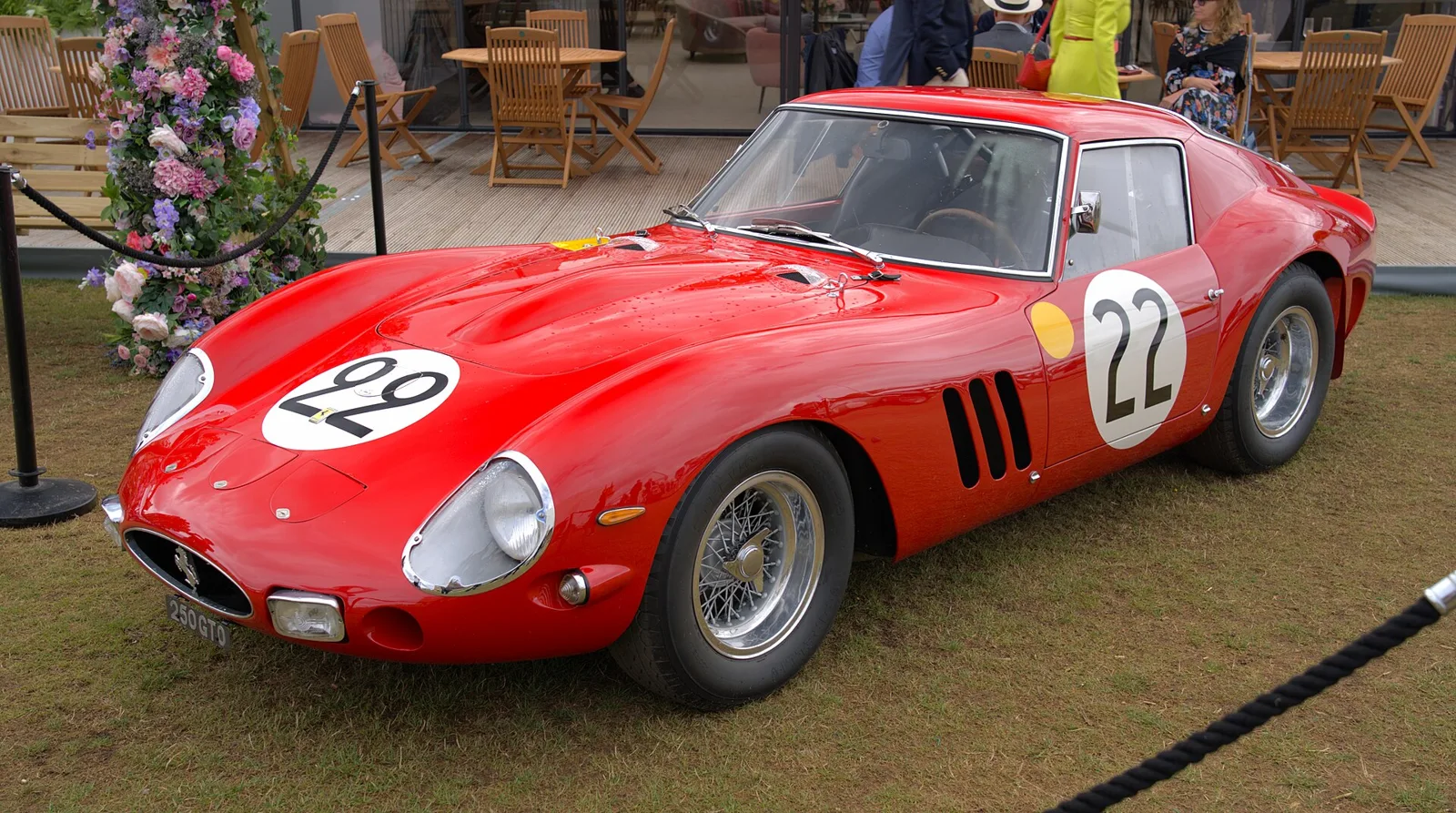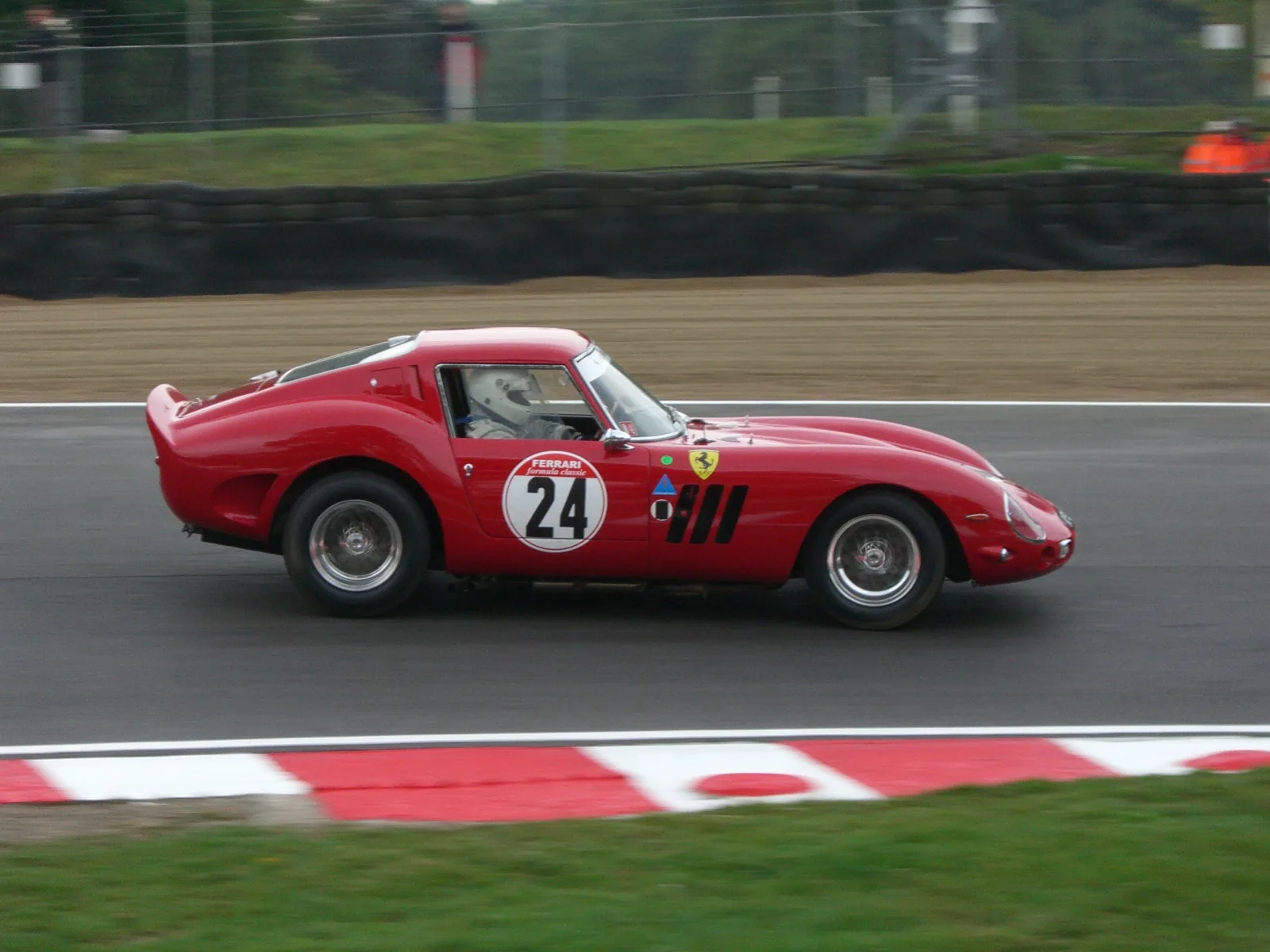
Only two or three cars were built in 1962 and 1963, each with a 4.0-litre V12 and a body close to the 250 GTO, for a racing calendar that had little room for them.
Built only two or three times in 1962 and 1963, the Ferrari 330 GTO had a 4.0-litre V12 adapted from the 400 Superamerica road car, a body close to the 250 GTO and a racing purpose aimed at the 1962 prototype trophy.
The Ferrari 330 GTO was a front-engined racing coupe that Ferrari built in only two or three examples in 1962 and 1963. Its bodywork followed the 250 GTO closely, but it carried a larger 4.0-litre V12 from the 400 Superamerica road car. Few events were open to it, and today it is among the most expensive collector's cars.
Where did the 330 GTO come from?
Ferrari's works built the 330 GTO in 1962 and 1963, in two or three examples depending on how one counts. Its body largely resembled the 250 GTO, but its 4.0-litre engine was adapted from the 400 Superamerica road car, which suited the prototype class of up to 4.0 litres.
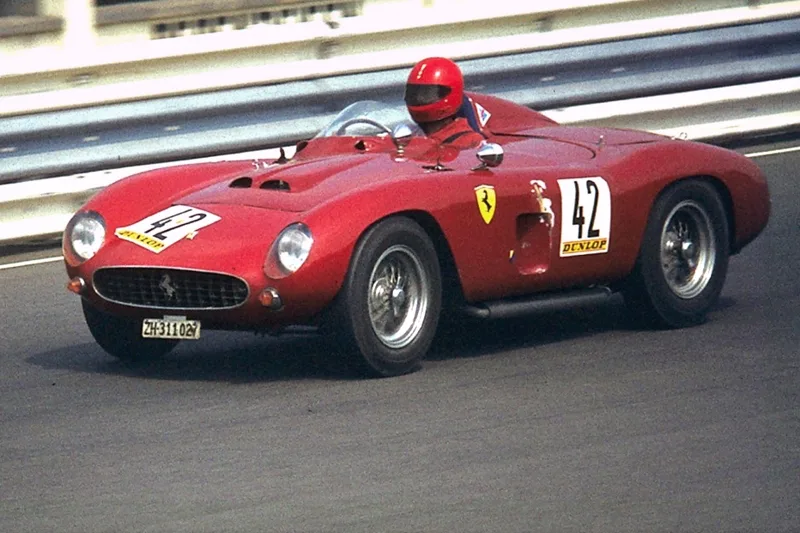
Ferrari had been building large-displacement front-engined racing coupes since 1951, beginning with the 340 America Vignale Berlinetta, chassis 0082A. The line first ended in 1955 with a 375 MM Pinin Farina Berlinetta and the one-off 410 Sport Berlinetta, after which Ferrari concentrated on open spiders.
From 1958 the FIA sports car championship capped displacement at 3.0 litres, which for the time being shut out larger sports cars. The position changed for the 1962 season in several respects.
A front-engined V12 racer built in two or three copies, for a rulebook that had little room for it.
How did the 1962 rule changes shape the car?
For 1962 the FIA admitted to its world championship only cars homologated in the near-series Gran Turismo category, with 3.0 litres still the top limit. Four major organisers of traditional world championship races announced a Sports Car Cup for prototypes up to 3.0 litres, alongside the FIA categories.
The organiser of the 24 Hours of Le Mans, the Automobile Club de l'Ouest, wanted still more powerful racers and created the Challenge Mondial de Vitesse et d'Endurance trophy for prototypes of up to 4.0 litres. Competing manufacturers had to race in four long-distance events, at Sebring, the Targa Florio, the Nurburgring and Le Mans.
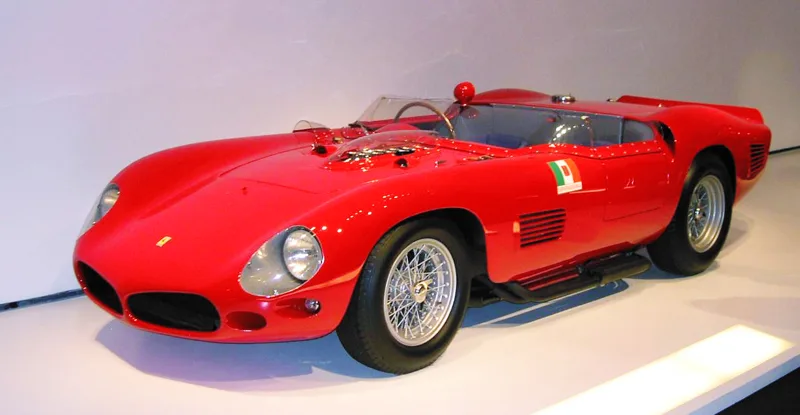
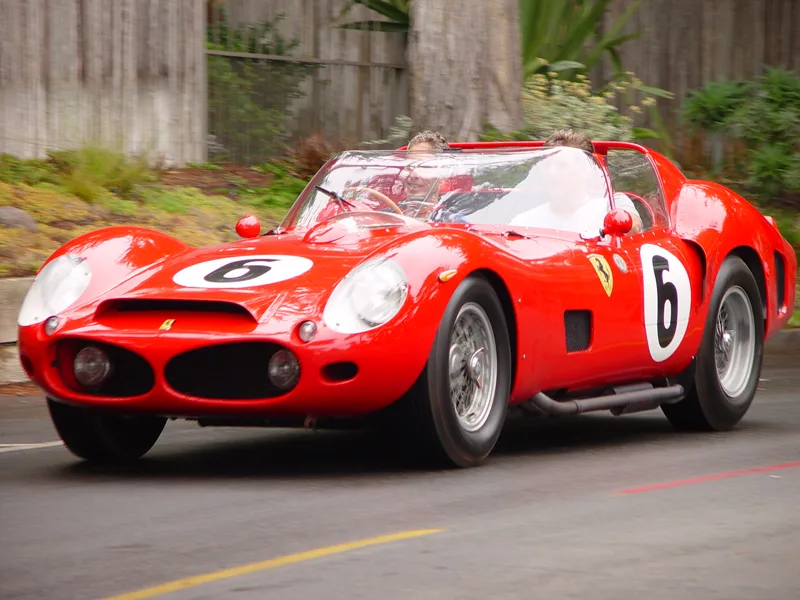
Against that background Ferrari created the open 330TRI, with a 4.0-litre V12 front engine, for the Challenge and the prestigious Le Mans overall win. The 330 GTO series was built alongside it.
Where did the 330 GTO sit in Ferrari's line-up?
Ferrari already had race-winning GT cars up to 3.0 litres. They included the 250 GT Berlinetta SWB from 1959 (chassis numbers from 1539GT), the 250 GT California Spyder SWB from 1960 (chassis numbers from 1795GT) and, above all, the new 250 GTO (chassis numbers from 3223GT). Private teams could also run these cars alongside the works team.
In the prototype class of up to 3.0 litres Ferrari tried several concepts. Three 250TRI/61 Fantuzzi spiders had a V12 front engine, and six Fantuzzi spiders had a longitudinal mid engine. Depending on the engine they were called 196SP, 246SP, 286SP, 248SP and 268SP. The V6 variants displaced 2.0, 2.4 and 2.8 litres, and the new V8s 2.4 and 2.6 litres.
Their number and performance made them almost unbeatable and the first candidates for overall wins. Even so, Ferrari went for the 4.0-litre class with the 330TRI and the 330 GTO, aiming at the Challenge trophy and the Le Mans overall victory.
Why is the name 330 GTO misleading?
The name was not settled at the time, because the racing department Scuderia Ferrari and the factory used no single designation for the new model. The 330 refers to the rounded displacement per cylinder in cubic centimetres, a convention shared with the 250 and other 330 models.
The GTO part was borrowed from the outwardly similar 250 GTO, and it misleads in two ways. The car was not a near-series GT vehicle in the sporting-regulation sense, and given its construction it could not, and was not meant to be, homologated as one ('Omologato').
The civilian top model, the 400 Superamerica, took its name from its total displacement in centilitres.
How was the V12 engine built?
The 330 GTO used a modified V12 from the 400 Superamerica, mounted longitudinally at the front with a 60-degree bank angle. Its aluminium crankcase and head, two valves per cylinder and six Weber carburettors gave about 390 PS (287 kW; 385 hp) at 7,500 rpm.
Displacement came to 3,967.45 cc (242.1 cu in). A bore of 77.0 mm and a stroke of 71.0 mm gave 330.62 cc (20.2 cu in) per cylinder, which is where the model number comes from. The compression ratio was 8.8:1.
Each cylinder had one spark plug and each bank its own ignition coil, and a dry-sump system supplied the engine oil. Power went through a multi-plate dry clutch into a hand-shifted four-speed with reverse, bolted straight to the engine, and a short propeller shaft carried it to the conventional differential at the rear.
Specifications at a glance
| Specification | Figure |
|---|---|
| Engine | V12, 3,967.45 cc (242.1 cu in), 60-degree bank angle |
| Output | About 390 PS (287 kW; 385 hp) at 7,500 rpm |
| Compression ratio | 8.8:1 |
| Wheelbase | 2420 mm (95.3 in); 2450 mm (96.5 in) quoted for the 1963 car |
| Dimensions | 4360 x 1675 x 1245 mm (171.7 x 65.9 x 49.0 in) |
| Dry weight | 950 kg (2,094 lb) |
| Top speed | About 280 km/h (174 mph), depending on gearing |
| Fuel tank | 140 litres, at the rear |
Chassis, suspension and brakes
The chassis was a tubular steel frame, with two longitudinal members and cross members of oval-section tubing. At the front, independent suspension with wishbones used coil-sprung telescopic dampers, an anti-roll bar and worm-and-roller steering. The rear was a classic solid axle on semi-elliptic leaf springs, with telescopic dampers, and all four wheels had discs.
It is often assumed that the car used the lengthened chassis of the 250 GTO. In fact the 4.0-litre engine's different crankcase gave different dimensions and weight, so Ferrari used adapted chassis from the road sports car 400 Superamerica, designated Tipo 538.
Chassis 3765LM carried the Tipo 538/566 designation, a lighter and stiffer variant made for Le Mans and developed shortly before the 330 TRI/LM. Chassis 4561SA used a largely unchanged Tipo 538. For the oldest candidate, chassis 3673, there is no firm sign of the LM setup, and it still officially carries the SA code.
Chassis 3765LM and 3673 were built for left-hand drive, while 4561SA had right-hand drive. Expressed in the radial sizes used now, the period tyres were roughly 195 R 15 up front and 225 to 235 R 15 at the back.
Who designed the body, and why does its shape matter?
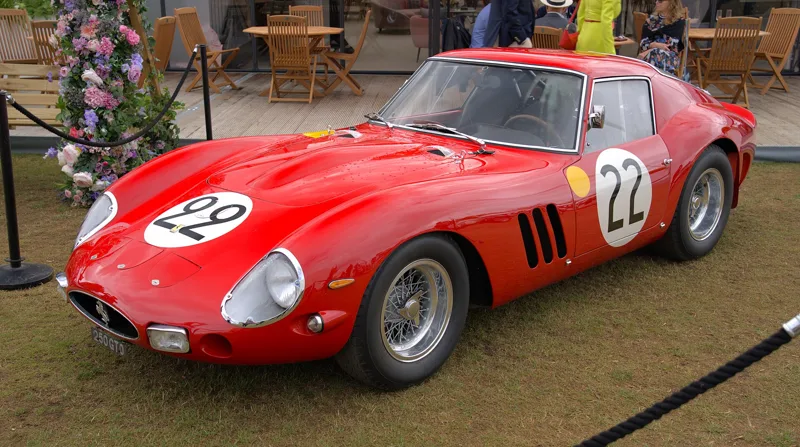
Giotto Bizzarrini led the body development under Enzo Ferrari's personal supervision, and the closed shape came from tests in the wind tunnel of the University of Pisa. Closing the body cut drag and added downforce, which helped both top speed and cornering stability. The nose was low and rounded, and the tail was a cut-off Kamm tail.
The body was built in Maranello by Carrozzeria Scaglietti, where Sergio Scaglietti put Bizzarrini's ideas, already checked in the wind tunnel, into practice. It was the first Ferrari body designed deliberately around aerodynamics. The tail's name honours the German aerodynamicist Wunibald Kamm.
Because the 400 Superamerica chassis was slightly longer and wider, the body was altered to suit it. The front ended a few centimetres further forward, and the bonnet bulge grew longer and higher to clear the taller engine. The 250 GTO, on which the body largely drew, had 39 examples built in the following years.
Under the regulations the model was designed as a two-seater, and Ferrari experimented with various air inlets and outlets on the nose, bonnet and wings to improve airflow and engine cooling.
How did the 330 GTO race?
The works car debuted at the 1,000 km race at the Nurburgring on 27 May 1962, then at Le Mans on 23/24 June. Few events suited four-litre prototypes, and the 3.0-litre prototypes were usually ahead, so the car found little use.
For 1963 Ferrari developed the 330 LMB as an alternative or successor. Its engineering was very close to the 330 GTO, but its tail was shaped for better airflow and resembled that of the 250 GT Berlinetta Lusso.
Work continued on another 330 GTO, chassis 4561SA, which was not finished until 23 September 1963, after the four prototype races of the season were over. The era of large front-engined racing coupes ended in 1964 with the 330P, a 4.0-litre V12 mid-engined car that developed the 250P and 275P further.
In private hands the older car raced in hill climbs, road rallies and smaller circuit events, and it entered the Targa Florio of 1965. The younger car returned to historic racing in 1988/89 and again from 1999 to 2011, despite its exorbitant value.
What happened to chassis 3765LM?
Chassis 3765LM was completed in May 1962 and was the only 330 GTO that Scuderia Ferrari ever ran as a works car at Le Mans. It retired after about six hours, when it left the track into deep gravel and sand and its engine overheated.
In practice Mike Parkes and Lorenzo Bandini had been second fastest, behind the 330 TRI/LM of Olivier Gendebien and Phil Hill. Late in 1962 Ferrari sold the car to Pietro Ferraro, an entrepreneur and driver who mostly raced in hill climbs and sometimes used the pseudonym 'Montin'.
In 1964 Ferdinando Latteri bought the car and had a 3.0-litre V12 from a former 250P test car fitted, along with its flanged five-speed gearbox. He raced it in Italy in 1965/66, including the Targa Florio in May 1965, and sometimes won overall or class victories in lower-class events. In 1967 it went through the Ferrari works for 8,000 US dollars and was painted yellow for its move to the United States.
The car was restored, appeared at a Concours d'Elegance in 1973, passed through several American owners and, since 1985, has belonged to the collector James Jaeger of Cincinnati, Ohio. It has since been restored to the highest level and painted red again.
It has appeared at major beauty contests, placing second in class at the Pebble Beach Concours d'Elegance in 2011 and winning Best of Show at the Amelia Island Concours d'Elegance. Jaeger also owns a race-prepared 4.0-litre V12, which he sometimes shows with the car, while the car itself still has the smaller 3.0-litre engine fitted in 1964.
Compared with chassis 4561SA, this example has two side ventilation slots behind the front wheels rather than three, and small rectangular fog lamps set flush into the nose.
What became of the other two cars?
Chassis 4561SA was finished on 23 September 1963, after the prototype races of that season were already over, and it never went out as a works racer. A senior Ferrari manager used it briefly before a British driver bought it and ran it in several smaller races.
Chassis 4561SA differs from 3765LM in some details. It used a largely unchanged Tipo 538 chassis, as on the 400 Superamerica, and it is the car with right-hand drive.
Chassis 3673 is the disputed one. Earlier accounts called it a one-off Ferrari 400 Superamerica GT from the start. Newer research suggests it was first built as a 330 GTO and raced as a works car, until a road accident badly damaged it; Willy Mairesse, a Ferrari works driver, was behind the wheel.
Rebuilding it from scratch left it unfit for professional racing. It was fundamentally converted in the 1980s, and it still exists.