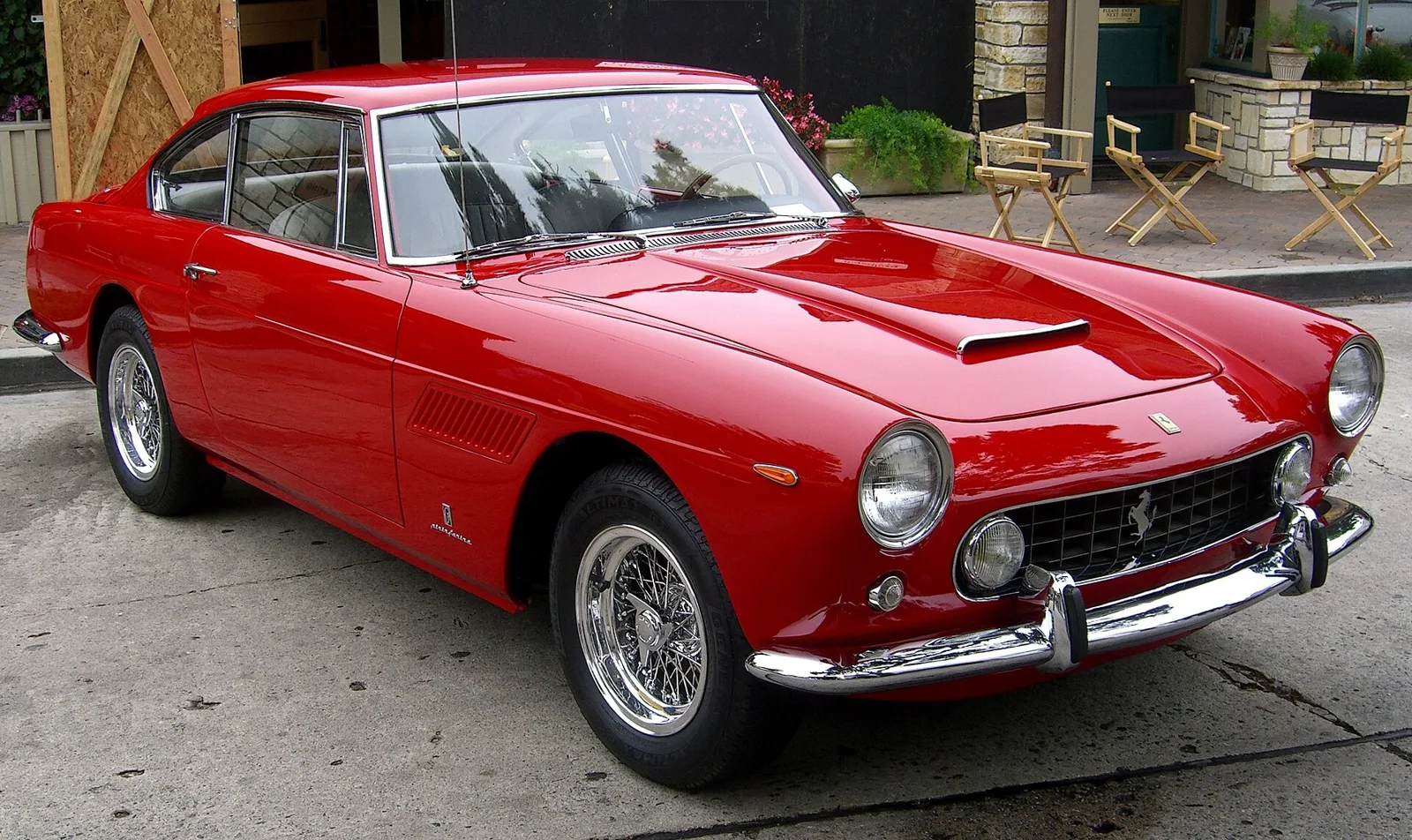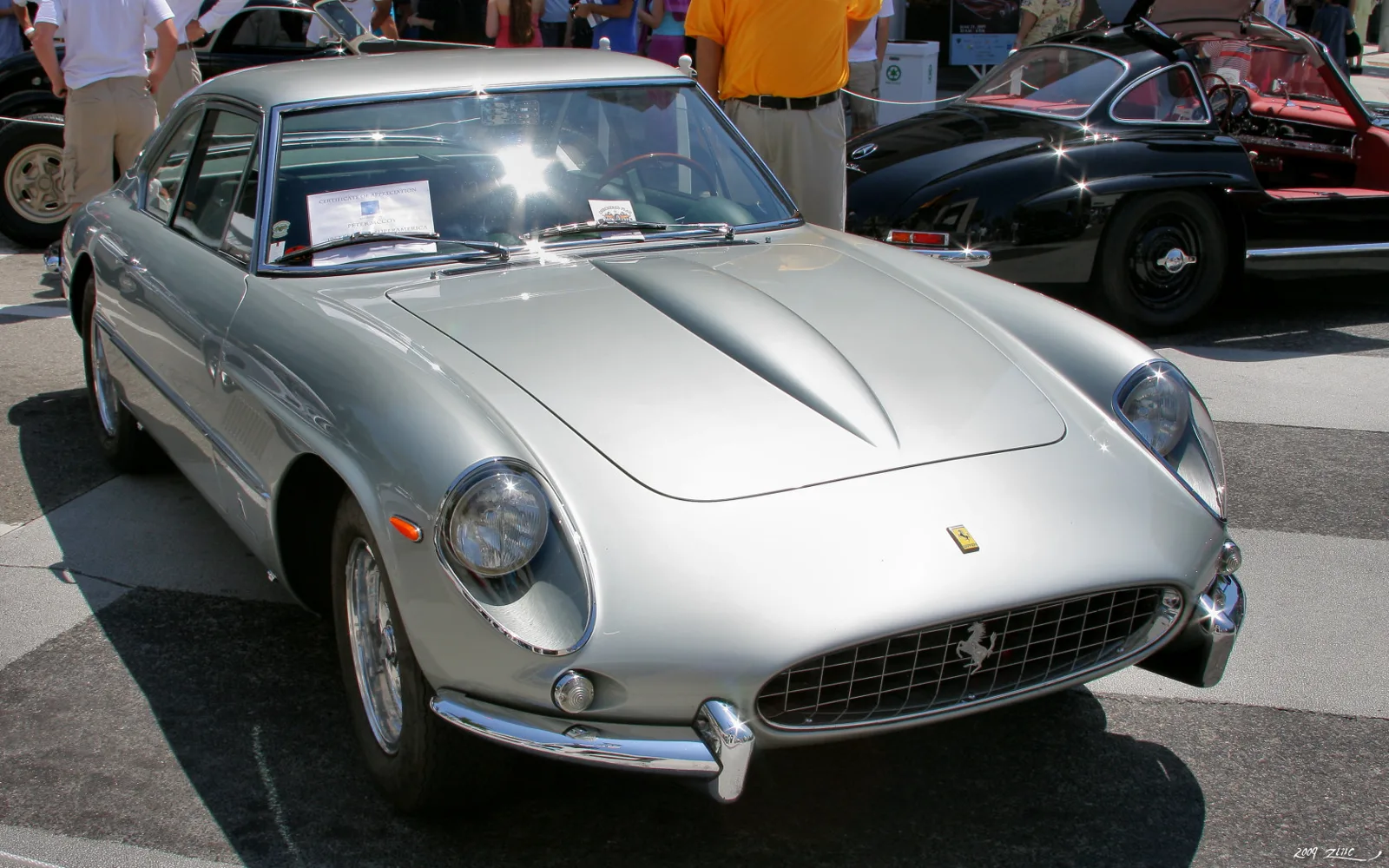
A new V12 sports car for the American market, built from 1959 to 1964 with Pininfarina convertible and coupe bodies.
Built from 1959 to 1964 in two series, the Ferrari 400 Superamerica was a V12 sports car aimed at the American market. Most examples wore Pininfarina bodies, its engine initially produced 294 kW, and the 500 Superfast succeeded it in 1964.
The Ferrari 400 Superamerica was a sports car built by Ferrari in two series between 1959 and 1964. It belonged to the Ferrari America range, aimed at the North American market, and it came as a convertible or a coupe, most often with Pininfarina bodies. Its engine was new rather than a variant of the older long-block design used in its predecessors. Pininfarina styled most of its bodies, while Scaglietti built two cars of its own.
Its successor, the 500 Superfast, was developed from the Superfast IV and came onto the market in 1964. Pininfarina had meanwhile derived several Superfast show cars from the 400 Superamerica in the early 1960s.
Why did Ferrari build large, powerful cars for America?
Ferrari's 250 series was aimed mainly at Europe and used small, highly tuned engines. North America was economically important, but buyers there showed little interest in those cars and wanted large, high-displacement engines. Ferrari therefore kept big, especially powerful models in its range alongside the 250 series, built in very small numbers, mostly for export.
The volume model from 1958 was the 250 GT Coupe, replaced in 1960 by the 250 GT 2+2. Some members of the 250 family were built in three-figure numbers, which marked the company's move from specialist to series manufacturer.
A V12 built for the American market, bodied by Pininfarina and open to customer requirements.
What came before the 400 Superamerica?
The 342 America (1952 to 1953), the 375 America (1953 to 1954) and the 410 Superamerica (1955 to 1959) came first. All were powered by large, very powerful long-block V12 engines based on a design by Aurelio Lampredi. The 400 Superamerica arrived in autumn 1959 as a new car in the same range, despite a similar model name.
Why is the model number unusual?
Ferrari usually derived a model's number from the rounded displacement of a single cylinder. The 400 Superamerica's code comes instead from a tenth of its total displacement. The Superamerica suffix had already been used on the predecessors, and it recorded the main sales market of the range.
How did the engine work?
The Tipo 163 is a 60-degree V12 displacing 3,967.44 cc (242.1 cu in), with a bore and stroke of 77 x 71 mm and a compression ratio of 8.8:1. Each cylinder has one inlet and one exhaust valve, an overhead camshaft serves each bank, and three Weber twin-barrel carburettors prepare the mixture.
Output was first quoted at 294 kW (400 PS; 394 hp) at 6,750 rpm. Later versions produced 250 kW (340 PS; 335 hp) at 7,000 rpm. Power went through a hand-shifted four-speed gearbox with overdrive, and the engine's design mixed Colombo and Lampredi features.
Where else did the Tipo 163 engine appear?
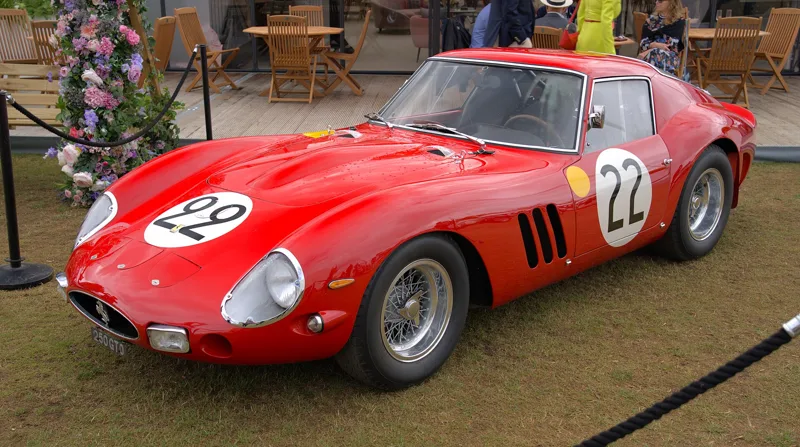
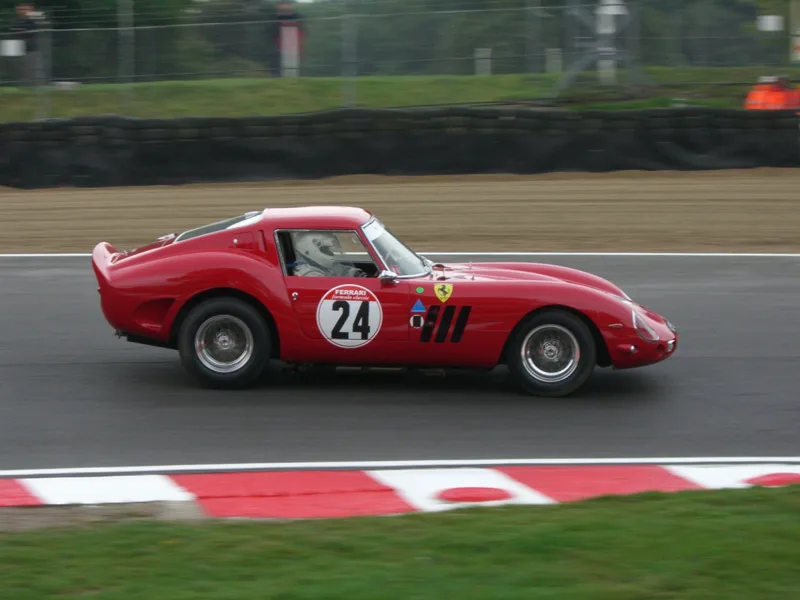
The engine was also fitted to other Ferraris, including the racing sports cars 330TRI and 330 GTO. In the winter of 1961-62 three prototypes of the forthcoming road-going 330 America received it, but the production 330 America was given the similar-sized Tipo 209 instead, which was substantially redesigned.
How was the chassis set up?
The frame is a welded steel tube structure, internally designated Tipo 538. Its design is similar to the 410 Superamerica's, and the one-off Superfast II shares the same frame. The front wheels are independently suspended on double wishbones with coil springs, while the rear has a rigid axle with longitudinal leaf springs and two trailing arms.
The two series differed mainly in their dimensions. Ferrari built one from 1959 to 1962 and the other from 1962 to 1964.
Hydraulic telescopic dampers are fitted front and rear, and all four wheels have servo-assisted disc brakes. The first series rode on a wheelbase of 2,420 mm (95.3 in), clearly shorter than the 2,600 mm (102.4 in) of the parallel volume model, the 250 GT 2+2. That made the car look more compact and powerful. With the second series from the 1962 model year, the wheelbase was lengthened to 2,600 mm (102.4 in), matching the volume models.
Was the 400 Superamerica first built as a convertible?
Series production began in 1960 with convertibles, and the body drew on the 250 GT Spyder California, a Scaglietti design from the same period. Closed Pininfarina versions followed from 1961, and roughly ten convertibles were built, six of them on the short first-series wheelbase.
The 250 GT Spyder California had a 2,400 mm (94.5 in) wheelbase from 1960, which matched the 400 Superamerica's short version. The two open Ferraris only looked different again when the second series stretched the 400 Superamerica to 2,600 mm (102.4 in).
What was the Coupe Aerodinamico?
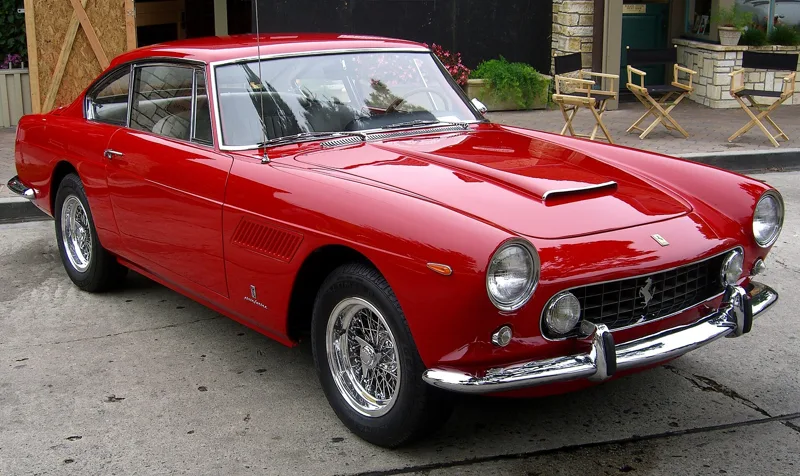
The Coupe Aerodinamico was the closed version of the 400 Superamerica, introduced in 1961. It took its styling from the Superfast II show car that Pininfarina had shown at the Turin motor show in 1960. The 400 Superamerica body is almost identical to the Superfast II's, except that the show car's pop-up front headlamps did not make it into production.
The body is a two-door coupe with a semi-fastback profile. Its tail drops away towards the bumper line, where oval-framed lamps are set, and a horizontal light edge runs along each flank. The first-series coupes came with different front ends. Most had recessed headlamps under an acrylic cover and an oval trim around the air intake, while the others had open headlamps set further forward. Second-series coupes had no covers over the rear wheels.
Did Scaglietti build its own 400 Superamericas?
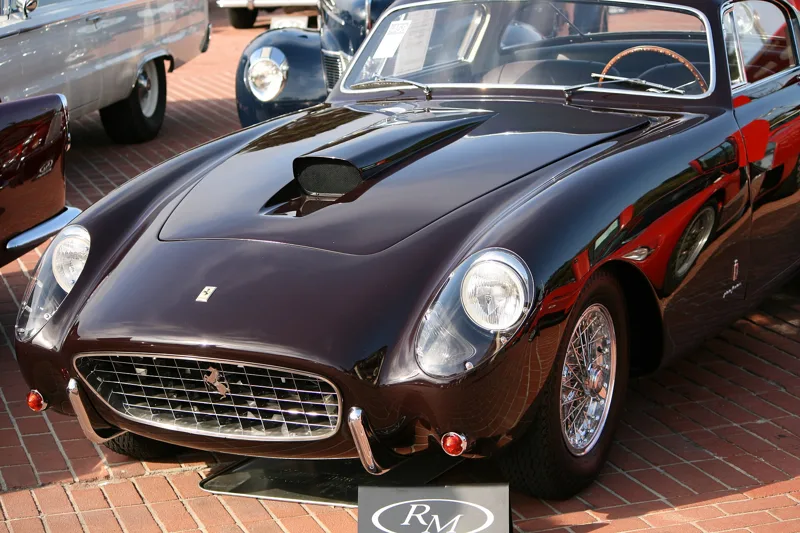
Scaglietti, the Maranello coachbuilder, built two 400 Superamericas with bodies of its own, one in 1960 and one in 1962. Both were based on the short first-series chassis. The 1960 car, chassis 2311SA, was a two-seat spider with far-set headlamps under acrylic covers, and its body matched the 250 GT Spyder California almost in every detail.
Scaglietti built that California model in about 105 examples between 1957 and 1963. The 2311SA was commissioned by the French entrepreneur Michel Paul Cavallier and sold after three years to the British Ferrari dealer Maranello Concessionaires. It changed hands many times and has been in the USA since 1986. The 1962 car, chassis 3673SA, was a two-door fastback coupe whose styling took cues from the 250 GTO.
Which special variants were built?
A special variant was chassis 1517SA, built in 1960 for Gianni Agnelli with its own Pininfarina notchback body. It was shown at the Turin motor show in November 1959, and it was the first car to use the 400 Superamerica's technology. Anita Ekberg owned it at one stage, and it has been in the USA since 1969.
Agnelli's notchback had a panoramic windscreen and a slight step in its rear wings. In 1961 Agnelli also had an identical Pininfarina body fitted to the chassis of a Maserati 5000 GT, numbered AM-103-008. That car ran for years without any marque emblem and still exists, held by a collector in the USA. Pininfarina also used the 400 Superamerica as the basis for several show cars, shown in the early 1960s as the Ferrari Superfast.
How many 400 Superamericas were made?
The exact production volume has not been established beyond doubt. Two cars with Scaglietti bodies are on record, and the Pininfarina figures vary across the literature, so any single total should be read with caution.
Specifications at a glance
| Specification | Detail |
|---|---|
| Built | 1959 to 1964, two series |
| Engine | Tipo 163 V12, 3,967.44 cc (242.1 cu in), 60-degree bank angle |
| Compression ratio | 8.8:1 |
| Power | 294 kW (400 PS; 394 hp) at 6,750 rpm; later 250 kW (340 PS; 335 hp) at 7,000 rpm |
| Gearbox | Hand-shifted four-speed with overdrive |
| Wheelbase | 2,420 mm (95.3 in) first series; 2,600 mm (102.4 in) second series |
| Front suspension | Double wishbones with coil springs |
| Rear suspension | Rigid axle, longitudinal leaf springs, two trailing arms |