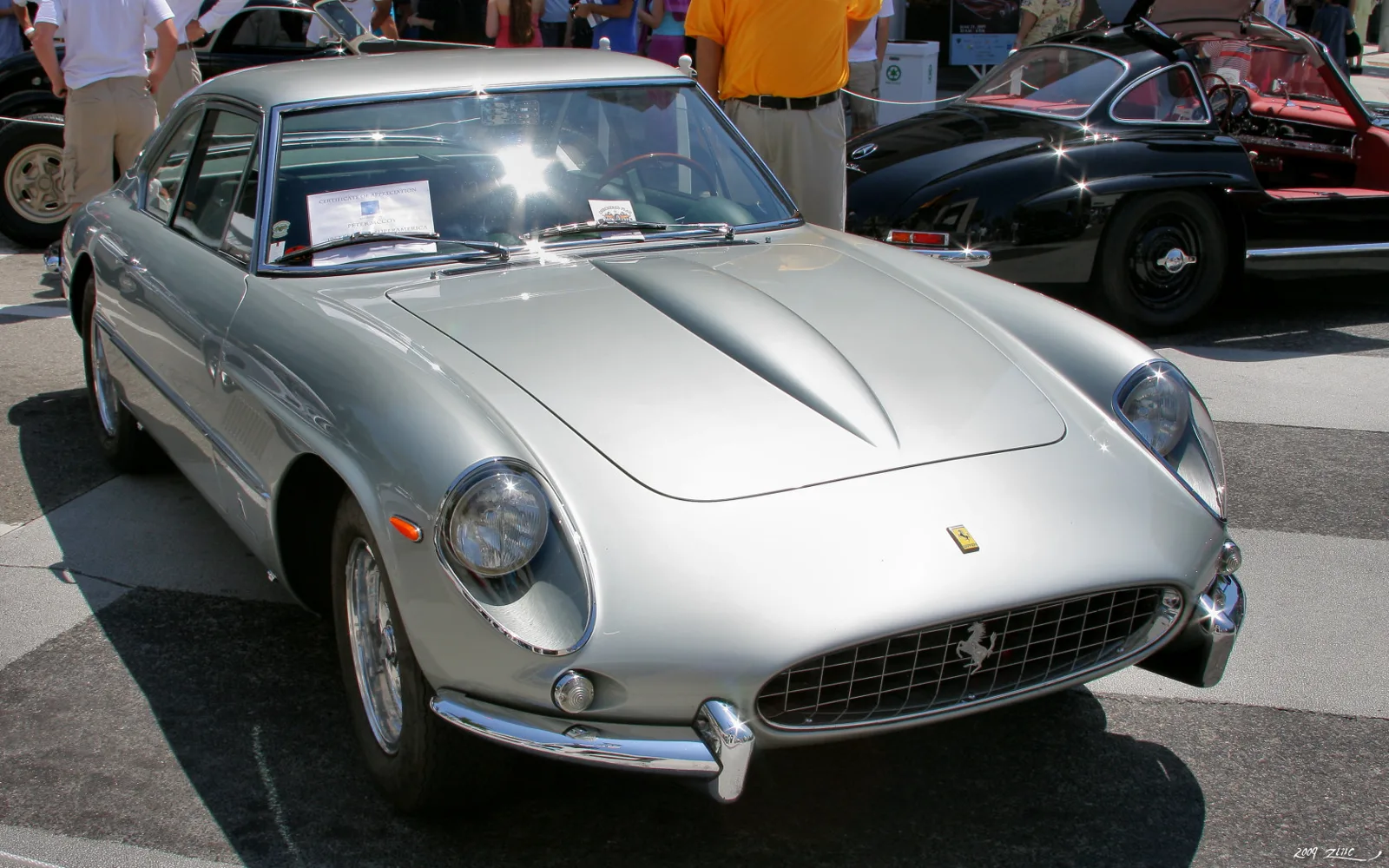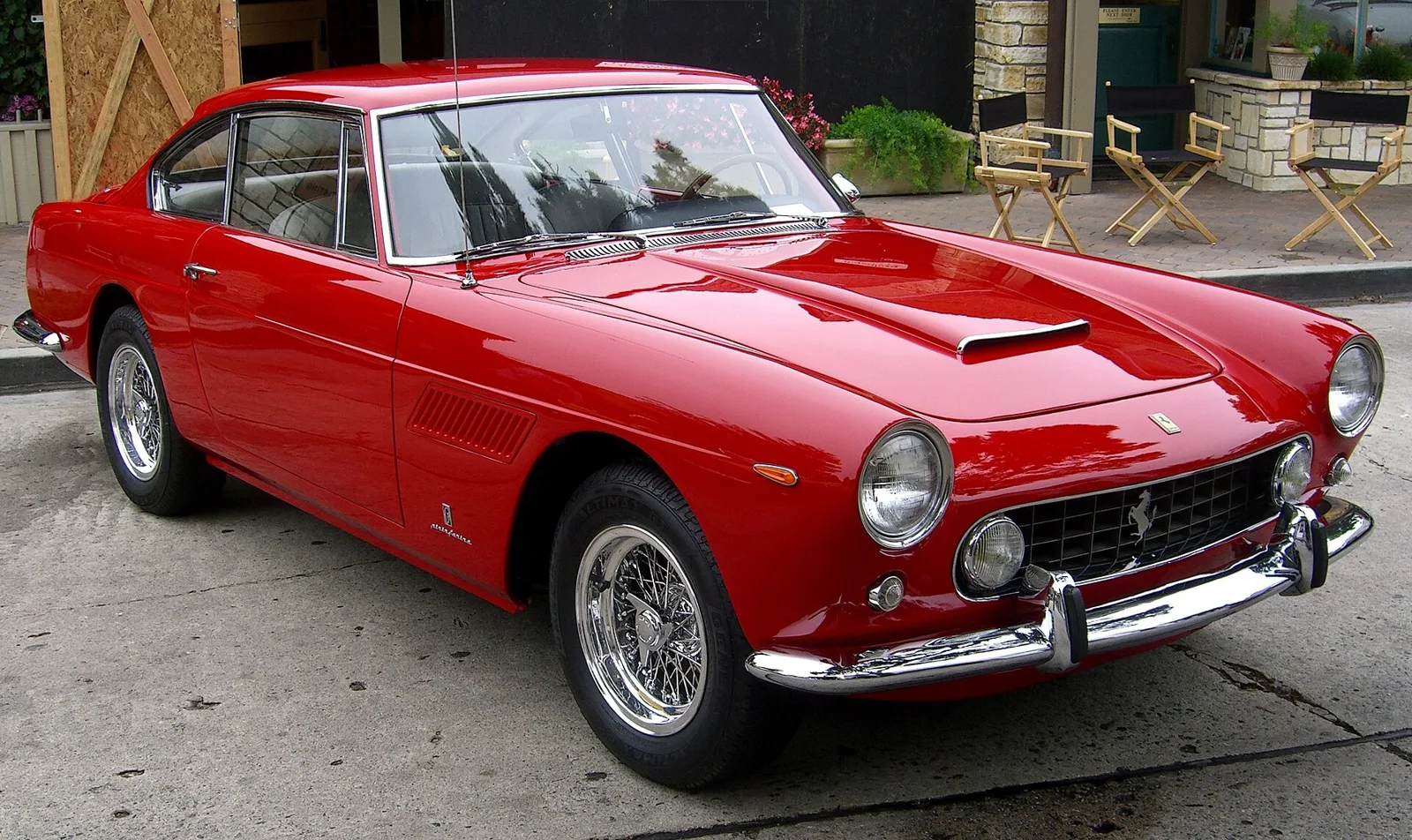
Pininfarina styling, a 240 PS V12 and a police career in Rome made the 250 GT 2+2 a landmark four-seat Ferrari from 1960 to 1963.
The Ferrari 250 GT 2+2 was a sports coupe from the Modena company, built from 1960 to 1963. It was Ferrari's first series-produced four-seater, and it used a 2,953 cc V12 making 240 PS (177 kW), with bodywork by Pininfarina.
Ferrari built its road cars in small numbers at first, and the 250 GT 2+2 became the most successful single model it had made up to then. It arrived in 1960 with room for four, a Pininfarina body and a V12 that traced back to a 1947 design. Its later life took in police service in Rome, and model makers still turn out kits of its police version.
Where did the 250 GT 2+2 come from?
The 250 GT 2+2 came from a family that Ferrari launched in 1953 as an alternative to its large 340 and 375 models, which were often exported overseas. It was the first series-built Ferrari with four seats, and it was larger than the 250 GT Coupe that it replaced.
Before the 250 family, Ferrari had produced mostly one-off cars. Road production started slowly: the 250 Europa and the 250 Europa GT were each built in fewer than 100 examples. The 250 GT, bodied by Boano and Ellena and presented in 1955, was the first to reach low three-digit numbers.
The 250 GT Coupe Pininfarina of 1958 was built about 350 times in two years. That success made Ferrari a genuine series manufacturer. In 1960 the larger 250 GTE 2+2 replaced the pure two-seat coupe, and it pulled in a new kind of buyer, including well-off family men.
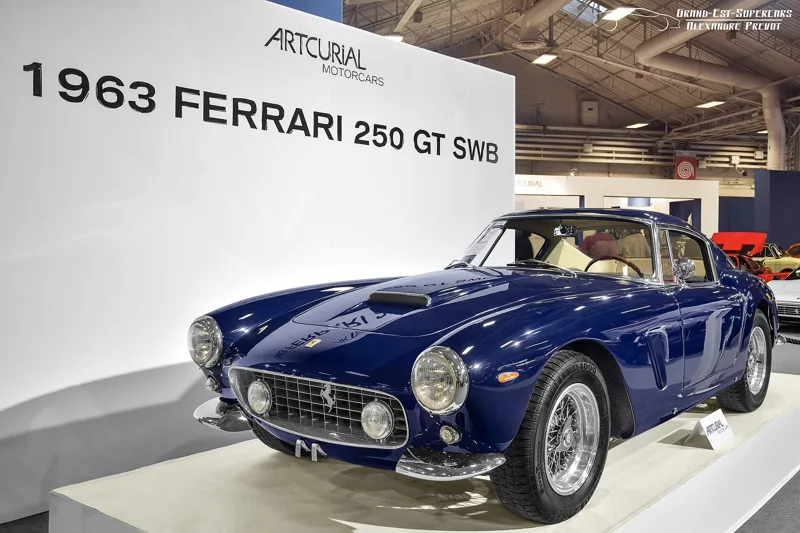
Alongside it came more sporting cars: an open Pininfarina cabriolet, the shorter Berlinetta SWB with an aluminium body, and the California Spyder, which was the open counterpart to the Berlinetta SWB.
The 2+2 was a commercial success. From 1963 Ferrari began gradually replacing the 250 family with the more powerful 330 family. Its 2+2 successor began as the interim 330 America, which shared the 250's body, until the 330 GT 2+2 arrived with a body of its own.
A four-seat Ferrari with a 240 PS V12 and Pininfarina styling that went on to serve Rome's police.
What did the 250 GT 2+2 look like?
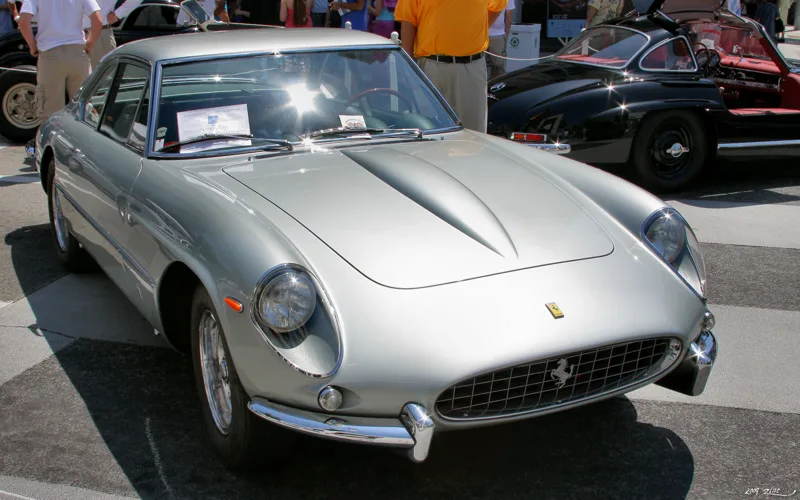
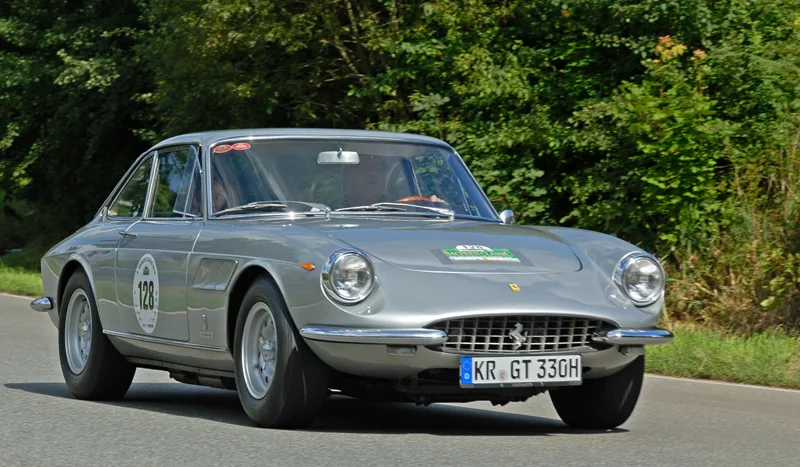
Pininfarina designed the body, which was entirely new and reused no details from the predecessor. A semi-fastback roof and a horizontal beltline gave the car a clean profile. It measured 4,700 mm (185.0 in) long, more than 300 mm longer than the 250 GT Coupe, and it was 60 mm wider.
The design was tested in the wind tunnel of the Politecnico di Torino. Each side had three windows, counting the triangular window in the door, and the tail lights sat in chrome frames set into the ends of the rear wings.
Opinions still differ. Some judge it the most beautiful road Ferrari built up to then, and its shape has been called timelessly elegant, though at times also rather staid. Some observers at the time thought it looked considerably more massive than its predecessor.
The body was steel throughout. Unlike the sportier variants, no examples were built with aluminium bodies, and the design changed little during production.
How did the V12 work?
The engine was a short-block V12 that followed a 1947 design by Gioacchino Colombo. Its 2,953 cc (180.2 cu in) displacement, 60-degree bank angle and three Weber double carburettors gave 240 PS (177 kW) at about 7,000 revolutions per minute.
Each bank had one chain-driven overhead camshaft, and each cylinder had one inlet and one exhaust valve. In this version the spark plugs sat on the outside of the V, not on its inner sides as in earlier versions of the Colombo engine.
The engine was designated Tipo 128. The first cars had the Tipo 128E, which was later replaced by an F version. Early cars also used a hand-shifted four-speed gearbox with an electrically engaged overdrive from Laycock-de Normanville, and later cars moved to a manual five-speed.
What was the chassis like?
The chassis kept the Tipo 508 layout, with an E suffix, built on a frame of oval steel tubes. The wheelbase was 2,600 mm (102.4 in), the same as the predecessor's. The front wheels had double wishbones, coil springs, hydraulic Houdaille dampers and an anti-roll bar.
The rear used a live axle on two lengthwise leaf springs, with two trailing arms and telescopic dampers. Every model had disc brakes on all four wheels.
To make room for four people, the engine and gearbox were moved 20 cm forward compared with the predecessors. That gave it a longer overhang than the earlier 250 GTs.
Which special versions were built?
The 250 GT 2+2 was largely standardised, and only a few special versions appeared during production. Two police cars for Rome and a Pininfarina special from 1961 stand out among them.
Chassis 2821GT received an individual body from the factory in 1961. Its front matched the standard car up to the doors, but the tail, with its sloping boot and tail lights integrated into the bumpers, was modelled on the 400 Superamerica. It had an older 128C engine at first, later a Tipo 128E, and its four-speed had no overdrive. The car was on show in London in October 1961, still survives, and fetched 2.3 million US dollars in 2014.
Did the 250 GT 2+2 serve the police?
Two 250 GT 2+2 cars went to the Roman police in 1962 and 1963. Ferrari fitted them with a blue light, a siren and a radio, and painted them in the dark blue of the Italian police, without changing the engineering.
The trigger was a high level of crime in Rome. The city's police chief and the Italian head of state, Giovanni Gronchi, concluded that the police needed fast cars able to chase fleeing gangsters.
The first car, chassis 3363, was delivered in 1962. Not long afterwards, policemen were test-driving it on a public road when a fatal accident occurred, and the car was completely destroyed.
The second car, chassis 3999, was delivered in 1963 to the Squadra Mobile of the Roman police, and it was very similar to the first. Its main driver, the policeman Armando Spadafora, became a celebrity in Italy, and he had trained with the racing driver Roberto Lippi in 1963. The car served until 1973, reportedly in several car chases, and it was auctioned that year. It still exists.
The police car gained international fame, and many makers sold model cars in different sizes. More than 40 years after it left service, kits of it are still being produced.
What became of the Fantuzzi NART Spyder?
A 1961 250 GT 2+2, chassis 2235, was originally delivered with a series body. It went to an Argentine customer through the American Ferrari importer Luigi Chinetti, and the customer crashed it after a short time. Chinetti took the car back and had Carrozzeria Fantuzzi of Modena design and build an entirely new body.
Fantuzzi's 1965 design was a two-seat spyder with a rounded body. A roll bar behind the seats picked up a feature of the Ferrari 250P racing sports car, while the chassis stayed unchanged. The name Fantuzzi NART Spyder referred to Chinetti's North American Racing Team.
The car was displayed in San Francisco in November 1965 and in New York the next April, though Chinetti did not sell it at first. In 1966 the engine was reworked to Testa Rossa specification. The car then passed through several American owners, and it underwent a complete restoration in the 1980s.
In August 2016 the NART Spyder sold at auction in Monterey for 1.1 million US dollars.
How was the 250 GT 2+2 used as a donor?
Some 250 GT 2+2 chassis ended up under other Ferrari models that were rebuilt or recreated. Piero Drogo's Carrozzeria Sports Cars was involved in two such projects, and in one case the body moved from one chassis to another.
The first project began with chassis 2735GT, a Berlinetta SWB that had received a special body from Carrozzeria Sports Cars in 1961. In 1980 the firm Grand Prix Metalcraft removed that body and built a Berlinetta SWB body that formally matched the factory car. The Drogo body was then fitted to a modified 250 GT 2+2 chassis, number 3611GT.
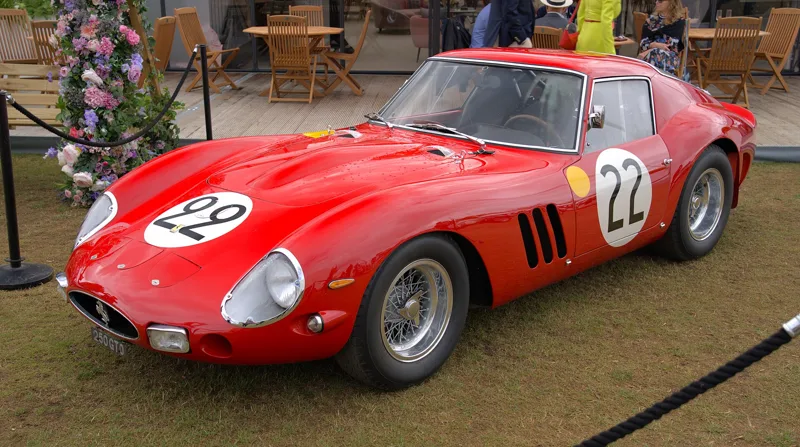
A similar history belongs to a 250 GTO, chassis 3445, bodied by Scaglietti in 1962. It initially went to the Scuderia Serenissima, and then to Ulf Norinder, a racer from Sweden. When it needed an overhaul in 1965, Scaglietti had no spare capacity, so Drogo reworked the car instead.
In the 1970s the British racer Robert Lamplough owned the car and damaged it in a road accident in 1976. The GTO chassis was repaired, and the Drogo body was replaced by a new GTO body in the original design. The Drogo body was then joined to a 250 GT 2+2 chassis, number 2423GT, which received a regular GT 2+2 engine.
Ferrari 250 GT 2+2 specifications
| Specification | Detail |
|---|---|
| Built | 1960 to 1963 |
| Engine | 2,953 cc (180.2 cu in) V12, Tipo 128 |
| Output | 240 PS (177 kW) at about 7,000 rpm |
| Carburation | Three Weber double carburettors, type 36DCF |
| Gearbox | Four-speed with overdrive, later five-speed manual |
| Wheelbase | 2,600 mm (102.4 in) |
| Length | 4,700 mm (185.0 in) |
| Width | 60 mm more than the 250 GT Coupe |
| Brakes | Disc brakes on all four wheels |
| Production | 950 cars in the lead figure; 954 built by Pininfarina |
| Successor family | 330, from 1963 |
Which gearbox did the 250 GT 2+2 use?
The first cars had a hand-shifted four-speed with an electrically engaged overdrive. Later cars used a manual five-speed. The Pininfarina Speciale, by contrast, kept a four-speed that had no overdrive.