The Rover P6 won the first European Car of the Year with a de Dion axle, while the rear-engined Imp fought the Mini with an aluminium engine and a troubled reputation.
The Rover P6, announced in October 1963, was a two-litre executive saloon with disc brakes all round and de Dion suspension, and it won the first European Car of the Year. The rear-engined Hillman Imp took on the Mini with an aluminium engine, but reliability problems hurt it.
Two British cars arrived within months of each other in 1963, and neither behaved like the cars around it. The Rover P6 had a de Dion rear axle, disc brakes on all four wheels and a body that borrowed ideas from a Citroen. The Hillman Imp carried an aluminium engine in the tail, the first British mass-produced car with an aluminium block and head.
One went on to become the first European Car of the Year and stayed in production until 1977. The other lost money for its maker, damaged its reputation and played a part in bringing down the Rootes Group.
What made the Rover P6 different from other British saloons?
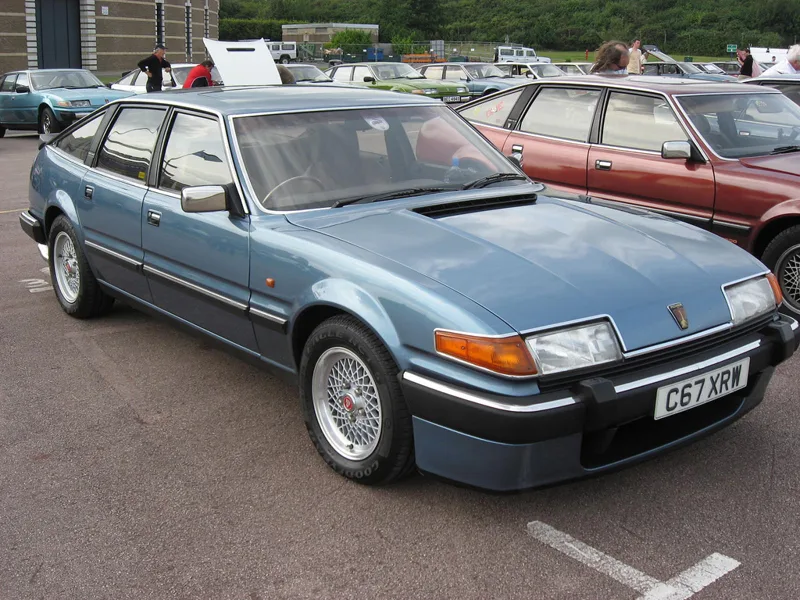
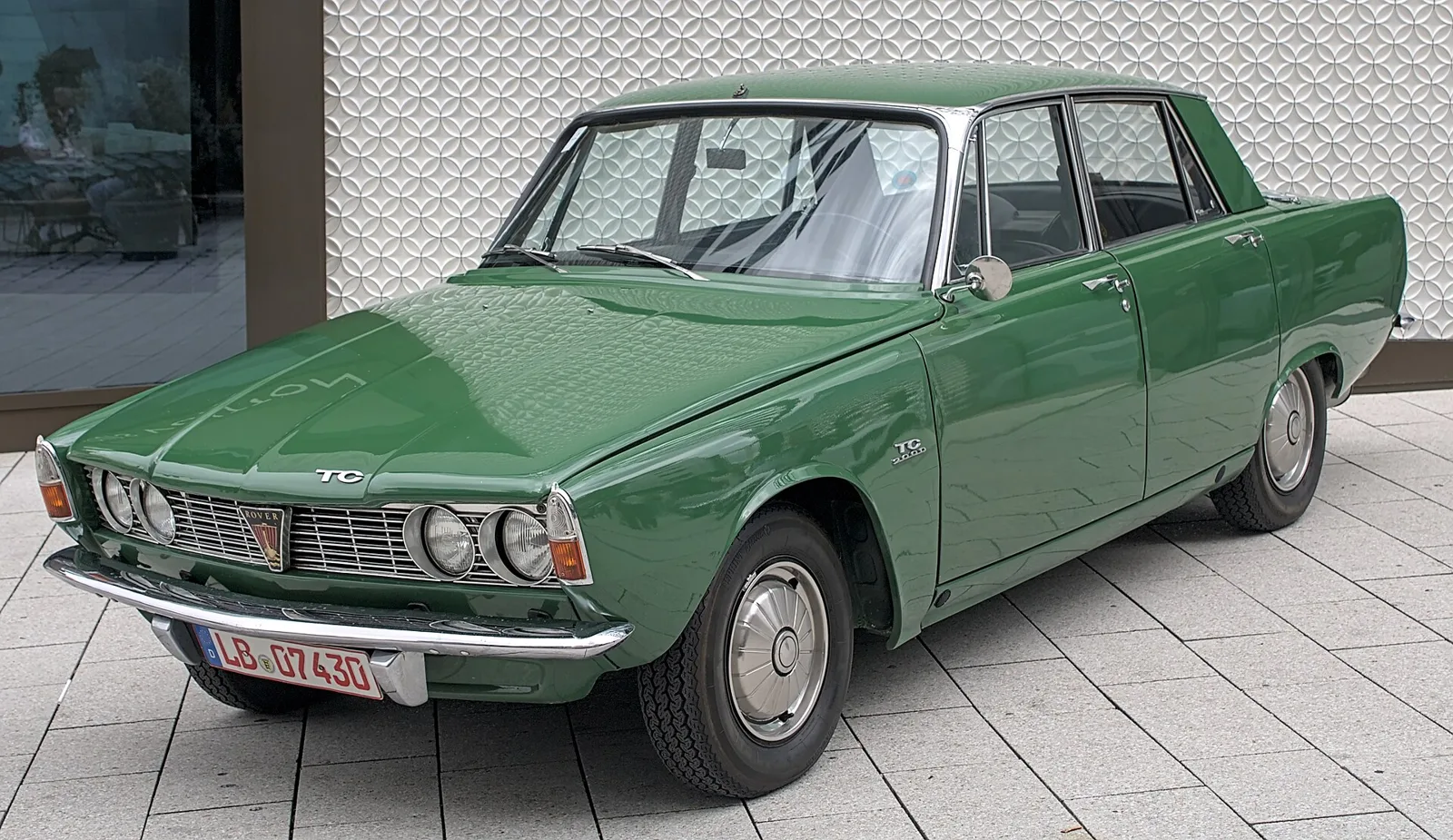
The Rover P6 was a clean-sheet design announced on 9 October 1963, marketed first as the Rover 2000, and aimed at a gap between small family saloons and big three-litre cars. It brought advanced engineering, including a de Dion rear axle and four-wheel disc brakes, to a mid-priced executive car.
Rover had spotted that younger, better-off professionals wanted more than a 1.5-litre Ford Consul or Singer Gazelle could offer, but not the bulk of a Wolseley 6/99 or Vauxhall Cresta. They also wanted lower running costs than a Jaguar Mark 2. The mood was set by recent European cars such as the Citroen DS and Lancia Flavia, and by the Chevrolet Corvair. Rover therefore planned a smaller, cheaper replacement for the old-fashioned P4, with a two-litre engine, and expected it to sell in far greater numbers. The larger P5 stayed on sale alongside until 1973.
The detail was clever. The unibody carried non-stressed panels bolted to a unit frame, an idea taken from the Citroen DS. The rear suspension used a de Dion tube made in two telescoping parts, so the wheels stayed vertical and parallel without the sliding splines that cause stiction in the drive shafts. At the front, a bell crank passed wheel movement to a horizontal spring mounted against the engine bulkhead. That layout left a wide engine bay, because Rover hoped to fit a gas turbine one day.
Safety was a selling point. The 2000 won industry awards for its safety design, and its front side lights carried a plastic prism that let the driver see the corner of the car at night and confirmed the lights were on. Sharp edges on the prisms failed approval rules in some export markets, including Germany, so a smooth lens was fitted there.
The styling came from David Bache, who drew on the Citroen DS body of sculptor Flaminio Bertoni and added a Kamm tail. The result had a big boot with little room in it, because the rear suspension took up much of the space. The car's closest rival at home was the Triumph 2000, launched one week after the Rover. Against the Triumph and the Citroen, the Rover's rear seat was tight, built for two rather than three.
The Imp shared a market with the Mini and a fate with Rootes.
Why did Rover build a square engine for the 2000?
Rover designed the 2000's engine for sustained high speed. Its bore and stroke were identical at 85.7 mm (3.4 in), which kept piston speeds and bearing loads low, and motorways with no upper speed limit were opening around the world. British saloons usually had long-stroke engines, a hangover from the pre-1947 horsepower tax.
The 2.0-litre engine (1,978 cc) produced about 104 bhp (78 kW). It was unusual for its overhead camshaft and for a flat cylinder head, with the combustion chambers cast into the piston crowns, a layout often called a Heron head. Think of it as moving the shaping work from the roof of the chamber to the top of the piston, which left the head with a perfectly flat face.
Rover later fitted twin SU carburettors and a reworked top end to create the 2000 TC, launched in March 1966 for North America and continental Europe, with about 110 bhp (82 kW) net. The company said that Britain's new 70 mph (112.65 km/h) blanket limit made the extra speed pointless at home, then relented in time for the London Motor Show in October 1966. The single-carburettor cars carried on as the 2000 SC.
How did the V8 change the Rover P6?
The 3500, introduced in April 1968, put Buick's compact aluminium 3.5-litre V8 under the bonnet, lifting top speed to 114 mph (183 km/h) and cutting the 0-60 mph time to 10.5 seconds, according to the manufacturer. A Motor road test of the automatic recorded 117 mph (188 km/h) and 9.5 seconds.
Rover bought the rights to the Buick design, which had come from the Buick Special, to set the P6 apart from the Triumph 2000. The gas turbine never reached the P6, but the engine bay was wide enough for the V8 once the front cross-member had been moved forward. An extra air intake under the bumper fed a bigger radiator, the battery moved to the boot, and the body was otherwise unchanged. The V8 went on to outlive its first home, the P5B, by more than thirty years.
Rover claimed the aluminium V8 weighed the same as the four-cylinder. Only the Jaguar 340, a run-out model advertised at a price 15 per cent lower, was substantially quicker among its price rivals. Early cars came only with a three-speed Borg Warner 35 automatic, until a four-speed manual 3500S arrived in 1971. The S stood for synchromesh, not sport, but the manual car did 0-60 mph in 9 seconds against 10.1 for the automatic, and its official fuel figure was 24 mpg against 22.
Leykor assembled the 3500 in South Africa, where a high-compression version of the V8 made 184 hp (137 kW) from 1971. The P6 was phased out there during 1975, and the SD1 arrived in 1977.
Buying a Rover P6 today: what separates the series
Early cars built until 1966 differ from later ones in many small ways. They have the sharks-tooth front valance, boot and door shuts painted in body colour, a non-plastic instrument panel and a speedometer that stops at 110 mph. Over the first three years Rover changed exhausts, gear linkages and trim, so no two early cars are quite alike. The earliest surviving production P6 is 102 FJJ, now being rebuilt around a 1965 base unit.
The Series II, or Mark II as Rover named it, followed in 1970. It moved the battery into the boot on every car, brought a plastic front air intake in place of the alloy one, and added new bonnet pressings and rear lights. Round gauges and rotary switches appeared on the 3500 and 2000 TC, while the 2000 SC kept the linear speedometer and toggle switches. Boot space is tight on all of them. A touring package carried the spare on the boot lid, and a Dunlop Denovo run-flat tyre was offered briefly on Series II cars, though few owners chose it.
The last years of production were poor. In August 1975 the Automobile Association's Drive magazine gave a trophy to a Rover 3500 as the worst new car in England. That car, bought in 1974, covered 6,000 miles (9,700 km) in six months while using three engines, two gearboxes and two clutch housings, and it spent 114 of its first 165 days in a workshop. An Austin Allegro with forty faults in ten months came second and a Triumph Stag third, and the story was repeated in Germany.
Why was the Hillman Imp built?
The Hillman Imp was built because the Suez Crisis of 1956 brought petrol rationing to Britain and ruined sales of the heavy cars Rootes was known for. The BMC Mini had already seized the market for small economical cars in 1959, so the Imp, known inside the company as project APEX, was Rootes's reply.
Michael Parkes, later a Formula One driver, and Tim Fry designed it. They went to the engineering director, B. B. Winter, and offered to design the car the company needed, and he told them to get on with it. An early design, nicknamed The Slug, looked like a bubble car, and the Rootes design board sent them back to make it more serious. Testing was thorough, including winter runs in Norway, summer heat in East Africa and Arctic conditions in Canada, led by Ken Sharpe.
Rootes had thought about small cars before. A 1938-1939 prototype called Little Jim had a conventional front engine and a 750 cc water-cooled unit, and a rear-engined Little Jimmy followed in 1949, but neither shaped the Imp. The name itself came from an engine made by the marine-engine builder Ailsa Craig, whose owner traded it to Rootes in exchange for a Humber Super Snipe.
What was radical about the Hillman Imp?
The Imp used an engine block and cylinder head cast in aluminium, a first among British mass-produced cars, and it was also the first with a rear engine. Revealed in early May 1963 when the Duke of Edinburgh opened the factory at Linwood in Scotland, it cost 508 pounds 1s 3d at launch, or 532 pounds 4s 7d in Deluxe form.
The four-cylinder engine was inspired by the Coventry Climax FWMA and had an overhead camshaft. It drove through a full-synchromesh aluminium transaxle at a time when Alec Issigonis, designer of the Mini, had called synchromesh on every forward gear impossible. The engine was canted at 45 degrees to keep the centre of gravity low. The Imp also introduced the diaphragm spring clutch to British volume production, and it had a hatch that opened onto the rear seat back, a folding rear bench and an automatic choke, which was rare on small cars outside the United States until the 1970s.
Rear-engined cars tend to oversteer, so the designers insisted on an independent rear suspension with semi-trailing arms, a costly choice for a small car, after long tests of a Corvair with swing axles. The Imp used swing-axle geometry at the front to balance the handling, but that gave too much understeer at first, and the camber was reduced by lowering the pivot points.
The Imp was easy to tune, as an overhead-camshaft engine with good airflow should be, and it did well in competition. Rootes introduced the Rally Imp in 1964 with a 998 cc engine, and Rosemary Smith and Tiny Lewis finished first and second overall in the works cars at the 1965 Tulip Rally.
What went wrong with the Hillman Imp?
Reliability. Poor cooling of the rear engine quickly caused trouble, and the Imp's reputation suffered just as Rootes was trying to match the Mini, which totalled 1,190,000 cars in the 1960s. Imp sales were estimated at 33,000 in 1963 and reached 50,142 in 1964, but fell to 42,663 in 1965.
Part of the blame lay with owners and garages, who in the 1960s did not understand how to look after aluminium engines, and Giubo couplings failed regularly. The engine was also more fragile than the Climax it came from, because Rootes had adapted it for mass production. Rootes had planned three engine sizes of 800, 875 and 998 cc, but cost, weight and unreliable experimental 998 cc units left only the 875 cc, a limit the Mini did not face.
Rootes reworked the car for 1965. The Mark II dropped the pneumatic throttle linkage and automatic choke for conventional parts, and gained a water pump, a cylinder head with larger ports and valves, and better front suspension geometry. A luxury version, the Singer Chamois, had arrived in October 1964. After Chrysler took over, the range was revised again, with a new dashboard of four round dials, and prices for 1968 were cut by more than four per cent. This final version is sometimes called the Chrysler Imp, although the badge Mark III was never officially used.
The Imp's cost to Rootes was huge. The investment in the car and the Linwood plant contributed to the group's collapse, along with industrial unrest and the Chrysler link that William Rootes began in 1964, the year he died. Chrysler owned the company by 1967. Production ended in March 1976 after a 13-year run. Estimates of the total built range from fewer than 441,000 to just under half a million, and half of it was built in the first three years.
Buying a Hillman Imp today
The Imp comes in several forms: the two-door saloon in Basic and De Luxe trim, the Husky estate, a van and a coupe. The Mark I of 1963 to 1965 has the pneumatic throttle and automatic choke, and the Mark II from 1965 carries 'Mark II' badges on the doors. Gauges for temperature, voltage and oil pressure were standard, which owners of later cars would have missed. Early cars survive in museums: one of the first built is at the Glasgow Museum of Transport, and a 1963 example registered 1400 SC is at the National Motor Museum at Beaulieu.
The two cars side by side
| Rover P6 | Hillman Imp | |
|---|---|---|
| Launched | 9 October 1963 | Early May 1963 |
| Layout | Front engine | Rear engine |
| First engine | 1,978 cc, about 104 bhp | Aluminium four, 875 cc |
| Rear suspension | De Dion tube | Semi-trailing arms |
| Main rival | Triumph 2000 | BMC Mini |
| Production ended | 1977 | March 1976 |
| Honour or reputation | First European Car of the Year | Ahead of its time, hurt by reliability |
What became of each
The P6 ended in 1977 with the arrival of the SD1, after a run at Solihull under Rover and then British Leyland. The Rover V8 it hosted lived on far longer. Rover's gas turbine saloon T4, the 1961 prototype whose outline first showed the P6 shape, survives at the British Motor Museum.
The Imp's place in the Chrysler UK range went to the Chrysler Sunbeam, a three-door hatchback built on Avenger underpinnings. Both cars were made at Linwood until it closed in 1981, after just 18 years. Chrysler Europe became part of Peugeot two years after the Imp ended. The proposed Imp Mark III with a 928 cc engine fell to Chrysler's cost cutting, and the engine reappeared years later in the Sunbeam. The Ryton assembly plant continued until December 2006, when production of the Peugeot 206 moved to Slovakia.