From a 1962 design that was still being built in Iran in 2005 to a big Humber and the last Singer, the Rootes group's cars and the badges they wore.
The Rootes Arrow was a range of cars designed by the Rootes Group in 1962 and sold under Hillman, Humber, Singer, Sunbeam, Chrysler and other badges from 1966 to 1979, and in Iran until 2005. The Humber Hawk and Singer Gazelle were older Rootes names, with the Gazelle VII joining the Arrow range.
A car conceived in 1962 by a cash-strapped British group was still being built in 2005, in Iran, wearing the name Iran National Paykan. That car was the Rootes Arrow, a family of saloons, estates, coupes and pick-ups that carried more than a dozen badges and sat behind one of the stranger production runs in British motoring. Alongside it sit two older Rootes names, the Humber Hawk and the Singer Gazelle, which show how the group built and sold cars for decades before the Arrow arrived.
What was the Rootes Arrow?
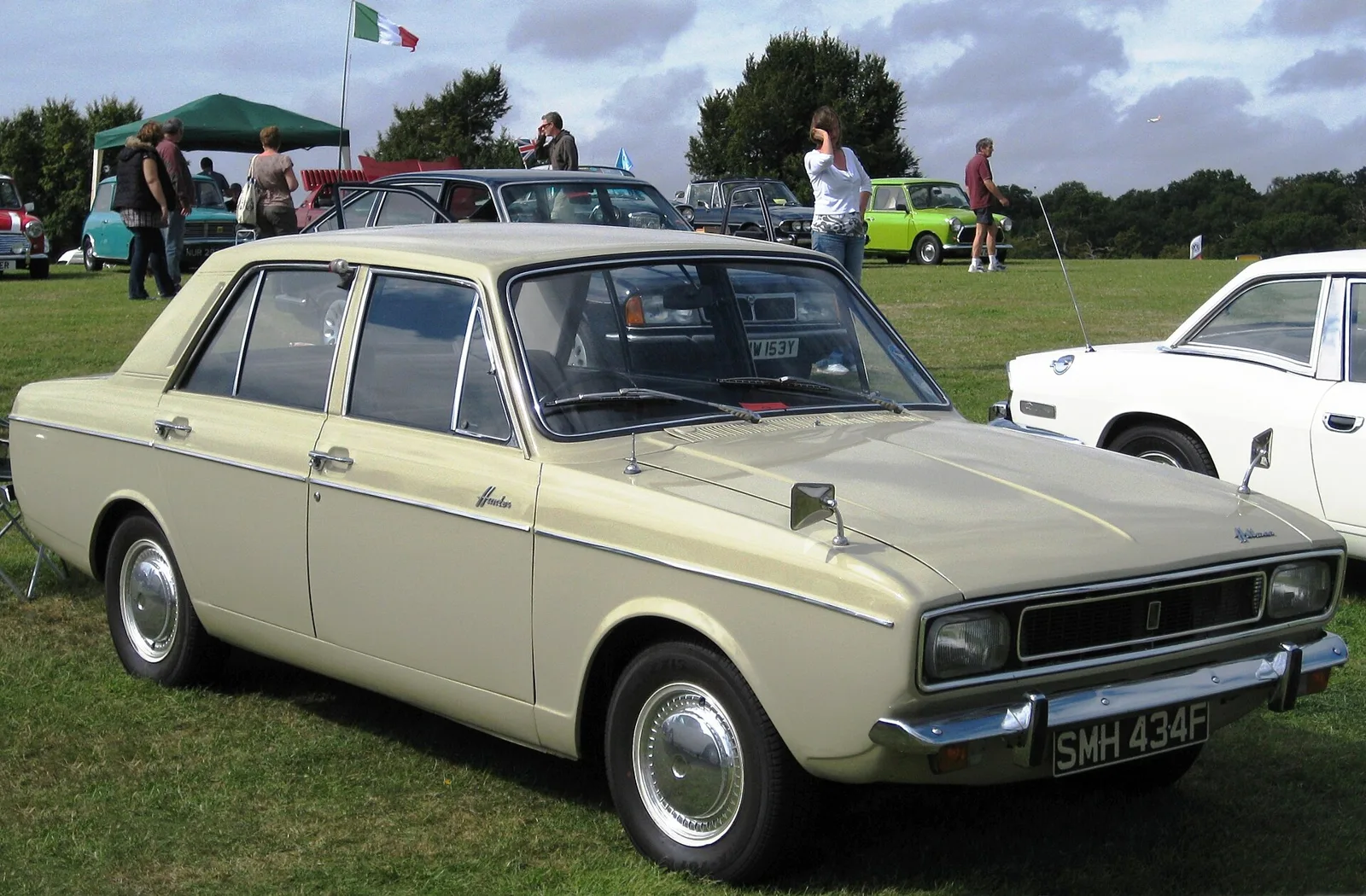
Arrow was the group's name for a range sold in Europe from 1966 to 1979 by the Rootes Group and later by Chrysler Europe. It is counted among the last Rootes designs, and it was finished without any influence from Chrysler, the American firm that went on to own the company. Almost nobody calls it the Arrow in conversation. The range is nearly always known by its busiest model, the Hillman Hunter.
The body styles ran wider than the badges suggest: saloon, estate, fastback coupe and two quite different pick-ups, the Dodge Husky built in South Africa and the Paykan Pick-Up built in Iran. Each pick-up had a body of its own. Depending on the model there were two doors or four, and the coupes were kept for Sunbeam.
One basic car went after several customers at once.
Which badges did Rootes group cars wear?
The list is long. Chrysler used Hunter and Vogue. Dodge used Husky. Hillman went furthest with Arrow, Break de Chasse, Estate Car, GT, Hunter, Hustler, Minx and Vogue. Humber contributed the Sceptre, Singer the Gazelle and the Vogue, and Sunbeam added the Alpine and Rapier fastbacks plus its own Arrow, Hunter, Minx, Sceptre and Vogue.
During the 1960s Rootes was trying to cut the number of platforms and the engineering bill, yet it held on to the names of the companies it had bought so that each could keep its own place in the market. One basic car therefore went after several customers at once.
Some of the badges moved around by country. Sunbeam was used for export markets where that name was better known or seemed likelier to sell cars. The Sunbeam Arrow name appeared in North America. Some French-speaking markets got a Sunbeam Break de Chasse, plus Hunter, Vogue and Minx versions, and a Sunbeam Sceptre with Humber Sceptre equipment turned up in France and some German-speaking markets. Break is a French word for an estate.
Who did the Hillman Hunter compete with?
The Hunter was Coventry's main entry in the small family car class during a production life of 13 years. At home it faced the Ford Cortina, the Vauxhall Victor, the Austin and Morris 1800 and the Morris Marina. The sporty Sunbeam Rapier took on the Ford Capri, the MGB GT, the Vauxhall Firenza and, to a degree, the Triumph Dolomite. The Humber Sceptre, a notch higher, chased premium editions of ordinary saloons: the Wolseley 18/85, the Vanden Plas 1300 and 1500, and the 1600E and 2000E versions of the Cortina.
How was the Rootes Arrow engineered?
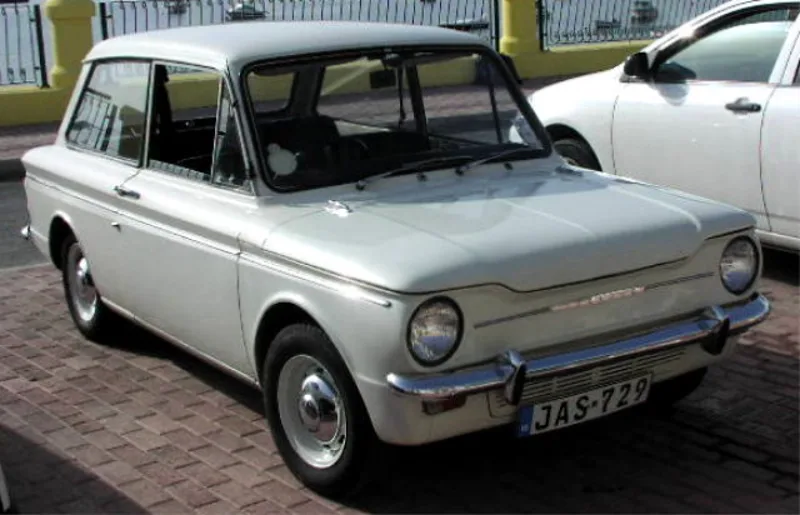
Rootes had just been through the Hillman Imp, a small rear-engined car whose cooling problems often warped cylinder heads. After it, a larger rear-engined sequel was considered and then dropped. The Arrow went the conventional way, closer in layout to the Audax series that had included the previous Hillman Minx. With money tight, little new engineering ground was broken, and most parts came from components Rootes already trusted.
The starting point was an established 1725 cc overhead-valve petrol engine, newly strengthened with five main bearings. Output ranged from 66 to 88 bhp (49 to 66 kW), the top figure going to the Humber Sceptre. The engine leaned over by 15 degrees, a modest tilt that allowed a lower bonnet line and made room for the carburettors. The specialists at Holbay went further, fitting two Weber 40DCOE carburettors to lift output to 107 bhp (80 kW) in the Sunbeam Rapier H120 and the Hillman Hunter GLS. Manual Hillman Minx and Singer Gazelle versions took a smaller 1500 cc engine, as did the Hunter DeLuxe that succeeded the Minx; automatics all used the 1725 cc unit.
Weight and cost got special attention, because the natural rivals included the Mark 2 Ford Cortina. Even so, the car brought several firsts to a Rootes model: MacPherson strut suspension at the front, curved side glass and flow-through ventilation. At the rear was a live axle on leaf springs. Manual cars had four speeds and an optional Laycock de Normanville overdrive, and Borg-Warner automatics were optional too, first the three-speed Type 35 and from 1973 the four-speed Type 45.
One quirk carried over from the Audax cars. The handbrake lived beside the driver's door, not in the middle of the car.
How did the Hunter change over time?
It replaced the Hillman Super Minx. The wheelbase was two and a half inches (64 mm) shorter and the car lighter, yet the cabin grew because the engine and toe-board moved forward. In May 1968 power-assisted brakes became a factory option, at a price slightly below 13 pounds, which Rootes said was cheaper than the kit offered earlier for fitting afterwards.
A mild facelift in 1970 brought new grilles, and some versions swapped a wooden dashboard for a plastic one. A more thorough update in 1972 gave a dashboard of moulded plastic with deeply hooded round dials, a new steering wheel, a plastic air cleaner in place of a metal one and squarer headlamps behind a new grille, along with some engine tuning. For 1975 the bumpers grew and a wide strip of anodised aluminium wrapped the tail lights. Fundamentally the car stayed the same.
The Arrow under Chrysler
Chrysler acquired Rootes in 1967, and the Arrow derivatives were pruned until only the Hillman Hunter remained by 1976. It was rebadged as the Chrysler Hunter in the UK in September 1976 and ran until 1979. Hunter production had already moved in 1969 from Ryton to Linwood, home of the troubled Imp plant.
The Chrysler Alpine hurt the Hunter after its launch, and sales were lower after 1975. The Alpine was a similar size but had front-wheel drive and a hatchback body, at a time when rear-drive saloons still dominated the class. By the time the Hillman became the Chrysler Hunter, with four headlights, a central console and a voltmeter, Chrysler dealers had been selling the French-built Alpine for more than two years. The Super version added an aluminium-head engine, viscous fan coupling, reclining seats, a vinyl roof and simulated wood trim. Evidently a car at the end of its life, it sold in small numbers.
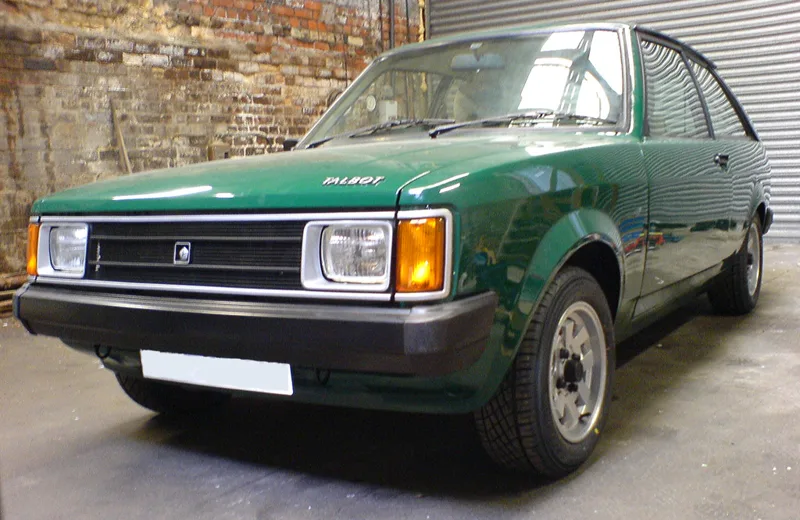
The last European Hunters came from the Santry plant in Ireland, assembled from complete knock-down kits until 1979, after the Avenger had moved to Linwood in 1976. No evidence exists that a Talbot badge ever went on a production Hunter after Peugeot took over Chrysler Europe in 1978. The final Chrysler Hunter was built in Porirua, New Zealand, in September 1979 and was donated to the Southward Museum, which sold it to a private collector in 2000.
What did each marque add?
Hillman
The first Hillman Hunter, with the 1725 cc engine, reached the home market in October 1966, and the cheaper 1496 cc Minx followed in January 1967. The Hillman GT was built on Minx trim but treated as a model in its own right, with twin Zenith Stromberg CD150 carburettors, 94 bhp (70 kW) and Ro-Style wheels. In 1972 the Hunter GLS arrived with the Holbay twin-Weber engine shared with the Rapier H120, a close-ratio gearbox and four headlights.
The estate, announced in April 1967, first went on sale as the Hillman Estate Car with no Hunter or Minx lettering. Its one-piece tailgate was cheaper to make than the split two-piece unit on the car it replaced, though the change drew unfavourable comment in the press. Competition success helped the image, since Andrew Cowan won the 1968 London-Sydney Marathon in a Hunter.
The range was later simplified. The entry-level Hunter DeLuxe, or DL, took over from the Minx with its 1496 cc engine, with the 1725 cc iron-head unit as an option. Above it were the Hunter Super and GL, both with the alloy-head engine, then the twin-carburettor Hunter GT, with the Holbay-engined GLS at the top. For the 1975 Motor Show Hillman built a limited Hunter Topaz, based on the Super, with overdrive, a radio, a vinyl roof, Rostyle wheels and half-cloth seats as standard, all in metallic bronze that no other Hunter wore. It cost less than a standard Super fitted with the optional overdrive.
Singer, Sunbeam and Humber
The Singer Vogue and Gazelle sat slightly above the Hunter and Minx. Price still mattered: the Vogue estate, announced in April 1967, got a dynamo where the saloon had an alternator, which the maker said kept the recommended UK price below 1,000 pounds. The Singers were retired early in 1970 with the rest of the Singer range, after which the Vogue carried a Sunbeam badge for a short time at home, and throughout its life in the main export markets.
The Sunbeam Alpine, with one carburettor, and the twin-carburettor Rapier were fastback coupes only, sold with a sporting image. Yet it was the Hillman Hunter that went long-distance rallying.
The Humber Sceptre carried on Humber's luxury tradition and was the best-equipped Arrow. Manual cars first had the D-type overdrive from Laycock de Normanville; the J-type took over from chassis numbers L3 in July 1972, and later cars used a close-ratio G-type gearbox. A Sceptre estate appeared at the London Motor Show in October 1974 with a built-in roof rack, a carpeted load floor protected by metal strips and lit by an extra interior light, and a rear window washer and wiper, a rare feature on British estates then.
The Humber Hawk before the Arrow
The Humber Hawk was a four-cylinder car built by Humber Limited from 1945 to 1967, and it was a big one. The first Hawk was the first Humber launched after the war, a re-badged Hillman 14 from before it. It was slightly longer thanks to a new boot lid on its fastback tail, narrower with the running boards gone and 112 pounds (51 kg) lighter than the prewar car. Its engine gave 56 bhp, nearly ten per cent more than before and shared with Sunbeam Talbot's 90s, through a four-speed gearbox with a central floor change.
The Mark II of September 1947 hardly counted as a facelift. Its main difference was a column gear change whose control ring made it impossible to crash the synchromesh, and top speed stayed near 65 mph (105 km/h). The Mark III, first seen in London in October 1948, was properly new: Loewy Studio styling, an integral body, coil-sprung independent front suspension and a hypoid rear axle, still with the 1944 cc side-valve engine rated at 56 bhp at 3800 rpm. Against the prewar style it saved 3 cwt or 336 lb (152 kg). Inside, the front bench gained three inches (76 mm) and the rear seat five inches (130 mm), though the car was shorter by six inches (150 mm) and lower by one and a half inches (38 mm).
The Mark IV arrived in early spring 1951 with a 2267 cc engine, 58 bhp, 15-inch wheels and steering commended for its lightness, though 53 per cent of its 2,996 pounds (1,359 kg) sat on the front wheels. The Mark V of September 1952 had a stronger body-frame, a lower bonnet line and wrap-around bumpers. In June 1954 the Mark VI added an overhead-valve cylinder head, and an estate with a fold-down tailgate followed in 1955.
The 1957 unitary Hawk
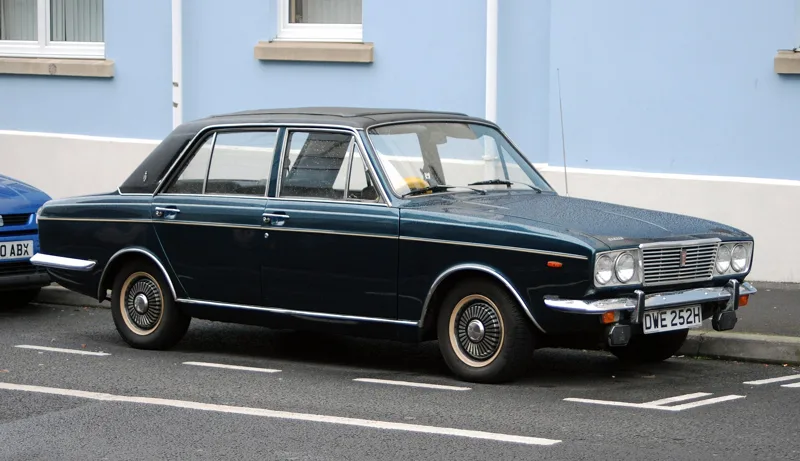
An entirely new Hawk was announced in May 1957 with unitary construction, a body it shared with the 1958 Humber Super Snipe. For the first time an estate was offered from the factory, and its bodyshell was the largest unitary shell of any British-built car until the Jaguar Mark X of 1961. Rootes styled it in-house, with a wrap-around windscreen and more glass than before, giving it a considerable resemblance to a base 1955 Chevrolet four-door sedan. The 2267 cc engine carried over, and a Borg Warner D.G. automatic became available. The estate's tailgate split horizontally, the lower half folding down to lengthen the load platform.
Revisions each brought a new series number. The Series II of October 1960 added servo-assisted front disc brakes and dropped the automatic at home. The Series III of September 1962 brought a larger fuel tank and a bigger rear window. The October 1964 Series IV flattened the roof, shrank the rear window, put an extra window behind the rear doors, added synchromesh to first gear and fitted a rear anti-roll bar. The last of them, the 1965 Series IVA, restored the automatic, now the Borg Warner Model 35.
Rootes announced in March 1967 that the Hawk, Super Snipe and Imperial were finished, and said Chrysler Valiants imported from Australia would take their place. With the Hawk gone, Rootes stopped offering a large family car in Britain, and the market for big estates soon fell to the Volvo 145, which reached Britain in March 1968.
What did the Singer Gazelle become?
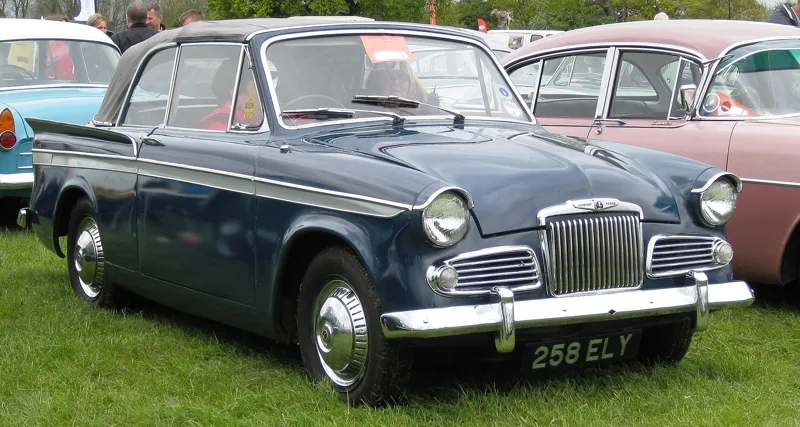
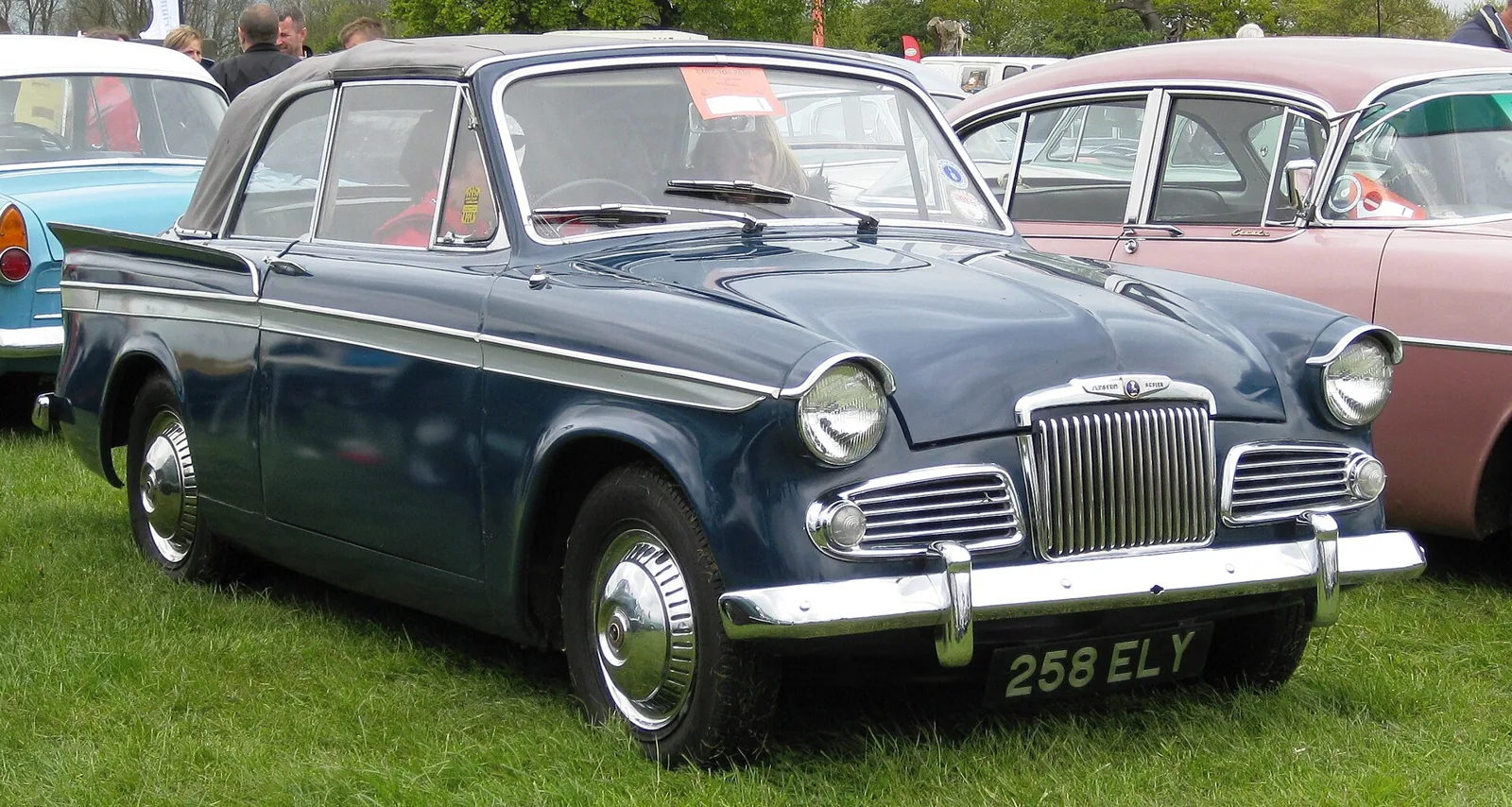
The Gazelle was the first Singer made after the Rootes takeover in 1956. Announced in late September 1956, it was essentially a Hillman Minx that kept the Singer overhead-cam engine and had a restyled nose around a traditional Singer grille. Its Audax body drew heavily on the Loewy design organisation in the United States. The Gazelle began as a saloon and convertible; the Series II of autumn 1957 added an estate, optional overdrive and a larger fuel tank. Front suspension was independent on coil springs, with a live axle on half-elliptic leaf springs behind. The convertible's hood could be fully down or folded back behind the front seats, which was called the coupe de ville position, and extra cross bracing under the car made up for the lost roof.
From the IIA in 1958 the Singer overhead-cam unit gave way to the standard Hillman pushrod engine, which gave 56 bhp against 49. Rootes policy meant small upgrades, each with a new designation. The III of September 1958 had better seats, a folding front armrest and two-tone paint. The IIIA of September 1959 gained small tail fins, a larger windscreen and twin Solex carburettors for 60 bhp, plus a Smith's Easidrive automatic option. The IIIB of September 1960 went back to a single carburettor, which helped economy and servicing in remoter territories. The IIIC of July 1961 had a 1592 cc engine making 53 bhp, and the convertible ended in February 1962, the estate in March.
There was no Gazelle IV. In July 1961 the body meant for it became the Singer Vogue instead. The Gazelle V of August 1963 had longer rear doors, no wrap-around rear window and front disc brakes. The Gazelle VI of 1965 was the last Audax Gazelle, with a new five-bearing 1725 cc engine, first at 65 bhp and later at 59 bhp, and a rectangular grille that stayed fixed when the bonnet opened.
The Gazelle VII of 1967 joined the Arrow range as a four-door saloon only, at first with automatic transmission and the 1725 cc engine, then with a manual 1496 cc version. Production ceased in 1970, and the last one built was also the last Singer ever made. Australia had its own line. Rootes Australia built the Gazelle from 1957 to 1961 as a Sports Saloon, Station Wagon and Estate Van, and once Chrysler Australia had bought the firm in 1965 it made a Gazelle VI variant badged as a Hillman.
How quick were the Hawk and Gazelle on test?
| Car | Year tested | Top speed | 0-60 mph | Fuel use | Price tested |
|---|---|---|---|---|---|
| Humber Hawk Mark IV | 1951 | 71.4 mph (114.9 km/h) | 30.0 seconds | 24.2 mpg imp (11.7 L/100 km) | GBP 850 |
| Humber Hawk Mark VI estate, overdrive | 1956 | 79.7 mph (128.3 km/h) | 25.2 seconds | 22.8 mpg imp (12.4 L/100 km) | GBP 1405 |
| Humber Hawk Series I | 1957 | 83.9 mph (135.0 km/h) | 19.7 seconds | 22.5 mpg imp (12.6 L/100 km) | GBP 1261 |
| Singer Gazelle, overdrive | 1957 | 78.0 mph (125.5 km/h) | 24.8 seconds | 33.5 mpg imp (8.4 L/100 km) | GBP 1016 |
| Singer Gazelle Series III convertible, 1494 cc | 1959 | 83.4 mph (134.2 km/h) | 21.2 seconds | 32.5 mpg imp (8.7 L/100 km) | GBP 1,003 |
The Motor ran all five tests, and the prices include taxes. The convertible cost 67 pounds more than the saloon.