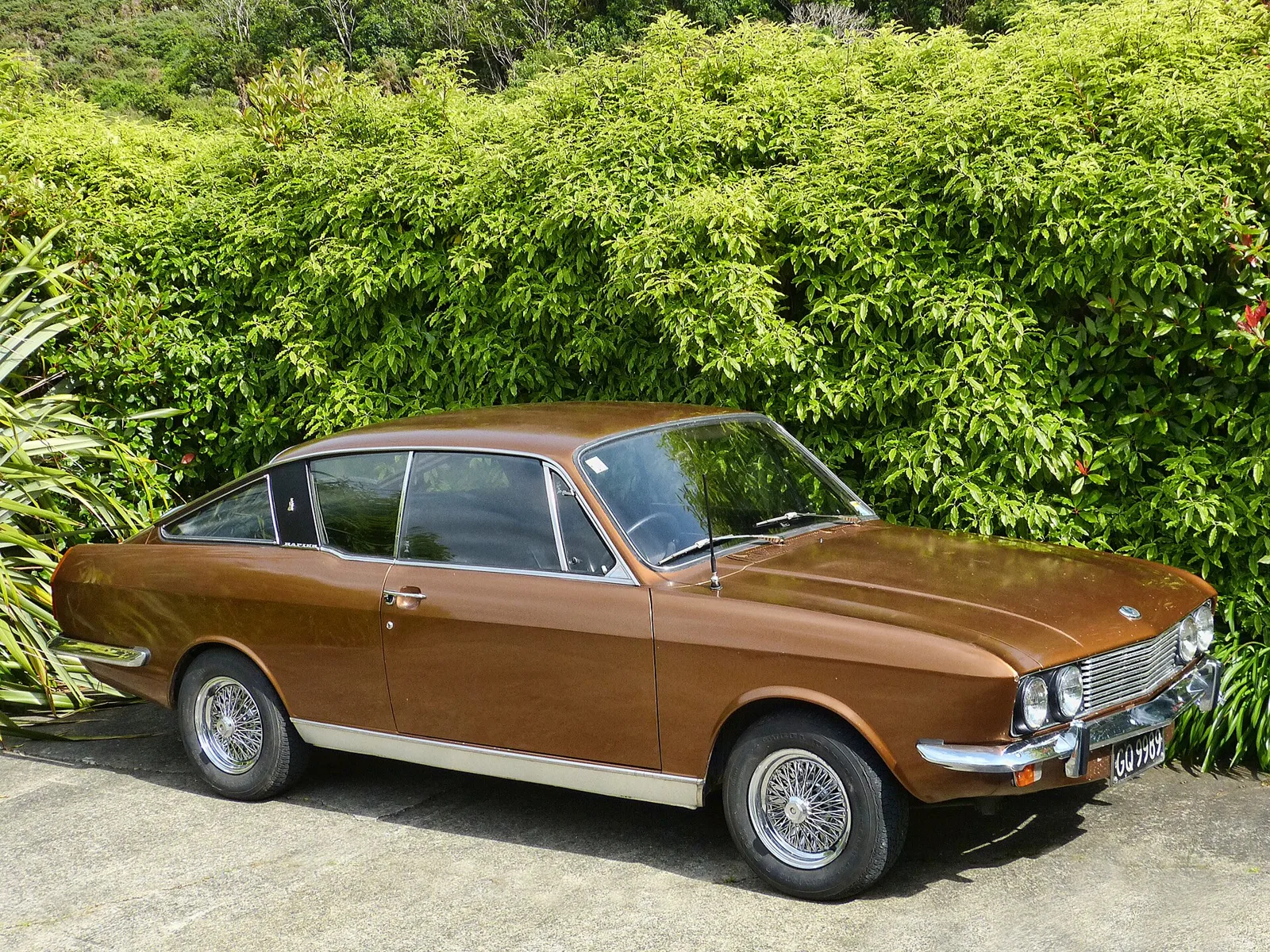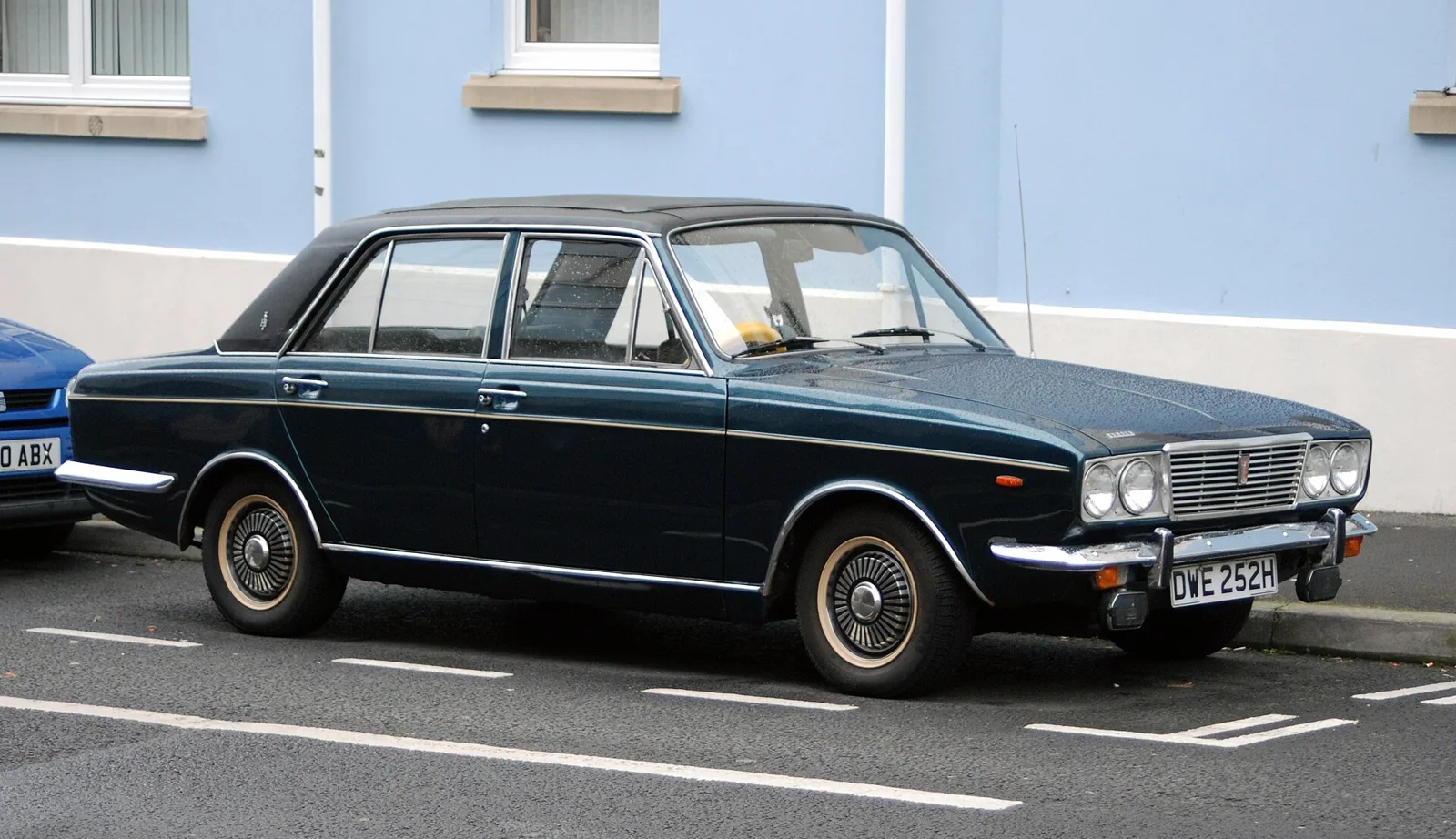
A medium-sized Humber built on the Rootes Arrow family from 1967 to 1976, with a 1.7-litre four and a Sunbeam version in some markets.
Sold as a Humber in Britain from 1967 to 1976, the Sceptre was a medium-sized Rootes product. Its platform was shared with the Hillman Hunter, its engine was a 1,725 cc four-cylinder, and some markets knew it as a Sunbeam instead.
The Humber Sceptre Mark III was a medium-sized car sold on Britain's home market under the Humber name from 1967 to 1976. It belonged to the Rootes Arrow family, which included the Hillman Hunter, and in some markets it was also sold as a Sunbeam. Its body and running gear were shared with its sister models, while its interior was finished to a higher standard.
Where did the Sceptre come from?
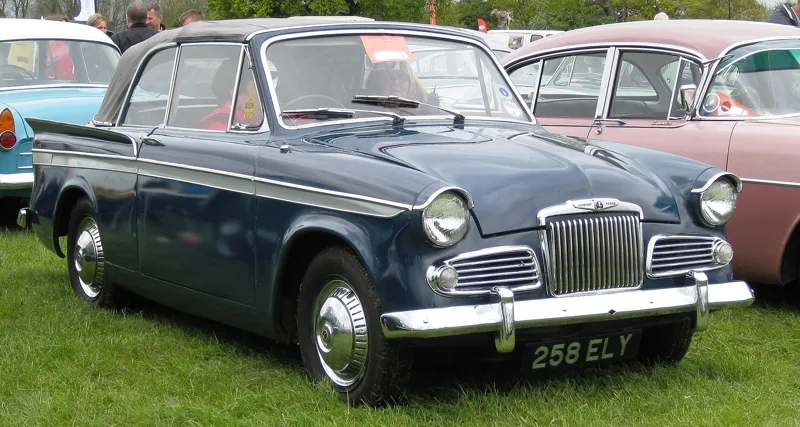
The Sceptre began in 1963 as the Mark I, a medium-sized Humber derived from the cheaper Hillman Super Minx. It sat beside the large Hawk, Super Snipe and Imperial saloons. The Mark II followed, and the Sceptre was built until 1967. Across both series, close to 30,000 cars rolled out over four and a half years.
Humber had belonged to Rootes since 1931 and had traditionally been the group's top marque. Its classic large cars rarely sold beyond low four-figure numbers and regularly lost the group money, so the smaller Sceptre proved far more successful.
A Humber in name and an Arrow in almost every other respect, sold under several badges at once.
What did Chrysler change in 1967?
Chrysler took full control of Rootes in 1967 and quickly began rationalising. It dropped the large Humber saloons without a successor, and it planned to serve the upper end of the British market with American models built in Australia. Humber was reduced to well-equipped versions of the group's mass-produced models.
The Humber brand was folded into the marketing of the mid-size Rootes Arrow, launched in 1966. Chrysler built a whole range of Arrow variants to replace the Hillman Super Minx, the Sceptre Mark II and the Singer Vogue, models introduced in 1961 and 1963.
How many models did Rootes sell at once?
In the early years the group offered seven formally distinct models built on one basic type, all on sale in Britain at once. They were the Hillman Hunter, the Hillman Minx, the Singer Vogue, the Singer Gazelle, the Sunbeam Alpine and Rapier, and the Humber Sceptre. Each was a different badge on largely the same car.
This was a clear case of badge engineering, a practice widely criticised in Britain at the time, in which the range always carried a few models too many. From 1970 the line-up was simplified. Singer was dropped entirely, which removed the Vogue and the Gazelle, and the Hillman Minx was no longer built.
How did the Sceptre end?
When Chrysler began building the Alpine hatchback in 1976, production of the Hunter moved to Ireland, while the Sceptre and the Sunbeam models ran out. The Humber name was abandoned at the same time. The Hunter carried on for three more years, latterly as a Chrysler, and ended in 1979 when PSA took over Chrysler Europe.
Body and styling
The Sceptre had a self-supporting body. It was offered as a four-door saloon only until 1974, when a four-door estate was added in October and built until 1976. Rootes' own design studio, under Rex Fleming, shaped the saloon, while Roy Axe designed the estate.
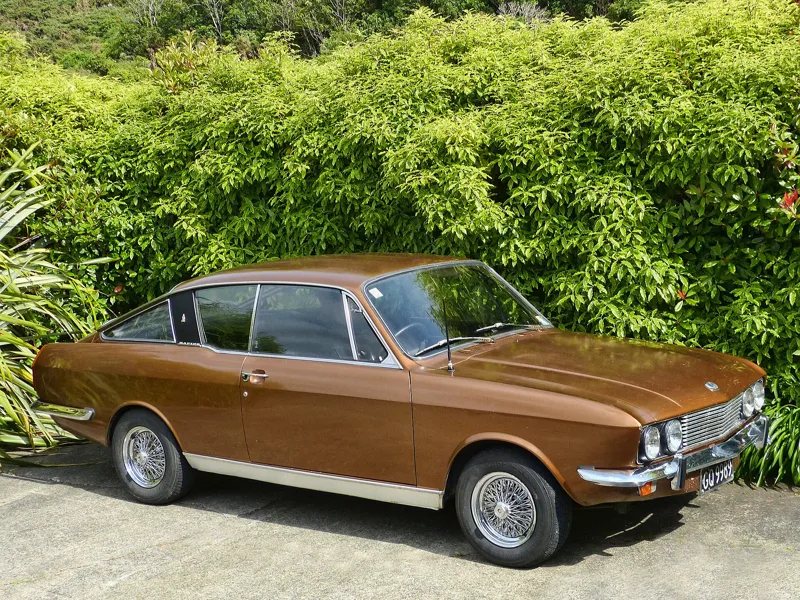
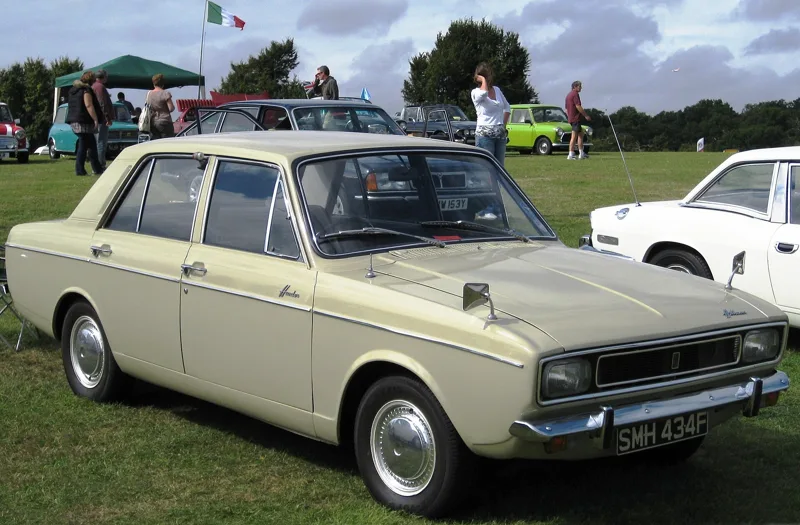
The saloon has a notchback with a trapezoidal roof and a broad C-pillar, and unlike its sister marques it came with a black vinyl roof as standard. Its round twin headlamps sit in rectangular surrounds. The Hunter GLS adopted the same headlamps from 1972, and the trapezoidal radiator grille, which first marked the Humber alone, later passed to the Hunter as well.
The rear matched the sister models, with horizontal lamp units and the number plate below the bumper. In the last two years a silver trim panel ran across the full width of the back and into the rear wings. It stylised the ribbed tail lamps that Mercedes-Benz had made familiar. In 1974 the bumpers were widened, with the front indicators built into them.
What engine did the Sceptre use?
The Sceptre had a 1,725 cc (105.3 cu in) in-line four-cylinder engine from Hillman, with a light-alloy cylinder head and five crankshaft bearings. It was mounted longitudinally at the front, tilted 10 degrees, and drove the rear wheels. The basic design dates back to 1953, and the 1.7-litre version had already appeared in 1965 in the predecessor model.
Output figures changed over time. The launch figure was 88 bhp (66 kW; 90 PS), a German-language brochure from 1970 gave 94 PS (69 kW; 93 bhp), and during the 1970s the group reduced the output to 79 bhp (60 kW; 82 PS). Sport versions of the engine, producing up to 105 bhp, went to Sunbeam rather than Humber.
Which gearboxes were offered?
A hand-shifted four-speed manual with an overdrive was standard. The overdrive could be used in third and fourth gear and raised the ratio by just under 25 percent. A three-speed BorgWarner automatic was available for an extra charge. The transmission did not change during the whole production period.
Chassis and interior
The chassis matched the sister models. It used MacPherson struts at the front and a rigid rear axle on leaf springs, with discs at the front, drums at the rear and servo assistance for the brakes.
Inside, the Sceptre was more upmarket than its siblings. Wood veneer covered the instrument carrier and the inner door edges. Two shaped individual seats, called bucket-shaped in a German brochure, replaced the rear bench, and a fold-down centre armrest was fitted. All seats were trimmed in imitation leather, as genuine leather was not available.
Was there a Sunbeam Sceptre?
Rootes sold several Arrow variants as Sunbeams on international markets, because the name was judged better known worldwide than Hillman or Singer. For some continental markets, including the German-speaking area, the Humber Sceptre was also sold as the Sunbeam Sceptre. It was built identically, and only the brand lettering on the bonnet and boot lid was changed.
The Sunbeam Sceptre kept the Humber grille and the Humber badges, inside and out. A German-language brochure called them distinguished badges. In North America the same logic applied to a Hillman variant, which was sold as the Sunbeam Arrow.
Where was the Sceptre built?
Bodyshells were built until 1968 by the Pressed Steel Company in Cowley, Oxfordshire, and finished at Rootes' Ryton-on-Dunsmore works near Coventry. From 1968 Rootes Pressings (Scotland) at Linwood made the bodyshells. Final assembly stayed at Ryton for a transition period, so bodyshells had to be hauled across the country by goods train.
In 1970 final assembly for all Arrow models, the Sceptre included, had moved to Scotland. There are indications that some Sceptres were also built by Chrysler Ireland in Dublin.
How many Humber Sceptres were built?
A total of 43,951 saloons and estates of the Humber Sceptre type were built from 1967 to 1976. Sunbeam-badged cars are counted in that total. Over the same period, the cheaper Hillman Hunter was built more than ten times as often, from 1966 to 1979.
How was the Sceptre received?
The British motoring journalist Giles Chapman looks back on the Sceptre as one of the worst cars ever sold. He argues that Rootes hoped for a quick profit from the ultra-respectable reputation of the Humber name, and did a good job of turning a long-established name into worthlessness.
Specifications at a glance
| Specification | Detail |
|---|---|
| Built | 1967 to 1976, sold as a Humber |
| Body | Four-door saloon (1967 to 1976) and four-door estate (1974 to 1976) |
| Engine | 1,725 cc (105.3 cu in) in-line four, Hillman |
| Output | 88 bhp (66 kW; 90 PS) at launch; 79 bhp (60 kW; 82 PS) later |
| Gearbox | Four-speed manual with overdrive; three-speed BorgWarner automatic optional |
| Suspension | MacPherson struts at the front; rigid rear axle on leaf springs |
| Brakes | Discs at the front, drums at the rear, servo assisted |
| Production | 43,951 from 1967 to 1976, including Sunbeams |