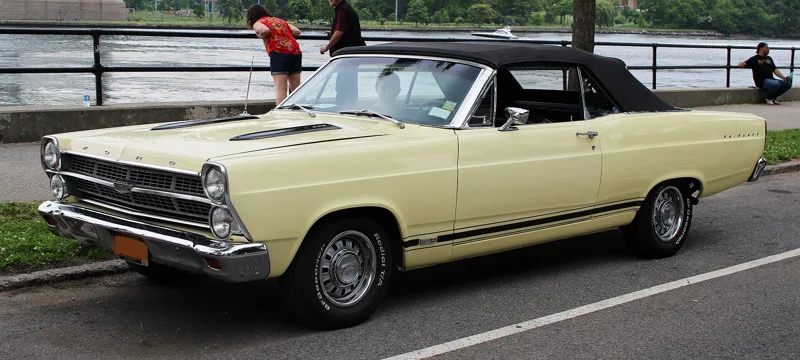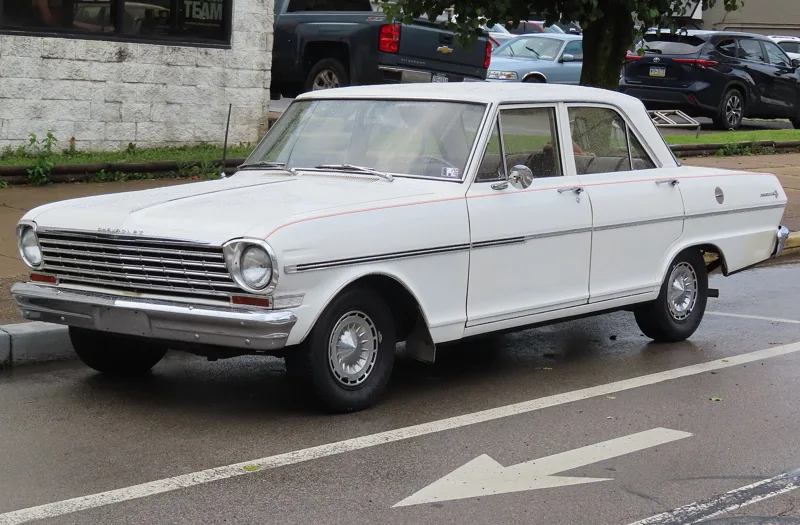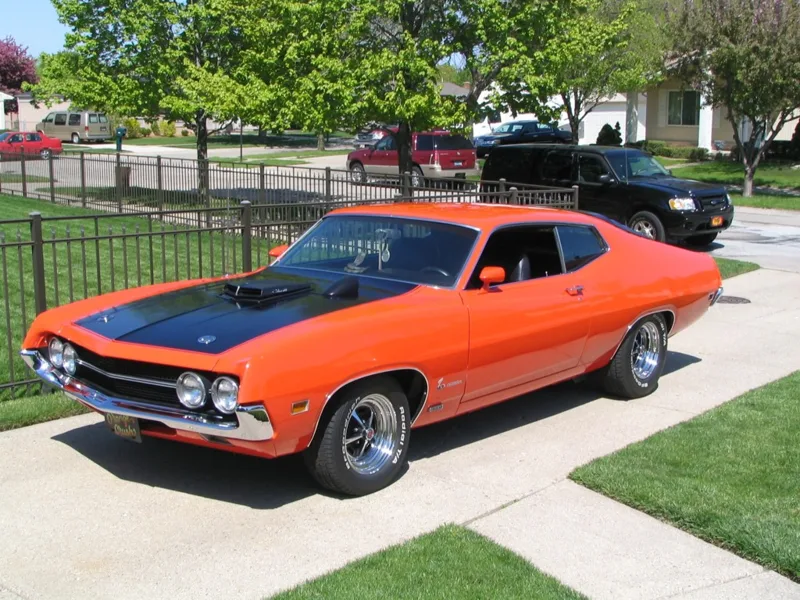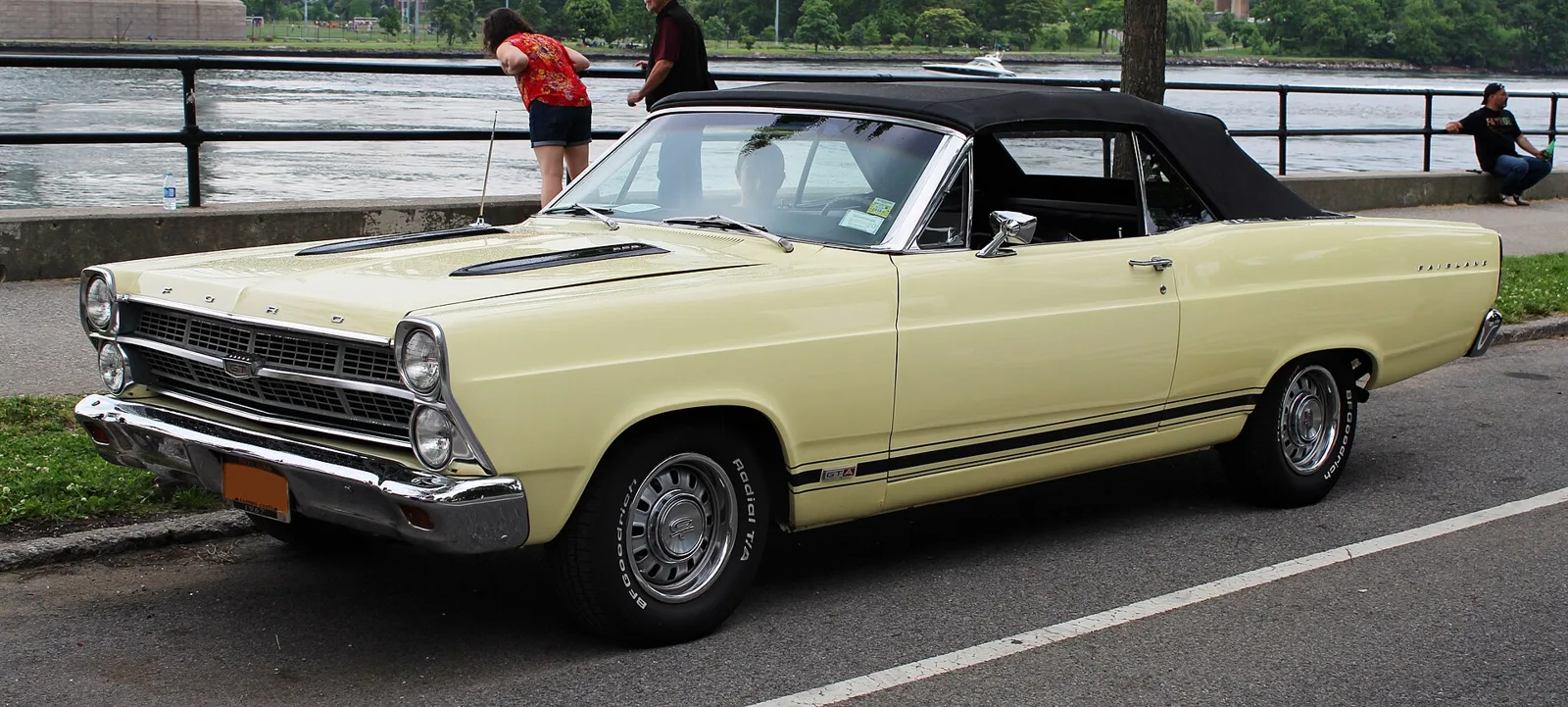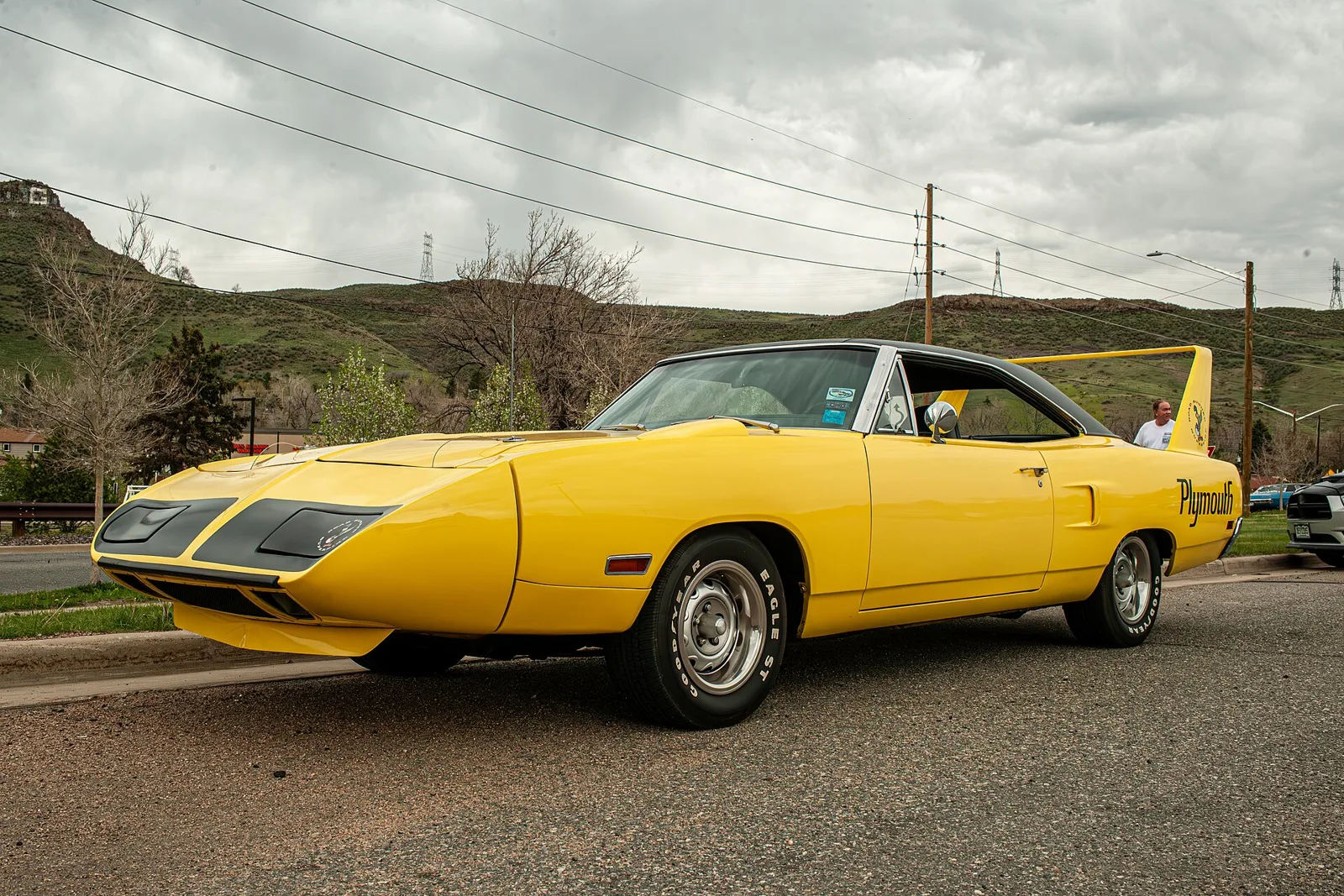
A wing that stayed a secret for decades, a hot rod built by hand in Detroit, a compact that humbled NASCAR and a full-size workhorse named after a London hotel.
The Plymouth Superbird (1970) was a winged NASCAR homologation special, the Prowler (1997-2002) a hand-built retro roadster, the Valiant (1960-1976) a durable compact and the Savoy (1951-1964) a full-size family and fleet car.
For almost 30 years, the height of the enormous wing on the Plymouth Superbird was said to be a guarded Chrysler formula. Then in the 1990s a retired engineer offered a tidy explanation: it simply let the boot lid open. That was an urban myth. The wing stands where it does because the designers wanted it above the roofline, in clean air.
What was the Plymouth Superbird?
The Plymouth Superbird was a highly modified, short-lived version of the Plymouth Road Runner, built for the 1970 NASCAR season as the follow-up to Dodge's Charger Daytona of 1969. It carried Looney Tunes Road Runner graphics and a horn that mimicked the cartoon's beep, beep. Its main rivals were the Ford Torino Talladega and the Mercury Cyclone.
Both Mopar aero cars had a protruding nosecone and a high rear wing. The Superbird's smoothed body and nose were refined from the Daytona's, and the fibreglass pop-up headlights added nineteen inches to the Road Runner's length. The wing sat on tall vertical struts to catch less disturbed air, which raised the downforce it made. Rear-facing fender scoops hid cutouts. On Daytonas they let trapped air out of the wheel wells to reduce lift, but on road-going Superbirds the covers were cosmetic. Ground clearance was 7.2 inches (18 centimetres).
The Dodge Charger 500 that opened the 1969 season had been shaped with a wind tunnel and computer analysis before it became the nosed and winged Daytona, and Plymouth took the lessons from that season's racing.
NASCAR never ran the compact race again, because the Valiants were too fast.
How many Superbirds were built, and with which engines?
NASCAR's homologation rules demanded that raced cars be sold to the public in minimum numbers. For 1970 the threshold rose from 500 to one for every two of a manufacturer's dealers in the United States, which meant 1,920 Superbirds for Plymouth. It was the only year of production, with emissions rules, higher insurance for fast cars and NASCAR's effective ban on the aero cars all closing in.
Counts vary. Chrysler memos of September 1969 show sales staff preparing for 1,920 cars, while published figures run as high as 2,783. The generally accepted number is 1,935 built and shipped to American dealers, with 34 to 47 allegedly going to Canada. More than 1,000 are believed to survive.
- The top engine was the 426 Hemi V8 with two four-barrel Carter carburettors, rated at 431 PS (317 kW; 425 bhp) at 5000 rpm. Plymouth quoted 5.5 seconds from 0 to 97 km/h (60 mph). The most frequently reported figure is 135 Hemi cars.
- The 440 Super Commando Six Barrel made 290 kW (390 hp), with the commonly reported number of 716 cars.
- A single four-barrel 440 produced 280 kW (375 hp) and powered the rest.
The 440 was cheaper to make, so the street Hemi was effectively built to the minimum number needed for homologation.
On the road, the aerodynamic changes made little difference, even at the drag strip. Only above 97 km/h (60 mph) did the nose and wing begin to help.
What happened to the Superbird in NASCAR and in showrooms?
The Superbird was designed to lure Richard Petty back to Plymouth. In autumn 1968 he had left Plymouth's NASCAR team for Ford, whose stock car director Charlie Grey reasoned that signing him sent the message that money rules none. In 1970 Petty won a season-leading 18 of the 40 races he entered in a 47-race season, added nine more top fives and finished fourth in the championship, despite missing seven races with an injury suffered at the Rebel 400.
Then the rules changed. For 1971 NASCAR limited aero cars to 305 cu in (5.00 L) engines, or they had to carry much more weight. Both penalties killed their competitiveness. Ford had a Superbird-style nose in the works for its 1970 Torino King Cobra, but dropped it.
The road car fared no better. The styling proved too extreme for buyers, many of whom preferred the ordinary Road Runner, and cars sat unsold on dealer lots as late as 1972. Some were converted back into regular Road Runners to clear them. Today prices run from US$200,000 to $450,000 depending on engine, gearbox and options, and conversion kits exist for 1970 Road Runners and Satellites.
What was the Plymouth Prowler?
The Plymouth Prowler, later the Chrysler Prowler, was a two-seat sports car built by DaimlerChrysler for the 1997 to 2002 model years. It was known for its hand-built aluminium body, hot rod styling and open, Indy racer-style front wheels. Total production was 11,702.
It grew from a 1993 concept. Chrysler's design and international director Thomas C. Gale, who kept a hotted-up 1932 Ford in his garage, approved it as the follow-up show-stopper to the Dodge Viper. A Chrysler-sponsored project at the Art Center College of Design, a thesis by Douglas Foose, also fed in, with drawings of a retro roadster.
The engine was a 3.5 L, 24-valve single-overhead-cam V6 from Chrysler's LH cars, making 217 PS (160 kW; 214 hp) at 5850 rpm. In 1999 it became an aluminium-block unit of 257 PS (189 kW; 253 hp) at 6400 rpm. A four-speed Autostick semi-automatic transmission sat at the rear, joined to the engine by a spinning drive shaft, which helped give the car a 50-50 weight distribution. The Prowler was the first rear-drive Plymouth since the 1989 Gran Fury and the last Plymouth with that layout. Critics grumbled about the V6, but its output matched or beat Chrysler's contemporary Magnum V8s, and the light car reached 60 mph in just over 7 seconds.
The 1997 model took 7.2 seconds to reach 60 mph and was limited electronically to 190 km/h (118 mph). Cars from 1999 to 2002 needed 5.9 seconds and topped out at 203 km/h (126 mph).
Unlike the Viper, it was designed to be a daily driver, with keyless entry, power windows and locks, dual airbags, leather bucket seats, air conditioning, and a stereo with cassette player, plus a CD changer as an option. Aluminium construction, much of it adhesively bonded, extended to the chassis. The body came from Shadyside, Ohio, and cars were assembled by hand at the Conner Avenue plant in Detroit.
When did the Prowler stop, and what did it cost?
It was built for 1997 and then for 1999 and 2000 as a Plymouth. After the brand ended in 2001, the car became the Chrysler Prowler for 2001 and 2002, though in Canada DaimlerChrysler kept selling it as a Plymouth for 2000, the last Plymouth sold there. The final Prowler was built on 15 February 2002, and the Chrysler Crossfire took over the niche in 2004.
The list price rose from US$38,300 in 1997 to $39,300 in 1999, $43,000 in 2000, $44,225 in 2001 and $44,625 in 2002. Boot space was so limited that Chrysler dealers sold a $5,000 matching trailer, shaped like the back end of a Prowler on 15-inch versions of the five-spoke wheels. A warning on the hitch said towing anything else would void the warranty. Colours numbered 12 across both production runs, from the purple that was the only choice in 1997 to a single high voltage blue Conner Avenue Edition that was auctioned at Christie's.
A 1998 Prowler was sealed in an above-ground vault at Centennial Park in Tulsa, Oklahoma, as a time capsule, after an earlier buried 1957 Belvedere was damaged when its vault failed. Experts expect the Prowler to fare better when it is opened in 2048 and returned to Chrysler. In 1999 Chrysler showed the Howler concept, a Prowler with a small truck bed and a 4.7 L Jeep V8 under the bonnet.
What was the Plymouth Valiant?
The Valiant was Plymouth's compact car, sold in the United States from the 1960 model year through 1976. Chrysler needed an entry in the compact market that had emerged in the late 1950s. The Valiant became known for durability and reliability, was one of Chrysler's best sellers in the 1960s and 1970s, and helped keep the company solvent. Road & Track called it one of the best all-around domestic cars.
It was built or sold in at least ten countries, from Argentina and Australia to Sweden and Switzerland, with the badge and without it. Small by American standards, it passed for a big car in Europe.
How did the Valiant come about?
In May 1957, Chrysler president Tex Colbert set up a committee to answer a growing compact class that included the Volkswagen Beetle, American Motors' Rambler, and coming entries from GM, Ford and Studebaker. Design chief Virgil Exner produced a smaller, lighter car that did not give up passenger or luggage space. It was first called Falcon, after his 1955 concept, but became the Valiant when Henry Ford II asked to use the Falcon name.
It debuted at the 44th British International Motor Show in London on 26 October 1959 and was treated as a separate brand for 1960, advertised as nobody's kid brother. For 1961 it became a Plymouth model, and the 1961-62 Dodge Lancer was essentially a rebadged Valiant. From 1964 it was sold as the Plymouth Valiant.
Styling was bolder than the Ford Falcon or the Studebaker Lark, though less radical than the rear-engined Corvair. Exner's Forward Look produced crisp, wedge-shaped lines, canted tailfins with cat's-eye lamps and a simulated spare tyre pressed into the boot lid, all linking it to the Imperial and the 300F.
What made the Valiant's slant-six special?
It was an all-new overhead-valve six whose cylinders leaned 30 degrees to the right, allowing a lower bonnet line. The water pump moved to the side to shorten the engine, and a long-branch intake manifold drew on Chrysler's work in tuned intakes. It beat comparable American straight sixes on power and economy and soon earned a name for dependability. Project engineer Willem Weertman and his team kept it simple, with a forged four-main crankshaft and a mechanical valve train. Over 50,000 aluminium-block versions of the 225 cu in (3.7 L) engine were sold as extra-cost options between late 1961 and early 1963.
The 1960 Valiant also showed off Chrysler's skill with aluminium die casting. It carried 60 lb (27 kg) of aluminium parts, including the first alternator on a car and the case for the new Torqueflite A-904 automatic transmission. Together they saved an estimated 102 lb (46 kg), about 4% of shipping weight.
The structure was unitary, the first from Chrysler since the Airflow of the 1930s. Against a 1959 Plymouth with a separate body and frame, the shell measured 95% stiffer when twisted and 50% stiffer when bent. Torsion bars and unequal arms looked after the front suspension, with a live axle on asymmetric leaf springs at the rear.
What was the Valiant Hyper-Pak?
It was a dealer tuning kit, available in limited numbers from 1 December 1959, to turn the compact into a stock car. Features included 207 N m (153 lb ft) of torque, a 10.5:1 compression ratio, dual exhaust pipes and a 57 litre (15 US gal) fuel tank. Chrysler engineer Dick Maxwell said seven Hyper-Pak Valiants were built for the compact race held with the 1960 Daytona 500, each with a 148 hp 170 cu in six.
The result was a rout. On 31 January 1960, Marvin Panch won the first race, 10 laps of a road course, at 141.838 km/h (88.134 mph), and Valiants took the first seven places. He then won the second race of 20 laps on the tri-oval at 196.794 km/h (122.282 mph), after a multi-car accident on lap four took out the leaders, among them Richard Petty. Maxwell recalled that the cars were so fast NASCAR never ran the race again.
What else could you buy as a Valiant?
A thrifty wagon. The Valiant station wagon offered 72.3 ft3 (2.0 m3) of cargo space and needed two feet less parking room than a full-size Plymouth. Built only at the Dodge main plant in Hamtramck, it came in V100 and V200 trim with two or three seats, and was the cheapest four-door wagon in America. The two-seat model undercut both the Lark and the Rambler wagon by $60, and the three-seater was $186 below the Rambler. The cargo deck had a lockable compartment, and three-seat versions came with run-flat Captive-Aire tyres in place of a spare.
The first generation existed in four distinct forms: early 1960, late 1960, 1961 and 1962. Early V200s wore extensive brightwork, including an 8 in (20 cm) chrome spear on each front fender, until cost-saving plastic trim replaced some stainless mouldings around January 1960. For 1961 the Valiant gained new two-door sedan and hardtop bodies, and the trim changed to separate model years, a mild form of planned obsolescence. For the first time, "Plymouth" script appeared next to the right taillight.
What was the Plymouth Savoy?
The Savoy was a Plymouth model made from 1951 to 1964. Like the Plaza and Belvedere, it took its name from an upscale hotel, in this case the Savoy Hotel in London. It began as a trim package, from 1951 to 1953, on the base Suburban station wagon.
When it came out as a car in 1954 it sat in the middle of the range, priced between the base Plaza and the top-line Belvedere. On 26 February that year Plymouth lengthened the stroke by a quarter inch, lifting displacement from 217.8 to 230.2 cu in (3.6 to 3.8 L) and power from 75 kW (100 hp) to 82 kW (110 hp). The 1954 car came as a two-door Club Coupe, a four-door sedan and a two-door Club Sedan. Power steering arrived in 1955. For 1956 the range added a hardtop coupe and the Custom Suburban wagon, seat belts, and an optional Highway Hi-Fi record player. A four-door hardtop followed for 1957 and 1958.
The big change came in 1959, when Plymouth dropped the Plaza and made the Savoy its entry-level full-size car. The hardtops, side trim and plusher interior went, but sales held, because taxi firms, police departments and other fleets bought it, as did buyers wanting a roomy, cheap car with a V8 and automatic available. By 1960 a Taxi Special was spun off from it. The 1961 styling drew harsh remarks, mostly about the odd chromed eyelashes on the front.
What engines did the 1962 to 1964 Savoy have?
The redesigned 1962 range started with the 225 cu in (3.7 L) Economy 6 of 108 kW (145 hp). The initial V8 options were the Fury V-800 and Sport Fury V-800, both 318 cu in (5.2 L), at 172 kW (230 hp) and 194 kW (260 hp). Above them came the 361 cu in (5.9 L) Golden Commando at 227 kW (305 hp). Later in the year came a 383 with twin four-barrel carburettors and 250 kW (335 hp), then the Super Stock Max Wedge, a 413 cu in (6.8 L) raised-block V8 making 410 or 420 hp (306 or 313 kW) depending on compression. Only 289 were built, sold as competition cars, and the 426 Wedge replaced the 413 for 1963 and 1964 with 415 or 425 hp (309 or 317 kW).
Plymouth dropped the name after 1964 except in Canada, where it ran through 1965. In the United States the 1965 entry model was the Fury I.
Elsewhere, Premier Automobiles built the Savoy and the Dodge Kingsway in Kurla, Bombay, and in Mexico Automex assembled a rebadged Dodge version in 1960 and 1961. Chrysler Australia built the P25 Savoy from 1954 to 1957 plus a coupe utility from 1956 to 1958. In New Zealand, Todd Motors at Petone put together right-hand-drive Savoys and their Plymouth, Dodge and "Plodge" siblings from Canadian kits, because Canadian cars qualified for a lower import duty. That assembly ended with 1963 models, replaced by the locally built Australian AP5 Chrysler Valiant.
How do the Savoy, Valiant, Superbird and Prowler compare?
| Model | Years | Type | Distinguishing hardware |
|---|---|---|---|
| Savoy | 1951-1964 | Full-size family car, later entry level | Six-cylinder or V8, up to 425 hp in 426 Wedge form |
| Valiant | 1960-1976 | Compact car | Slant-six with 30 degree cylinder tilt |
| Superbird | 1970 | NASCAR homologation special | 426 Hemi, tall rear wing and nosecone |
| Prowler | 1997-2002 | Two-seat retro roadster | 3.5 L V6 with rear transaxle |