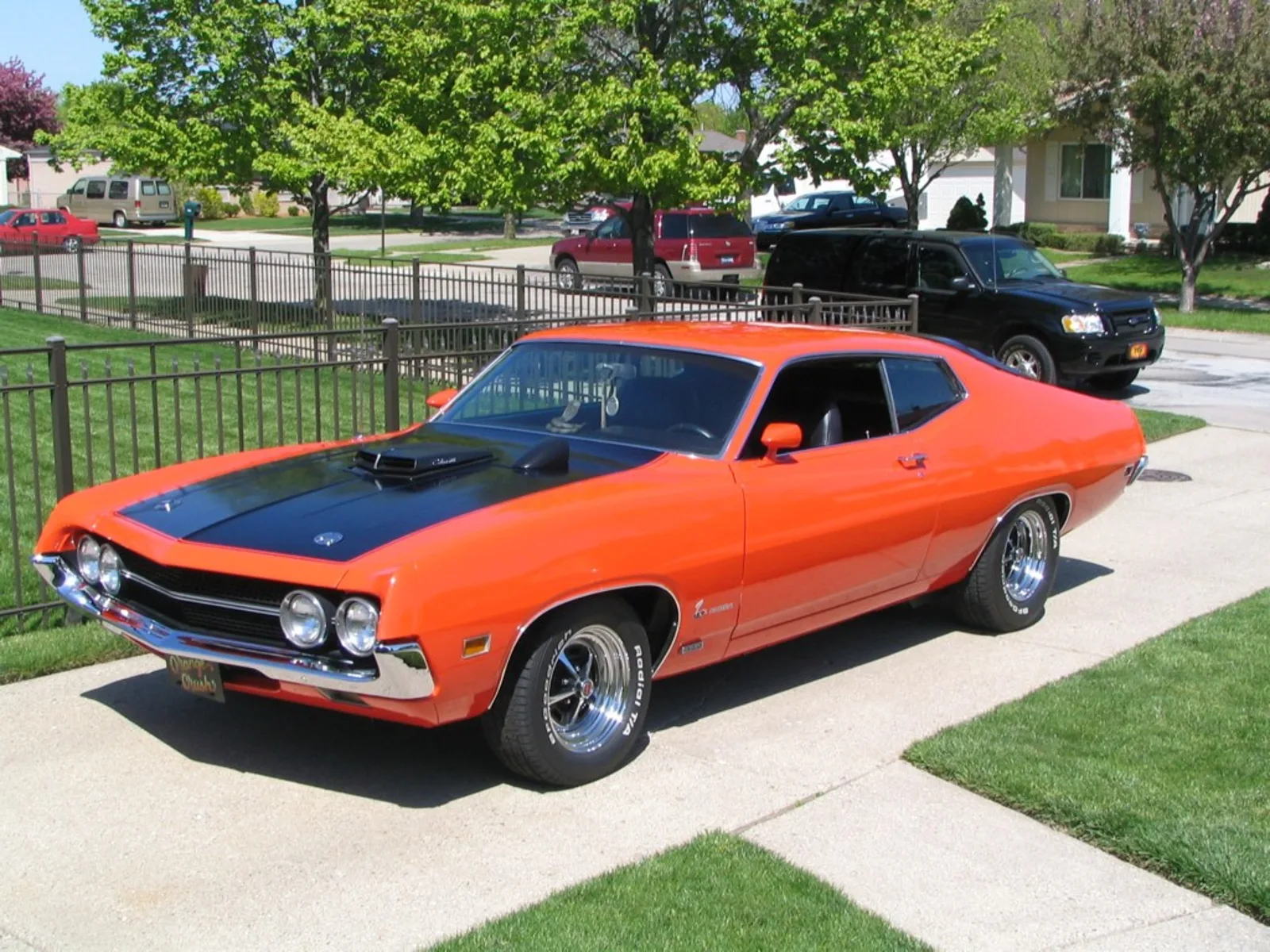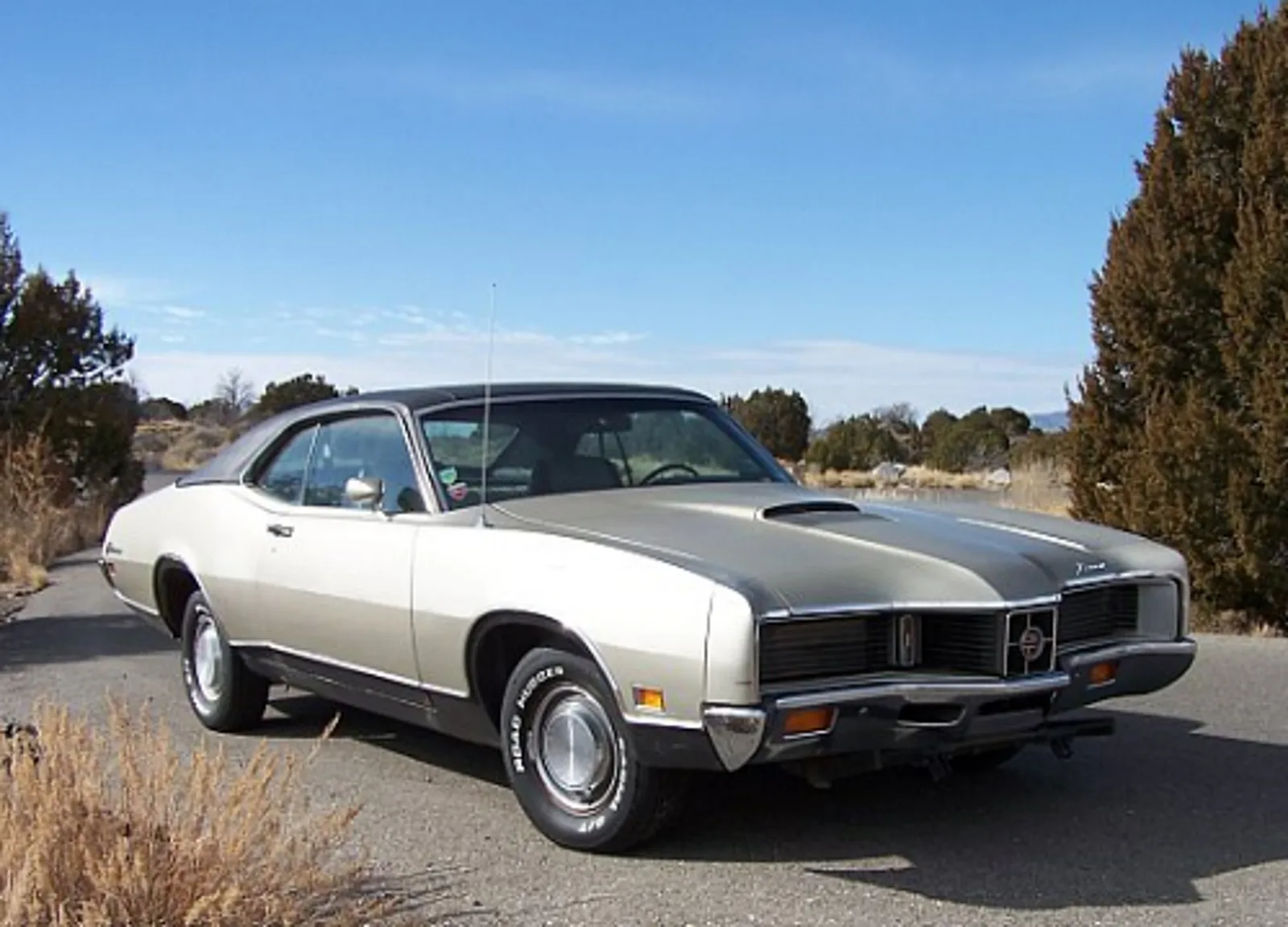
From a sporty Comet trim in 1964 to a 429 cu in Cobra Jet muscle car and a NASCAR record holder, the Cyclone ran until 1971.
The Mercury Cyclone was a performance car sold by Mercury, the Ford division, from 1964 to 1971. It began as a sporty option on the Comet, became its own nameplate in 1968 and returned in 1972 as a Montego performance package. Its engines ranged from 289 cu in to 429 cu in.
Mercury's Cyclone began in 1964 as a performance trim of the Comet and ran until 1971. It grew into a separate car in 1968, raced in NASCAR and returned for one last season in 1972 as a performance package on the Montego.
Where did the Mercury Cyclone come from?
The Cyclone started in 1964 as a sporty option for the Mercury Comet and replaced the S-22 as the brand's performance version. Its own nameplate came with the 1968 model year, as the Montego began to replace the Comet. Within Mercury's range it sat between the Cougar pony car and the full-size Marquis and Marauder two-doors.
Mercury positioned the Cyclone as a muscle car and used it to represent the brand in racing, where it was marketed as a clone of the Ford Fairlane Thunderbolt. Although the Cougar overshadowed it, the Cyclone carried Mercury's flag in motorsport.
Four generations were built before production ended with the 1971 model year. Each generation kept the name while the body, engines and trim changed considerably from one to the next.
A Comet option that grew into a Mercury muscle car, a NASCAR winner and a one-off 1972 Montego package.
How did the Cyclone's styling change between 1964 and 1967?
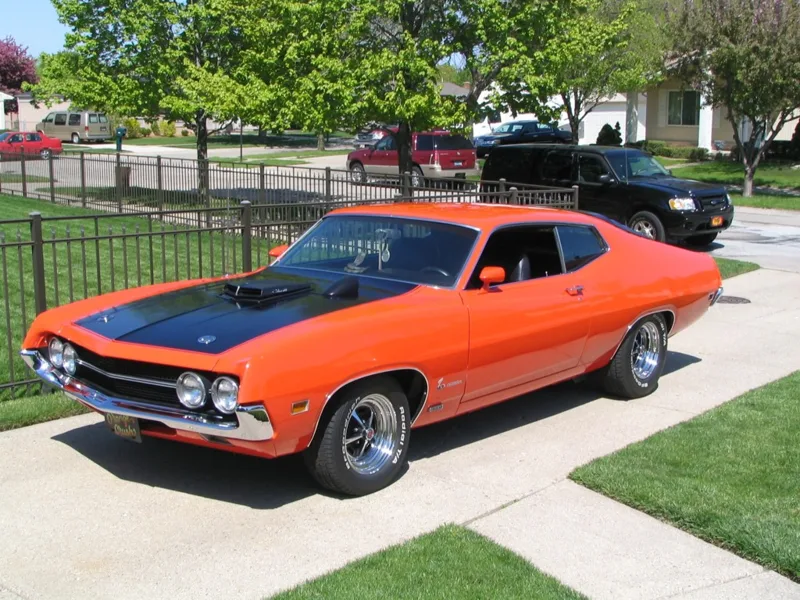
The 1964 car was a sporty Comet with a spoked steering wheel and bucket seats. For 1966 the body gained sculpturing that ran the length of the car and was based on the Ford Fairlane. By 1967 the standard engine was still the 4,736 cc (289 cu in) eight-cylinder, rated 200 hp (149 kW).
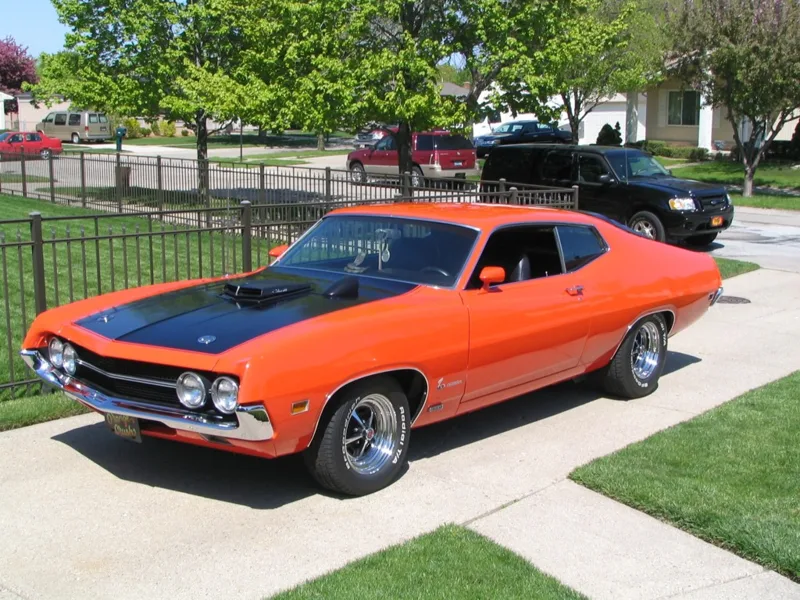
The 1966 GT brought car stripes, a fibreglass hood with two air scoops and the 6,391 cc (390 cu in) engine. Some Comet Cyclones received a 427 Ford FE rated 410 hp (306 kW), fitted by Andy Hotton of Dearborn Steel Tubing. Those cars kept the standard body and wore only a small chromed 427 badge on each front fender.
The 1968 models dropped Comet from the name and added a mid-level body stripe. The GT added an upper stripe, wide whitewall tyres, special wheel covers, an all-vinyl interior and the special handling package.
Which engines did the Cyclone offer?
Cyclone engines ran from a 4,736 cc (289 cu in) eight-cylinder in 1964 to a 7,030 cc (429 cu in) eight-cylinder in 1970. The 1968 range offered two-barrel and four-barrel versions of the 302 and 390, while the 1970 Super Cobra Jet used a 780 CFM Holley carburettor.
The 1968 302 cu in (4,949 cc) engine was rated 157 kW (210 hp) as a two-barrel and 172 kW (230 hp) as a four-barrel. The 390 cu in option, standard on the GT, produced 198 kW (265 hp) as a two-barrel and 242 kW (325 hp) as a four-barrel. A limited-production 428CJ joined mid-year, rated 335 hp.
In 1969 the 302 cu in engine was rated 164 kW (220 hp). The 351 cu in (5,752 cc) came in 186 kW (250 hp) or 216 kW (290 hp) versions, and the GT's 390 cu in engine made 239 kW (320 hp). The Spoiler version of the 390 used the Improved Performance S-code engine, which made 325 hp with a 735 cfm Holley carburettor.
What was the Cyclone Spoiler II?
The Spoiler II was Mercury's NASCAR-focused Cyclone. The street version used a 5,752 cc (351 cu in) Windsor block, while the racing version used the 7,030 cc (429 cu in) Boss block, the same engine found in the 1969 Boss Mustang.
The model was pitched against the Dodge Charger Daytona and Plymouth Superbird. A redesigned Spoiler II was developed for 1970, but only a single prototype was built.
What was the Cobra Jet Cyclone?
The Cobra Jet arrived in 1969 as a Cyclone model with a 7,014 cc (428 cu in) engine rated 250 kW (335 hp) and a 735 CFM Holley four-barrel. It added a blacked-out grille, dual exhausts, a 3:50:1 axle ratio, chromed engine dress-up parts, hood stripes and a competition handling package over the standard Cyclone and GT.
A Ram Air option was offered on the same engine, but no difference in horsepower was quoted for it. Mercury also fitted the Cobra Jet with a chromed engine dress-up kit that the standard Cyclone did not get.
In 1970 the Cobra Jet model was dropped, and the name moved to engine designations instead.
What did the 1970 Cyclone range include?
The 1970 line comprised the Cyclone, the Cyclone Spoiler and the Cyclone GT. The base car's standard engine was a 7,030 cc (429 cu in) four-barrel rated 360 hp (268 kW) SAE gross, while the Spoiler came with the 429 Cobra Jet with Ram Air as standard.
The Spoiler was aimed at performance buyers, with front and rear spoilers, racing stripes, a functional hood scoop and a 140 mph speedometer with an 8,000 rpm tachometer. The Super Cobra Jet, rated 375 hp (280 kW) gross, came with a Drag Pack that added a front-mounted oil cooler and a 3.91 ratio gear. The Super Drag Pack offered a 4.30 ratio gear and a Detroit no-spin locker.
The GT was the style-led choice, with comfort weave bucket seats, a full-length console, twin racing mirrors, hide-away headlights and three-pod tail lights. Its base engine was a 351 Cleveland with a two-barrel carburettor and a three-speed manual. The Action Special Equipment Package, which sold to 953 buyers, swapped the bucket seats for a bench and added a vinyl roof and white sidewall tyres.
What was the 1972 Cyclone package?
For 1972 the Montego was fully redesigned, and the Cyclone returned as a performance option package for the Montego, Montego MX two-door and Montego GT. Only 30 Cyclone package cars were built, 29 Montego GTs and one Montego MX, and twenty of them had the 7,030 cc (429 cu in) engine.
The package included functional Ram Air through twin hood scoops, a Traction-Lok limited-slip differential and hub caps with trim rings. The 351 cu in (5,752 cc) Cobra Jet small block was rated 248 hp (185 kW) SAE net, while the 429 cu in (7,030 cc) unit was rated 205 hp (153 kW) SAE net. Tyres were F70-14 for the 351 cars and G70-14 for the 429 cars.
The 351 came with a four-speed manual or a three-speed automatic, while the 429 was sold only with the automatic. Early Mercury literature showed the option, but later editions said nothing about the Cyclone package at all.
How did the Cyclone perform in NASCAR?
The Cyclone was one of the most successful body styles in Winston Cup racing. It took first and second places at the 1968 Daytona 500, and the Wood Brothers Racing 1971 car holds a NASCAR record of 18 wins from 32 races. That success led to the Aero Warrior street cars built to suit the track.
The Cyclone began in drag racing before it reached NASCAR, where it ran alongside the Fairlane and later the Torino. At the 1972 Daytona 500, 12 of the 40 starting cars were Cyclones, which shows how widely the model was raced.
NASCAR changed its rules for 1971, ending production of aerodynamically optimised cars and restricting engine displacement.
Why did production of the Cyclone end?
Production ended after the 1971 model year. The Cyclone was not directly replaced within the Mercury line, and once the Cougar moved to the Montego chassis, Mercury-body NASCAR teams phased the Cyclone out in favour of the Cougar XR7, introduced in 1974.
The Cougar XR7 was repackaged as a personal luxury version of the Montego for 1974, which closed the Cyclone's chapter in the Mercury line-up.
The most striking speed figure attached to the nameplate came in 1968, when the Cyclone was named the fastest car of that year after setting a world record of 304.52 km/h (189.22 mph) at Daytona.
What are the Mercury Cyclone specifications?
| Specification | Detail |
|---|---|
| Production years | 1964 to 1971; 1972 option package |
| Generations | Four |
| First-generation engine | 4,736 cc (289 cu in) eight-cylinder, 156.6 kW (210 hp) |
| 1968 302 engine | 4,949 cc (302 cu in); 157 kW (210 hp) two-barrel, 172 kW (230 hp) four-barrel |
| 1968 390 engine | 6,391 cc (390 cu in); 198 kW (265 hp) two-barrel, 242 kW (325 hp) four-barrel |
| 1969 351 engine | 5,752 cc (351 cu in); 186 kW (250 hp) or 216 kW (290 hp) |
| Cobra Jet (1969) | 7,014 cc (428 cu in); 250 kW (335 hp); 735 CFM Holley four-barrel |
| 1970 standard engine | 7,030 cc (429 cu in); 268 kW (360 hp) SAE gross |
| 1970 Super Cobra Jet | 280 kW (375 hp) gross; 250 kW (335 hp) net; 780 CFM Holley |
| 1972 package | 30 cars; 153 kW (205 hp) SAE net for the 429 |
| 1968 Daytona record | 304.52 km/h (189.22 mph) |
| NASCAR record | Wood Brothers Racing 1971 car: 18 wins from 32 races |