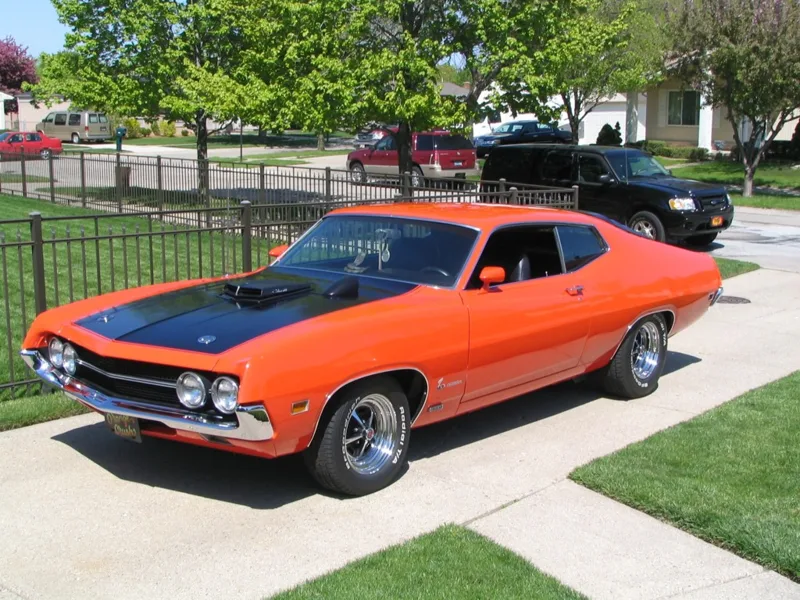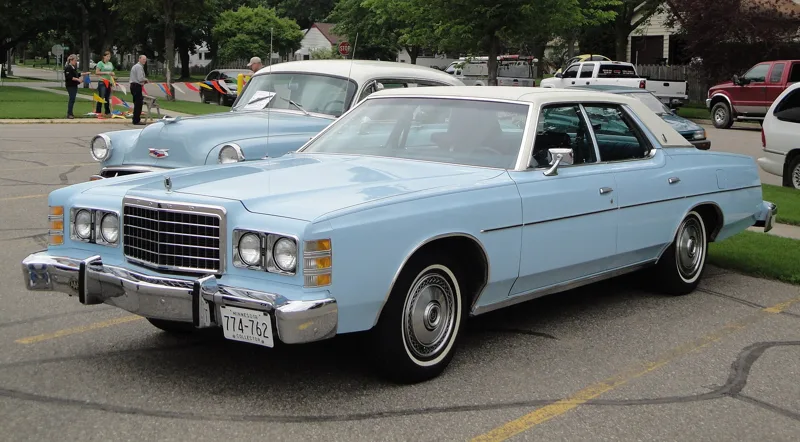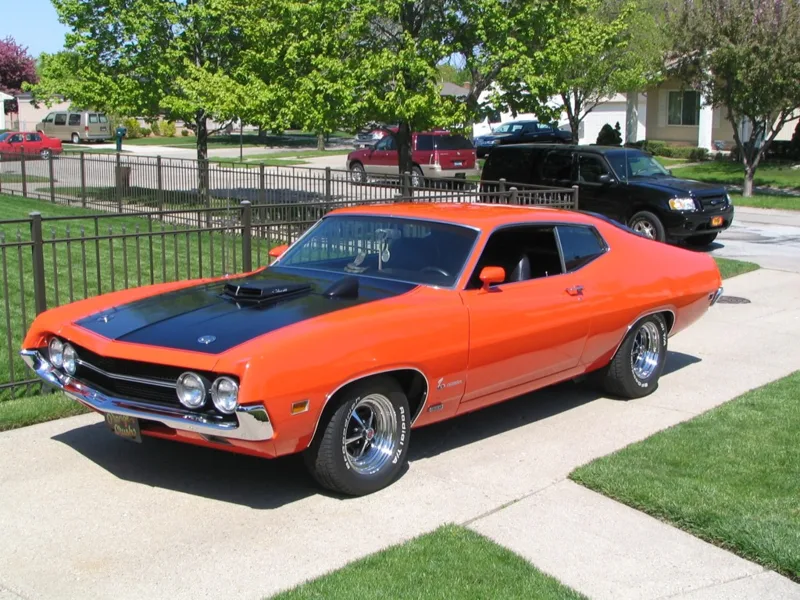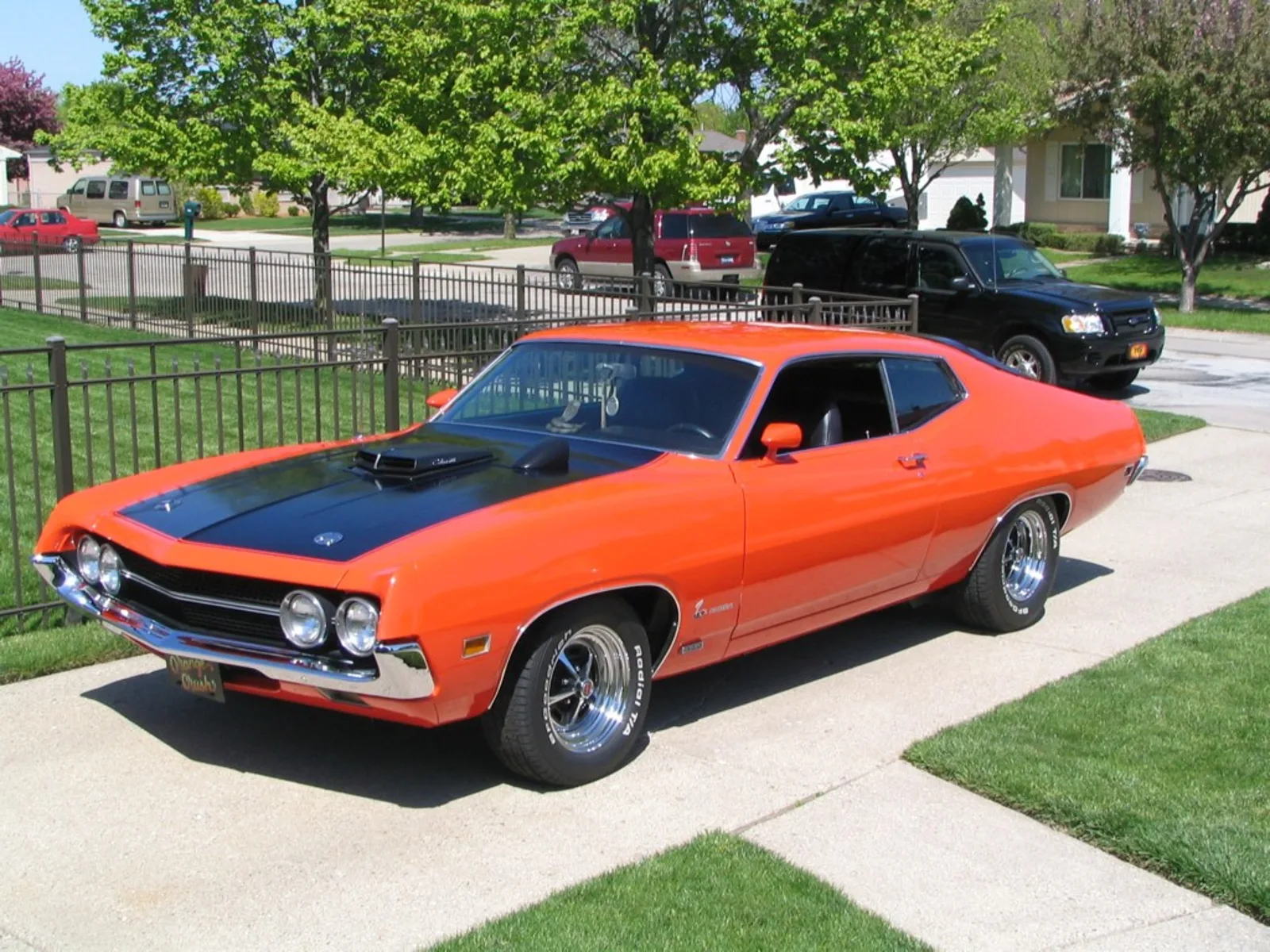
Ford's Torino and Mercury's Montego were built on the same intermediate bones from 1968, so the choice came down to badge, trim and the buyer's taste.
The Ford Torino and Mercury Montego were near-identical intermediate cars from 1968 until 1977, sold through Ford and Mercury dealers. The Torino carried the sporting badge, while the Montego offered Mercury's brand and its own Cyclone and GT versions, and both lines were redesigned together in 1972.
The Ford Torino and the Mercury Montego were built as near-identical intermediate cars from 1968, and they competed for the same buyers. Ford sold the Torino and Mercury sold the Montego, so the choice was less about engineering and more about the badge, trim and dealership. The comparison shows what separated two cars that shared much of their basic bones.
Were the Ford Torino and Mercury Montego rivals?
They were rivals in the sense that Mercury sold its own version of the same car. The Montego was the Mercury counterpart of the Torino, and the two competed for the same intermediate buyers in the same market.
The Torino was the Ford side of that pairing, and it was initially an upscale variant of the intermediate Fairlane. The Montego was Mercury's answer, introduced for 1968 across North America, and it replaced the Comet Capri and Comet Caliente in the Mercury line.
Because the two were essentially twins, the distinction lay mainly in trim, grille and brand. Buyers chose between a Ford and a Mercury, and between a Torino and a Montego, rather than between two different kinds of car.
Two near-identical intermediates from one platform, with the Torino's racing badge and the Montego's Mercury name separating them.
When did each car go on sale?
The Torino was produced for the North American market between 1968 and 1976, and it was introduced in 1968 as a new premium subseries of the Fairlane. The Montego arrived for 1968 as well, after first appearing in 1967 in Canada as part of the Meteor line.
The two cars were redesigned together in 1972, when the Torino and the second-generation Montego moved from unibody to body-on-frame construction. The Torino name continued through 1976, and the 1977 successor carried the LTD II badge.
The Montego's first two generations ended in 1977. For that model year Mercury discontinued the nameplate and expanded the Cougar to include a full range of sedans and wagons.
How were the first Torino and Montego built?
The 1968 Torino used a unibody chassis on the same platform as the 1966 and 1967 models. Its front suspension used short and long control arms with coil springs, and the rear used long semi-elliptical leaf springs on a solid axle.
The Montego's basic engineering matched that of its Ford twin. Its trims were the Montego, Montego MX and Montego MX Brougham, and its wagon, the Villager, followed in 1970.
The 1968 Torino line-up was large. Ford listed 14 intermediate models that year, and 16 in 1969 when the Cobra arrived. The base six-cylinder was a 200 cu in (3.3 L) unit, while the GT came with a 302 cu in (4.9 L) V8 as standard.
A six-week UAW strike in 1968 forced a change, and a 289 cu in (4.7 L) V8 became the base V8 and the standard engine on the GT. Ford did not change its sales literature to reflect the switch, so brochures still showed the older engine.
The Torino's body was drastically changed from the 1967 Fairlane, with a full-width recessed grille and horizontal quad headlights. The SportsRoof fastback, added for 1968, gave the Torino a sloping roofline that was later useful on the racetrack.
What are the Ford Torino and Mercury Montego specifications?
| Specification | Ford Torino | Mercury Montego |
|---|---|---|
| Years | 1968 to 1976 | 1968 to 1977 in its first two generations |
| Role | Upscale Fairlane, later the main intermediate name | Mercury counterpart of the Torino |
| Wheelbase (1968) | 116 in (2,946 mm) for two- and four-door models; 113 in (2,870 mm) for wagons | Same wheelbase options as the Torino |
| Body styles | Hardtop, SportsRoof fastback, sedan, Squire wagon | Hardtop, convertible, sedan and five-door wagon at launch |
| Base six-cylinder | 200 cu in (3.3 L); 250 cu in (4.1 L) from 1969 | 250 cu in (4.1 L) inline-six from 1969 |
| Performance V8 | 428 Cobra Jet, rated 335 hp (250 kW) | 428 Cobra Jet for non-MX Brougham cars |
| 1970s V8 range | Revised in later years; not recorded for the Torino here | 351 V8 standard in 1975, with 400 and 460 options |
| Quarter-mile, 1968 tests | Car and Driver 428 CJ: 14.2 seconds at 98.9 mph (159.2 km/h) | not recorded |
| 0 to 60 mph, 1968 test | Car Life GT with 390-4V: 7.7 seconds | not recorded |
| Production | 172,083 Torinos in 1968 | not recorded for the first generation |
| Body construction, 1972 | Body-on-frame from 1972 | Body-on-frame from 1972, split wheelbase |
| End of the line | Rebranded as the Ford LTD II for 1977 | Discontinued for 1977; Cougar line expanded |
What changed on the Montego for 1970 and 1971?
For 1970 the Montego gained an inch of wheelbase and a forward-thrusting grille, and the convertible was dropped from the range. The 1971 model adopted an egg-crate grille while keeping the forward-thrusting shape, and the Cyclone was added during that model year.
The V8 lineup was revised for 1970, dropping the 390 and 428 in favour of a 429, and high-performance versions were kept for the Cyclone. The 1971 model year then removed the 429, which left the 351 Cleveland as the highest-performance V8.
The Montego Villager, introduced in 1970, served as the wagon equivalent of the MX Brougham, and the concealed headlamps of the MX Brougham were dropped in 1971.
Which car had the stronger engines?
The 428 Cobra Jet was the most potent engine offered in the 1968 Torino, and it was thought to be under-rated at 335 hp (250 kW). Its mid-year introduction on April 1, 1968, made the car very rare.
Montego buyers could choose the same 428 Cobra Jet V8, but only for models other than the MX Brougham. The Montego also received a 351 V8 in 1969 and a 429 V8 when the 1970 revision dropped the 390 and 428.
Later, the Torino and Montego used a different range of engines. By 1975 both lines had a 351 V8 standard with 400 and 460 options, and the inline-six and 302 V8 had been dropped from the intermediate range.
How did the second-generation chassis differ?
The 1972 redesign switched both lines to a body-on-frame structure. The Montego adopted a split wheelbase, with 114 inches for two-door cars and 118 inches for four-door cars and wagons.
True four-door hardtops gave way to pillared hardtops, with frameless door glass supported by a thin B-pillar. Two-door Montegos kept hardtop roofs, though with much wider C-pillars.
In 1974 the Cougar XR7 adopted the two-door Montego body, and the fastback Montego GT hardtop was dropped. The engine range also changed, with a 460 V8 shared with the Mercury Marquis and Colony Park available from 1974.
How fast were the 1968 Torino GT and its rivals?
Car Life tested a 1968 Torino GT SportsRoof with a 390-4V engine, a C-6 automatic and a 3.25:1 axle. It recorded 0 to 60 mph in 7.7 seconds and a quarter-mile time of 15.8 seconds at 90 mph (140 km/h).
Car and Driver tested a 1968 Torino GT with the 428 Cobra Jet, Ram Air induction and 3.91:1 gears. It recorded a quarter-mile of 14.2 seconds at 98.9 mph (159.2 km/h), and the magazine said the Cobra Jet option, priced at $306, gave Ford fans a reason to rejoice.
Motor Trend found that cornering felt natural in the GT, and the Torino's handling gave it a good balance of power and grip when properly equipped.
Did the Montego have a performance version?
The Montego had its own performance route through the Cyclone. Mercury added the Cyclone to the Montego line during the 1971 model year, and in 1972 it returned as an option package, of which only 30 were produced.
The Montego GT replaced the Cyclone as the Mercury's sporty fastback from 1972 to 1973, and it was a counterpart of the Ford Gran Torino SportsRoof for the first time.
The Torino had its own muscle-car range, with the Cobra and the Cobra Jet. The Torino's racing record, including its use as the base for NASCAR entrants, gave it a stronger motorsport identity than the Montego.
Which car sold more?
The Torino sold strongly in its first year, with 172,083 units built in 1968. Including Fairlane production, the total for the year reached 371,787 cars, and a 1968 Torino GT convertible was the Indianapolis 500 pace car.
The Montego's sales rose sharply after the 1972 redesign, with sales up 136% over 1971. The MX Brougham saw the largest gains, with the two-door up 897% and the four-door up 1,021%.
The 1973 fuel crisis then pushed Montego sales lower. The Montego's total production for its first two generations is not recorded in this comparison, so a complete sales race cannot be called.
How did the Montego's later revival compare?
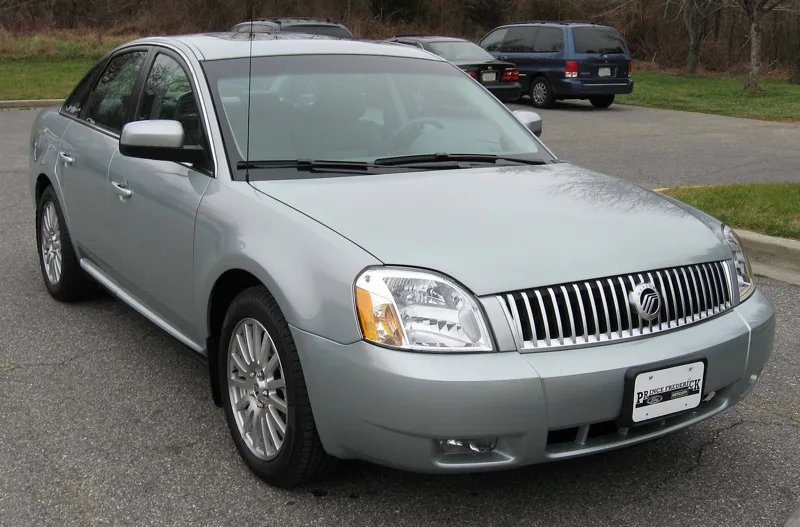
After a 28-year absence, Mercury revived the Montego nameplate for 2005 as a full-size sedan, slotted between the Milan and the Grand Marquis. It was the Mercury counterpart of the Ford Five Hundred, and it was built at Chicago Assembly.
The 2005 car used the Ford D3 platform developed with Volvo, with front-wheel drive, and a 3.0L Duratec V6 at launch. For 2008 the Montego became the final generation of the Mercury Sable.
The 2005 car was offered solely as a four-door sedan, and HID headlamps and LED taillamps were standard on the Montego alone. Its interior was built for five passengers, with a 60/40 fold-down rear seat.
That revival had little in common with the Torino twin of the 1970s. It was a different car in a different class, so the comparison is best read as a story of the original 1968 to 1977 pairing.
Which car suits which buyer?
The Torino suits a buyer who wanted a Ford intermediate with a strong performance and racing identity, from the GT and the Cobra Jet to the SportsRoof fastback. The Montego suits a buyer who preferred Mercury's badge and trim, and who wanted the same underlying car with a more refined feel.
The figures do not settle which was the better car. The Torino had the stronger sporting heritage and the more recorded road-test data, while the Montego offered the Mercury brand and the Cyclone and Montego GT as its own sporting options.