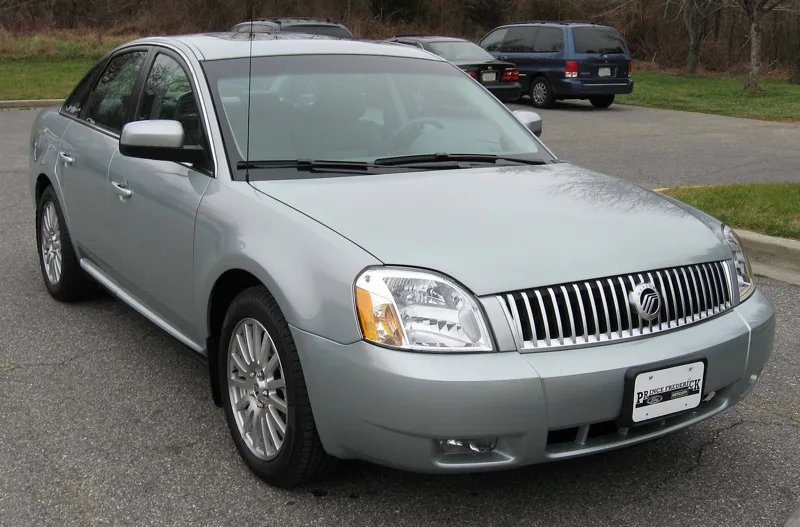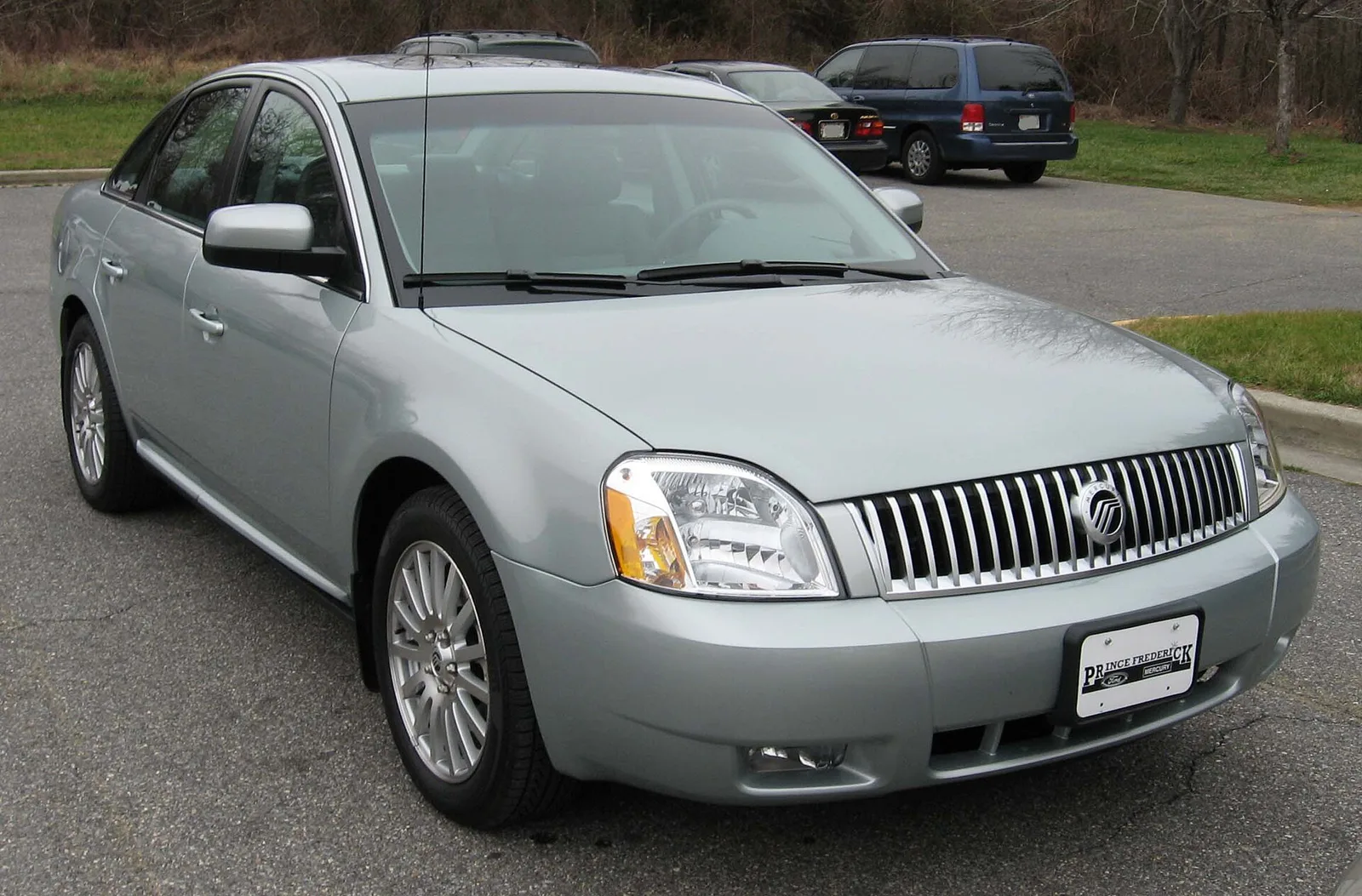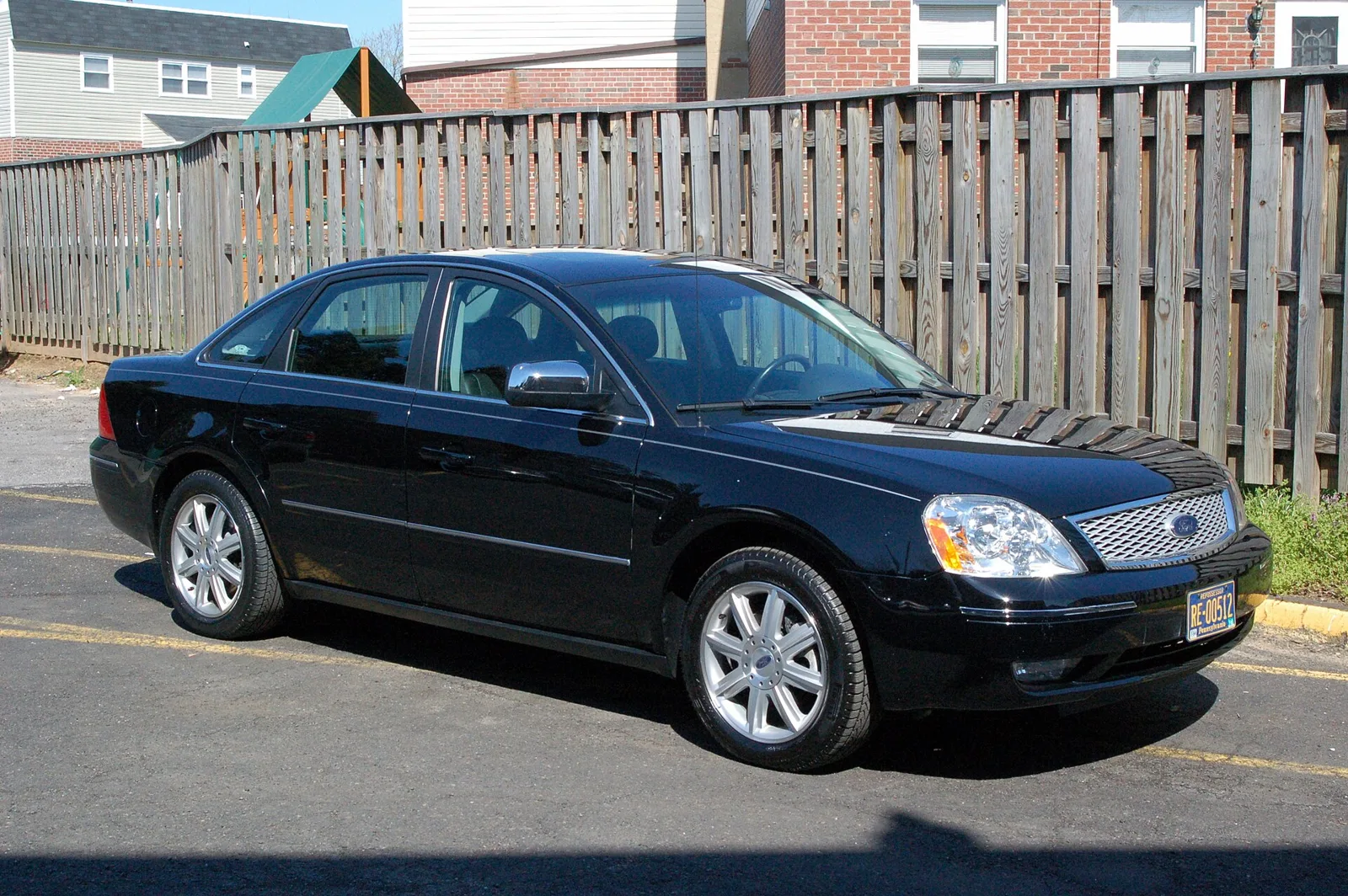
A high-roof, front-drive full-size sedan from 2005 to 2007 with Volvo-derived safety, a 203 hp V6 and a styling brief that critics found too careful, before its nameplate changed.
The Ford Five Hundred was a high-roof, front-drive full-size sedan built in Chicago for the 2005 to 2007 model years. It used the D3 platform derived from Volvo's P2, carried a 203 hp V6, and was renamed as a fifth-generation Taurus.
The Ford Five Hundred was a full-size, four-door, five-passenger sedan with a high roof, a front engine and front- or all-wheel drive. Ford built it in Chicago for North America and Mexico. It had one generation, covering 2005 to 2007, before it was rebadged as a Taurus.
Why did Ford build the Five Hundred?
The Five Hundred was a product of several pressures at Ford. The company had bought a string of brands, including Volvo Cars in 1999, and it needed to get a return on those investments. Its market share was slipping, falling from 18.3 percent in 2004 to 17.4 percent in 2005, and its Way Forward plan called for a restructuring.
Buyers were also moving away from sedans towards minivans and SUVs and crossovers. Ford set out to rethink the traditional sedan and wagon formula, and the Five Hundred was the result.
The car first surfaced as a lone concept drawing in 2002, at the New York show. The production version followed in 2004 at the North American International Auto Show, where two platform-mates, the Mercury Montego and Ford's crossover Freestyle, also appeared.
A tall, Volvo-engineered sedan that was praised for its packaging, criticised for its engine and then renamed as a Taurus.
How did the Five Hundred's design come together?
Internally the car was known as the D258. George Bucher, Ford's chief designer, styled it under the direction of J Mays, the vice president of design, who also gave the car its name. Mays recalled the 500 suffix Ford had used for a model's top trim, as on the Galaxie 500.
Critics noted that the body was minimalist outside and simple in its interior graphics. The cabin was tall, the seating was high, and the greenhouse was prominent, a combination that recalled the Volkswagen Passat and the Audi A6. Mays had designed cars for the Volkswagen Group, including the Passat and Audi models, before moving to Ford.
Phil Martens, a Ford vice president, claimed the Five Hundred came first among cars built around the crossover idea, at a time when the industry was chasing that concept. The argument was that the car borrowed the height and seating of a crossover while keeping the outline of a sedan.
What platform did the Five Hundred share?
The car sat on the Ford D3 platform, which it shared with the Montego and Freestyle. The D3 was a development of the Volvo P2 architecture that underpinned the S80, and it marked Ford's move to front-wheel drive in its full-size sedans.
Buyers could add a Haldex all-wheel drive system, a unit borrowed from the S80 and XC90, on every Five Hundred and Montego.
The suspension was independent at both ends. The front used MacPherson struts, and the rear used a multi-link axle with coilover shocks, with stabiliser bars front and rear. Four-wheel anti-lock disc brakes were fitted, with 12.5-inch discs at the front and 13-inch discs at the rear.
What engine and transmission did the Five Hundred have?
The Five Hundred used a Duratec V6 that made 203 hp. The engine had been developed with Porsche, and its cylinder head used the Cosworth casting method. The V6 was the only engine offered at launch, and its output was the same across every trim.
Front-drive cars came with a six-speed Aisin automatic. The gearbox depended on the drive layout. All-wheel drive cars used a ZF continuously variable transmission, which was a first for a US domestic automaker. The CVT was one of the car's selling points.
Under the bonnet the car also used new powertrain electronics, with a CAN bus system and a Black Oak controller. The software relied on PowerPC machine language and floating-point calculations to speed up execution.
How safe was the Five Hundred?
Volvo engineers worked on the car's safety. The front seats were mounted on a hydroformed steel crossbeam that ran between the B-pillars, with an identical beam above, and a reinforced roof crossmember completed the structure. Ford marketed the system as SPACE, short for Side Protection and Cabin Enhancement, a development of Volvo's Side Impact Protection System.
The front frame rails were redesigned to absorb more impact energy. Volvo also contributed the collapsible steering column and the roof-mounted airbags. Dual front airbags came as standard, and a safety package added side and curtain airbags.
The Five Hundred earned a five-star government rating for front and side impacts, and the Insurance Institute for Highway Safety gave it a Best Pick award for frontal crash performance.
How was the Five Hundred's interior packaged?
Ford called its approach a high-package strategy. It aimed to combine the interior room of a large car with the exterior size, handling and fuel economy of a mid-size car. The raised greenhouse gave an elevated hip point and a more upright seating position, along with about three and a half feet of rear legroom.
The Five Hundred stood 61.5 inches tall, more than five inches taller than the Taurus sold alongside it. The rear seat sat higher than the front, which helped rear passengers see out. Visibility and safety were both reasons for the high seating.
A 60/40 folding rear seat supported a 21 cubic foot trunk, which was larger than the one in the Lincoln Town Car. With the optional folding front passenger seat, the car could carry items up to ten feet long, and its EPA-rated passenger volume was 107.5 cubic feet.
What trims did the Five Hundred come in?
At introduction Ford sold three trim levels: the SE, the SEL and the Limited. All wheel drive was offered across the range, with self-levelling shocks included. Base prices started at US$22,795 for a front-drive SE and climbed to US$28,495 for the all-wheel drive Limited.
The SE came with 17-inch painted alloy wheels, cloth upholstery, a six-way power driver's seat, cruise control and a CVT. Ford's SecuriLock immobiliser and the Securicode keypad, which could grant limited access, were standard, along with a compact spare tyre and anti-lock brakes.
The SEL added a message centre with a trip computer and compass, an electrochromic rear-view mirror, fog lamps and automatic headlamps. Its front seats were eight-way powered, and the audio system included a six-disc CD player with MP3 capability.
The Limited added heated shirred leather seats, a two-position memory driver's seat, cream-coloured gauges and an upgraded Audiophile sound system with a subwoofer. Its options included a power moonroof, parking sensors and a HomeLink transmitter.
Every model came with a warranty of 36,000 miles over three years.
What changed in the 2006 and 2007 model years?
For 2006 Ford offered a Pioneer navigation radio with Sirius satellite radio on the Limited. A power moonroof and leather seats became optional on the SE, and traction control, previously a required no-cost item on front-drive models, became an option. A rear entertainment system called the Family Entertainment System was also offered.
A mid-year 2006 change replaced the mid-door side trim with a small sill moulding and added black mudguards at each wheel. For 2007 the SE was discontinued, and the SEL and Limited built after September 4, 2006 gained two-row side curtain airbags.
The 2007 range also made shirred leather optional on the SEL, and it added an 18-inch eight-spoke alloy wheel package with a chrome grille. Ford extended the powertrain warranty to five years or 60,000 miles (97,000 km).
How did the Five Hundred sell?
Ford projected annual sales of 120,000 for the Five Hundred, a figure meant to lift profitability and reduce the need for incentives. Actual sales reached about 65 percent of that projection, and the gap was the car's central commercial problem.
The car sold 241,000 units in the United States over three model years. Ford offered no real market incentives in the first model year, and it had to offer substantial discounts midway through the second. The result was a car that sold well below plan.
What did critics say about the engine?
The Five Hundred's 203 hp engine became a point of criticism. Ford's own marketing manager acknowledged at launch that the power output was one of the hurdles the car faced. Writers generally considered its performance acceptable but lacklustre. Many reviewers shared that view.
Tom and Ray Magliozzi were more forgiving. They found the V6 adequate for a car of its weight, which was just under 4,000 pounds, and they said it cruised comfortably at highway speed. Motor Trend's Julian Mackie was less kind about the exhaust note, which he described in a far less flattering word.
What did critics say about the styling?
Reviewers were divided, with some praising the look as handsome and others calling it overly cautious. Those views were common across the trade press. The design team had aimed for an unpretentious kind of luxury, and the New York Times described the look as rigorously understated.
Some reviewers were more critical. Dan Neil of the Los Angeles Times praised the car's sensible proportions and its packaging, but said it was not beautiful or exciting. He also criticised the audio and climate controls, which he thought looked cheap.
The upper styling and greenhouse were widely seen as close to Volkswagen and Audi designs, and critics linked that to Mays's earlier work at the Volkswagen Group. In 2006 NPR argued that a concept that had worked well on paper had been blanded out in production.
How was the Five Hundred marketed?
Ford sold the car with the tagline Elevating the Sedan, which pointed to its height and its elevated seating, marketed as Command View. The 2004 Chicago press launch included a guerrilla campaign with ad mats that used local slang, including mock phrases such as Da Comfort and Da Style.
A sidewalk advertising plan along the city's Magnificent Mile also caused a dispute. The city said Ford never received permission for the signs, while Ford said a verbal approval had been given by voicemail.
Why did the Five Hundred end production?
Production ended on April 12, 2007, along with the Mercury Montego and the Ford Freestyle. At the 2007 North American show Ford had introduced a mid-cycle update for the Five Hundred and Montego, with new front and rear styling, new interiors and a 263 hp V6 with a six-speed automatic.
Ford CEO Alan Mulally then renamed the Five Hundred and Montego as the fifth-generation Ford Taurus and the Mercury Sable. The Freestyle became the Taurus X. The rename relied on the larger brand familiarity of the Taurus and Sable names.
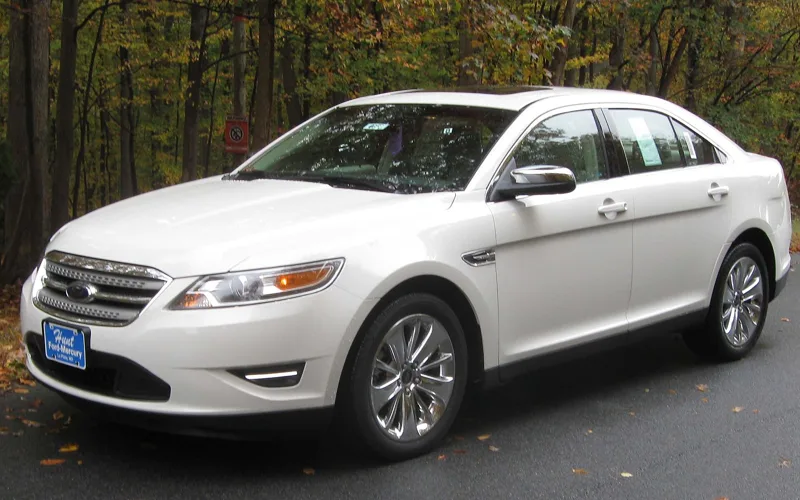
The Taurus was redesigned for the 2010 model year, retaining the D3 chassis but with more aggressive styling. That car became the final Taurus generation for North America.
What are the Ford Five Hundred specifications?
| Specification | Detail |
|---|---|
| Body | Full-size four-door, five-passenger, high-roof sedan |
| Production | 2005 to 2007 model years; ended April 12, 2007 |
| Platform | Ford D3, a variant of the Volvo P2 |
| Engine at launch | Duratec V6, 203 hp |
| Engine, 2008 update | V6, 263 hp; six-speed automatic |
| Transmission, front drive | Six-speed Aisin automatic |
| Transmission, all-wheel drive | ZF continuously variable transmission |
| All-wheel drive | Haldex system, optional on all models |
| Brakes | Four-wheel anti-lock discs; 12.5-inch front, 13-inch rear |
| Height | 61.5 inches |
| Trunk | 21 cubic feet |
| EPA passenger volume | 107.5 cubic feet |
| Base price | US$22,795, front-drive SE |
| Top price | US$28,495, all-wheel drive Limited |
| Projected annual sales | 120,000; actual about 65 percent |
| Domestic sales | 241,000 over three model years |
| Warranty at launch | 36,000 miles over three years |