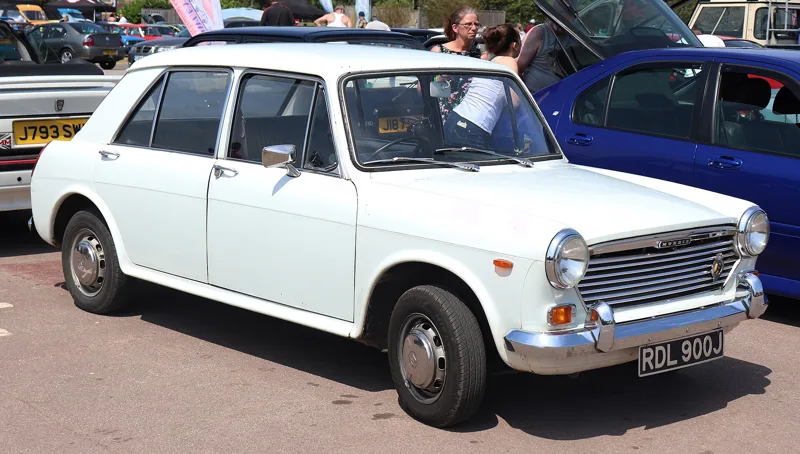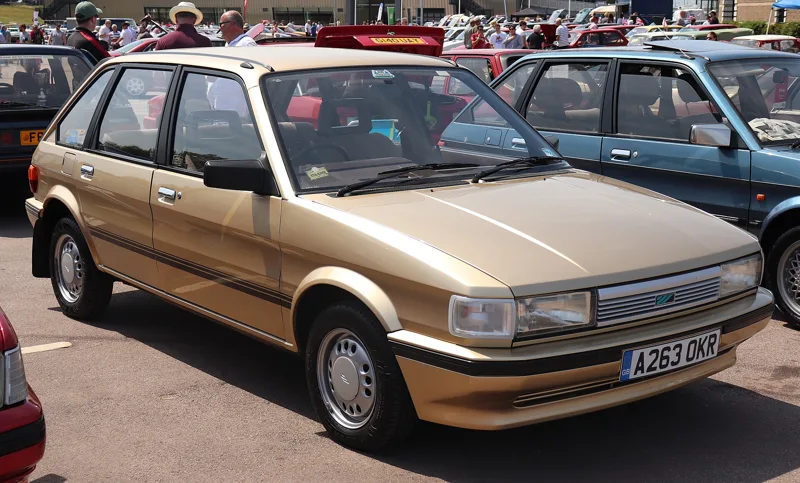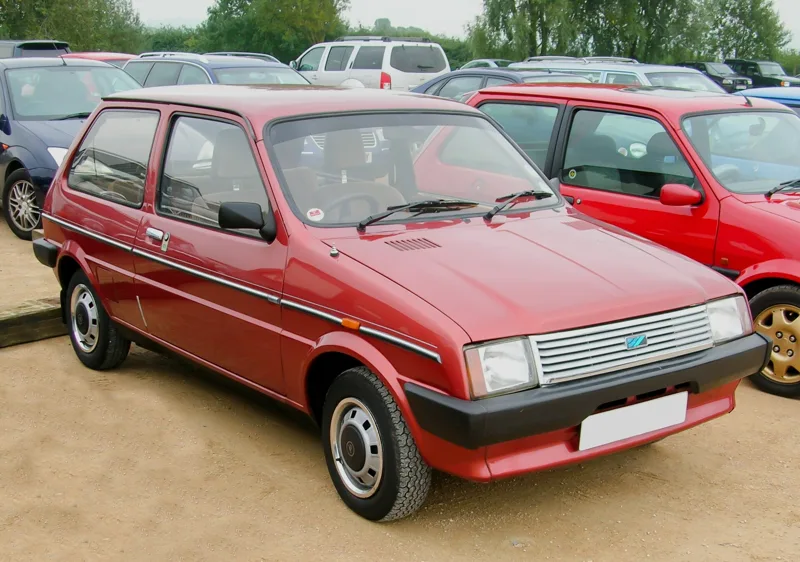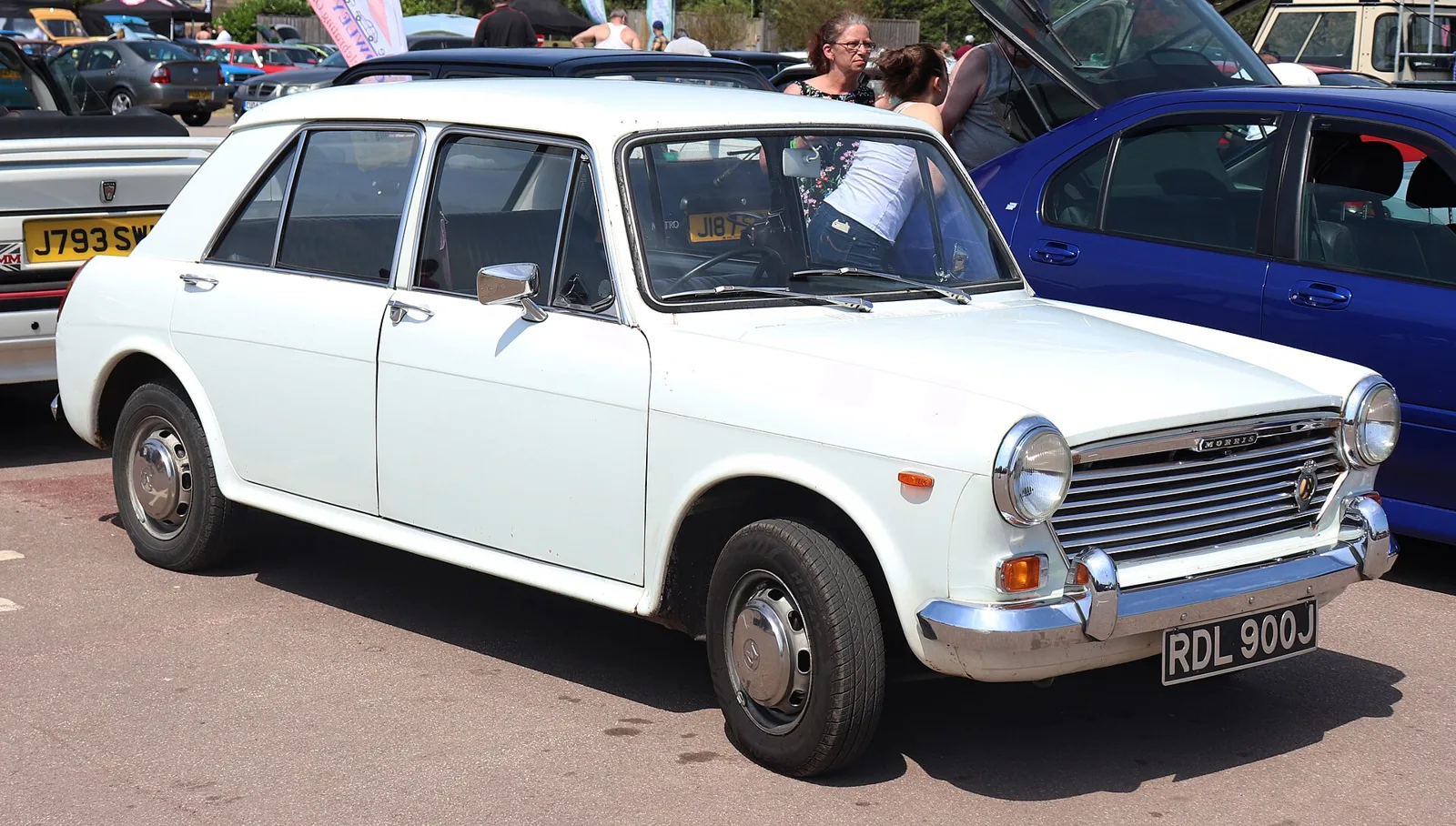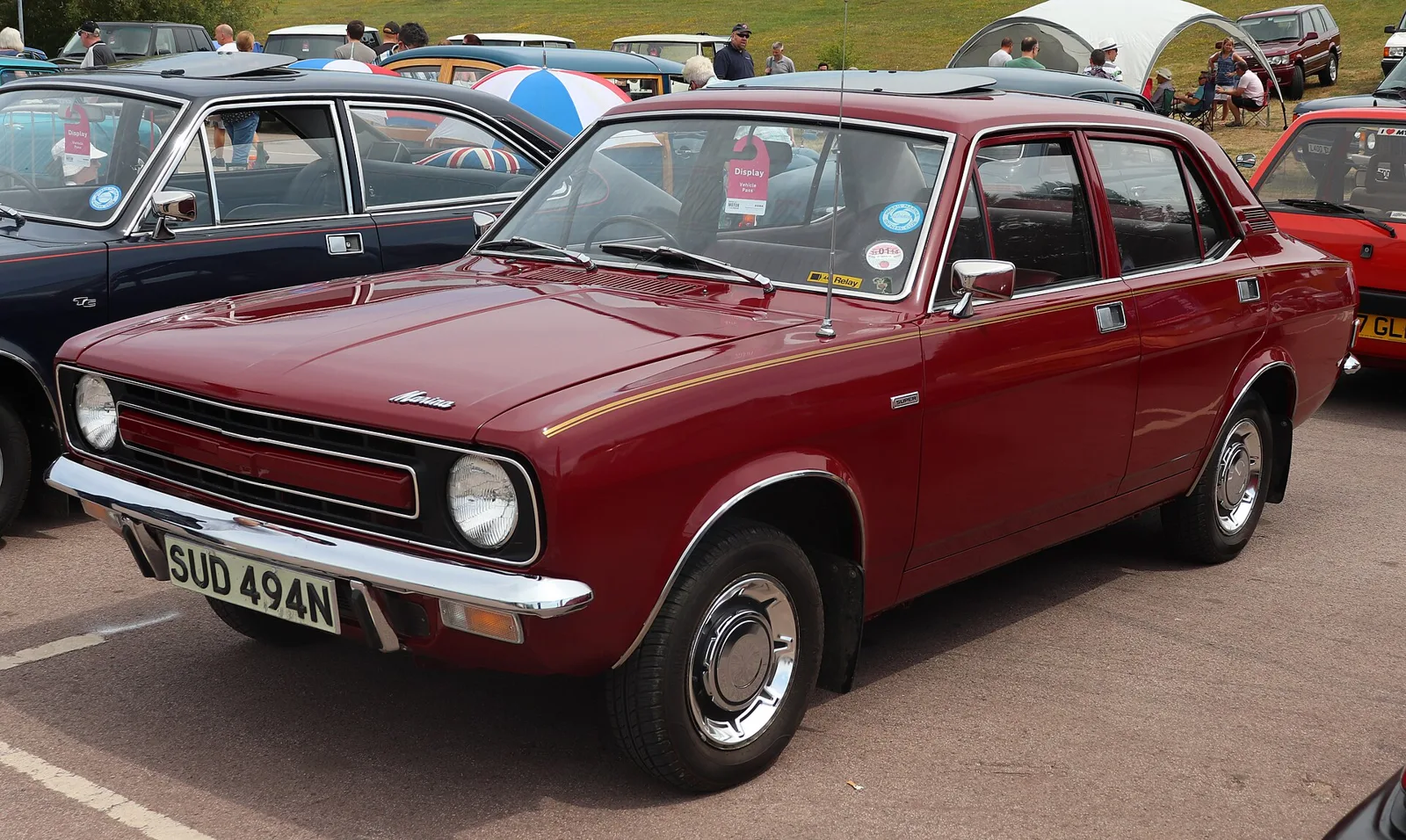
A parts-bin saloon, a round-bodied saloon with a square steering wheel and a five-speed hatchback with a troublesome gearchange: what each got right and wrong.
The Austin Maxi, Morris Marina and Austin Allegro were British Leyland family cars sold together in the 1970s. The Maxi was a five-door hatchback, the Marina a conventional rear-drive saloon assembled from parts-bin components, and the Allegro a front-drive saloon. All three were replaced by the Austin Maestro and Montego.
Three British Leyland family cars were on sale at once in the 1970s, and only one of them was allowed a hatchback. That decision, made by BL marketing, shaped the Austin Maxi, the Morris Marina and the Austin Allegro, and it helps explain why each car ended up with a reputation it struggled to shake off.
Each had something going for it: the Maxi's space, the Marina's simplicity, the Allegro's front-wheel-drive ride. Each also carried a flaw that the press and the public seized on. Together they show a company trying to sell three overlapping ideas with too little money and too much internal politics.
Why British Leyland built three family cars at once
British Leyland was created in 1968, when Leyland Motors merged with British Motor Holdings, the parent of Austin and Morris. The new management, drawn largely from the truck and bus side, were shocked to find that, apart from the Austin Maxi, which was in the final stages of development, and a tentative Mini replacement, BMH had nothing new in the pipeline.
The mass-market range was ageing fast. The Morris Minor dated from 1948, the Austin Cambridge and Morris Oxford "Farina" cars from 1959, and the 1100/1300 saloons were already a decade old. BL's plan was a quick replacement for the Minor and the Farina, to stay on sale for five years at most, until an entirely new car could take over.
To separate its brands, BL decided that Morris would offer conservative, traditionally engineered cars, while Austin and others would sell the adventurous ones, with the transverse-engine front-wheel-drive layout that Alec Issigonis had developed for the Mini. So the new car would be a Morris, with rear-wheel drive and a live rear axle like the Ford Escort, Ford Cortina and Vauxhall Viva. That also suited export markets such as South Africa, Australia and New Zealand, where BMC's innovative cars were considered too fragile and complex.
Three British Leyland family cars were on sale together, and only one was allowed a hatchback.
Austin Maxi: five speeds, five doors and a troublesome gearchange
The Maxi, codenamed ADO14, was the last car designed under BMC and the last production car by Issigonis, and it was the first launched by British Leyland. Under the original plan it would have been the "Austin 1500", with a Morris saloon to follow, but the new management dropped the notchback and developed the Marina instead. The new chairman, Lord Stokes, renamed the hatchback Maxi in homage to the Mini of ten years earlier.
It was launched in Oporto, Portugal, on 24 April 1969, and it was one of the first cars featured on the BBC programme Wheelbase. Under the practical, spacious body sat an all-new front-wheel-drive chassis and a five-speed manual gearbox, and a fifth gear on a family car was a rarity that many makers did not copy for more than a decade.
The gearbox also did the damage. The selector had a cable linkage that stretched, and while Austin quickly changed it to rods, by then the car's image was tarnished. All models suffered from the "cogs in the sump" layout, where gearbox and engine shared one oil supply, and the clutch oil seal was prone to leaking.
The 1,485 cc E-Series engine was joined in 1971 by a 1750 version. Top speed of the bigger car was 156 km/h (97 mph), and the smaller-engined one could exceed 145 km/h (90 mph). The twin-carburettor 1750 HL followed in 1972 with twin SU carburettors and produced 91 bhp (68 kW) at 5250 rpm.
Styling hurt it. To save tooling costs Austin reused door panels from the 1800 "Landcrab", which gave the Maxi a long wheelbase for its length and made it look like a scaled-down 1800, at a time when American-inspired "coke bottle" shapes were in vogue. A four-door saloon prototype, badged as a Morris, was built but dropped.
The car did plenty right. Inside it was roomy and comfortable, and it came with keen prices and reasonable running costs. The rear seat folded back as well as forward, so with fully reclining front seats it made a spartan bed. Thieves left it alone: it was voted the least stolen car in 1971 and 1972. Its dull interior and poor build quality let it down, although it was never as notorious as the Allegro and Marina. In Australia, tariff changes made building it uneconomic, so Leyland developed the Morris Nomad, a hybrid that combined the Maxi's engine, gearbox and tailgate with a Morris 1100 body.
John Lennon crashed a white Maxi into a ditch on a single-track road near Loch Eriboll in the Scottish Highlands on 1 July 1969. From 1975 to 1980 British Leyland supplied the Lawn Tennis Association with official Wimbledon Maxis. The Austin name was dropped in 1977 on the recommendation of the Ryder Report, and 1978 brought Hydragas suspension in place of Hydrolastic.
Production ended on 8 July 1981, after 450,297 cars over 12 years, well short of the projected targets. The hatchback that BL promoted had a side effect: BL marketing insisted the Maxi stay the sole hatchback in the lineup, which stopped the Allegro and the Princess from receiving a hatchback even though both designs could have taken it. The policy ended with the Rover SD1 in 1976, after which BL launched a raft of hatchbacks.
Morris Marina: designed to be unadventurous
The Morris Marina, codenamed ADO28, was a small family car made by the Austin-Morris division from 1971 to 1980. It replaced both the Morris Minor and the Morris Oxford, and it was sold in saloon, estate, coupe, pickup and van forms. In some markets it was the Austin Marina, the Leyland Marina or the Morris 1700. It was popular in Britain but rarely came close to challenging the Ford Cortina, and about 1.2 million were built. Various assessments rank it among the worst cars ever built.
Roy Haynes, who had designed the Cortina Mark II, drew it, and the Marina shares some of that car's styling and dimensions. Without the budget to develop two cars to fight the Escort and the Cortina, BL sized the Marina to take on both, so it ended up only marginally smaller than the Cortina. Haynes imagined a premium sporting coupe in the mould of the Ford Capri and a saloon for company-car buyers. He also proposed a floor pan common to several models, which BL's management thought too radical. Triumph designer Harry Webster was brought in to push the project forward, Haynes left, and his assistant Harris Mann took over as chief designer.
A car built from the parts bin
The Marina used existing BMC and Triumph components from the group's extensive parts bins, which made it simple and unadventurous by design. Cowley, the plant chosen to build it, was largely as it had been in the 1920s, and Leyland had to rebuild it, pushing costs up. An overpass had to be built over a municipal road that cut the engine line in two, and the road was then bought from Birmingham's local authority.
The Marina was meant to use E-Series engines, but their tall layout led to overheating and oil burning in the Maxi, so BL chose the A- and B-Series units instead. The body had already been drawn around the bigger engine, which left the car with its notorious "full nappy" rear-end styling. Design to production took just 18 months, and the board cut costs further. It dropped MacPherson struts in favour of an old Morris Minor design and abandoned a new four-speed gearbox, and the coupe used the saloon's front doors, so it became an obvious derivative of the saloon rather than the sporting model Haynes intended. The dashboard was illogical, with the radio and warning light controls facing the passenger.
Engines were 1.3-litre A-Series and 1.8-litre B-Series units driving the rear wheels through a live axle, with torsion bars at the front and leaf springs at the rear. An estate followed in 1972. The TC version had a twin-carburettor engine like the MG MGB, and BL Special Tuning offered a body kit for it. A 1.5-litre diesel, making only 37 or 40 hp depending on whose figures you trust, was sold in a few European countries but never in Britain, and 3,870 were built from 1977 to 1980.
The wipers and the colours
Perhaps the Marina's best-known quirk was the wipers, which were arranged as though for a car driven on the opposite side of the road. Prototype drivers had reported that airflow at some speeds lifted the wiper nearest the A-post off the glass, and BL judged the problem serious enough to change the layout, though later road testers questioned both the fix and its basis. Colours were typical of the decade: Harvest Gold, Limeflower Green, Blaze Orange and a purple called Black Tulip.
The car launched on 27 April 1971, with a night shift at Cowley from May. BL reported 2,000 cars a week and projected 5,000 by the end of 1971, which proved over-optimistic. Even so, the 100,000th Marina, a 1.8TC, left the line on 29 March 1972, and by February 1973 BL announced 250,000 had been built in under two years.
A facelift in 1975 brought new grilles, dashboard and seats, and Allegro-style seats followed in May 1977. The overhead-camshaft O-Series 1.7-litre engine replaced the B-Series 1.8 in 1978. In 1980 the Marina gave way to the Ital, the same car with mild styling changes, and the Ital ran until 1984, when the Austin Montego replaced it and the Morris marque was axed after more than 70 years.
Austin Allegro: the quartic wheel and the "All Aggro" nickname
The Austin Allegro was made from 1973 to 1982 as a replacement for the 1100 and 1300. The same car was built in Italy by Innocenti from 1974 to 1975 as the Innocenti Regent. In total, 642,350 Allegros were produced in ten years, less than a third of the 2.1 million 1100s and 1300s sold in the previous 11 years.
The Allegro was a saloon, not a hatchback, because BL had given that feature to the Maxi. Front-wheel drive was paired with the familiar A-Series engine, with the gearbox sitting in the sump, while higher-specification models took the Maxi's E-Series in 1500 and 1750 cc. The body rode on Hydragas suspension, derived from the Hydrolastic system of the 1100/1300.
How the shape went wrong
Harris Mann's original styling proposal had the sleek, wedge-like shape of the Princess. But management, keen to control costs, wanted to fit the existing E-Series engine and the bulky heating system from the Marina, and the low bonnet line was lost. The bodyshell became rounder and tubbier, and went against the sharp-edged Giugiaro styling then becoming fashionable. Jeff Daniels' 1980 book on the company reports that BL accepted this because it wanted to follow the Citroen approach of advanced technology with timeless styling.
Early cars featured a "quartic" steering wheel, rectangular with rounded sides, which was said to give extra room between the wheel and the driver's legs. Buyers disliked it, and it disappeared in 1974 as the HL replaced the SS, although BL waited until June 1975 to announce the change quietly. The criticism stuck all the same, and the Allegro is still associated with having a "square steering wheel". Journalists also criticised the gearchange, and a series of design flaws on early cars earned it the nickname "All Aggro". Most were fixed in the Allegro 2 of October 1975, but the reputation lingered.
There were upmarket versions. In September 1974 BL introduced the Vanden Plas 1500, with real leather seats, deep-pile carpet, a walnut instrument panel, walnut tables for rear passengers and a prominent grille. Its list price at launch was GBP 1,951, against GBP 1,159 for the starting Allegro. A three-door estate arrived in April 1975, but it ran for only about 100 days before the Series 2, which makes the Series 1 estate rarer than most of the range.
New Zealand Motor Corporation began assembling Allegros in 1975, and only a few hundred "Mark Ones" were built before the Mark Two. The company later dropped the car, though a last batch of 48 "Mark Three" kits was still shipped from England and assembled.
The Allegro 2 and 3 years
By the Allegro 2, rivals had moved on: the Mk2 Ford Escort, the highly acclaimed Volkswagen Golf, the Datsun Sunny and the Vauxhall Chevette had all arrived. At the end of 1976 BL held exploratory talks about moving Allegro production from Longbridge to its plant at Seneffe in Belgium, to free capacity for a planned Mini replacement, but UK-market cars stayed in Britain. The 1979 Equipe, a silver 1.7-litre sport model with alloy wheels, was aimed at the Golf GT and the Escort RS, but sales were poor.
The Allegro 3, introduced at the end of 1979, had the 1.0-litre "A-Plus" engine, a new grille with the Austin-Morris chevron logo and a modernised interior, including air vents shared with the Jaguar XJ6. It faced hatchback opposition from the Escort III and the Vauxhall Astra. Even so, as late as 1979 the Allegro was the fifth-best-selling new car in Britain. By 1981 it had fallen out of the top ten as buyers turned to the Triumph Acclaim and the Austin Metro, launched in October 1980. Production finished in March 1982, and the Maestro replaced it.
Richard Porter's book Crap Cars ranks the Allegro as the second worst car on its list, behind only the VW Beetle.
British Leyland family cars compared
| Model | Years built | Layout | Body | Production |
|---|---|---|---|---|
| Austin Maxi | 1969 to 1981 | Front-wheel drive | Five-door hatchback | 450,297 |
| Morris Marina | 1971 to 1980 | Rear-wheel drive | Saloon, estate, coupe, pickup, van | About 1.2 million |
| Austin Allegro | 1973 to 1982 | Front-wheel drive | Saloon, later estate | 642,350 |
Why British Leyland cars struggled
Strikes and other industrial action plagued BL all decade, and the Marina was among the casualties. Labour disputes eroded jobs, and meanwhile European and Japanese makers launched fresh designs, the VW Golf among them, that these cars were never likely to match. The replacements were repeatedly delayed, finally appearing as the Austin Maestro in 1983 and the Montego in 1984, and by then BL had abandoned separate Austin and Morris ranges. It lacked the money to develop a full rear-drive Morris range and an equivalent front-drive Austin one, and front-wheel drive was becoming accepted across the market.
What came after the Maxi, Marina and Allegro
After the Maxi ended, BL met demand for a larger hatchback by revamping the Princess as the Austin Ambassador, which lasted until the Montego arrived in 1984. That left BL with a single model in a sector where the Maxi had been one of three designs competing against the Ford Cortina. The Maxi's lines at Cowley were taken over by the Triumph Acclaim, launched in October 1981. The Maestro was introduced in March 1983 to replace the Allegro and the Maxi, with the Montego following for the Marina's market.