A Hemi racer sold to the public, rising horsepower through the letter series, a cheaper cousin that carried the name to 1971 and a revival built on Mercedes engineering.
The Chrysler 300 began with the 1955 C-300, a 300 hp Hemi coupe built for NASCAR. Letter-series cars ran to the 300L in 1965, a cheaper non-letter 300 followed to 1971, and a rear-drive 300C returned for the 2005 model year with Mercedes-Benz engineering.
Chrysler sold only 1,725 examples of its 1955 C-300, a Hemi coupe built to win NASCAR races. Half a century later the name came back on a four-door sedan, and a rapper phoned Chrysler's chief executive to ask for one.
The line runs in three acts. A run of letter-series cars from 1955 to 1965 were for years the most powerful built in America, a cheaper non-letter 300 carried the name until 1971, and the rear-drive 300C of 2005 borrowed the look of the original and a good deal of Mercedes-Benz engineering.
The 1955 Chrysler C-300: a racecar sold to the public
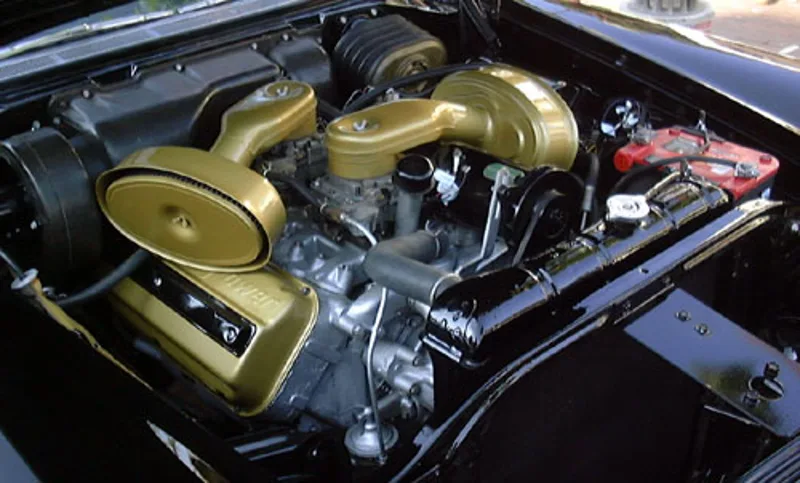
The car was named for its engine. The 331 cubic inch (5.4 litre) FirePower V8 made 300 hp (220 kW), and Chrysler advertised the result as America's Most Powerful Car. The C- in the name was just a Chrysler model prefix, and the coupe sat on the C-68 New Yorker series. It never carried a letter, but collectors call it the 300A in hindsight.
It was built for NASCAR. Chrysler sold it to private owners so that it qualified for racing, and the Hemi under its bonnet was the company's most powerful engine, named for the hemispherical shape of its cylinder heads. Dual four-barrel carburettors, solid valve lifters, a race camshaft, stiffer suspension and a free-breathing exhaust were what set it apart from other Chryslers. The engine and gearbox also went into the French Facel Vega Excellence and the Cunningham C-4R, which finished the 1954 24 Hours of Le Mans.
The idea was a driver's car with sports-car pace and a measure of comfort, a grand tourer in the post-war European style. The Mercedes-Benz 300 SL had arrived in North America in February 1954, the BMW 503 came about the same time as the Chrysler, and the Bentley Continental had appeared in 1952.
The parts-bin look
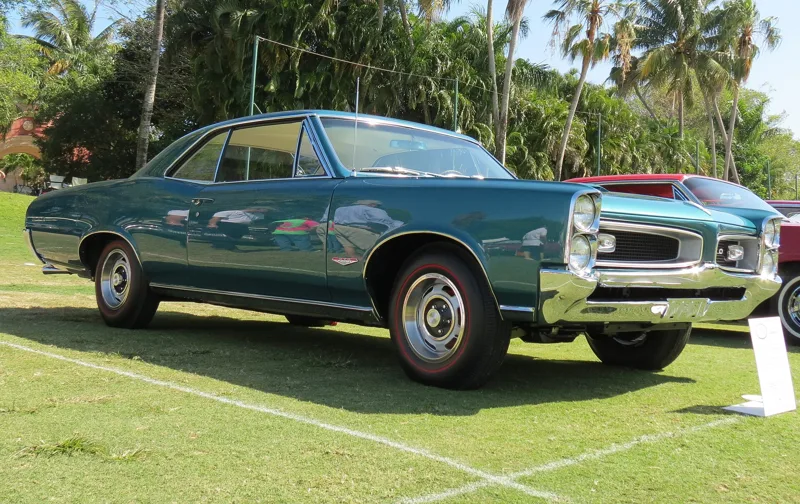
Virgil Exner's styling, branded the 100-Million Dollar Look, owed as much to the Chrysler parts bin as to a drawing board. The front clip and grille came from that year's Imperial, the midsection from a New Yorker hardtop and the rear quarters from a Windsor. Exner left on base-model bumpers and removed reversing lights, the bonnet ornament, side trim and exterior mirrors.
Standard equipment ran to an electric clock and two-speed wipers. Buyers chose from Black, Tango Red or Platinum White over a single tan leather interior. Power windows and a power front seat were available, but air conditioning was not offered in 1955.
The car measured 127.58 mph (205.32 km/h) in the Flying Mile and did well in NASCAR, where it wore paint advertising it as the fastest stock car in the world. Interest outran sales. The list price was US$4,100, and 1,725 were sold.
Chrysler sold only 1,725 C-300s in 1955, but the 300 name went on to run, with gaps, until 2023.
Chrysler 300 letter series: from 300B to 300F
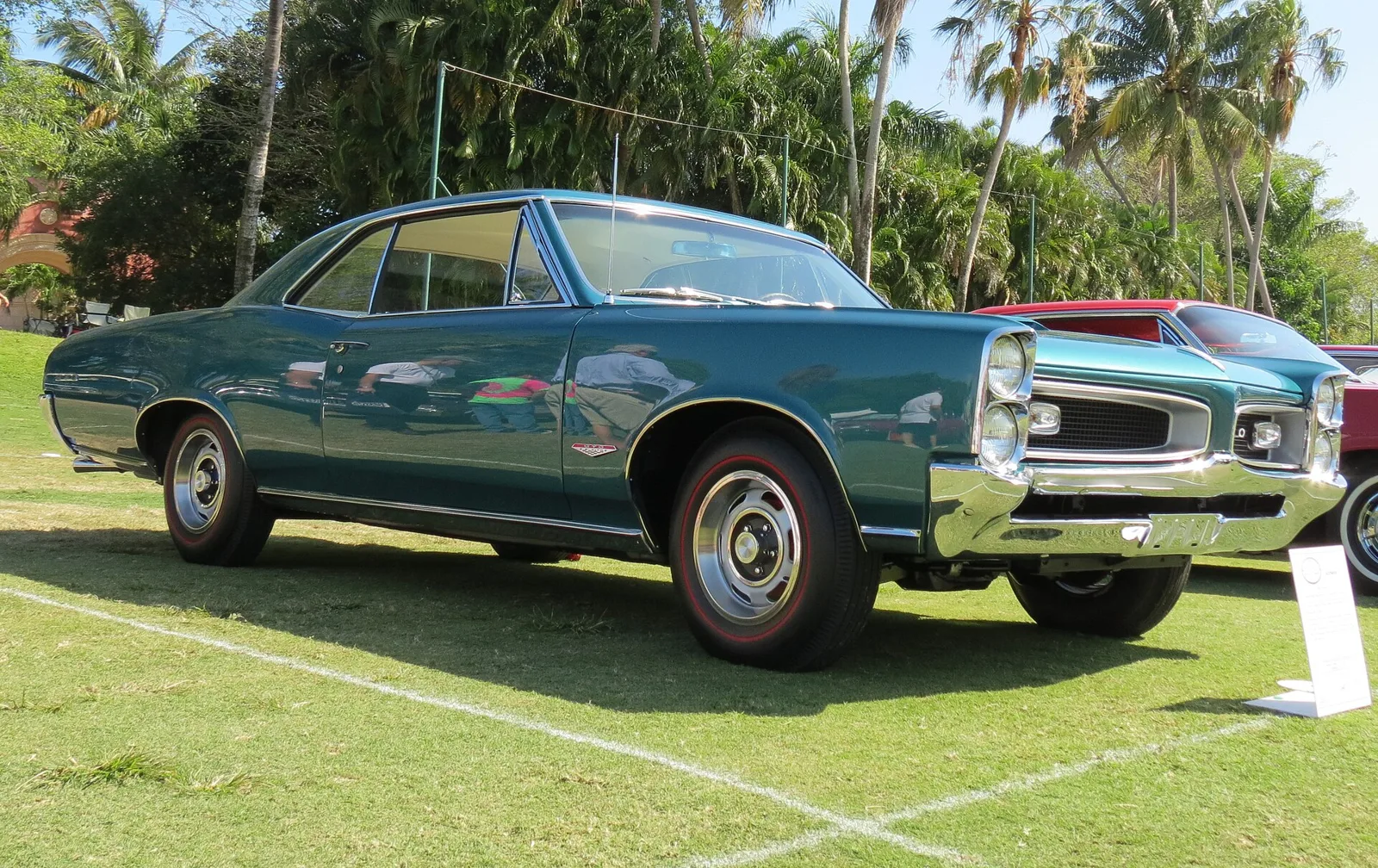
After the nameless first car, the 1956 model became the 300B, and every later year took the next letter of the alphabet, skipping I, until the sequence reached the 300L in 1965. The letter cars were sub-models of the New Yorker, and the name was dropped after 1965 even though the 300 itself carried on. They were among the postwar cars that put performance first, and so can be seen as an early form of the muscle car, though bigger and dearer than the term usually suggests.
1956 300B
The B kept the C-300's shape but gained a new tailfin treatment and a larger 354 cubic inch (5.8 litre) Hemi in two forms, 340 or 355 hp (254 or 265 kW). The higher rating needed 10:1 compression and made the 300B the first American car to produce one horsepower per cubic inch, a year ahead of the fuel-injected 283 cubic inch (4.6 litre) engine from Chevrolet. TorqueFlite controls sat to the left of the steering wheel, and top speed at the Daytona Flying Mile was almost 140 mph (225 km/h). It was the last Chrysler 300 with coil springs at the front. Only 1,102 were sold.
On the track, NASCAR team owner Carl Kiekhaefer raced 300Bs largely as they came from the factory, leather and all, and won 22 of 41 races, 16 of them in a row. Buck Baker drove some of them. DeSoto and Dodge shared much of the mechanical package, as the Adventurer and the D-500.
1957 300C
The 300C wore Chrysler's Forward Look. It had a wide, trapezoid grille found only on the 300C, a Vista-Dome windshield, twin headlights and tailfins rising from the doors, and it was first shown at the New York show on 8 December 1956. Wheels dropped from 15 to 14 inches, drum brakes remained, and a cooling duct fed air to the front drums.
The Hemi grew to 392 cubic inches (6.4 litres) and 375 hp (280 kW), with 18 limited cars at 390 hp (290 kW). A convertible was offered for the first time, at US$5,359, against US$4,929 for the hardtop. Torsion-Aire torsion bar front suspension replaced coil springs, and Airtemp air conditioning cost $495. Red, white and blue 300C medallions appeared on the car. Production was 1,918 coupes and 484 convertibles.
1958 to 1960: D, E and F
The 1958 300D was the last to use the FirePower Hemi, tuned to 380 hp as standard. Thirty-five cars had Bendix Electrojector fuel injection, rated at 390 bhp, but the primitive onboard computer proved unreliable and they were recalled and fitted with dual four-barrel carburettors. Standard equipment now included leather, power steering and brakes, air conditioning and cruise control. One 300D reached 156.387 mph (251.7 km/h) at the Bonneville Salt Flats. Only 618 hardtops and 191 convertibles were built, hurt by a recession and competition from the Ford Thunderbird.
For 1959 the Hemi gave way to the Golden Lion wedge-head V8 of 413 cubic inches (6.8 litres), which made about the same 380 hp (280 kW) but weighed 103 lb (47 kg) less and cost less to build. The 300E was the last body-on-frame car in the line, with 522 coupes and 125 convertibles. Its speedometer ran to 150 mph (241.4 km/h), the seats used a basket-weave "Living Leather" for air circulation, and Goodyear Blue Streak bias-ply tyres appeared. For 1960 the 300F took a Cross-Ram version of the 413 at 375 hp (280 kW).
| Model | Engine | Output | Built or sold |
|---|---|---|---|
| 1955 C-300 | 331 cu in (5.4 L) Hemi | 300 hp (220 kW) | 1,725 |
| 1956 300B | 354 cu in (5.8 L) Hemi | 340 or 355 hp (254 or 265 kW) | 1,102 |
| 1957 300C | 392 cu in (6.4 L) Hemi | 375 hp (280 kW); 390 hp (290 kW) in 18 cars | 1,918 coupes, 484 convertibles |
| 1958 300D | 392 cu in (6.4 L) Hemi | 380 hp (280 kW); 390 bhp with injection | 618 hardtops, 191 convertibles |
| 1959 300E | 413 cu in (6.8 L) wedge | about 380 hp (280 kW) | 522 coupes, 125 convertibles |
| 1960 300F | 413 cu in (6.8 L) Cross-Ram | 375 hp (280 kW) | - |
The Chrysler 300 non-letter series, 1962 to 1971
In 1962 Chrysler launched the 300H beside a second kind of 300 called the Sport Series. Chrysler was consolidating its range, and the new car replaced the 1961 Windsor and filled the space left when DeSoto was cancelled. It was pitched as a luxurious muscle car, with the pace of Dodge and Plymouth products and the comforts expected of a Chrysler.
The Sport Series was cheaper and more varied than the letter cars. It came as a hardtop coupe, a sedan and a convertible with bench seats throughout, while the letter cars were coupes or convertibles with bucket seats and a full-length console. A four-door hardtop, previously seen on the 1960 DeSoto Adventurer, was added. A 383 V8 was added as a choice, where the letter cars had a 413 as standard. Canada received a similar Saratoga instead, called the Saratoga 300 from 1964.
The long run to 1971
New sheet metal arrived in 1963 and again in 1965. When the letter series ended in 1966, the 440 V8 replaced the 413 in the Sport Series, and the 300 became the only car of its name. The 1967 makeover changed the nose and tail, dropped the four-door sedan and left the 440 as the sole engine, in base and more powerful TNT forms. Concealed headlamps arrived with a 1968 facelift and stayed a 300 trademark until 1971. The 1969 cars brought fuselage styling.
For 1970, following an Oldsmobile idea, Chrysler built the Hurst 300 in Spinnaker White with Satin Tan trim and an Imperial-derived leather interior. It had a 375 hp (280 kW) 440 cubic inch (7.2 litre) TNT V8, and 485 were made, plus a single convertible. Chrysler halted convertible production across its range in 1971, the year the Sport Series ended.
The 300 returns: Cordoba package and 300M
The name came back in spring 1979 as a US$2,040 option package on the Cordoba coupe. It added special emblems, a cross-hair grille and a 195 hp (145 kW; 198 PS) 360 cubic inch (5.9 litre) V8 with a four-barrel carburettor, along with police-specification suspension and a 3.23 rear axle ratio. Weak demand in the early 1980s recession held production below 2,900, and the car planned for 1980 was called the LS instead. Chrysler reused the 300M nameplate from 1999 to 2004, then brought back a Hemi V8 in the 300C for the 2005 model year.
The modern Chrysler 300 and its Mercedes bones
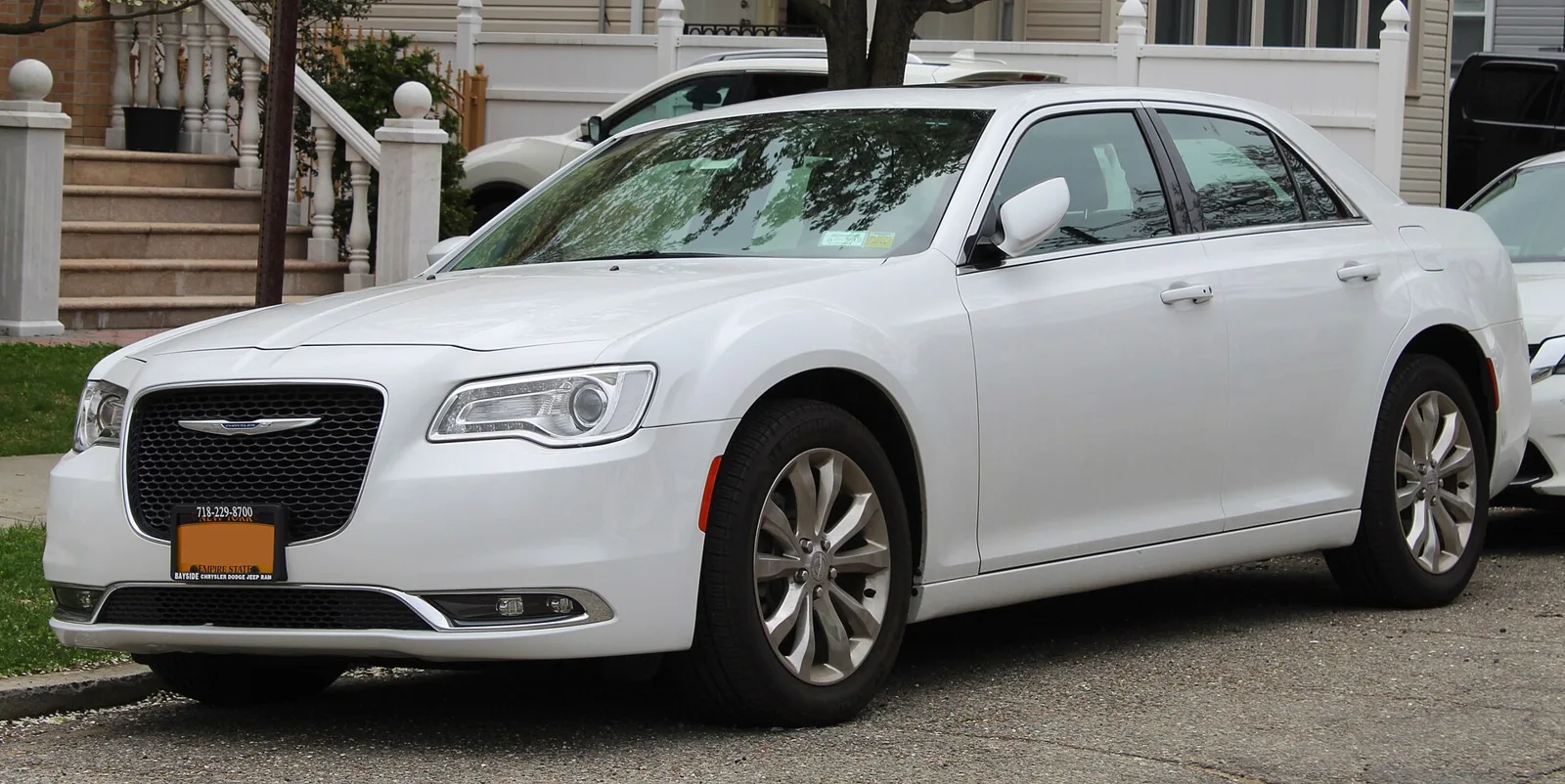
The new 300 was shown as a concept at the 2003 New York show, styled by Ralph Gilles, and production began in January 2004. It was a modern reading of the 1955 C-300 and the letter cars that followed: a big grille, a long bonnet and a low roofline. It also retained elements of the 1998 Chronos concept, and it was the last Chrysler designed under Tom Gale. The name matched that of the 1957 300C.
The platform was the rear-wheel-drive Chrysler LX, and Chrysler engineers visited Germany to study the coming W211 E-Class, so the toe board, the safety cage and the way loads flow through the body come from Mercedes-Benz thinking. Mercedes parts were everywhere: the 5-link rear suspension, the double-wishbone front end from the S-Class W220, the NAG1 five-speed automatic, stability control, the 4MATIC all-wheel-drive hardware and the 3.0-litre OM642 diesel sold abroad. Later cars even had a laser key ignition in place of a metal key.
Chrysler 300C generations and trims
The first generation ran from the 2005 to the 2010 model year as a sedan and wagon. The second, from 2011 to 2023, was a sedan only, sold as the 300C in the United Kingdom and Ireland and as the Lancia Thema in the rest of Europe.
| Trim | Engine | Output |
|---|---|---|
| Base (LX from 2008) | 2,736 cc V6 | 190 hp (142 kW) |
| Touring | 3,518 cc V6 | 250 hp (186 kW) |
| 300C | 5.7 L Hemi V8 | 340 hp (254 kW); 360 hp (268 kW) in 2009 and 2010 |
| SRT8 | 6.1 L Hemi V8 | 425 hp (317 kW) |
| 300C diesel (Europe, Australia) | 3.0 L V6 | 218 PS (160 kW) |
The 300C's Multi-Displacement System shuts down four cylinders when full power is not needed, to save fuel. The EPA rated the car at 15 mpg-US (16 L/100 km) in town and 23 mpg-US (10 L/100 km) on the highway. When all eight cylinders work, it makes 340 hp (254 kW) and 390 lb ft (529 Nm). The SRT8, with its 6.1-litre Hemi at 425 hp (317 kW) and 420 lb ft (569 Nm), reached 60 mph (97 km/h) in 4.9 seconds.
Outside North America the line included a 3.0-litre Mercedes diesel V6 of 218 PS (160 kW) and 376 lb ft (510 Nm), available from 2006 to 2011. It took 7.9 seconds to reach 60 mph and shared the petrol V6's top speed of 140 mph (225 km/h). Europe, Australia, South America, the Middle East and Japan also had a five-door wagon, the 300C Touring, which shared rear sheet metal with the Dodge Magnum. Magna Steyr in Graz, Austria, assembled the wagons and European sedans from June 2005. The wagon ended with the first generation.
Specials and one-offs
ASC unveiled a convertible, the Helios 300, in early 2005, but Chrysler confirmed it would not be built. A stretched Executive Series 300 at the 2006 New York show added 6 inches (152 mm) to the rear compartment for a 126 inch (3,200 mm) wheelbase. A Signature Executive Series package later cost an extra CA$2,240 in Canada. The 2006 Heritage Edition 300C used the 5.7-litre Hemi and styling cues from the 1950s and 1960s letter series. Beijing Auto built two prototypes of a Cadillac-nosed limousine, the T8, before losing the rights to the platform and engines in 2009.
How the Chrysler 300 was received
Reviewers liked how the 2005 car drove. They called the ride steady and comfortable, said it behaved much like a Mercedes, and noted stability at autobahn speeds above 150 mph. The weak point was numb steering. Top Gear gave it a kitsch gangster cool, praised the roomy interior and low price, and criticised some materials and the low torque of the V6s. British buyers dubbed it the poor man's Bentley.
In the United States the 300C was a mid-2000s hit, helped by celebrity owners including Barack Obama and by music videos. In 2004 Snoop Dogg phoned Chrysler chief executive Dieter Zetsche to ask for his own, then appeared in a commercial for the car with Lee Iacocca. Complex ranked it number 12 among hip-hop cars. Ralph Gilles said in 2008 that the 300 had turned out to be something of an icon for Chrysler.
The awards were many. The 300C was 2005 Motor Trend Car of the Year, on Car and Driver's Ten Best list for 2005 and 2006, Automobile of the Year, North American Car of the Year and Canadian Car of the Year. It finished fifth equal with the BMW 1-series among 2005 World Car of the Year finalists.
The second-generation 300 and the Hemi's racing roots
A redesigned 300 appeared in 2011 as a four-door sedan, built for the 2011 to 2023 model years. It continued a tradition of full-size, front-engine, rear-drive V8 luxury sedans that Chrysler had offered since the 1940s, a line whose earlier run ended with the Fifth Avenue in 1989.
The Hemi also had a racing history before any of this. The original FirePower Hemi powered the Cunningham C-5R, which finished the 1952, 1953 and 1954 24 Hours of Le Mans and the 1953 12 Hours of Sebring. Chrysler's competition record went back further still, to a Chrysler Six that finished the 1925 24 Hours of Le Mans.