From an abandoned Mitsubishi tie-up to the Alabama plant, the ML badge row with BMW and the lettered SUV family that now sits beside the saloons.
The Mercedes M-Class launched in 1997 and was renamed GLE in 2015. The GL-Class, later the GLS, grew above it as a full-size model, while the GLC arrived in 2015 as the compact SUV equivalent of the C-Class, giving Mercedes a lettered SUV family.
The SUV Mercedes-Benz launched in 1997 was first planned as a Mitsubishi in a different suit: a deal made in early 1991 would have put the Montero/Pajero platform under both badges, until the plan collapsed in May 1992. What Mercedes built instead became the M-Class, later the GLE, and the family around it now runs from the compact GLC to the enormous GLS.
The range reached its present shape through a naming row with BMW, quality complaints about the Alabama plant, a papal vehicle and a renaming that tied every SUV to a saloon. Following the letters tells you where each model sits and which cars share their bones.
Why did Mercedes drop its Mitsubishi plan for the M-Class?
Mercedes wanted a replacement for the G-Class, which had been in production for 11 years, and agreed in early 1991 to develop an SUV with Mitsubishi Motors. The partnership ended in May 1992 for stated technical reasons, and in-house development began in January 1993.
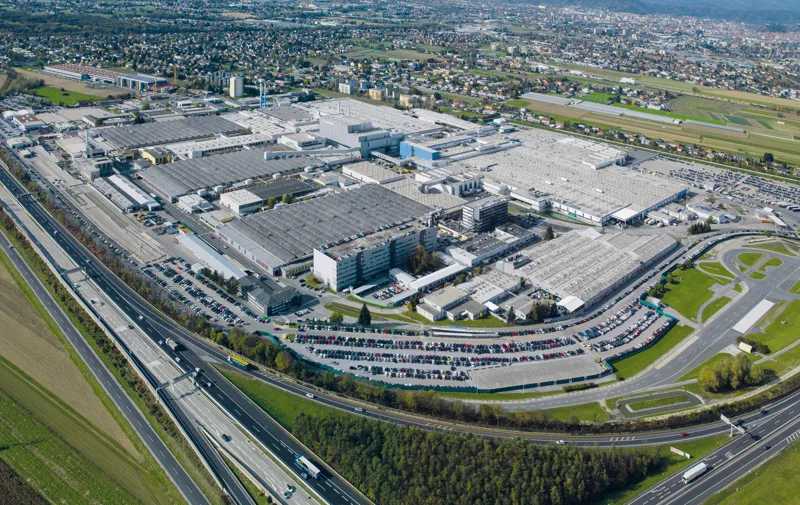
From there the project moved quickly on two continents. A search for a US plant site began in March 1993, Alabama was chosen by September, and construction ran from 1994 until July 1996. In Germany, design work continued from late 1992 to 1994, and the Sindelfingen studio's proposal won in 1993, with the board signing it off in February 1994. Patents were filed in Germany on 13 July 1994.
Test mules and mock-up crash tests started in May 1994, the first functional prototype was crash-tested in February 1995, and full climate testing ran from March 1995 to December 1996. Pilot production began in May 1996. The first production car left the line at Vance during the week of 9 February 1997, and the launch followed on 19 February 1997 in the United States as a 1998 model, with sales beginning that September.
The letters tell the story: G for Gelandewagen, L as the link, and a final letter that points to the saloon each SUV matches.
What was the first Mercedes M-Class like?
The W163 was a mid-size body-on-frame SUV with five seats, or seven with an optional third row. It was the first luxury SUV to offer electronic stability control, and it launched in North America as the ML 320 with a 3.2-litre V6 making 218 PS (160 kW; 215 hp) and 315 Nm.
Permanent 4Matic drive sent 48 percent of torque to the front and 52 percent to the rear through a two-speed BorgWarner transfer case. The 4-ETS system braked spinning wheels to imitate three differential locks. Front and side airbags with occupant detection for the front passenger helped it score top results in insurers' crash tests.
The third row never worked well. Access was awkward and the seats were unsuitable for large adults, so Mercedes dropped the seven-seat M-Class after the 2005 model year in favour of the larger GL-Class.
Engines multiplied quickly. Europe received a manual-only ML 230 with a 2.3-litre four from March 1998 until 2000, and the ML 270 CDI with a 2.7-litre inline-five turbodiesel arrived in 1998, reaching Australia in 2000. The ML 430 with Mercedes' new 4.3-litre V8 followed later in 1998, and the ML 55 AMG, built around a 5.4-litre V8, debuted in February 1999 as a 2000 model.
Why is it called the ML-Class and not the M-Class?
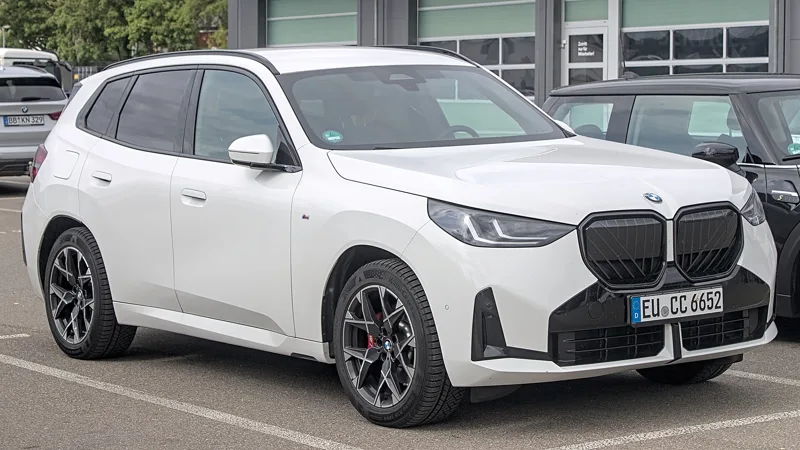
BMW, maker of the M3 and other M cars, objected to a Mercedes carrying an M badge followed by a three-digit engine number, such as M 320. Mercedes responded with ML badging under an M-Class umbrella, so the car became the ML 320, and plenty of writers, Mercedes included, have since called the whole series the ML-Class.
How did the M-Class earn praise and a rude nickname?
The ML 320 was Motor Trend's Truck of the Year for 1998, won the 1998 North American Truck of the Year vote in Detroit in January 1998, and took the World Car Award in March 1999. Mercedes still drew heavy criticism for build quality, and the car picked up the nickname Alabama Trashcan.
Quality improved over the years, particularly after the 2001 facelift for the 2002 model year, and DaimlerChrysler spent US$600 million on improvements to the Alabama factory ahead of the second generation's 2005 arrival. The facelift brought new lamps, bumpers and wheels, moved the side turn signals into the mirrors, and replaced the ML 430 with the 5.0-litre V8 ML 500. Europe gained a 4.0-litre V8 turbodiesel, the ML 400 CDI, and the ML 350 with a 3.7-litre V6 followed in 2002.
The W163 also had a film career. In September 1996, before launch, Mercedes allowed the makers of The Lost World: Jurassic Park to use modified pre-production M-Class SUVs, and a Mercedes advertisement ran before the film on original VHS copies. Jeff Goldblum received a complimentary ML 320. Two examples of each of the three versions used on screen were built, and surviving cars are displayed at Universal Studios in Orlando, the Mercedes-Benz Museum in Stuttgart and the visitor centre at the Alabama factory.
A more formal duty came with the Popemobile based on a W163 ML 430, in service since July 2002. Volkswagen offered to build a replacement on the Touareg, but Pope Benedict XVI chose to keep his predecessor's Mercedes.
What changed with the W164 M-Class?
The W164 was almost entirely new: a unibody structure instead of the old body-on-frame, shared with the GL-Class, plus a more aerodynamic shape with a drag coefficient of 0.34. Mercedes introduced it in April 2005 as a 2006 model, following a January debut in Detroit.
Development began in 1999 and took six years. The design by Steve Mattin, working under Peter Pfeiffer, was chosen in 2002, and prototype testing ran through 2003 and 2004. The new car stretched 150 mm and sat 5 mm lower compared with the first car. The 2006 Canadian Car of the Year awards named it the best new SUV, and early press reports described vast improvements in quality after Mercedes publicised the US$600 million spent on the Alabama factory.
The new features included the 7G-Tronic seven-speed automatic, optional bi-xenon headlights that steer with the road, and air suspension whose ride height could be changed. The manual gearbox disappeared. Permanent 4Matic stayed, now with a one-speed transfer case and no low range, though outside the United States an Off-Road Pro package added differential locks, a two-speed transfer case and adjustable ground clearance, which lifted the fording depth from 500 mm to 600 mm.
The ML 63 AMG, shown at the Detroit show in 2006 as a limited 2007 model, used a handcrafted 6.2-litre V8 producing 510 PS (375 kW) and 630 Nm. It reached 60 mph in 4.8 seconds and no naturally aspirated V8 SUV anywhere had more power when it launched.
A minor facelift debuted in New York in March 2008 for the 2009 model year, with new headlights, bumpers, grille and interior. The diesels were renumbered, so the numbers rose: the 350 CDI replaced the 320 CDI and the 450 CDI took over from the 420 CDI. Bluetec diesels with urea injection arrived in 2008, and in April 2009 the ML 450 Hybrid was announced, consuming almost 50 percent less fuel than the ML 550 while producing over 90 percent of the V8's power, with 335 hp (250 kW) in total. It was available only in the United States, and only under lease.
How did the M-Class turn into the GLE?
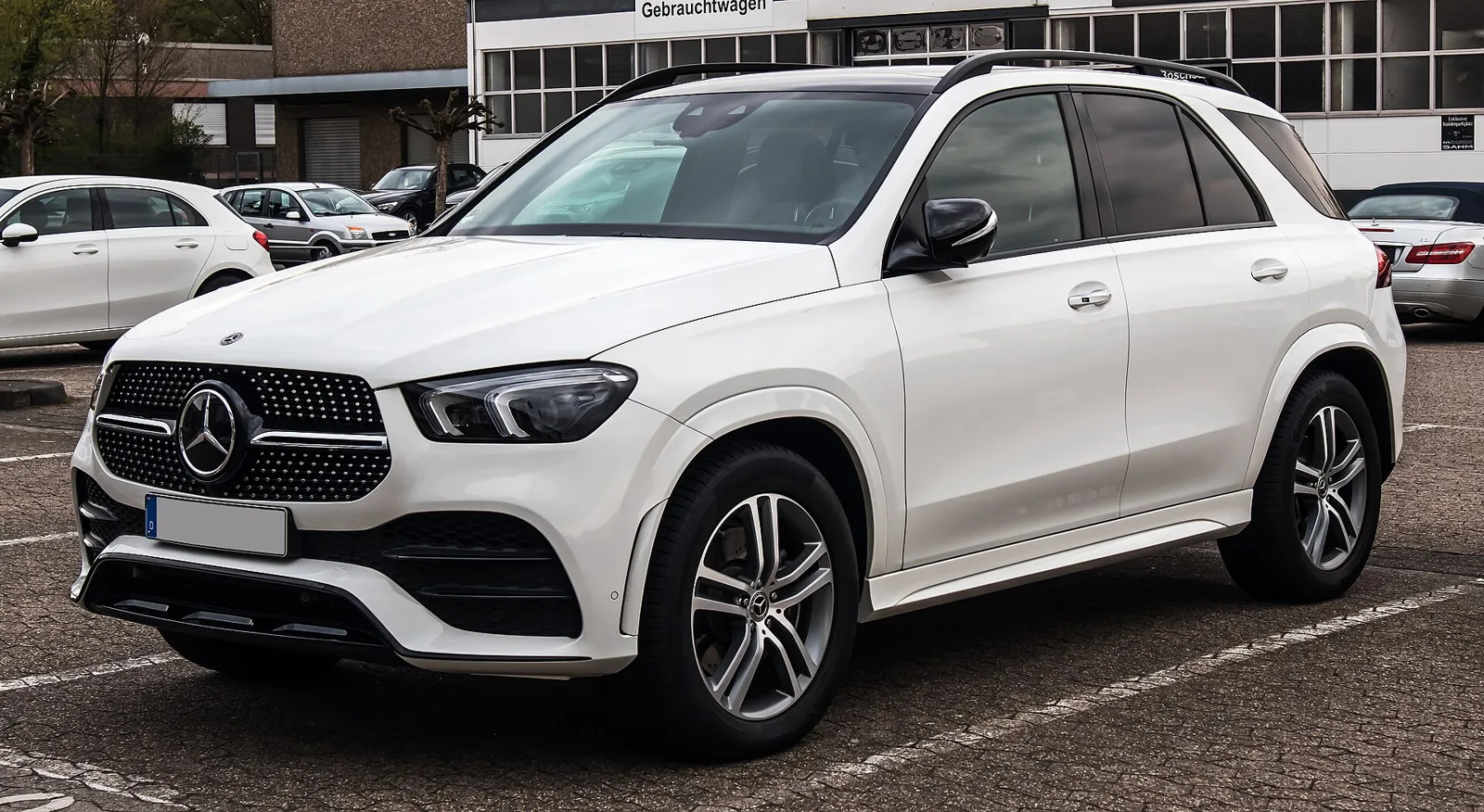
The renaming came with the facelifted W166 third-generation car, shown at the New York show in April 2015. Mercedes gave its SUVs a base name of GL followed by the letter of the saloon they match, so the GLE became the SUV equivalent of the E-Class.
The G alludes to Gelandewagen, the German word for off-road vehicle, and nods to the long-running G-Wagen. Development of the W166 began in 2006 and lasted five years, a shorter period than its predecessor. Europe and Australia had cars from Stuttgart between 2011 and 2015, and from 2015 all production moved to the Vance plant in Alabama, to harmonise the SUV nameplates with the E-Class. In size terms, the GLE slots above the GLC and under the GLS, whose platform it shares.
How did the GL-Class X166 grow into the GLS?
The X166 GL-Class ran from 2012 to 2019 as the second generation of the full-size model, and became the GLS with the 2016 facelift. It debuted at the New York show in 2012, went on sale in September 2012, and was 10 mm taller, 14 mm wider and 21 mm longer than its predecessor while weighing up to 100 kg (220 lb) less.
Every GL came with LED headlights, a 5.8-inch COMAND screen and adaptive air suspension that could lift the body to 285 mm (11.2 in) of ground clearance. Buyers could add soft-close doors, rear-seat screens or an off-road pack that brought a skid plate and low-range gearing.
The GL63 AMG came to the Los Angeles show in 2012 with a hand-built twin-turbo 5.5-litre V8 making 410 kW (550 hp) and 760 Nm, and a 2016 update lifted it to 430 kW (577 hp). The facelift, unveiled in November 2015 with production from January 2016, brought full LED tail-lights, an 8-inch display with Apple CarPlay and Android Auto, and a nine-speed 9G-Tronic in place of the seven-speed. The Guardian called the car a laughably outsized machine and said it was amazing while warning about unfettered excess. It was MotorTrend's SUV of the Year in 2013 and a Car and Driver 10Best winner in 2017.
What is the Mercedes GLS X167?
The X167 is the third generation of the GLS, produced since October 2019 and shown first at the New York show that year. It is 7.7 cm longer and 2.2 cm wider than the X166, with a wheelbase 6 cm longer, and was the first Mercedes SUV with three fully electrically adjustable rows of seats.
Buyers can also choose six seats with captain's chairs in the second row, and the rear seats fold flat at the touch of a button. Two high-end versions were unveiled in November 2019: the Mercedes-Maybach GLS 600 4Matic, with a detuned version of the M177 V8 and a 48-volt mild hybrid system, and the Mercedes-AMG GLS 63 4Matic+, whose 4.0-litre biturbo V8 produces 455 kW (619 PS; 610 bhp), the most powerful GLS ever.
The Maybach was the first Mercedes SUV to carry a stand-up star on the bonnet. Mercedes also registered a GLS 680 name, reserved for China because the number 8 is associated with luck and wealth. Not everyone cheered: Environmental Action Germany gave the car its Golden Vulture award in 2020 over its size and environmental impact. In March 2024 Mercedes recalled more than 116,000 GLE and GLS cars built from 2019 to 2024 because a 48-volt ground cable under the front passenger seat might not have been tightened properly.
Where does the GLC fit against the GLE?
The GLC is the compact end of the range. Introduced in 2015 for the 2016 model year to replace the GLK, it is, according to Mercedes, the SUV equivalent of the C-Class, just as the GLE matches the E-Class. The GLE is larger and sits a class above it.
The first generation (X253) was built in Bremen, with extra capacity added at Valmet Automotive in Uusikaupunki, Finland, from the first quarter of 2017. It came as a five-door SUV and as a sloping-roof GLC Coupe. Mainland Europe had three diesels, three petrols and a plug-in hybrid, the United Kingdom three diesels and one AMG petrol, and North America the GLC 300, GLC 43 AMG and GLC 63 AMG. A 2.0-litre turbo petrol and a 2.2-litre turbodiesel drove through a nine-speed automatic, and the boot is rated at 580 litres (20.5 cu ft).
China received the GLC L from October 2018, a long-wheelbase version 109 mm longer than the regular car, with a 2,973 mm wheelbase and three 2.0-litre engines of 184 PS, 211 PS and 245 PS. A fuel cell GLC F-CELL entered production in 2018, combining a hydrogen fuel cell with an externally chargeable battery.
The second generation (X254) was unveiled in June 2022 and is larger than before. Like the W206 C-Class, every model uses a four-cylinder with mild hybrid technology, and there are four plug-in hybrids. Non-AMG cars split torque 45/55 front to rear, the AMG GLC43 uses a 31/69 split, and the GLC63 uses an electronically controlled clutch that can send between none and half of the torque to the front axle.
How do the Mercedes SUV names line up?
| SUV | Position in the range | Platform codes | Debut |
|---|---|---|---|
| GLC | Compact; SUV equivalent of the C-Class, replaced the GLK | X253, X254, X540 (electric) | 2015, 2022, 2025 |
| GLE (formerly M-Class) | Mid-size; SUV equivalent of the E-Class | W163, W164, W166 | 1997, 2005, 2011 |
| GL, then GLS | Full-size, above the GLE | X166, X167 | 2012, 2019 |
What is new for the GLS and the electric GLC
A second facelift for the GLS X167 followed on 31 March 2026, for the 2027 model year. The electric GLC, shown at the Munich show in 2025 as the GLC with EQ Technology, is offered in a single variant, the GLC 400 4Matic. The battery-electric SUV was first sold as the EQC and is now sold as the GLC Electric.