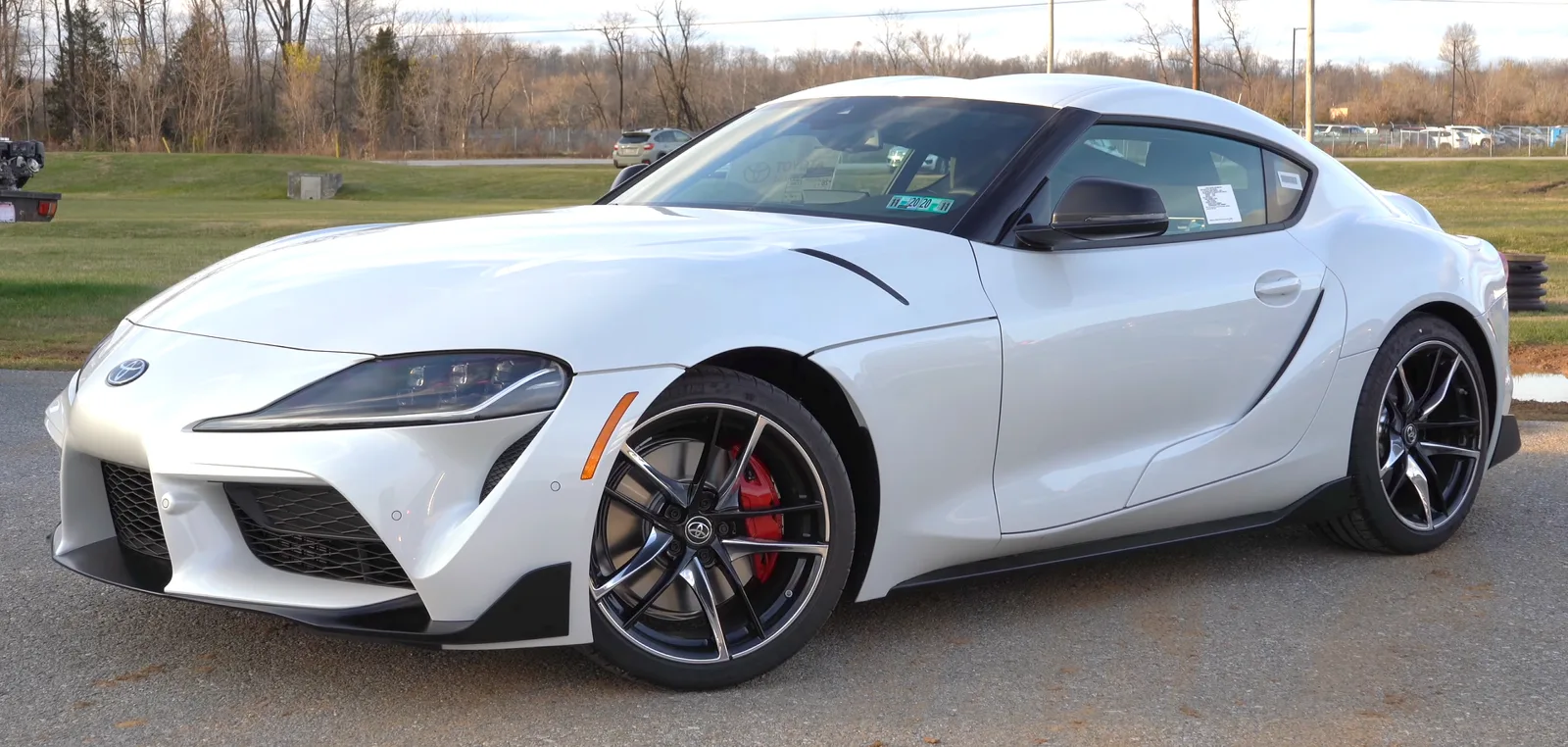
From a Celica with a longer nose to a BMW-built return after a 17-year gap, the Supra's story is one of borrowed parts, strong opinions and a long wait.
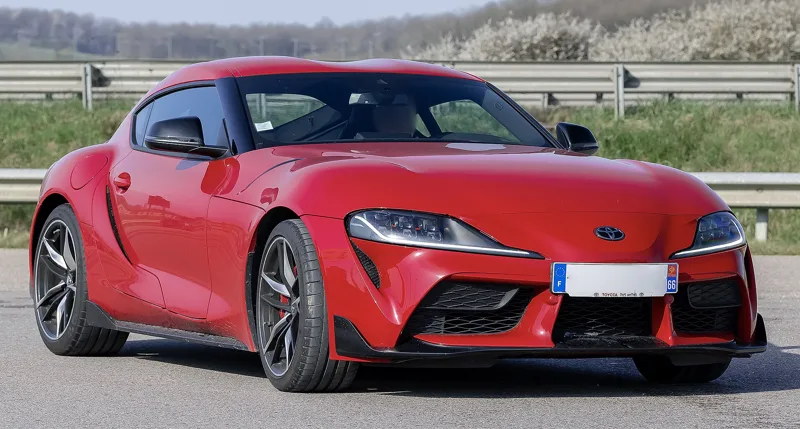
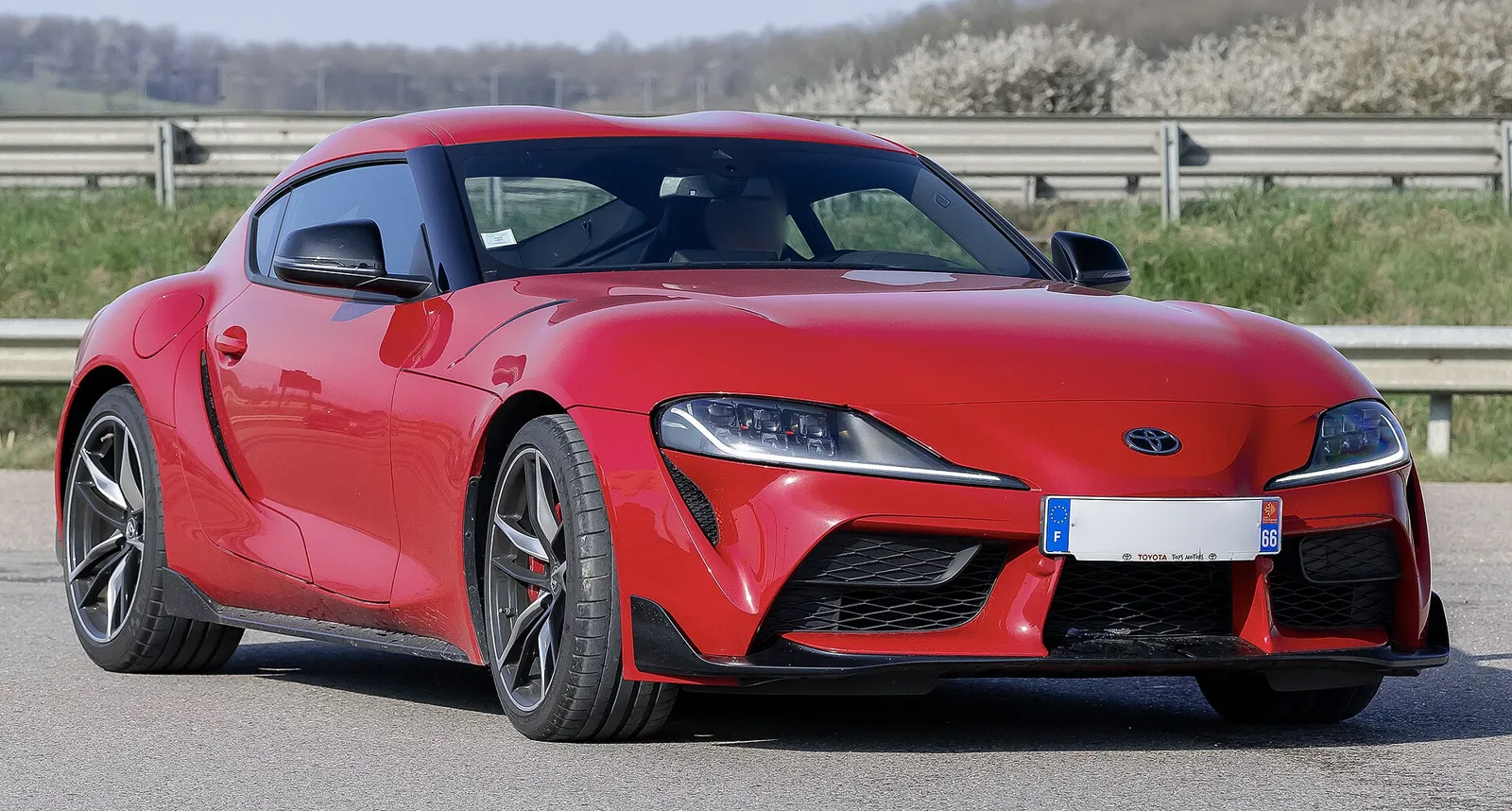
The Toyota Supra began in 1978 as a longer, six-cylinder Celica and became a separate model in mid-1986. The fourth generation ended in 2002, and the BMW-co-developed GR Supra went on sale in 2019 after a 17-year gap. Its production ended in March 2026 with no planned successor.
From 1978 until mid-1986 the Toyota Supra was officially a Celica. It took the Celica's liftback body, stretched the nose to fit an inline-six, and only stood alone once Toyota dropped the Celica prefix.
Where does the Supra name come from, and how did it start?
The name comes from a Latin prefix meaning above, to surpass or to go beyond. The car itself began in 1978 as the Celica Supra, after North American dealerships asked Toyota for a rival to the very popular Datsun 280Z. Toyota answered with a Celica liftback that was 129.5 mm (5.10 in) longer, with the doors and rear section unchanged and the front panels extended to accommodate a six-cylinder engine in place of the Celica's four.
In Japan the car was the Celica XX, pronounced double X. A preview called the CAL-1 was shown at the 1977 Tokyo Motor Show, and the production car followed in 1978 as part of a new Toyota effort to offer personal luxury cars through its existing dealerships. The XX shared a showroom channel, the Toyota Corolla Store, with the Celica. Five trims were offered, from the 2600G and 2600S to the 2000G, 2000S and entry-level 2000L.
Toyota did not give the Supra its own identity until mid-1986.
What was under the first Supra?
A straight-six, in two sizes. In 1978 buyers could choose a 2.0-litre 12-valve overhead-cam engine of 125 PS (92 kW; 123 hp), or a 2.6-litre unit of 82 kW (110 hp; 111 PS). Both had electronic fuel injection. Japanese buyers took the size of the engine seriously, because the larger one meant a higher annual road tax and made the car costlier to own than the smaller Celica.
Exports started in January 1979. The American version used the 2.6-litre engine at 110 hp (82 kW; 112 PS), with a five-speed manual or an optional four-speed automatic, both with overdrive. Four-wheel disc brakes were standard, with MacPherson struts at the front and a four-link rear suspension on coil springs. Inside were a tilt steering wheel, a map light that pulled out from the console and an armrest that flipped up to reveal storage.
The biggest change came in August 1980, for the 1981 model year. A 2.8-litre 5M-E engine borrowed from the Crown took over, rated at 116 hp (87 kW; 118 PS), with torque of 145 lb.ft (197 N.m); the new MA47 chassis code covered it. Performance figures for this car include 10.24 seconds to 60 mph (97 km/h) and a 17.5-second quarter mile at 77.7 mph (125 km/h). A Sports Performance Package added sport suspension, raised white-letter tyres and spoilers, and the year marked the last for an 8-track tape player in any Supra.
How did the second-generation Supra change things?
It became a more serious car. Toyota redesigned the whole Celica range in mid-1981 for the 1982 model year, and the Supra received fully retractable pop-up headlights, a longer wheelbase and a new front end. In Japan the Celica XX was the first car anywhere with a navigation computer. Cars with the 2-litre engine stayed under Japan's 1,700 mm (66.9 in) width limit.
In North America the car came as two models: the Performance Type, or P-type, and the Luxury Type, or L-type. They were mechanically identical, but the P-type added fibreglass fender flares, eight-way adjustable seats and 14x7-inch wheels, and the L-type could be had with a digital instrument cluster and trip computer. Initially the L-type meant automatic and the P-type meant manual.
The engine was a 2.8-litre double-overhead-cam 5M-GE with 145 hp (108 kW; 147 PS) and 155 lb.ft (210 N.m). With a drag coefficient of Cd=0.348, the car needed 9.8 seconds to reach 60 mph and 17.2 seconds for the quarter mile, at 80 mph (129 km/h). Lotus tuned the four-wheel independent suspension, and the rear used semi-trailing arms with coil springs. In February 1981 Japanese buyers also gained an alternative body style, the Soarer coupe.
When did the Supra stop being a Celica?
With the A70, in mid-1986. From then on the Supra stood apart from the Celica, and Toyota dropped the Celica prefix from the name. The old dragon logo, which had appeared on the first two generations because they were officially Celicas, gave way in January 1986 to a similar-sized badge with orange writing on a red background. That in turn was replaced in 1991 by Toyota's current oval logo.
The Supra traces much of its identity to the 2000GT, from the inline-six layout to an M engine that descended from those of the Crown and the 2000GT, and the chassis code A. The first three generations came from the Tahara plant in Aichi, and the fourth from the Motomachi plant in Toyota City. Toyota ceased fourth-generation sales in the United States in 1998, and worldwide production ended in 2002. Because of the Celica name, people still mistake one car for the other.
Why did the Supra take 17 years to return?
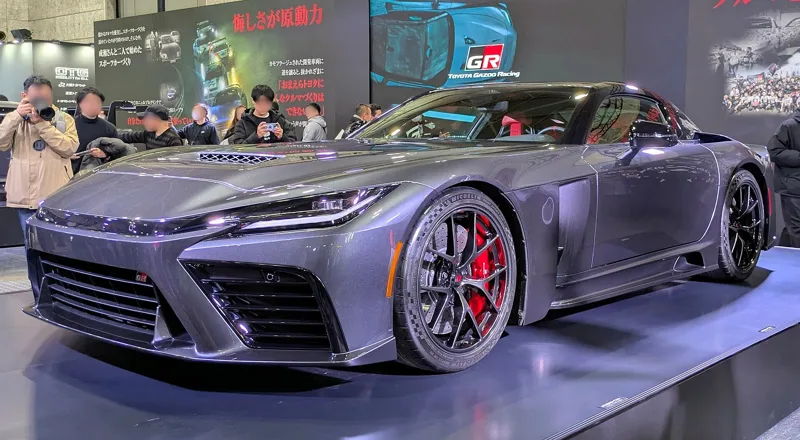
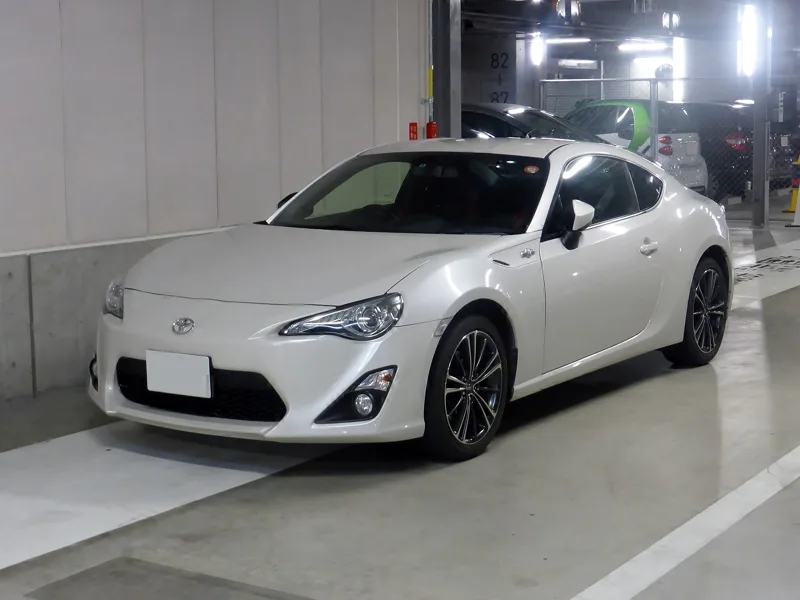
Toyota was in no hurry, and then it wanted help. Motor Trend reported that a Supra successor might build on the FT-HS concept shown at the 2007 North American International Auto Show, and that the fifth generation could use a 3.5-litre V6 hybrid system with over 298 kW (400 hp; 405 PS). Toyota said it was waiting to see how sales of the GT86 went before deciding.
The trademark filings tell part of the story. Toyota applied for the Supra trademark in 2010 and filed again in 2014 and, for Europe, in June 2016. In 2012 Tetsuya Tada, chief engineer of the Toyota 86, told reporters in Germany that the president, Akio Toyoda, had asked him to make a successor as soon as possible. In January 2014 Toyota showed the FT-1 concept, a front-engined, rear-drive car that drew on the 2000GT, Supra, MR-2 and FT-HS. Toyota said that if it were approved for production, a price of around US$60,000 should be expected.
Chief designer Nobuo Nakamura confirmed the FT-1 inspired the Supra but said the two differ, the production car being the smaller of the two and closer to a pure sports car, while the FT-1 was a bigger grand tourer. Akio Toyoda said the new car's design and performance identity came from the 2000GT. Autocar, meanwhile, expected a 2018 debut with a turbocharged inline-six supplied by BMW.
A pre-production car in camouflage appeared at the Goodwood Festival of Speed on 12 July 2018. Toyota confirmed the collaboration with the new BMW Z4 (G29) and described the Supra as much more hardcore and track-focused, engineered for a 50-50 front-to-rear weight distribution and benchmarked against the Porsche Cayman S (982), just as the previous Supra had faced the Porsche 968.
How was the GR Supra built with BMW?
Toyota and BMW developed one platform and then went their separate ways. Toyota wanted a rear-drive sports car to rival the Cayman S, and BMW wanted a roadster, which led them to co-develop an all-new platform stiff enough for both coupe and convertible. It takes elements from BMW M cars, including the suspension design, forged control arms and an electronic differential. Initially BMW considered one of its existing platforms, but chief engineer Tetsuya Tada declined.
After that, the two companies developed chassis, bodywork, interiors and tuning separately. The Supra's side sills are significantly wider and stiffer, with extra chassis bracing, and Toyota shifted the engine rearwards in the bay to improve weight distribution. Some vents on the body are fake, carried over from the race prototype, and were shaped so that aftermarket firms could make them work. Interior design, layout and most parts came from Toyota, with only small switchgear from BMW.
The car, which Toyota Gazoo Racing developed with BMW, is made by Magna Steyr in Graz, Austria, alongside the Z4. It uses BMW model codes, as a J29 with DB codes, but Toyota used A90 and A91 in marketing to maintain continuity from earlier generations.
What is the GR Supra like to drive?
Quick, and available with two BMW engines. A turbocharged B48 2.0-litre four-cylinder and a turbocharged B58 3.0-litre six formed the range, with the four first offered in Japan, other Asian countries and Europe, and arriving in the US in 2020 for the 2021 model year.
| Version | Power | Torque |
|---|---|---|
| 2.0-litre four | 145 to 190 kW (194 to 255 hp; 197 to 258 PS) | 320 to 400 N.m |
| 3.0-litre six | 250 to 285 kW (335 to 382 hp; 340 to 387 PS) | 495 to 500 N.m |
| A90 Final Edition | 324 kW (434 hp) | 571 N.m (421 lb.ft) |
The rear wheels are driven by a ZF 8HP eight-speed automatic, recalibrated by Toyota with its own software. A dual-clutch gearbox was considered, but Toyota picked the ZF for smoothness, reliability and weight savings. A manual was left out at first because the torque-converter automatic shifted more quickly, handled lots of torque, suited aftermarket tuning and kept the car apart from the 86. Then in 2022, for the 2023 model year, a six-speed ZF S6-53 manual arrived for the six-cylinder only, with rev-matching and a shorter final drive.
Car and Driver tested the 3.0 in December 2019 and recorded 3.7 seconds from 0 to 97 km/h (0 to 60 mph), allowing for a one-foot rollout, which is 0.3 seconds quicker than Toyota's claim. The quarter mile passed in 12.2 seconds at 183 km/h (114 mph). A test in August 2020 gave the 2.0 a 0 to 97 km/h time of 4.7 seconds and a 13.3-second quarter mile, finishing at 167 km/h (104 mph). In August 2019 Sport Auto lapped the Nurburgring Nordschleife in 7:52.17 on factory Michelin Pilot Super Sport tyres.
How was the GR Supra launched and sold?
With a big stage. Akio Toyoda unveiled the fifth generation in Detroit at the North American International Auto Show of January 2019, 17 years after the previous generation was last sold. He said it had been tuned and developed with extensive Nurburgring testing, and Fernando Alonso, a double Formula 1 champion who drives for Toyota Gazoo Racing, was there to help. The European launch took place at Geneva in 2019.
The first production car went under the hammer at Barrett-Jackson in January 2019, and Craig Jackson bought it for US$2.1 million. All proceeds went to charity, split between the American Heart Association and the Bob Woodruff Foundation. It had a one-off matte grey finish, a red interior and Akio Toyoda's signature on the dashboard.
Customers could buy one in Japan from 17 May 2019, in the United States from 22 July 2019 at US$49,990, and in Australia from 2 September 2019. Japan received three trims: the SZ with the 145 kW (194 hp; 197 PS) four, the SZ-R with the 190 kW (255 hp; 258 PS) version and the RZ with the six. In 2020 the RZ was raised to 289 kW (387 hp), and a Horizon Blue Edition was limited to 100 units. A 35th Anniversary Edition of just 35 cars in 2021 marked the 1986 A70, and in 2022 the RZ gained the six-speed manual.
How did the GR Supra end?
With a send-off and no successor. In late November 2024 Toyota revealed a final run of the A90 for Europe and Japan, built from parts sourced from or inspired by the GT4 race car, including a carbon-fibre front spoiler, canards, a removable bonnet duct and a swan-neck rear wing. It also gained KW suspension, an Akrapovic titanium exhaust, Brembo 15.6-inch front rotors, forged wheels and Recaro carbon-fibre seats.
Power rose by 70 kW (94 hp) and torque by 70 N.m (52 lb.ft) over the standard 3.0, to 324 kW (434 hp) and 571 N.m (421 lb.ft), through a revised intake path, a low-back-pressure catalyst and engine control changes. A baffle plate in the oil pan, a sub-radiator and enlarged differential cooling fins helped it cope. Only 300 were made, 150 for Japan and 150 for Europe.
The last GR Supra left the line in March 2026, seven years after the first, and no successor is planned.