A Ferrari 375 Plus won a race of rain, dead ignition wiring and a late chase, finishing just under three minutes ahead of the Jaguar D-Type.
The 1954 race finished with a Ferrari 375 Plus, driven by Gonzalez and Trintignant over 302 laps. Rolt and Hamilton's Jaguar D-Type chased it home, and the margin was the closest finish in the race since 1933. The winning margin was just under three minutes.
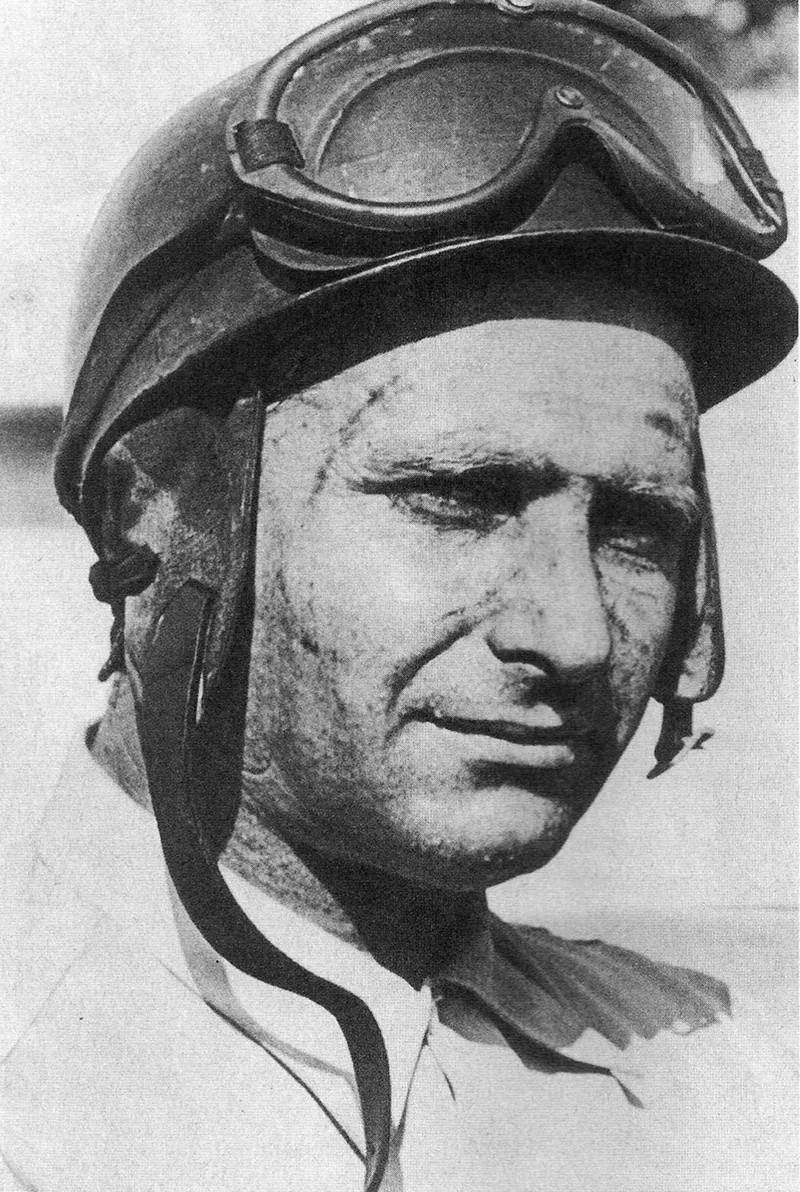
Gonzalez and Maurice Trintignant won the 1954 24 Hours of Le Mans in a Ferrari 375 Plus, finishing just under three minutes ahead of the Jaguar D-Type of Rolt and Hamilton. It was the closest finish since 1933 and the first Le Mans victory for the Scuderia Ferrari, won in the rain by a car that nearly stopped in the final hour.
Why was the 1954 race billed as brute force against science?
The race was framed as a clash of philosophies. Ferrari's 4,954cc V12 with about 345 bhp stood against the Jaguar D-Type, which had better handling and disc brakes but less power. Rain would decide which approach worked, and for much of the race it favoured the Jaguar.
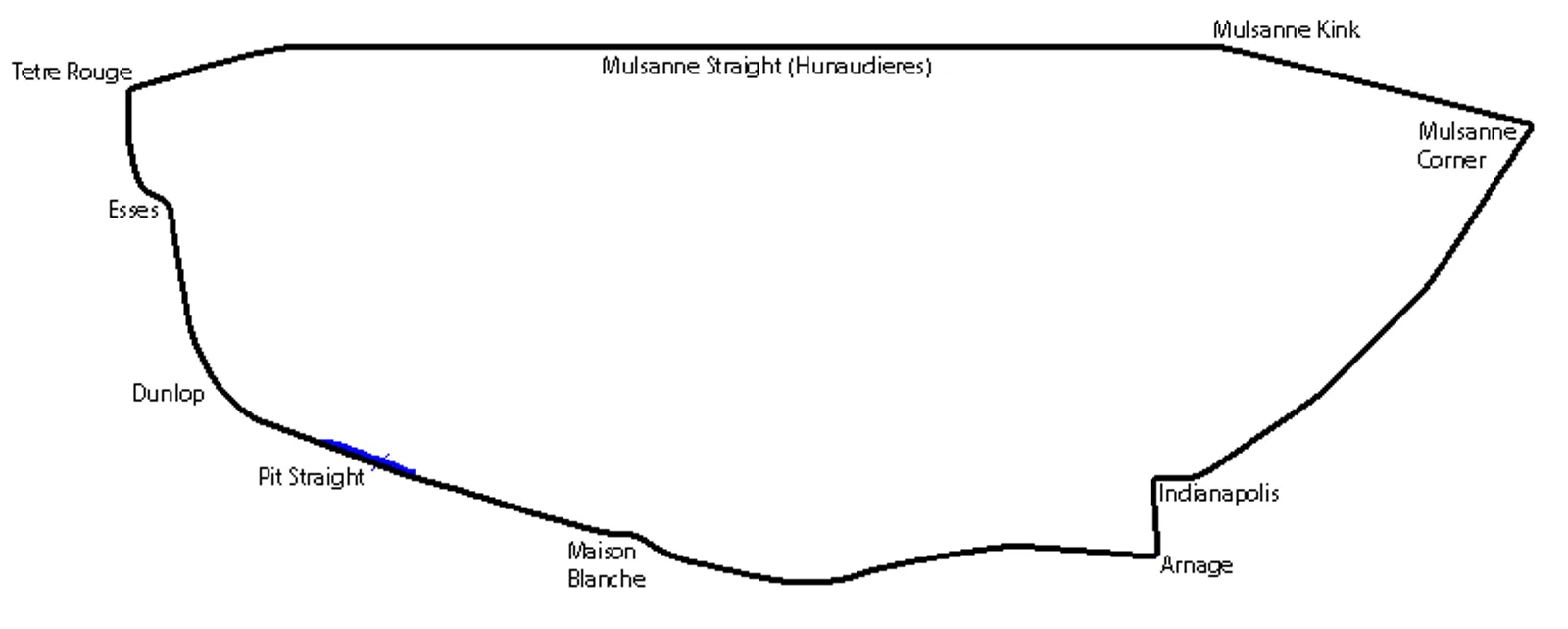
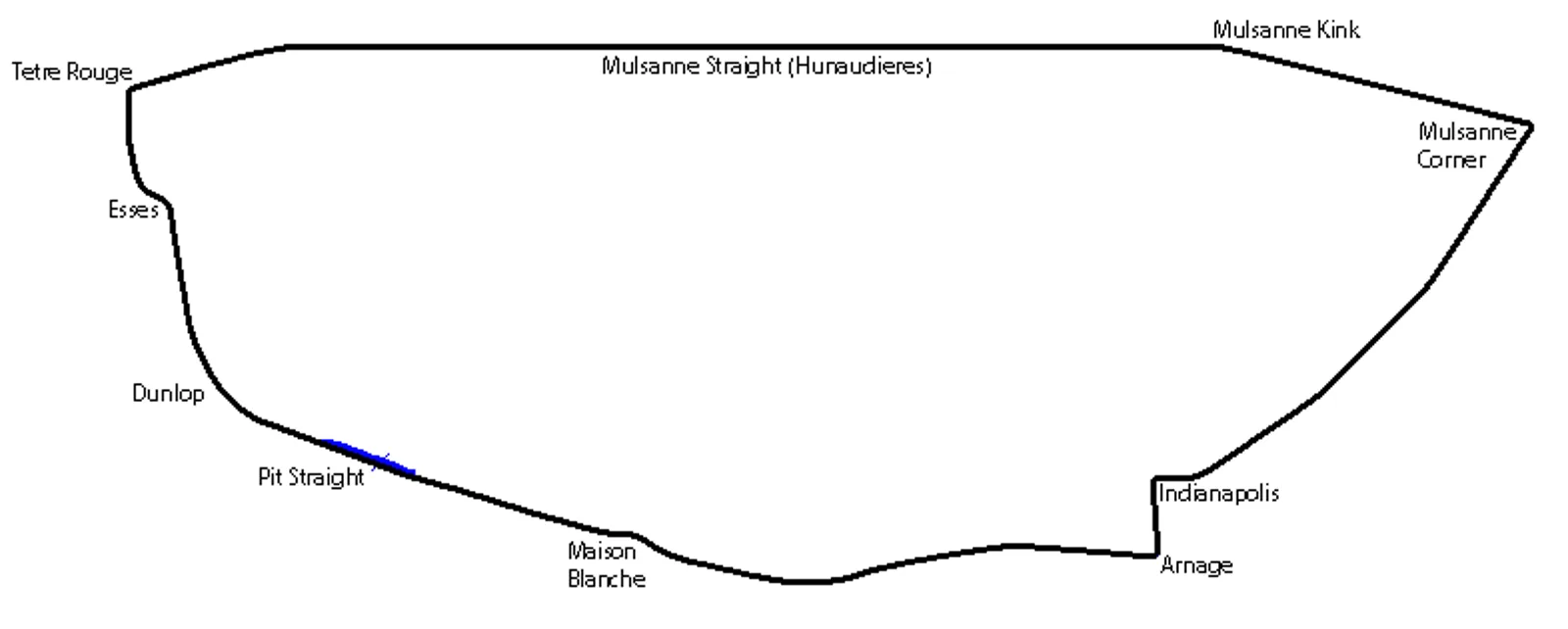
The rules were tuned for a close contest. The fuel, oil and water replenishment window was extended from 28 to 30 laps, which meant 405 km between stops, although brake fluid was exempted for safety. The allowance for supercharged engines was cut from x2.0 to x1.4, a change that worked against the blown cars.
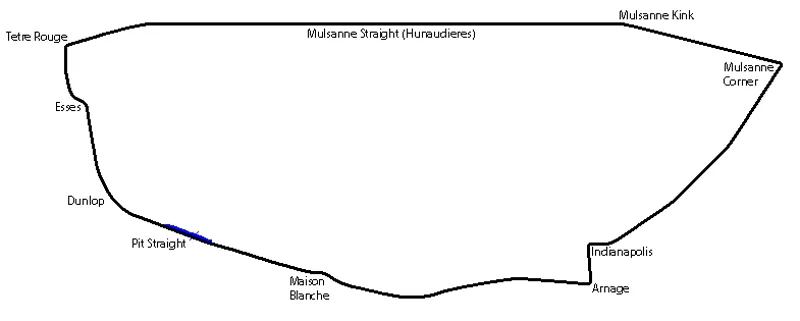
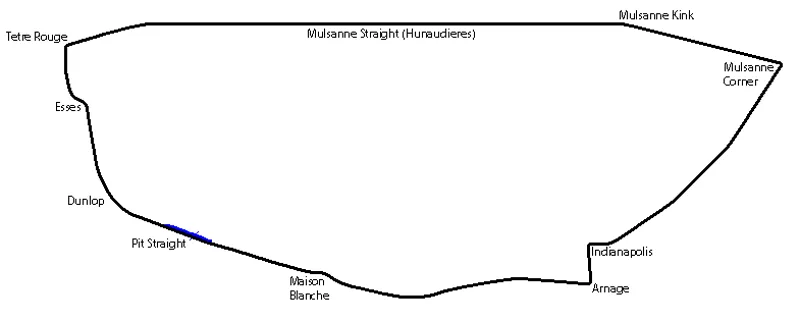
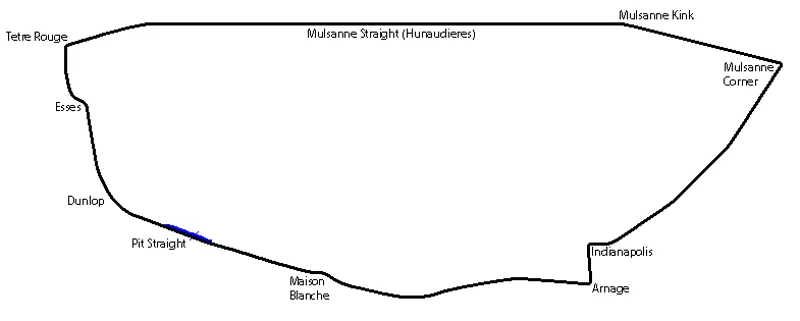
On the circuit, the stretch from Mulsanne to Arnage was widened to 8 metres, and the Indianapolis corner gained a slightly banked camber. It was also the first year the race was broadcast on television, which put the event in front of a wider audience than ever before.
Ferrari won the race by three minutes, but the rain and a soaked ignition system did most of the work.
Which teams and cars were entered?
The race drew 85 registered cars, and 58 arrived for practice. Mercedes-Benz stayed with Formula One, Alfa Romeo had closed its racing division, Lancia withdrew and Austin-Healey boycotted the race, so the front of the field was fought between Jaguar and Ferrari.
Jaguar's sole racing focus that year was Le Mans. The three D-Types were built for the smooth tarmac at La Sarthe, with a single vertical wing developed in the wind tunnel and a ride height of only 32 inches (810 mm). Their 3.4-litre straight-six was tilted at 8 degrees to lower the bonnet, produced 250 bhp and gave a top speed above 270 km/h. The drivers were Rolt with Hamilton, Moss with Walker, and Whitehead with Ken Wharton. An ex-works C-Type was lent to the Belgian Ecurie Francorchamps team after its original car was crashed on the way to the circuit.
Ferrari's answer was the 375 Plus, styled by Pinin Farina. Its bored-out Lampredi V12 now displaced 4,954cc and produced about 345 bhp, nearly 40% more than the Jaguars, with a top speed approaching 270 km/h. Gonzalez, Maglioli and Trintignant came from the Ferrari Formula One team, and Paolo Marzotto, Robert Manzon and Louis Rosier completed the line-up.
The smaller marques filled out the field. Lagonda-Aston Martin entered five works cars and two private entries, with one supercharged DB3S giving 235 bhp. Its long-running, expensive Lagonda sports car carried a 4.5L V12 that was effectively a double Aston Martin engine. Gordini arrived with four cars in three classes, the lead T24S carrying a 3.0L engine of 230 bhp. It also had new Messier disc brakes and a top speed above 230 km/h. Porsche returned with open spyders using the new quad-cam 547 engine, which made 110 bhp.
Triumph made its first Le Mans entry with an off-the-shop-floor TR2, and Maserati made its debut too. Talbot sent no works team, but it supplied an improved 4.5L engine, good for 280 bhp, to three privately entered T26 spyders driven by Levegh, Meyrat and Grignard.
Kieft brought the first fibreglass chassis to Le Mans, and one of its cars carried the new Coventry Climax FWA engine. Cunningham had wanted the new Dunlop disc brakes for his own cars, but Jaguar used its contract right to veto the deal.
Gilberte Thirion qualified a 2-litre works Gordini, but she was excluded from the race because she was a woman, and her father drove the car in her place.
OSCA had made a striking start to the year: a 1500cc MT-4 run by Cunningham, shared by Stirling Moss and Bill Lloyd, took a win at Sebring against much bigger machinery. Three such cars arrived at Le Mans.
Glamour came with Chinetti's team, where the film star Zsa Zsa Gabor accompanied her wealthy boyfriend, the Dominican Porfirio Rubirosa.
Tony Rolt took the prototype D-Type round the full track in an unrelated May event, about five seconds faster than Ascari's lap record from the previous year. In the official practice the three works cars recorded identical times, and Moss was timed at 154.44 mph (278 km/h) over the flying kilometre, a clear speed advantage for the Jaguars.
How did the race start under the dark clouds?
Prince Bernhard started the race at 4pm. The Ferraris of Gonzalez, Marzotto and Manzon led 1-2-3 away from the line, with Moss, Rolt and Wharton chasing, until a heavy downpour arrived after only five laps and cancelled the Ferrari's advantage in power.
Wharton had a collision at the start and lost time to a blocked fuel filter in the first hour. Moss took the lead on lap 22, still in heavy rain, and from then on the race became a to-and-fro battle between the two marques, with the Gordini and Cunningham cars trading places in the top ten behind them.
Not every car survived the conditions. Count Baggio planted his Ferrari into the Tertre Rouge sandbank on lap 5 and could not dig it out, so Rubirosa never got his turn at the wheel. Thompson's Lagonda spun backwards into the bank at the Esses, and after nearly two hours to recover it was retired because its rear lights were too badly damaged.
What happened in the night and the early morning?
At 9.30pm, Meyrat's Talbot collided with Jimmy Stewart's Aston Martin as both were lapping a slower car. The Aston rolled and threw Stewart clear. The car was completely written off, and Stewart was very lucky to suffer only a serious arm break, which contributed to his retirement from racing.
As the rain eased, Wharton and Whitehead made a strong comeback to third, a place that became second when the Maglioli and Manzon Ferrari broke its gearbox just after 11pm. Moss, after a total brake failure at the end of the Mulsanne straight at about 160 mph, was stranded with a car that could not be driven any further.
By midnight Gonzalez and Trintignant were two laps ahead of Whitehead and Wharton. Manzon and Rosier were third, with Rolt and Hamilton ahead of the Aston Martins of Parnell and Salvadori and of Collins and Bira, which completed the top six. Rosier and Manzon's Ferrari, running third at dawn, then retired with a broken gearbox, jammed in second gear.
Did the Ferrari really have the race in hand?
It did not, and the race came down to the last hour. At around 10am Rolt's Jaguar glanced the bank coming out of Arnage, costing two minutes in the pits. By then the rain had eased enough for Ferrari's power to tell, and the Jaguar drivers began to close the gap again on Trintignant.
Trintignant brought the Ferrari in for a routine stop with 90 minutes to run. Gonzalez took over, but the V12 refused to restart. The mechanics lost seven minutes before they found the cause: the rain had saturated the ignition wiring. Rolt was then close enough to be on the same lap as the leader.
Hamilton took over from Rolt with an hour to go and cut the gap to 90 seconds in the rain. Gonzalez had not eaten or slept through the weekend, and his laps dropped to around 5'30'' by the end. His pit crew kept urging him on, and as the rain stopped with half an hour to go, the track dried and the Ferrari's power came back into play.
What decided the 1954 finish?
The leading Ferrari lost seven minutes at its last stop when saturated ignition wiring stopped the engine restarting, and Hamilton reduced the gap to 90 seconds. Gonzalez then pulled away again once the track dried, and the Ferrari won by just under three minutes after 302 laps.
Gonzalez eased off on the final lap, crossing the line in front of a crowd that had watched the Jaguar close in for the best part of two hours. Prince Bernhard, who had started the race, climbed aboard with Trintignant for a celebratory lap through the wet.
Pit stops decided the margin, as the Jaguar spent 37 minutes in the pits to the Ferrari's 29. The Cunningham C-4R of Spear and Johnston finished third, 19 laps behind, and Briggs Cunningham came home fifth.
Final order of the leading cars
| Place | Entry | Result |
|---|---|---|
| 1st | Ferrari 375 Plus, Gonzalez and Trintignant | 302 laps, winning margin just under three minutes |
| 2nd | Jaguar D-Type, Rolt and Hamilton | Second on the road |
| 3rd | Cunningham C-4R, Spear and Johnston | 19 laps behind |
| 5th | Cunningham C-4R, Briggs Cunningham | Fifth overall |
| 6th | Gordini, last remaining car | First French car home, with a special prize |
| 6th to 8th | Bristol coupes | Clean sweep of the 2-litre class with 1-2-3 in the class |
What did the smaller classes achieve?
The small-engine classes were not sideshows. DB cars took the Index of Performance and the Biennial Cup, and the owner-driver Rene Bonnet and Elie Bayol finished 10th overall with a class distance record that embarrassed many larger cars. The Monopole entry was second in its class.
The Bristol team finished sixth, seventh and eighth overall and took a clear 1-2-3 in its class. The leading Bristol finished more than 30 laps ahead of the only other Frazer-Nash in its class to finish. Wilson and Mayers drove at times with the door open, because a window wiper made it hard to see.
The two OSCA works cars that had led their class collapsed in the final two hours. Giardini crashed and rolled at Mulsanne, and the second car hit the barriers at Dunlop. Leygonie ran back to the pits for equipment, and the car that had been abandoned was later disqualified at the finish. The last OSCA ended with a broken transmission.
What did the 1954 race mean for Ferrari and Porsche?
The win was Ferrari's first at Le Mans for the Scuderia, and it was the last appearance of Gonzalez at La Sarthe. Three years before, he had scored Ferrari's first Formula One victory, so the Le Mans win completed an impressive run for the Argentine driver.
Gonzalez and Marzotto also beat Ascari's lap record by more than ten seconds in the dry, even though the weather had left the race soaked. Porsche's 550s finished third overall in the final round of the championship, in the Carrera Panamericana, and the Carrera name was soon applied to the 356 road cars with the quad-cam engine.
Maserati's 2-litre cars won more than 20 class victories across Europe that season, and in October DB inaugurated its Formula Monomill series for young drivers, with Jo Schlesser winning the first race at Montlhery.