How a Japanese parts maker founded in 1933 became the centre of a recall covering more than 100 million airbag inflators, and what followed for the company.
Takata Corporation was a Japanese parts maker founded in 1933 that became a major seat belt and airbag supplier. Its inflators were the basis of the largest auto recall in history, which led to a $1 billion settlement, a 2017 bankruptcy and a sale to Key Safety Systems.
Takata Corporation was a Japanese automotive parts company that began with parachute lifelines and grew into a major maker of seat belts and airbags. From 2013 its airbag inflators became the centre of the largest automotive recall in history. The crisis led to the company's bankruptcy and sale, and the recalls have continued since.
Who founded Takata and what did it make?
Takata was founded in 1933 in Shiga Prefecture, Japan, by Takezo Takada. The company first produced lifelines for parachutes and other textiles. Seat belts came later, when research began in the early 1950s and sales followed in the 1960s, supported by Japan's first crash test plant for seat belts under real-world conditions.
In the 1970s Takata developed child restraint systems, and in the 1980s it changed its name to Takata Corporation and expanded abroad. Its markets grew to include Korea, the United States and, later, the United Kingdom. Each step widened its customer base beyond Japan.
In 2000 Takata acquired the German competitor Petri AG. The European subsidiary, Takata-Petri, was renamed Takata AG in early 2012, and it produced steering wheels and plastic parts as well as safety products for the automotive industry.
A parachute-cord maker that became the centre of the largest auto recall in history, with its inflators now recalled in more than 100 million cases.
When did Takata start making airbags?
Takata began making airbags in 1988, and by 2014 it held about 20 percent of the airbag market. Its inflators were fitted by many manufacturers, which meant that a single fault could reach vehicles across many brands at once, across the industry.
The inflators were made at the Monclova plant in Coahuila, Mexico, which was operated by TK Holdings Inc., the company's North American and Mexican subsidiary. Propellant choice mattered as well. Ammonium nitrate was used from the late 1990s as a cheaper but less stable alternative to tetrazole, which had replaced the older sodium azide.
What was the 1995 seat belt recall?
The first large Takata recall came in May 1995, when a US recall covered 8.333 million vehicles. Most were Japanese built and dated from 1986 to 1991, and they used seat belts made by Takata Corporation. It was described at the time as the second largest recall in the 30-year history of the Department of Transportation.
The recall followed an investigation by the National Highway Traffic Safety Administration into Honda vehicles, after owners reported buckles that failed to latch, released on their own or released in an accident. The investigation then widened to other Japanese imports, and it found that the problem was not confined to Honda.
A nine-month investigation found that the buckles were made of ABS plastic. Ultraviolet light made the plastic brittle over time, so fragments broke off and jammed the release button mechanism. Some manufacturers had first suspected user abuse rather than a design failure.
The recall did not go smoothly. Only 18% of the 8.9 million vehicles with the Takata buckle had been repaired two years after the recall began. The regulator assessed a $50,000 civil penalty against both Honda and Takata for failing to report the defect in a timely manner, and it said Honda had known of the hazard at least five years before the recall.
How did the airbag recalls begin in 2013?
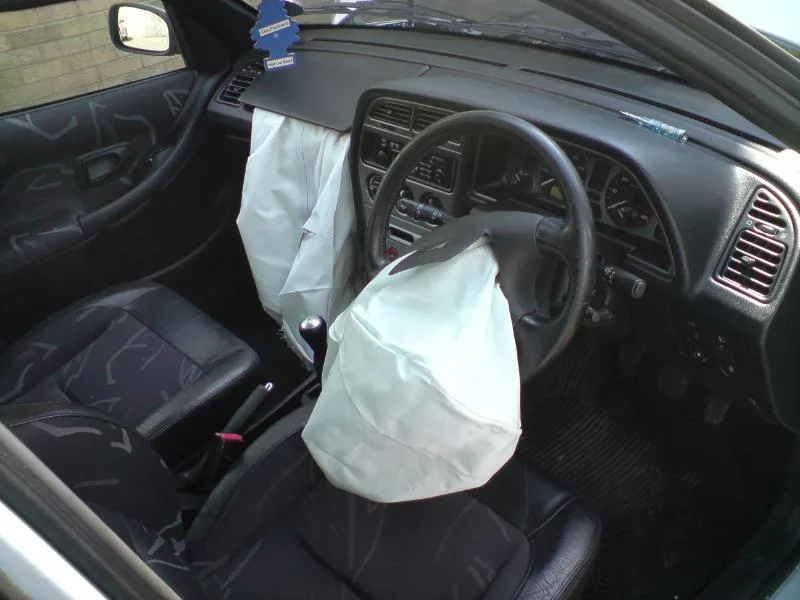
In April and May 2013, a total of 3.6 million cars were recalled because of defective Takata airbags. The problem may have started a decade earlier, with faulty airbags placed in some Honda models from 1998. Honda said it knew of more than 100 injuries and 13 deaths, seven in the United States and six in Malaysia.
The affected inflators came from Monclova, and in November 2014 BMW announced that it would move its orders from the Mexican plant to a Takata plant in Germany.
Identifying the vehicles at risk was harder than it should have been. Takata admitted in June 2014 that its Mexican subsidiary had mishandled the manufacture of explosive propellants and had stored chemicals improperly. The failure of TK Holdings to keep proper quality control records made it difficult to find the affected cars, which prompted another round of recalls that June.
What caused the airbag inflators to fail?
On 23 June 2014 seven automakers, BMW, Chrysler, Ford, Honda, Mazda, Nissan and Toyota, announced that they were recalling more than three million vehicles worldwide. The inflators could rupture and send debris flying inside the vehicle, and the action followed an investigation that began after the regulator received three injury complaints.
Takata said that excessive moisture was the cause of the defect. A Japanese transport ministry official said that moisture and humidity could seep into inflators and destabilise the volatile propellant inside. Takata later stated that the issue had only been shown to affect vehicles in hot and humid locations, though it recalled all potentially affected vehicles as a precaution.
Later Honda action addressed the same inflator problem. A 2018 recall in Canada covered Honda vehicles whose front passenger airbags had been modified in the original 2014 recall, because their non-desiccated inflators could rupture on deployment. Honda then replaced those airbags with units that feature a desiccated inflator.
How many deaths and injuries were linked to the airbags?
The death toll grew steadily as the recalls continued. One of the earliest cases was a pregnant Malaysian woman, who was killed in July 2014 in a collision involving her 2003 Honda City. A metal fragment from a ruptured driver's side airbag struck her neck, and her daughter, delivered after the mother's death, died three days later.
By the time of the January 2017 settlement, at least 16 deaths were linked to the defective airbags. As of September 2024, 28 deaths in the United States and 35 deaths globally had been attributed to the faulty inflators. Honda's own reporting counts 17 US deaths and over 200 injuries linked to Takata inflators.
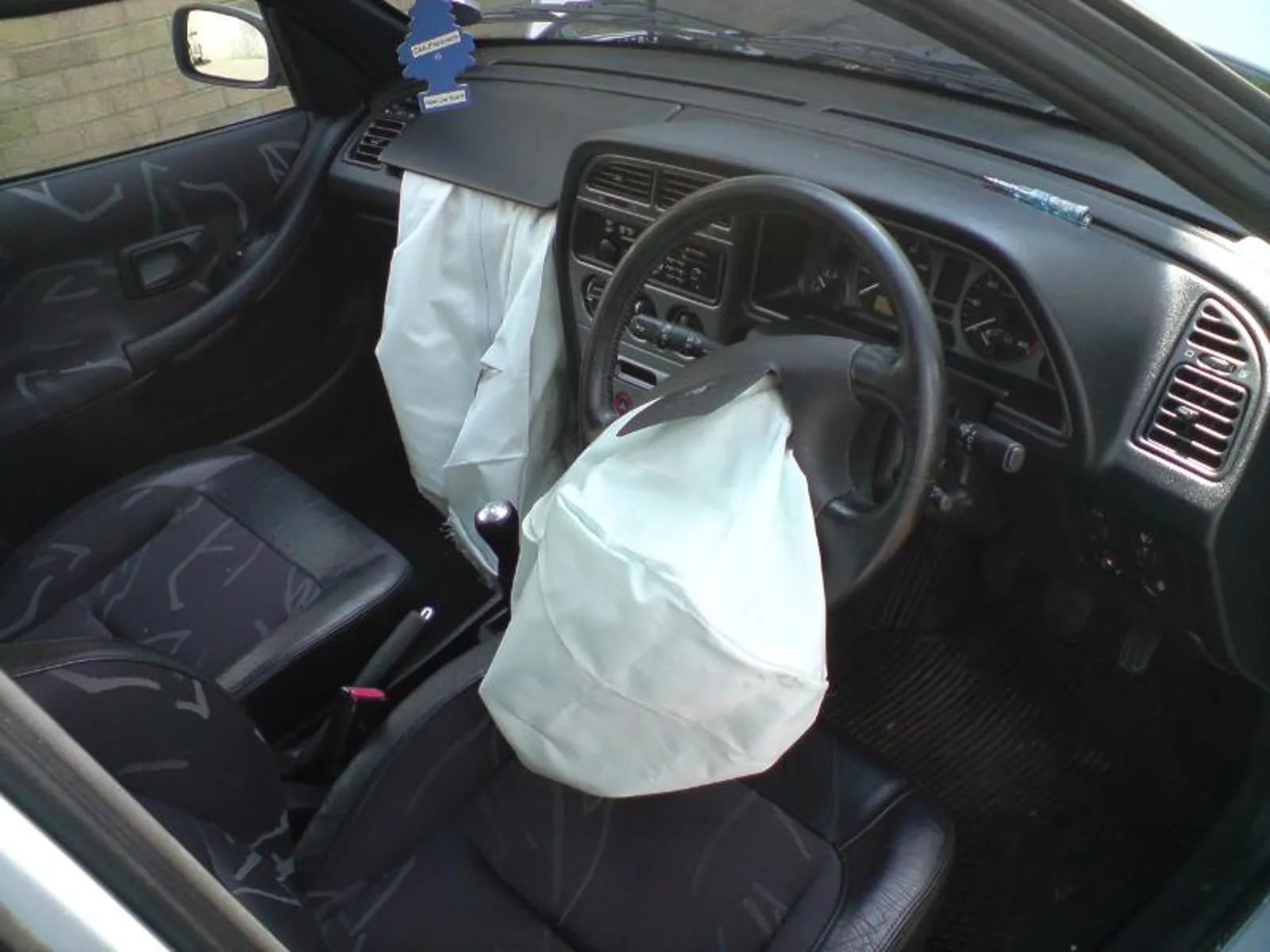
Regulators described the risk as shrapnel reaching the face and body of drivers and front seat passengers, which is why the recall was framed as a safety issue.
How large did the Takata recalls become?
The recalls grew in steps. In 2014 more than three million vehicles were recalled worldwide. By May 2015 Takata had recalled 40 million vehicles across 12 brands, bringing the number of eligible cars to about 53 million, which made it the largest auto recall in history. On 4 May 2016 the regulator announced recalls of a further 35-40 million inflators.
| Date | Recall | Scale |
|---|---|---|
| May 1995 | Seat belt buckles, Japanese imports | 8.333 million vehicles |
| April and May 2013 | Airbag inflators, first wave | 3.6 million cars |
| 23 June 2014 | Multi-maker airbag recall | Over 3 million vehicles worldwide |
| May 2015 | Largest auto recall in history | 40 million vehicles, about 53 million eligible |
| 4 May 2016 | Additional inflators announced | 35-40 million inflators on top of 28.8 million |
| 28 February 2018 | Compulsory recall in Australia | 2.3 million vehicles |
| 4 January 2019 | Ford expansion | 953,000 vehicles |
| January 2024 | Toyota and General Motors | 61,000 vehicles |
By January 2024, over 100 million airbag inflators worldwide had been recalled by more than 20 carmakers.
How did regulators and courts respond?
The NHTSA ordered a nationwide airbag recall on 18 November 2014, after several automakers in the US had recalled hundreds of thousands of cars. The order required Takata to start a single, US-wide campaign rather than a patchwork of separate recalls.
In November 2015 Takata was fined $200 million by US federal regulators, of which $70 million was paid up front, after it admitted fault. On 13 January 2017, US prosecutors charged three Takata executives over the airbags. They were named as Shinichi Tanaka, Hideo Nakajima and Tsuneo Chikaraishi.
Takata then accepted a guilty plea and agreed to pay $1 billion to close the inquiry. Of that total, $25 million was a fine, $125 million went to victims, and $850 million went to automakers as compensation.
What happened in Australia, New Zealand and Canada?
On 28 February 2018 the Australian Federal Government announced a compulsory recall of all cars fitted with Takata airbags. Around 2.3 million vehicles were covered, and their airbags had to be replaced within two years. Volkswagen's recall followed on 1 March 2018 with 106,806 vehicles, including the Golf, Passat, Polo and Up!.
Holden then said its recall covered 330,000 of its Australian vehicles, although none had originally been on the federal government's compulsory list. In New Zealand, the government announced a compulsory recall of 50,000 vehicles with Alpha-type airbags on 4 April 2018, and it blocked the import of vehicles whose faulty airbags had not been replaced.
Transport Canada announced on 28 June 2018 the recall of 222,336 Honda vehicles built between 2001 and 2007. Ford's recall expanded on 4 January 2019 by 953,000 vehicles, including 782,384 in the United States and 149,652 in Canada.
What happened to the company itself?
On 25 June 2017 Takata filed for Chapter 11 bankruptcy in the United States and for bankruptcy protection in Japan. The US case was heard in the Delaware bankruptcy court, and the company owed more in compensation than was possible for its survival. Its remaining assets were sold to Key Safety Systems for about $1.6 billion.
Key Safety Systems was Chinese owned and based in Michigan. When the acquisition was completed, the company was renamed Joyson Safety Systems on 11 April 2018 while its Michigan operation kept the Key Safety Systems name.
The recall story did not end with the sale. In June 2021 Joyson said it had discovered over a thousand cases in which Takata had falsified seat belt safety test data. Recalls continued in the years after, including Stellantis asking owners of 2003 Dodge Ram pickups to stop driving in 2022, and Honda warnings in February 2023.
Which carmakers and countries were affected?
The number of affected manufacturers was large. Acura, Audi, BMW, Cadillac, Chevrolet, Chrysler, Citroen, Dodge, Ferrari, Ford, Honda, Jaguar, Lexus, Mazda, Mercedes-Benz, Nissan, Subaru and Toyota were among the brands listed, along with many others. Ferrari recalled its 2014-15 models in July 2015 after tests on a 458 Italia showed airbags deploying in a rotated orientation.
In South America, Brazil was the only country to register a defect in the company's airbags across 17 car brands. Estimates by the national traffic secretariat, SENATRAN, indicated that owners of 2.5 million of the 3.5 million vehicles involved had not gone in for the replacement. In 2025 Citroen recalled almost 900,000 cars in Europe, including the C3 and DS3 models, and later expanded the recall to the C4, DS4 and DS5.